Cruise Ports for WWII History
Some of these ports are museums, and several of them are graves. If you are planning a cruise around where the Second World War happened, the question is not which port is best but which one you can honestly reach in the hours you have.
My quick take
The mistake I see is treating these like any other shore stop, where you line up three sights and hope the traffic cooperates. Most of these places reward one thing done slowly, and they punish a rushed itinerary by leaving you with the inside of a coach window.
I also think it is worth saying out loud what you are going to. A war cemetery is not an attraction, and the ships that call at these ports sell tickets to them anyway, so the framing has to come from you.
The quick facts
- Easiest to reach: Darwin, where the wartime oil tunnels sit a short walk from the wharf.
- Book well ahead: The USS Arizona Memorial program at Pearl Harbor runs on free timed reservations that go quickly.
- Needs the whole day: Gallipoli from Canakkale, which is a First World War battlefield, not a Second World War one.
- Not a port day: Bletchley Park from Southampton, and Tinian from anywhere.
- Carry cash: Honiara and several Pacific stops run on notes, not cards.
What kind of cruise puts you in front of this history
There is no single wartime itinerary, and the Pacific sites alone are split between Australia repositioning voyages, South Pacific loops and the few ships working Micronesia. Europe splits three ways again, with Normandy on British Isles sailings, Westerplatte on a summer Baltic run, and Malta and the Dardanelles on eastern Mediterranean itineraries.
Japan’s two atomic bomb cities are the exception, because they sit on ordinary Japan and Seto Inland Sea cruises that run heavily in spring and fall. If you want a broad view of how those itineraries fit together, our guide to Japan cruise ports by region lays out which coasts get which ships.
Honolulu: Pearl Harbor is close, the ticket is the hard part
Ships come alongside at Pier 2 in Honolulu Harbor, so you walk straight off, and the Honolulu port guide covers the rest of Oahu if you want it. Pearl Harbor sits roughly 10 miles (16 km) west of the pier, which is anywhere from 25 minutes to nearly an hour depending on the freeway.
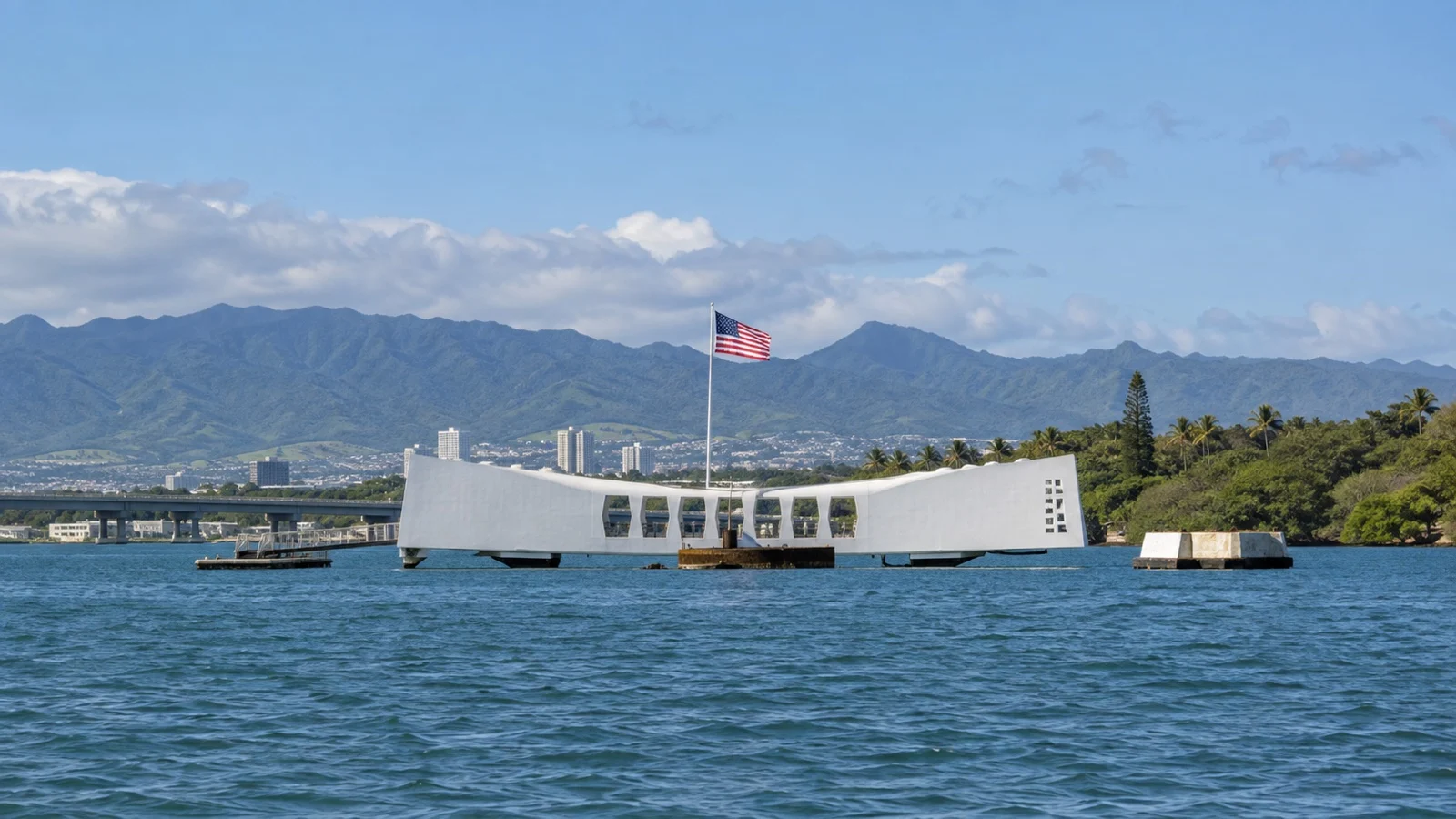
The museums and grounds at Pearl Harbor National Memorial cost nothing to enter. The boat program out to the USS Arizona Memorial is the piece that needs a free timed reservation booked online in advance, and those release on a schedule and disappear fast.
A port day is enough if you budget half of it and go straight there. What you are standing over is a sunken battleship with most of her dead still aboard, and people generally fall quiet on the memorial without being asked to.
Le Havre and Cherbourg give you two very different runs at Normandy
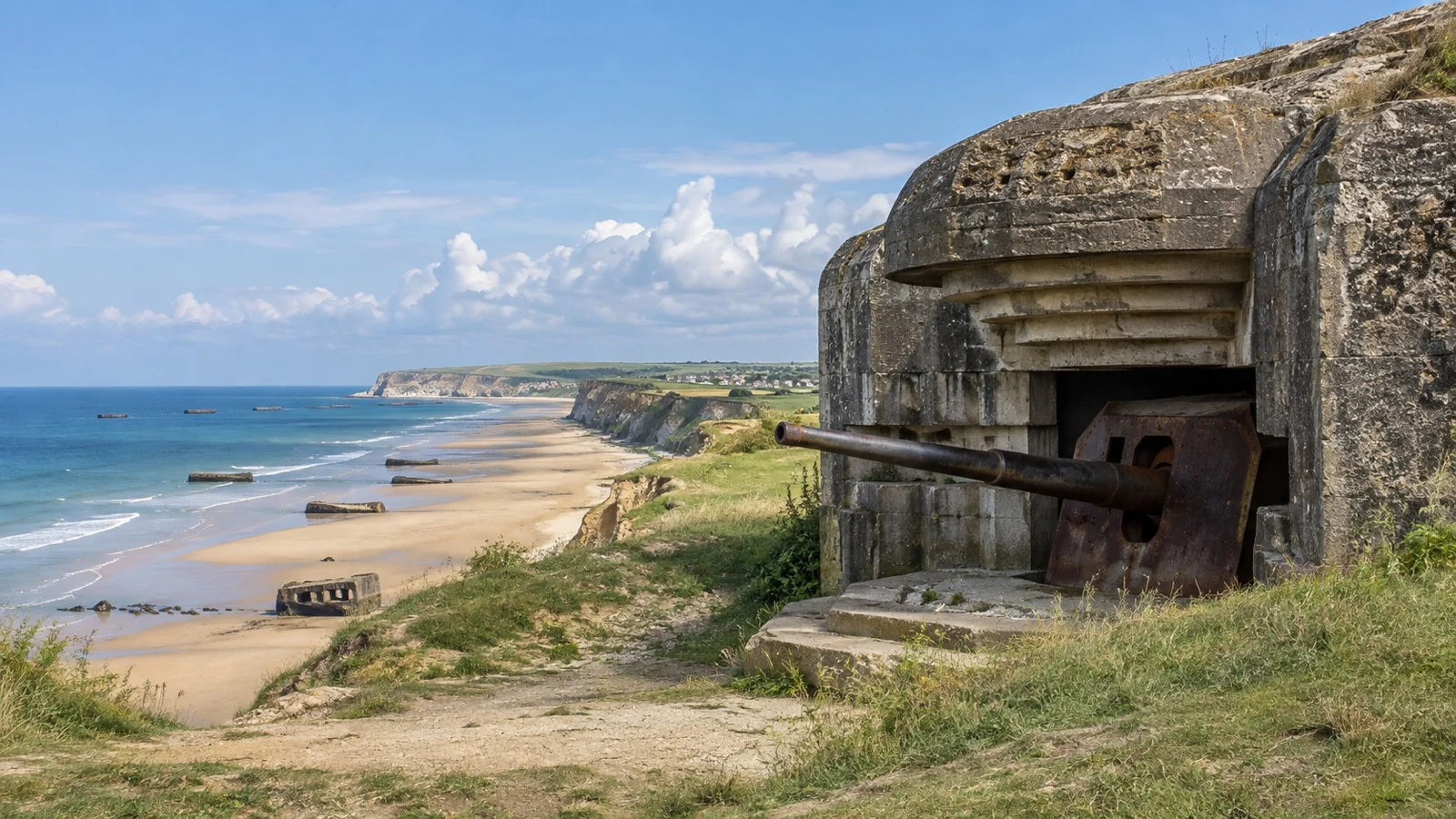
Cherbourg is the better of the two by a wide margin. Ships tie up at the Quai de France beside the old transatlantic terminal, and Sainte-Mere-Eglise and Utah Beach are only about 35 to 45 minutes away by road.
Omaha Beach and the American cemetery above it at Colleville-sur-Mer are closer to 90 minutes each way from Cherbourg. From Le Havre, where ships berth at Pointe de Floride about 1.5 miles (2.4 km) from the city, that same sector is a longer haul again and eats most of a port day in transit.
There is no useful public transportation between the beaches, so this is a coach tour or a pre-booked car, a choice our comparison of ship excursions, local tours and going it alone works through. The cemetery above Omaha holds more than nine thousand graves in white rows, and visiting it is quiet and slow rather than informative in the museum sense.
Gallipoli belongs on this list, and it is not a Second World War site
I include it because cruisers ask about it in the same breath, and pretending otherwise would be sloppy. The landings on the Gallipoli peninsula were 1915, a generation before the war the rest of this list covers.
Access is through Canakkale, where ships usually anchor in the strait and tender to a quay by the waterfront. From there you cross the Dardanelles by ferry to the European side and then drive, because the cemeteries and memorials on the Anzac sector are spread across miles of narrow hill roads.
That is a full port day and nothing else, and a small guided tour is the honest answer for most people. Doing it from Istanbul is close to 200 miles (320 km) each way, which is a legitimate overland day trip and a bad idea on a ship’s schedule.
Darwin is the one you can genuinely walk
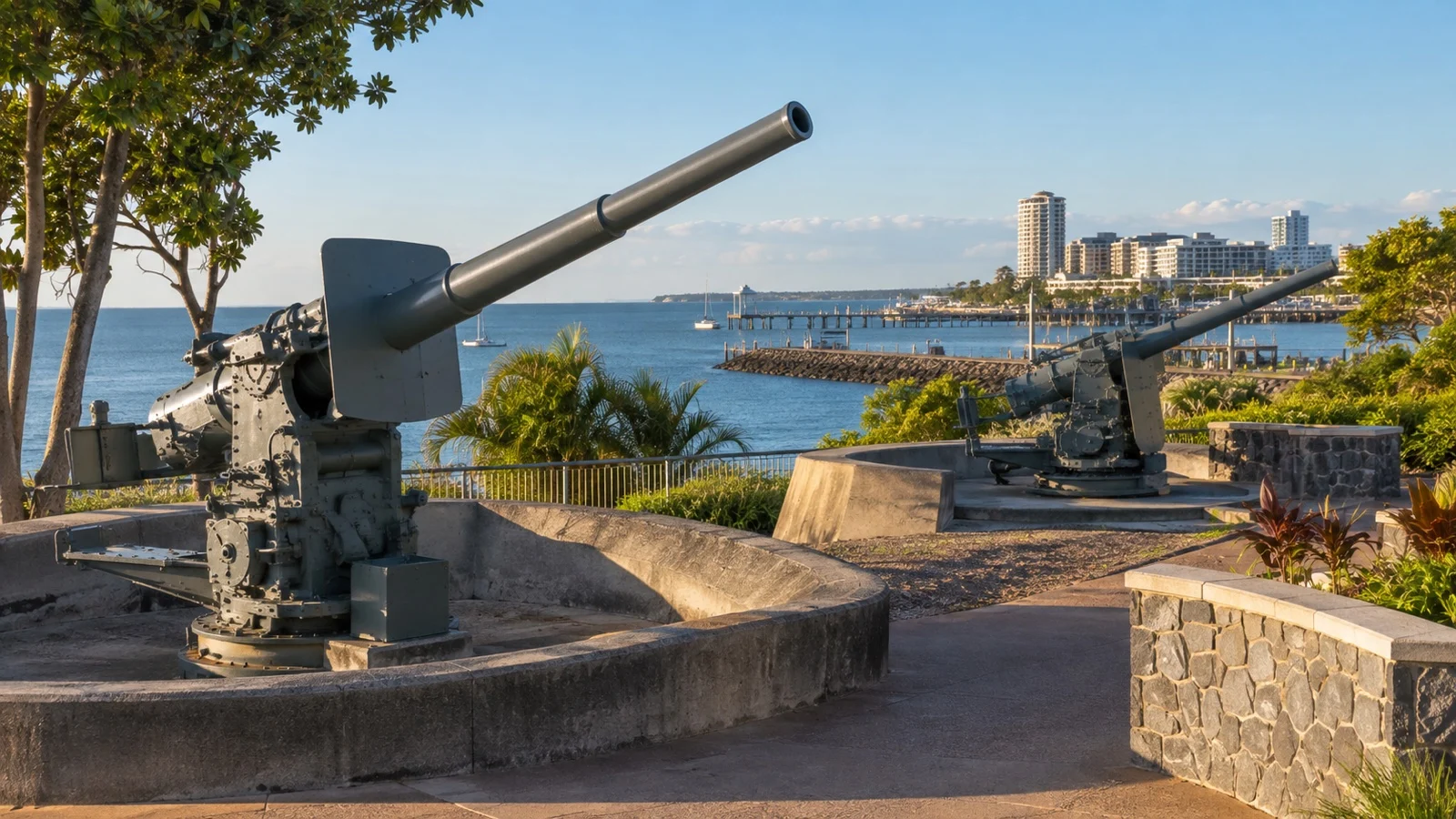
Ships take an alongside berth at Fort Hill Wharf, about 0.6 mile (1 km) from the central business district, so town is a 5 to 15 minute walk. Darwin was bombed from the air in February 1942, and the raids kept coming for well over a year after that.
The wartime oil storage tunnels are dug into the escarpment right by the waterfront, and you walk through them. That is the rare case on this list where you can do the history properly and still be back aboard with hours to spare, which the Darwin port guide sets out in more detail.
The military museum out at East Point needs a taxi rather than legs, so on a short call I would take the tunnels and let it go.
Guam and Saipan: free parks, difficult logistics
Guam berths you inside the working commercial port at Apra Harbor, and nothing there is walkable. War in the Pacific National Historical Park is free and spread across several separate units along the west coast, including the July 1944 landing beaches at Asan and Agat.
The catch is transportation, not admission. Buses do not run every day and the intervals are long, so plan on a pre-booked driver, a rental car or a ship tour, and the Guam port guide is blunt about the visitor center being closed some days.
Saipan is a rarer call and mostly falls to smaller ships. American Memorial Park in Garapan honors the servicemen and the Chamorro and Carolinian civilians who died in the 1944 Marianas campaign, and an hour or two covers the visitor center and the memorial court.
The cliffs at the northern end of the island, where large numbers of civilians died in the last days of the battle, need a vehicle and a guide who will explain what happened there. Tinian is a separate hop again, and I would not plan a ship day around it.
Nagasaki and Hiroshima, and what a short call really buys you
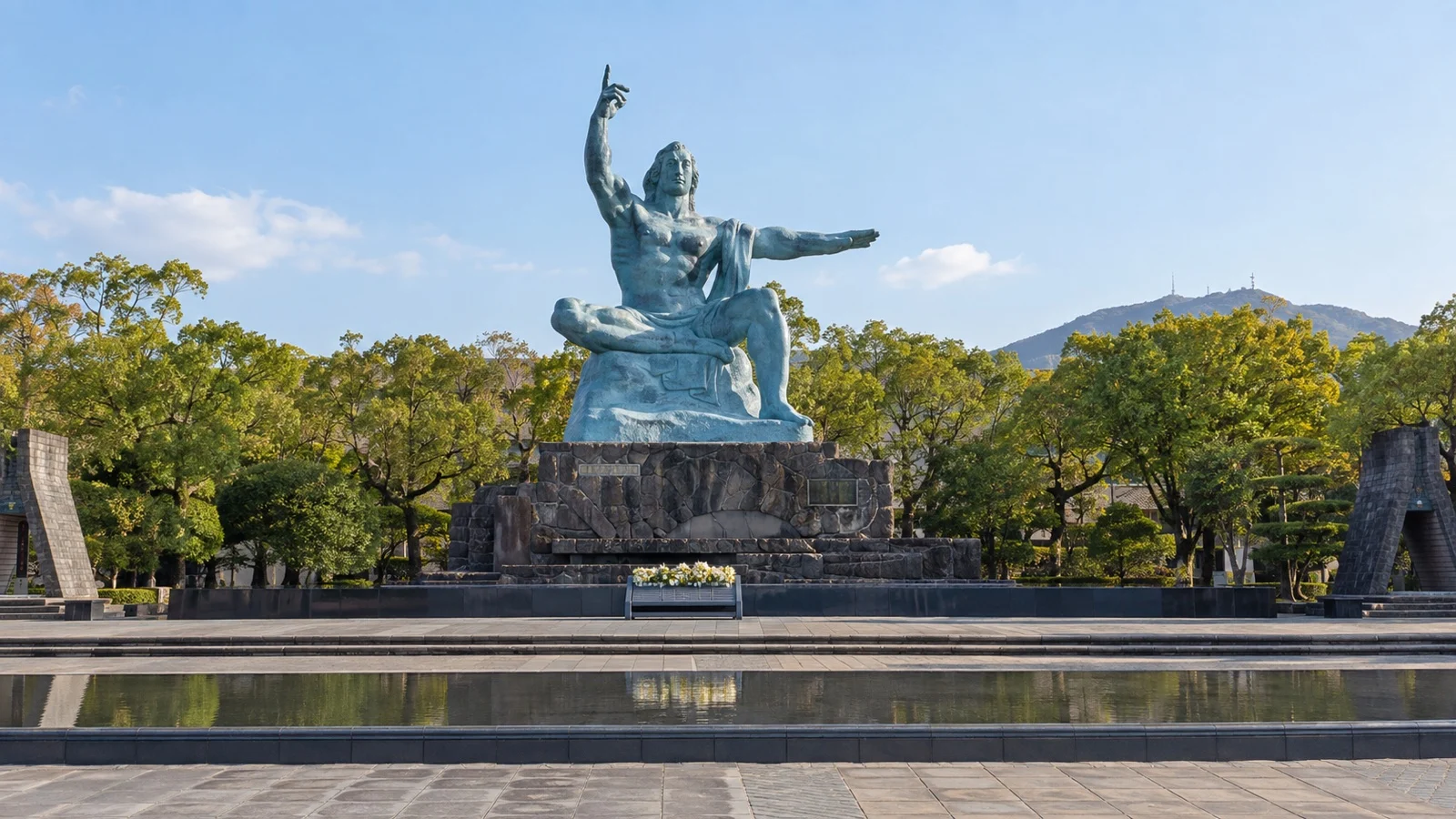
Nagasaki is the gentler of the two logistically, with large ships alongside at the Matsugae terminal and a tram up into the Urakami district. A five hour call covers the Peace Park, the hypocenter marker and the atomic bomb museum, which charges only a token entry fee.
The bomb fell there on the morning of August 9, 1945, and the hypocenter is a plain black pillar that says more than any exhibit around it.
Hiroshima puts you at Ujina, roughly 3 miles (5 km) south of the center, with a streetcar running in. Allow about half an hour on the tram plus a short walk, and accept that a four hour call means the Peace Memorial Park and the museum and nothing else.
If your itinerary calls at Kobe instead, Hiroshima is reachable by bullet train in theory and a stretch in practice once you add transfers and an all aboard time. The same arithmetic applies to Kyoto, which our post on visiting Kyoto from a Kobe or Osaka stop covers.
The Pacific island battle sites are the hardest and the most affecting
Honiara is Guadalcanal, and most ships anchor and tender because the berths are short. The ridges south of town, the Matanikau river line and the old airfield are all a modest drive away, with wrecked equipment still sitting in the grass where it was left.
There are memorials on both sides here, American and Japanese, within a few miles of each other. Take cash, since acceptance is thin outside the main hotels, and our guide to what to carry ashore explains why small notes matter here.
Rabaul was a major Japanese base, and tunnels, bunkers and wrecks lie scattered across the Gazelle Peninsula. Go into a tunnel only with a qualified guide and never through an unmarked opening, which is advice worth taking literally.
Koror is the gateway to Palau, where larger ships anchor in the lagoon. Peleliu, the island most people are thinking of, is a long boat ride south, and unless your ship is running it as an excursion I would treat it as out of reach on a single call.
Gdynia, Gdansk and Westerplatte on one port day
Ships berth alongside in Gdynia, roughly 20 miles (32 km) north of Gdansk, and the regional train is the sensible way south. Budget something like 75 to 100 minutes each way from the gangway to central Gdansk, which the Gdynia and Gdansk port guide breaks down step by step.
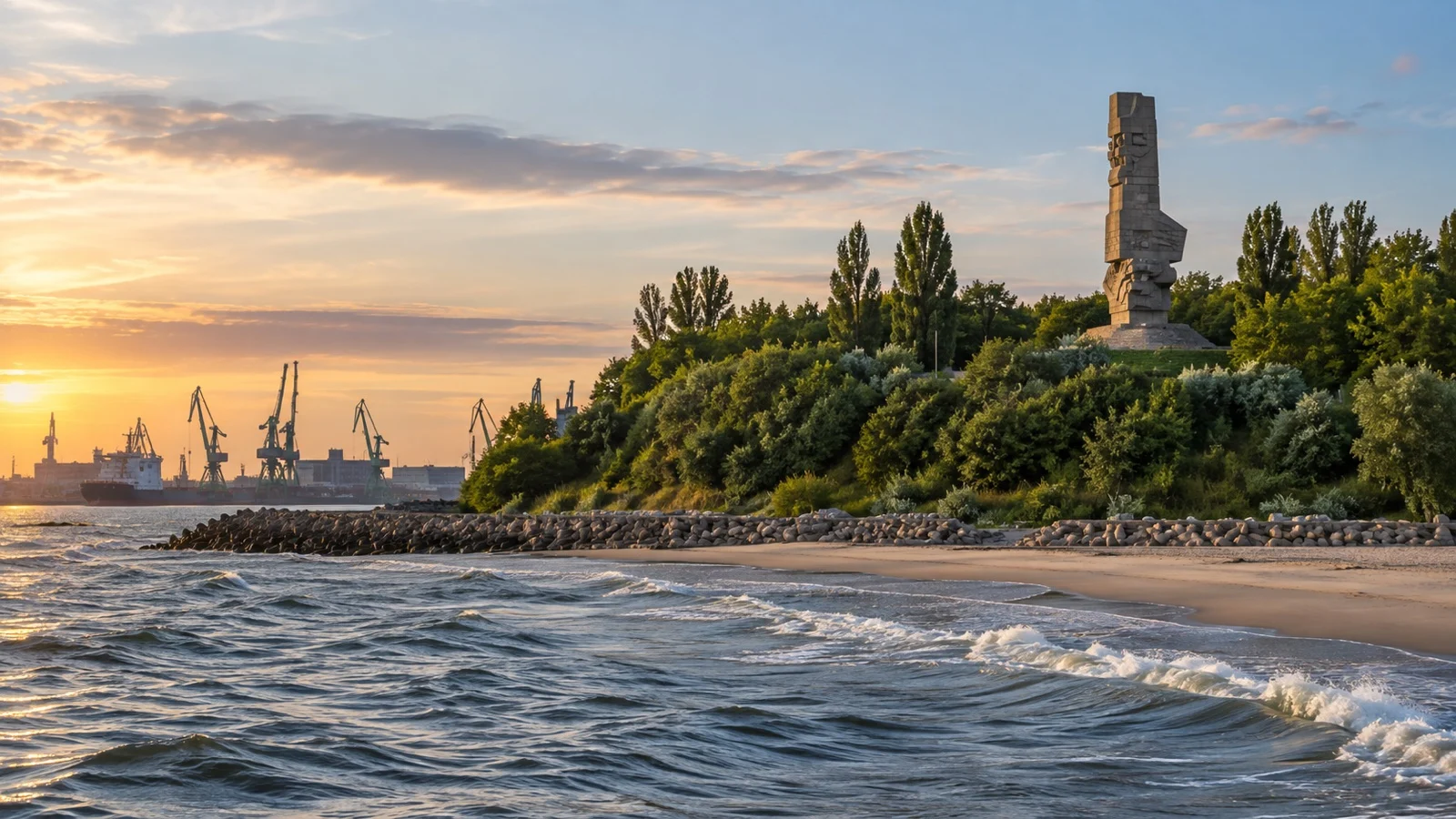
Westerplatte is where the war in Europe began on September 1, 1939, and it sits out at the mouth of the harbor rather than in the old town. Reaching it takes a bus or a harbor boat from central Gdansk, so it adds real time on top of the train.
The Museum of the Second World War is a large, serious institution in central Gdansk, and it runs the Westerplatte site as a branch. You are choosing between them on a port day, and I would take Westerplatte in decent weather and the museum if it is not.
St. Peter Port and the occupation the rest of Britain did not have
The Channel Islands were the only British territory occupied by German forces, from 1940 until the war ended, and the concrete is still all over the Guernsey coastline. That alone makes the stop worth taking seriously.
This is a tender port, with boats running to the pontoon at the end of Albert Pier, and a swell can cancel the call outright. The St. Peter Port guide is realistic about how much of your morning the tender line can absorb.
Two occupation museums do most of the work. One sits close to town and one is out on the island and needs a taxi or a bus, so pick one, check the seasonal hours before you go, and give it proper time.
Valletta puts the siege under your feet
Ships berth at Pinto Wharf on the Valletta Waterfront in Floriana, and the old city sits on the bluff above you. The Barrakka Lift climbs about 190 feet (58 m) from Lascaris Wharf for a small return fare, and it is around a third of a mile from the terminal.
Malta was among the most heavily bombed places of the war, and the island’s tunnels and shelters are the physical record of that. Fort St. Elmo at the tip of the peninsula houses the national war museum, and the Siege Bell memorial stands above the harbor at the Lower Barrakka Gardens.
The underground war rooms cut into the rock below the Upper Barrakka are the other obvious stop, and hours there are worth confirming for your date. Everything in the Valletta port guide is within walking distance once you are up the hill, which makes this one of the easier days on the list.
Dover, Southampton and whether Bletchley fits
Dover is the strongest UK option and most people miss it. The castle’s wartime tunnels were the command center for Operation Dynamo, the 1940 evacuation from Dunkirk, and a round trip by taxi from the cruise terminals runs to about three hours.
The Battle of Britain memorial sits along the cliffs between Dover and Folkestone if you have longer, and the Dover port guide covers how the terminals connect to town. If you are calling here rather than turning around, this is the one I would build the day on.
Bletchley Park is a different proposition. It is up near Milton Keynes, tickets are booked online in advance, and from Southampton that is a stay-over day with an extra hotel night, not something you slot in before boarding.
The war museum in Lambeth is the realistic London option, since entry is free and needs no booking and the train from Southampton Central to Waterloo runs around 80 minutes. Even that only works on a spare day, not on embarkation morning with luggage in tow.
Which of these I would actually build a day around
I am ranking these by whether you can do them justice in the time a ship gives you, not by which makes the better outing. That distinction matters here more than anywhere else on this site.
Nagasaki, Darwin and Valletta are the three where a normal port call is genuinely enough, because the significant ground is close and the transportation is simple. Hiroshima joins them if your call runs six hours or longer.
Cherbourg and Honolulu are worth spending money on, because a guide or a booked reservation is the difference between seeing the place and standing near it. Gdynia, Canakkale and Guam all work but demand that you pick one thing and leave the rest.
If I had to name one, it would be Cherbourg. The Cotentin sites are close enough that you walk the ground rather than watch it go past a window.
The practical layer nobody puts in the brochure
Several of these sites are cemeteries or burial grounds, and a few are places where people are still where they fell. Local expectations vary, but quiet clothing, no eating and drinking in the plots, and asking before photographing other visitors will keep you on the right side of everyone.
Timed and advance tickets apply in more places than you expect. Pearl Harbor’s memorial program, Bletchley Park and the larger Polish and Japanese museums all reward booking ahead, and some of them are effectively closed to you if you turn up cold on a busy day.
Money splits by region, with Japan and western Europe card friendly and the Solomon Islands and parts of Papua New Guinea firmly not. A prepaid transit card is the single most useful thing you can buy in a Japanese port.
Check opening days, not just hours. More than one of these sites closes on a set weekday, and a Sunday or Monday call is the version that quietly falls apart at the gate.
Quick answers
Can you visit Pearl Harbor on a cruise stop in Honolulu?
Yes, and it is about 10 miles (16 km) from the pier, so budget half your day. Reserve the free timed ticket for the USS Arizona Memorial program online as soon as your window opens.
Can you see the D-Day beaches from Le Havre?
You can, but the drive is long enough that most of the day goes to the road. Cherbourg is the far better port for the landing beaches if your itinerary offers both.
Is Hiroshima or Nagasaki easier on a cruise day?
Nagasaki, because the terminal is close to town and the tram runs straight to the Peace Park area. Hiroshima needs about half an hour on the streetcar from Ujina before you start.
Do you need a tour to visit Gallipoli from Canakkale?
For a cruise call, effectively yes, because you have to cross the strait by ferry and then cover miles of hill roads. A small guided tour focused on one sector is the version that works.
Which cruise port has wartime history you can walk to?
Darwin, where the oil storage tunnels are a short walk from Fort Hill Wharf. Nagasaki and Valletta are close behind once you allow for a tram ride or an elevator.
Final word
The best version of any of these days is narrow. One site, enough time to stand still in it, and a guide or a marker board that tells you what happened on the ground you are standing on.
The worst version is four stops and a photograph at each. If your call is short, cut the itinerary rather than the time you spend, because these places give you almost nothing when you are hurrying.
How this guide was researched: Berth locations, transfer distances, park and museum access rules and ticketing requirements for each port were checked in November 2026. Opening days, seasonal hours, tender arrangements and reservation windows change regularly, so confirm the details for your own sailing date before you commit to a plan. See our Editorial Policy.
More on this topic: browse every guide on shore excursions and DIY port days.