Darwin Cruise Port: Walkable Top End Port Guide
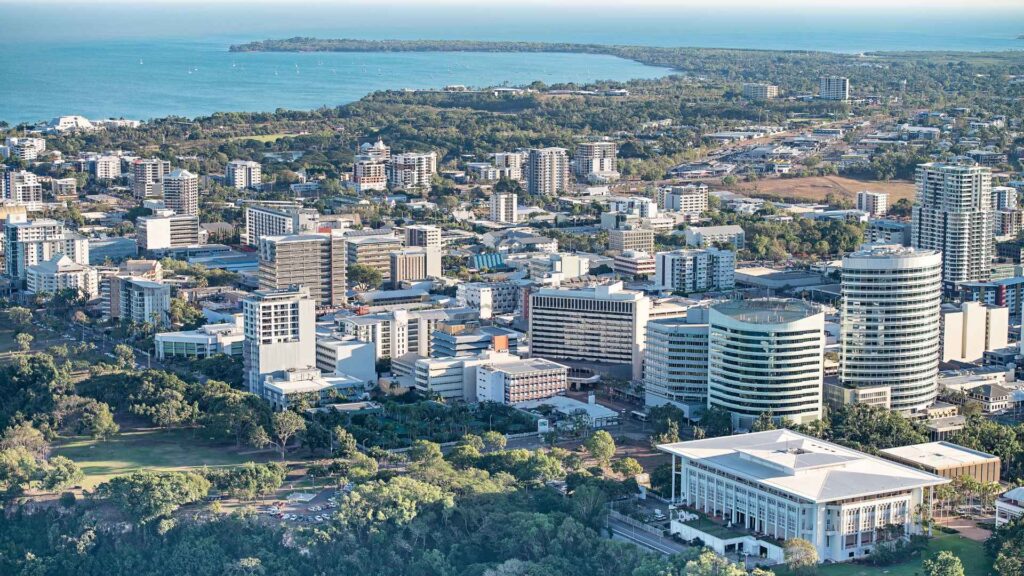
Darwin is the tropical capital of Australia‘s Northern Territory, and it is one of the easiest ports in the country to walk straight off the ship. Here is exactly how I would spend a day.
My quick take: this is a warm, unhurried “Top End” city where crocodiles, wartime history and Litchfield’s waterfalls are the real draw.
Because you land beside the Waterfront Precinct, a couple of hours on foot already fills a good port day. For more Aussie stops, see my Cairns and Brisbane guides.
The quick facts
- Where you land: Fort Hill Wharf, right beside the Darwin Waterfront Precinct and about 0.6 mile from the CBD. See the official Darwin Port cruise information.
- Dock or tender: Fort Hill Wharf is a proper alongside berth, so you walk off.
- Into town: Roughly a 5 to 15 minute walk.
- Currency and language: The Australian dollar (AUD), and English.
- Time zone: Australian Central Standard Time (ACST, UTC+9:30).
- How often the call is missed: Low (under 1%): the sheltered berth is rarely limited by local weather.
One honest safety note before you swim
Do not swim in the sea around Darwin. Top End waters carry saltwater crocodiles year round, and box jellyfish (marine stingers) in the wet season.
The managed alternative is right at the port: the Wave Lagoon is a filtered, chlorinated attraction separated from the harbor and supervised during operating hours. Admission and hours can change, so check the official page before promising children a swim.
Getting around
For the central sights you genuinely do not need a car. The Waterfront, Crocosaurus Cove and the CBD mall are all an easy walk from the wharf.
Taxis and rideshare cover anything further out, like the museum or military sites. For the national parks, a guided tour or rental car is the practical choice.
Walking from the ship and getting farther out
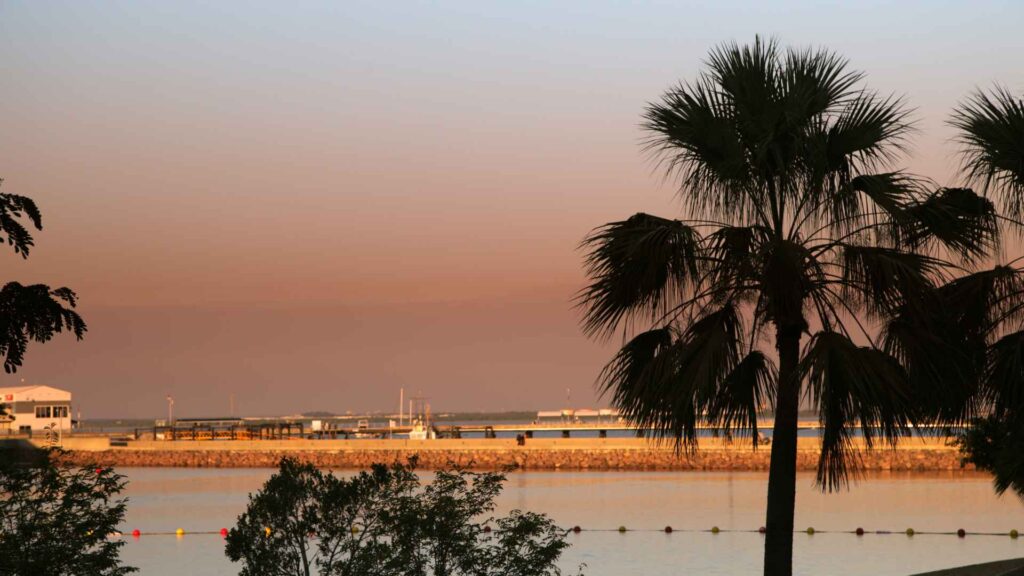
Fort Hill Wharf opens beside the Waterfront, then elevators and the elevated pedestrian link help with the climb toward the CBD. Heat and humidity make the short distance feel longer, so carry water and use a taxi for the museum, Mindil Beach, or the military precinct if anyone in your group tires easily.
For a central day, pair the Waterfront with Crocosaurus Cove or the museum rather than zigzagging between both sides of town. For wildlife outside Darwin, a booked Adelaide River cruise is easier than Kakadu and leaves much more room for a late vehicle or road closure.
A rental car makes sense only for confident drivers who understand remote-road conditions, fuel distances, and seasonal closures. A guided Litchfield tour costs more but removes navigation, monitors swim-site status, and gives the driver responsibility for the return timetable.
Most visitors who do not live in the Northern Territory need an NT Parks pass for Litchfield and other covered parks. Ask whether a tour includes it; independent drivers should buy the correct pass before leaving Darwin.
The stops I’d actually spend time on
These are the named, verifiable places worth a cruiser’s limited hours, roughly in walking order from the ship.
- Darwin Waterfront Precinct: your first stop off the gangway, with cafes, the Wave Lagoon and the free Recreation Lagoon. Easy shade and wi-fi to plan the day.
- Stokes Hill Wharf: a historic finger wharf beside the precinct, good for a waterfront lunch and harbor views.
- Crocosaurus Cove: an in-town croc attraction on Mitchell Street. Fun fact: its “Cage of Death” lowers you into a clear enclosure with a giant saltwater croc.
- Museum and Art Gallery of the Northern Territory: superb Aboriginal art plus a moving Cyclone Tracy room. That cyclone flattened Darwin on Christmas 1974.
- WWII Oil Storage Tunnels: walk-through tunnels dug into the escarpment after Japanese air raids. Darwin was first bombed in February 1942.
- Darwin Military Museum: the Defense of Darwin Experience tells that wartime story with hardware and interactive displays.
- George Brown Darwin Botanic Gardens: shady tropical and monsoon-forest plantings, an easy green break near the city.
- Mindil Beach Sunset Market: only if your call runs late. It trades Thursday and Sunday, 4pm onward, in the dry season (roughly late April to late October).
- Deckchair Cinema: an open-air dry-season cinema by the harbor, a lovely option for an overnight port stay.
Day trips, and how far they really are
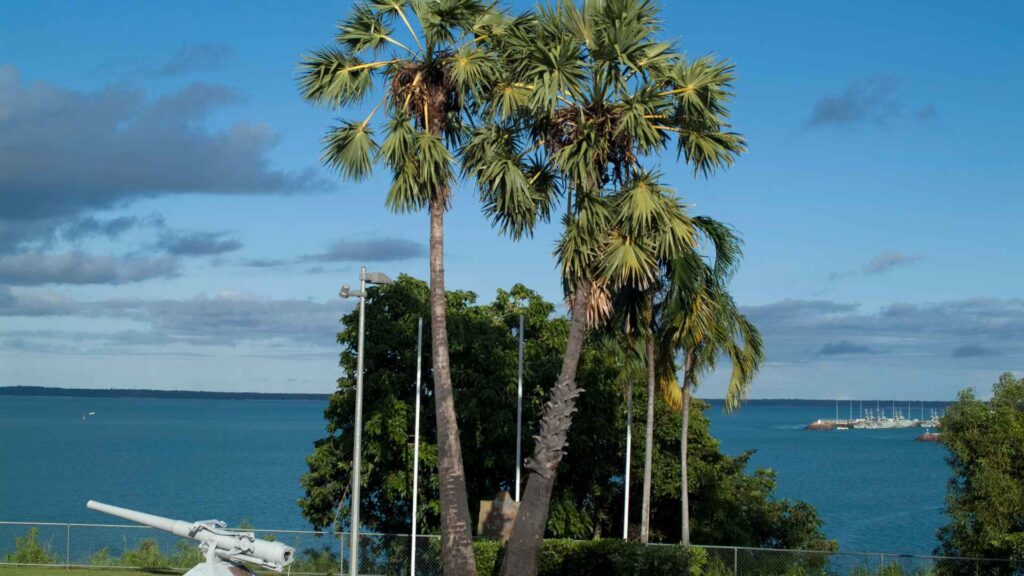
Litchfield National Park is the smart big day out, about a 1.5 hour drive south. It is the region’s waterfall country, with ranger-monitored swimming holes.
Highlights include Wangi Falls, Florence Falls, Buley Rockhole, and the magnetic termite mounds. Swimming areas can close for flooding, water quality, or crocodile management, so enter only where park signs say the site is open that day.
Kakadu National Park is the famous UNESCO wilderness, but be realistic: it is roughly 3 hours each way. It only works as a very long, tour-run day, and can be tight against sail-away.
If you would rather stay close, a jumping-crocodile cruise on the Adelaide River sits about an hour from the city and delivers the wildlife thrill without the distance.
Weather, wildlife, and booking checks
The dry season gives the most predictable roads and outdoor hours, but popular Litchfield parking areas and tours can fill. In the wet season, waterfalls are dramatic while flooding, lightning, and cyclone watches can force last-minute changes.
Never approach a crocodile, ignore a closure sign, or assume freshwater means crocodile-free. Follow Northern Territory Parks signs and ranger advice at every swimming area, and stay out of Darwin’s open beaches and harbor water.
Mindil Beach Sunset Market and the Deckchair Cinema are useful only on the right dry-season evenings and a late ship call. Check the specific date and last gangway time before treating either as part of a normal daytime itinerary.
How I’d plan the day
- 3 hours: walk the Waterfront, cool off in the Wave Lagoon, then Crocosaurus Cove and the CBD mall.
- 5 hours: add the Museum and Art Gallery for the Cyclone Tracy and Aboriginal art collections, plus a waterfront lunch.
- 8 hours: commit to a guided Litchfield day for the waterfalls and safe swimming holes, back with a comfortable buffer before all-aboard.
Whatever you choose, build in a return buffer. Traffic is light, but the parks are a long way out and you do not want to gamble with sail-away.
A return-buffer rule that fits the Top End
For a city-only day, start back 60 minutes before all-aboard because the route is short and taxis are available. For Litchfield or an Adelaide River cruise, leave a 90-minute to two-hour independent cushion, and use a ship excursion if the schedule cannot support it.
Kakadu deserves at least an overnight from Darwin rather than a rushed port-day drive. That is not underselling the park; it is giving its distances, heat, wildlife, and seasonal access the time they require.
A realistic word on accessibility
The Waterfront Precinct is modern, flat and step-free, with elevators on the skywalk link up to the CBD. That makes the core walk manageable for most.
Gangway steepness still varies with the tide and your ship, so confirm specifics with your cruise line. Darwin’s harbor has a large tidal range.
When to go, and the weather
Cruise season lines up with the dry (May to October): warm, sunny days and lower humidity. It is the best time for markets, walking and waterfalls.
The wet season (November to April) is hot and humid with heavy storms, and adds marine stingers to the sea. Either way, sunscreen, a hat and water are essential.
Quick answers
Can I walk into Darwin from the ship? Yes, Fort Hill Wharf sits beside the Waterfront Precinct, and it is a 5 to 15 minute walk up to the CBD.
Is it safe to swim at the beaches? No. Crocodiles are present year round and stingers in the wet, so use the netted Wave Lagoon at the Waterfront instead.
Can I do Kakadu on a port day? Choose Litchfield or a closer wildlife excursion because Kakadu’s main visitor areas require a very long road day unless the ship offers a protected tour on an unusually long call.
For more planning, browse my walkable cruise ports roundup and the wider South Pacific guide.
How this guide was researched: Unless a first-hand visit is explicitly identified above, this guide is based on independent research using official port, tourism, transit, government, and attraction sources where available. Logistics and time-sensitive details were reviewed in September 2026. See our Editorial Policy.