Skip to Content

The Most Walkable Cruise Ports in 2025

Love stepping off the ship and wandering straight into the heart of a city?

This data backed guide ranks 2025’s most walkable cruise ports by region, with realistic walking times, easy routes, and insider tips.

Plan DIY port days that feel simple, safe, and unforgettable without taxis, shuttles, or stress.


Table of Contents

How we ranked walkability

To build these rankings, I scored ports on factors that matter for real travelers who want to explore on foot.

  • Distance from pier to the action: how quickly you reach the historic center, beach, or main attractions.
  • Sidewalks and paths: continuous sidewalks, waterfront promenades, and pedestrian zones.
  • Crossings and traffic: signalized crosswalks, low traffic stress, and protected areas.
  • Terrain: hills, stairs, steep streets, or flat routes.
  • Shade and comfort: trees, arcades, sea breezes, and places to sit.
  • Wayfinding and amenities: signs, public restrooms, water, and quick food stops.

I translate this into practical guidance with typical walk times based on an average pace of 4.5 kilometers per hour and distance estimates rounded for clarity.

Times vary by exact berth, weather, and mobility needs, so use these as friendly, realistic benchmarks rather than stopwatches.

Morning arrivals usually mean cooler temperatures and lighter crowds! If the route climbs, consider walking out early and rolling back downhill later.

walkable cruise ports

Caribbean and Atlantic

The Caribbean shines for easy port days where the city or beach begins right at the gangway. Here are our most walkable picks:

1) San Juan, Puerto Rico

Why it is super walkable: Old San Juan is one of the best cruise-adjacent old towns on earth. Cobblestones, pastel balconies, plazas, and two forts form a compact loop.
Typical walk time and distance: 15 to 30 minutes to reach San Cristóbal or El Morro from most piers. Distances 1.2 to 2 kilometers depending on your fort of choice.
Easy first hour route: Pier to Paseo de la Princesa, through the city gate to waterfront views, then up to Plaza de Armas and Calle Fortaleza.
Terrain and tips: Gentle hills and short climbs. Shade increases in side streets. Wear grippy soles if streets are damp.

2) Willemstad, Curaçao

Why it is super walkable: The Queen Emma pontoon bridge links the lively districts of Otrobanda and Punda. You stroll through a fort, across the harbor, and straight into colorful shopfronts.
Typical walk time and distance: 10 to 15 minutes from cruise berths by the Mega Pier to the bridge.
Easy first hour route: Pier to Rif Fort, cross the bridge for Handelskade photos, then meander Punda’s lanes.
Terrain and tips: Flat waterfront paths make this ideal in warm weather.

3) Oranjestad, Aruba

Why it is super walkable: Arcaded streets, a breezy waterfront, and a compact shopping core begin steps from the terminal.
Typical walk time and distance: 5 to 10 minutes to the center along Lloyd G. Smith Boulevard and Main Street.
Easy first hour route: Welcome Plaza to Main Street, pause in Wilhelmina Park, loop back by the marina.
Terrain and tips: Flat, with good curb cuts. Shade varies by block.

4) Philipsburg, St. Maarten

Why it is super walkable: A seaside boardwalk parallels Front Street, so you can bounce between sand and shops.
Typical walk time and distance: About 15 minutes and 1 to 1.2 kilometers from the cruise terminal to the Courthouse on Front Street.
Easy first hour route: Terminal to the Boardwalk, dip your toes, then cut inland for Front Street cafés.
Terrain and tips: Flat. Bring a hat and water at midday.

5) Charlotte Amalie, St. Thomas

Why it is super walkable: From the Havensight area, a harborfront sidewalk leads to the historic core with arcades and hillside viewpoints.
Typical walk time and distance: 20 to 30 minutes and 1.5 to 2 kilometers from Havensight to Main Street depending on your berth gate.
Easy first hour route: Havensight to Yacht Haven Grande, then along the waterfront into town.
Terrain and tips: Flat to gentle. Traffic increases in the city center, so use marked crossings.

6) Nassau, Bahamas

Why it is super walkable: The redesigned terminal opens on Bay Street, with a plaza, murals, and quick access to landmarks and the Straw Market.
Typical walk time and distance: Steps to Bay Street. 15 to 20 minutes up to the Queen’s Staircase if you want a short climb.
Easy first hour route: Port plaza art walk, Pompey Square, optional climb to the Water Tower, return via side streets.
Terrain and tips: Mostly flat in the core with one optional stair climb.

7) St. George’s, Grenada

Why it is super walkable: The Carenage curves around a perfect harbor, and the market is an easy stroll.
Typical walk time and distance: 10 to 15 minutes to the market and lagoon area.
Easy first hour route: Esplanade Mall to the Carenage, pause for nutmeg souvenirs, continue to the Sendall Tunnel and back.
Terrain and tips: A few short hills and one tunnel with sidewalks.

Many berths open directly onto waterfront promenades or historic cores. Even when beaches are your goal, lively streets make the walk part of the fun.

walkable cruise ports

North America - West Coast

These ports deliver waterfront paths and downtowns that start right at the pier.

1) Vancouver, Canada Place

Why it is super walkable: The terminal sits on the Coal Harbour seawall. Gastown, the business district, and Stanley Park views are all accessible on foot.
Typical walk time and distance: 5 to 15 minutes to Gastown and Waterfront Station. 30 to 40 minutes along the seawall for big harbor views.
Easy first hour route: Canada Place sails to the seawall, coffee at the marina, loop past the Steam Clock.
Terrain and tips: Flat multiuse path. Good wayfinding.

2) San Diego, B Street Pier

Why it is super walkable: The Embarcadero is a purpose built promenade with museums, parks, and seafood spots.
Typical walk time and distance: 5 to 10 minutes to the USS Midway area and nearby green spaces.
Easy first hour route: Harborfront stroll to the museum ships, pause at Waterfront Park, return through Little Italy.
Terrain and tips: Flat. Plenty of benches and shade sails.

3) Victoria, Ogden Point

Why it is super walkable: A scenic path from the breakwater leads to the Inner Harbour and Parliament buildings.
Typical walk time and distance: 25 to 35 minutes and about 2.5 kilometers to the Inner Harbour.
Easy first hour route: Breakwater views, Dallas Road waterfront, Fisherman’s Wharf, then the Empress lawn.
Terrain and tips: Mostly flat with ocean breezes. Wear layers.

4) San Francisco, Pier 27

Why it is super walkable: The Embarcadero links the cruise terminal to Ferry Building food stalls and Fisherman’s Wharf.
Typical walk time and distance: 15 to 20 minutes to the Ferry Building. Another 20 to Fisherman’s Wharf.
Easy first hour route: South to the Ferry Building, then back north for Ghirardelli Square if you want extra steps.
Terrain and tips: Flat waterfront. Weekend mornings are quiet.

5) Seattle, Pier 66

Why it is super walkable: Downtown, Pike Place Market, and the waterfront parklands sit nearby.
Typical walk time and distance: 15 to 20 minutes up to Pike Place Market.
Easy first hour route: Aquarium boardwalk, Market produce stalls, return via the new waterfront park.
Terrain and tips: Short uphill sections toward the market.


North America - East and Gulf

Historic harbors, riverfront walks, and iconic city cores make these stops ideal for walkers.

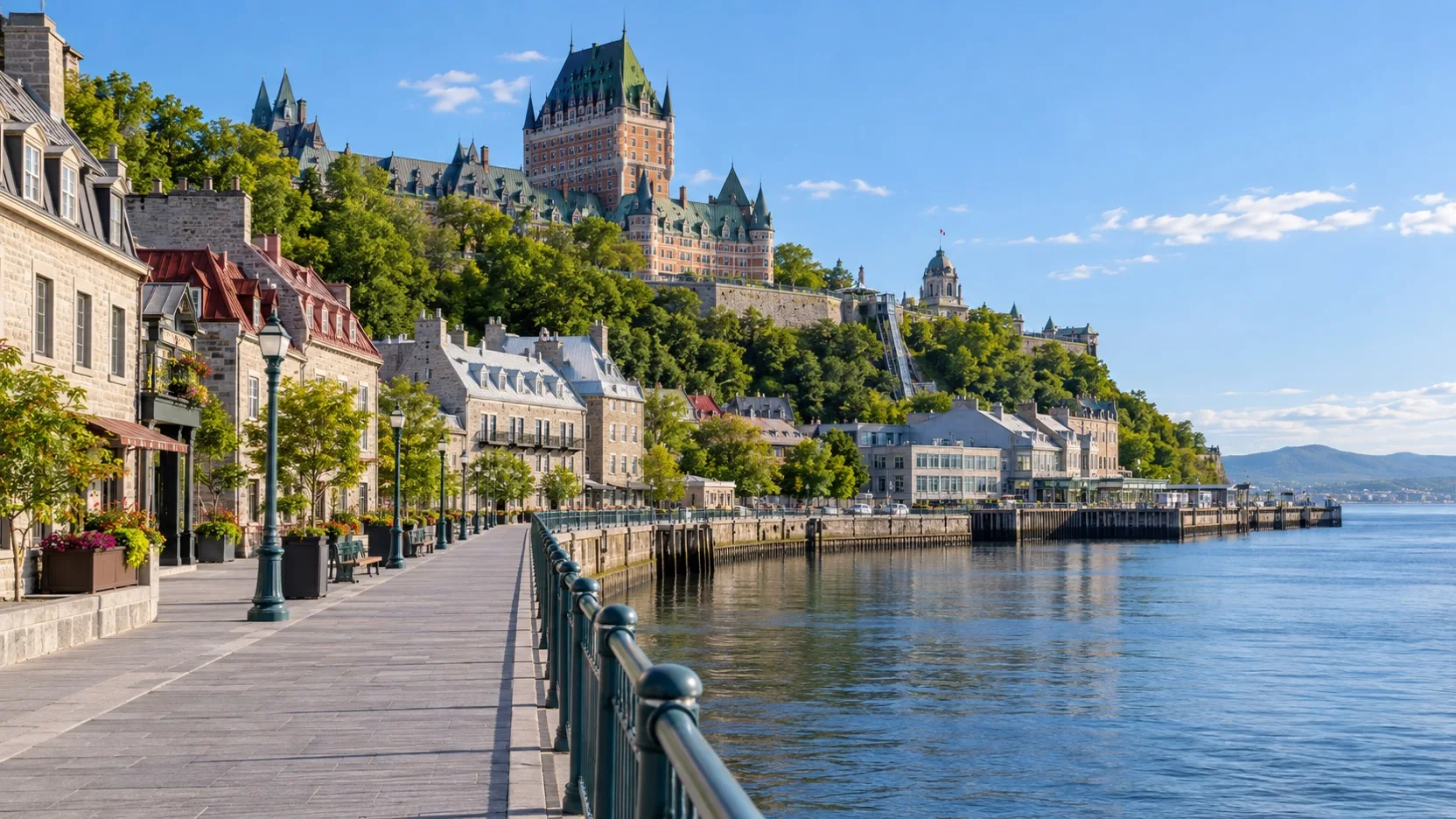
1) Quebec City, Old Port

Why it is super walkable: The cruise quays sit below UNESCO listed Old Quebec with promenades and plazas.
Typical walk time and distance: 10 to 20 minutes into the lower town and market. 25 to 35 minutes up to the Chateau Frontenac via gentle slopes or a funicular alternative.
Easy first hour route: Old Port market to Place Royale, then climb to Dufferin Terrace for the view.
Terrain and tips: Some hills in the upper town. Cobblestones in places.

2) Halifax, Seaport

Why it is super walkable: A continuous boardwalk ties together museums, breweries, and the Historic Properties district.
Typical walk time and distance: 15 to 30 minutes and 1 to 2 kilometers along the waterfront depending on your turning point.
Easy first hour route: Farmer’s market, Maritime Museum, Historic Properties, and back.
Terrain and tips: Flat wooden boardwalk with ramps and railings.

3) New Orleans, Julia Street

Why it is super walkable: The riverfront meets the Warehouse District with the French Quarter close by.
Typical walk time and distance: 20 to 25 minutes and about 1.8 kilometers to Jackson Square.
Easy first hour route: Convention Center Art Walk, cross to the Quarter for beignets, loop back by the river.
Terrain and tips: Flat. Watch tram tracks when crossing.

4) Boston, Flynn Cruiseport

Why it is super walkable: The Harborwalk connects the Seaport to green spaces, food halls, and skyline views.
Typical walk time and distance: 25 to 35 minutes to Seaport Commons and Fan Pier.
Easy first hour route: Harborwalk to Fan Pier Park, snack stop, return via Fort Point channel bridges.
Terrain and tips: Flat. Windy in shoulder seasons.

5) Key West

Why it is super walkable: Old Town radiates from Mallory Square with pastel homes, shady porches, and quirky museums.
Typical walk time and distance: 10 to 20 minutes to Duval Street or the waterfront squares.
Easy first hour route: Mallory Square, Duval Street window shopping, back via Whitehead Street for the lighthouse.
Terrain and tips: Flat and shaded in many blocks.


Alaska cruise ports

Alaska

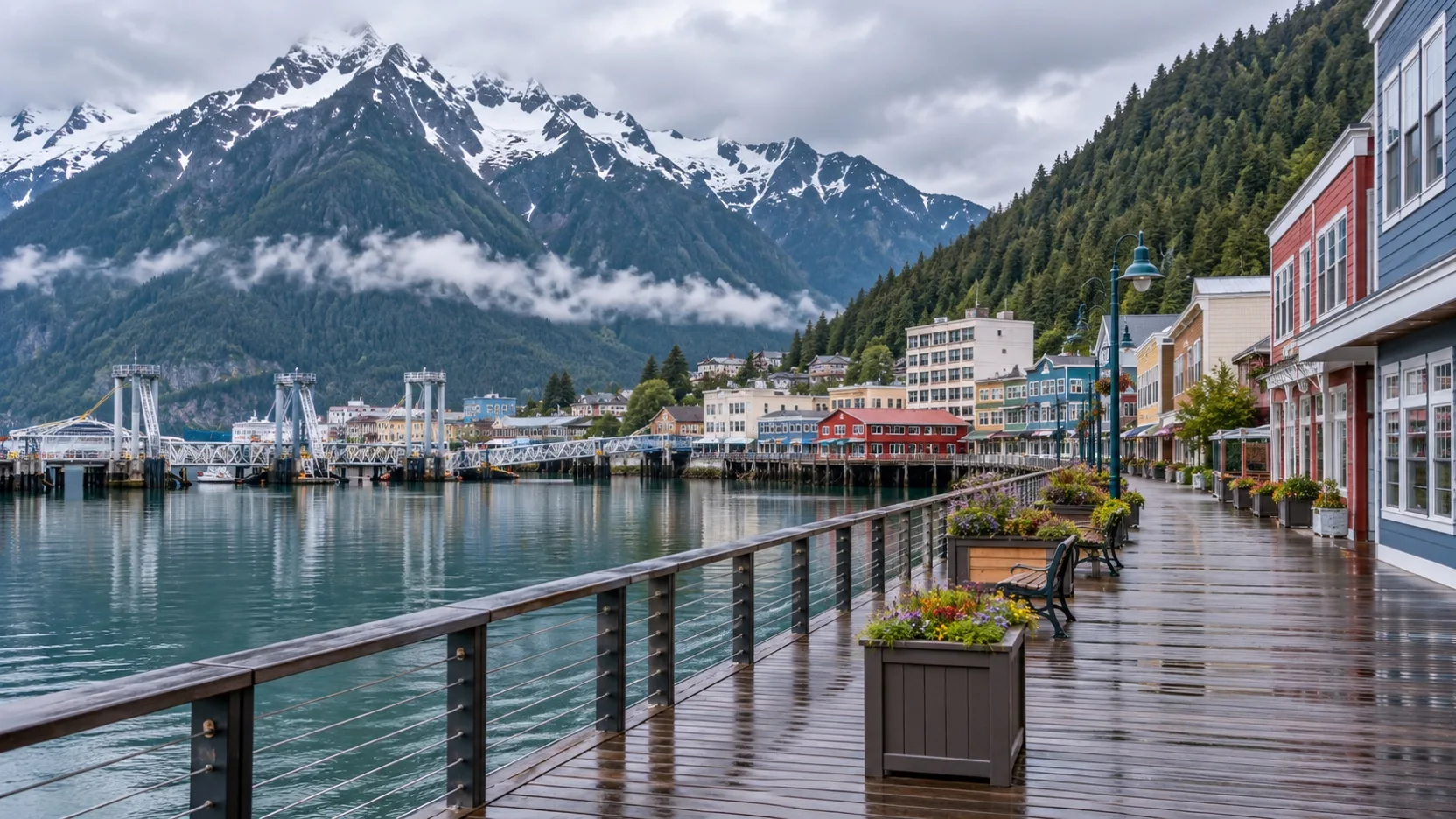
Front street boardwalks and compact frontier towns make Alaska a pedestrian favorite when the weather cooperates.

1) Ketchikan

Why it is super walkable: Piers open into shops and the famous Creek Street boardwalk.
Typical walk time and distance: 5 to 15 minutes to Creek Street and the salmon ladder.
Easy first hour route: Totem poles by the tunnel, up to Married Man’s Trail overlook, loop back through Creek Street.
Terrain and tips: Short wooden staircases. Watch for damp boards.

2) Juneau

Why it is super walkable: South Franklin Street sits by the docks with the Mount Roberts Tram steps away.
Typical walk time and distance: 5 to 10 minutes to the tram station, 15 to 20 to the state capitol and museum area.
Easy first hour route: Tram plaza, to the Governor’s Mansion lookout, back through boutique streets.
Terrain and tips: Gentle uphills. Bring a light rain jacket.

3) Skagway

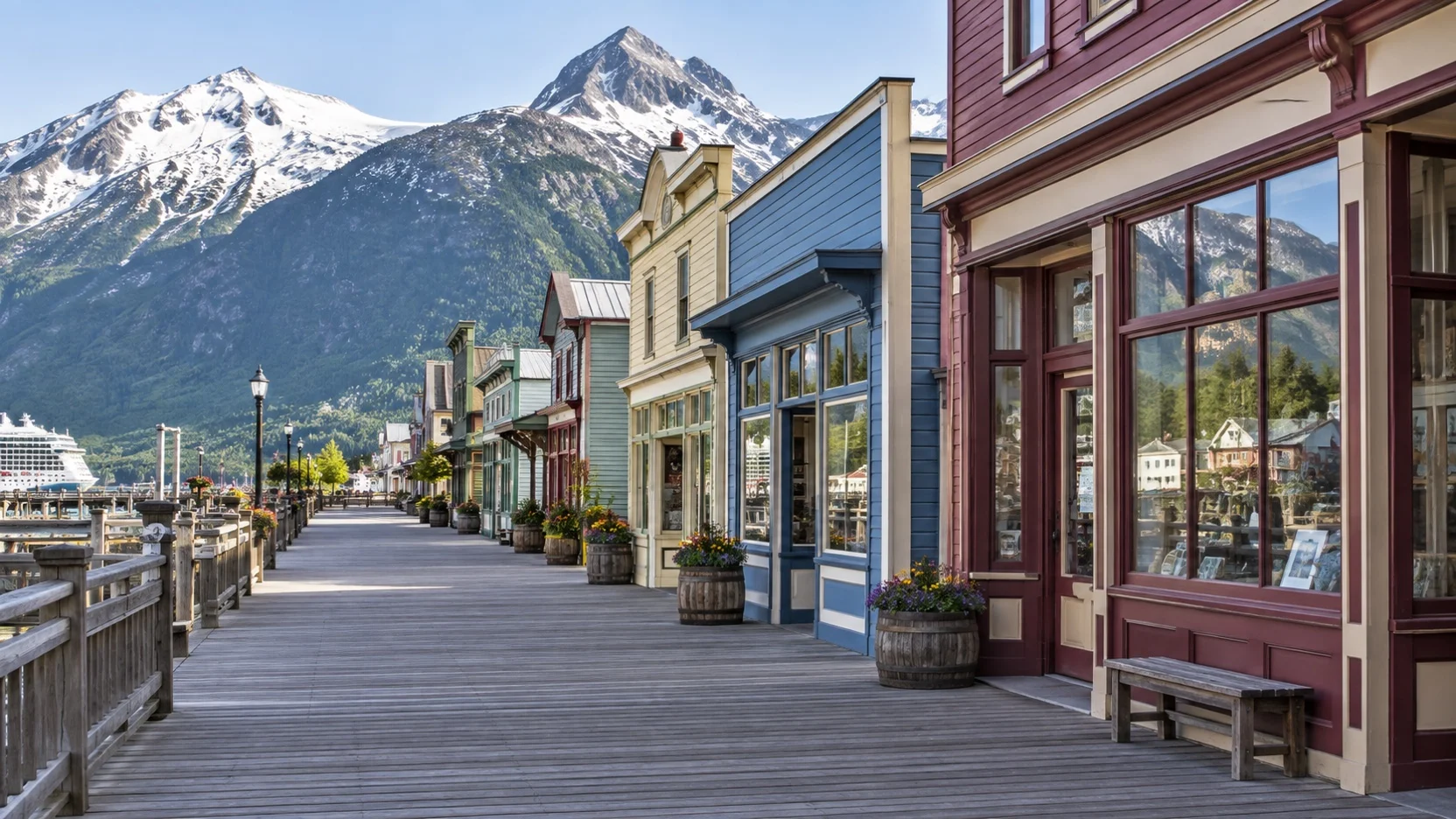
Why it is super walkable: Broadway Street feels like a movie set with colorful wooden facades.
Typical walk time and distance: 10 to 20 minutes from most berths to the center of town.
Easy first hour route: Broadway stroll to the historic depot, optional side streets for gold rush history.
Terrain and tips: Flat grid with wooden boardwalks.

4) Sitka

Why it is super walkable: Tender boats land minutes from St. Michael’s Cathedral and Crescent Harbor.
Typical walk time and distance: 5 to 15 minutes to key downtown sites.
Easy first hour route: Cathedral, Totem Square, harbor views, and back.
Terrain and tips: Compact, mostly flat. Layers recommended.

5) Icy Strait Point and Hoonah

Why it is super walkable: A scenic coastal path links the cruise complex to the town.
Typical walk time and distance: 30 to 40 minutes each way if you walk the shoreline to Hoonah.
Easy first hour route: Walk toward town for views, pause at the cannery exhibits, return as needed.
Terrain and tips: Flat path. Keep an eye out for wildlife near the tree line.


Mediterranean cruise port

Mediterranean

Distances can vary by berth, but several standout ports put you right where you want to be.

1) Valletta, Malta

Why it is super walkable: The Grand Harbour terraces rise from the pier to a fortified city with golden streets and balconies.
Typical walk time and distance: 15 to 25 minutes to the Upper Barrakka Gardens and St. John’s Co-Cathedral.
Easy first hour route: Elevator up to the gardens, Republic Street window shopping, back via side lanes.
Terrain and tips: A steep initial rise if you choose to walk instead of taking the lift.

2) Split, Croatia

Why it is super walkable: Ferries and cruise ships dock next to Diocletian’s Palace. You step into living Roman architecture.
Typical walk time and distance: 5 to 10 minutes to the palace gates and Riva promenade.
Easy first hour route: Riva to Peristyle, cathedral courtyard, then the market.
Terrain and tips: Smooth stone underfoot. Can be slick if wet.

3) Cádiz, Spain

Why it is super walkable: The pier faces the old city walls. Beaches, plazas, and tapas are all within reach.
Typical walk time and distance: 5 to 15 minutes to the cathedral and market.
Easy first hour route: Cathedral square, covered market, Caleta Beach overlook if you want extra steps.
Terrain and tips: Flat with sea breezes. Excellent signage.

4) Barcelona, Spain

Why it is super walkable: From the cruise area you reach the Columbus Monument and the lower end of La Rambla on foot, plus the harborfront Moll de la Fusta.
Typical walk time and distance: 15 to 30 minutes depending on berth.
Easy first hour route: Waterfront to La Rambla and the Gothic Quarter.
Terrain and tips: Flat. Expect crowds by midday.

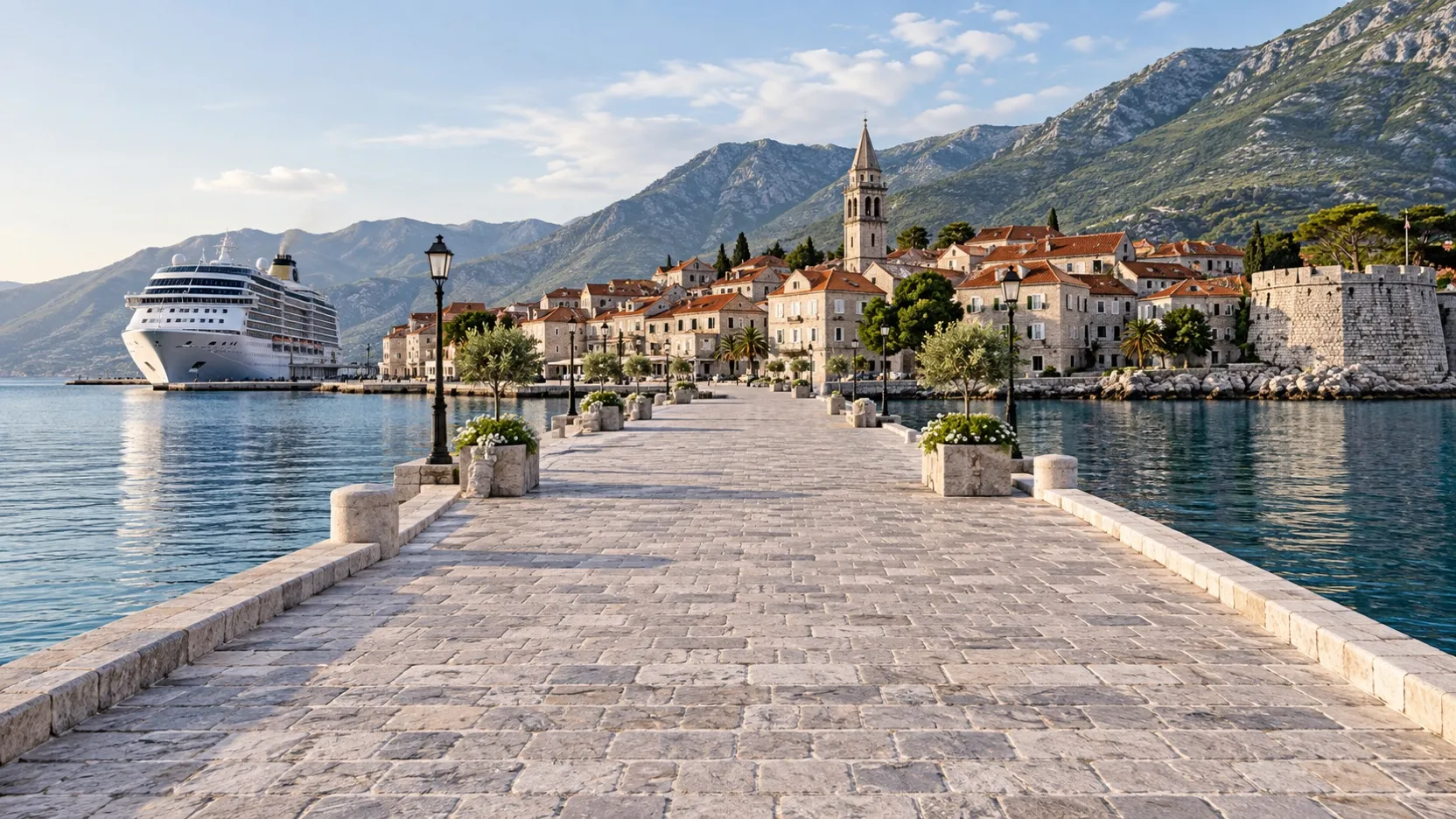
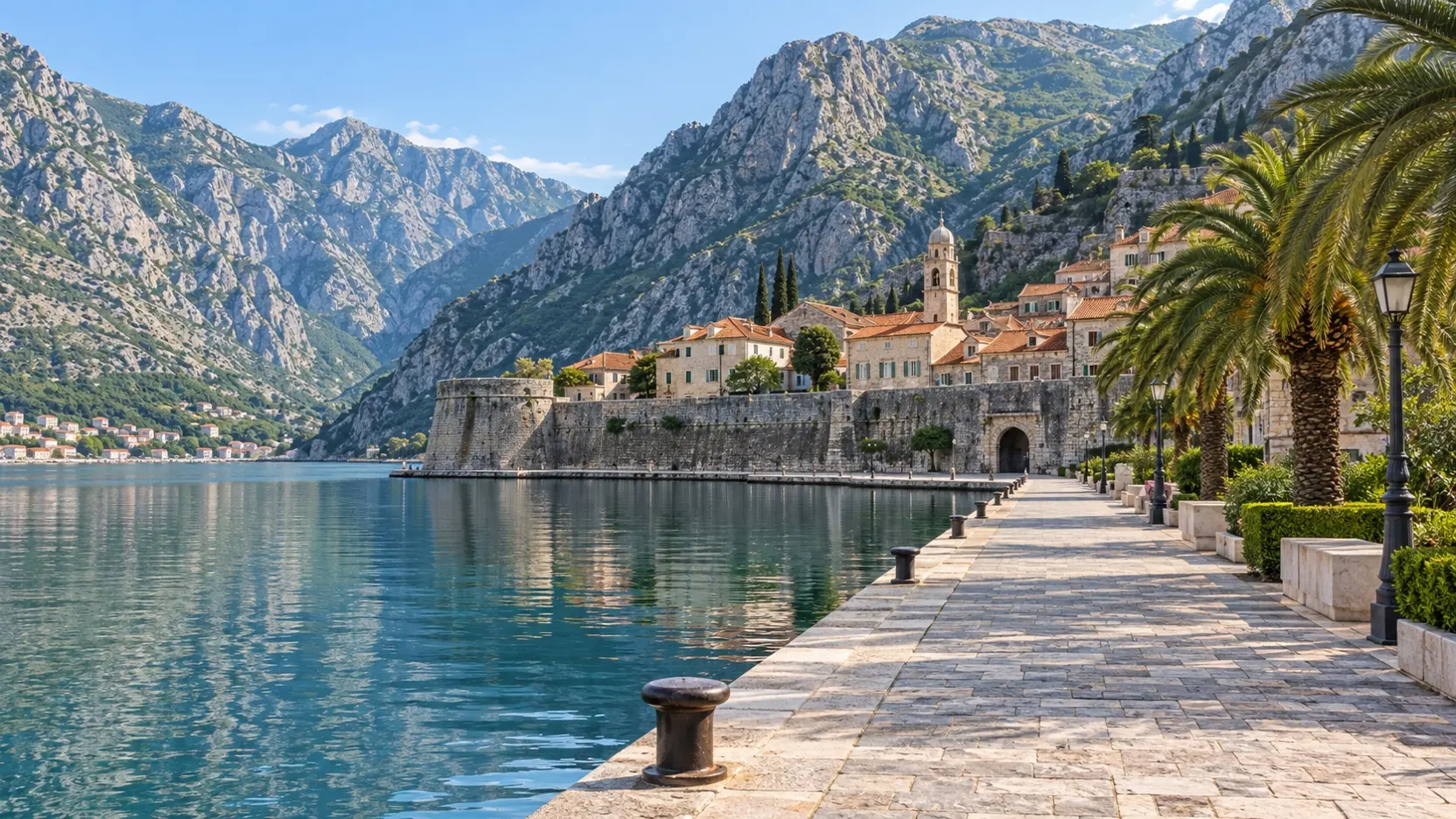
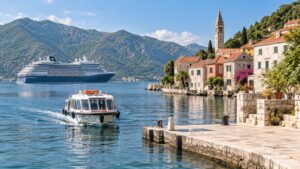
5) Kotor, Montenegro

Why it is super walkable: Ships anchor or dock near the medieval gate. The old town is a stone maze of squares and cafes.
Typical walk time and distance: 5 to 10 minutes to the main gate.
Easy first hour route: Gate to clock tower, cathedral, and back through shaded lanes.
Terrain and tips: Cobblestones. Mountain trail above town is optional and steep.

6) Rhodes, Greece

Why it is super walkable: The walled Old Town and Mandraki Harbor sit by the cruise pier.
Typical walk time and distance: 10 to 15 minutes to the main gates.
Easy first hour route: Windmills and harbor deer statues, then the Knights’ Street.
Terrain and tips: Flat in the core with a few short slopes.

7) Málaga, Spain

Why it is super walkable: A waterfront park and pedestrian streets connect the port to the Alcazaba and Picasso landmarks.
Typical walk time and distance: 15 to 25 minutes to the cathedral and old town.
Easy first hour route: Palmeral de las Sorpresas promenade, cathedral square, optional Alcazaba climb.
Terrain and tips: Mostly flat. Alcazaba route is a steady uphill.


Norway cruise ports

Northern Europe and the Baltic

Expect immaculate sidewalks, smart signage, and long summer daylight.

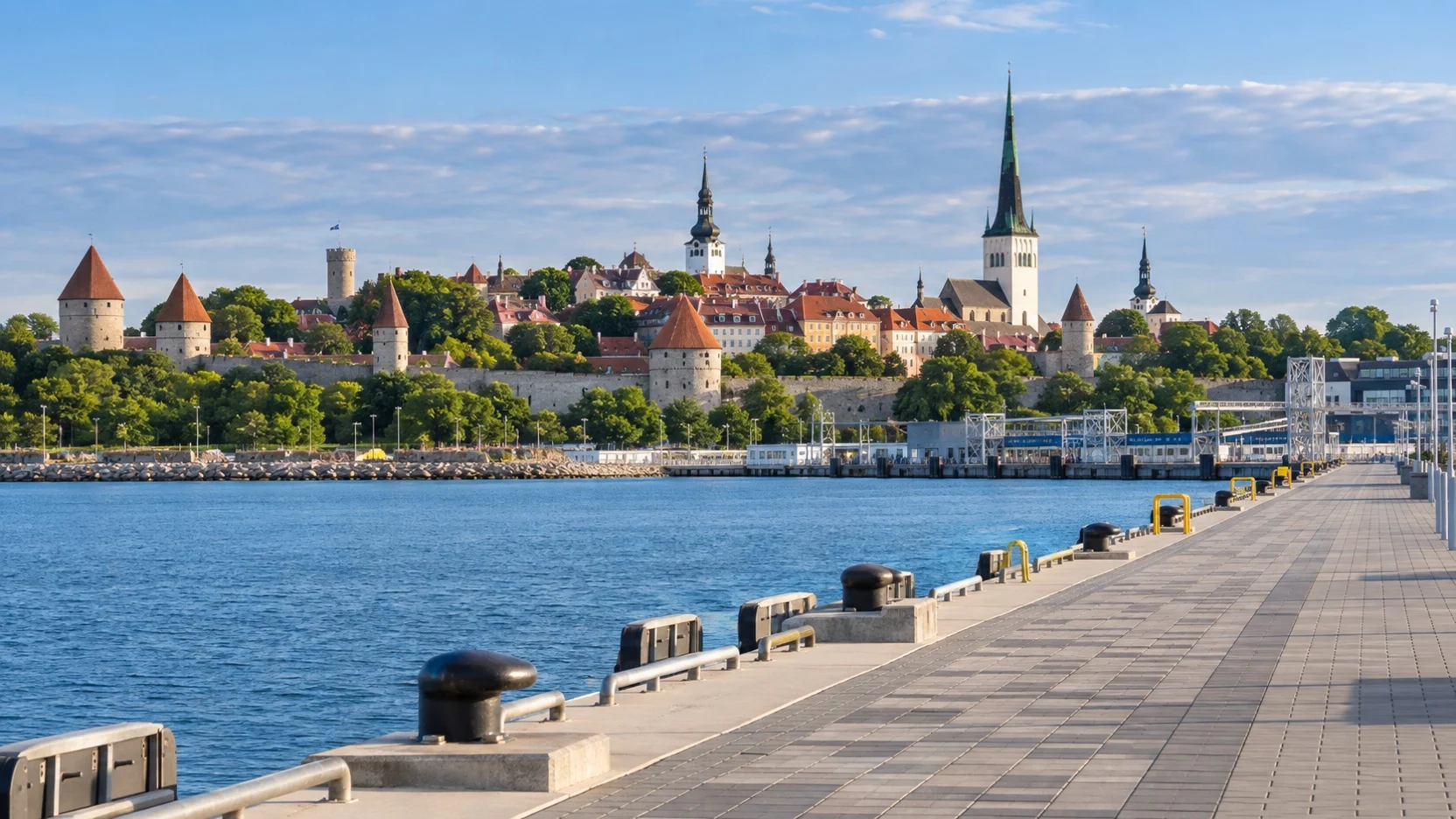
1) Tallinn, Estonia

Why it is super walkable: The medieval old town sits just inland from the cruise quays.
Typical walk time and distance: 15 to 20 minutes and about 1.5 kilometers to the town walls.
Easy first hour route: Fat Margaret tower, Town Hall Square, back by St. Catherine’s Passage.
Terrain and tips: Cobblestones with gentle slopes.

2) Bergen, Norway

Why it is super walkable: The historic Bryggen wharf area is a short harbor stroll from common berths.
Typical walk time and distance: 10 to 20 minutes to Bryggen.
Easy first hour route: Fish market, Bryggen lanes, optional funicular for views.
Terrain and tips: Flat by the water. Light rain is common.

3) Copenhagen, Denmark

Why it is super walkable: Depending on berth, Langelinie and Nordhavn offer waterfront paths toward Kastellet and Nyhavn.
Typical walk time and distance: 25 to 40 minutes into Nyhavn from Langelinie.
Easy first hour route: The Little Mermaid, star shaped Kastellet, then canal views.
Terrain and tips: Flat, exposed to wind. Great signage.

4) Oslo, Norway

Why it is super walkable: The Aker Brygge promenade and Opera House roof walk create a dream loop.
Typical walk time and distance: 10 to 20 minutes to Aker Brygge from most city berths.
Easy first hour route: Fortress views, harborfront food stalls, return by the Opera House.
Terrain and tips: Flat with broad plazas.

5) Stavanger, Norway

Why it is super walkable: Ships dock near Old Stavanger’s white wooden houses.
Typical walk time and distance: 5 to 10 minutes to old town lanes and the harbor square.
Easy first hour route: Old town photos, cathedral park, waterfront promenade.
Terrain and tips: Short cobbled sections.

6) Helsinki, Finland

Why it is super walkable: Waterfront parks link West Harbor berths to the Market Square and neoclassical core.
Typical walk time and distance: 25 to 35 minutes into the market and Senate Square.
Easy first hour route: Harborfront to market stalls, cathedral steps, return by Esplanadi.
Terrain and tips: Flat and leafy. Bring a light layer.

7) Warnemünde, Germany

Why it is super walkable: While it serves Berlin excursions, the seaside resort town at the pier is perfect for walkers.
Typical walk time and distance: 5 to 15 minutes to the lighthouse and broad beach.
Easy first hour route: Alter Strom canal, lighthouse, beach boardwalk.
Terrain and tips: Flat sand and paved paths.


British Isles cruise

Western Europe and the British Isles

Harbors that blend maritime heritage with pedestrian districts score highly here.

1) Lisbon, Portugal

Why it is super walkable: The riverfront terminal sits near Alfama and Baixa with tiled streets and miradouros.
Typical walk time and distance: 10 to 20 minutes to the arch at Rua Augusta.
Easy first hour route: Alfama lanes, up to a viewpoint, down to Baixa’s grid for coffee.
Terrain and tips: Hills with stairs in Alfama. Flat in Baixa.

2) Cobh, Ireland

Why it is super walkable: Ships berth beside the town with its cathedral crown and waterfront bandstand.
Typical walk time and distance: 5 to 15 minutes through the seafront and colorful streets.
Easy first hour route: Promenade, cathedral climb, heritage center.
Terrain and tips: One steep section to the cathedral.

3) Southampton, England

Why it is super walkable: Old walls, the Bargate, and modern shopping streets are close to city berths.
Typical walk time and distance: 15 to 25 minutes to the Bargate from most terminals.
Easy first hour route: Town walls trail, Bargate photos, coffee on the High Street.
Terrain and tips: Flat. Watch for construction diversions.

4) St. Peter Port, Guernsey

Why it is super walkable: Tenders land by a compact town of granite lanes and harbor views.
Typical walk time and distance: 5 to 15 minutes through the center to the museum and gardens.
Easy first hour route: Harbor promenade, High Street, Castle Cornet exterior views.
Terrain and tips: Some short hills and cobbles.

5) Dublin, Ireland

Why it is super walkable: From Alexandra Quay or North Wall, riverside paths and bridges lead to the core.
Typical walk time and distance: 30 to 40 minutes to Trinity College or Temple Bar depending on berth.
Easy first hour route: River walk to the Custom House, Ha’penny Bridge, and back.
Terrain and tips: Flat. Wind can funnel along the river.


The Most Walkable Cruise Ports

South America

Ports here range from beachy promenades to colonial centers. Heat and hills can factor in, so time your walks wisely.

1) Montevideo, Uruguay

Why it is super walkable: The Ciudad Vieja and rambla start by the port.
Typical walk time and distance: 10 to 20 minutes to Plaza Independencia.
Easy first hour route: Port market, Sarandí pedestrian street, Plaza Independencia, and back.
Terrain and tips: Flat with generous plazas.

2) Rio de Janeiro, Brazil

Why it is super walkable: The revitalized waterfront around Praça Mauá features museums, murals, and views of Sugarloaf.
Typical walk time and distance: 10 to 25 minutes between pier, Museum of Tomorrow plaza, and boulevard.
Easy first hour route: Boulevard stroll, plaza photos, snack stop at kiosks.
Terrain and tips: Flat urban esplanade. Hydrate in hot months.

3) Salvador da Bahia, Brazil

Why it is super walkable: The lower city meets the upper city via the Elevador Lacerda, putting Pelourinho’s colonial streets within reach.
Typical walk time and distance: 15 to 25 minutes from the cruise area to the elevator and into Pelourinho.
Easy first hour route: Mercado Modelo, elevator up, cathedral square, music filled lanes.
Terrain and tips: Short steep sections. Cobblestones up top.

4) Recife, Brazil

Why it is super walkable: The historic Recife Antigo district lies close to the port with bridges and squares.
Typical walk time and distance: 10 to 20 minutes to the Marco Zero area.
Easy first hour route: Riverfront square, colonial streets, pause for a chilled coconut.
Terrain and tips: Flat with open plazas.

5) Valparaíso, Chile

Why it is super walkable: The lower town and funiculars begin near the terminal area. Murals and viewpoints dot the hills.
Typical walk time and distance: 15 to 25 minutes to the nearest ascensores and mural corridors.
Easy first hour route: Harborfront stroll, ride a funicular, short loop along Cerro Concepción.
Terrain and tips: Hills and stairs if you venture upward. Flat quayside option available.


The Most Walkable Cruise Ports

Asia

Berths vary, but several ports deliver stellar walks right from the ship.

1) Hong Kong, Tsim Sha Tsui

Why it is super walkable: When ships call at Ocean Terminal, the promenade, skyline views, and museums begin at your doorstep.
Typical walk time and distance: Steps to the Avenue of Stars, 10 to 20 minutes to the Clock Tower and cultural center.
Easy first hour route: Promenade loop with skyline photos, Nathan Road window shopping.
Terrain and tips: Flat with shade from arcades.

2) Singapore

Why it is super walkable: Both Marina Bay and HarbourFront areas offer waterfront promenades with gardens and air conditioned malls along the route.
Typical walk time and distance: 15 to 35 minutes to key viewpoints depending on terminal and path.
Easy first hour route: Bayfront garden edges, skyline reflections, indoor cool down, then back.
Terrain and tips: Flat. Humidity is the main challenge. Start early.

3) Keelung, Taiwan

Why it is super walkable: The harborfront is minutes from night market snacks and photogenic temples.
Typical walk time and distance: 10 to 15 minutes to Miaokou Night Market lanes.
Easy first hour route: Harbor plaza, market loop, harbor views.
Terrain and tips: Flat with occasional short stairways.

4) Kaohsiung, Taiwan

Why it is super walkable: The cruise area sits near the Pier 2 Art Center with warehouses turned galleries and murals.
Typical walk time and distance: 10 to 20 minutes across the district.
Easy first hour route: Art warehouses, light rail photo stop, harbor breeze.
Terrain and tips: Flat grid with plenty of resting spots.

5) Nagasaki, Japan

Why it is super walkable: The waterfront is close to Dejima and hillside gardens.
Typical walk time and distance: 15 to 25 minutes to Dejima or Glover Garden base.
Easy first hour route: Dejima museum zone, stone bridges, optional climb or tram up the hill.
Terrain and tips: Mixed flat and uphill streets.

6) Busan, South Korea

Why it is super walkable: The international terminal is a reasonable stroll from Jagalchi Market and the BIFF square food stalls.
Typical walk time and distance: 25 to 35 minutes to the market area, about 2 kilometers.
Easy first hour route: Harborfront to fish market, snack crawl, lantern lined streets.
Terrain and tips: Mostly flat. Busy crossings use signals.

7) Naha, Okinawa

Why it is super walkable: The port sits near the start of Kokusai Dori with endless shops and eateries.
Typical walk time and distance: 20 to 30 minutes to the busy stretch depending on berth.
Easy first hour route: Harborfront to Kokusai Dori, side alleys for food courts, loop back.
Terrain and tips: Flat with shade under awnings.


Australia cruise ports

Australia and New Zealand

Waterfront promenades and compact downtowns make walking the best way to start your day.

1) Sydney, Overseas Passenger Terminal

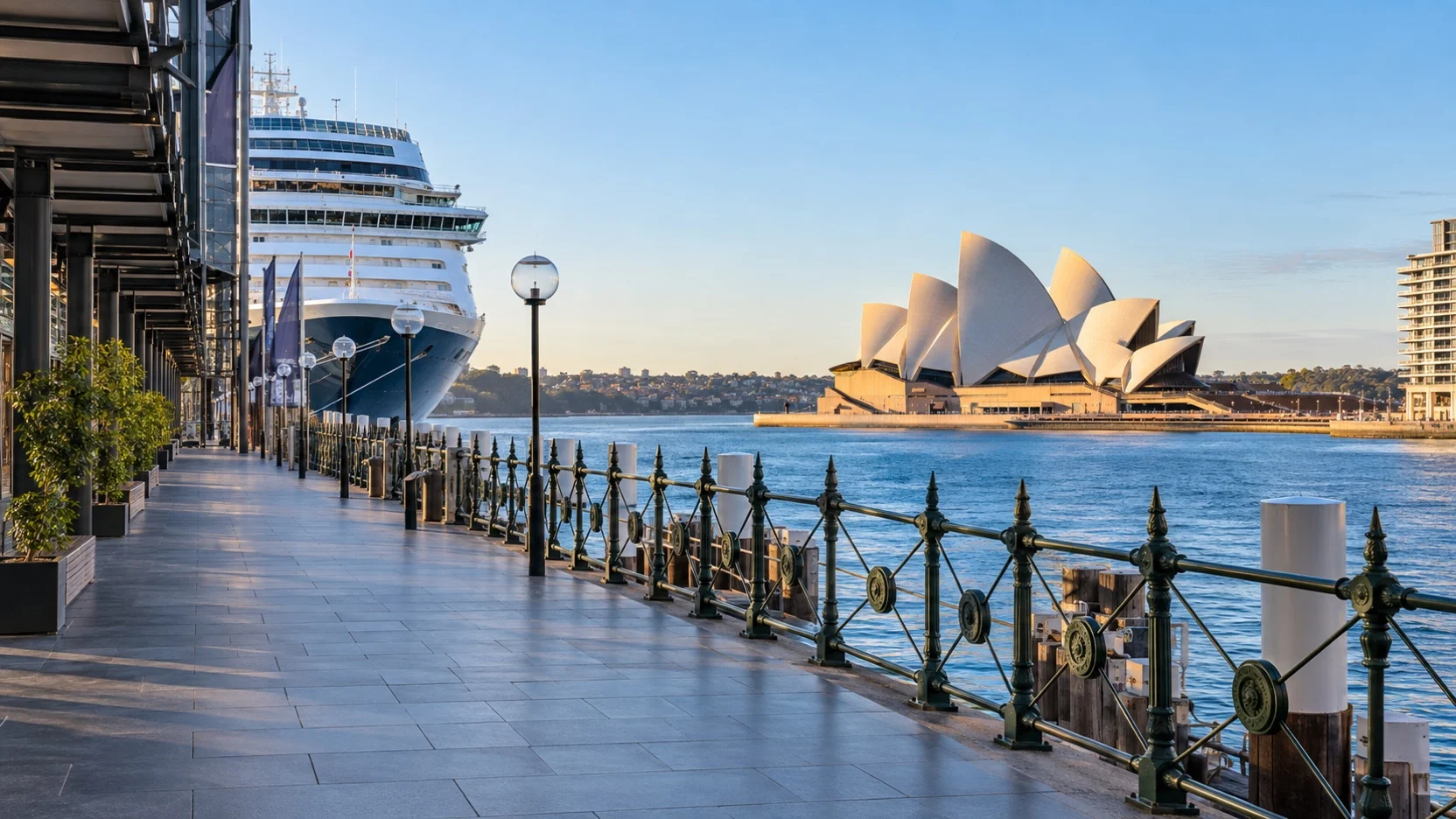
Why it is super walkable: You dock beneath the Harbour Bridge across from the Opera House. The Rocks and Circular Quay are right there.
Typical walk time and distance: 5 to 15 minutes to The Rocks, 10 to 20 to the Opera House forecourt.
Easy first hour route: The Rocks laneways, harbor photos, botanical garden edge.
Terrain and tips: Flat with a few short ramps.

2) Auckland

Why it is super walkable: Queens Wharf and the surrounding harborside open into Britomart and the Viaduct in minutes.
Typical walk time and distance: 5 to 15 minutes to most downtown sights.
Easy first hour route: Viaduct Basin loop, Wynyard Quarter boardwalk, coffee stop.
Terrain and tips: Flat. Wind off the water is common.

3) Wellington

Why it is super walkable: The waterfront is designed for pedestrians with sculptures, cafes, and Te Whanganui-a-Tara views.
Typical walk time and distance: 25 to 35 minutes from common berths to Te Papa and Courtenay Place.
Easy first hour route: Waterfront sculptures, museum forecourt, Cuba Street detour.
Terrain and tips: Flat foreshore. Breezy afternoons.

4) Hobart

Why it is super walkable: Salamanca Place and the harbor market sit beside the wharves.
Typical walk time and distance: 5 to 15 minutes to Salamanca’s sandstone warehouses.
Easy first hour route: Harbor sheds, Salamanca lawns, Battery Point cottages.
Terrain and tips: Short hills toward Battery Point.

5) Tauranga - Mount Maunganui

Why it is super walkable: Many ships dock at Mount Maunganui where a beach town and volcanic cone trail start near the pier.
Typical walk time and distance: 5 to 15 minutes to town and beach. 45 to 60 if you choose the base trail around the mount.
Easy first hour route: Beach boardwalk, town center, optional base track start.
Terrain and tips: Flat in town. The base track is gently rolling.

6) Napier

Why it is super walkable: Art Deco architecture lines the waterfront and compact grid.
Typical walk time and distance: 10 to 20 minutes to the main boulevard from tender landing.
Easy first hour route: Marine Parade, Deco storefronts, seaside gardens.
Terrain and tips: Flat seaside paths.

7) Picton

Why it is super walkable: A small harbor town with a pretty foreshore and cafes.
Typical walk time and distance: 5 to 15 minutes across town, up to 30 if you add a harbor viewpoint.
Easy first hour route: Foreshore walk, marina lookouts, bakery pit stop.
Terrain and tips: Flat with one short viewpoint climb.


tender ports that still feel easy

Middle East

Think early starts and shaded lanes. The best options place a classic souq or corniche within reach.

1) Muscat, Oman - Mutrah

Why it is super walkable: The Mutrah Corniche and souq sit near the cruise dock with mountain and harbor views.
Typical walk time and distance: 10 to 20 minutes to the souq and waterfront arches.
Easy first hour route: Corniche stroll, souq browsing, harbor photos near the fort.
Terrain and tips: Flat promenade with shade in the market.

2) Dubai, Port Rashid

Why it is super walkable: The historic creekside neighborhoods are the closest on foot.
Typical walk time and distance: 25 to 40 minutes to the Al Shindagha and Al Fahidi areas depending on berth.
Easy first hour route: Heritage houses, creek views, cool down in a courtyard café.
Terrain and tips: Flat urban streets. Start early in warm months.

3) Abu Dhabi, Mina Zayed

Why it is super walkable: Corniche parks and landmark towers line up within a long but straightforward stroll.
Typical walk time and distance: 30 to 45 minutes for a pleasant taste of the corniche.
Easy first hour route: Market area to the seafront, palms and pavilions, return by shade.
Terrain and tips: Flat. Hydrate and wear a hat.


Practical walking playbook

  • Start smart: Leave as soon as the gangway drops for cooler temperatures and quieter streets.
  • Pick a loop: Out along the water or through the old town, then return via a different street for new views.
  • Use landmarks: Towers, plazas, harbors, and hills keep you oriented without pulling up your phone constantly.
  • Fuel and refill: Carry a small bottle, then top up at a café. In hot climates, sip often.
  • Know your limits: If a hill looks steeper than expected, pivot to a flat promenade. You will still get a great day.
  • Footwear matters: Lightweight sneakers with traction beat flip flops on slick stone and boardwalks.
  • Weather watch: Shade rules in the tropics. Layers rule in the north. A pocket poncho saves days in shoulder seasons.

Region-by-region winners at a glance

  • Caribbean and Atlantic: San Juan, Willemstad, Oranjestad
  • North America - West Coast: Vancouver, San Diego, Victoria
  • North America - East and Gulf: Quebec City, Halifax, New Orleans
  • Alaska: Ketchikan, Juneau, Skagway
  • Mediterranean: Valletta, Split, Cádiz
  • Northern Europe and Baltic: Tallinn, Bergen, Copenhagen
  • Western Europe and British Isles: Lisbon, Cobh, Southampton
  • South America: Montevideo, Rio de Janeiro, Salvador da Bahia
  • Asia: Hong Kong Tsim Sha Tsui, Singapore, Keelung
  • Australia and New Zealand: Sydney, Auckland, Wellington
  • Middle East: Muscat, Dubai, Abu Dhabi

FAQ: Walkable cruise ports in 2025

How accurate are the times and distances?
They are traveler friendly estimates based on common berths and an average walking pace. Expect small variances by ship position, construction detours, and weather. If mobility is a concern, halve the suggested distances and pick the flattest segments.

What if a city has multiple cruise terminals?
Many big cities do. I selected the berths most commonly used by mainstream lines for 2025 schedules, then noted ranges where needed. If your ship docks farther out, you can still use the same routes, but consider a short shuttle to the start of the walk.

Are tender ports still walkable?
Yes. In places like Kotor, Sitka, Akaroa, or St. Peter Port, tenders put you right in the heart of town. You trade a few minutes on the water for unbeatable proximity on land.

How do heat and hills change the ranking?
Heat raises effort more than distance does. A flat one kilometer waterfront in the tropics can feel easier than a short but steep old town climb. Start early, chase shade, and build in café breaks.

What makes a port feel safe for walking?
Continuous sidewalks, signalized crossings, visible foot traffic, and good sightlines. Waterfront promenades and pedestrianized cores are ideal. If traffic stress rises, pop into a side street or park to reset the vibe.

Do I need mobile data to follow these routes?
Not at all. The ports in this guide use obvious landmarks like forts, cathedrals, towers, markets, and harbors. Snap a photo of the ship and one or two waypoints before you go. If you get turned around, walk downhill toward the water.

Can I combine walking with public transit?
Absolutely. Many featured ports have trams, funiculars, or ferries that turn a steep climb into a scenic ride. Walk out and ride back, or the reverse, to balance energy and time.

How should families plan a walkable port day?
Pick loops with playgrounds, shaded plazas, or beaches at the midpoint. Bring snacks and set a light goal like ice cream in the square or a lookout photo. Keep expectations flexible and celebrate small wins.


Final word

Walkable ports turn a port call into a city date. You set the pace, follow your curiosity, and spend time on the things you actually came to see.

Keep this list handy, pick a loop that fits your energy, and let the waterfronts, plazas, and old stones do the rest.

The Most Walkable Cruise Ports pin