Ketchikan Cruise Port: A First-City Planning Guide
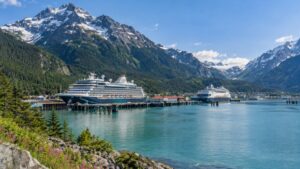
Ketchikan is known as Alaska’s First City, but your day is walkable only when the ship uses a downtown berth rather than Ward Cove. Here is how I would plan a relaxed, totem-filled day in Alaska’s “First City.”
Last Visited: July 2026 aboard Norwegian Jade. This stop was part of my Alaska sailing from Whittier to Vancouver.
My quick take on Ketchikan
Downtown berths put Creek Street, museums, and shops near the gangway, while Ward Cove requires a shuttle before the same walkable day begins. If this is early in your voyage, my Alaska cruise ports overview and Skagway guide pair well with this one.
The quick facts
- Where you land: at a downtown Ketchikan berth or the separate Mill at Ward Cove north of town. The official Travel Alaska city guide explains the downtown waterfront, while Ward Cove passengers must allow for the separate transfer into Ketchikan.
- Dock or tender: Ships usually dock at a downtown berth; overflow vessels anchor in Tongass Narrows and tender ashore.
- Into town: No transport is needed from a downtown berth; Ward Cove requires the provided shuttle or arranged transportation.
- Currency and language: US dollars and English; card payment is near-universal.
- Time zone: Alaska Time.
- How often the call is missed: Low (roughly 1 to 2%): the sheltered berth is rarely limited by local weather.
How I’d confirm my own berth
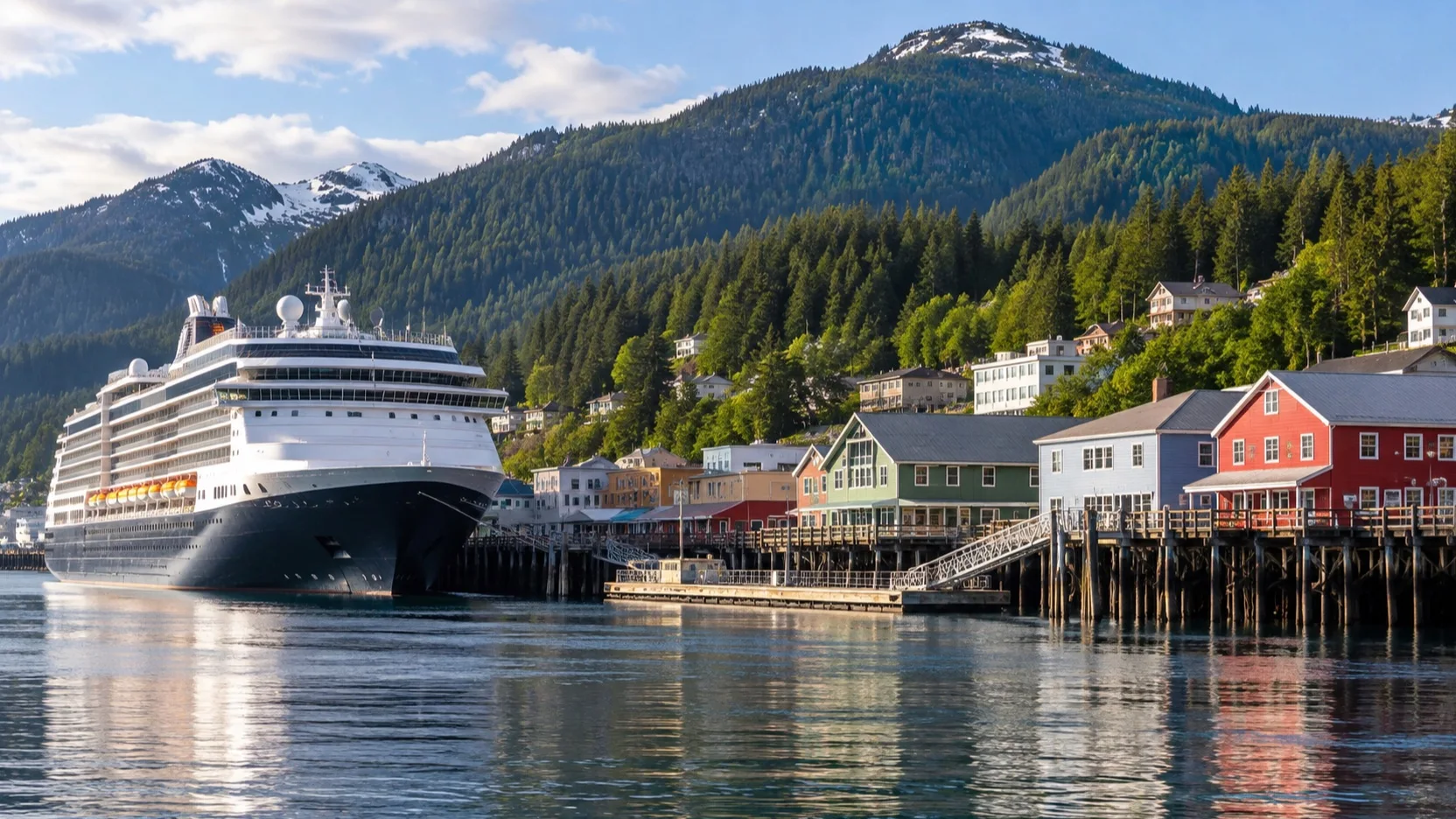
Downtown has several cruise docks strung along the waterfront, while the Mill at Ward Cove is a separate two-berth facility north of town. Your daily program will name the berth; only the downtown docks put you in easy walking range of town.
If a floatplane or boat excursion is on your plan, ask at the shore-excursion desk where it departs, since some leave from the floatplane docks a little further along the harbor.
Getting around
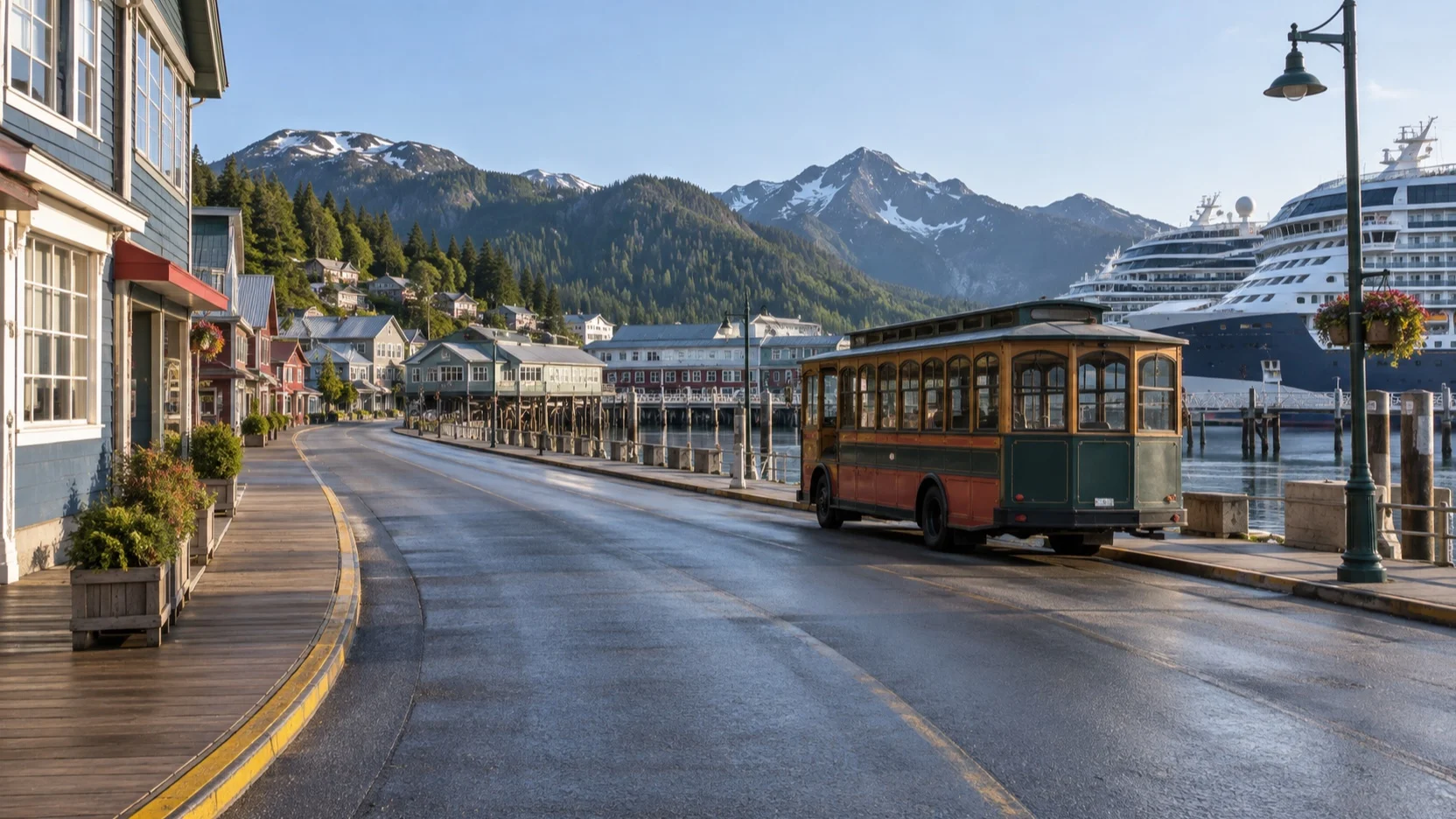
Downtown is the easy part: it is flat, compact, and made for walking. Creek Street, the museums, and the shops are all close together.
For sights outside the center, the Ketchikan Trolley loops past attractions like Saxman and Totem Bight, and taxis wait near the docks. Car rentals exist, but the island’s road system is short, so most cruisers skip driving.
Your berth changes the whole day
Ketchikan has downtown berths along the waterfront and the separate Mill at Ward Cove north of town. Downtown passengers can walk directly to Creek Street, while Ward Cove passengers need the complimentary operator shuttle or an excursion pickup and should budget for the ride and boarding line in both directions.
Check the berth shown by your cruise line rather than assuming every Ketchikan call is downtown. If you are at Ward Cove, protect at least 60 to 90 minutes of the day for the round-trip transfer and queue, then set a firm downtown shuttle cutoff before all aboard.
For an excursion, confirm whether pickup is at the ship, the Ward Cove complex, or a downtown meeting point. That one detail can decide whether Misty Fjords, Saxman, or Totem Bight fits without a stressful connection.
The stops I’d actually spend time on
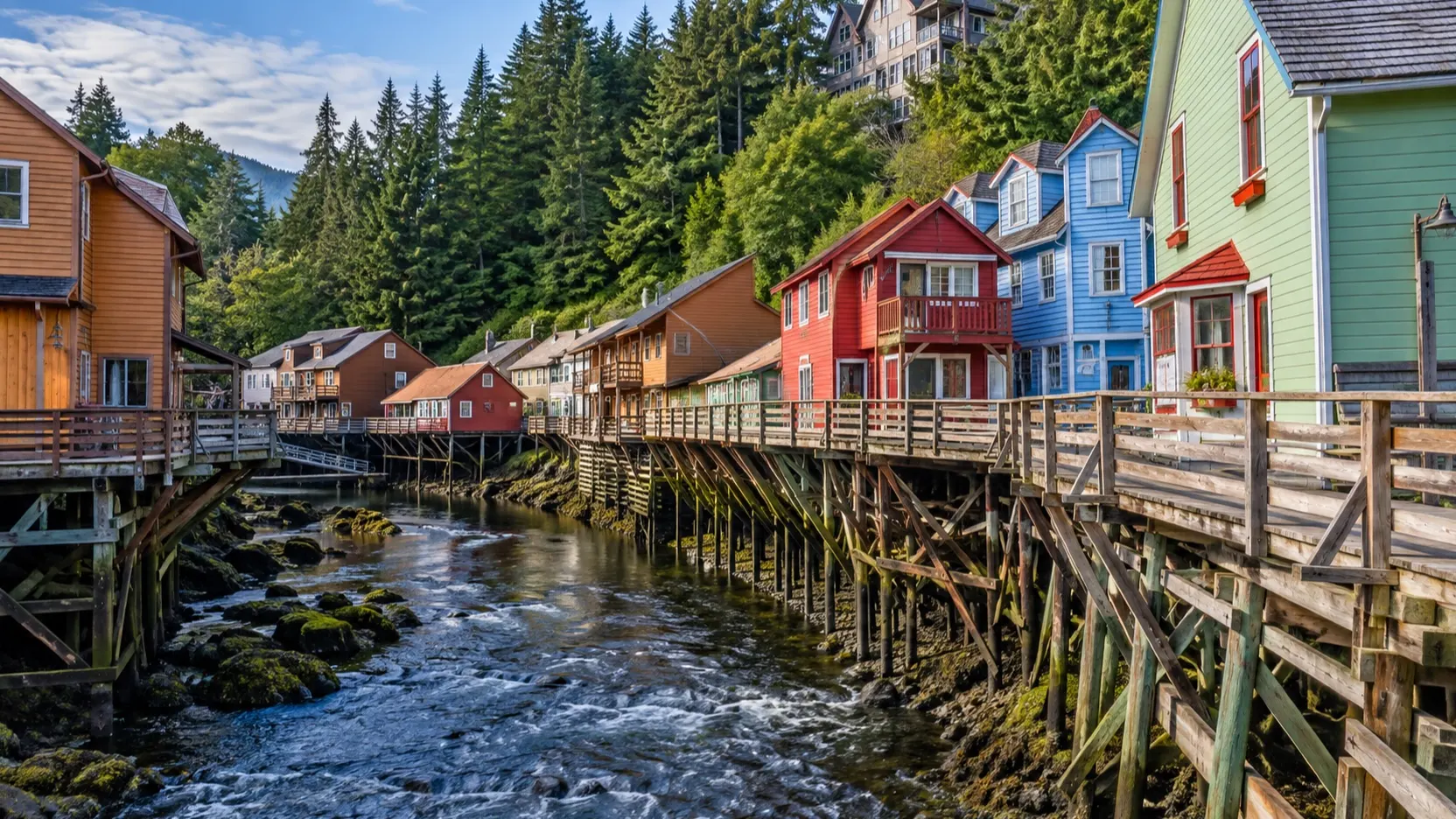
- Creek Street: A boardwalk built on stilts over Ketchikan Creek, lined with galleries, gift shops, and cafes. It was the town’s red-light district until 1954, and salmon still run below the planks in summer.
- Dolly’s House Museum: A former Creek Street brothel turned museum, complete with the bar that sat over a trapdoor to the creek for dumping bootleg whiskey. A quick, quirky look at the old days.
- Southeast Alaska Discovery Center: A short walk from the piers, with three large totems in the lobby, a re-created rainforest, and underwater cameras trained on spawning salmon. A great orientation to the region.
- Totem Heritage Center: Along Ketchikan Creek, it preserves an important collection of original 19th-century poles recovered from Tlingit and Haida villages, displayed with their histories.
- Saxman Native Village: About 2.5 miles south of downtown, this Tlingit village keeps 24 totem poles moved from abandoned villages in the 1930s, plus drum-and-dance performances and a clan house.
- Totem Bight State Historical Park: Ten miles north, this 11-acre park set in rainforest and coastline is packed with restored totems and a colorful community house, per Alaska State Parks.
- Great Alaskan Lumberjack Show: A short walk from the port, with real lumberjacks competing in log rolling, axe throwing, and tree climbing. Light, family-friendly fun if the weather turns.
- Misty Fjords National Monument: A 3,570-square-mile wilderness of sea cliffs and fjords with rock walls rising 3,000 feet from the water, part of the Tongass National Forest. Best seen by floatplane or boat tour.
- Salmon fishing and viewing: Ketchikan calls itself the “Salmon Capital of the World,” and anglers can target all five species of Pacific salmon on a guided charter. No rod needed to watch them run up Ketchikan Creek.
- Married Man’s Trail: A short historic footpath once used to reach Creek Street discreetly, now a leafy stroll along the creek.
Fun fact worth your limited time: Travel Alaska notes that Ketchikan houses the world’s largest collection of standing totem poles, so even a slow downtown wander delivers the culture you came for.
Choose the experience, not the sales pitch
Choose Saxman when a guided cultural program and clan-house context matter, or Totem Bight when you prefer an independent forest-and-coast walk around reconstructed poles and a community house. In either place, treat the poles as living Indigenous history rather than colorful props and use the site’s interpretation.
Misty Fjords is for travelers who value wilderness views enough to accept a weather-dependent flight or a longer boat ride. Ask about total flight or boat time, landing claims, weight limits, and cancellation terms because fog and wind can remove the day’s expensive centerpiece.
Fishing charters suit serious anglers, but licenses, species rules, equipment, catch processing, seasickness, and the exact dock all matter. Families with mixed interests usually get better value from one cultural site plus downtown, where anyone can shorten the day.
How I would plan the day
- Three useful hours from a downtown berth: Walk Creek Street, the Southeast Alaska Discovery Center, and one nearby museum. From Ward Cove, use the same loop only after subtracting the shuttle in both directions.
- Five to six hours: Choose Saxman or Totem Bight for interpreted Indigenous art, then use downtown as the flexible extra. These sites suit culture-focused travelers better than a rushed drive-by of both.
- Seven or more hours: Make Misty Fjords, fishing, or another boat or flight the anchor and keep downtown optional. Weather can cancel aircraft and small-boat trips, so understand the refund policy and keep a walkable backup.
A realistic word on accessibility
Downtown is flat and largely walkable, which helps, but Creek Street’s boardwalk has steps and slopes in places. If you have mobility needs, confirm ramp and gangway details with your cruise line, since access can shift with the tide and your assigned berth.
When to go, and the weather
The Alaska cruise season runs roughly May to September, when attractions are open and salmon runs peak in mid to late summer. Expect rain in any month, since Ketchikan sits in a temperate rainforest.
Dress in layers with a waterproof shell and comfortable shoes, and the damp won’t slow you down.
Quick answers
Is Ketchikan walkable from the ship?
Yes from a downtown berth, where Creek Street, museums, and shops are nearby; Ward Cove passengers must first use the provided shuttle or arranged transportation.
Do ships ever tender in Ketchikan?
Most ships use a downtown berth or Ward Cove, while some schedules use a tender, so check the berth and transfer instructions for your sailing.
What is the one thing not to miss?
Creek Street, for its stilted boardwalk, salmon, and easy access to the totems and museums nearby.

How this guide was researched: Unless a first-hand visit is explicitly identified above, this guide is based on independent research using official port, tourism, transit, government, and attraction sources where available. Logistics and time-sensitive details were reviewed in September 2026; see our Editorial Policy.