Pisco Cruise Port Guide: Ballestas, Paracas and Huacachina
Pisco is a launch point for one of Peru’s most unusual cruise days, where a cold Pacific ecosystem meets a coastal desert and vineyards grow behind dunes. The Ballestas Islands, Paracas National Reserve, Huacachina oasis, and the namesake spirit all compete for a limited port call.
I would decide whether wildlife, desert scenery, or inland adventure matters most before booking. Combining everything can work on a long cruise-specific itinerary, but only when the boat runs early, the road plan is disciplined, and the return to Puerto General San Martín remains conservative.
Pisco cruise port quick facts
- Primary cruise arrival: Puerto General San Martín on the Paracas Peninsula
- Port character: A working commercial facility rather than a walkable tourist harbor
- Shore transfer: Follow the ship’s current shuttle, tender, and independent-operator instructions
- Best wildlife experience: An early Ballestas Islands boat from Paracas
- Best weather backup: A road tour through Paracas National Reserve
- Best inland adventure: Huacachina dunes near Ica with a cruise-aware driver
- Best cultural add-on: A responsible pisco tasting focused on grapes and distillation
- Currency: Peruvian sol, with cards and foreign currency acceptance varying by business
- Return strategy: Choose one major goal and protect a wide port-access buffer
Where cruise ships arrive near Pisco
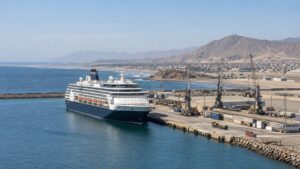
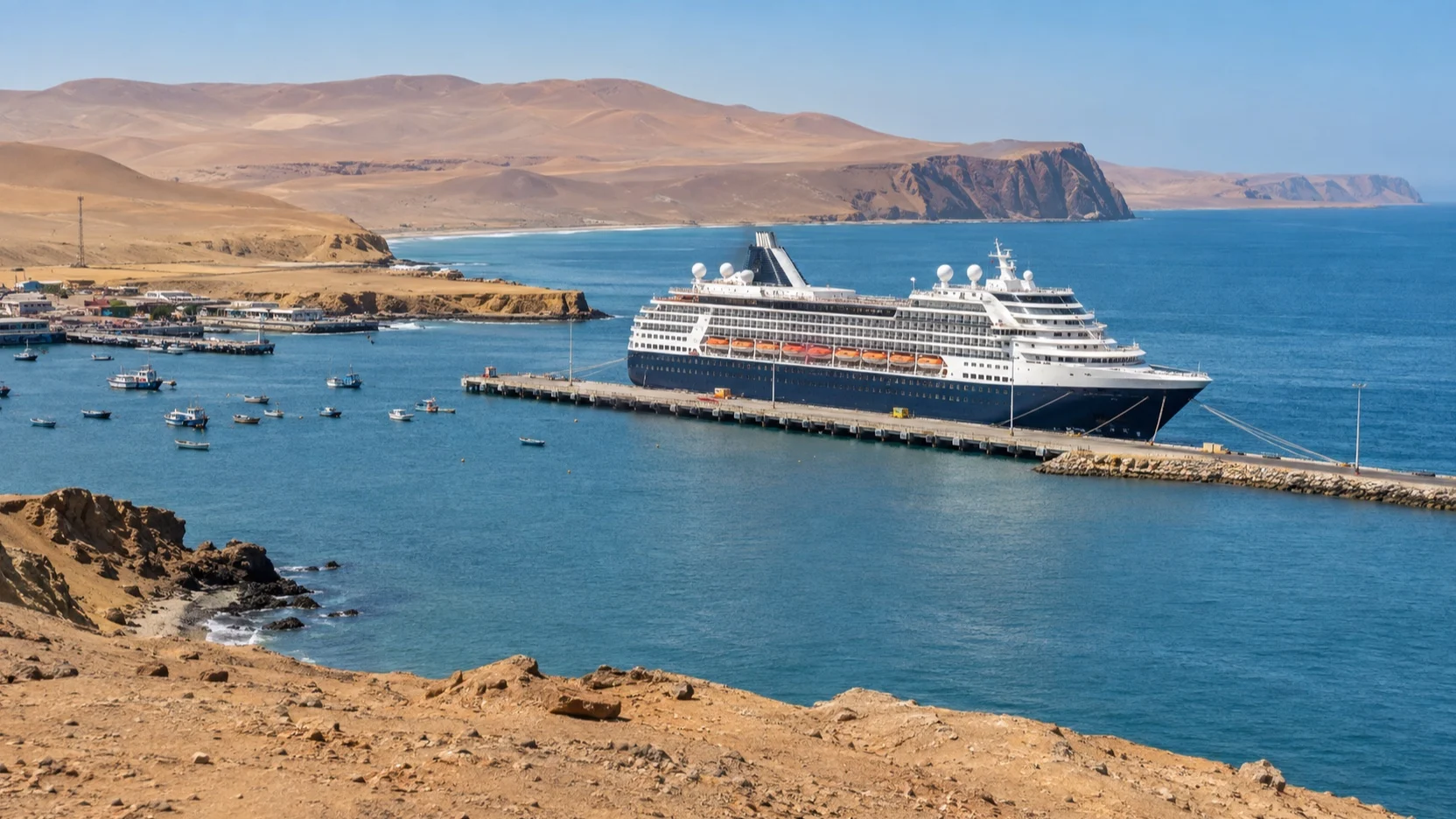
Cruise itineraries commonly use the name Pisco, but ships generally arrive at Puerto General San Martín on the Paracas Peninsula. This is a working port outside both Pisco city and the visitor waterfront at Paracas.
Passengers should expect controlled port movement and follow the cruise line’s current shuttle or tour procedure. Walking independently from a commercial berth is not the normal sightseeing plan.
Ships usually berth when space and operations allow, while anchoring and tendering may be used under different conditions. The daily program is the only reliable source for your sailing’s gangway, tender, shuttle endpoint, and independent pickup rules.
Send any private operator the ship name, date, exact port label, and instructions issued onboard. Pisco, Paracas, and General San Martín are related place names, but they do not describe one interchangeable meeting point.
Paracas is the practical visitor base
Paracas town is the natural staging point for Ballestas boats, restaurants, and many regional tours. Its waterfront is far more useful to a cruise passenger than central Pisco when the main goal is the bay or reserve.
Confirm whether the ship shuttle ends in Paracas, at a port gate, or somewhere else. That single detail changes how much independent time you have and where a boat operator can meet you.
Do not book a generic hotel-guest departure without explaining that you are arriving by cruise ship. A local operator should understand the port procedure, marine schedule, and need for an early return.
If disembarkation begins late, shrink the day immediately. The peninsula still supports wildlife, desert views, seafood, and a slow waterfront meal without forcing a race toward Ica.
Ballestas Islands: the signature wildlife trip
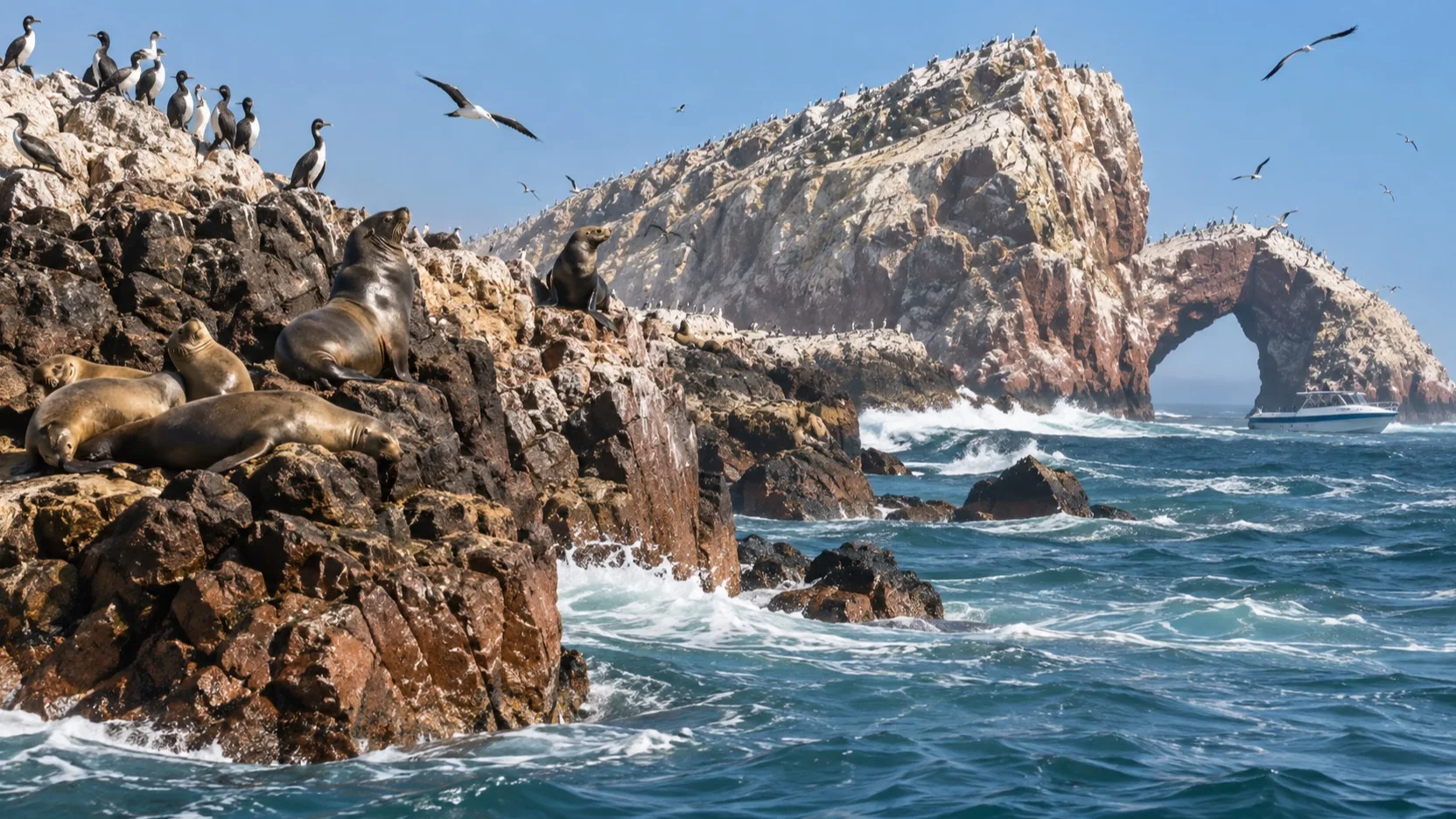
The Ballestas Islands are rocky protected islets reached by boat from Paracas. Trips generally observe from the water rather than landing, allowing visitors to see the habitat while reducing disturbance.
Sea lions, Humboldt penguins, cormorants, boobies, pelicans, and other wildlife may appear, but no responsible operator can guarantee a species or behavior. The experience is the living ecosystem, not a checklist of promised animals.
Many routes also view the Paracas Candelabra, a vast geoglyph cut into a desert hillside above the bay. Its origin remains debated, which is more interesting than forcing one tidy explanation onto it.
Morning departures are usually preferable because marine operations and afternoon winds can narrow the day. Choose an operator that states the actual pier, departure, return, boat design, life-jacket procedure, and weather policy.
What the boat feels like
Expect spray, wind, engine noise, strong wildlife odors, and a bumpy ride even when the marina looks calm. Secure hats, protect electronics, and wear a wind-resistant layer that can tolerate salt water.
Front seats can be wetter and experience more motion, while seating farther aft may feel gentler on some boats. Follow crew instructions, remain seated when required, and never pressure the captain to approach wildlife or rocks more closely.
Anyone prone to motion sickness should ask a qualified health professional about an appropriate plan before travel. Take any chosen preventive measure according to professional or product guidance rather than waiting until the boat is underway.
Questions to ask before paying
Ask about age limits, boarding steps, handholds, restroom availability, shade, life-jacket sizes, seating, maximum group size, wet-weather gear, and the complete transfer from your cruise arrival point. A two-hour boat listing may exclude transport, check-in, and loading.
Request the cancellation and refund terms in writing. Wind, swell, port orders, or wildlife-protection rules can alter the route without making the operator unreliable.
Paracas National Reserve
Paracas National Reserve protects a vast marine and coastal desert landscape in the Ica region. Peru’s protected-areas service, SERNANP, highlights the reserve’s biodiversity, clear windy climate, beaches, viewpoints, visitor center, marked circuits, and birdlife.
The meeting of ocher desert, cliffs, blue water, and pale salt or sand makes this more than a backup. For travelers who prefer scenery and interpretation to a moving boat, it can be the strongest choice of the day.
Official access points, roads, viewpoints, hours, and fees can change after weather, maintenance, or environmental events. Check current SERNANP notices and ask the driver which authorized route is open before departure.
The North Circuit includes several named viewpoints and beaches, but a cruise tour should select a realistic portion rather than racing through every stop. The visitor center can add ecological context before the scenic drive.
Stay on marked roads and routes, follow ranger guidance, avoid disturbing wildlife, and carry waste out. Protected land is habitat first and a photo background second.
Ballestas plus the reserve
An early boat followed by a focused reserve drive is the most natural combination because both use Paracas as a base. It also creates a sensible fallback when the marine trip is canceled.
Ask whether the same operator controls both segments and what happens when the boat does not sail. A clear substitute plan prevents the group from spending the morning waiting for a decision that never improves.
Do not confuse a technically possible full circuit with a satisfying one. Leave time for lunch, restrooms, port transfer, and the kind of unscheduled delay that working harbors and wildlife boats produce.
Huacachina: spectacular but farther inland
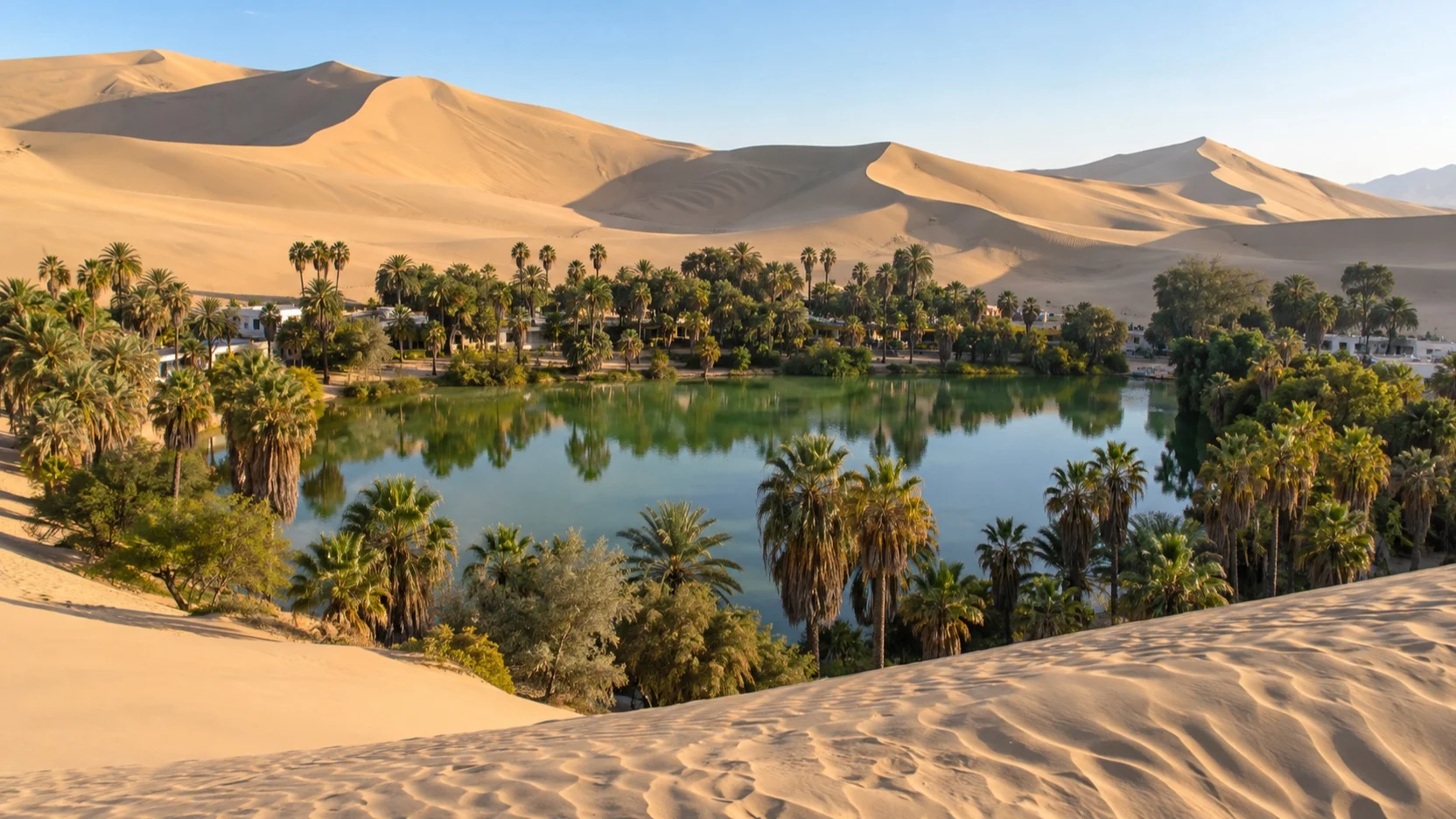
Huacachina is a small oasis beside Ica, surrounded by enormous dunes. The lagoon, palms, sand ridges, buggy rides, and sandboarding create a dramatic contrast with the cold-water wildlife offshore.
The inland drive makes Huacachina a deliberate main destination rather than an easy add-on. Traffic, port access, check-in, activity briefing, and the return across the desert must all fit well before all aboard.
A generic day tour may be designed for hotel guests who have no ship deadline. Use a cruise-aware operator and obtain the planned port return, buffer, and late-ship policy in writing.
Dune buggies
Buggy rides can involve speed, steep drops, sharp turns, vibration, and hard jolts. Ask about the vehicle, seat belts or harnesses, helmets, age and health restrictions, insurance, and driver credentials.
This is not a gentle scenic drive simply because passengers remain seated. Travelers with back, neck, joint, pregnancy, motion, or balance concerns should review the actual activity and seek appropriate professional advice.
Sandboarding
Sandboarding can mean standing, sitting, or lying on a board, and the physical demand differs sharply. Confirm the instruction, equipment, protective gear, hill size, and whether a lower-intensity version is available.
Fine sand reaches cameras, phone ports, shoes, and bags quickly. Use a simple sealed pouch and keep anything that cannot tolerate grit inside it.
Enjoying the oasis without the ride
You do not need a buggy or board to appreciate Huacachina. A lagoon walk, partial dune viewpoint, meal, or quiet photo stop can create an excellent inland day.
Loose sand, steps, heat, and uneven paths still affect accessibility. Ask where the vehicle drops passengers, whether shade and accessible restrooms are available, and how much walking is unavoidable.
Can you combine Ballestas and Huacachina?
Yes, some cruise-specific excursions combine them on a sufficiently long call. The strongest sequence puts the boat first because its departure window and marine conditions are less flexible.
Huacachina follows inland only when the operator defines a firm time for leaving the dunes. A late boat, slow disembarkation, or road issue should automatically shorten or cancel the second half.
Ask what happens when the boat is canceled, whether the tour shifts to the reserve or Ica, and which fees remain refundable. A useful combined tour has a contingency structure rather than a promise that every headline will happen.
For a short call, choose Ballestas with Paracas or choose Huacachina. One memorable landscape is better than viewing three through a windshield while calculating the gangway.
Pisco vineyards and the namesake spirit
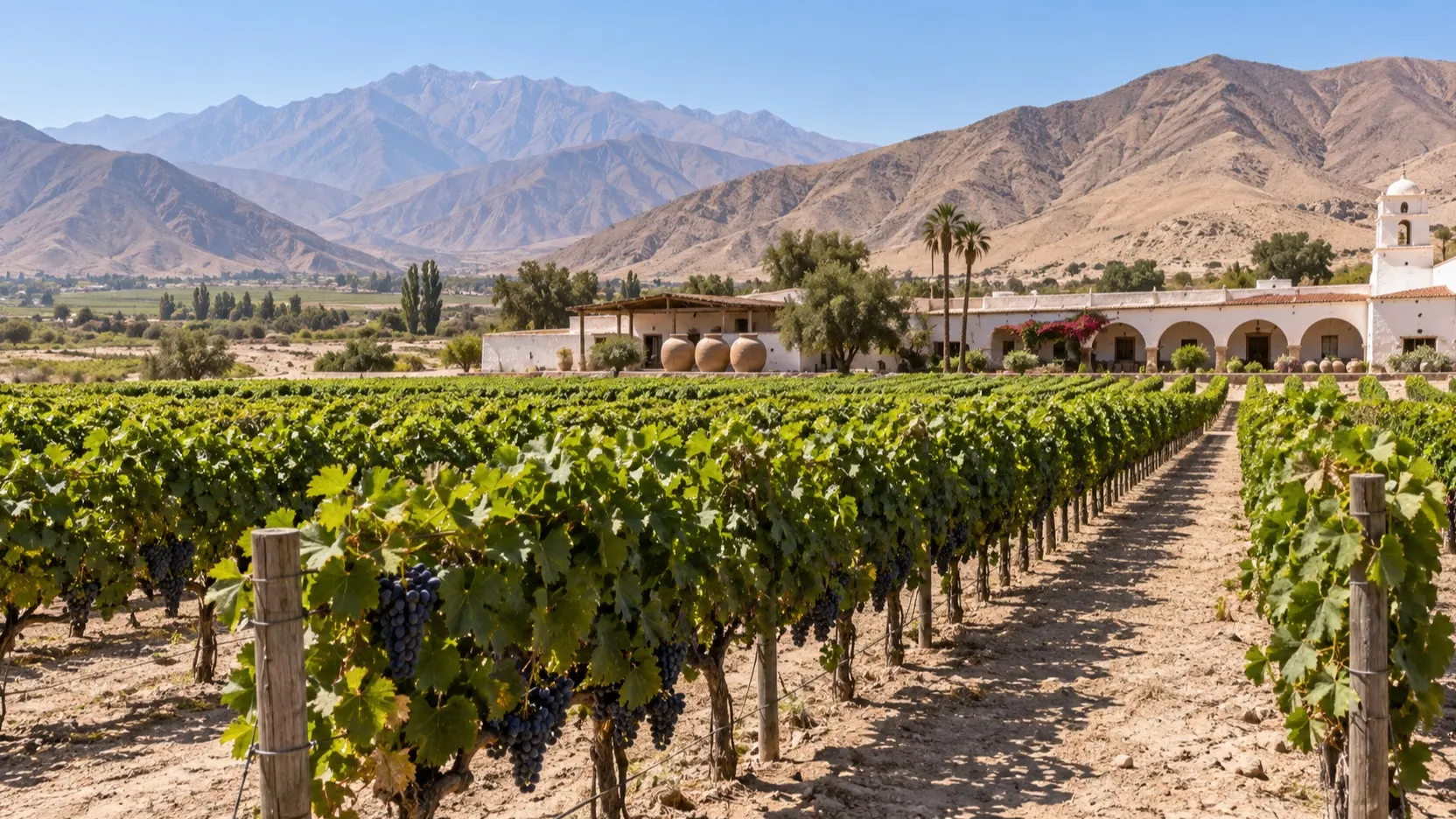
Pisco is a grape brandy with deep roots in Peru’s coastal valleys, and a responsible tasting adds agricultural and cultural context to an inland day. The most interesting visits explain permitted grape varieties, harvest, fermentation, distillation, aging rules, and how styles differ.
A historic winery or modern producer can pair naturally with Ica or Huacachina. Verify whether the experience includes a vineyard, production area, guided tasting, lunch, shopping, and transport, because the word winery can describe very different visits.
Avoid turning the day into a rushed drinking circuit. Alcohol, desert heat, a moving boat, and a dune buggy make hydration and moderation particularly important.
A passenger who does not drink can still enjoy grape growing, architecture, food, and production history if the venue provides a thoughtful nonalcoholic option. Ask before booking so the stop has value for the entire group.
Choosing a reputable tour
A ship excursion offers the simplest coordination when the itinerary combines a boat, inland road travel, or several admission points. Read the exact activity description because protected return does not guarantee a comfortable boat, meaningful wildlife time, or gentle buggy ride.
An independent operator may provide a smaller group and more flexible sequence. It must understand ship changes, tender delays, shuttle endpoints, port pickup restrictions, and a conservative return.
Request the itinerary in writing with meeting point, boat departure, road time, activity duration, included admission, meal, equipment, cancellation, and planned port arrival. Ask who monitors the ship and how the company communicates without mobile data.
Do not build the schedule around the fastest drive time shown on a map. Local estimates should include checkpoints, congestion, fuel or restroom stops, and the correct port entrance.
Accessibility and lower-energy options
Accessibility begins at the ship because the berth, gangway, tender, shuttle, and independent pickup may determine whether the rest of the tour works. Ask the cruise line for sailing-specific information before committing.
Small Ballestas boats can involve steps, narrow seating, movement, spray, and no restroom. Request the exact boarding method, handholds, assistance, seating, equipment storage, and whether the passenger must transfer independently.
Reserve viewpoints may allow scenic travel with shorter walks, but surfaces, wind, sand, and vehicle access vary. The visitor center and selected road stops may suit more travelers than the full circuit.
Huacachina’s loose dunes and adventure rides present substantial barriers. A lagoon-focused vehicle visit can lower the intensity, but it still needs confirmed close drop-off, shade, restroom access, and time seated.
A relaxed Paracas day can combine waterfront views, seafood, a short accessible drive, and the reserve visitor center if current access fits. This is a complete port day, not a lesser version of the buggy itinerary.
Weather and seasonal conditions
Paracas is famously windy and lies in a dry coastal desert. Offshore air can feel cold and wet while the inland sun around Ica and Huacachina feels hot on the same day.
Dress in layers, secure your hat, use sun protection, carry water, and protect electronics from both spray and grit. Sunglasses help with glare but need a strap on a fast boat or buggy.
Wind and swell can cancel marine operations, while natural events or maintenance may close reserve roads or viewpoints. Accept the captain’s or ranger’s decision and use the prepared land alternative.
Summer heat increases the demand of dunes and exposed reserve stops. Begin outdoor activity early, take shade and hydration seriously, and do not answer delay by rushing across loose sand.
Food and drink
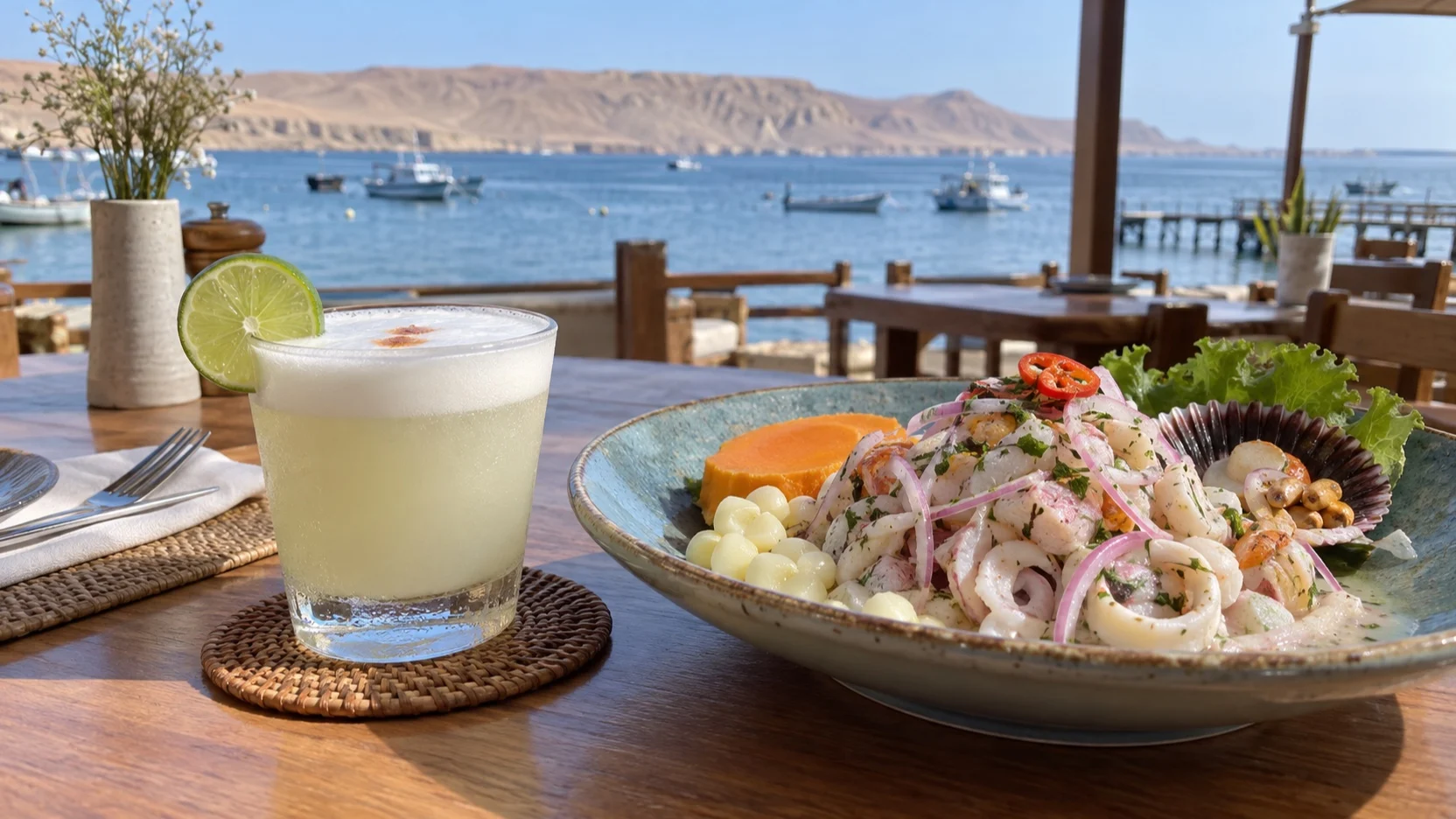
Seafood is a natural choice in Paracas, with ceviche, tiradito, grilled fish, shellfish, and rice dishes appearing widely. Choose a reputable restaurant that understands your port schedule and can describe ingredient handling.
Ceviche uses raw seafood cured with citrus, so travelers should make a personal food-safety choice based on the venue and their health needs. A grilled dish is an easy alternative for anyone who prefers fully cooked food.
Inland meals may feature regional produce and pair with a pisco demonstration. Confirm whether lunch is included, fixed, or ordered separately because service time can change the return calculation.
Drink plenty of reliably treated water and keep alcohol modest before boats or adventure activities. A clear head and steady balance improve every part of this particular port day.
Money, phones, and communication
Peru uses the sol, and cards are common at established operators and larger restaurants. Small cash remains useful, while any foreign-currency price should be confirmed with the exchange rate before payment.
Mobile service can vary across the peninsula and inland routes. Download maps, reservations, ship details, operator contacts, and the port meeting point before leaving the vessel.
Carry a backup payment method in a separate place. A waterproof pouch should hold identification, cruise card, cash, and phone on the boat, while a dust-resistant pouch helps at Huacachina.
Agree on communication and reunion if a group splits. One branch should never carry the other branch’s only phone, port directions, or return money.
Three realistic Pisco port-day plans
The wildlife and reserve day
Take the earliest practical Ballestas boat, eat in Paracas, then visit a focused selection of reserve viewpoints and the visitor center if open. This route stays geographically coherent and has the strongest weather fallback.
The Huacachina day
Travel inland with a cruise-aware driver, enjoy the oasis, choose one appropriately intense dune activity, and add a winery or meal only if the return remains generous. Leave the dunes at the time agreed before departure.
The lower-energy day
Use the ship’s transfer to Paracas, take a gentle waterfront break, enjoy lunch, and arrange a short reserve drive with confirmed vehicle and restroom access. Skip the small boat and buggy without apology.
Common Pisco planning mistakes
The first mistake is assuming the itinerary name places the ship in Pisco city or Paracas village. Puerto General San Martín is a working port with its own controlled transfers.
The second is booking a generic hotel-guest tour that ignores shuttle or tender time. Cruise passengers need an operator who understands the terminal and return.
The third is treating Ballestas wildlife as guaranteed. Weather, park rules, animal movement, and the captain’s safe approach determine the experience.
The fourth is adding Huacachina after a late boat because the map still looks manageable. A delayed morning should shrink the inland plan immediately.
The fifth is calling a dune buggy low effort because it involves sitting. Speed, jolts, restraints, heat, and vehicle entry make it a physical adventure.
The sixth is ignoring the correct port entrance on the return. Reaching the peninsula is not the same as reaching the gangway.
Pisco cruise port frequently asked questions
Do cruise ships dock in Pisco?
Ships commonly use Puerto General San Martín near Paracas rather than a downtown Pisco pier. Berthing, tendering, and passenger transfer procedures depend on the sailing and port operations.
Are the Ballestas Islands suitable for children?
Many families enjoy the trip, but boats can be bumpy, wet, windy, noisy, and strongly scented. Ask about minimum age, life-jacket sizes, seating, shade, and current conditions.
Will I see penguins?
Humboldt penguins may be present along with sea lions and many seabirds, but wildlife is never guaranteed. A responsible guide explains the ecosystem without promising a particular animal.
Is Huacachina close to the cruise port?
It requires a significant inland road trip whose duration varies with the cruise facility, traffic, and port process. Use a cruise-specific plan with a conservative return instead of estimating from mileage.
Do I have to sandboard?
No. The oasis can be enjoyed through lagoon views, photography, a partial dune walk, dining, and a scenic visit shaped to your comfort.
What happens if Ballestas boats are canceled?
A strong operator will explain the refund and substitute plan before booking. Paracas National Reserve is the most natural alternative when its roads and viewpoints are open.
The bottom line
Pisco is worth the planning because the port can deliver cold-water wildlife, stark desert coast, an inland oasis, and grape culture in one region. The responsible choice is to select the version that fits the ship rather than forcing every headline into one day.
Put Ballestas first for wildlife, use the reserve as a strong land experience or backup, and travel to Huacachina only with a firm return. For the broader itinerary, compare our South America cruise ports guide and our nearby Arica cruise port guide.
Planning note: Berths, tenders, shuttles, boat departures, reserve access, road conditions, admission, and activity rules can change. Confirm time-sensitive details with your cruise line, port, SERNANP, and operator before travel.
How this guide was researched: This guide was checked against current official SERNANP protected-area information plus port, tourism, transport, wildlife, and activity guidance. Logistics and time-sensitive details were reviewed September 11, 2026; see our Editorial Policy.