Khasab Cruise Port: Fjords, Dhows and Tenders
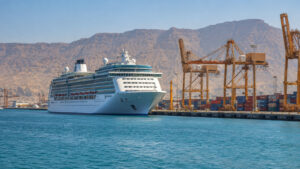
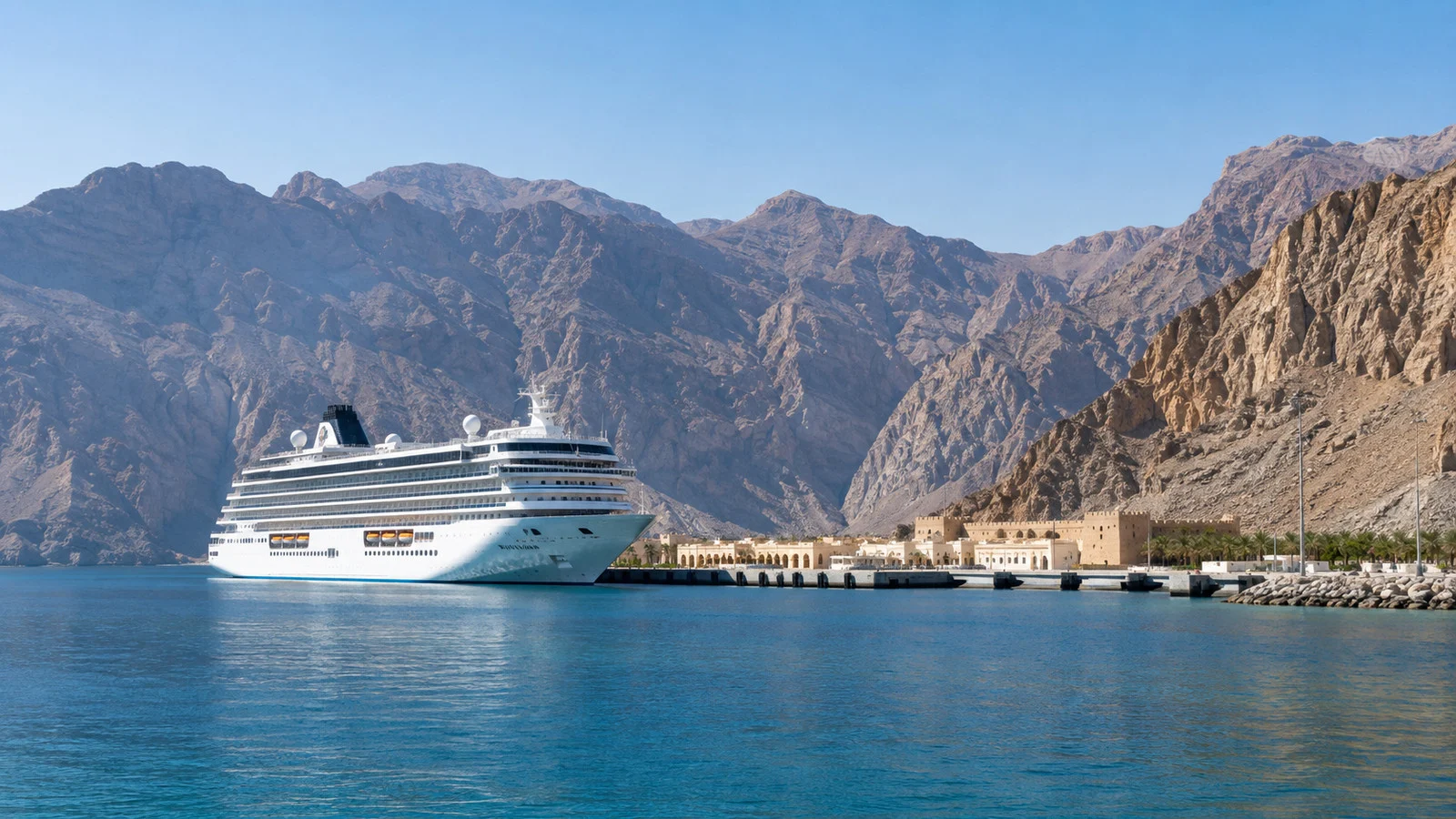
Khasab is a rare cruise call where the landscape explains the destination before you even step ashore. Bare mountains fold into sheltered water around the Musandam Peninsula, and the harbor feels more like a doorway to those inlets than the edge of a conventional port city.
My best advice is wonderfully simple: decide whether you want a dhow cruise or a mountain drive, reserve it early, and protect your return time. The town is worth a look, but the most memorable parts of Musandam begin beyond its streets.
My quick take
I would choose a half-day dhow trip for a first visit. It delivers the cliffs, quiet coves, small coastal settlements, swimming opportunities, and the chance of seeing dolphins without using every minute of the call.
A mountain safari is the better choice if sweeping viewpoints and geology excite you more than a day on the water. Trying to combine both can turn Khasab into a race, especially if your ship is tendering or the call is short.
Quick Facts
- Port: Port of Khasab in Oman’s Musandam Governorate, facing the Strait of Hormuz.
- Berths: Asyad publishes three berths of 60, 90, and 300 meters in a protected harbor basin.
- Dock or tender: Your ship may berth or anchor according to vessel size, traffic, and the day’s operational plan.
- Top experience: A traditional dhow cruise into the sheltered inlets of Musandam.
- Currency: Omani rial.
- Language: Arabic is official, while English is common in visitor services.
- Time zone: Gulf Standard Time, four hours ahead of UTC throughout the year.
- Planning caution: Confirm the arrival method, immigration instructions, meeting point, and all aboard time with your cruise line.
Understanding the Port of Khasab
Khasab is the principal town of Musandam, an Omani exclave separated from the rest of the country by the United Arab Emirates. The geography is unusual, but cruise passengers arriving by sea simply clear according to the process arranged for their voyage.
The official Asyad port page describes a protected harbor basin 10 meters deep, with berths measuring 60, 90, and 300 meters. It serves cruise ships, ferries, and regional freight, so expect a working port rather than a resort-style cruise complex.
A ship that fits the available cruise arrangement may dock alongside, while another call may use tenders. Vessel length is only part of the decision because berth schedules, harbor instructions, weather, and other operations also matter.
Check the daily program delivered aboard your ship instead of relying on a previous traveler’s experience. If you are tendering, add time for boat loading, the ride ashore, security, and the return queue.
Getting from the port into town
Transportation arrangements vary by ship and call. Taxis and tour vehicles commonly meet passengers near the controlled port area, while some cruise programs may provide a shuttle, but only your ship can confirm what will operate that day.
If you take a taxi, agree on the fare, destination, waiting time, and return arrangement before leaving. Keep small notes or a screenshot of the driver’s number and the agreed pickup place.
Walking in intense sun is less pleasant than the map may suggest, and port gates can make the route feel longer. I would save my energy for the fort, waterfront, or a booked excursion rather than treating the port road as sightseeing.
Why the dhow trip is the classic choice
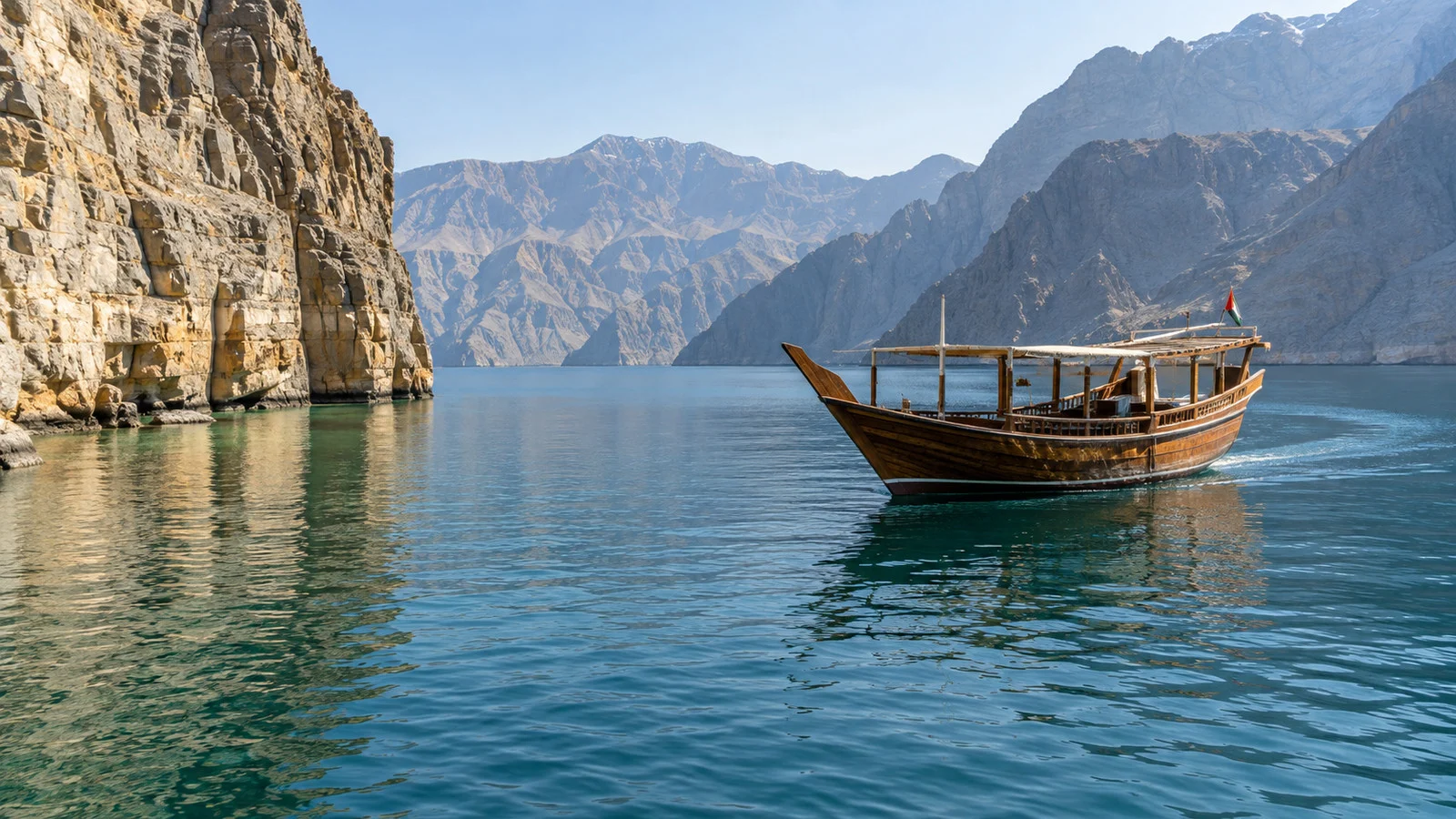
Musandam’s long coastal inlets are often called fjords, although their geology is different from the glacial fjords of Norway. The name still captures the drama of steep rock walls dropping into blue water.
Traditional wooden dhows carry visitors into these sheltered channels at an easy pace. Most cruise-friendly trips offer shade, cushions, drinks, scenery, and one or more stops, but the exact route depends on time and conditions.
Khor Sham is the best-known direction for cruise excursions, with Telegraph Island appearing on many itineraries. A boat may also pass remote settlements and pause for swimming or snorkeling when the operator and weather allow.
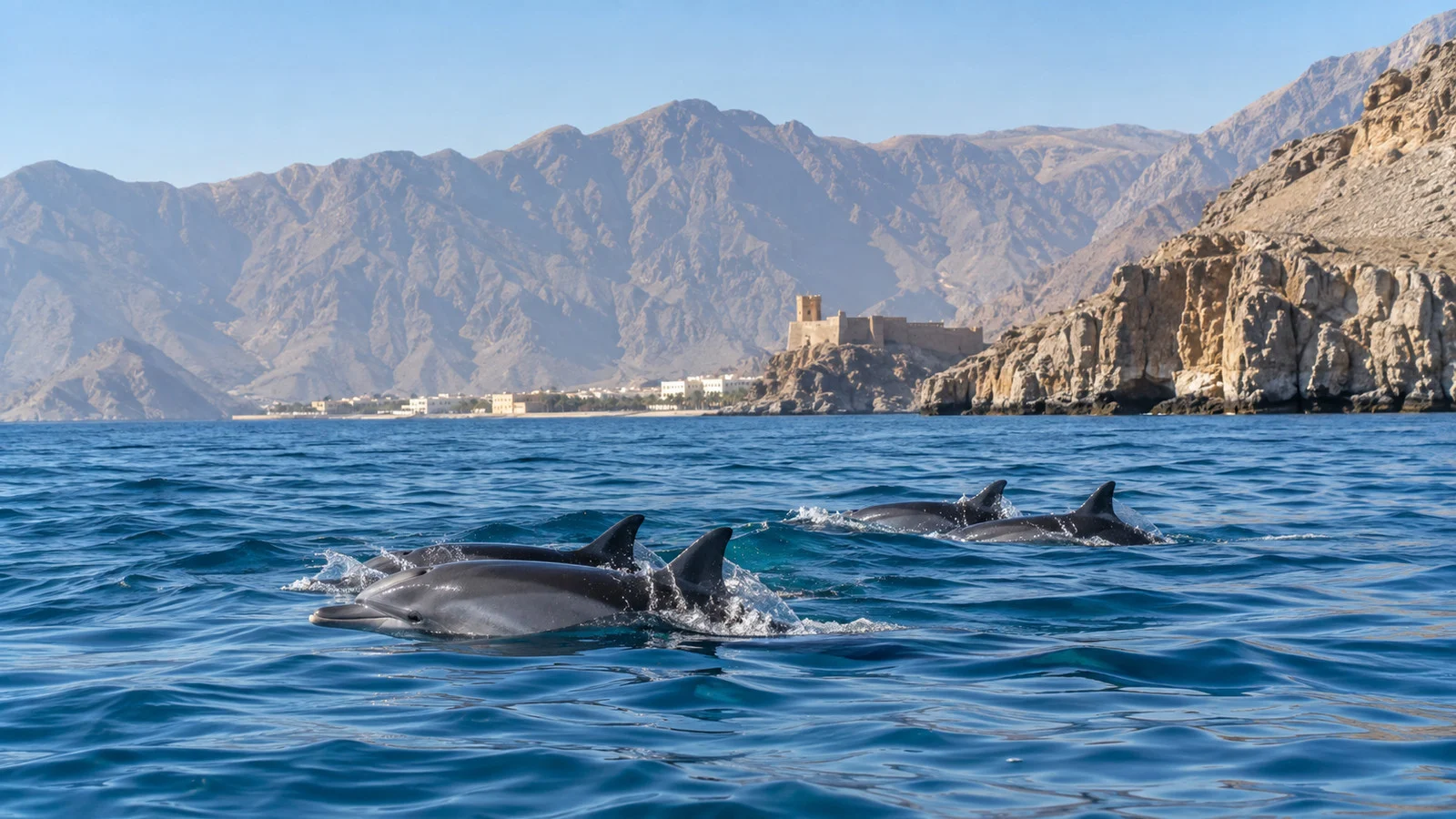
Dolphins are frequently associated with Musandam cruises, but they are wild animals and cannot be guaranteed. I would choose an operator for safety, timing, and comfort rather than for a promise no one can control.
What to ask before booking a dhow
Confirm the departure point, boarding method, trip length, shade, life jackets, toilet arrangement, drinking water, and return time. If your ship is tendering, make sure the operator understands that you must be back before the final tender, not merely before the published departure.
Travelers with limited mobility should ask for photographs of the actual boat and pontoon. A low seat, step across water, narrow plank, or ladder can matter more than the distance traveled.
Independent tours can be excellent when booked with a reliable local company. A ship excursion costs more in many cases, but its coordinated departure and return can be valuable on a short or tendered call.
Khasab Fort
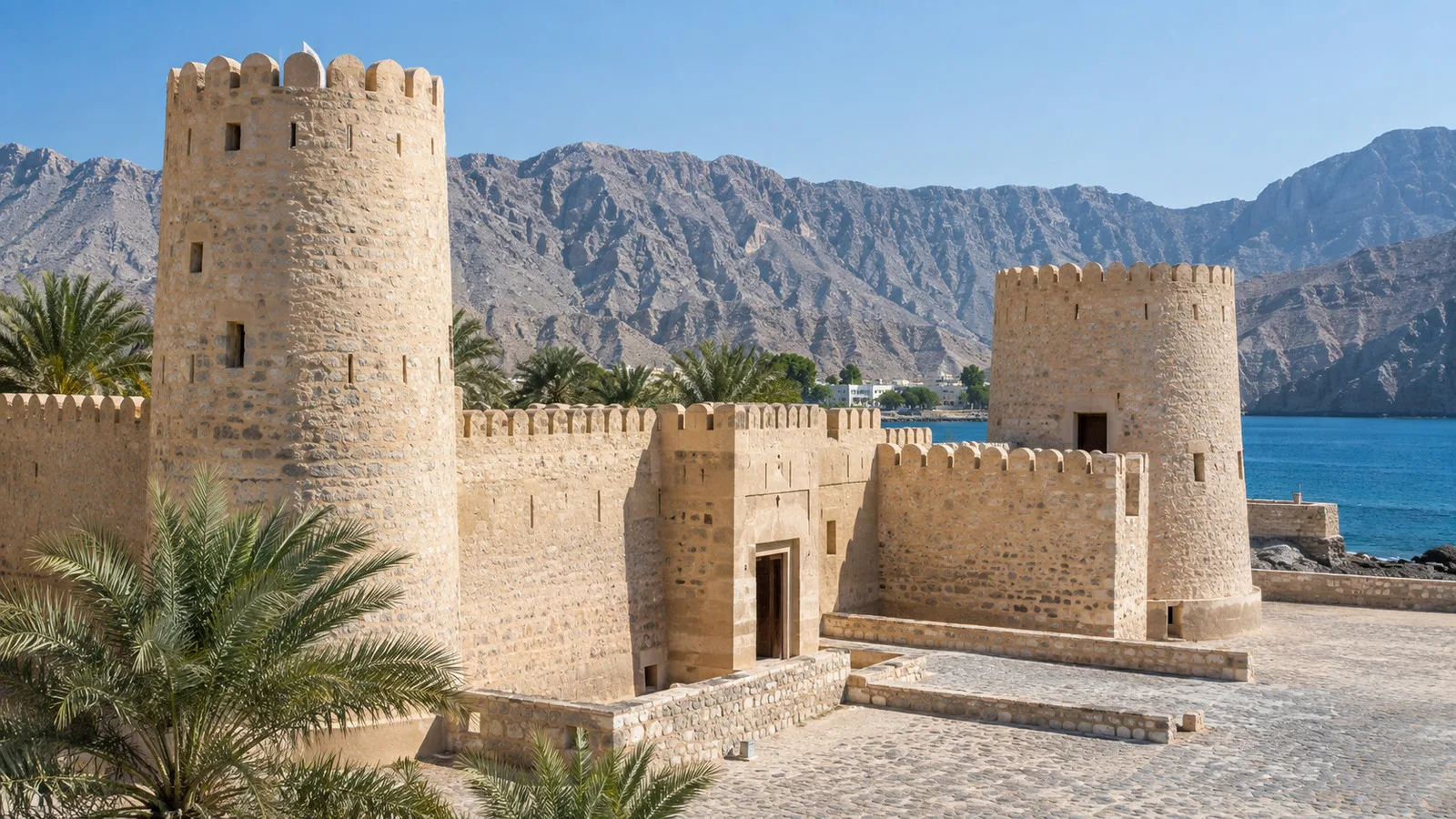
Khasab Fort is the strongest cultural stop in town and an easy companion to a shorter boat outing. Its square plan, corner towers, central tower, courtyards, and traditional structures introduce the defensive and domestic history of Musandam.
Oman’s Ministry of Heritage and Tourism says the fort dates to the early seventeenth century and reflects several phases of construction and reinforcement. The building later served as a governor’s residence, military accommodation, a court, and a judge’s office.
The official Khasab Fort page currently lists daily hours from 8:00 in the morning to 6:00 in the evening, tickets at reception, and wheelchair accessibility. Recheck the live page before travel because public holidays, maintenance, or seasonal decisions can alter access.
Allow enough time to notice the boats, rooms, construction materials, and coastal setting instead of simply walking around the walls. This is a compact visit, so it pairs naturally with a town stroll or dhow cruise.
Exploring Khasab town
Khasab is a working regional town, and that is part of its appeal. The waterfront, fort area, small shops, mosques, produce, dates, spices, and everyday commerce offer a quieter counterpoint to the polished skylines elsewhere on many Gulf itineraries.
Dress with local customs in mind by covering shoulders and knees away from the ship. Lightweight loose clothing is more comfortable in the heat than something tight, and a scarf can be useful for sun or an unexpected visit near a religious site.
Ask permission before photographing people, shops, boats, or working areas at close range. Military, security, border, and commercial port facilities should never be treated as casual photo subjects.
Mountain safaris and high viewpoints
Musandam’s interior replaces blue water with pale limestone, steep tracks, terraces, wadis, and wide views. A four-wheel-drive tour is the practical way to experience it because the roads and surfaces can be demanding.
Jebel Harim
Jebel Harim is promoted as the high mountain experience of Musandam. Tours may include fossils, traditional villages, viewpoints, and sections of rough or winding road, with the precise route set by the operator and conditions.
This is not a good choice for everyone who experiences motion sickness, back discomfort, or anxiety on exposed roads. Tell the operator your concerns before paying rather than hoping the vehicle or route will be gentler than described.
Khor Najd
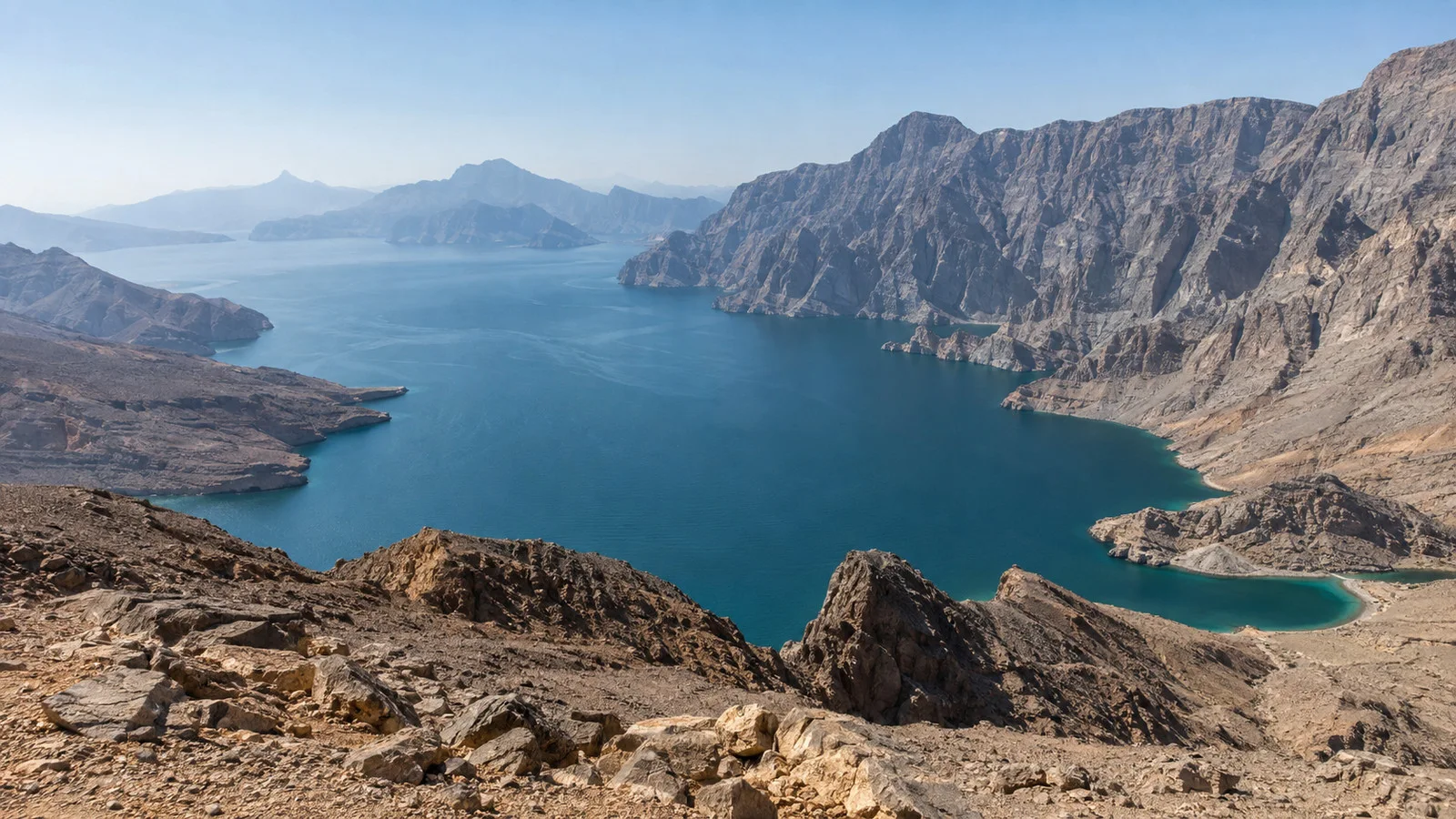
Khor Najd is a dramatic inlet seen from a road viewpoint, offering the classic image of mountains folding around bright water. Some tours descend toward the shore, while others use the overlook as the main stop.
The viewpoint is the prize for many visitors, so a descent is not essential if time or comfort is limited. Ask whether the tour includes the ridge, beach, or both.
Choosing between water and mountains
Pick the dhow if you want a relaxed pace, sea air, swimming possibilities, and the signature coastal scenery. Pick the mountain safari if you prefer photography from above, rugged terrain, and a more active sense of the peninsula’s geology.
Families often find the boat easier, although young children still need close supervision around open decks and boarding points. Travelers sensitive to heat may prefer a morning outing in either direction and a short indoor visit to the fort afterward.
If the ship offers a long call, you may see packages that combine elements of both. Read the time breakdown carefully because a combination tour can spend more time transferring than lingering.
Visa and entry basics
Do not assume that entry rules for the United Arab Emirates automatically cover Musandam, because Khasab is in Oman. Passport nationality, route, cruise line handling, and whether you enter elsewhere in Oman can all affect instructions.
The Omani government cruise visa service says the competent authority grants cruise passenger visas following a ship agent’s request. Give your cruise line accurate passport information and follow its written instructions rather than applying through an unrelated website.
If you plan an overland border crossing before or after the cruise, that is a different situation from walking ashore during a managed port call. Check current requirements for every passport holder and every country crossed.
Heat, sun, and what to bring
The Gulf cruise season favors the cooler part of the year, but Khasab can still feel hot on an exposed pier, open deck, or mountain stop. Sun reflection from rock and water makes protection important even when the air feels comfortable.
Bring water, sunscreen, sunglasses, a secure hat, and a light layer that covers your skin. Choose shoes that can handle boat steps, dusty ground, and smooth fort surfaces.
A waterproof phone pouch is handy on a dhow, but I would also bring a small towel if swimming is part of the plan. Keep valuables minimal because changing space and dry storage may be basic.
Accessibility and comfort
The most important accessibility question is whether the ship is alongside or using tenders. Cruise lines set their own transfer rules, and tender boats may not accommodate every wheelchair, scooter, balance issue, or sea condition.
Khasab Fort is listed by the national tourism authority as wheelchair accessible, yet individual rooms, thresholds, surfaces, and rest areas may still require clarification. Contact the attraction or tour provider for details that match your needs.
Traditional dhows vary widely, so never rely on a generic accessibility label. Ask about the gangway, step height, deck seating, shade, toilet, swimming ladder, and help available from the crew.
Mountain safaris involve high vehicles and uneven motion. Request a private vehicle if you need frequent stops, a specific seat, or control over the pace.
Three realistic ways to spend the day
Plan one: the classic dhow morning
Take a reserved half-day dhow cruise, return with a comfortable margin, and visit Khasab Fort if timing permits. This is my favorite first visit because it captures the Musandam landscape without making the day frantic.
Plan two: mountains and fort
Book a four-wheel-drive outing to the interior viewpoints, then finish at Khasab Fort or with a short town stop. This works well for travelers who prefer landscapes from land and do not want the boarding challenges of a dhow.
Plan three: an easy local visit
Use confirmed transportation to Khasab Fort, browse the town, and return to the port early. It is less spectacular than the inlet, but it can be a comfortable answer for a short call, uncertain weather, or limited mobility.
Common mistakes to avoid
The first mistake is assuming the ship will dock because a previous itinerary did. Confirm the actual arrival arrangement, since a tender can shorten the usable day and change where independent tours meet.
The second is booking a boat based only on the lowest price. Safety equipment, shade, boarding, clear communication, and a conservative return time are worth paying for.
The third is trying to combine a full dhow trip with a full mountain safari. Choose one defining experience and let the fort or town fill the remaining time.
The fourth is underestimating sun exposure. A shaded dhow still leaves you near reflective water, while mountain viewpoints offer very little shelter.
The fifth is following generic visa advice. Use your cruise line and official Omani sources because rules depend on the person and itinerary.
Frequently asked questions
Does Khasab have a cruise ship berth?
Yes. The official port operator lists a 300-meter berth along with two smaller berths, but the day’s operational assignment still determines whether your ship docks or tenders.
What is the best excursion in Khasab?
A half-day dhow trip through Musandam’s sheltered inlets is the signature choice for most first-time visitors. A mountain safari is a strong alternative for travelers who prefer viewpoints and rugged roads.
Can I explore Khasab without an excursion?
You can visit the fort and town with locally available transportation, but confirm the return arrangement before leaving the port. The most dramatic coastal and mountain scenery requires a boat or vehicle.
Are dolphins guaranteed on a dhow cruise?
No. Sightings are possible and often promoted, but dolphins are wild, so choose the trip for the landscape rather than a guarantee.
Is Khasab Fort accessible?
The official tourism page labels it wheelchair accessible. Ask for current details about surfaces, thresholds, restrooms, and the route from your drop point if those affect your visit.
Do cruise passengers need an Omani visa?
Requirements and handling depend on nationality and itinerary. Oman’s official service describes a ship agent request process for cruise passenger visas, so follow the cruise line’s personalized instructions.
My final take
Khasab is at its best when you stop looking for a city day and lean into Musandam’s geography. Reserve one excellent water or mountain experience, keep your timing conservative, and let the fort or town be a welcome extra.
I would take the dhow on a first visit, sit in the shade with a view of the cliffs, and return early enough to enjoy the port without checking the clock every five minutes. That is the version of Khasab that stays with you.
How this guide was researched: No firsthand Khasab visit is claimed. This guide was checked September 12, 2026 against current Asyad port information, Oman Ministry of Heritage and Tourism guidance, and the Omani government’s cruise visa service.