Australia Cruise Ports: A Guide to Every Terminal
Australia is a country of homeports and headline ports of call, and where your ship docks changes the whole day.
Here is how I would compare the main Australia cruise ports, from Sydney’s harbor to the tropical north, so you can plan each stop with confidence.
My quick take
Sydney is the country’s big homeport and the most walkable arrival in Australia. If you only have one day in each place, the east coast cities put you closest to the action, while the northern and Tasmanian ports are more about nature and history.
Use this page as a map. Each port below links to a full guide with terminals, transport, and the stops worth your limited hours.

The quick facts
- Main homeports: Sydney and Brisbane handle the largest share of round-trip departures, with Melbourne and Fremantle also used regularly. Adelaide, Cairns, Darwin, and smaller ports appear on selected embarkation itineraries, so always confirm the terminal printed on your documents.
- Headline ports of call: Hobart and Port Arthur in Tasmania, Cairns and Airlie Beach on the Great Barrier Reef, plus Darwin, Eden, and Broome.
- Currency: the Australian dollar (AUD). Cards are widely accepted in cities.
- Safety: the U.S. State Department lists Australia at Level 1, “exercise normal precautions,” its lowest advisory tier.
- Season: the main cruise season runs the Australian spring and summer, roughly October to April. The tropical north is a dry-season region, and Tasmania is a summer and fall call.
Sydney
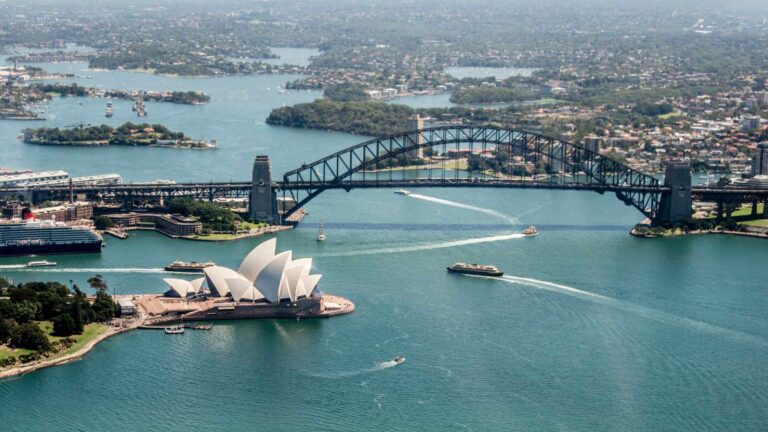
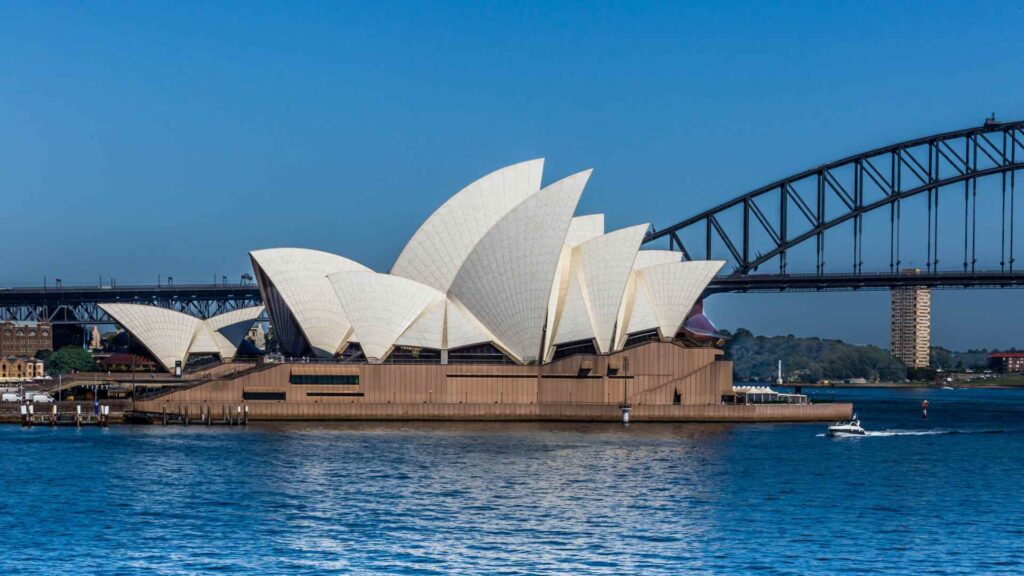
Sydney is Australia’s flagship cruise homeport, and it has two very different terminals. The Overseas Passenger Terminal sits right at Circular Quay in The Rocks, across the water from the Opera House.
Per the Port Authority of NSW, the OPT is a short walk to trains, ferries, and light rail at Circular Quay. Ships that fit under the Sydney Harbour Bridge may use White Bay Cruise Terminal instead, while taller ships must remain east of the bridge at the OPT, so confirm the terminal before booking a hotel or transfer.
From the OPT you can walk to The Rocks, the Royal Botanic Garden, and the harbor foreshore. If you want a bed nearby before or after, it pays to book close to Circular Quay so you can walk to the terminal.
Brisbane
Brisbane uses the Brisbane International Cruise Terminal at Pinkenba, near the mouth of the Brisbane River. The Port of Brisbane puts it about 13 miles from the CBD and 7.5 miles from the airport.
The catch is that the terminal is not served by public transport, so plan on a taxi, rideshare, ship transfer, or tour. Once you reach town, South Bank and the riverfront are the easy wins, and the Gold Coast and Sunshine Coast are day-trip range.
Melbourne
Melbourne docks at Station Pier in Port Melbourne, the closest major cruise terminal to a city center after Sydney. The 109 tram runs from beside the pier toward the CBD, which makes an independent day simple.
This is the port for laneway coffee, Federation Square, and Queen Victoria Market. With a long day you can reach the Great Ocean Road or the Yarra Valley, though both eat most of your hours.
Adelaide
Adelaide ships berth at Outer Harbor, with the city roughly 45 minutes away by train. The nearby station makes an independent CBD day straightforward, but wine-country tours should leave directly from the port.
Adelaide is the wine gateway of the group. The Barossa Valley, McLaren Vale, and the Adelaide Hills are all within reach, and the seaside suburb of Glenelg is a quick tram ride from the center.
Fremantle (for Perth)
On the west coast, ships dock at the Fremantle Passenger Terminal on Victoria Quay, per Fremantle Ports. “Freo” is a walkable heritage town in its own right, with the Fremantle Markets and the convict-era Fremantle Prison close by.
Perth’s city center is about half an hour away, and a train runs from Fremantle station. Rottnest Island and its quokkas are a ferry ride from the harbor if you would rather stay on the coast.
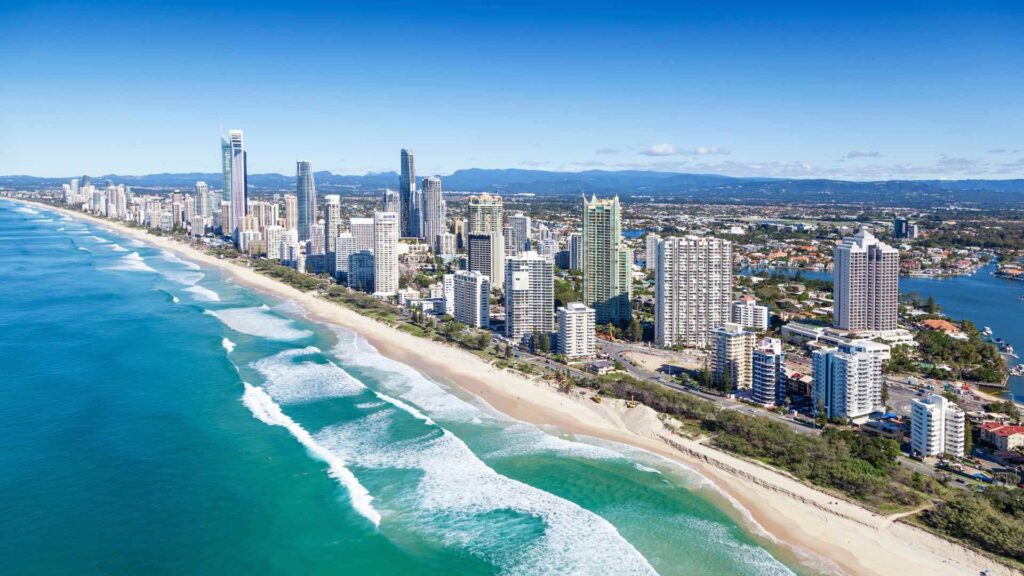
Tasmania: Hobart and Port Arthur
Hobart is the standout Tasmanian call, usually docking at Macquarie Wharf within walking distance of Salamanca Place and the waterfront. The Museum of Old and New Art, MONA, is a short ferry ride upriver and worth booking ahead.
Nearby, Port Arthur anchors a day around one of Australia’s most significant convict sites, a UNESCO World Heritage listing on the Tasman Peninsula. Tasmania is a summer and fall call, so pack layers even in the peak season.
The Great Barrier Reef: Cairns and Airlie Beach
Cairns is the classic reef gateway in tropical North Queensland, with reef pontoons, the Daintree Rainforest, and the Kuranda Scenic Railway all on the menu. It is also your springboard for snorkel and dive day trips.
Further south, Airlie Beach is the gateway to the Whitsundays and Whitehaven Beach, and ships here usually tender ashore. Watch the stinger season, roughly November to May, when marine jellyfish mean netted enclosures or protective suits for swimming.
Darwin, Eden, and Broome
Darwin is the Top End’s tropical capital, a base for Kakadu and Litchfield day trips and famous saltwater crocodiles. It sits in the dry-season, expedition-heavy end of the calendar rather than the summer city season.
On the New South Wales south coast, Eden is whale country on the Sapphire Coast, with the Killer Whale Museum telling the story of Old Tom. It is a smaller, nature-first stop rather than a big-city day.
Far to the northwest, Broome is the Kimberley’s pearling town, known for Cable Beach and its sunset camel trains. This is dry-season expedition territory, generally April to September, and the wider region often overlaps with South Pacific itineraries on longer voyages.
Two of Australia’s most remote calls sit far out in the ocean, and I cover them together in my Norfolk Island and Christmas Island cruise ports guide. Both are small, nature-first stops that only a handful of itineraries reach.
The terminal-by-terminal cheat sheet
Sydney: Overseas Passenger Terminal at Circular Quay is the walk-off winner for The Rocks, ferries, and trains. White Bay Cruise Terminal is west of the Harbour Bridge and needs a taxi, rideshare, or cruise transfer, so never book transport for “Sydney cruise terminal” without the name.
Brisbane: Brisbane International Cruise Terminal at Pinkenba is about 13 miles from the CBD and has no scheduled public transport. Pre-book road transport because taxis and rideshares can queue when a large ship arrives.
Melbourne: Station Pier in Port Melbourne connects to the CBD by Route 109 tram, and an express Route 109 bus can operate on eligible cruise days. You need a myki outside the central Free Tram Zone, and the official port page says it is sold at the terminal service desk.
Adelaide: the passenger terminal is at Outer Harbor, beside the end of the Outer Harbor rail line. Allow about 45 minutes on the train to central Adelaide and check the return schedule before leaving the ship.
Fremantle for Perth: the Fremantle Passenger Terminal and occasional adjacent Victoria Quay berths put you near Fremantle, not central Perth. Walk or use the call-day shuttle when provided to reach Fremantle Station, then allow about 30 minutes by train to Perth.
Cairns: Wharves 1 to 6 form the cruise quay, with the dedicated terminal at Wharf 2/3 in the city center. Ships that cannot safely enter Trinity Inlet may anchor and tender, so check the live port schedule before assuming a walk-off arrival.
Hobart: Macquarie Wharf 2/3 is the primary berth and terminal, with Macquarie Wharf 4/5 used for another vessel. TasPorts says both are within about 1/2 mile of the CBD, although passengers from the secondary berth may be routed through the main terminal.
Darwin: Fort Hill Wharf sits beside the Waterfront Precinct, with elevators and a pedestrian link toward the CBD. This is an easy walk-off call, but national-park trips need a booked tour or car.
Newcastle and Eden: Newcastle uses a working-port berth with organized ground transport into the city, while Eden Cruise Wharf at Snug Cove lands passengers near the town waterfront. In both places, confirm ship-day shuttles rather than assuming normal public transit reaches the secure berth.
Burnie, Albany, and Broome: these are working or regional ports where the ship, port, or destination may provide controlled shuttles or tenders. The exact landing and transport plan can change by vessel, so the daily program matters more than a generic map pin.
Airlie Beach, Port Douglas, Port Arthur, Busselton, and Kangaroo Island: these are commonly tender calls with a landing near the visitor area. Tender queues and wind exposure shorten the usable day, so book independent ferries or tours only after leaving at least a 90-minute cushion before the ship’s last tender.
Entry, biosecurity, and practical planning
Australia requires an appropriate visa or travel authority for most non-citizens, including many cruise passengers. Check your passport’s exact eligibility with the Department of Home Affairs before travel because an airline or cruise line can deny boarding when the document is missing.
Australian biosecurity rules apply to cruise arrivals as well as flights. Declare food, plant material, animal products, wooden articles, and outdoor gear when asked, or dispose of risk goods at the terminal; clean soil from shoes and hiking equipment before arrival.
Distances in Australia are larger than they look on an itinerary map. For a first visit, choose the city from Sydney, Melbourne, Adelaide, or Fremantle; choose one headline ecosystem from Cairns, Darwin, or a tender island; and keep a 60 to 90 minute independent return buffer, longer when a ferry or regional drive is involved.
Travelers with limited mobility should favor OPT Sydney, central Cairns, Hobart, Darwin, and central Fremantle, then confirm the ship’s gangway. White Bay, Brisbane, working-port berths, and tenders add a transfer or boarding step even when the destination itself is accessible.
When to go, and the weather
Australia’s seasons run opposite to the Northern Hemisphere. The busiest cruise months are the local spring and summer, roughly October to April, when the southern cities are warm and long on daylight.
The tropical north flips this. Cairns, Darwin, and Broome are best in the dry season, when humidity and rain ease, so many northern and Kimberley voyages run April to September.
You can double-check current alerts on the U.S. State Department’s Australia page before travel. Most non-citizens need a visa or electronic travel authority, but the correct document depends on nationality and purpose, so use the official Home Affairs visa finder rather than a third-party seller.
Quick answers
Which Australian port is best for first-time cruisers?
Sydney is the easiest when your ship uses the downtown terminal at Circular Quay, with Melbourne’s Station Pier a strong second for city access.
Do any Australian ports require tendering?
Yes, smaller calls and reef stops such as Airlie Beach can tender ashore rather than dock, so always confirm with your cruise line.
What is the currency, and are cards accepted?
The currency is the Australian dollar, and cards are widely accepted in cities, though a little cash is handy at small stalls and markets.

How this guide was researched: Unless a first-hand visit is explicitly identified above, this guide is based on independent research using official port, tourism, transit, government, and attraction sources where available. Logistics and time-sensitive details were reviewed in September 2026. See our Editorial Policy.