Melbourne Cruise Port (Station Pier): A Practical Guide
Melbourne gives cruise travelers a waterfront arrival in Port Melbourne with one of the world’s great food, art, and neighborhood cities only a tram ride away. The trick is not finding something to do, but choosing a compact route before the city’s scale and long day-trip wish list pull you in too many directions.
Station Pier is outside the central Free Tram Zone, so the ride into the city needs a valid myki even though many central tram trips later in the day may be free. Once downtown, laneways, galleries, gardens, markets, and the Yarra River can fill an excellent day without an organized excursion.
My quick take
For a first call, take Route 109 into central Melbourne, walk the laneways around Federation Square, choose one major museum or market, and return before peak traffic becomes stressful. I would save the Great Ocean Road and Phillip Island for a hotel stay because both demand too much road time for most cruise schedules.
Station Pier also handles embarkation and disembarkation, which is a different experience from a simple day call. Turnaround guests need to follow luggage and check-in instructions rather than planning around the sightseeing margins in this guide.
The Quick Facts
- Melbourne cruise ships normally berth alongside at Station Pier, 6 Waterfront Place in Port Melbourne.
- The city center is several miles from the pier, so most visitors use Route 109, a taxi, rideshare, shuttle, or tour.
- Stop 129 Beacon Cove is the regular Route 109 tram stop a short walk from Station Pier.
- The central Free Tram Zone does not extend to Station Pier, so you need a valid myki for the trip from Port Melbourne.
- Ports Victoria may run an express Route 109 bus on eligible cruise-call days, but service is not available for every visit.
- The currency is the Australian dollar, and cards are accepted widely.
- English is the everyday visitor language, while Melbourne is a multicultural city on the traditional lands of the Kulin Nation.
- Station Pier has no public luggage storage, so embarking or disembarking guests need a hotel or city-based plan.
Where ships dock in Melbourne
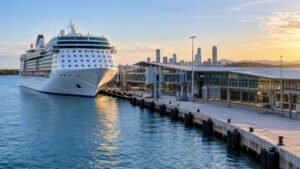
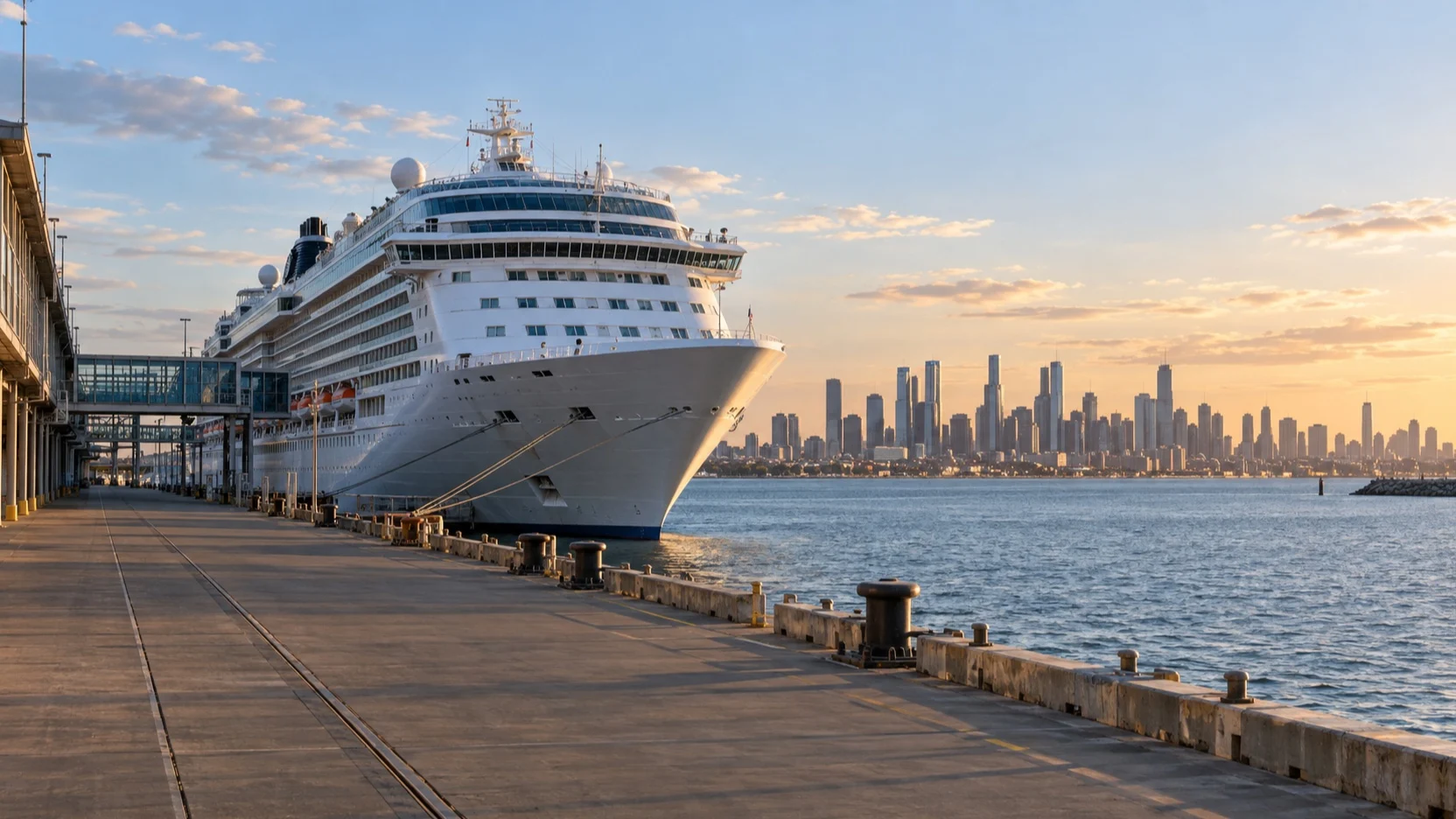
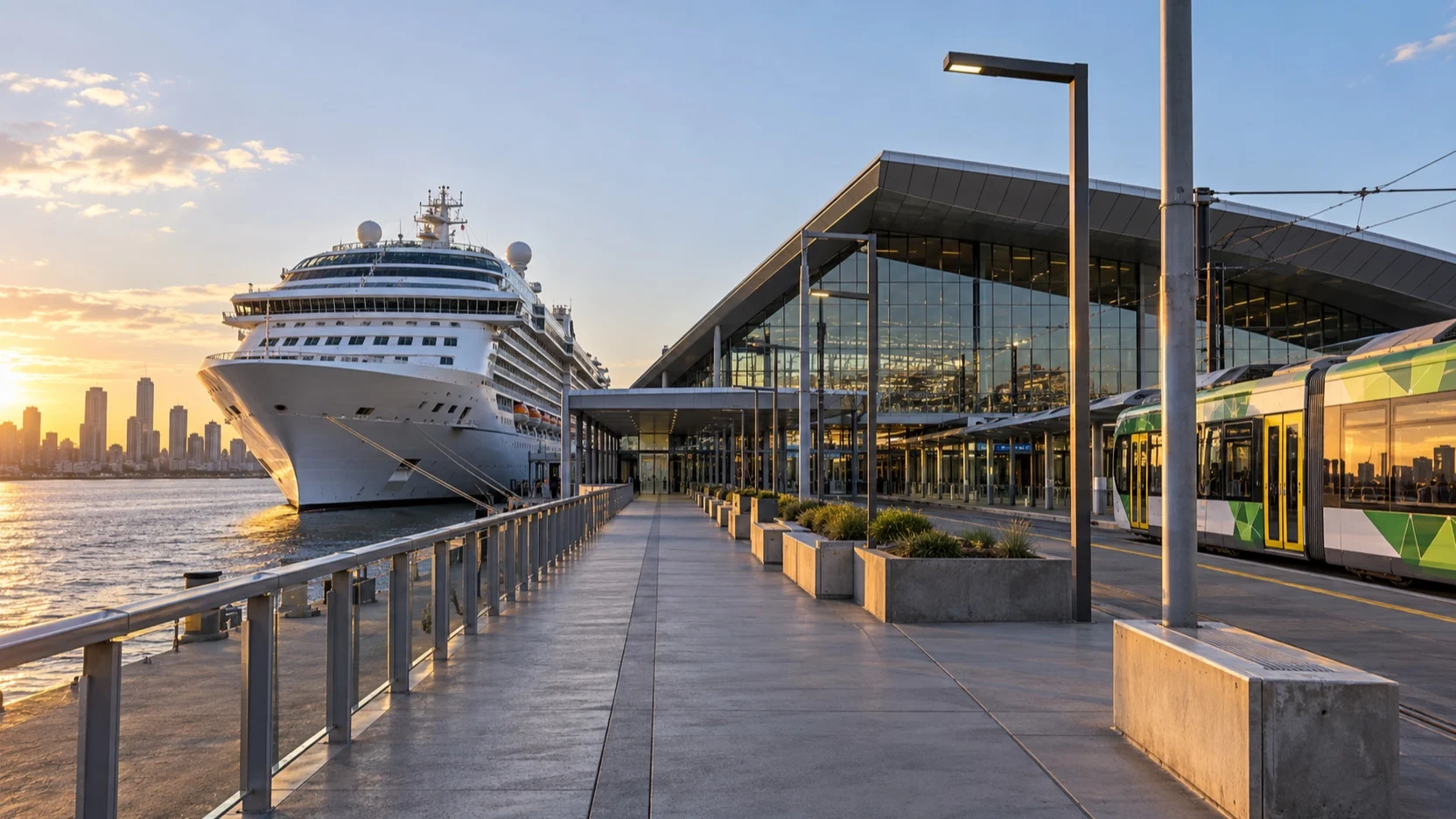
Cruise ships use Station Pier in Port Melbourne, a historic finger pier that also serves passenger operations beyond cruising. Ports Victoria lists the official address as 6 Waterfront Place, with arriving guests leaving through the Gatehouse toward the surrounding plaza.
The pier is a secure operational area, and access on cruise days is restricted to ticketed passengers and authorized personnel during embarkation periods. Friends, drivers, and private pickups may need to wait at the car park or designated landside meeting area rather than walking onto the pier.
Melbourne is normally an alongside port, so guests walk across a gangway rather than transfer by tender. The gangway slope, queue, and walking distance can still vary by ship and tide, so travelers who need assistance should coordinate it with the cruise line.
Station Pier services and limitations
The terminal supports cruise processing, but it should not be treated like a large international airport filled with shops and waiting lounges. Ports Victoria states that Station Pier does not provide public luggage storage and has no nearby car-rental agency.
A taxi rank may be established on cruise-ship visit days, while private pickup arrangements use the designated landside area. If you need an accessible vehicle, luggage help, or a fixed pickup, reserve it and share the current port instructions with the driver.
Waterfront Place and the Port Melbourne foreshore offer cafes and a pleasant local fallback. They are useful if your ship arrives late or if you prefer a quiet day near the water, but central Melbourne holds the greater range of major sights.
The exact public-transport plan
The regular tram option is Route 109 from Stop 129 Beacon Cove, which Ports Victoria describes as a short walk from Station Pier. Trams continue toward the city, giving travelers a direct way to reach central stops without depending on road traffic for the full journey.
You need a myki because Station Pier and Beacon Cove sit outside Melbourne’s Free Tram Zone. The port’s official cruise passenger page says myki tickets can be purchased at the service desk in the international cruise terminal, but verify that service is operating for your particular call.
Ports Victoria also lists an express Route 109 bus on qualifying cruise days when the visit is not a turnaround. Check the cruise schedule, terminal signs, and staff advice instead of assuming the bus will run simply because a previous ship had it.
Inside the central Free Tram Zone, travel is free only when the entire ride remains within its boundaries. If you cross the boundary, the usual myki rules apply, so use Public Transport Victoria’s current journey planner for the route and fare conditions.
Taxi and rideshare choices
A taxi or rideshare can be convenient for a group, heavy luggage, or a destination not near Route 109. Melbourne traffic varies sharply by weekday, event schedule, and construction, so a short distance on a map is not a guaranteed short ride.
Set the pickup and return point carefully because secure-pier access can be restricted. On the way back, use Station Pier or the Gatehouse as the destination and leave time to walk from wherever the driver is allowed to stop.
Airport transfers
Melbourne Airport at Tullamarine is well north of Station Pier, and traffic makes a same-day flight connection risky without a large margin. Arriving the day before an embarkation is the calmer choice because a delayed flight can otherwise become a missed cruise.
SkyBus operates its Melbourne City Express between the airport and Southern Cross Station. Route 109 passes near Southern Cross, but the bus-to-tram chain requires handling luggage and validating the correct ticket for each service.
A direct taxi or rideshare avoids the transfer and may make sense for two or more travelers with bags. Confirm the pickup terminal, expected road time, tolls, and cruise check-in cutoff before leaving the airport.
A first-time city route
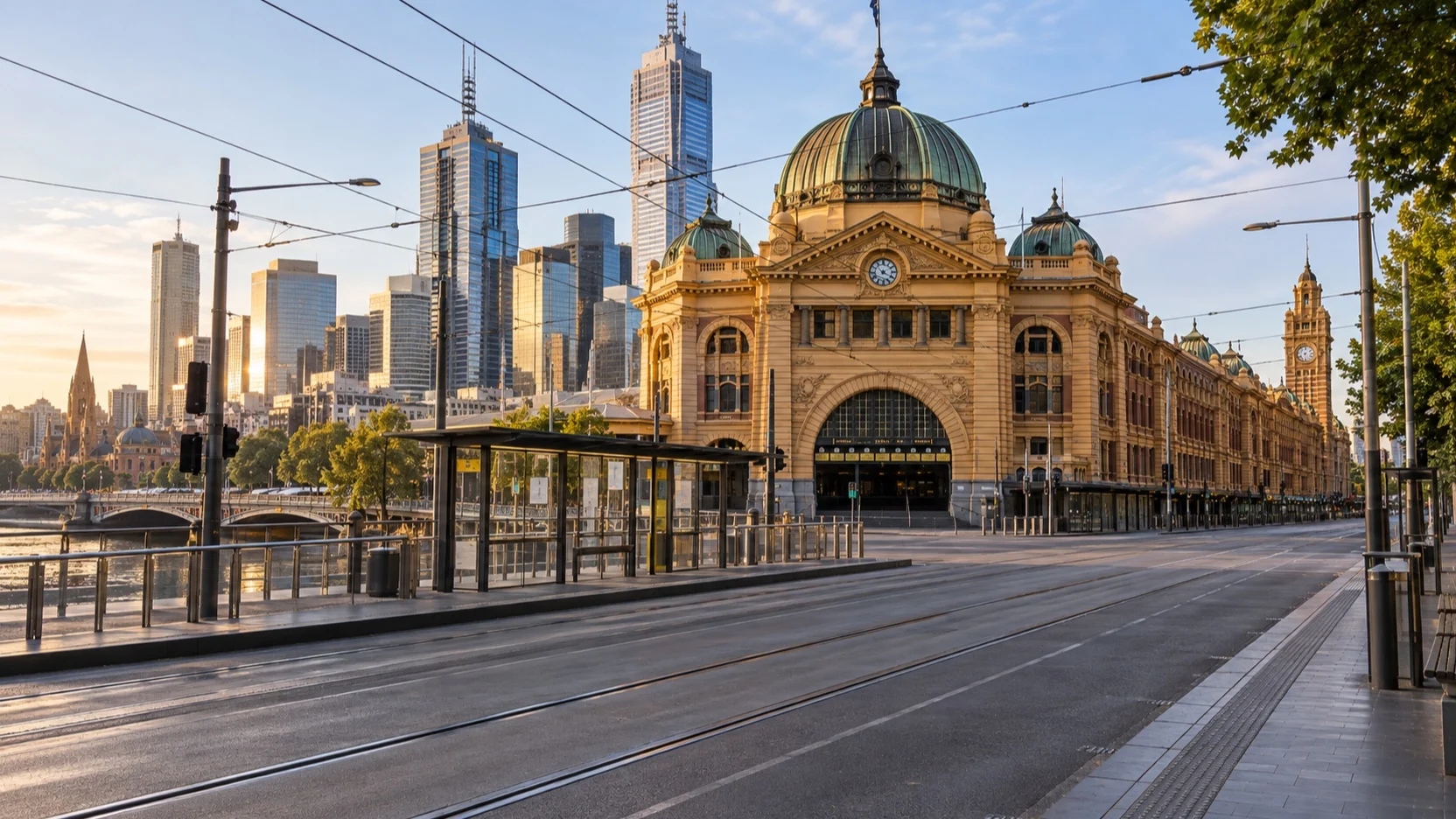
Ride into the central city and begin around Federation Square and Flinders Street Station, where several transport lines and river walks meet. From there, Melbourne’s laneways and arcades create a flexible route that can expand or contract according to time.
Walk a loop through Hosier Lane, Degraves Street, Centre Place, the Block Arcade, and the Royal Arcade, but expect street art and shopfronts to change. Melbourne rewards looking up, stepping into small passages, and taking a coffee break more than following a rigid checklist.
Finish near the Yarra River or continue to one major attraction. The important discipline is choosing one indoor centerpiece rather than losing the day in transit between several corners of the city.
Melbourne sights worth prioritizing
Federation Square and the river
Federation Square sits opposite Flinders Street Station and works as an easy orientation point. The Yarra River promenades, Southbank, galleries, cafes, and bridges are close enough to combine without another transport decision.
Check for events that may close parts of the square or change pedestrian routes. A festival can add atmosphere, but it can also slow movement and fill trams near your return time.
National Gallery of Victoria
The National Gallery of Victoria operates major collections and exhibitions at NGV International on Saint Kilda Road and the Ian Potter Centre at Federation Square. Admission policies vary by exhibition, so use the official NGV site for current hours, tickets, and access.
Art lovers can comfortably make the gallery the center of a port day. Choose a few galleries or one temporary exhibition instead of trying to cover every floor before lunch.
Queen Victoria Market
Queen Victoria Market is a strong choice for food, produce, and a less formal sense of local life. Trading days and sections vary, so confirm the current calendar before traveling across the city specifically for it.
Crowds can be dense and the market is not inside the immediate Federation Square loop. Pair it with nearby central streets rather than trying to combine it with a long trip to the coast.
Royal Botanic Gardens and the Shrine
The Royal Botanic Gardens Victoria and Shrine of Remembrance sit south of the river in a broad green precinct. They suit travelers who want open space, skyline views, and a quieter pace after the central laneways.
Distances inside the gardens add up, and summer heat can make an apparently gentle walk tiring. Choose a defined loop and carry water instead of attempting every garden path.
The sporting precinct
The Melbourne Cricket Ground and surrounding arenas reveal how deeply sport shapes the city. Stadium tours and events require current schedules, while the exterior river walk can still provide a sense of the precinct without a ticket.
Major matches affect transport and crowds well beyond the venue. Check the event calendar if your ship calls on a weekend or public holiday.
Saint Kilda
Saint Kilda offers a seaside alternative with a foreshore, cafes, Luna Park’s landmark entrance, and access toward the redeveloped pier. It is not the same direction as a compact central-city loop, so plan transport and return timing before adding it.
Little penguins are associated with the breakwater area, but viewing is a dusk activity subject to current access rules. Most cruise visitors should treat Saint Kilda as a daytime beach neighborhood rather than promise themselves a wildlife encounter.
Food and coffee without wasting the day
Melbourne’s coffee culture is easiest to enjoy by choosing a cafe near the route you already planned. Crossing the city for a famous name can mean a queue and two unnecessary tram rides when excellent options are usually close.
The city’s food reflects migration from across Europe, Asia, the Middle East, Africa, and the Pacific. Chinatown, Lygon Street, markets, and central laneways all provide distinctive choices, but one neighborhood is enough for a single call.
Tell restaurant staff if you have a firm ship deadline and allow time to pay. Australia does not require travelers to copy tipping customs from another country, so review the bill and local practice before adding anything automatically.
Three realistic port-day plans
A short call
Take Route 109 to the central city, walk Federation Square and a compact laneway loop, then return to Station Pier. Keep any museum visit brief and avoid a cross-city lunch reservation.
A half day
Add the NGV, Queen Victoria Market, or the Royal Botanic Gardens to the central route. Choose only one because each can fill more time than the map implies.
A full day
Combine central Melbourne with Saint Kilda, the sporting precinct, or a guided food experience. A nearby regional excursion can fit only when transport is designed around the ship, while the longest coastal drives remain poor choices for most calls.
The Great Ocean Road question
The Great Ocean Road is spectacular, but the Twelve Apostles lie far west of Melbourne and require a very long round trip. Traffic, stops, weather, and road conditions make it unsuitable for casual independent planning on an ordinary port day.
If the Great Ocean Road is essential, add hotel nights or use a ship excursion with a clearly protected return. Even then, expect the day to center on the vehicle journey rather than relaxed time at every coastal viewpoint.
Yarra Valley, Dandenong Ranges, and Phillip Island
The Yarra Valley is closer than the Twelve Apostles and can work with a prearranged driver or ship tour. Winery appointments, alcohol service, and road traffic still require a structured plan, and the driver should be separate from anyone tasting.
The Dandenong Ranges offer forest scenery and the Puffing Billy heritage railway, but train times must align with the ship. Reserve the railway in advance and avoid building a tight independent return around the last possible connection.
Phillip Island’s famous Penguin Parade happens after dark, which conflicts with many same-day cruise departures. Save it for an overnight stay unless the cruise line offers a purpose-built evening program and the ship remains in port.
Accessibility
An alongside berth removes the tender barrier, but Station Pier still involves gangways, terminal walking, and a move through the Gatehouse. Ports Victoria directs passengers with special needs to request help from ship staff for the journey toward the car park.
Route 109 vehicles and stops may have varying boarding conditions, while street works can affect accessible paths. Use the current Public Transport Victoria accessibility information and ask for a taxi when the tram-to-street chain does not fit your needs.
Melbourne’s modern cultural buildings are often more accessible than older arcades and narrow lanes, but each venue differs. Confirm lifts, companion policies, seating, restrooms, and step-free entrances directly before visiting.
Weather and sun
Melbourne’s cruise season usually spans the warmer Southern Hemisphere months, yet the city is famous for fast weather changes. A hot afternoon can follow a cool, windy morning, and Port Phillip conditions may feel different from sheltered downtown streets.
Carry a light waterproof layer, sun protection, water, and comfortable shoes. Heat warnings, thunderstorms, and strong wind can alter outdoor plans, so keep a gallery or museum ready as a substitute.
Port operations are generally reliable, but no guide should invent a cancellation rate. Follow the ship and Ports Victoria when wind, pilotage, or berth operations affect the schedule.
Entry and biosecurity
Australian visa or travel-authority requirements depend on nationality, passport, and purpose of travel. Use the Department of Home Affairs official visitor visa finder and make sure approval is linked to the passport you will carry.
Australia enforces strict biosecurity rules on food, plant material, animal products, and outdoor equipment. Declare anything uncertain, clean soil from footwear, and follow the ship’s instructions about items that cannot be taken ashore.
Money, language, and connectivity
The Australian dollar is the local currency, and cards are widely accepted. A small backup payment method is useful for markets, transit issues, or any vendor whose terminal is temporarily offline.
English is the main visitor language, while Melbourne’s communities speak many languages and the city stands on Aboriginal land. Acknowledging living culture means respecting sites, names, and guidance rather than reducing Indigenous heritage to a decorative note.
Mobile service is strong in central areas, but international roaming can be expensive. Download your transport route, tickets, and ship contact details before leaving the pier.
Frequently asked questions
Do ships tender in Melbourne?
No, cruise ships normally berth alongside at Station Pier. The gangway setup can still vary, so travelers who need assistance should confirm it with the cruise line.
How do I reach the city center?
Route 109 from Stop 129 Beacon Cove is the regular public-transport option, while taxis, rideshares, and some cruise-day buses also operate. Check Ports Victoria and Public Transport Victoria for the service running on your date.
Is the tram free from the cruise port?
No, Station Pier is outside the central Free Tram Zone. Use a valid myki for the journey from Beacon Cove and understand when free central travel begins.
Can I store luggage at Station Pier?
Ports Victoria says there are no luggage-storage facilities on the pier. Use your hotel or a verified city storage service and allow time to retrieve bags before check-in or departure.
Can I visit the Great Ocean Road?
It is possible only with a very long, carefully managed day, and the road journey dominates the experience. A hotel stay before or after the cruise is the more comfortable choice.
Is Melbourne walkable?
The central city is highly walkable once you arrive, and trams help connect farther neighborhoods. Station Pier itself is outside the center, so the day begins and ends with transport.
How Melbourne compares with other Australian ports
Sydney can deliver an iconic harbor arrival directly beside major sights, while Melbourne asks for a short city transfer and then rewards deeper neighborhood wandering. Hobart is smaller and more immediately compact, with a very different maritime and island character.
Melbourne’s advantage is choice: art, sport, gardens, markets, food, and coast all fit within the broader city. Its danger is trying to do all of them in one port call.
For more regional planning, see our guides to Sydney and Hobart. Give each port a distinct theme and the itinerary will feel much richer.
The bottom line
Melbourne is an easy port once you solve the short Station Pier transport chain. Buy or load the correct fare, ride Route 109 into the city, and build the day around one neighborhood plus one major attraction.
Leave distant icons for an overnight and protect the return trip from traffic and event crowds. The city’s best moments often arrive over coffee, art, or a laneway you did not expect to find.
This guide was last reviewed on September 11, 2026. Pier access, transit services, cruise-day buses, attraction hours, and entry rules can change, so confirm final details with your cruise line and official providers.