Ko Samui Cruise Port: Tenders, Beaches & Big Buddha
Ko Samui is a tender port, and that single fact should shape everything you plan. There is no cruise pier here, so your day depends on a small boat, a swell, and a captain’s judgment call.
When it works, it is one of the loveliest days in the Gulf of Thailand. When it does not, you get a sea day that nobody asked for.
My quick take
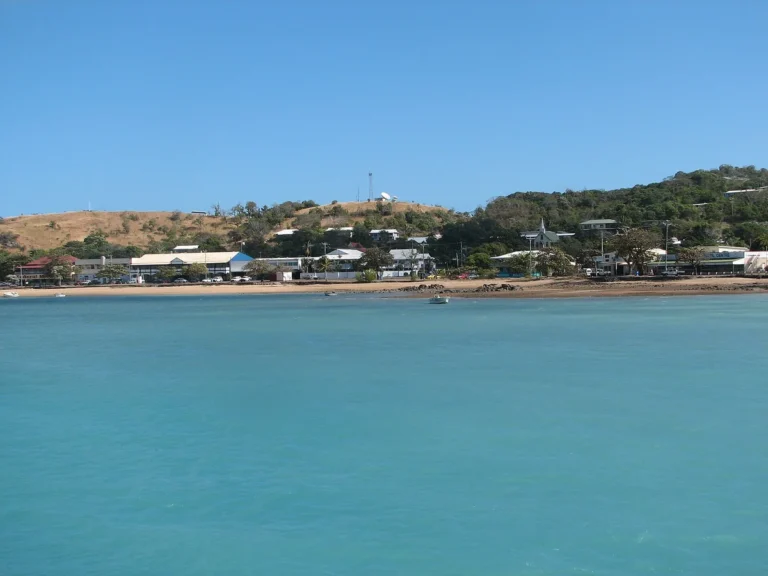
Samui is a proper island rather than a resort strip, and it is bigger than it looks from the ship. Nathon, where you land, is the working town rather than the pretty part.
A strong default day is a taxi loop, going north to the Big Buddha, then Fisherman’s Village, then back down through Chaweng. That covers the island’s best three hours without a second boat attached.
Ang Thong marine park is the spectacular option, but it is another boat stacked on top of the tender. On a short call I would not risk it, and on a long call I would only book it through the ship.
If tendering is new to you, it is worth understanding what actually happens before you build a day around it. My guide to what is a tender port explains the mechanics and the ways it goes wrong.
The quick facts
- Where you land: the pier at Nathon, on the west coast of Ko Samui in Surat Thani province, out in the Gulf of Thailand. It is the island’s administrative town and ferry hub, not its holiday face.
- Dock or tender: Large cruise ships normally anchor and tender ashore at Nathon because Samui has no berth for them; verify the landing point in the daily program.
- Into town: Nathon is right there when you step off the tender, and you can walk its couple of streets in about 20 minutes.
- Currency and language: Thai baht (THB) and Thai, with English widely used across the tourist side of the island.
- Time zone: Indochina Time (ICT, UTC+7).
- Call reliability: This is a weather-dependent tender call, and wind or swell can delay or halt small-boat operations. The captain and tender team make the decision for the actual ship and sea state.
- Best first visit: Arrange one island loop linking Big Buddha, Fisherman’s Village, and one beach. Keep Ang Thong for a long call with a ship-run excursion.
- Return margin: Reach the Nathon tender meeting point well before the published final boat. Leave more time after Chaweng, Lamai, Big Buddha, or an island loop because ring-road traffic can change quickly.
Tendering into Nathon, and why the call sometimes does not happen
Ko Samui has no berth for large cruise ships, so a normal call anchors offshore and uses tenders to Nathon. The transfer can involve steps, a moving platform, tender tickets, and queues in both directions.
Wind, swell, visibility, and the safe movement between ship and tender control the operation. The master may delay, shorten, relocate, or cancel a call when those conditions are not acceptable.
Thailand’s Marine Department regulates piers and passenger boats and can issue restrictions when conditions deteriorate. Local marine warnings are an important signal, but the ship’s master makes the tender decision for your vessel.
Nathon’s pier area has a small market, a handful of cafes, and taxi drivers who have been waiting specifically for you. It is functional rather than charming, and you will not want to spend the day in it.
Build your plan so that a missed call costs you nothing but disappointment. This is not the port for a prepaid private tour with a no refund clause.
Getting around
Taxis wait at the pier and they negotiate rather than meter, so settle the number and the route before you get in. Hiring one driver for three or four hours beats four separate rounds of haggling.
Songthaews, the pickup trucks with bench seats in the back, run the ring road for a fraction of the price. They are slow and they stop constantly, which is fine only if you have hours to spare.
Samui’s ring road looks simple, but left-side traffic, scooters, rain, congestion, and unfamiliar junctions make a cruise day a poor time to learn. Rent a scooter only with the legally required license and motorcycle endorsement, a proper helmet, and insurance that actually covers it.
Chaweng, Big Buddha, and the northeast coast can each take considerably longer than a map suggests when the ring road is busy. Build the day around one geographic loop and obtain the driver’s realistic call-day estimate before leaving Nathon.
The stops I would actually spend time on
Samui is small enough to sample properly in a port day, which is rarer than it sounds. These are the places worth your limited hours.
The Big Buddha at Wat Phra Yai: A golden seated Buddha on a small islet off the northeast corner, joined to Samui by a causeway. Steps up, shoulders and knees covered, and a fine view back across the water.
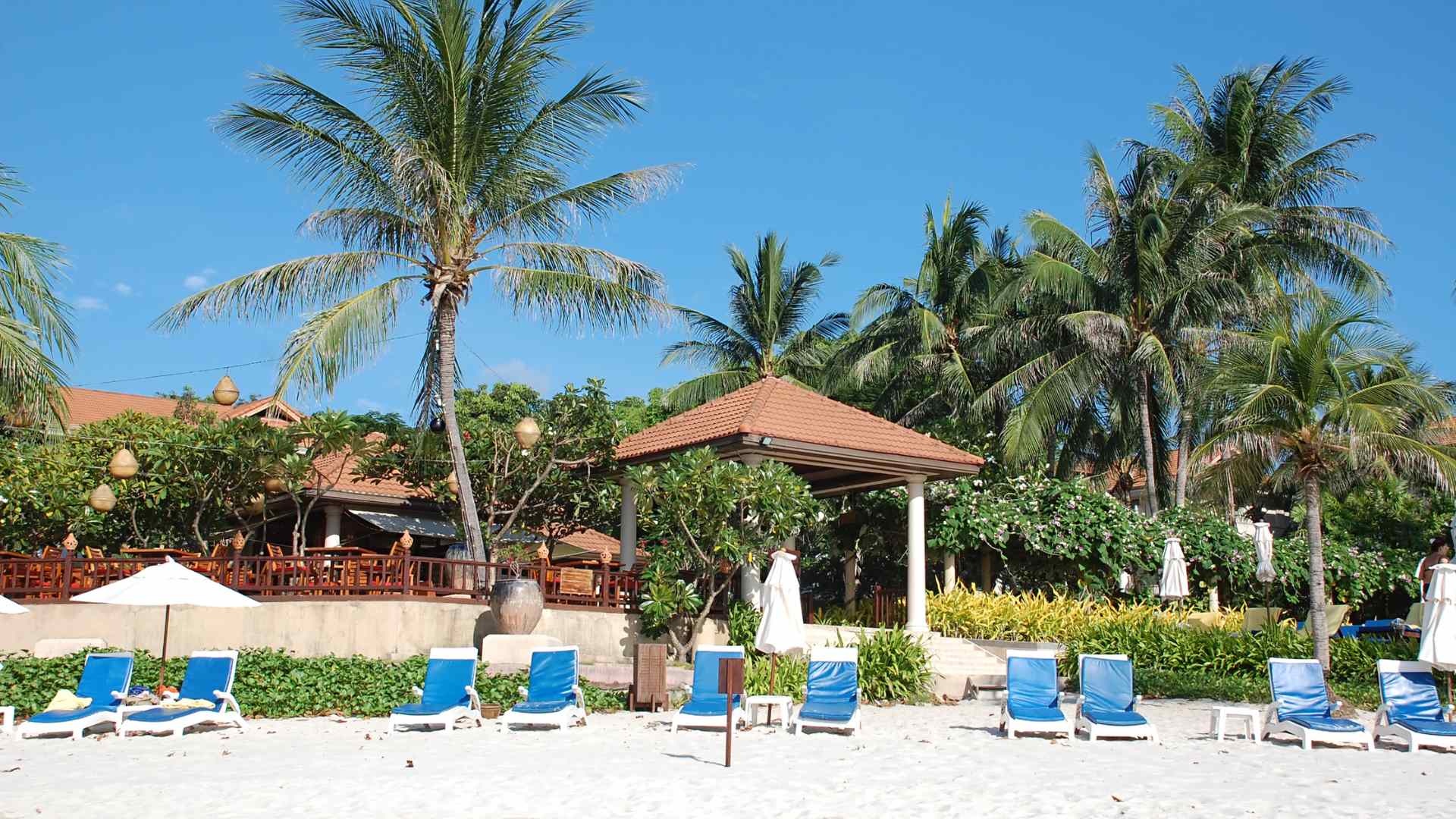
Chaweng: Samui’s longest and busiest beach, which the Tourism Authority of Thailand lists among the island’s prime swimming spots. Good sand, warm water, and no shortage of somewhere to buy lunch.
Lamai: The quieter of the two main beaches, on the southeast coast, with a slower pace and cheaper everything. My pick if you want a beach rather than a scene.
Hin Ta and Hin Yai: The rock formations at the end of Hat Lamai, which the tourism authority describes with admirable restraint as surprisingly shaped. Ten minutes of your day, and you will laugh.
Bophut Fisherman’s Village: A short strip of old Chinese shophouses on the north coast, now full of cafes and small restaurants. The best walking on the island and the easiest lunch.
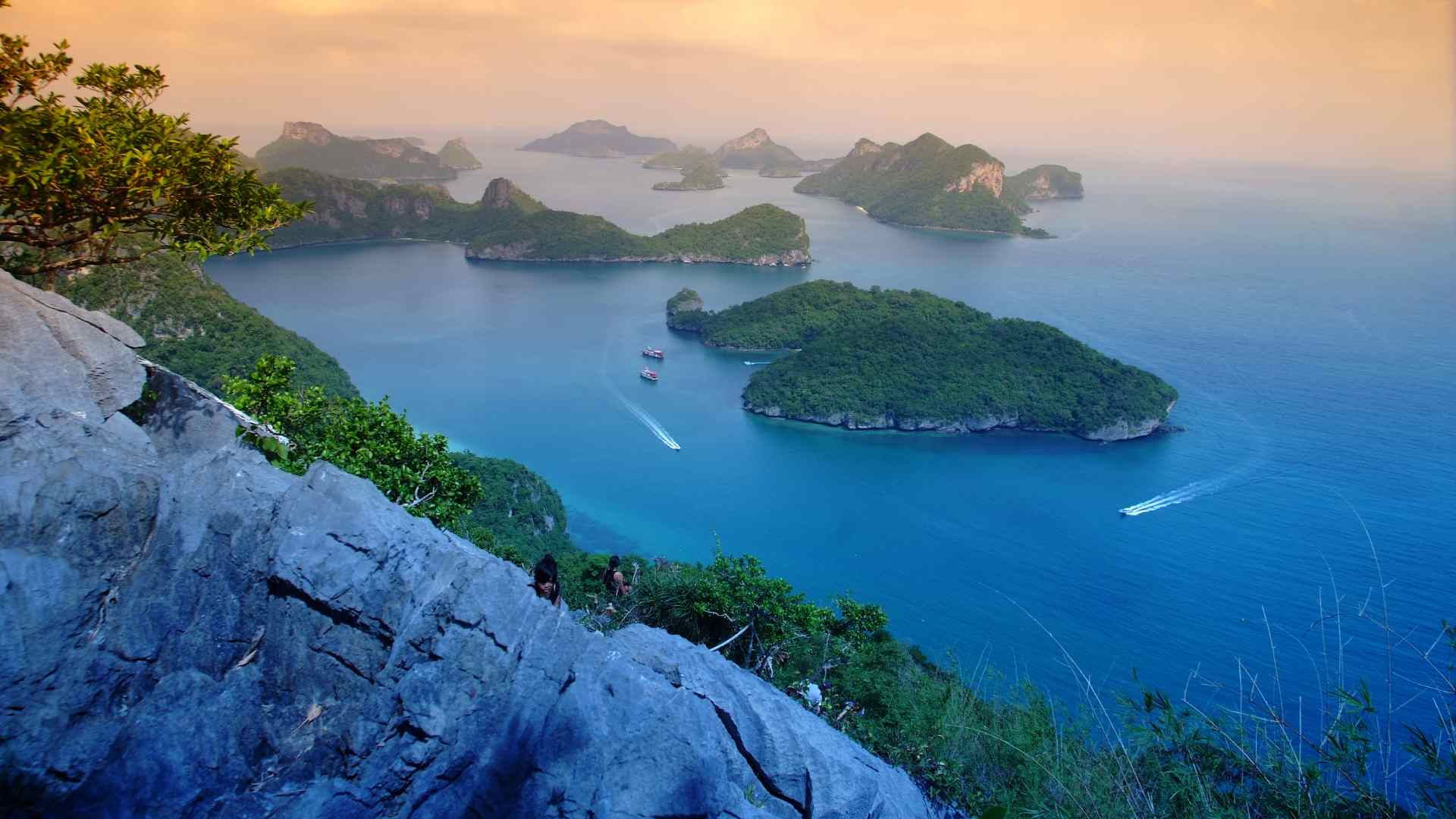
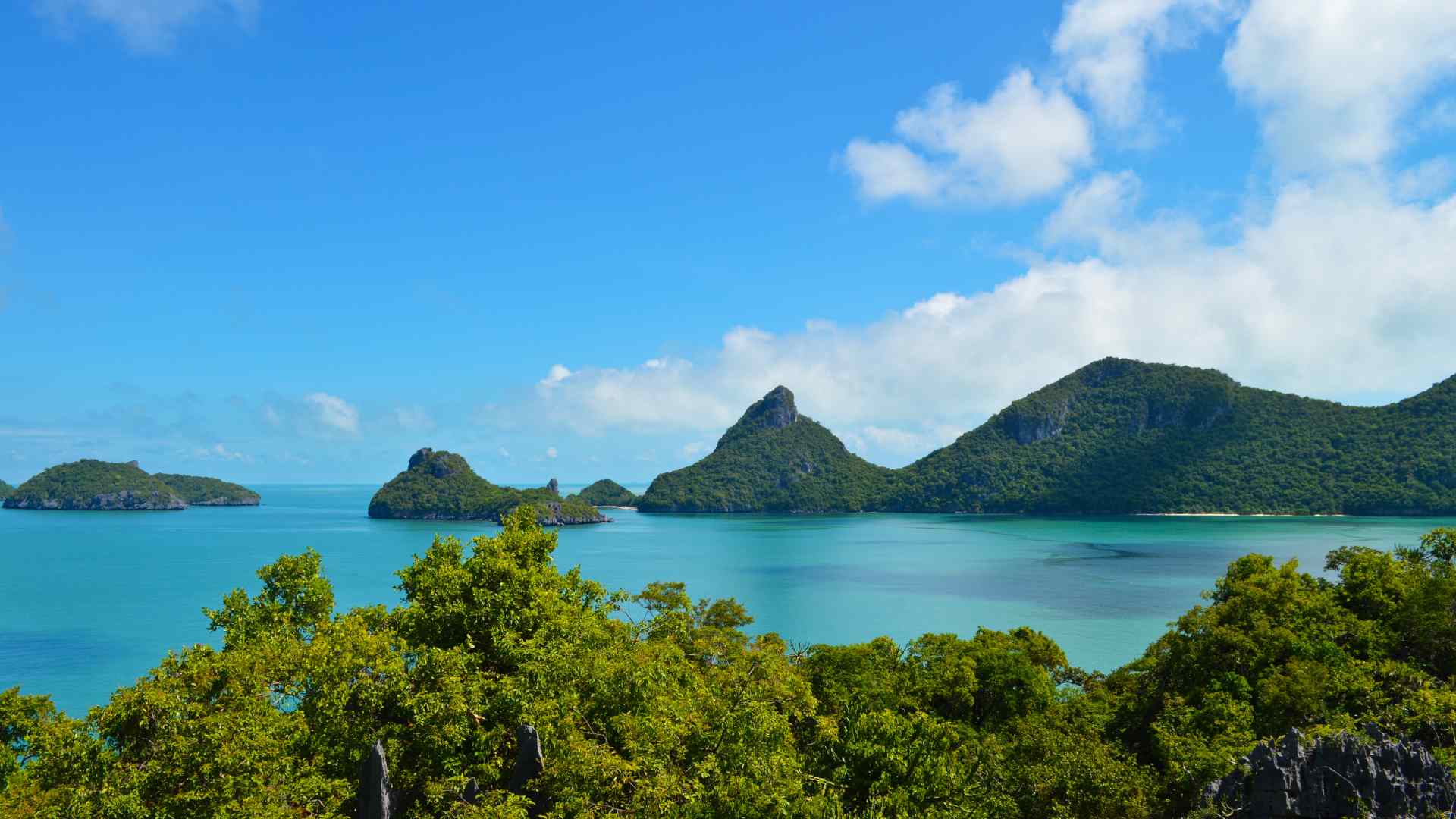
Ang Thong National Marine Park: An archipelago northwest of Samui with limestone islands and a hidden saltwater lagoon, reached by a boat trip that takes most of a day. Long calls only, and book it through the ship.
Na Muang waterfalls: Two falls in the island’s interior, one an easy stroll from the road and one a genuine climb. Much better after rain and rather sad in the dry months.
Wat Plai Laem: A temple near the Big Buddha with a many armed Guanyin figure standing over a lake full of extremely well fed fish. Quieter than its famous neighbor and better to photograph.
Nathon itself: The port town, with a morning market, a row of Chinese shophouses, and the honest working side of Samui. Worth half an hour while you wait for a tender, and no more than that.
Fun fact: The rocks at the end of Hat Lamai are called Hin Ta and Hin Yai, Grandfather and Grandmother, and the resemblance is not remotely subtle. The Tourism Authority of Thailand’s Surat Thani page lists them among the province’s highlights with a completely straight face.
How I would plan the day
Get on an early tender, because the line only grows and the day is shorter than it looks. If your line issues tender tickets, be at the lounge when they open the desk.
Agree a taxi loop at the pier for three or four hours, with your return time said out loud and repeated. Big Buddha, Fisherman’s Village, a beach, and back is a very good use of that time.
If conditions are marginal, treat the published tender cutoff as changeable and monitor ship messages. A shortened call can collapse a distant independent plan, so the safe response is to drop stops rather than protect a prepaid itinerary.
That is exactly why I would not book Ang Thong with an independent operator. A private speedboat has no obligation to get you back before your ship’s revised departure time.
On a short call, walk Nathon, take a taxi to Fisherman’s Village for lunch, and come straight back. It is a modest plan and it essentially never goes wrong.
Reach the Nathon tender landing 60 minutes before its cutoff after a nearby plan, or 90 minutes early after Chaweng, Big Buddha, Lamai, or an island loop. Ang Thong adds another boat and belongs only on a cruise-line operation whose timing and cancellation handling are written for that sailing.
At temples, cover shoulders and knees, remove shoes where directed, and never climb on religious objects. Do not feed or approach monkeys; secure glasses and phones, and seek prompt medical advice after any bite or scratch because rabies exposure needs urgent assessment.
A realistic word on accessibility
This is one of the harder ports for limited mobility, and it is important to be direct about that. The tender transfer involves steps onto a moving platform, and many lines will not carry powered wheelchairs on tenders at all.
Ashore, the ring road is smooth and taxis are plentiful, but Nathon’s sidewalks are uneven and the Big Buddha is essentially a staircase. Beaches here mean soft sand with no boardwalks.
Ask the line’s access team well before sailing rather than at the gangway on the morning. My roundup of wheelchair-friendly cruise ports shows which calls repay the effort and which are better enjoyed from the deck.
When to go, and the weather
Samui’s Gulf of Thailand weather does not follow Phuket’s Andaman pattern exactly, which catches travelers out. Late-year monsoon conditions can bring heavier rain and rougher water, but the same-day marine forecast matters more than a calendar shortcut.
The Tourism Authority of Thailand describes the Surat Thani islands as visitable year-round and highlights April through November broadly. That tourism window is not a promise of tender conditions on a particular morning.
Expect heat, humidity, and strong sun in every season. Carry water and plan temple clothing that covers shoulders and knees without turning the day into a portable sauna.
The Thai Meteorological Department publishes marine forecasts for the Gulf, and a look the night before tells you what your captain already knows. Pack reef safe sunscreen, a hat, and something with sleeves for the temples.
Quick answers
Does Ko Samui tender?
Large cruise ships normally anchor offshore and tender to Nathon because the island has no berth for them; confirm the landing point and final boat in the ship’s daily program.
How often do calls get canceled?
There is no reliable public percentage for a specific sailing, and the practical question is whether wind, swell, visibility, and transfer movement are acceptable for the ship’s tender operation.
Is Ang Thong doable on a port day?
Only on a long call, and only through the ship; it is a full day boat trip stacked on top of a tender operation.
Is Nathon worth exploring?
For about half an hour, yes, for the morning market and the old shophouses; the island’s better parts are all a taxi ride away.
The last word
Samui is a lovely, low effort island wrapped around one significant risk. Treat the call as a bonus rather than the reason you booked, and it will never let you down.
For the contrast, my Phuket cruise port guide covers Thailand’s other island call, on the opposite coast with the opposite weather calendar. If your itinerary includes both, they will not feel like the same country.
And for the calls that usually bookend these sailings, see my Singapore and Kuala Lumpur guides. Between them you can work out where to spend your energy across the whole loop.
How this guide was researched: Unless a first-hand visit is explicitly identified above, this guide is based on independent research using official port, tourism, transit, government, and attraction sources where available. Logistics and time-sensitive details were reviewed in September 2026; see our Editorial Policy.