Napier Cruise Port: Shuttle, Art Deco and Hawke’s Bay
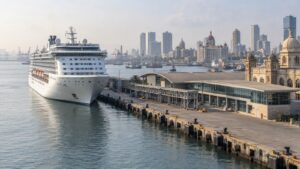
Napier is one of New Zealand’s easiest cities to love and one of its simplest ports to misunderstand. The ship berths close to town, but the working harbor is secure, so your day begins and ends with authorized transport rather than a walk from the gangway.
Once the shuttle reaches the city, everything changes. Art Deco streets, Marine Parade, cafés, museums, cycle paths, wineries, and Hawke’s Bay countryside give you several excellent days inside one compact region.
The port rule is simple: do not walk
Napier Port is an active cargo harbor where cruise ships normally berth alongside. Passengers are not permitted to walk independently through the operational port, so use the cruise shuttle or an authorized excursion vehicle even though downtown looks tantalizingly close.
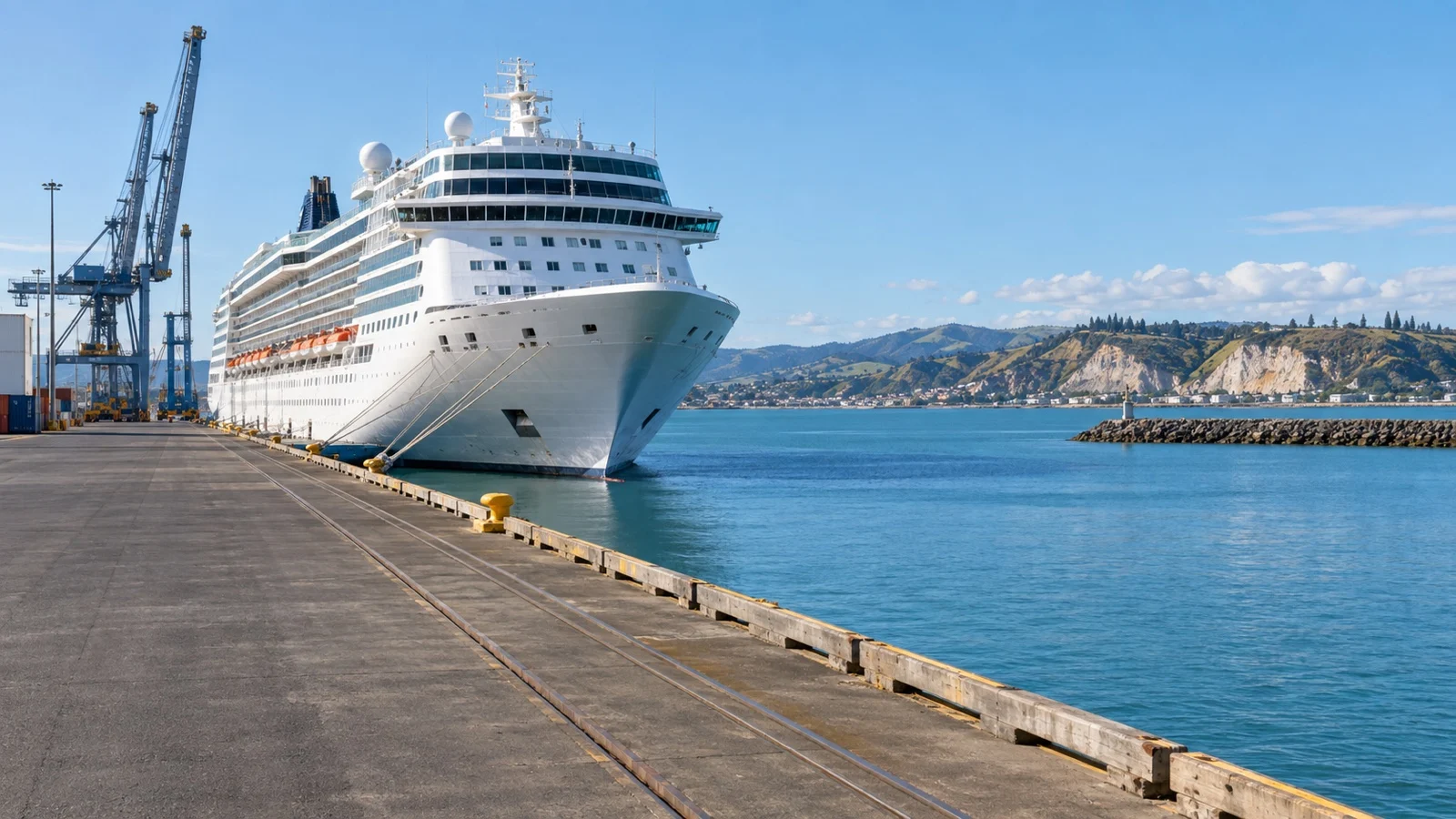
The exact shuttle drop-off can change with city operations, events, and the arrangement for your ship. Listen for the current location, frequency, accessibility setup, and final return time before leaving the pier.
This is not a normal tender port, and the transfer is about industrial safety rather than water conditions. Do not arrange a driver at the ship unless the operator confirms port authorization and the precise pickup point.
The return works the same way in reverse. Reaching central Napier at all aboard time is too late because you still need the authorized ride, port entry, and gangway.
Quick Facts
- Port style: normally alongside in a secure working harbor
- Walking through the port: prohibited, so use the authorized shuttle or excursion vehicle
- City drop-off: confirm onboard because the location and operating details can change
- Best independent plan: Art Deco center and Marine Parade
- Regional highlights: Hawke’s Bay wineries, countryside, and Cape Kidnappers gannet reserve
- Wildlife rule: gannets are seasonal and reserve access carries specific safety controls
- Cycling: excellent in the region when rental, route, wind, and return timing are settled
- Currency: New Zealand dollar, with cards widely accepted
- Weather: strong sun, coastal wind, and rain can appear in one day
- Return rule: arrive at the shuttle stop early enough to absorb a line and port transfer
Why Napier looks like a film set
A devastating earthquake struck Hawke’s Bay in 1931, and much of central Napier was rebuilt in the architectural styles of the era. Art Deco geometry, Māori motifs, Spanish Mission details, and carefully restored storefronts now create an unusually coherent streetscape.
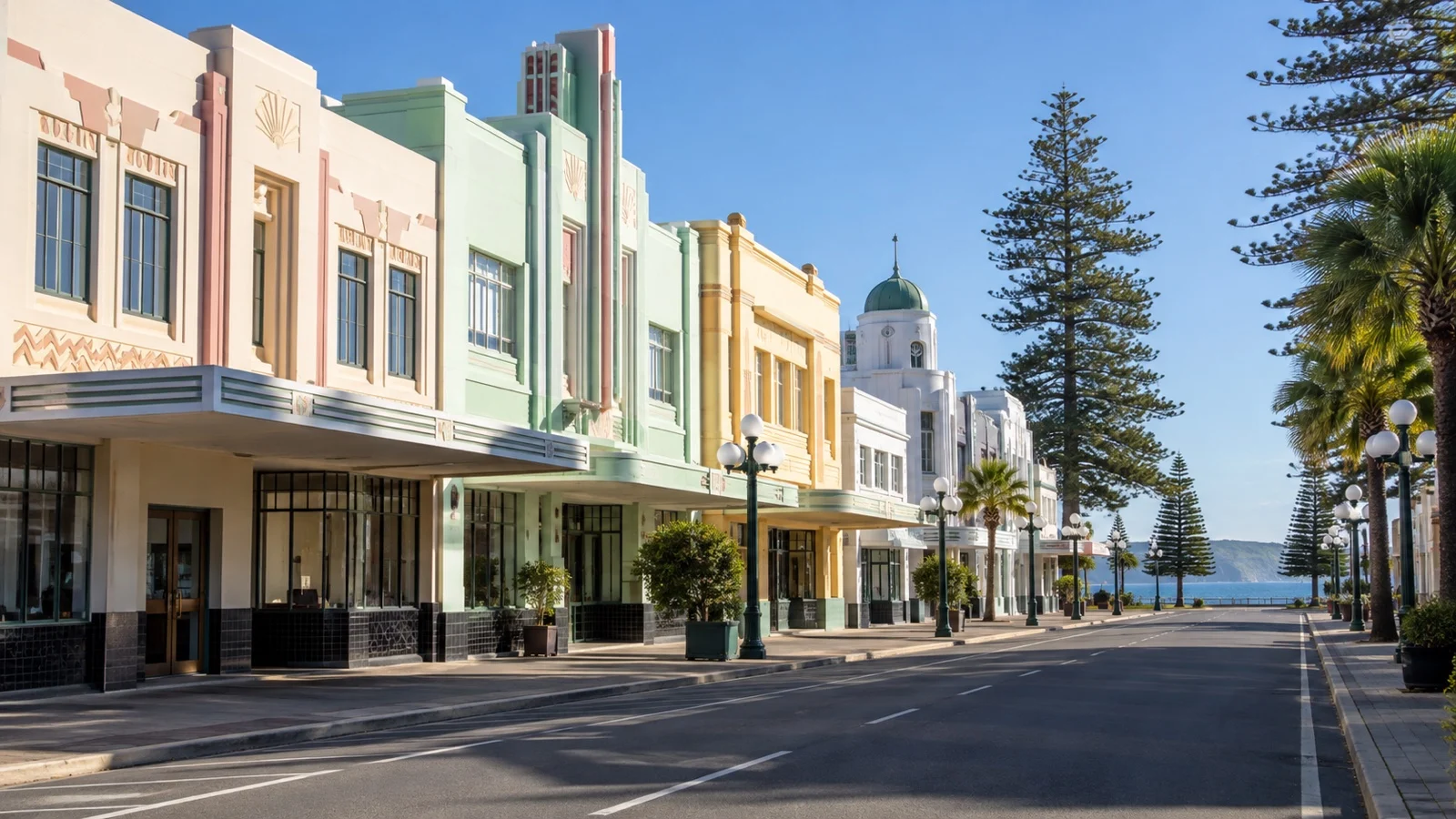
The Art Deco Trust is the authoritative heritage organization for the city’s rebuilding story. Its center, guided walks, and vintage-car tours add the details that turn pretty façades into a much more human history.
A self-guided walk is easy if you want complete control over pace, but a knowledgeable guide helps you notice ornament, materials, and the decisions made after the earthquake. Book a timed tour only after checking where the port shuttle ends and how long the city transfer takes.
Do not rush this part of Napier. The pleasure lies in looking up, crossing a street for a better angle, and realizing that the city center itself is the museum.
Marine Parade organizes an easy day
Marine Parade runs along the waterfront and links gardens, viewpoints, cultural stops, cafés, and the edge of downtown. It is the natural spine for an independent day because you can shorten or extend the walk without committing to a distant road.
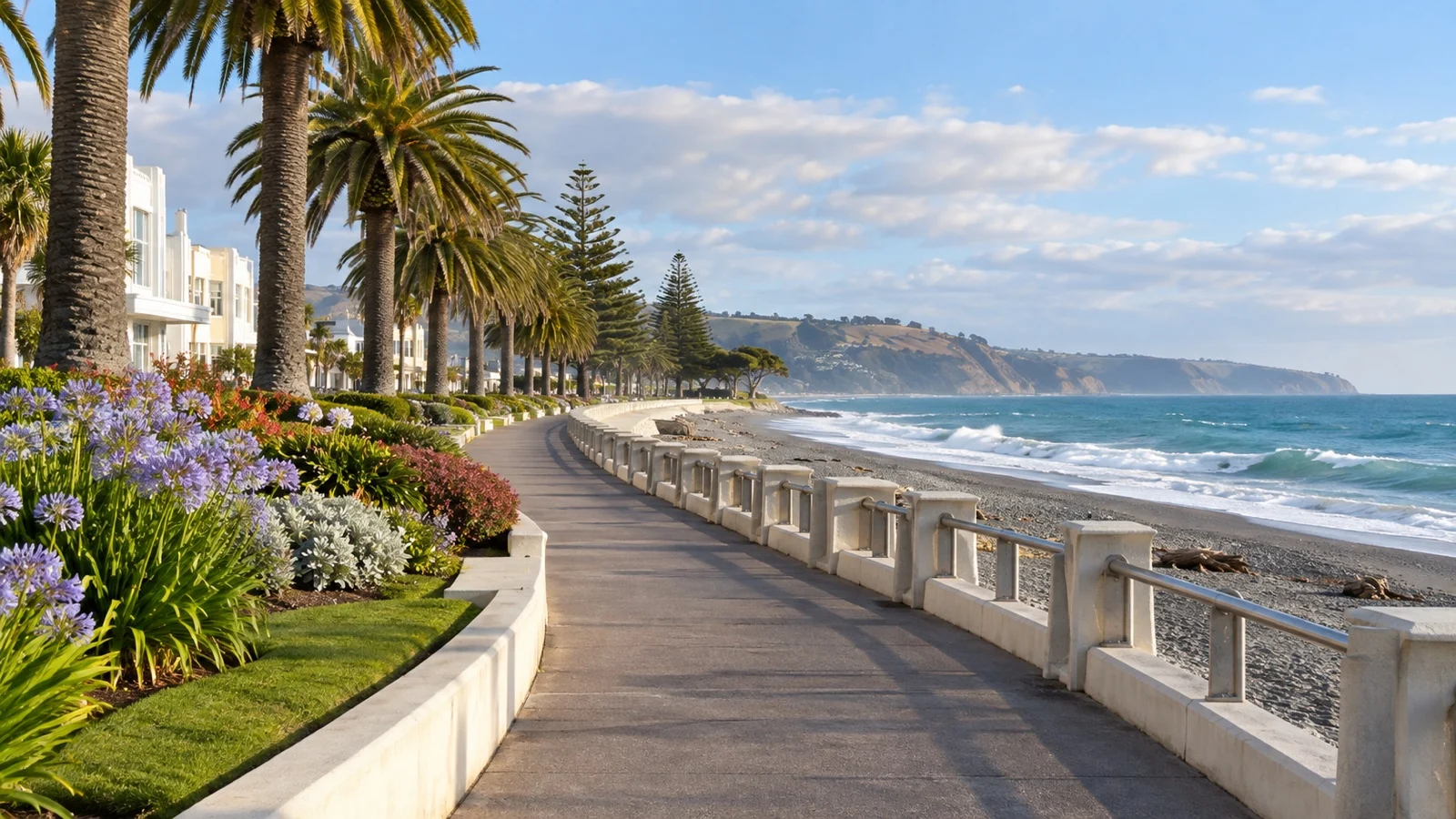
The sea looks inviting, but local beach conditions can involve steep shingle and strong water movement. Use designated swimming advice and never treat the open shore like a sheltered resort beach.
The National Aquarium, MTG Hawke’s Bay, and other attractions may fit depending on current hours. Verify same-day opening information rather than relying on a cruise schedule written months earlier.
Wine country needs a designated plan
Hawke’s Bay is one of New Zealand’s major wine regions, with cellar doors spread around Napier, Hastings, Havelock North, and rural districts. The landscape is compact enough for a port-day tour, but not so compact that random taxis create a sensible route.
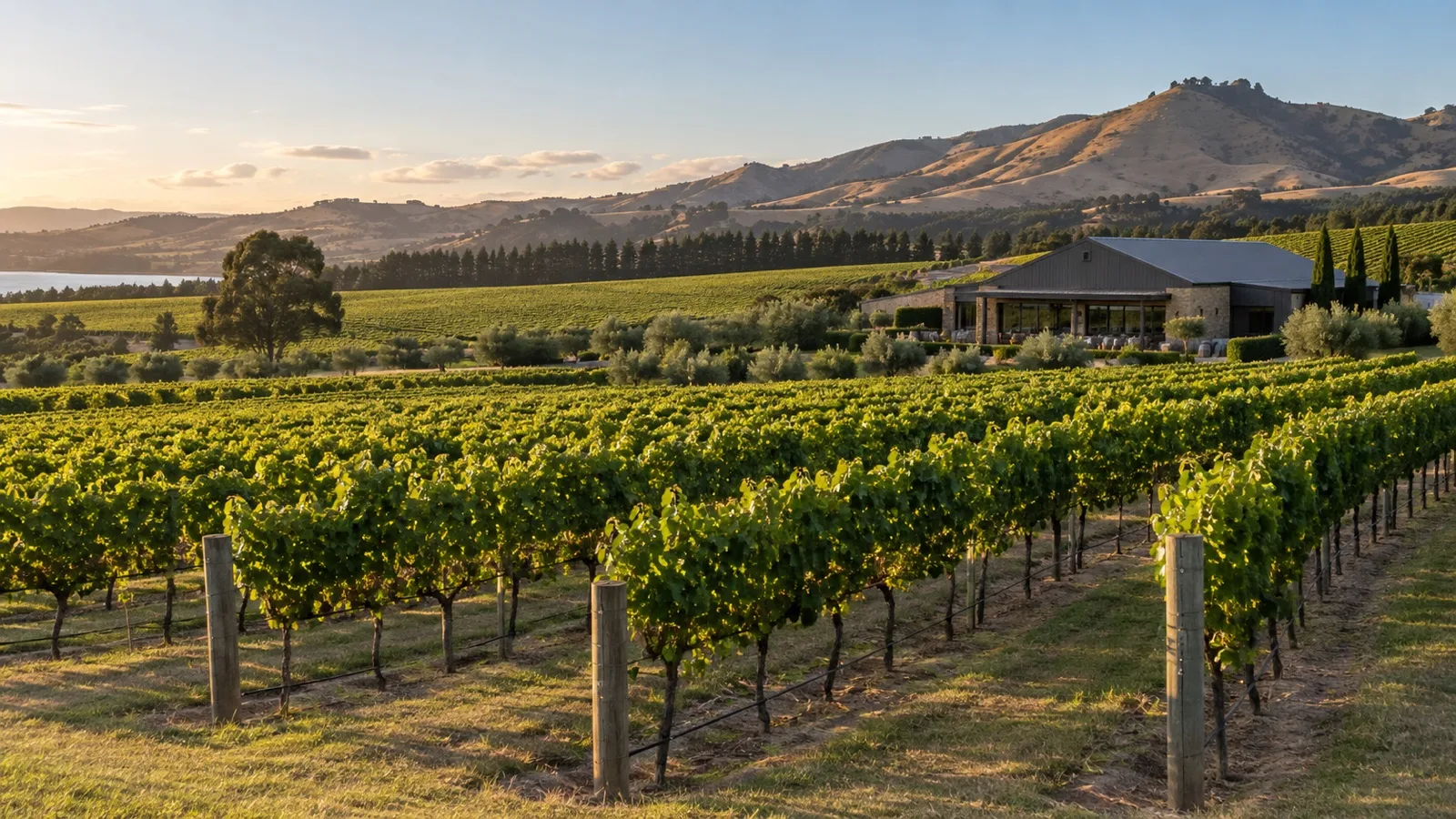
Choose an established operator, a private driver, or another designated transport plan. Confirm which wineries are included, whether appointments are secured, how much food is provided, and where the vehicle meets you after the port shuttle.
Cellar-door hours and tasting formats can change, especially after weather events, private functions, or seasonal scheduling. Avoid building the day around a fragile price or an unconfirmed walk-in tasting.
Two well-chosen estates and lunch usually feel better than a rushed circuit. The driver should protect the return time, and nobody in your party should be pressured to drink simply because the region is famous.
Cape Kidnappers requires current safety information
Cape Kidnappers, also known as Te Kauwae-a-Māui, is home to nesting gannet colonies and wide Hawke’s Bay views. The experience is seasonal, and the Department of Conservation says the best viewing is generally from early November through late February.
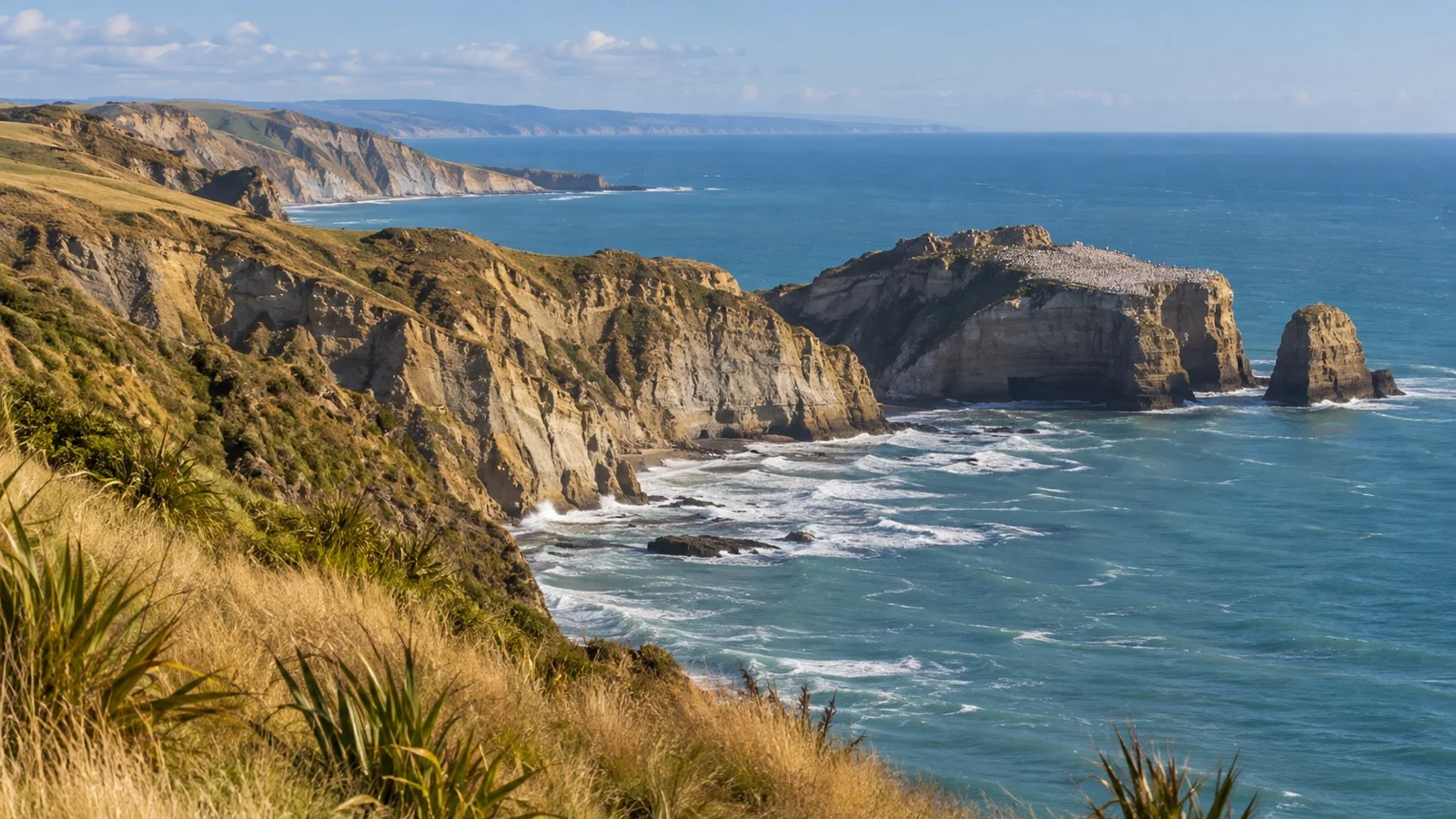
The famous beach route is not a casual shoreline stroll. DOC warns of significant rockfall and landslide risk, states that tides and big seas control access, and recommends an overland commercial tour through private land as the lower-risk option.
For a cruise day, I would choose a reputable overland excursion rather than attempting the long tide-dependent beach walk. Check current alerts because track status can change at any time after rain, earthquakes, or fresh slope movement.
At the colony, stay behind barriers or at least the official minimum distance, move calmly, and avoid loud noise. Nesting birds need space even when a photograph would be better from one step closer.
Cycling can be brilliant with the right clock
Hawke’s Bay has an extensive cycling culture, with paths linking waterfront, wetlands, vineyards, and towns. A bike can turn a standard city day into something expansive without committing to a coach.
The practical questions are rental pickup, helmet fit, e-bike range, road crossings, wind direction, and puncture support. Confirm the latest return time in writing and leave enough space to lock the bike, reach the shuttle, and queue.
Choose a route that can be shortened if wind rises. An out-and-back ride along exposed coast or levee can feel very different when the return leg is into a headwind.
Three ways to use the day
The city classic
Take the shuttle, join an Art Deco walk, continue along Marine Parade, and finish with coffee or lunch. This is the most flexible choice and the easiest to adapt for weather or low energy.
The Hawke’s Bay tasting day
Use prearranged transport for a focused winery route with a real meal and a conservative return. Keep downtown shopping optional until you know the shuttle timetable is comfortable.
The wildlife and landscape day
Choose a current, authorized Cape Kidnappers excursion that fits the gannet season and access conditions. Let the operator substitute another viewpoint if safety alerts or weather close the expected route.
Accessibility begins with the shuttle
Because walking through the port is not allowed, the shuttle determines whether an independent city day works. Ask whether vehicles have lifts or ramps, whether wheelchairs may remain assembled, and how mobility assistance is coordinated at both ends.
Central Napier is relatively compact, but curb cuts, older thresholds, and walking-tour pace vary. The Art Deco Trust or individual attraction can provide route-specific details before you book.
Winery visits may include gravel, lawns, cellar steps, and high tasting counters. Cape Kidnappers tours can involve high vehicle steps, prolonged sitting, uneven ground, and exposure to wind.
Do not accept a generic accessible label for a regional tour. Ask about every transfer, restroom, surface, and seating point from ship to attraction and back.
Weather can rewrite the region
Hawke’s Bay is known for sunshine, but cruise days can still bring cool wind, rain, and fast changes. Carry layers, a light waterproof shell, sunscreen, water, and a hat that will stay put.
Strong wind affects cycling, coastal viewpoints, gannet tours, and the feel of the exposed port. Rain can alter rural roads and reserve access even when central Napier remains comfortable.
Check MetService close to departure and trust local closures. A sheltered Art Deco day is a smart response to conditions, not a consolation prize.
Food, coffee, and local pacing
Napier and the wider bay are rich in produce, wine, seafood, and café culture. Build one relaxed meal into the day rather than collecting tastings without enough food or water.
Markets and food producers have seasonal hours, so verify before traveling out of town. In the city, you can stay flexible and choose a busy local café once you understand the shuttle timing.
If drinking wine, pace tastings and keep essential medication interactions in mind. The region is enjoyable for non-drinkers too, with architecture, gardens, cycling, coastline, and food all standing on their own.
Safety and practical transport
Use authorized shuttles and established tour operators from the port. A driver who cannot explain the approved pickup point should not be the foundation of your return plan.
New Zealand drives on the left, which matters for rental cars and cyclists. For one cruise day, parking, alcohol, rural navigation, and port access often make prearranged transport the calmer choice.
Keep valuables secure in crowded shuttle areas and carry essential medication with you. Save the port agent number and a photograph of the daily program offline.
Returning through a port you cannot walk into
The all aboard calculation includes the city shuttle queue, drive through the port, security check, and gangway. Reaching the drop-off exactly at the deadline does not satisfy any of those steps.
Arrive early enough to absorb a full shuttle or mobility loading delay. If you are on a regional tour, set the city return target before the last winery or viewpoint rather than after it.
Tell an independent operator your all aboard time, not only the sailing time. Then protect a personal margin that belongs to you and never becomes one final tasting.
Money, entry, and reservations
New Zealand uses the New Zealand dollar, and contactless cards are common in established businesses. A small amount of cash can help with minor purchases, but avoid relying on outdated price claims.
Immigration and biosecurity procedures depend on the itinerary and ship clearance. Follow the cruise line’s current instructions, and never bring food, plant material, or animal products ashore unless the rules clearly allow it.
Book winery and heritage tours after checking the call schedule, then reconfirm close to arrival. Coastal and wildlife tours should include a clear alternative if weather or access changes.
Choose the Hawke’s Bay day you actually want
Pick one theme: Art Deco city, wine country, cycling, or gannets. Then check the physical demands, forecast, shuttle timing, and final return before adding anything else.
Use Napier Port for harbor context, Hawke’s Bay tourism for current regional planning, the Art Deco Trust for heritage, and DOC for Cape Kidnappers alerts. Your ship remains the final authority for berth, shuttle, meeting point, and all aboard time.
Napier works beautifully when you respect the one inconvenient rule at the start. Take the authorized ride out of the port, then let this unusually graceful city and its generous region do the rest.
Return to the shuttle before urgency enters the day. That simple discipline keeps the port secure and leaves Hawke’s Bay feeling spacious, stylish, and entirely worth the stop.