Broome Cruise Port: A Kimberley Guide
Broome is a remote Kimberley port where Cable Beach, pearling history, red cliffs, and extreme tides shape the day. The commercial wharf is not a walk-off town center, so confirm the ship transfer before booking anything else.
My quick take
Choose a town-and-beach loop or one reserved outer attraction. Tide-dependent footprints, sunset camel rides, and distant Kimberley flights need more schedule discipline than their brochures suggest.
Your ship berths at an industrial wharf, so plan a shuttle or tour. For the bigger picture, see my Australia cruise ports guide and how Broome compares with Darwin across the Top End.
The quick facts
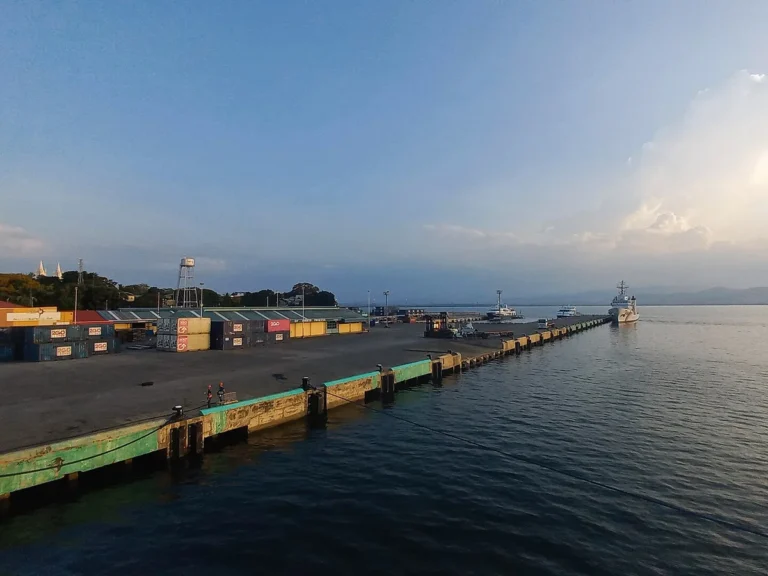
- Where you land: normally KPA Terminal 1 at the commercial Port of Broome on Roebuck Bay. The outer berth is 1,086 feet long, and the port normally accommodates vessels up to 984 feet subject to harbor-master approval.
- Dock or tender: many ships berth alongside, while a vessel or operational conflict may require anchoring. The harbor master and cruise line decide, with tidal current and vessel dimensions part of the assessment.
- Into town: use the ship shuttle, approved taxi pickup, or tour for the roughly 5 to 6 mile trip to Chinatown. Public walking through the working port is not the day plan.
- Currency and language: The Australian dollar (AUD), and English.
- Time zone: Australian Western Standard Time (AWST, UTC+8).
- How often the call is missed: Medium (roughly 3 to 7%): tides, berth availability, or wind can disrupt calls.
How I would confirm my own arrival
Broome serves cargo, fishing, pearling, charter, and cruise traffic, and the harbor has a tidal range of roughly 20 to 30 feet. Berth, gangway, tender, and shuttle arrangements remain ship-specific.
Read the daily program the night before and confirm the assigned berth or anchorage, first public transfer, drop point, and final return. A high commercial wharf and large tide can change gangway slope during the call.
Getting around
Broome is spread between the port, Chinatown, Town Beach, and Cable Beach, so walking is not a useful port-transfer plan. Match one transport method to the entire route.
- Ship shuttle: confirm whether it serves Chinatown, Cable Beach, or both, plus the final departure. A drop in one district does not mean there is a continuous loop all day.
- Taxis: limited supply can create long waits on ship days. Book the return or keep the driver when visiting Gantheaume Point, Cable Beach, or the crocodile park.
- Organized tours: for Willie Creek Pearl Farm or the dinosaur coast, a booked tour is the easiest way to cover the distances in a short call.
- Driving: rental cars are available in Broome, and Australians drive on the left. Book ahead in the busy dry season.
The stops I’d actually spend time on
These are the named, verifiable places I would choose from in a single Broome day.
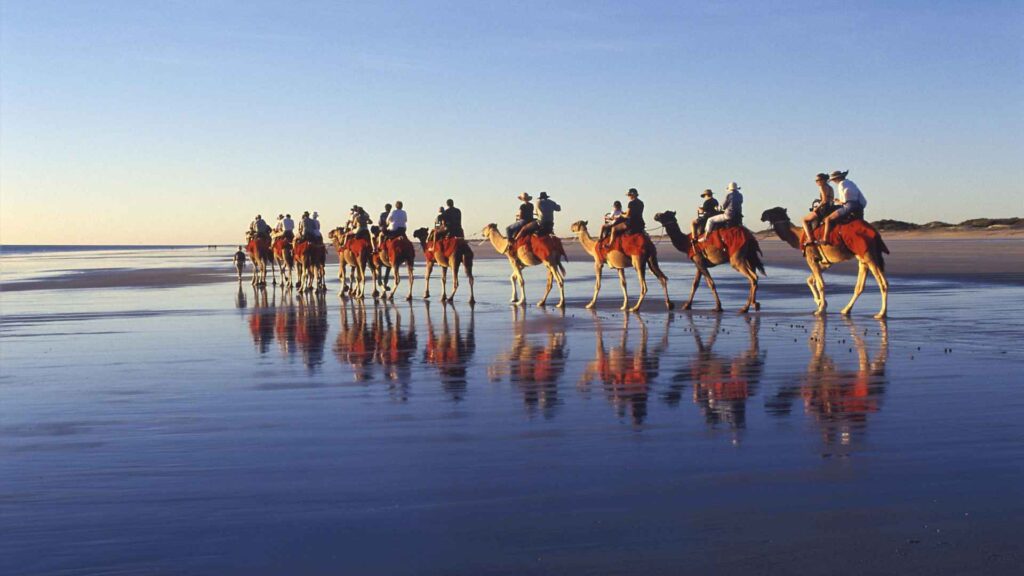
- Cable Beach: a roughly 14-mile beach best used for a walk, swim only when local warnings allow, or a prebooked camel ride. Sunset rides often fall after a daytime ship departure.
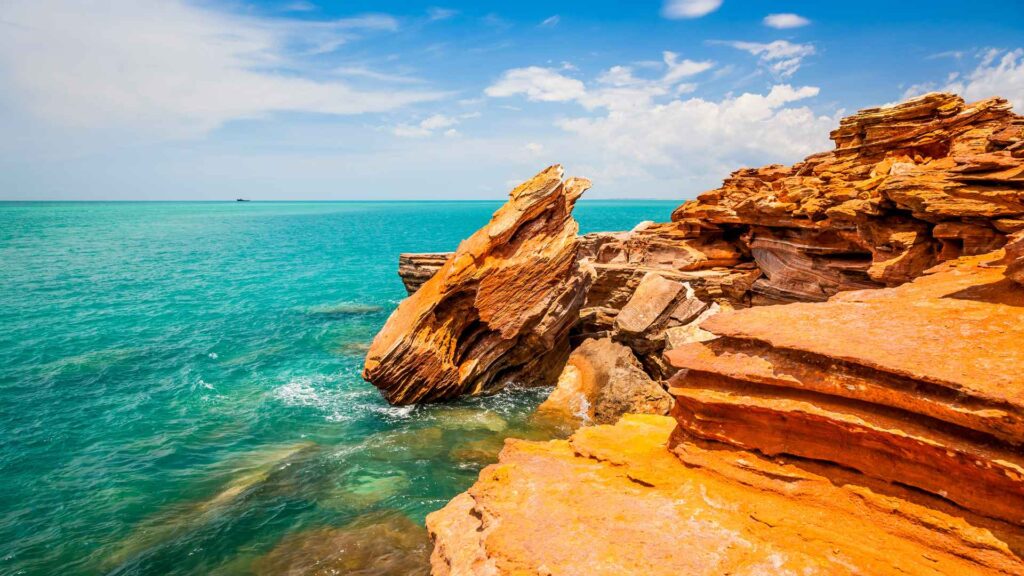
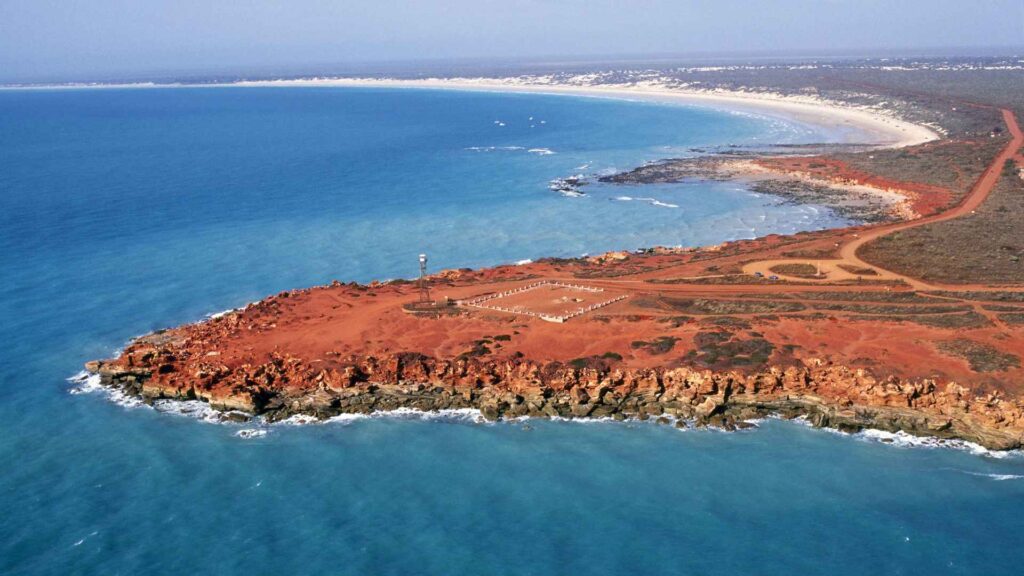
- Gantheaume Point: red cliffs against turquoise water at the southern end of Cable Beach, a classic Broome viewpoint.
- Dinosaur footprints: genuine tracks on the reef platform near Gantheaume Point are visible only at suitably low tides and require slippery rock access. Replica casts near the point provide a safer fallback when the tide is wrong.
- Historic Chinatown: Broome’s small original center, home to the pearl showrooms and its multicultural pearling story.
- Sun Pictures: the open-air cinema in Chinatown. Fun fact: it is billed as the world’s oldest operating picture gardens, screening films since 1906.
- Willie Creek Pearl Farm: outside town and best reached on its scheduled transfer or an organized tour. Confirm the full pickup and return chain rather than pricing only the admission.
- Broome Historical Museum: a compact museum covering the pearling era, the WWII years, and the town’s cultural mix.
- Malcolm Douglas Crocodile Park: outside central Broome with limited presentation times. Check current opening, transport, heat, and accessibility before making it the day’s anchor.
- Roebuck Bay and Staircase to the Moon: the effect appears on selected full-moon evenings when exposed mudflats and moonrise align. Most daytime cruise calls will not match the published viewing time.
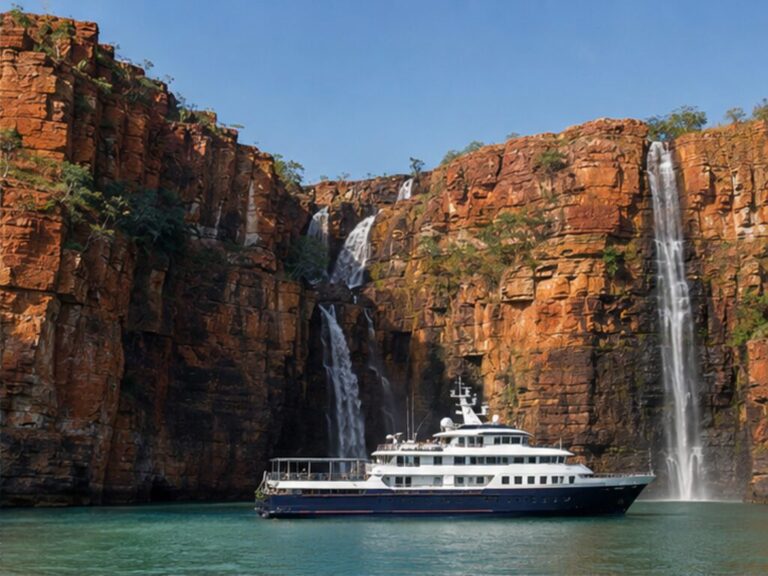
Horizontal Falls and the Buccaneer Archipelago can be sold from Broome as long flight or boat combinations, but they are not casual wharf excursions. Use only a licensed operator whose current route, marine-park rules, landing plan, and return time fit a long call.
How I’d plan the day
Broome works best with one main area and one timed condition, such as Cable Beach plus low tide at Gantheaume Point. Do not let a sunset or moonrise event push you beyond the ship’s final return.
- About 3 hours: shuttle to Chinatown, browse the pearl showrooms and Sun Pictures, then a quick look at Town Beach on Roebuck Bay before heading back.
- About 5 hours: Cable Beach for the sand and the camel viewpoint, then Gantheaume Point, with the dinosaur footprints if the low tide lines up.
- A full day: a booked tour to Willie Creek Pearl Farm or a wider Broome loop, leaving a solid buffer before the last shuttle back to the wharf.
Reach the shuttle pickup 75 to 90 minutes before all-aboard, or return two hours early from an independent flight, boat, or distant farm. Keep the ship agent’s number offline in case transport fails.
A realistic word on accessibility
The commercial wharf has a high deck, working traffic, and a gangway whose angle changes sharply with the tide. Passengers normally need the ship’s approved transfer rather than walking the long port road.
Ask the line whether its shuttle can carry your mobility device and whether crew assistance is available at the expected tide. Beaches, camel mounts, dinosaur-track rocks, and some tour vehicles remain inaccessible even after a manageable port transfer.
When to go, and the weather
Broome has a tropical climate split into a dry season and a wet season, and cruise calls cluster in the dry.
- Dry season (roughly April to October): warm, sunny days and low humidity. This is peak cruise and tourism season.
- Wet season (roughly November to April): hot, humid, and stormy, with the risk of marine stingers in the water.
- Sun and water: the sun is strong year-round, so carry water, sunscreen, and a hat. Heed local signage about crocodiles and stingers before entering the water.
Entry, biosecurity, and Kimberley conditions
Australia’s visa or Electronic Travel Authority requirement depends on passport and itinerary. Use the Department of Home Affairs and follow the cruise line’s arrival instructions.
Western Australia applies strict biosecurity controls, and Broome operators may also protect pearl-farm and remote-area environments. Declare restricted food or natural items, clean footwear, and follow every vehicle and site instruction.
Heat, ultraviolet exposure, crocodiles, marine stingers, tides, and cyclones are practical risks rather than background trivia. Carry water, use strong sun protection, and swim only where current local signs and patrol advice say it is safe.
Quick answers
Can I walk into Broome from the ship?
No. The port is a working wharf about a 10-minute drive from town, so plan on the shuttle, a taxi, or a tour.
Do ships dock or tender at Broome?
It varies. Many ships berth alongside the wharf, but Broome’s extreme tides mean some tender, so check your cruise line’s port information.
For context on tender calls, see my guide to tender ports.
Why is Broome famous for pearls?
By the early 1900s Broome was the pearl-shell capital of the world, and the industry drew workers from across Asia. That legacy still shapes Chinatown and the town’s South Sea pearl showrooms today.
First cruise? My first-timer port guide covers the basics.
How this guide was researched: Unless a first-hand visit is explicitly identified above, this guide is based on independent research using official port, tourism, transit, government, and attraction sources where available. Logistics and time-sensitive details were reviewed in September 2026; see our Editorial Policy.