Guam Cruise Port: Apra Harbor, Buses and Battlefields
Guam rewards travelers who arrange transportation before the ship reaches Apra Harbor. The cruise berth sits inside a working commercial port, and the island’s beaches, memorials, villages, and museums are spread far beyond the gate.
My first choice is a focused World War II route through War in the Pacific National Historical Park, followed by one beach or cultural stop. A vehicle and a realistic turnaround time matter more here than a long wish list.
Quick Facts
- Territory: Guam, an unincorporated territory of the United States
- Port: Commercial Port of Guam in Apra Harbor
- Arrival: Ships normally berth alongside rather than tender
- Walkability: The secured industrial port is not a practical sightseeing base on foot
- Best transportation: Ship excursion, prebooked private driver, or confirmed rental car
- Currency: US dollar
- Languages: English and CHamoru
- Time zone: Chamorro Standard Time, UTC plus 10, with no daylight saving time
- Best first visit: Asan Beach, Asan Bay Overlook, and one nearby cultural stop
Where Cruise Ships Dock
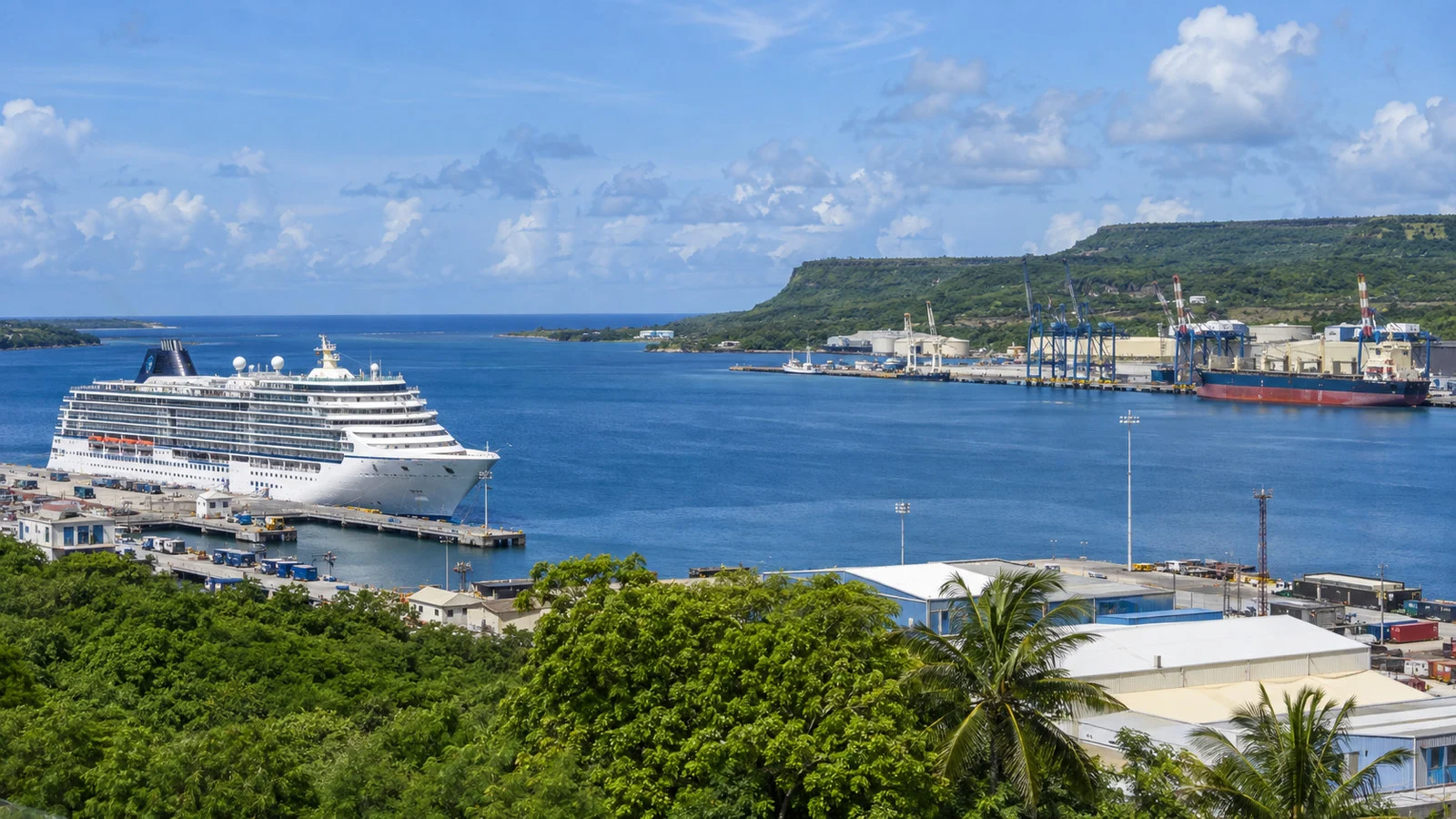
Cruise ships use the commercial side of Apra Harbor, operated by the Port Authority of Guam. The harbor is shared with United States naval facilities, so access rules and passenger routes are controlled.
This is a cargo port that accommodates cruise calls, not a waterfront promenade designed around visitors. Expect fencing, security, container operations, and arranged transportation rather than cafés outside the gangway.
Ships normally berth alongside in the sheltered harbor, which avoids a tender transfer. The exact berth and route through the port can still change with operations, weather, and vessel requirements.
Follow the ship’s daily program for the authorized pickup point and any shuttle instructions. A driver needs a meeting place outside the secured area, not a map pin somewhere among the cargo yards.
Can You Walk From the Port?
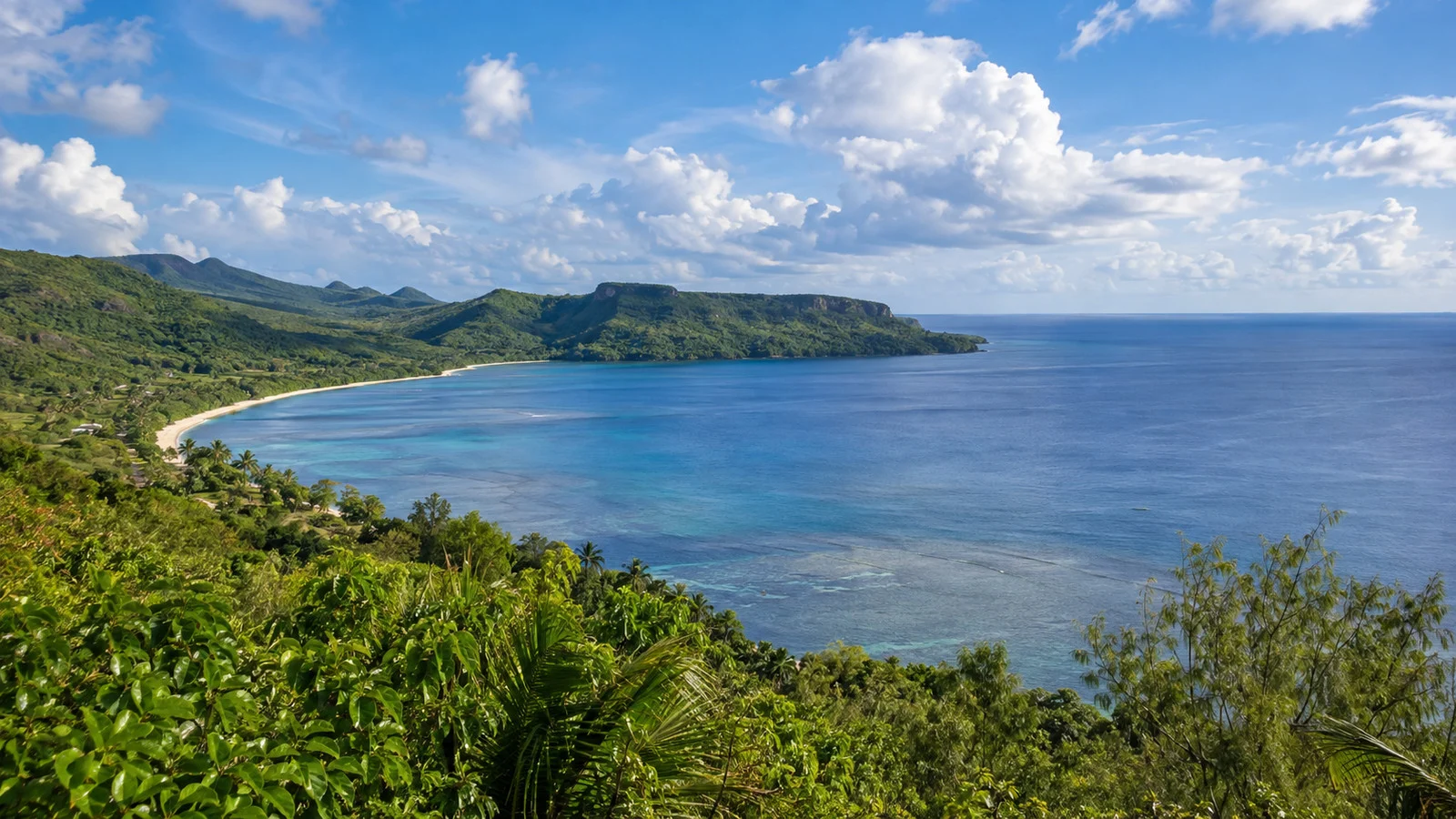
Do not plan to walk from the ship to an attraction. The surrounding roads serve industrial traffic, useful destinations are distant, and a secured port may limit independent pedestrian movement.
Piti is geographically nearby, but that does not make the route from the berth a safe or authorized sightseeing walk. Clear the port with ship-provided or prearranged transportation first.
Guam also lacks one compact tourist center that solves the day. Hagåtña, Tumon, Asan, Piti, and the southern villages each offer something different and require road travel between them.
Transportation That Works
A ship excursion is the easiest option when the call is short or the itinerary includes several historic sites. It provides port access, a guide, and a return schedule tied to the vessel.
A prebooked private driver gives more control and works well for a small group. Confirm the pickup outside the secure zone, the hourly rate, waiting time, and the final return deadline in writing.
A rental car can be economical, but only when the agency confirms delivery or an accessible pickup arrangement. Do not assume cars will be waiting at the cruise gate on arrival.
Taxis serve Guam, yet they may need to be dispatched rather than hailed. Arrange both directions before leaving the port, especially for beaches and park units without a reliable taxi queue.
Why the Public Bus Is Risky
The Guam Visitors Bureau says the Guam Mass Transit Authority operates nine routes with service frequencies ranging from 30 minutes to two hours. Buses run Monday through Saturday, with no service on Sundays or holidays.
Standard fares are inexpensive, but the timetable is the problem for a cruise visitor. A missed bus on a two-hour frequency can erase the margin protecting all-aboard.
The bus network also does not create a simple connection from the gangway to every attraction. Use it only after studying the current official visitor bureau guidance and building a generous backup plan.
War in the Pacific National Historical Park
War in the Pacific National Historical Park protects battle sites, memorials, and landscapes connected with the Japanese occupation and the 1944 battle to retake Guam. Its units are spread across the island rather than enclosed behind one entrance.
The park does not charge an entrance fee, but transportation between units takes time. Choose a connected pair of sites instead of trying to collect every marker in one port call.
The T. Stell Newman Visitor Center is the best introduction, with exhibits, personal accounts, artifacts, a battle map, and a short film in several languages. The National Park Service currently lists hours of 9:00 a.m. to 4:00 p.m., Tuesday through Saturday.
A Sunday or Monday cruise call misses the visitor center, although outdoor park units may still be available. Check current conditions because storms, maintenance, ceremonies, and military operations can affect access.
Asan Beach and Asan Bay Overlook
Asan Beach was a major American landing area in July 1944 and now combines open shoreline, memorial features, and surviving traces of the battle. The quiet landscape makes the history more immediate than a hurried photograph ever could.
Asan Bay Overlook adds the essential geographic perspective from above. Its views help connect the reef, beach, ridges, and scale of the invasion, while the memorial wall honors people who suffered or died during the war.
Pairing the beach with the overlook creates a coherent half-day without driving the full island. Bring water, sun protection, and respect for a place that is both beautiful and deeply painful.
Piti Guns and the Visitor Center
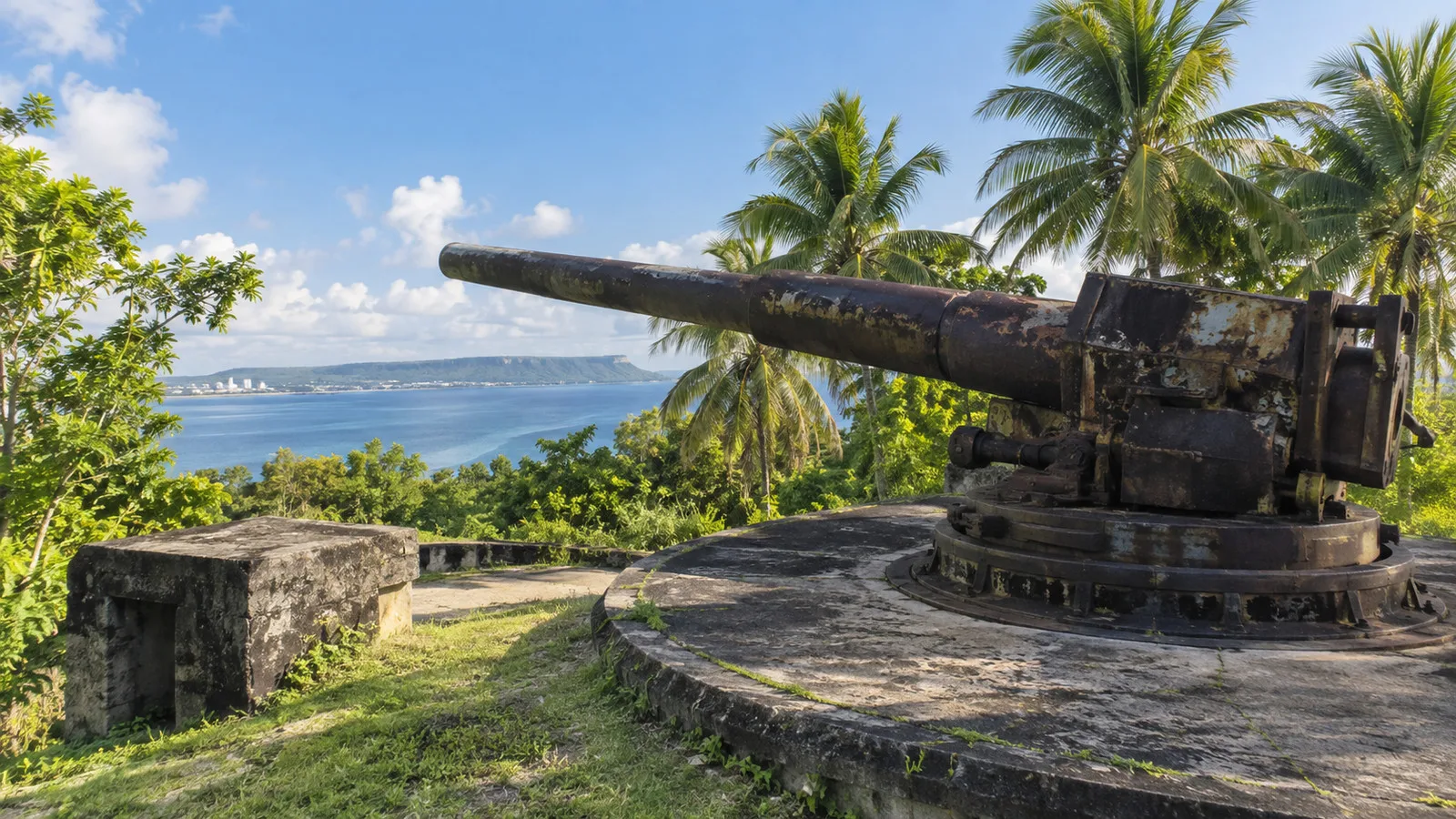
The Piti Guns unit preserves Japanese coastal defense guns above the village of Piti. The trail is short, but tropical heat, mud, roots, steps, and slippery ground make it more demanding than the distance suggests.
Closed shoes are essential, and travelers with limited mobility should choose another park unit. Heavy rain can turn a modest jungle path into a poor port-day decision.
The visitor center is also near Piti and can be paired with the guns when it is open. A Type-C Japanese midget submarine stands outside, while the indoor galleries give much-needed CHamoru and civilian context.
Hagåtña and CHamoru History
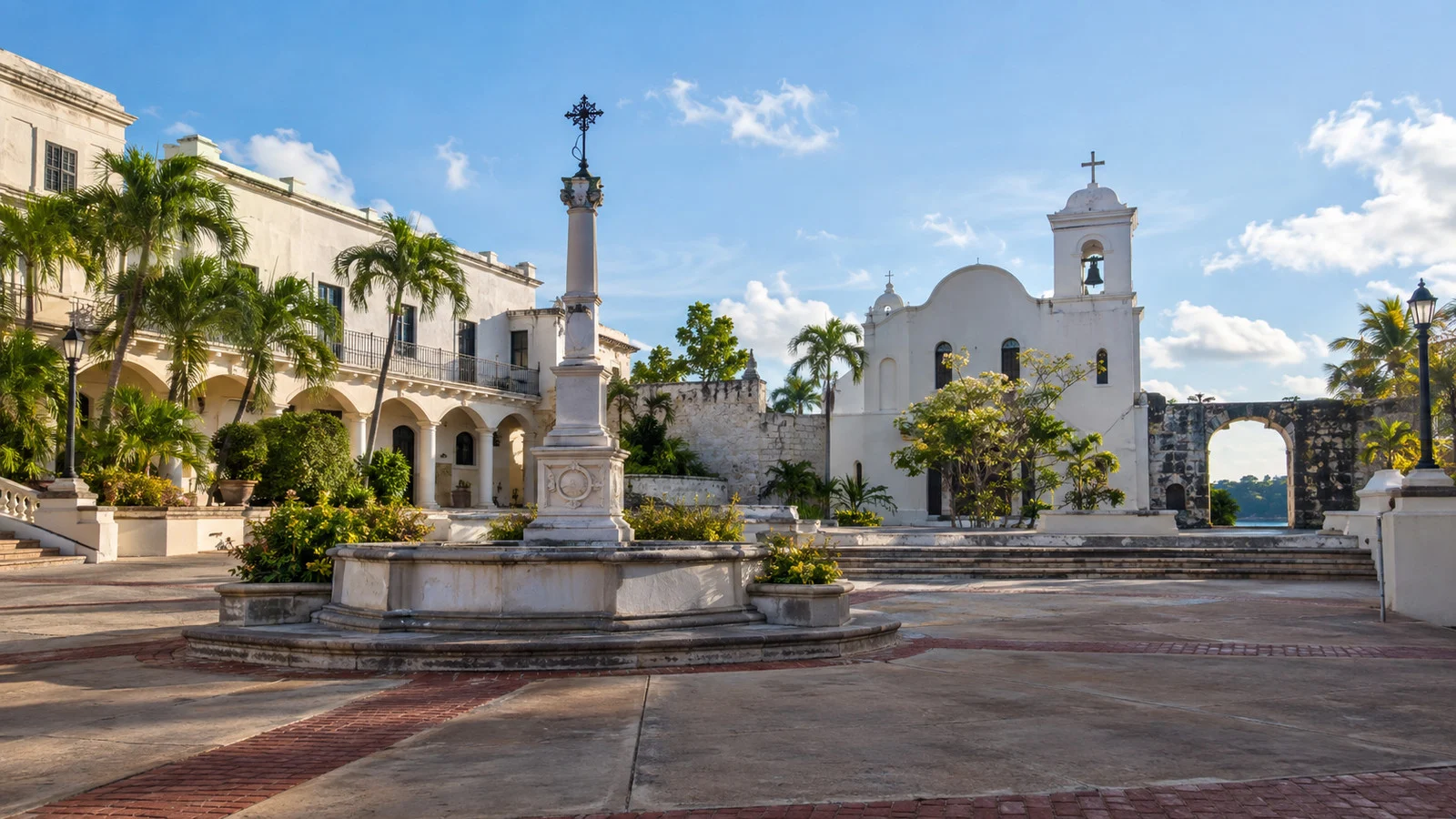
Guam’s capital, Hagåtña, offers a different layer of the island through Plaza de España, Dulce Nombre de Maria Cathedral-Basilica, and nearby cultural sites. It works best as one part of a planned driving route.
The Senator Antonio M. Palomo Guam Museum presents CHamoru history and the island’s wider story. Check current hours directly because published schedules, holidays, and event closures can change.
A guide adds real value by explaining Guam beyond the military timeline. Spanish colonial rule, CHamoru resilience, migration, faith, language, and contemporary island life all belong in the story.
Tumon Bay and Beach Time
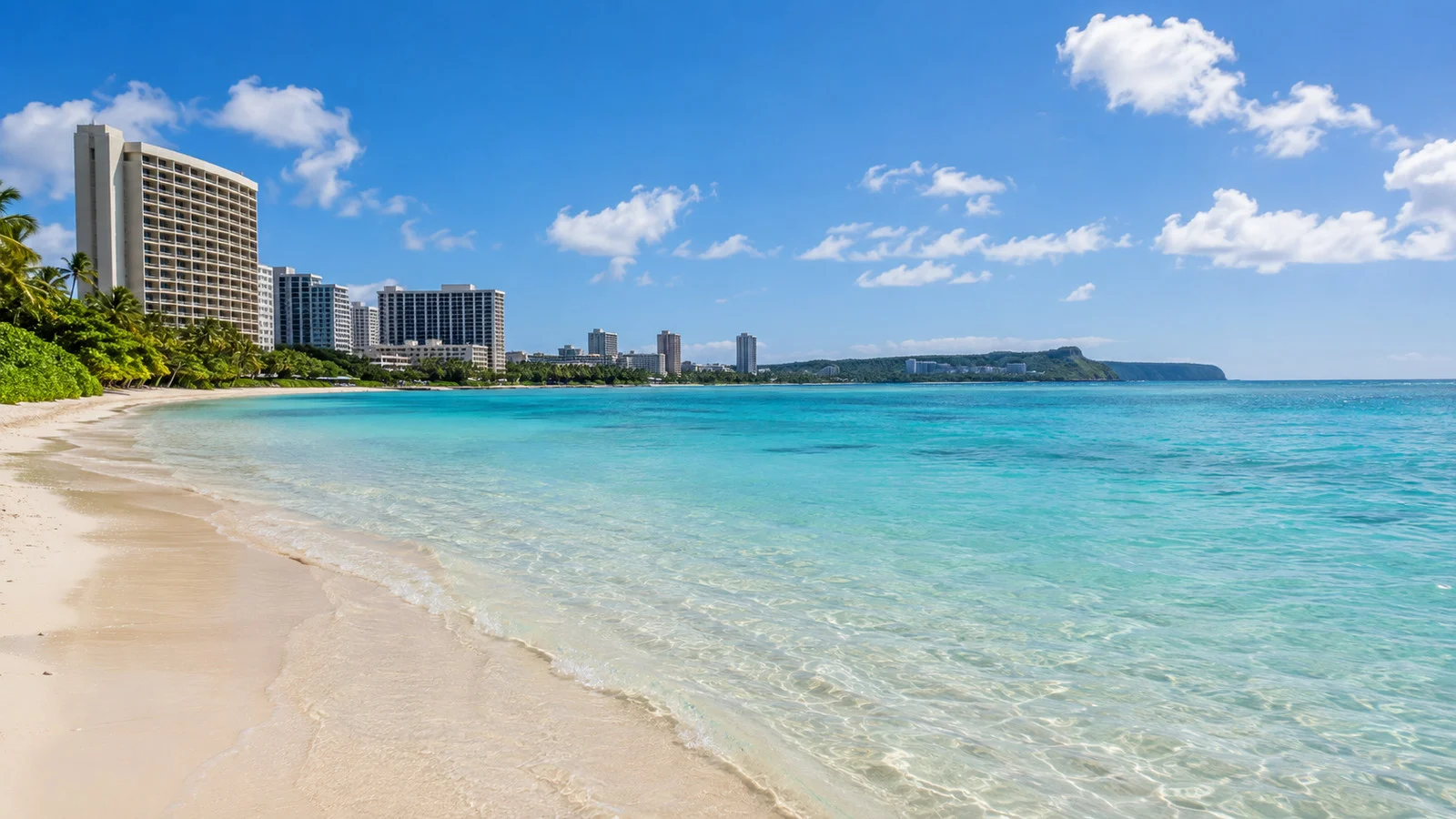
Tumon is Guam’s main resort district, with a broad bay, hotels, restaurants, shopping, and organized visitor services. It is the easiest choice for travelers who want a polished beach day rather than a history circuit.
Beach conditions depend on tides, wind, surf, and weather, even inside the reef. Ask locally about swimming areas and follow posted warnings rather than assuming calm-looking water is risk-free.
Tumon is not next to the cruise berth, so preserve ample return time. Traffic through the island’s busier central corridor can make a simple map distance feel surprisingly long.
Entry Forms and Documents
Guam follows United States entry requirements, but the correct documents depend on citizenship, residency, route, and the program used to enter. A closed-loop cruise does not justify guessing.
The Guam Visitors Bureau says all arriving passengers, or one responsible family member for the household, must complete the Guam Electronic Declaration Form. The form is mandatory, digital, and available up to 72 hours before arrival through the official Guam Customs and Quarantine Agency site.
Travelers using the Guam-CNMI Visa Waiver Program also need the applicable electronic travel authorization. Confirm the exact rule with the cruise line and official US government sources for the passport used in the booking.
Complete forms only on official government websites and save confirmations offline. Shipboard internet and cellular service should not be the only place a required document exists.
Accessibility and Mobility
An alongside berth avoids a tender, but transportation out of the secure port remains the first accessibility question. Ask the cruise line whether the shuttle or excursion vehicle can carry your specific wheelchair or scooter.
The T. Stell Newman Visitor Center is the most controlled museum environment, while park landscapes vary. Asan Beach and the overlook have more manageable paved areas than the Piti Guns trail.
Tropical heat adds strain even on short paths. Build in shade, water, restrooms, and recovery time rather than measuring a site only by walking distance.
Confirm accessible restrooms and entrances with each attraction before booking. A driver’s willingness to help does not replace a lift, securement system, or safe transfer plan.
Weather and Typhoon Season
Guam is warm throughout the year, with high humidity and powerful tropical sun. Light clothing, a hat, sunscreen, water, and a breathable rain layer belong in the day bag.
The Guam Visitors Bureau describes January through May as the dry season and July through November as the rainy season. June and December are transitional, while squalls can occur with little notice in any month.
Typhoon likelihood is greatest from July through September, though tropical systems can occur at other times. A storm may affect the cruise call, roads, attractions, or water activities even if the center remains far away.
No authoritative public source publishes an audited percentage of missed Guam cruise calls. Treat any precise cancellation rate without supporting port data as an estimate, not a fact.
Three Sensible Port-Day Plans
For history, combine the T. Stell Newman Visitor Center, Asan Beach, and Asan Bay Overlook. This route works only when the center is open and transportation is waiting.
For an easier scenic day, visit Hagåtña and continue to Tumon for lunch or beach time. Keep the final hour flexible for traffic and port access.
For a short call, choose the visitor center with one nearby Piti attraction. A smaller day with context is better than a frantic island loop.
The Final Take
Guam is not a walk-off-the-ship port, but it can be one of the most meaningful calls in the western Pacific. The island opens once transportation is confirmed and the day has one clear theme.
Choose history, culture, or the beach, then protect the return to Apra Harbor with a generous margin. Guam deserves more than a shopping stop, and a thoughtful route gives its CHamoru story room beside the wartime landmarks.
How this guide was researched: No firsthand Guam port visit is claimed. This guide was checked September 12, 2026 against current Port Authority of Guam information, Guam Visitors Bureau transportation, entry, and weather guidance, Guam Customs and Quarantine resources, and National Park Service visitor information.