The Cruise Ports Hardest to Catch Your Ship From
Missing the ship is not one problem, it is five or six different problems depending on which port you are standing in. In Barcelona it costs you a train ticket and an afternoon.
In a Norwegian fjord village it can cost you two days.
My quick take
The advice everyone gives you is about the clock, and the clock is the easy part. What actually decides how bad your day gets is the map.
What I would do is stop thinking about all-aboard time as a single rule and start thinking about it as a sliding scale. Some ports deserve a two hour cushion and some deserve five, and the difference is not the port’s charm, it is its airport.
The thing I would not do is assume the ship will wait. Cruise lines apply their published late-return assistance to their own excursions and not to independent plans, and the captain’s obligation is to the sailing schedule and the pilot booking, not to you.
The quick facts
- Who pays: you do, unless you were on a ship-operated excursion that ran late. That is the single clearest reason to buy the line’s tour in a port where recovery is hard.
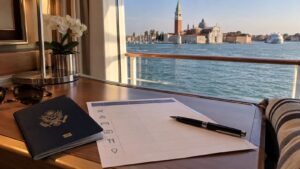
- What you need in your pocket: a passport book, not the birth certificate that a closed-loop sailing lets you board with. The State Department strongly recommends that all cruise passengers carry a passport book even when the line does not require one, in case you need to fly home.
- The American complication: leaving a foreign-flagged ship at one US port and trying to rejoin at another can create a federal coastwise-law issue. It matters most on itineraries with consecutive US calls, including Alaska and Hawaii, and the cruise line must approve any recovery plan.
- The tender multiplier: anchored ports add a boat ride and a line to every departure, and the last tender leaves well before the ship does. Treat the last tender time, not the all-aboard time, as your deadline.
- What happens to your things: crew may try to retrieve a passport from your cabin and leave it with the port agent, but that is not guaranteed. Luggage and medication usually sail on, which is why a day’s essential medicine belongs in your bag ashore.
Tier one: the mainland ports where a train fixes it
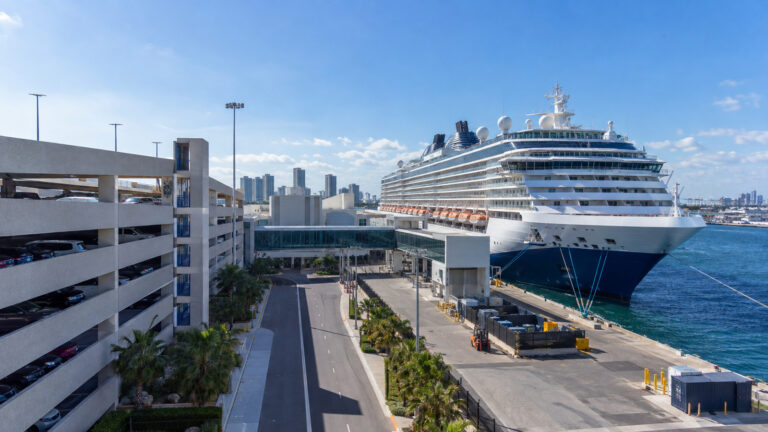
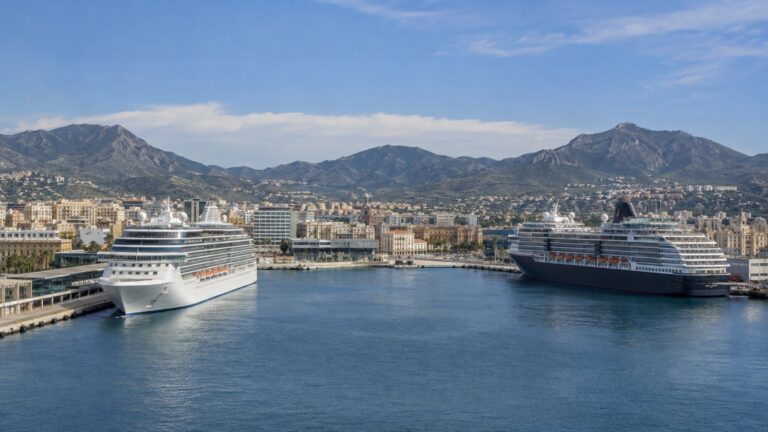
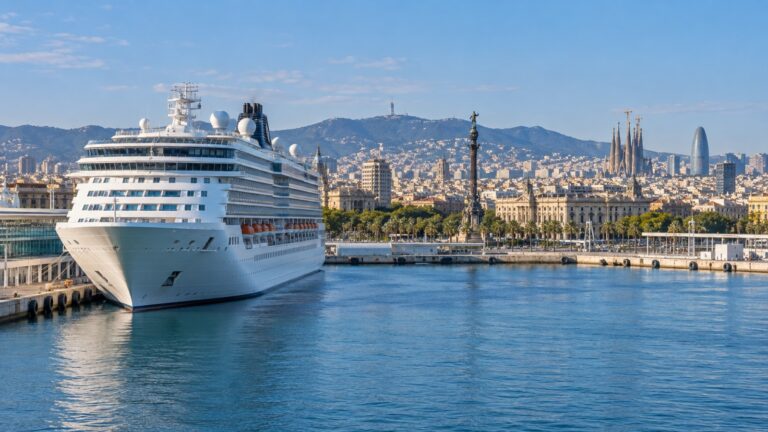
This is the good outcome, and it covers most of the Mediterranean and Northern Europe. Barcelona, Marseille, Livorno, Civitavecchia, Naples and Southampton are all sitting on dense national rail networks, the same trains that often beat a line transfer when you are reaching a river ship from the airport.
If the next approved reboarding port is Livorno or Genoa, rail can make the recovery easier than it would be on an island. The cruise line and port agent still need to confirm where you may rejoin before you buy a ticket.
The cost of this outcome is usually a couple hundred dollars and a lost port day. Annoying, expensive, survivable.
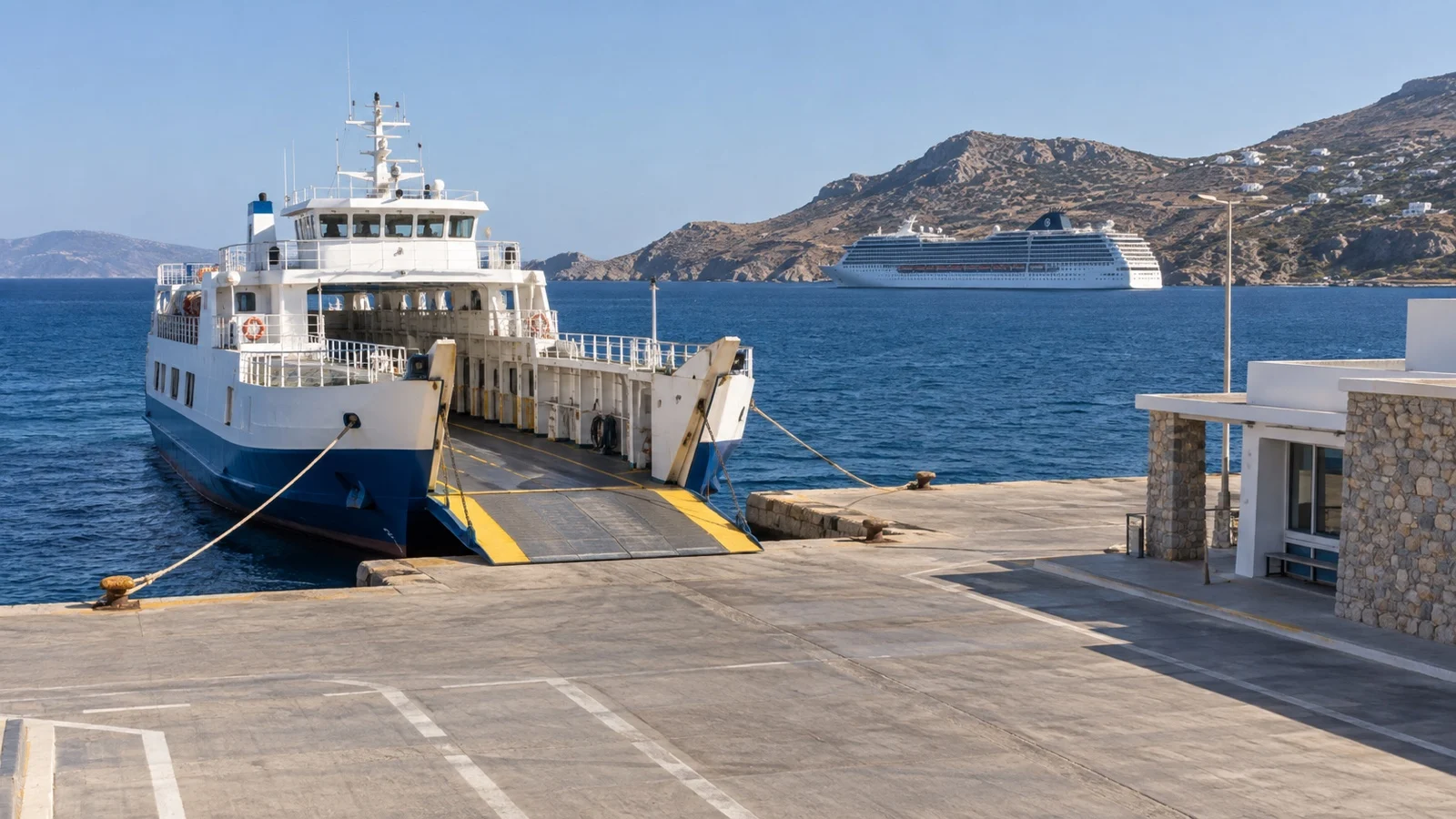
Tier two: the Mediterranean islands, where the ferry schedule is the whole story
Islands look worse than the mainland and often are not, provided they have an airport. Santorini, Mykonos, Rhodes, Corfu, Palma and Malta all have real airports with several daily flights to a hub.
The catch is that the hub is almost always Athens, Rome or Madrid, and your ship is not going there. A short flight to the hub, a long wait, and a second flight back out to the island your ship reaches tomorrow can eat a full day to cover a distance the ship covers overnight.
The islands with no airport are the ones that hurt. A missed sailing from a small Greek or Croatian island can mean a ferry that runs once a day, and if you miss that too you are there until tomorrow.
Tier three: the Norwegian fjords, where the airport is over a mountain
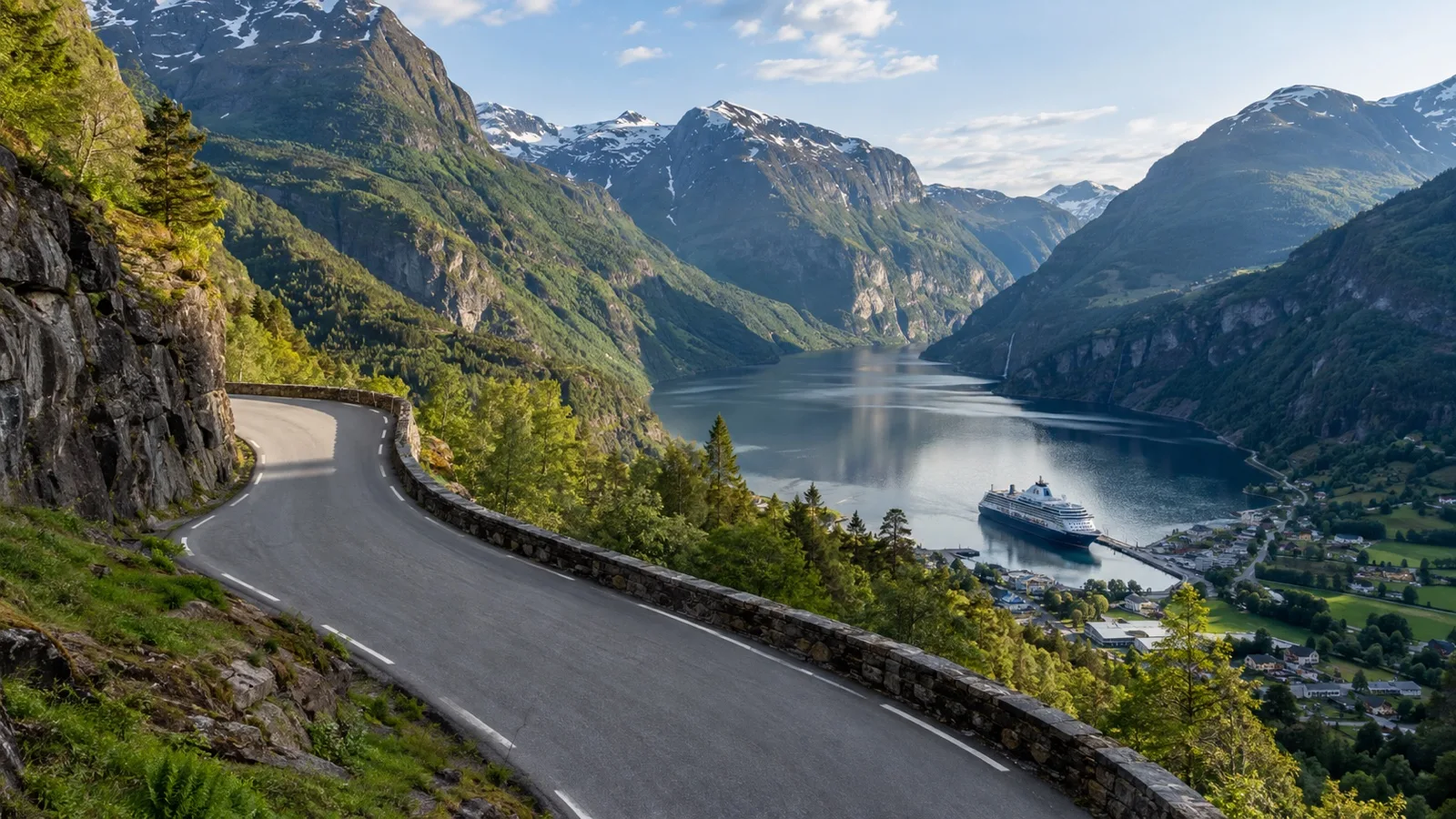
Norway is the tier that surprises people, because it looks like Europe and behaves like Alaska. The fjord villages your ship calls at have a few hundred residents and no scheduled air service.
Norway is not short of airports. Avinor, the state operator, runs 43 airports across the country, precisely because so much of it cannot be reached any other way.
None of them are in Geiranger, Flam, Olden or Hellesylt. From those places you take a bus over a mountain road to a regional airport, then a flight to Oslo or Bergen, then a second flight or a long drive to wherever the ship is tomorrow.
That is a two day recovery in good weather, and several of the passes that connect fjord villages to the outside world close for winter.
If your ship is running north toward Tromso or Honningsvag while you are trying to catch it, the gap widens every hour. There is a real chance you skip two ports and rejoin at the turnaround.
Tier four: Alaska, where the road system does not reach
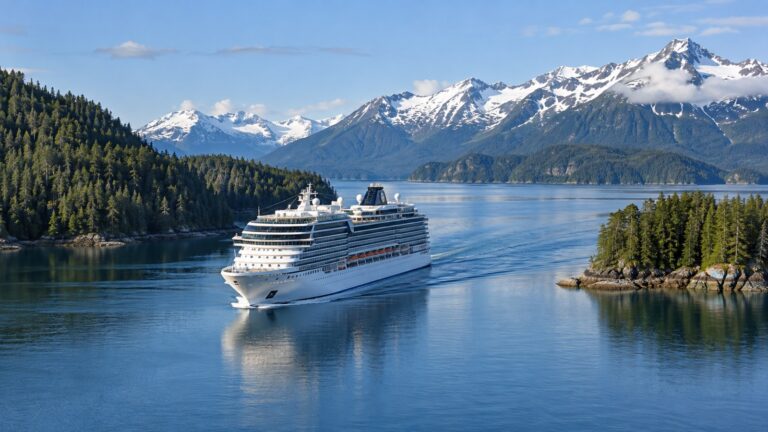
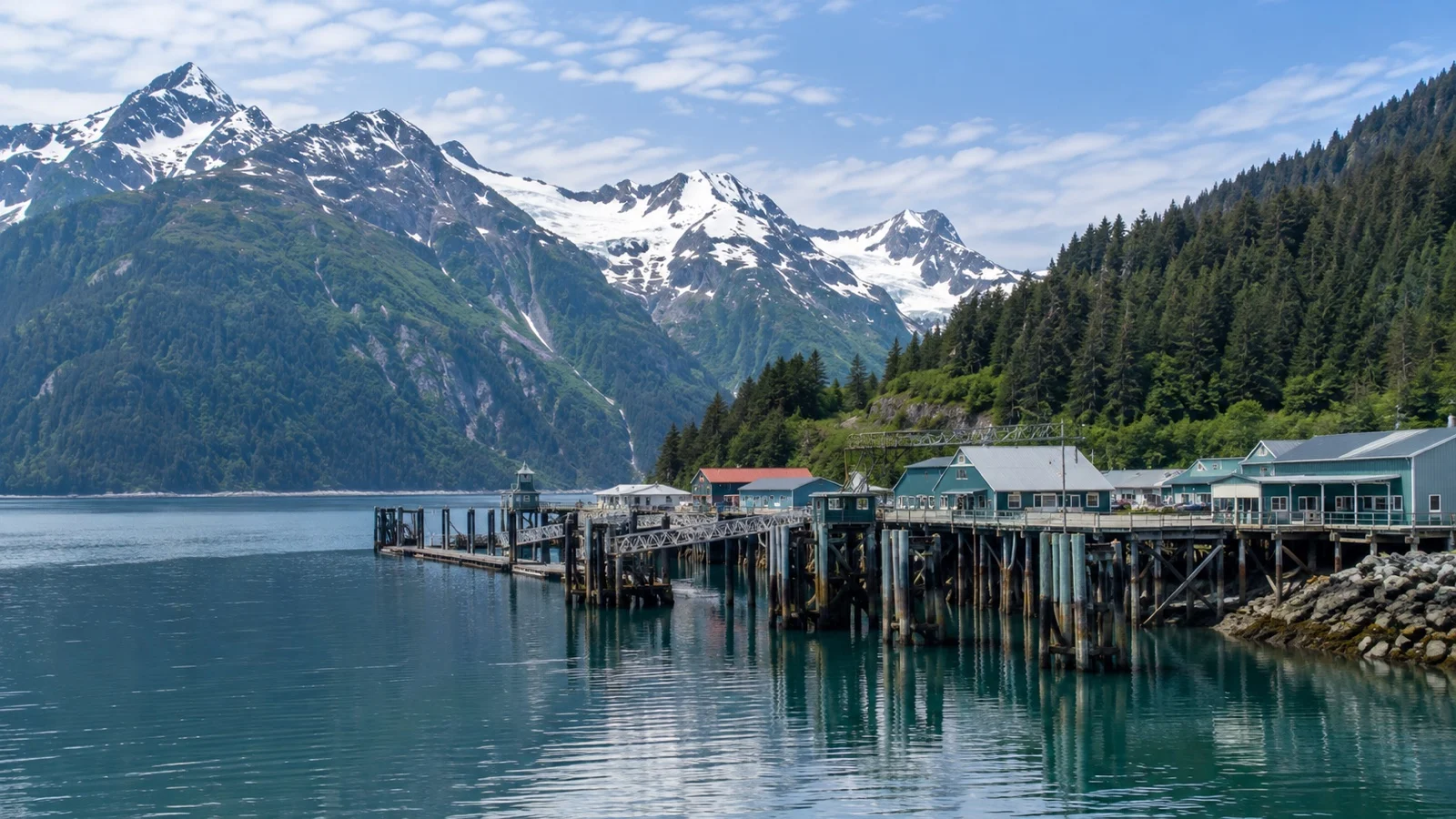
Southeast Alaska is the hardest place in the United States to chase a ship, and the reason is geography rather than distance. Juneau, Sitka, Ketchikan, Haines and Icy Strait Point are not connected to the North American road network.
The state runs ferries instead. The Alaska Marine Highway System covers 3,500 miles of coastline and serves over 30 communities from Bellingham, Washington all the way out to Dutch Harbor.
Those ferries are wonderful and they are also slow, and some routes run twice a week rather than twice a day. A ferry that leaves Juneau tomorrow afternoon does not help you catch a ship sailing from Skagway tonight.
Then there is the legal layer, which is the part nobody sees coming. Federal coastwise law bars a foreign-flagged vessel from transporting passengers between two US ports, and almost every big cruise ship in Alaska is foreign-flagged.
The practical effect is that leaving the ship in Juneau and rejoining in Ketchikan on a Seattle round trip is not simply a travel problem. It can create a coastwise-law problem that the line must evaluate, and reboarding is never something to assume.
Worth knowing: the Passenger Vessel Services Act carries a civil penalty for each passenger unlawfully transported and landed, and the amount is adjusted over time. The cruise line has to evaluate the actual itinerary and may refuse a reboarding plan that creates a coastwise violation, so do not treat the next Alaska port as an automatic recovery point.
Tier five: the small Caribbean islands, where two flights is a good day
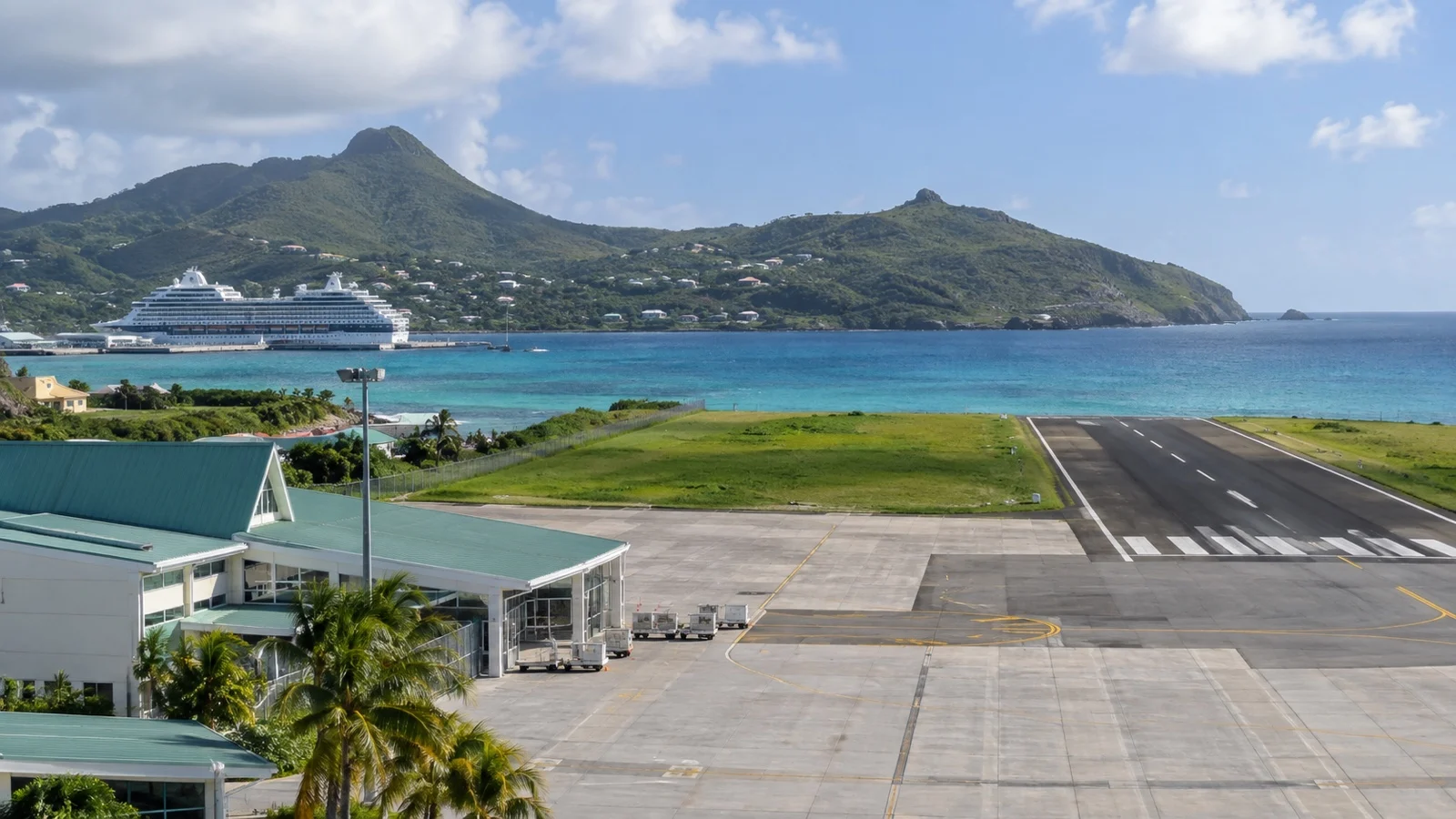
The Caribbean feels forgiving because it is warm and everyone speaks some English. It is not forgiving at all once you leave the big ports.
Nassau, San Juan, Cozumel, Aruba and St Thomas are fine, because all of them have airports with multiple daily flights to Florida. You will pay for a same-day ticket and you will make it.
The small islands are a different country, sometimes literally, and they turn up most often on itineraries from the smaller luxury and expedition lines. Bequia, Jost Van Dyke, Virgin Gorda and most of the smaller Grenadines have either no airport at all or a strip with a handful of regional turboprops a day.
Recovery from those looks like a ferry to a larger island, a regional flight to San Juan or Barbados, an overnight, then a flight to wherever the ship is. Two flights, one hotel, two lost sea days, and every leg of it bookable only in local business hours.
What the port agent actually does
Every cruise call has a local agent, a shoreside company the line hires to handle the ship’s business in that port. Pilotage, provisioning, customs paperwork, crew changes and, occasionally, you.
If you miss the ship, the agent is who confirms your ship has sailed, tells you which port it reaches next and when, and can sometimes arrange for your passport to be left ashore. What they cannot do is pay for anything.
In a large port the agent is a real office with staff. In a fjord village or on a small island it may be one person who handles two ship calls a week and who has gone home by 4pm.
That asymmetry is the whole argument of this post. The ports where you most need help are the ports where the least help exists.
The things I would actually do
- Scale your cushion to the port, not the clock: back aboard one hour early in Barcelona, three hours early in Geiranger, and by the second-to-last tender anywhere anchored. The cushion should track how hard the recovery is, not how far the town is.
- Photograph the gangway board: all-aboard time, port agent name, agent phone number, and the berth. It takes six seconds and it is the difference between a phone call and a panic.
- Buy the ship’s tour in tier three, four and five ports: a line-operated excursion comes with the line’s published late-return assistance, and in a fjord village or small island that protection can be worth the markup. In Barcelona it is not.
- Follow the ship’s passport instructions: some ports require the original ashore and others tell you to leave it secured onboard. Carry the port-agent details and a copy either way, and ask guest services before leaving in a hard-to-recover port.
- Set your watch to the ship, every single day: the ship does not always follow local time, and the mismatch has stranded more people than sleeping in ever has. My guide to ship time and local time covers where it goes wrong.
How I would actually decide
Before a port day I ask one question, which is what my Plan B looks like if I am standing on the pier watching the ship leave. If the answer arrives in under five seconds, I relax.
In Livorno the answer is a train to Civitavecchia. In Ketchikan the answer is a flight to Seattle and a very awkward conversation about coastwise law, so I behave differently.
A realistic word on accessibility
Everything above gets harder if you travel with mobility equipment, and the reason is that recovery routes are not accessible routes. A regional turboprop boarded by airstairs, with a tight baggage allowance and no jet bridge, is not a scooter-friendly aircraft.
Medication is the sharper issue. If your ship sails with your cabin, it sails with your pills, so the rule I would hold to is that a full day’s medication travels in your bag ashore in every port, in every region, without exception.
The practical answer is to weight ship-operated excursions much more heavily than a non-disabled traveler would. Royal Caribbean, like every major line, states plainly that documentation and entry requirements are your responsibility, and that responsibility does not soften because the recovery was physically hard.
When to go, and the weather
Season changes the recovery math more than most people expect. It works on the ferries, the flights and the roads all at once.
Alaska in May and September is the sharpest example. Regional flights in Southeast Alaska are highly weather-sensitive, and low cloud can cancel a Juneau to Sitka hop with no useful alternative that day.
Norway in the fjords is at its most forgiving from June through August, when the mountain passes are open and daylight runs almost around the clock. By late September daylight is shrinking quickly and early snow can disrupt the same mountain roads.
The Caribbean flips it. Hurricane season from June through November is not just a risk to your itinerary, it is a risk to the flights you would use to catch up, and one storm can shut a regional hub for two days.
The Mediterranean is easy year round on transport, with one high summer catch. Rail strikes and engineering work can remove your Plan B on exactly the day you need it, so check official service notices before going ashore.
Quick answers
Will the ship wait for me?
Do not count on a delay. A cruise-line excursion comes with that line’s stated late-return assistance, while an independent traveler is responsible for meeting the posted all-aboard time.
What is the hardest region to rejoin a ship from?
Southeast Alaska, because the towns have no road connection and coastwise law limits where a foreign-flagged ship can pick you back up. Remote Norwegian fjord villages and small Caribbean islands are close behind.
Who is the port agent and how do I reach them?
The port agent is the local company your cruise line hires to handle its business in that port. Their name and number are printed in the daily program and posted at the gangway, so photograph both before you walk away.
Do I need my passport ashore?
Follow the ship’s instructions because local clearance rules differ. The State Department recommends traveling with a passport book in case you must fly home, but that does not mean every port requires you to carry it ashore.
Does travel insurance cover catching up with the ship?
Many policies include a missed connection or trip interruption benefit that can pay for transport to the next port, and many do not. Read the specific benefit before you sail, because the limits are often lower than a same-day fare from a small island.
The last word
Nobody plans to miss the ship, which is exactly why the planning that matters happens weeks earlier, at the point where you decide how far from the pier to wander. The port decides the stakes and you decide the exposure.
It is worth remembering that ships miss ports far more often than passengers miss ships, and my roundup of ports most likely to be missed or canceled is the mirror image of this one. Weather and swell decide both.
The five second Plan B question is the entire technique, and it costs nothing. In Barcelona you will laugh at it, and one morning in a fjord village with a 5pm departure and a two hour drive ahead of you, you will not.
How this guide was researched: Unless a first-hand visit is explicitly identified above, this guide is based on independent research using official port, tourism, transit, government, and attraction sources where available. Passport and emergency guidance was checked against the US Department of State’s cruise ship travel page, coastwise law and its penalty against US Customs and Border Protection’s informed compliance publication on the Passenger Vessel Services Act, Alaska ferry coverage against the Alaska Marine Highway System, Norwegian air connectivity against Avinor, and passenger documentation responsibility against Royal Caribbean’s published travel document requirements; logistics and time-sensitive details were reviewed in September 2026; see our Editorial Policy.
More on this topic: browse every guide on choosing a cruise.