Cherbourg Cruise Port: Berths, Beaches and Bayeux
Cherbourg offers an unusually convenient Normandy arrival, with most cruise ships berthing alongside at Quai de France near the city center. The town is easy to explore, while the D-Day beaches and Bayeux require a deliberate road or rail plan.
The best day depends on one choice: stay local for maritime history and a relaxed walk, or use organized transportation for the wider Cotentin Peninsula. Trying to combine too many distant memorials creates more windshield time than understanding.
Quick Facts
- Country: France
- Main cruise berth: Quai de France at the Transatlantic Maritime Station
- Arrival: Ships normally berth alongside, with no tender required
- Into town: About half a mile on foot, with call-day shuttles offered
- Closest major attraction: La Cité de la Mer in the terminal complex
- Popular excursion: Sainte-Mère-Église, Utah Beach, or another focused Normandy history route
- Currency: Euro
- Best plan: Choose either Cherbourg itself or one coherent regional excursion
Where Cruise Ships Dock
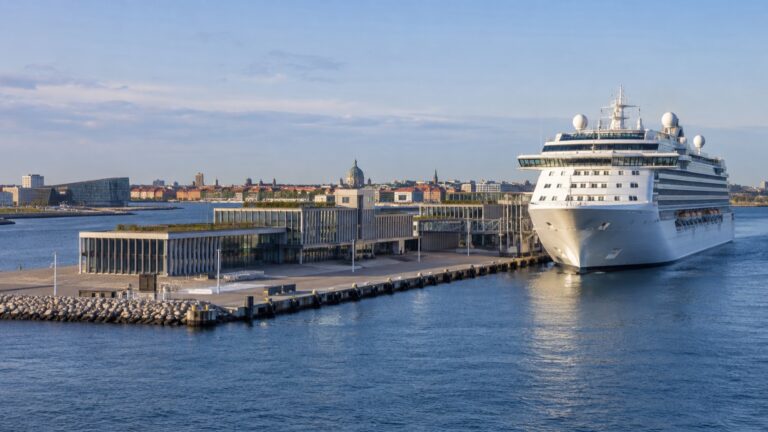
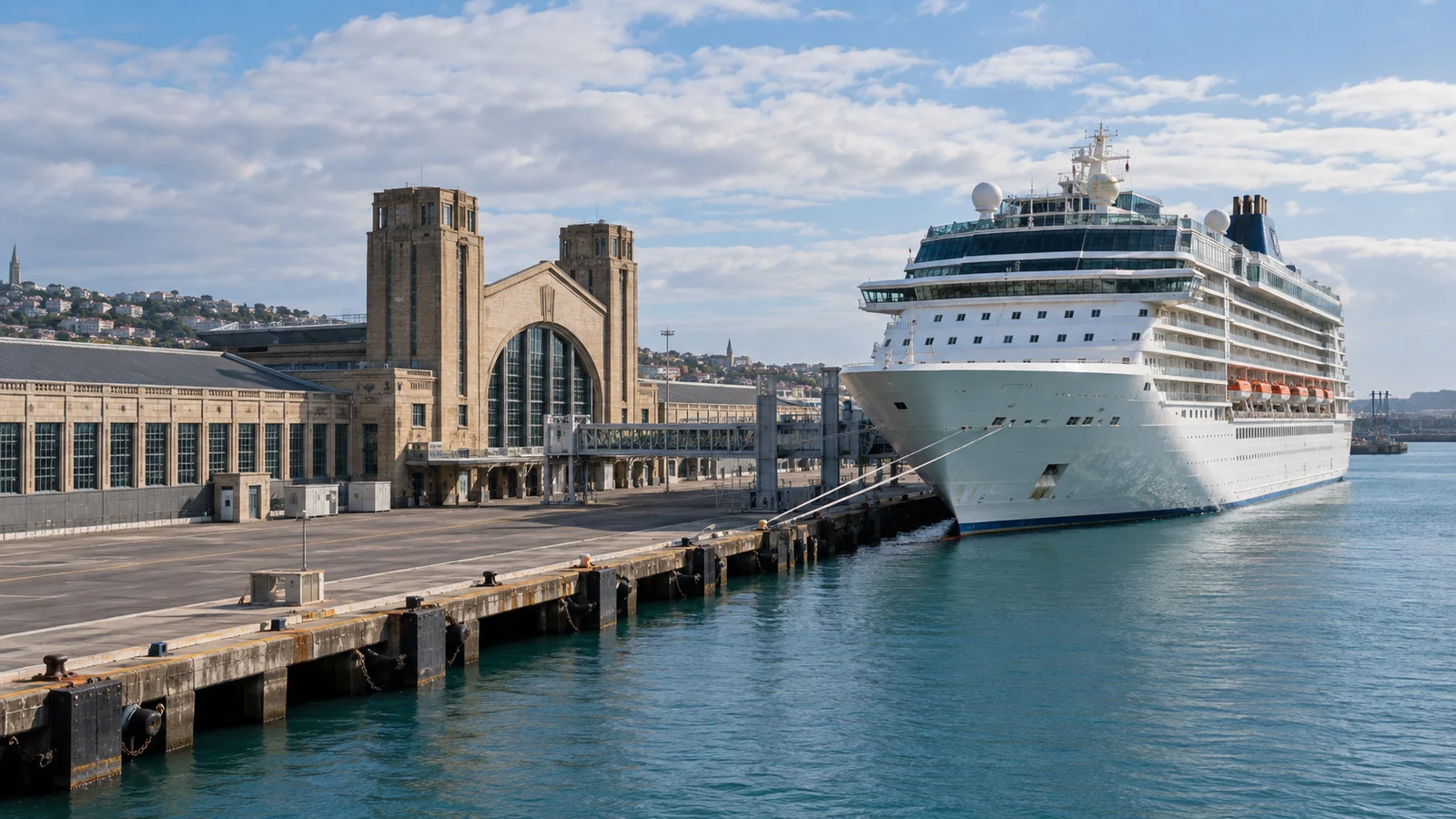
The Port of Cherbourg identifies Quai de France as its modern cruise terminal. The quay is about 600 meters long, with depths reaching 14 meters, and a covered pedestrian walkway connects ships with the terminal building.
The berth sits within Cherbourg’s vast sheltered harbor and was built for large ocean liners. Modern cruise ships normally come alongside rather than tendering passengers ashore.
The official port page says shuttle services connect the terminal with the city center on call days. Check the ship’s daily program because the precise stops, hours, and any charge can vary.
Port operations can still alter a berth or passenger route. Follow signs and crew instructions rather than assuming the gangway will match a photograph from an earlier voyage.
The Historic Transatlantic Terminal
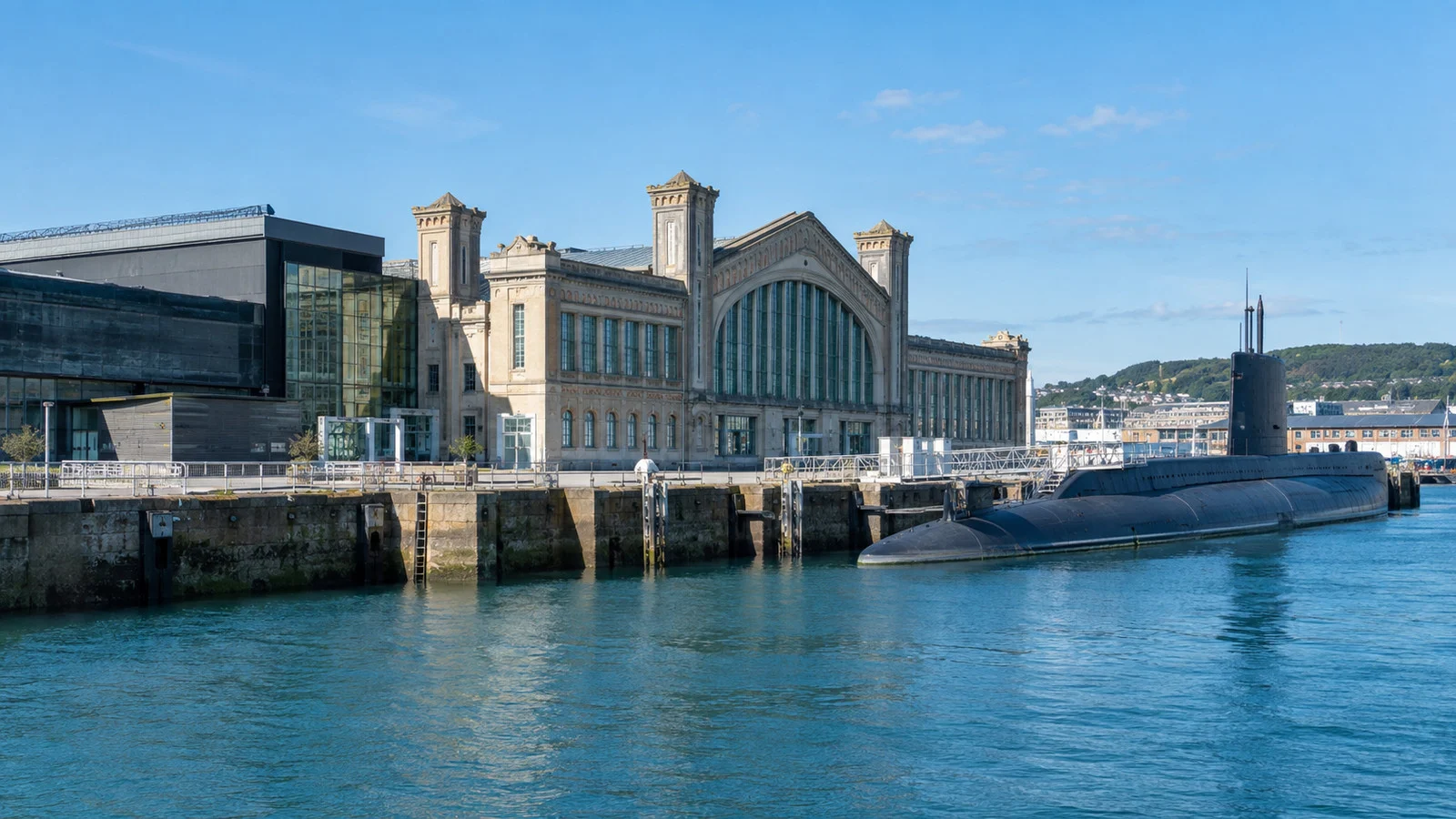
The cruise terminal occupies part of Cherbourg’s former Transatlantic Maritime Station, an Art Deco landmark from the great liner era. The building’s scale makes sense when you remember that it served ships such as Queen Mary and Normandie.
Today, the complex also houses La Cité de la Mer. This creates the rare possibility of stepping from a modern ship into a maritime museum without arranging transportation.
The Cotentin tourist office lists elevators, restrooms, a hospitality desk, a gift shop, free Wi-Fi, and food service within the terminal area. Facilities can be adjusted during cruise calls, so ask the welcome team what is available that day.
The information desk is useful for current shuttle, train, museum, and weather questions. Local advice given on the morning of the call deserves more trust than a perfectly organized plan created months earlier.
Walking Into Cherbourg
The tourist office describes the city center as roughly half a mile from the cruise terminal. The route follows the inner harbor and is generally straightforward for travelers comfortable with a moderate paved walk.
Use the shuttle if weather, fatigue, or mobility makes the walk less appealing. Confirm the return stop and final departure rather than assuming buses run continuously until the gangway closes.
Cherbourg’s compact center includes the marina, market area, shops, cafés, and Basilica of the Holy Trinity. It is a pleasant working city rather than a staged old town, which gives a local morning an easy rhythm.
The railway station lies beyond the central harbor area and requires more walking than the main shopping streets. Add that distance to both ends of any independent Bayeux plan.
La Cité de la Mer
La Cité de la Mer is the easiest major attraction for cruise passengers because it shares the old liner terminal complex. Its exhibits focus on submarines, deep-ocean exploration, marine life, Titanic, and Cherbourg’s transatlantic history.
Le Redoutable, a former French nuclear submarine, is the signature experience. The museum states that children under five cannot enter the submarine for safety reasons, although they can visit the other eligible areas.
The official hours and rates page publishes a detailed calendar and notes that ticket sales stop 90 minutes before closing. Check the exact day because opening times change seasonally.
Allow at least two hours for a focused visit and longer if submarines or ocean science are priorities. The attraction is large enough to fill most of a call without any transportation stress.
Understanding the D-Day Geography
Cherbourg sits near the northern end of the Cotentin Peninsula, while the landing sites stretch across a much wider coastline to the south and east. They are not one compact attraction with a central parking lot.
Sainte-Mère-Église and Utah Beach are the closest major D-Day destinations from Cherbourg. Omaha Beach, Pointe du Hoc, and the Normandy American Cemetery require more road time and a carefully designed route.
An organized excursion is the best choice when Normandy history is the reason for the call. It combines transportation, guiding, timed stops, and a protected return to the ship.
A private guide can work well when booked far in advance and given the ship’s schedule. Avoid relying on a one-way taxi to a rural memorial, since finding another vehicle for the return can be difficult.
Sainte-Mère-Église and Utah Beach
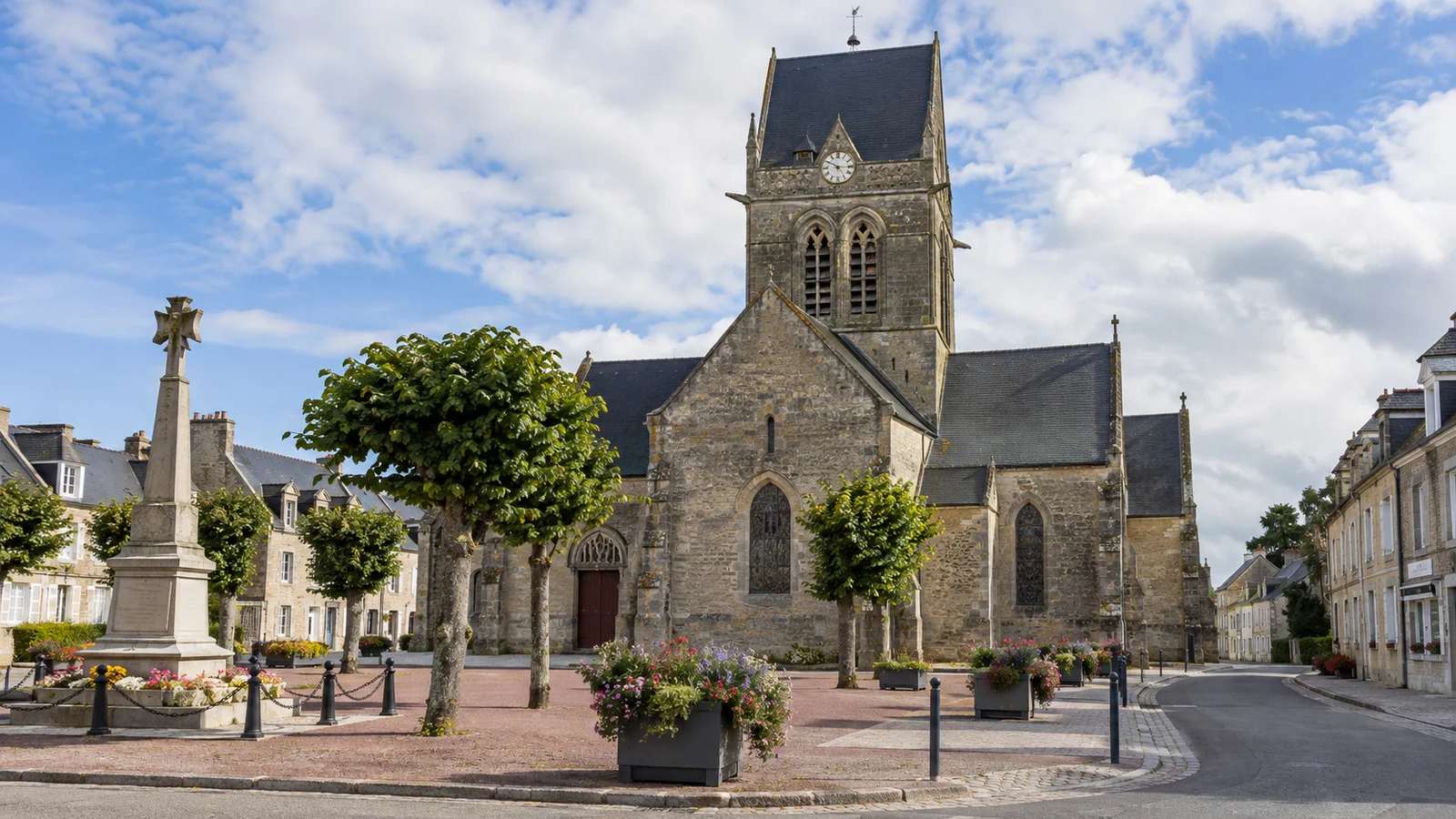
Sainte-Mère-Église is associated with the American airborne landings and was among the first towns liberated during the invasion. The church square and Airborne Museum form the practical center of a focused visit.
The Airborne Museum’s aircraft, vehicles, displays, and immersive exhibits need more than a rushed walkthrough. Check its official opening hours and last-admission time close to departure.
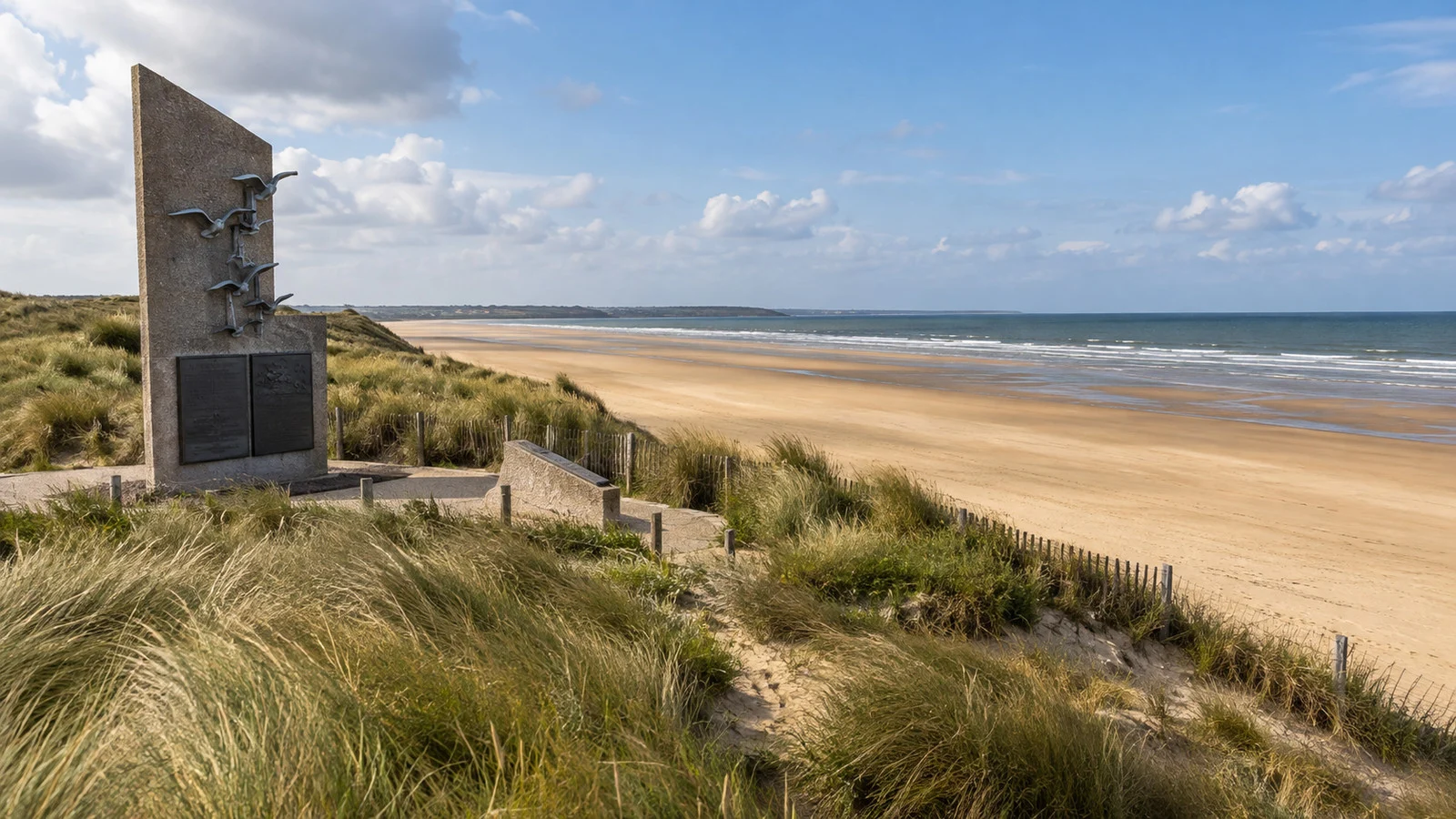
Utah Beach adds the coastal landscape and museum context, but it is a separate stop requiring road time. A well-paced half day can combine it with Sainte-Mère-Église without attempting the entire Normandy front.
Use a guide to connect the terrain, units, and chronology instead of collecting isolated monuments. The history becomes clearer when the landscape and sequence are explained together.
Bayeux by Train or Tour

Direct regional trains can make Bayeux possible for an independent visitor when the call is long enough. Check the live SNCF schedule, allow time to reach Cherbourg station, and identify more than one realistic return service.
Bayeux station is within walking distance of the historic center, cathedral, and museums. Trains do not provide a simple network between the scattered landing beaches, so a separate guided vehicle is needed for a broader battlefield day.
The Bayeux Tapestry Museum is currently closed for a major renovation until autumn 2027. The official museum notice should be checked before booking any excursion that promises the embroidery.
Bayeux remains worthwhile for its cathedral, preserved streets, and other museums. The closed tapestry display changes the focus of the day, but it does not erase the city’s history or charm.
More to See in Cherbourg
Cherbourg offers enough for a rewarding day without leaving the city. Its harbor, maritime architecture, museums, shops, and local food avoid the long motorcoach hours required by the eastern Normandy sites.
The Musée Thomas Henry holds a significant fine-art collection, including works connected with Normandy. Check the City of Cherbourg’s current opening days because midday closures and public holidays can affect a port visit.
The umbrella manufacturer Le Parapluie de Cherbourg draws on the city’s cinematic identity and local craft. Workshop or museum access can change, so confirm the current visitor format before walking over.
A market and café stop can complete a relaxed morning. Keep enough time for the terminal and gangway rather than treating the short walk as permission to return at the final minute.
Accessibility and Mobility
Cherbourg usually starts well for mobility because ships berth alongside and the terminal provides elevators between levels. Gangway slope and assistance can still vary with the vessel and tide.
The harbor route toward the center is generally paved and level, but distance, wind, and occasional uneven surfaces matter. A shuttle may be more comfortable for travelers who cannot manage the full walk.
La Cité de la Mer publishes accessibility information, but the submarine has physical constraints that differ from the main museum. Ask about the specific exhibit route rather than assuming every component is step-free.
Regional excursions can involve motorcoach steps, grass, gravel, dunes, cemetery paths, and historic buildings. Confirm the vehicle lift, wheelchair storage, restroom access, and walking surfaces before booking.
Weather and What to Wear
English Channel weather can change quickly, with wind, rain, low cloud, and cool air even during the main cruise season. Dress in layers and carry a compact waterproof jacket.
Wind often matters more than the temperature number, especially at exposed beaches and memorials. A secure hat and grippy shoes are more practical than an optimistic umbrella on a blustery day.
Wet grass and gravel can affect cemetery and coastal paths, while cobbles appear in historic centers. Closed shoes with dependable traction work for both town and excursion days.
No audited Cherbourg cruise-call cancellation percentage is publicly available. The harbor is sheltered, but ships can still change plans because of weather, traffic, berth operations, or a wider itinerary decision.
Three Sensible Port-Day Plans
For the easiest day, visit La Cité de la Mer and walk into central Cherbourg. This plan minimizes transportation and leaves flexibility for weather or a delayed arrival.
For a focused D-Day day, choose Sainte-Mère-Église and Utah Beach with the ship or a prebooked guide. Their geography works better from Cherbourg than a rushed attempt to reach every eastern memorial.
For Bayeux, use a current rail schedule or organized tour and remember that the tapestry museum remains closed until autumn 2027. Build a backup return into any independent plan.
Whichever route you choose, return well before all aboard. Normandy roads and regional trains are not improved by a last-minute sprint.
The Final Take
Cherbourg combines an easy alongside berth with serious maritime and wartime history. Its own museum and walkable center make a satisfying day, while the wider Cotentin Peninsula rewards one carefully chosen excursion.
Choose the local city or one coherent Normandy route, confirm current openings, and protect the return to Quai de France. This guide was desk-researched on September 12, 2026 using the Port of Cherbourg, Cotentin Tourist Office, La Cité de la Mer, and Bayeux Museum.
It does not claim a personal sailing, berth inspection, museum visit, or Normandy excursion. Live access and transportation must always be reconfirmed.