Gdynia (Gdańsk) Cruise Port: Quays, Trains and Two Cities
When an itinerary says “Gdańsk (Gdynia),” the parentheses contain most of your planning. Your ship is usually in modern Gdynia, while the famous brick gates, amber shops, and Motława waterfront of Gdańsk sit a substantial road or rail journey away.
Two cities, two ports, one dangerously vague label
This guide is specifically for ships berthing in the Port of Gdynia, normally at Francuskie Quay or sometimes Pomorskie Quay. It does not cover calls assigned to the separate Port of Gdańsk, whose quays, ground transport, and return route are different.
The Port of Gdynia’s official cruise schedule confirms the ships calling here, while Princess explains that its ships marketed as Gdańsk calls dock in Gdynia about 20 miles north of Gdańsk. Check your own cruise line’s berth notice, because a destination name is not a berth confirmation.
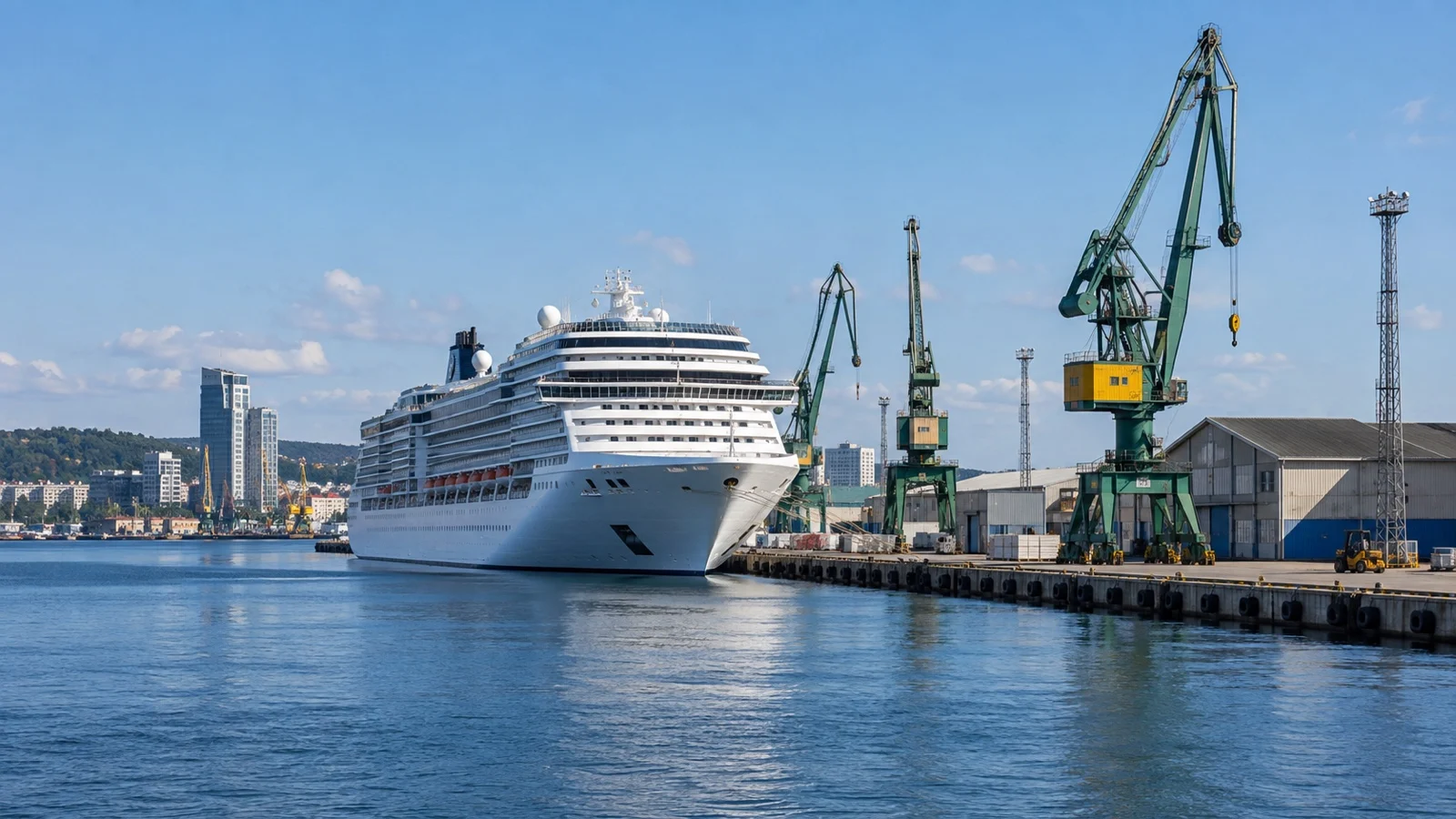
Francuskie Quay sits in an active working port beside the historic Maritime Station and Emigration Museum. Large cruise ships berth alongside, tendering is not normal, and unrestricted wandering through operational port roads may be limited.
Cruise lines often provide a shuttle toward central Gdynia, but price, drop-off point, frequency, and accessibility are determined per call. Do not assume “shuttle to town” means Gdańsk, because it usually means Gdynia city center.
The quick facts
- Where you land: Francuskie Quay, or sometimes Pomorskie Quay, inside the working Port of Gdynia, beside the historic Maritime Station and Emigration Museum. Główne Miasto in Gdańsk is about 20 miles south, so check whether your ship is in Gdynia or the separate Port of Gdańsk.
- Dock or tender: Large ships berth alongside here and tendering is not the normal arrival.
- Into town: Central Gdynia is roughly 2 miles, reached by cruise-line shuttle, bus 119 or 133 from the Muzeum Emigracji stop, or a taxi.
- Currency and language: The Polish złoty (PLN) and Polish, with English common in tourist areas.
- Time zone: Central European Summer Time (CEST, UTC+2) during the cruise season, CET (UTC+1) in winter.
- How often the call is missed: Low (under 1%): the sheltered berth is rarely limited by local weather.
The decision tree before breakfast
Your berth says Gdynia: Use this guide.
Your berth says Port of Gdańsk: Use that port’s same-day instructions instead.
You want an easy day: Stay in Gdynia.
You want historic Gdańsk: Allow a serious transfer buffer.
You want Sopot: Use the same Tri-City rail corridor, but plan a separate stop.
The closest major sight is wonderfully on theme
The Emigration Museum occupies the former Maritime Station beside Francuskie Quay, where passengers once began transatlantic journeys. Its official access page lists buses 119 and 133 at the Dworzec Morski or Muzeum Emigracji stop and explains connections from Gdynia Główna.
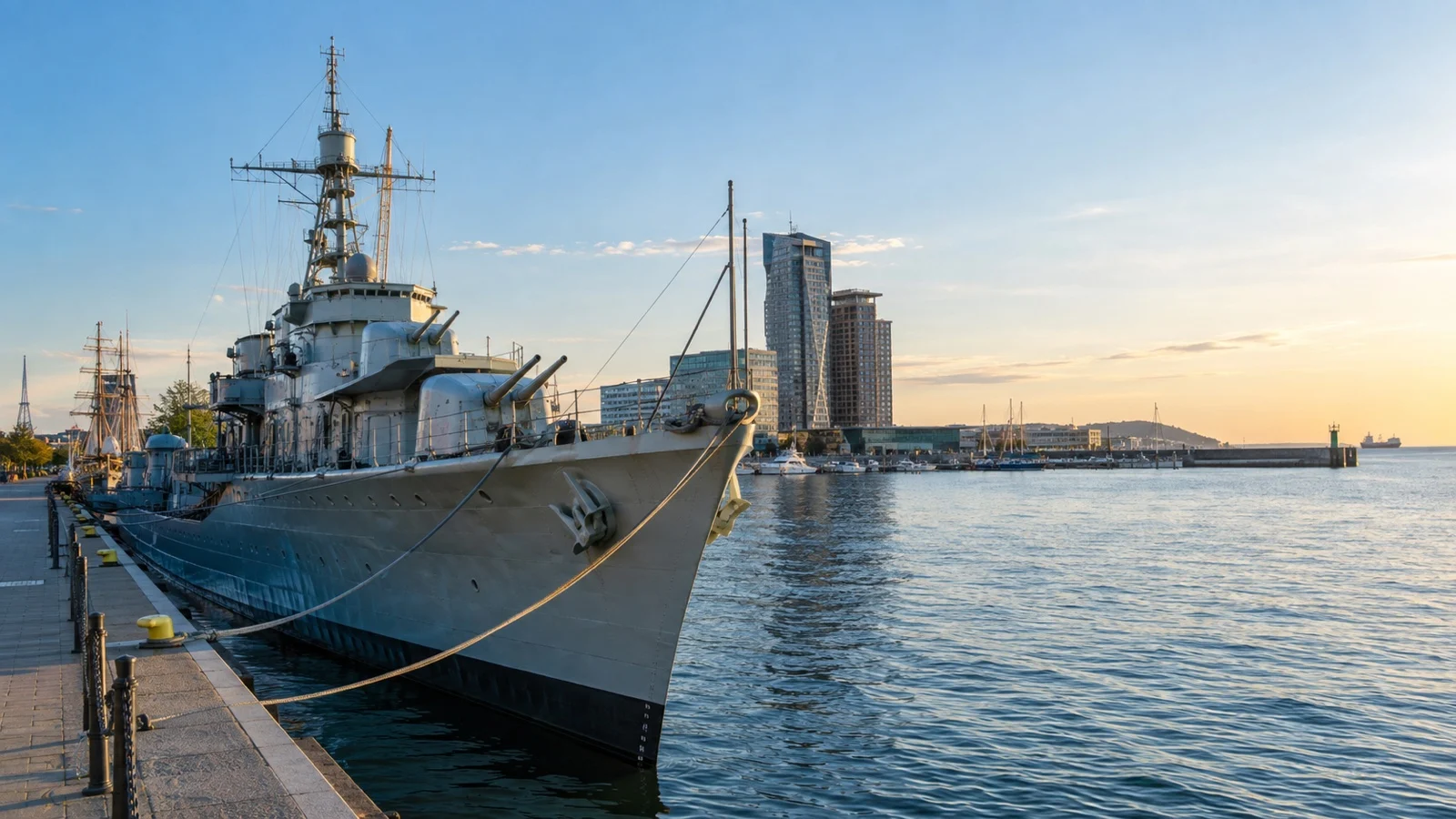
The museum’s exhibits examine generations of Polish migration through personal stories, objects, politics, and economics. Check opening days before relying on it, since the perfect museum beside the ship is less perfect when the doors are closed.
Access between the gangway and museum entrance still depends on the secure-port route set for your call. Follow marked passenger paths and ask staff rather than hopping a barrier because the building looks tantalizingly close.
Gdynia deserves more than gateway status
Gdynia expanded rapidly as Poland’s major seaport in the interwar era, and its center is full of crisp modernist buildings rather than medieval lanes. A walk along 10 Lutego Street toward Kościuszko Square reveals curved corners, pale façades, nautical details, and a city designed with forward motion in mind.
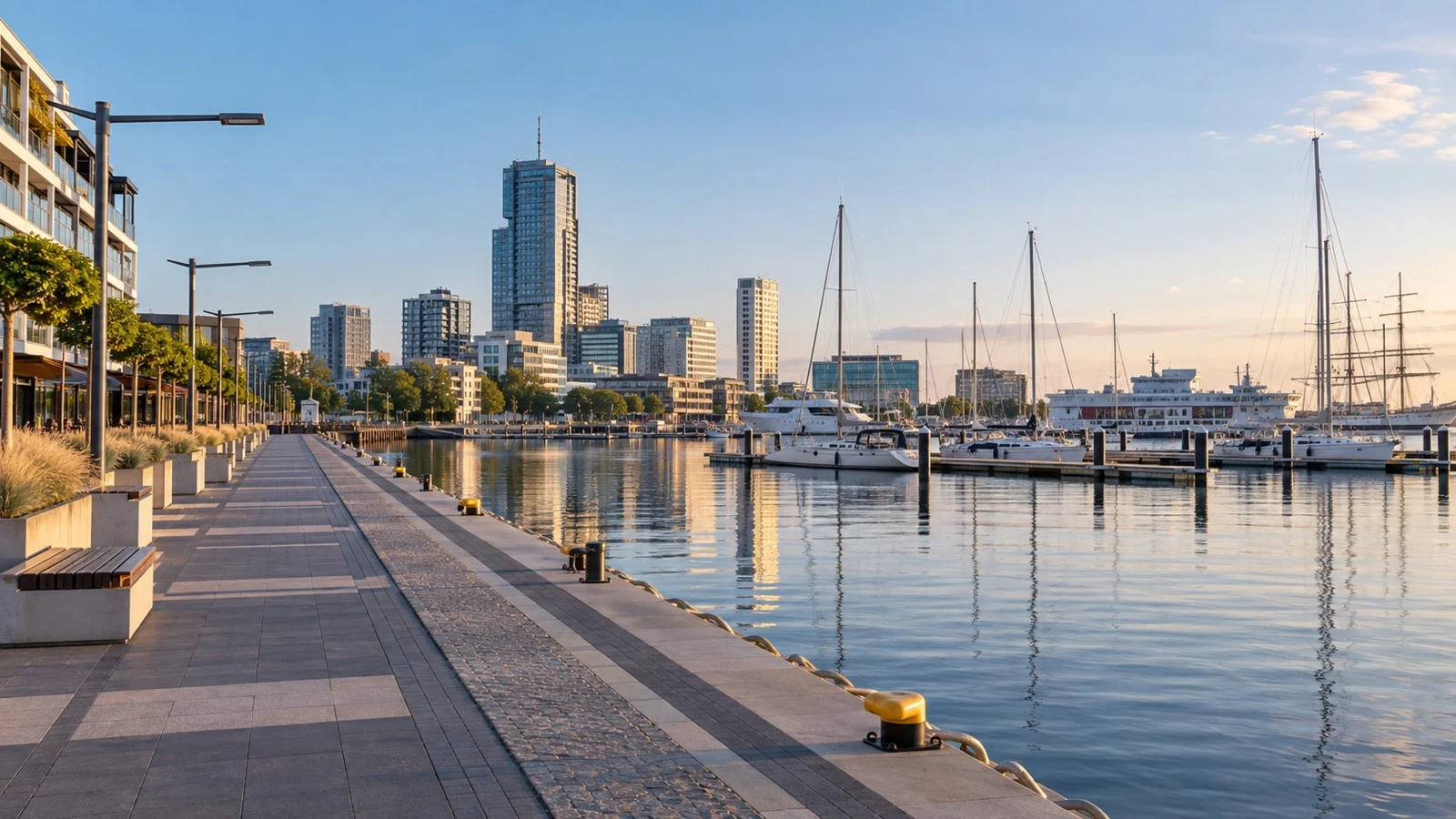
At the waterfront, museum ships Dar Pomorza and ORP Błyskawica sit near the marina, Gdynia Aquarium, and city beach. Check opening hours independently because fitting multiple ticketed attractions into one port call is optimistic in the way buffets encourage a fourth dessert.
Kamienna Góra offers elevated city and bay views, with a funicular-style incline railway from near the center when operating. The surrounding paths can be steep, so travelers with limited mobility should verify lift access and choose the smoother waterfront instead.
How to reach central Gdynia
A cruise-line shuttle is the simplest option when its drop-off and return schedule suit your plans. Common central targets include Kościuszko Square or an area convenient to Gdynia Główna station, but use the exact location announced onboard.
Public buses 119 and 133 connect the Maritime Station or Emigration Museum area with the city, with service levels varying by day and time. Verify the current timetable, ticket method, and stop direction before boarding, because Sunday frequency is generally thinner than weekday service.
A taxi or established ride-hailing app removes the bus-to-station step and can be cost-effective for a small group. Save the ship name and quay in writing for the return, not simply “cruise terminal,” because Gdynia also has a separate public ferry terminal.
The independent route to Gdańsk
First reach Gdynia Główna by shuttle, bus, or taxi, then take an SKM or suitable regional train toward Gdańsk. Gdańsk Główny is convenient for the historic center, while Gdańsk Śródmieście can place you slightly closer to parts of the Main City depending on the service.
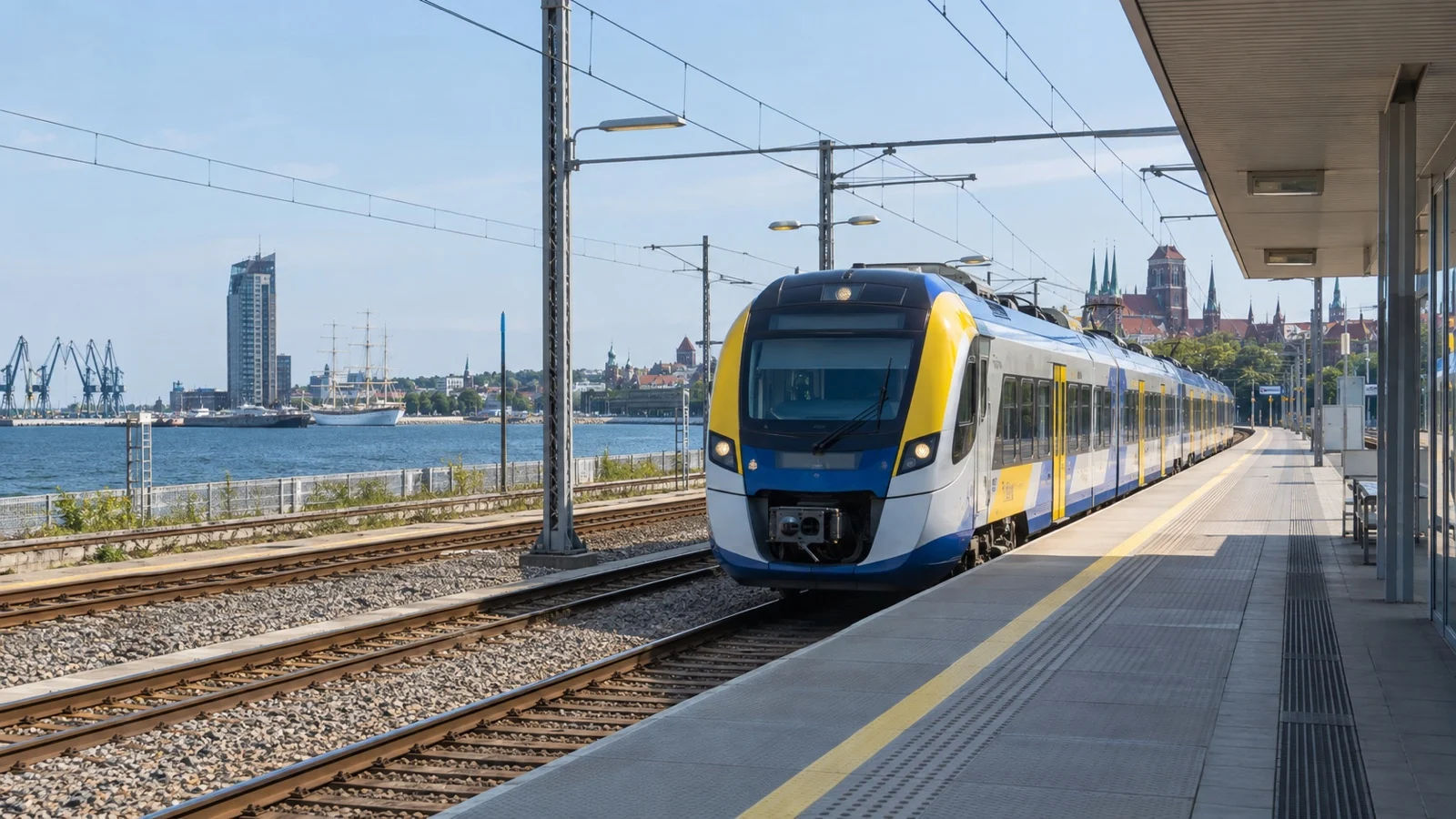
The rail journey itself is commonly around 30 to 40 minutes, but your real transfer includes waiting, platforms, ticket purchase, the port-to-station leg, and walking at the other end. Budget roughly 75 to 100 minutes each way from gangway to central Gdańsk when building a safe independent plan.
Buy the correct ticket before boarding and validate it when the ticket type requires validation. Rail, bus, and metropolitan products are not automatically interchangeable, so ask station staff or use the operator’s official app rather than assuming one attractive day pass covers everything.
On the return, check that your train stops at Gdynia Główna rather than rushing onto anything with Gdynia somewhere on the display. Express and regional stopping patterns differ, and arriving at the wrong suburban station is a poor finale to an otherwise excellent amber-shopping career.
What to prioritize in historic Gdańsk
Walk the Royal Way through the Golden Gate, Long Street, Long Market, and Green Gate, then turn along the Motława waterfront toward the medieval crane. Saint Mary’s Church, Mariacka Street, and the reconstructed façades supply more than enough for a first visit.
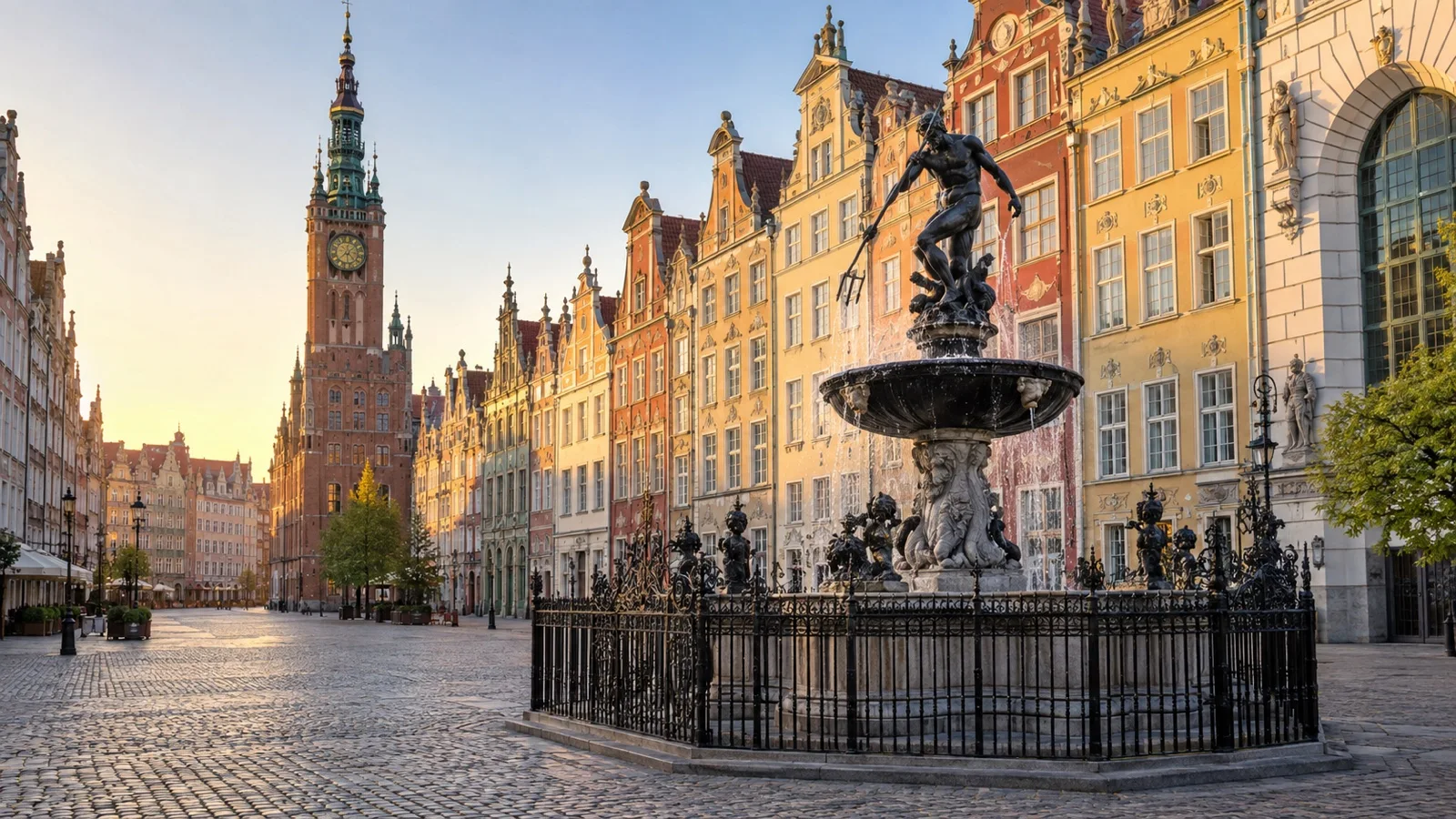
Choose one museum at most, because the Museum of the Second World War and European Solidarity Centre each deserve real time and sit beyond a quick photo loop. Reserve timed admission where available, and leave the rest for a future land visit rather than converting your day into competitive heritage.
A cruise-line “Gdańsk on your own” motorcoach costs more than the train but simplifies the port transfer and supplies a fixed meeting point. Read the excursion terms carefully, since even organized independent time has a specific bus departure you can miss.
Sopot is not a free bonus city
Sopot lies between Gdynia and Gdańsk on the rail corridor, known for its long wooden pier, beach, and resort center. It makes a pleasant primary destination or a short stop on a long call, but combining all three Tri-City centers produces more transit than pleasure.
If you want Gdańsk’s historic core, protect that time and skip Sopot. If you prefer an easier seaside day, pair central Gdynia with Sopot and avoid the longest transfer.
For another Baltic gateway call with transfer tradeoffs, our Warnemünde cruise port guide tackles the even longer Berlin decision. You can also compare Gdynia with the berth and transit choices in our Copenhagen cruise port guide.
Accessibility: choose the city before the route
Ships berth alongside, but the gangway gradient and port transfer remain vessel-specific. Ask whether the call’s shuttle is step-free, whether mobility devices can be carried, and where the accessible drop-off sits in central Gdynia.
The Emigration Museum provides disability information and occupies a restored historic building beside the quay. Confirm the accessible passenger path from your specific ship, as secure-port routing can prevent the obvious direct approach.
Gdynia’s central waterfront is relatively broad and paved, although gradients, curb design, and attraction gangways vary. Historic Gdańsk adds cobbles, bridge slopes, crowds, a train transfer, and significantly more distance.
A prearranged accessible vehicle to Gdańsk may be more workable than combining port shuttle, station, train, and old-city surfaces. Our guide to wheelchair-friendly cruise ports lists practical questions for cruise lines and tour operators.
Weather, money, and normal city caution
Baltic cruise season brings long daylight, changeable temperatures, showers, and coastal wind. Carry a light waterproof layer, sun protection, and shoes comfortable enough for train platforms and cobbled Gdańsk streets.
Poland uses the złoty, although contactless card payment is common. Do not count on euros being accepted, and keep a backup card or small amount of local currency for ticket machines or minor purchases.
Gdynia and Gdańsk are generally straightforward visitor cities, but watch belongings on crowded trains, platforms, and tourist streets. Use licensed taxis or reputable apps, verify the vehicle, and never accept a vague verbal fare for a long cross-city trip without understanding the price.
Return arithmetic that actually protects the day
For a Gdynia-only day, aim to reach the port shuttle stop or authorized gate 60 minutes before all-aboard. The final ride through the secure working harbor can take longer than the city map implies.
From Gdańsk, plan to leave the historic center at least three hours before all-aboard when traveling independently. This allows for the walk to the station, a missed train, the Gdynia station-to-port transfer, traffic, security, and one ordinary mistake.
Never target the last train or shuttle that could theoretically work. Save the cruise-line port agent number, shuttle location, exact quay, and a screenshot of the return rail plan.
Our Helsinki cruise port guide offers another useful lesson in checking the exact berth before choosing ground transport. Baltic ports are friendly to independent travelers, but only after the parentheses have been investigated.
Protect the station-to-quay return
Gdynia Główna is not the cruise terminal, so the train back from Gdańsk completes only the longest middle leg. Keep enough time for the platform exit, a taxi or confirmed bus to the secure port, the authorized gate, and the final walk to the ship.
Check the live SKM or regional operator before both journeys because engineering work, event crowds, and different stopping patterns can change the useful train. Gdańsk is the better choice for a long call, while Gdynia keeps the day flexible and removes two station transfers.
Poland is in the Schengen Area, but permission to go ashore still depends on nationality, passport, itinerary, and the ship’s clearance. Follow the cruise line’s document instructions and verify any visa question through the official Polish consular service before sailing.
Gdynia (Gdańsk) cruise port FAQ
Do cruise ships dock in Gdańsk or Gdynia?
Many itineraries marketed as Gdańsk use the separate Port of Gdynia, usually Francuskie or Pomorskie Quay. Some ships can call at the Port of Gdańsk, so verify your berth rather than relying on the itinerary label.
How far is Gdańsk from Gdynia cruise port?
Princess describes Gdynia as about 20 miles north of Gdańsk. Allow roughly 75 to 100 minutes each way from gangway to historic center when combining port transfer, train, waits, and walking.
Can I take the train independently?
Yes, by first reaching Gdynia Główna and then using an appropriate train to central Gdańsk. Check stops, buy the correct ticket, and keep a large return buffer.
Is Gdynia worth exploring?
Absolutely, especially for modernist architecture, maritime history, the Emigration Museum, museum ships, and an easy waterfront. It also avoids spending several hours of the call in transit.
Do ships tender at Gdynia?
Cruise ships normally berth alongside. Follow same-day instructions if unusual weather or an operational change affects your call.
We separate confirmed facts, operational variables, and planning estimates under our Editorial Standards and Corrections Policy. Your ship’s daily information is the final authority for the actual port, quay, shuttle, and all-aboard deadline.
How this guide was researched: Terminal, tender, transit, entry, attraction, booking, safety, and accessibility details were checked against current official sources on September 10, 2026, including the Port of Gdynia, PKP SKM, Gdynia public transport, the Emigration Museum, and Poland’s official consular service. Sailing assignments, border requirements, schedules, access, and operating conditions can change, so confirm the ship-specific details before travel; see our Editorial Policy.