Cruise Ports With Roman Ruins You Can See in a Day
Most Roman ruins that make the brochure sit two or three hours inland from the pier. A handful are a ten minute walk from your gangway, and knowing which is which before you book is the whole game.
My quick take
Roman ruins are the most oversold shore excursion category in the Mediterranean. Half of them are genuinely close to the ship, and the other half are a coach seat with a hot walk on the end of it.
What I care about is the ratio of ruin time to travel time. If I am spending four hours in a vehicle to get ninety minutes on a site, I would rather stay in the port town and find lunch.
The quick facts
- Shortest walk: Split and Pula both put major Roman structures within about fifteen minutes of the ship.
- Best single site: Ephesus from Kusadasi, roughly 25 minutes inland and still the strongest ruin day going.
- Not happening in a port day: Jerash from Aqaba, and Merida from anywhere on the Iberian coast.
- Heat is the real constraint: Almost every site here is open stone with no shade at all.
- Tickets have changed: Several of these sites now use daily caps or timed entry, so buying at the gate is no longer safe.
What “in a day” actually means here
A port call is not a day. Subtract the all aboard buffer and the walk out of a working port and seven usable hours is a good outcome, which is why my rule is ninety minutes of travel each way.
That one rule sorts almost everything below. It also means the question of which Mediterranean ports you can handle on your own matters more than the ruin at the far end.
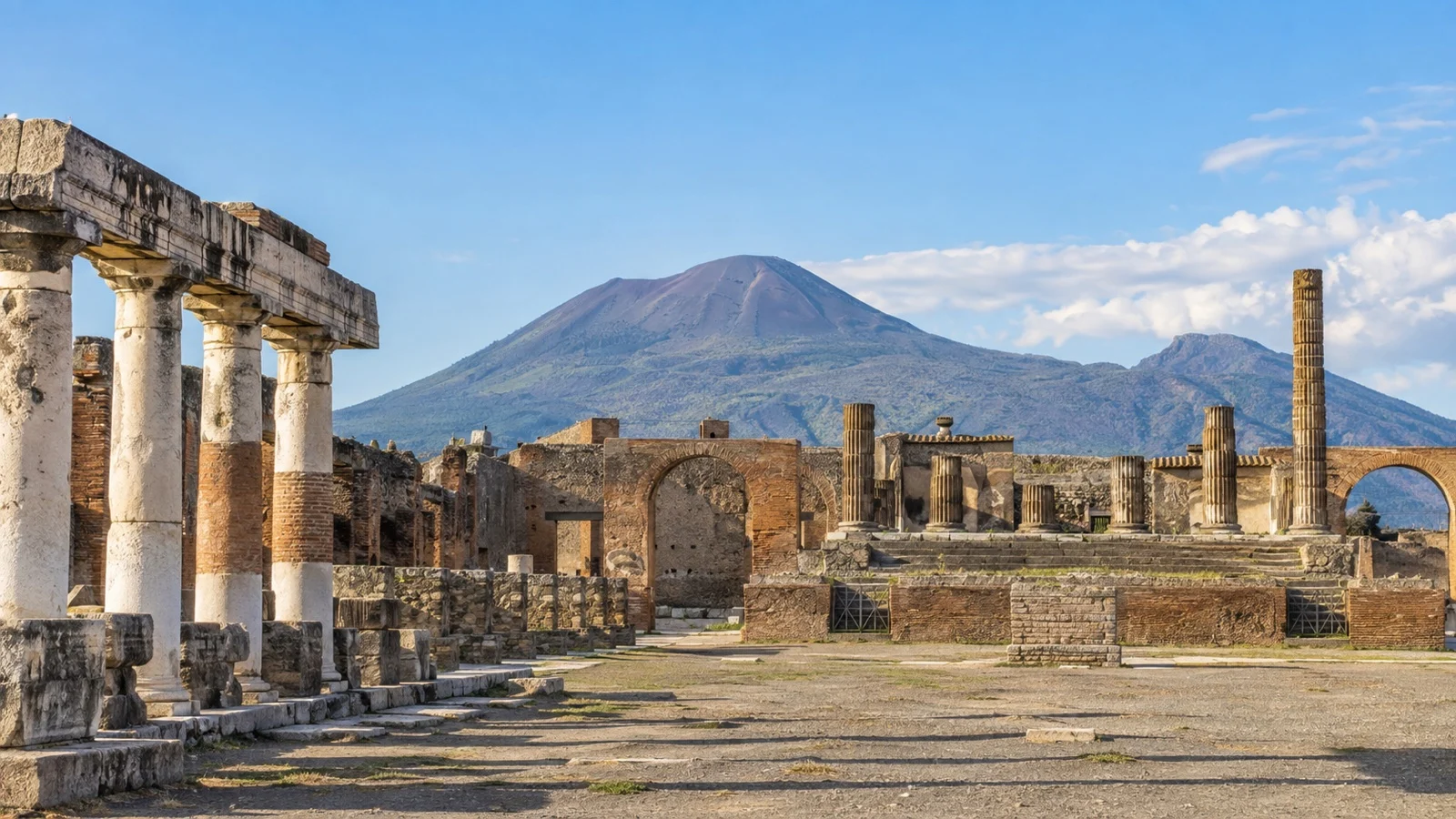
Naples: Pompeii or Herculaneum, and I would pick one
Ships tie up at Molo Beverello or the Stazione Marittima and nothing tenders. The historic center is a flat 10 to 15 minute walk, which already puts Naples ahead of most ports here.
The Circumvesuviana line runs from Napoli Garibaldi or Porta Nolana to the Pompei Scavi stop in roughly 35 to 40 minutes. Herculaneum is on the same line and comes up first, at Ercolano Scavi.
Pompeii is enormous and almost entirely roofless, which in July is less a highlight than an endurance event. Herculaneum covers a fraction of the ground and is better preserved, so I would take it on a hot call and save Pompeii for October.
Both towns are listed together as one property with the villas at Torre Annunziata, which is why people assume they are one visit. They are not, and the case for doing Pompeii without an excursion is worth reading first.
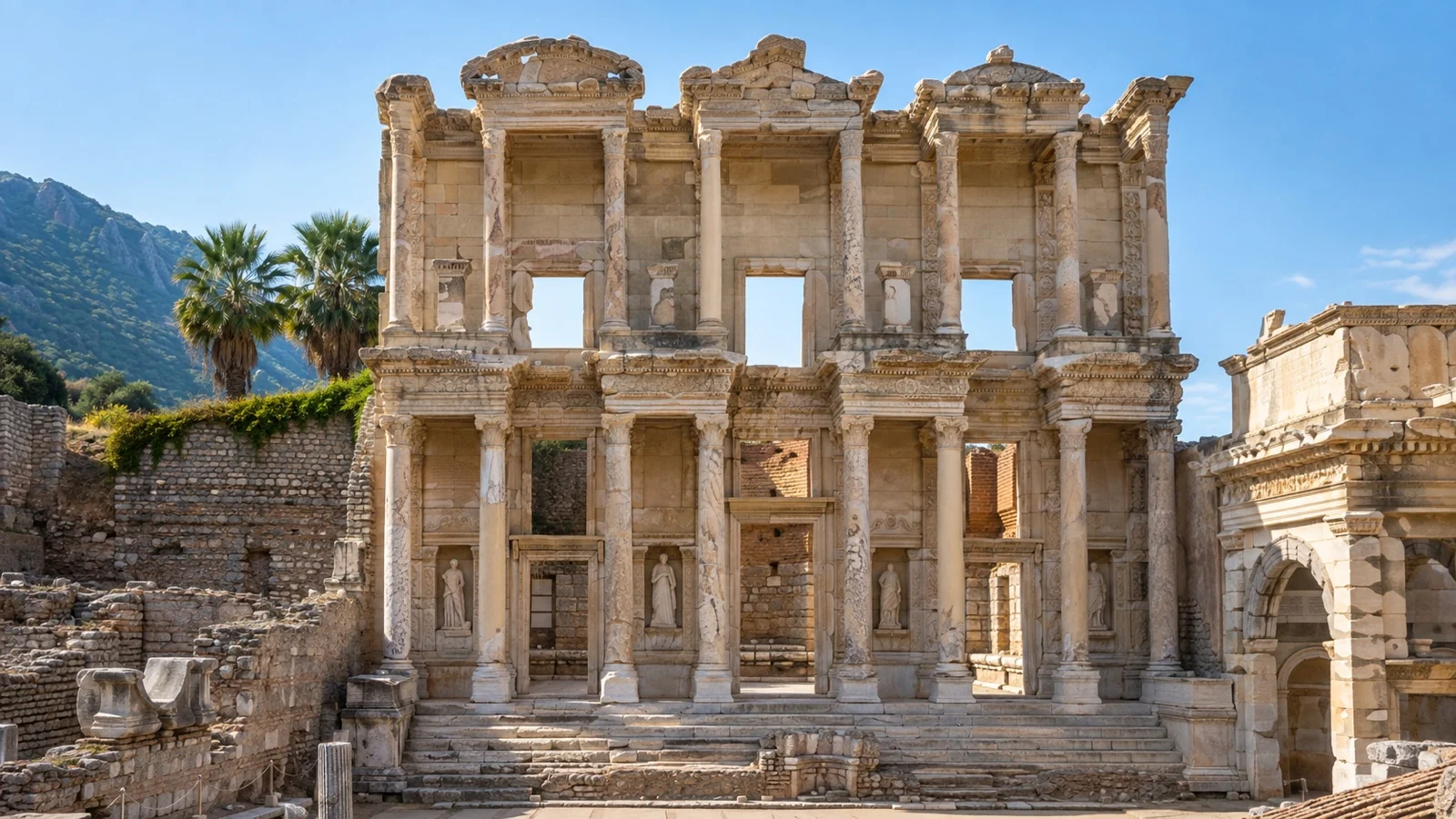
Kusadasi: Ephesus is the easy yes
Ege Port puts you about 165 feet from the terminal gate to the edge of town, one of the shortest ship to street walks in the Mediterranean. Ephesus is around 25 minutes inland, and traffic on a four ship day is the only real variable.
The site has an upper gate and a lower gate, and this is the detail people get wrong. Enter at the upper gate and you walk downhill past the Library of Celsus and the Great Theater instead of grinding up marble in full sun.
The Terrace Houses are a separate ticket and easily the best hour you can buy in Turkey. They are roofed, cooler, far less crowded, and the mosaics and painted walls inside are the part you will remember.
Fix the fare, the waiting plan and the gate before you get in a taxi. The rest of the independent case is in the guide to reaching Ephesus on your own.
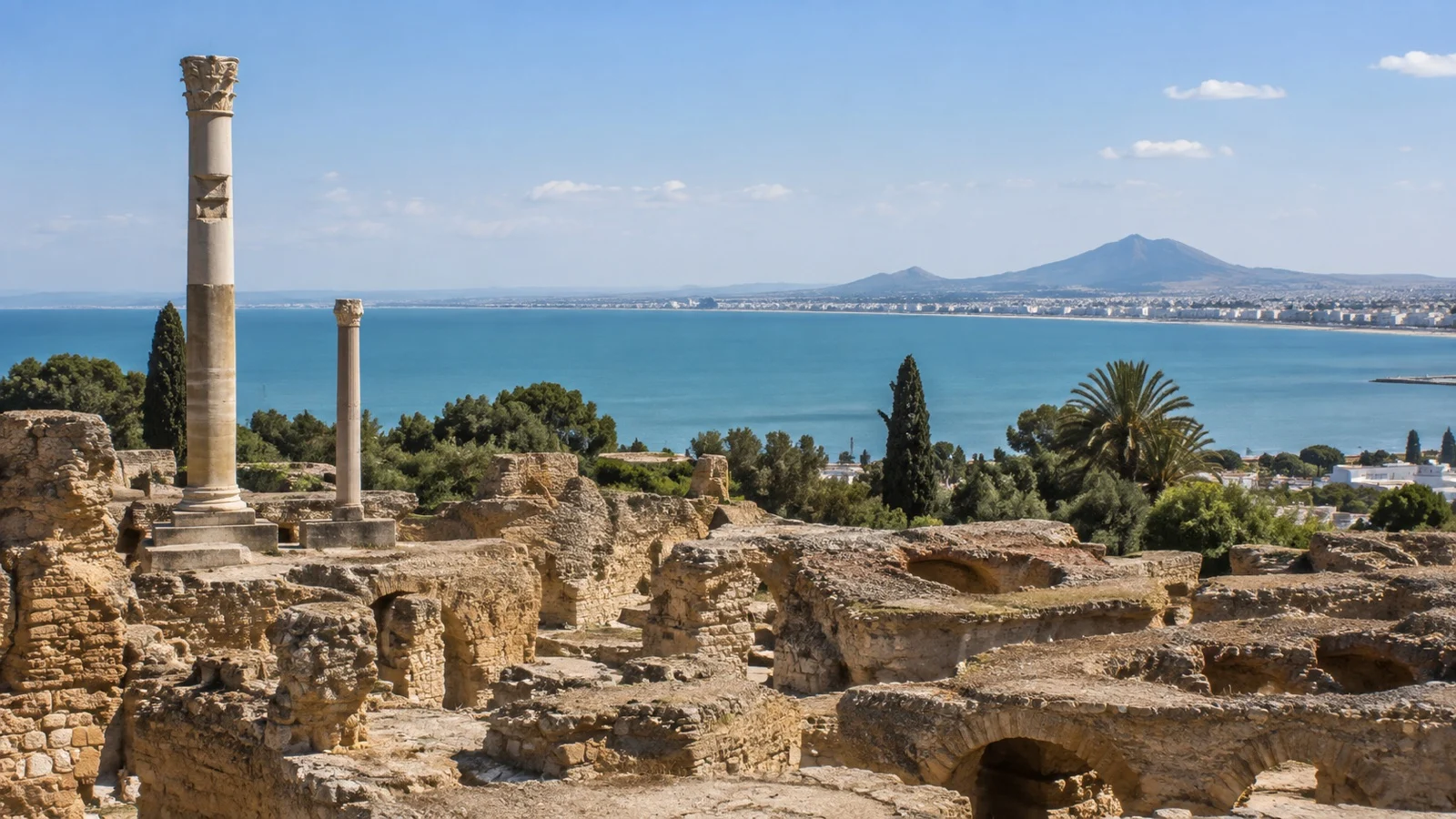
La Goulette: Carthage is closer than it looks on a map
Ships berth at La Goulette, on the spit between the Lake of Tunis and the sea. Central Tunis is roughly 6 to 7 miles (10 to 12 km) away, or 15 to 25 minutes by taxi.
The useful thing about this port is the TGM light rail, which runs from La Goulette through Carthage and Sidi Bou Said to La Marsa. Carthage is only a few stops along, so the ruins are local rather than an expedition.
The catch is that Carthage is not one site but a scatter of separate enclosures across a modern suburb. Walking all of them in the heat is more than most people want, so I would pick two or three and sort transport before stepping off.
Al Khoms: Leptis Magna is the one you probably cannot have
Leptis Magna is, by most measures, the most complete Roman city on the Mediterranean. It has also been on the danger list since 2016, which tells you most of what you need to know.
Mainstream cruise calls to Libya are effectively non existent right now. If you see Al Khoms printed on an itinerary, treat it as provisional until the line confirms it.
On the rare call that happens, ships berth in the cargo port and the site is a 10 to 20 minute coach ride away, by escorted coach only. This is the one entry where I would book the ship’s tour without hesitating, and the Al Khoms guide explains why.
Split: the ruin you eat lunch inside
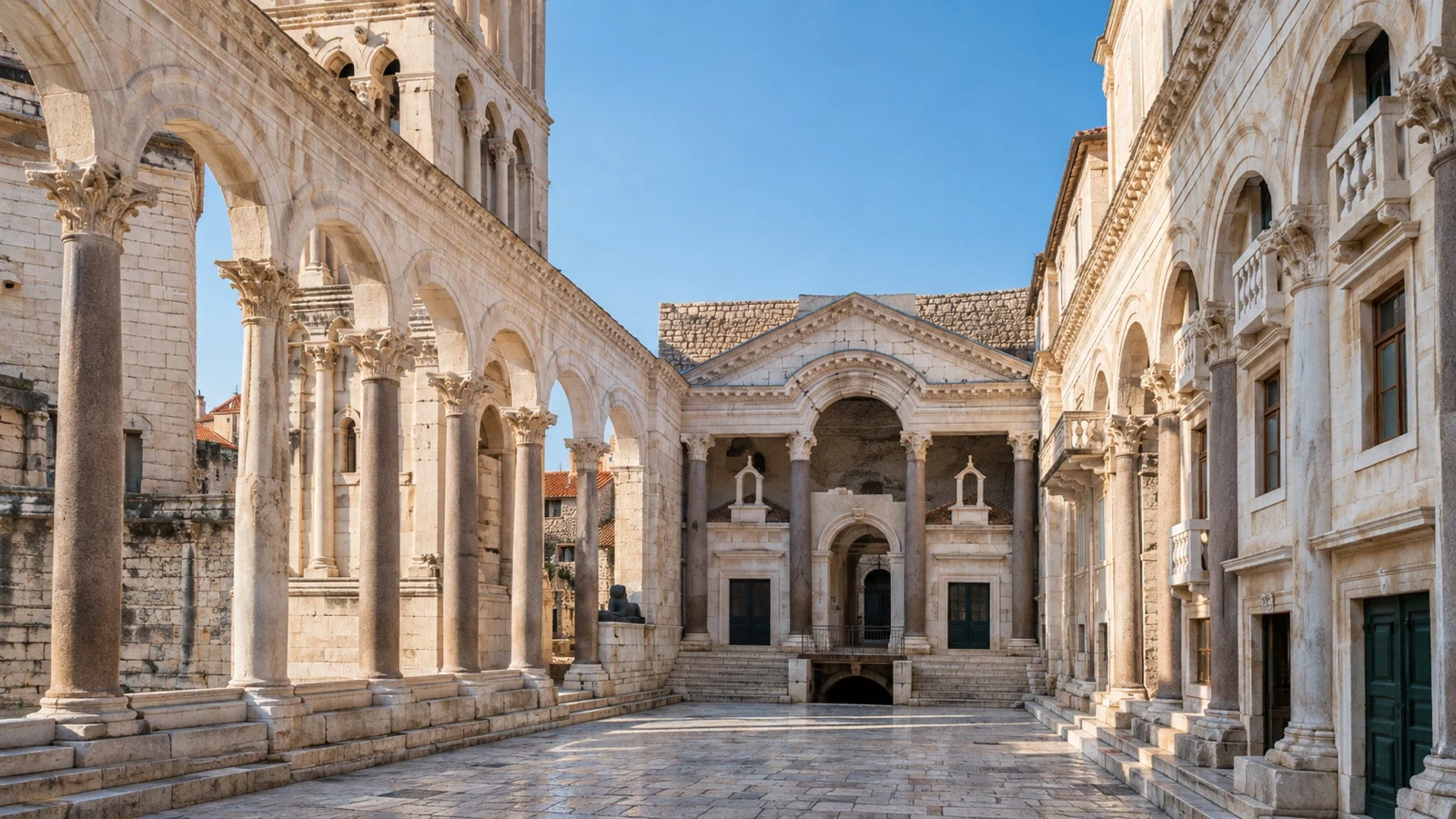
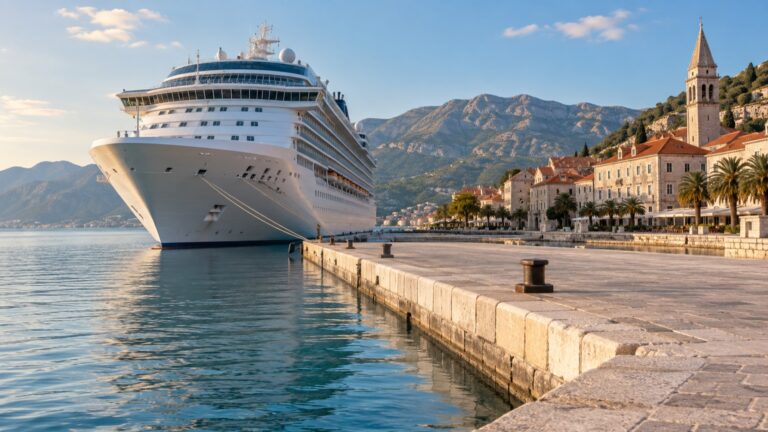
Ships berth in the city harbor beside the ferry berths and on almost every call you simply walk off. Diocletian’s Palace is a 5 to 10 minute flat walk around the harbor and along the Riva.
What makes Split different is that the palace is not a fenced archaeological park. It is a neighborhood, with apartments and bars built into fourth century walls, and the lanes cost nothing to wander.
The ticketed parts still earn their money. The Peristyle is the ceremonial heart, the Cathedral of St. Domnius sits inside what was the emperor’s mausoleum, and the substructures under the Riva are among the best preserved of their kind.
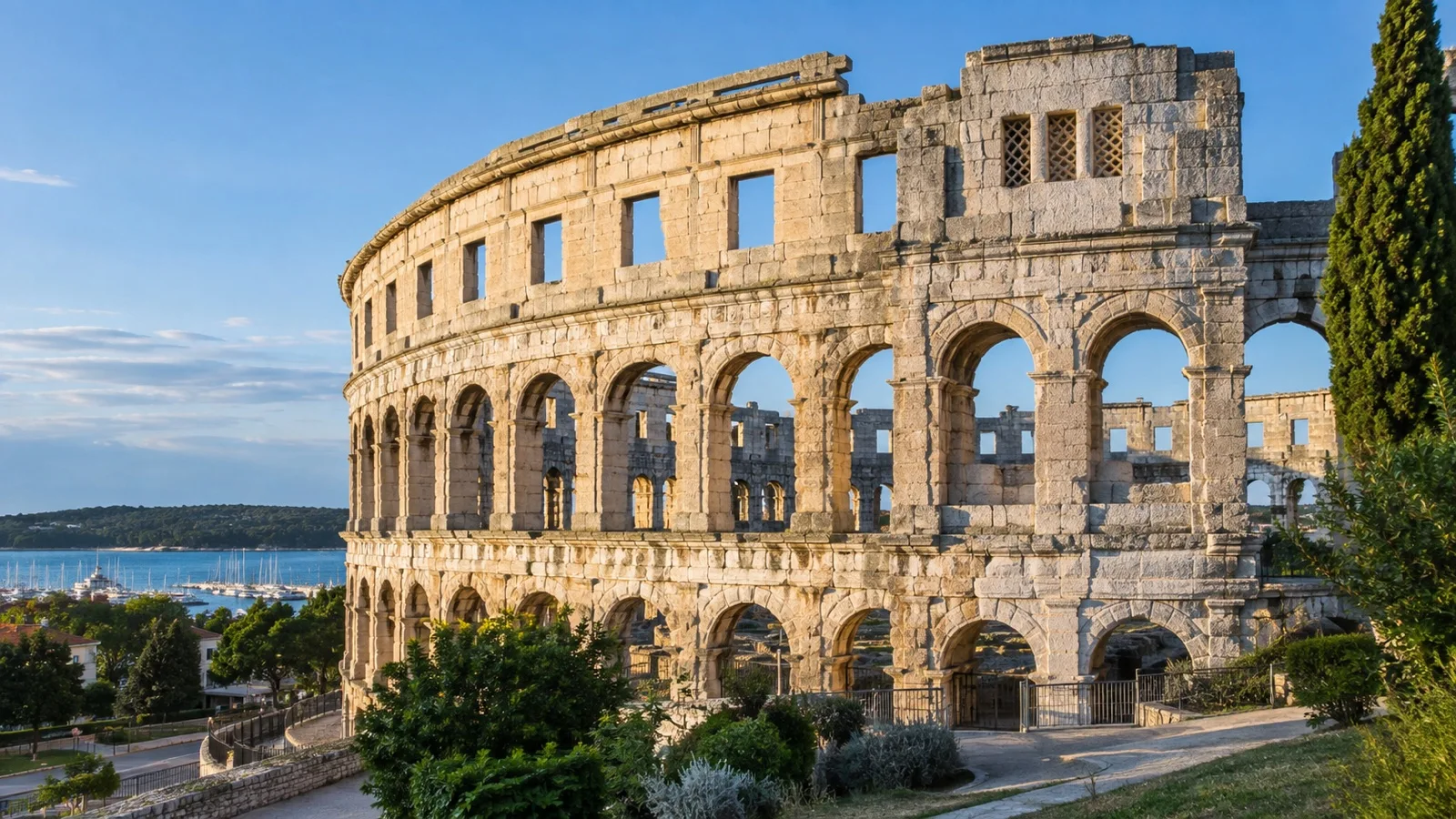
Pula: an amphitheater at the end of a short walk
Pula is the best value on this list per minute of effort. From a central berth or a tender landing the Arena is roughly a 10 to 15 minute walk, and it is one of the most complete Roman amphitheaters anywhere.
Some ships berth in the city harbor and others anchor and tender, so confirm your arrival through the line. Breakwater reconstruction has been running through 2026, so follow the marked public routes rather than cutting through the harbor.
Give the Arena an hour, then keep walking, because the Temple of Augustus sits on the old forum a few minutes beyond and the Arch of the Sergii is simply part of a shopping street. Four serious Roman monuments on foot is the argument for skipping an excursion here.
Marseille: Arles and Nimes are a train ride and a decision
This one is not walk off and go. Ships dock in the Cap Janet and Mole Leon Gourret area in the north of the city, and a shuttle drops you near Place de la Joliette.
From there you reach Saint-Charles station, and both Arles and Nimes are around an hour each way on a direct train when the schedule cooperates. Both have Roman amphitheaters still standing and still in use, and Arles adds a theater.
The problem is the stack of connections, and the return leg is what you are really betting on. I would only try it on a long call with an evening departure, and the Marseille guide covers what the shuttle does and does not do.
Tarragona and Barcelona: the Roman capital nobody plans for
Tarragona was Tarraco, capital of Roman Spain, and what survives is a serial property of around 81 acres scattered through the modern city. Amphitheater, circus, forum, walls and aqueduct, all woven into a working town.
If your ship calls here, understand the shuttle first. Ships use the Moll de Balears in the outer port, the shuttle to the Moll de Costa is mandatory, and walking out is not permitted because the route crosses live cargo terminals.
From the drop off, the amphitheater and old town are about a 17 minute walk, uphill through terraced streets. Two different institutions ticket different monuments, so buy for the sites you actually want.
Coming the other way, Tarragona sits about 62 miles (100 km) from Barcelona, a bit over an hour each way on the faster trains. It works, but only if you have already done Barcelona, and the Tarragona guide has the shuttle detail.
Merida: the best Roman city you will not reach from a ship
Augusta Emerita was founded in 25 BC and left a theater, an amphitheater, a circus and a bridge over the Guadiana, all inscribed as one ensemble of 22 component parts. On the ground it is probably the most complete Roman city in Spain.
It is also deep in Extremadura, a long way from any coastline. The nearest realistic cruise ports are Lisbon and Cadiz, and both are three hours or more of driving in each direction.
That is six or seven hours in a vehicle for whatever is left of your call. Treat Merida as a land trip on the front or back of a sailing, because it deserves two days rather than the wrong end of a bus ride.
Aqaba and Jerash: the math does not work
Jerash is one of the great provincial Roman cities, with a colonnaded street and an oval forum. It also sits north of Amman, the far end of Jordan from the water.
Ships berth alongside at Aqaba and you walk straight off, which is the last easy part of this idea. Petra alone is about two hours of driving each way and eats the entire call, and Jerash is considerably further north again.
If Roman Jordan is the reason you booked, do it as a land extension from Amman. From an Aqaba call, Wadi Rum at roughly an hour each way is the smarter use of the same day.
Caesarea from Haifa or Ashdod: the quiet half day
Caesarea Maritima is Herod’s harbor city, later a Roman provincial capital, and it sits directly on the beach. There is a theater still used for concerts and an aqueduct running along the sand.
From Haifa it is about 27 miles (43 km) down the coast, under forty minutes by road, and ships berth alongside so there is no tender on the clock. Compare that with Jerusalem, which is roughly 94 miles (151 km) each way.
It is also reachable from an Ashdod call, though it competes with a lot of other options there. Regional access changes here, sometimes at short notice, so confirm what is operating close to your sailing date.
Roman Britain: four ports, four different answers
From Newcastle you dock at North Shields, about 7 to 8 miles east of the city, with a shuttle to Central Station of roughly 30 minutes. The Roman fort at Arbeia is just across the river at South Shields via the Shields Ferry.
The dramatic Hadrian’s Wall forts are a different matter. They sit well inland and need real road time, so pick one site with a cruise aware operator and build in a serious margin rather than improvising.
- Liverpool: Chester is a short local train ride and has a Roman amphitheater and walls you can walk.
- Dover: The castle grounds hold a Roman lighthouse, which is a strange and excellent thing to find on a castle hill.
- Southampton: Bath is a stretch on a port call and comfortable on a turnaround, so save it for embarkation day.
- London calls: Fragments of the Roman wall survive in the City, but you are choosing them over everything else London has.
Which of these I would actually pick
If I could take one, it is Ephesus from Kusadasi, because the scale is unmatched and the port makes going independently genuinely easy. Second is Split for the five minute walk, and third is Pula for the amphitheater.
The ones I would not attempt from a ship are Merida and Jerash. Leptis Magna I would love to see and currently cannot plan for, and Rome from Civitavecchia is a separate argument that deserves its own page.
The practical layer for ruin days
Heat is what ruins these days, not logistics. Excavated cities are open stone with no canopy, and a mid afternoon start in August at 95 degrees (35 C) is how people end up leaving after twenty minutes.
Go early, carry more water than you think you need, and read up on how heat should change a Mediterranean port plan. Wear real shoes, because Roman paving is uneven by design.
Small bills still matter at gates, kiosks and taxis in several of these countries, and card acceptance is patchier than the brochure implies. The guide to carrying cash and cards in port covers what to have in your pocket.
Finally, check whether your port has a shuttle that is not optional, because Tarragona and Marseille both add a leg you cannot walk. That leg is time, and time is the entire budget on a ruin day.
Quick answers
Can you visit Pompeii from Naples without an excursion?
Yes, and plenty of people do it on the Circumvesuviana from Napoli Garibaldi or Porta Nolana, roughly 35 to 40 minutes to the Pompei Scavi stop. Buy your site entry in advance, because timed entry and daily caps are now normal.
Which cruise port has Roman ruins closest to the ship?
Split, at a 5 to 10 minute flat walk from the berth into Diocletian’s Palace. Pula is close behind at 10 to 15 minutes to the Arena.
Is Ephesus worth a ship excursion or should I go on my own?
Independent works well, because the drive is short and taxis wait outside the gate, as long as you fix the fare and the gate in advance. Take the tour if you want a guide, since the site rewards context more than most.
Can you see Jerash on a cruise stop in Aqaba?
Not realistically, since Jerash sits north of Amman and Petra alone is already about two hours of driving each way. Save it for a land extension and use the port day for Wadi Rum or the reefs.
Do I need to book Roman sites in advance from a cruise ship?
For the big names, yes, because timed slots and visitor caps are increasingly standard and a sold out morning is not recoverable on a port call. Smaller municipal sites are usually fine at the gate.
Final word
The best Roman ruin on your itinerary is rarely the most famous one. It is the one you can reach, stand in properly, and leave without watching the clock.
Pick by travel time first and reputation second and you will have a better day almost every time. Split, Pula, Kusadasi and Naples give you that, and the long inland drives are usually a story you end up telling about a bus.
How this guide was researched: Berth locations, walking distances, drive times and site listings for every port above were checked in October 2026. Opening hours, ticket caps, shuttle arrangements and which ports are actually being called change often, so confirm the details for your own sailing. See our Editorial Policy.
More on this topic: browse every guide on shore excursions and DIY port days.