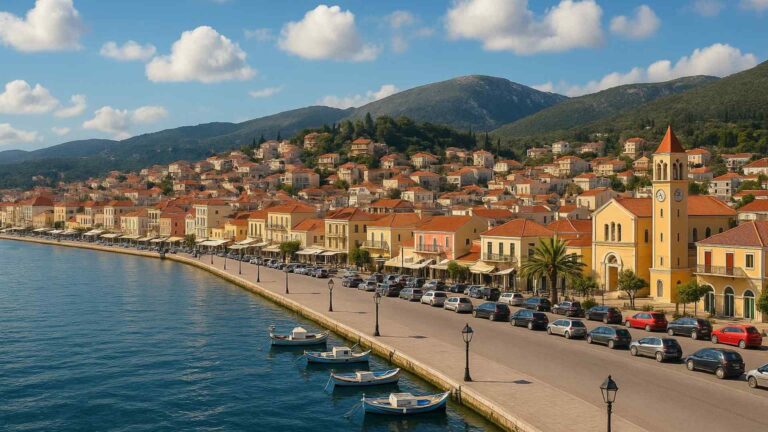
Naples Cruise Port: Pompeii, Vesuvius & Amalfi Coast
Naples is one of Europe’s rare cruise ports where the city begins almost at the gangway, yet the famous choices beyond it can make the day feel impossibly complicated. Pompeii, Herculaneum, Mount Vesuvius, Capri, Sorrento, and the Amalfi Coast all sound close on a map, but each needs its own transport plan and weather margin.
My strongest advice is to choose one headline excursion or commit to Naples itself. The city rewards attention with castles, churches, archaeology, street life, and extraordinary food, while a day built around three distant icons usually becomes a view through a windshield.
Quick Facts
- Main cruise facility: Stazione Marittima at Molo Angioino for many large ships
- Nearest city landmark: Castel Nuovo and Piazza Municipio
- Useful metro stop: Municipio for the port and central Naples
- Best first excursion: Pompeii with a guide and a protected return margin
- Compact alternative: Herculaneum, often easier to absorb in one visit
- Island gateway: Molo Beverello for many hydrofoils, with schedules varying by season and weather
- Currency: euro, with cards useful and some cash helpful
- Ellie’s rule: pick Naples, ruins, volcano, island, or Amalfi Coast, then resist adding a second major journey
Arriving at Naples Cruise Port
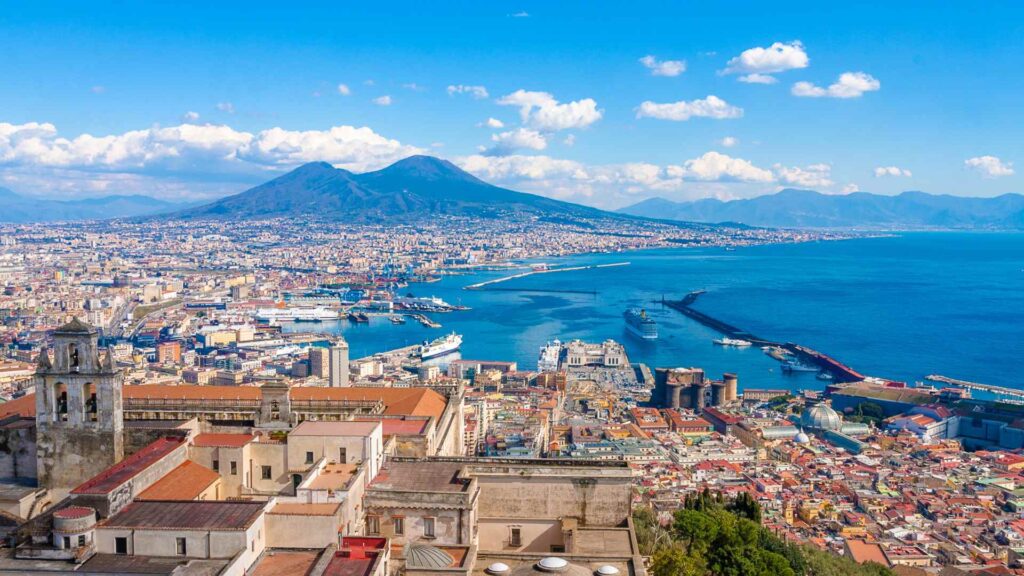
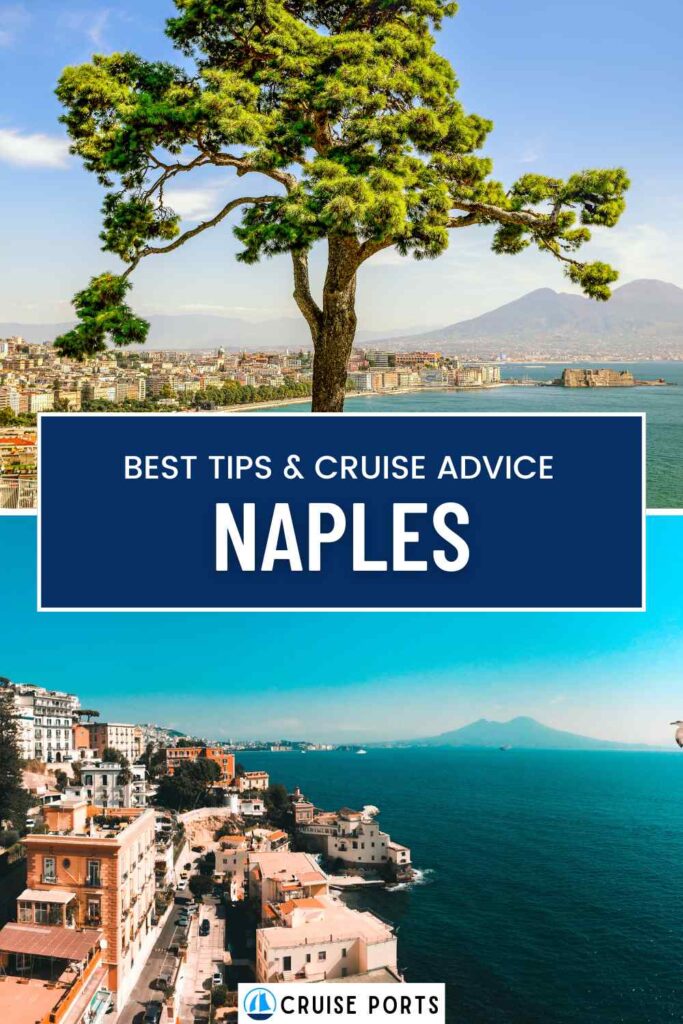
Many large cruise ships use the Stazione Marittima on Molo Angioino, directly below central Naples. The terminal faces Castel Nuovo, and Piazza Municipio, the metro, shopping streets, and the historic center are within reach.
The Port of Naples has multiple passenger areas, so your berth and terminal instructions still matter. Use the cruise line’s daily program and the port information for your specific ship rather than assuming every vessel unloads at the same doorway.
Disembarkation can funnel many passengers toward taxis and tour buses at once. If you have a timed train, museum ticket, or ferry, leave enough time to clear the ship and find the correct pickup point.
Keep your ship card, passport copy if advised, terminal address, and emergency number offline. Naples is busy and exhilarating, which is a poor environment for searching an email while standing in traffic.
Walking into Naples
For an independent city day, Naples is remarkably convenient. Exit toward Piazza Municipio, orient yourself by Castel Nuovo, and choose a route through the monumental center or toward the historic core.
Sidewalks can be uneven, scooters move quickly, and crossings require attention. Wear secure shoes, keep valuables close, and step aside before consulting a phone rather than stopping in a crowded lane.
Via Toledo leads toward shopping, the Spanish Quarter, and the celebrated Toledo metro station. Spaccanapoli cuts through the historic center, where churches, workshops, cafes, and courtyards turn a simple walk into the day’s main experience.
Naples city highlights
Castel Nuovo
Castel Nuovo stands almost opposite the cruise terminal, making it the easiest major landmark. Its monumental arch and fortress walls provide immediate historical context without committing you to a long transfer.
Check current opening arrangements if you want to enter, because event access and ticketing can change. Even an exterior visit pairs naturally with Piazza del Plebiscito and the waterfront.
Historic center
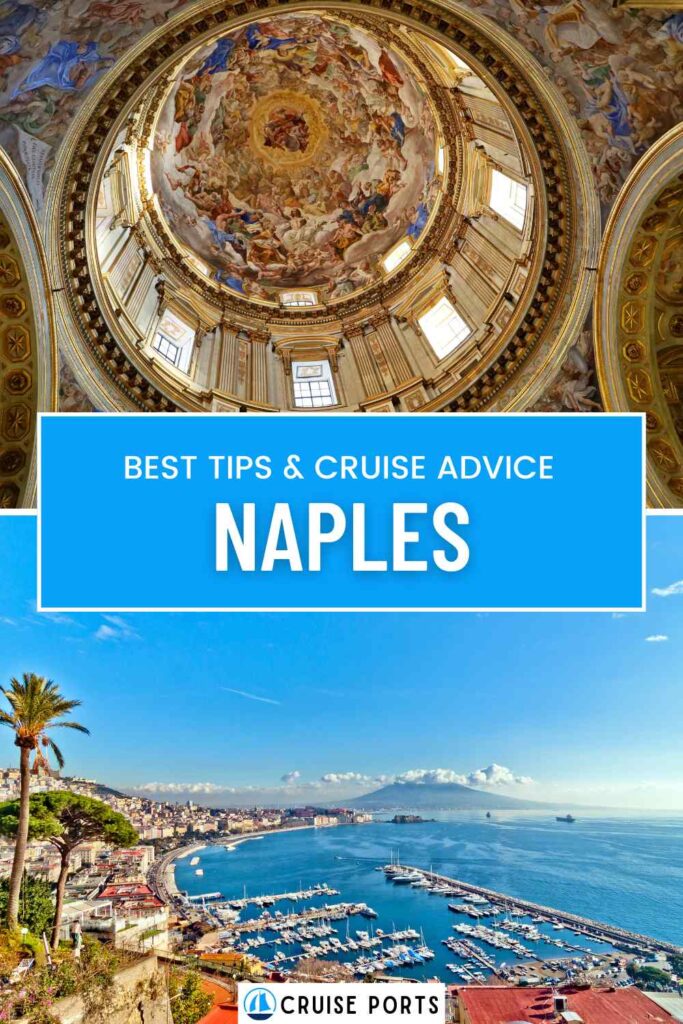
Naples’ historic center is dense with churches, excavated layers, craft streets, and daily life. Sansevero Chapel, Santa Chiara, Naples Cathedral, and underground sites all require choices because timed tickets and queues can consume more of the day than their map distances suggest.
Reserve only the attraction you would regret missing and let the streets provide the rest. This approach leaves room for pizza, espresso, and a return route that does not end in a sprint.
National Archaeological Museum
The National Archaeological Museum is the best city companion to Pompeii and Herculaneum. Its mosaics, sculpture, frescoes, and objects help restore the texture of Roman life that can be hard to imagine among exposed walls.
It is also an excellent alternative when heat, rain, or transport disruption makes an outdoor ruin less appealing. Check official gallery closures and ticket details before setting out because not every room is always open.
Piazza del Plebiscito and the seafront
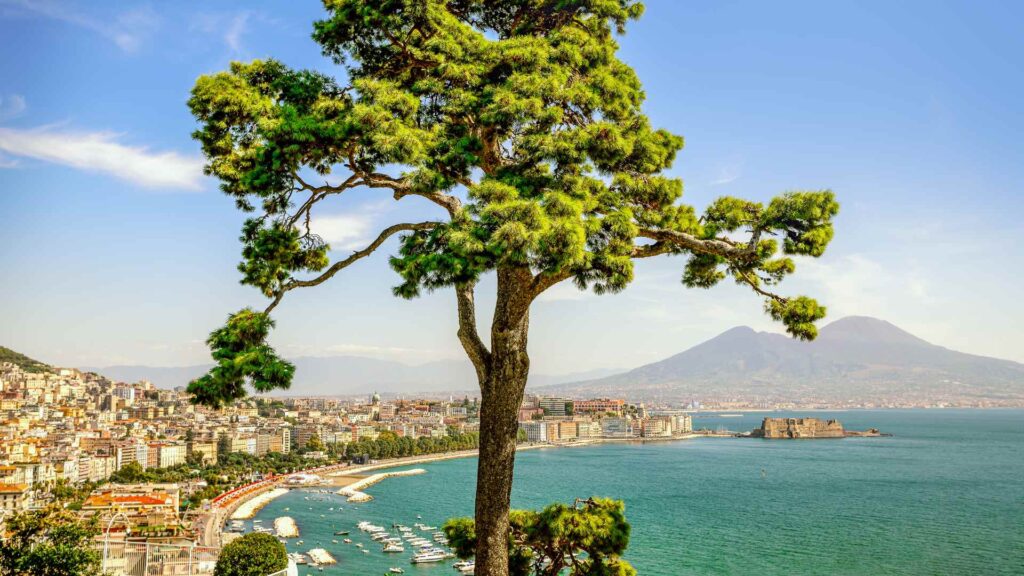
Piazza del Plebiscito, the Royal Palace area, Galleria Umberto I, and Teatro di San Carlo form an elegant central circuit. Continue toward the Lungomare and Castel dell’Ovo only if port hours and walking stamina allow.
The seafront delivers the Bay of Naples view many travelers expect, but the return distance grows quietly. Turn back before fatigue turns a beautiful promenade into an anxious march.
Using the metro and local transport
Municipio station serves the port area and connects central destinations on Naples’ metro network. Toledo, Dante, Museo, and Garibaldi can be useful depending on your plan, and the stations themselves include striking architecture and art.
Use ANM’s current service information because maintenance, operating hours, and elevator availability can change. Validate or tap according to the current ticket rules and keep the same card or device consistent where contactless travel is offered.
Regional rail toward Pompeii and Herculaneum is run through a different network, commonly associated with Circumvesuviana services. Check EAV’s official notices and timetable, then protect a return train earlier than the last one you could theoretically catch.
Pompeii from Naples
Pompeii is the classic first-time excursion because its streets, houses, baths, theaters, temples, and public spaces reveal the scale of an entire Roman city. It is also large, exposed, uneven, and impossible to cover completely during one port call.
The archaeological park controls current ticketing, entrances, visitor rules, and daily access. Buy through the official Pompeii Archaeological Park, place the correct visitor name on any personalized ticket, and ignore unauthorized sellers who imitate official branding.
A licensed guide adds real value because the site is not a linear museum with one obvious route. Agree on a focused plan that includes several houses or public buildings while respecting closures and conservation barriers.
From the cruise port, options include a ship excursion, private driver, organized coach, or regional rail from the relevant Naples station. The ship tour simplifies return risk, while independent rail provides flexibility at the cost of more navigation and exposure to service disruption.
Wear closed shoes with grip, carry water, use sun protection, and expect very little shade. A three-hour focused visit can feel fuller than six hours spent trying to locate every famous room.
Herculaneum from Naples
Herculaneum is smaller than Pompeii and preserves details such as upper stories, carbonized wood, and intimate domestic spaces. For many cruise passengers, its compact footprint creates a more coherent and less exhausting archaeological day.
The modern town of Ercolano surrounds the site, and the walk from the regional station slopes toward the entrance. Travelers with limited mobility should confirm vehicle access and site conditions rather than assuming smaller means easy.
Use the official Herculaneum Archaeological Park for tickets, opening information, and current closures. Pairing Herculaneum with the Naples archaeological museum can create a superb history day without attempting the volcano.
Mount Vesuvius
Vesuvius looks close from the bay, but visiting the crater requires timed logistics, uphill transport, an exposed trail, and a valid official ticket. Road congestion, cloud, heat, wind, and park restrictions can alter the experience.
Do not arrive expecting to buy access casually at the gate. Review the Vesuvius National Park’s official guidance, approved ticketing, trail status, and transport instructions before the cruise.
Combining Pompeii and Vesuvius is possible on a disciplined organized excursion, but it creates a long and physically demanding day. I would choose Pompeii alone for archaeological depth or Vesuvius alone for landscape, unless climbing the volcano is the defining goal of the trip.
Capri from Naples
Fast passenger boats often depart from Molo Beverello, close to the cruise terminal, which makes Capri look like an easy independent day. The real constraints are ticket lines, seasonal crowding, weather, island transport, and the absolute need to catch a safe return sailing.
Use the operating ferry companies’ own schedules and verify which Naples pier each service uses. Buy the return early, choose a sailing well before all aboard, and understand the rebooking rules if weather changes.
Capri town, Anacapri, the Blue Grotto, a boat tour, and beach time do not all fit comfortably into one call. Pick one principal experience and let the harbor movements determine what else is realistic.
The Blue Grotto can close when sea conditions make the entrance unsafe. Never build the value of the entire day around an attraction that nature may remove.
Ischia and Procida
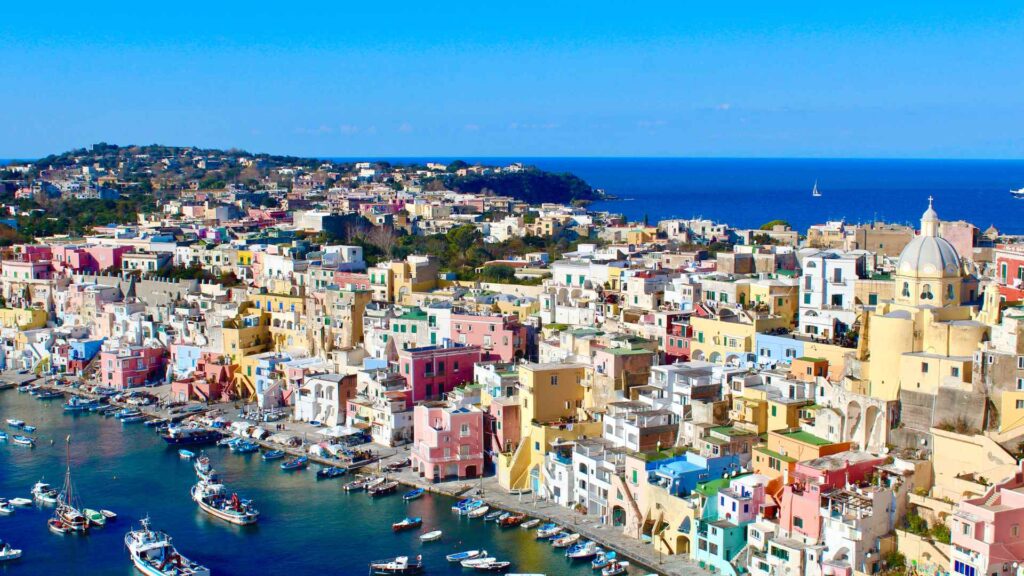
Ischia offers thermal landscapes, larger towns, beaches, and more ground to cover than many first-time visitors expect. Procida is smaller and colorful, but ferry timing still rules the day.
Either island can reward repeat Naples visitors who already know the city and ruins. For a first call, Capri’s fame or Naples’ depth usually makes the decision simpler, though neither is automatically better.
Check the exact arrival harbor and island transport before booking. A ticket to the island is not a complete excursion plan.
Sorrento
Sorrento sits above the bay and works as a gateway to the peninsula, but reaching it independently can involve regional rail or seasonal marine transport. The journey itself can be crowded, and the town’s cliffs create vertical movement between port level and center.
A ship excursion or private driver removes some uncertainty, though road traffic remains outside anyone’s control. If Sorrento is the goal, enjoy Sorrento rather than treating it as a transfer platform for two additional coast towns.
The Amalfi Coast
The Amalfi Coast is magnificent and logistically fragile during a port call. Narrow roads, congestion, parking limits, marine weather, and crowds can turn a modest distance into most of the day.
Choose a cruise-line excursion, a reputable private driver, or a carefully verified seasonal boat service. Make the return plan the first decision, not the final detail after selecting restaurants and viewpoints.
Positano is visually irresistible but built on steep terrain with many steps. Amalfi offers a compact center and cathedral, while Ravello requires a climb inland and another transport segment.
I would visit no more than two coast towns on a long call and often just one. A panoramic drive plus a slow lunch is more memorable than collecting village names while watching the clock.
Independent travel or ship excursion
Ship excursions are most valuable when distance, timed admission, or marine transport creates a real return risk. Pompeii and the coast are the obvious examples, especially for travelers uncomfortable navigating Italian transit.
Independent travel is strongest for Naples itself, Herculaneum with preparation, or a simple ferry outing with generous margins. It can save money and improve flexibility, but the ship will not wait for an ordinary delayed train or missed hydrofoil.
A private driver can split the difference, provided the company is licensed, reputable, and clear about port pickup. Share the all-aboard time in writing and insist on a return margin rather than a sightseeing promise.
A first-time city day
Walk from the terminal to Castel Nuovo, Piazza del Plebiscito, and the historic center. Reserve one timed attraction, eat pizza near the place that interests you rather than the place with the longest social-media line, then return by Municipio.
Add the archaeological museum if Roman history is your priority. Add the seafront if the weather is beautiful and you prefer atmosphere to another interior.
This is the lowest-risk plan and still one of the richest port days in the Mediterranean. Naples is not a consolation prize for missing Pompeii.
A ruins-first day
Leave early for Pompeii or Herculaneum with tickets and transport settled. Use a guide or a preplanned route, then return to Naples with time for a coffee or brief city walk near the terminal.
Do not add Capri, Positano, or a Vesuvius climb because the map makes them look nearby. Archaeological sites reward slow attention, and every transfer adds a new way to miss the ship.
A scenery-first day
Choose Capri, Sorrento, or one focused Amalfi Coast route. Protect the earliest practical departure and a conservative return, then accept that the sea or road may force a different plan.
Keep Naples as the backup because it begins outside the terminal. If ferries are canceled, the city can rescue the day without a desperate search for another distant tour.
Food without losing the day
Pizza is essential for many visitors, but Naples offers much more, including pasta, seafood, fried street food, pastries, and strong coffee. Eat where the route already takes you instead of crossing the city for one famous name.
Busy restaurants may have queues and slow service, so tell staff if you have a firm ship deadline. Keep enough cash or a physical card for a backup when a small business has a payment issue.
Carry water in hot weather and choose crowded, clean businesses with visible turnover. Travelers with allergies should bring an Italian translation that explains ingredients and cross-contact clearly.
Accessibility
Stazione Marittima and modern metro stations offer accessibility features, but elevators can be out of service and historic Naples includes cobbles, curbs, slopes, and narrow sidewalks. Confirm the current step-free route rather than relying on the symbol alone.
Pompeii has accessible initiatives and routes, yet ancient surfaces, heat, closures, and distance still matter. Herculaneum is smaller but involves grade changes and ancient pathways.
Capri, Positano, and the Amalfi Coast are particularly demanding because of steps, steep streets, crowded boats, and variable gangways. Request written details from the cruise line or operator about vehicle lifts, boat boarding, restrooms, and actual walking distances.
Heat, weather, and seasonal pressure
Summer heat makes Pompeii, Vesuvius, and exposed ferry queues harder than their itineraries suggest. Start early, carry water, use sun protection, and schedule shade before anyone feels unwell.
Spring and fall can be more comfortable but bring rain, wind, and sea disruption. Winter offers fewer crowds at some sights while marine schedules and opening hours may be reduced.
Check the official forecast and operator notices on the morning of the call. A canceled ferry or closed crater path is a safety decision, not an invitation to find an unofficial workaround.
Common mistakes
The first mistake is planning Pompeii, Vesuvius, and the Amalfi Coast in one day. The second is buying a ferry without protecting a much earlier return sailing.
The third is ignoring Naples because excursion marketing treats it only as a gateway. The fourth is choosing the cheapest transport seller outside the terminal without checking the license, route, or return commitment.
The fifth is wearing smooth sandals on ancient stone. Comfortable closed shoes improve almost every possible Naples port day.
My verdict
Naples is an exceptional cruise call because it offers a complete city at the pier and several world-class journeys beyond it. Pompeii is the first-time archaeological choice, Herculaneum is the compact alternative, Vesuvius is the active outing, and Capri or the coast should stand alone as the day’s scenic commitment.
Choose one, protect the return, and keep Naples in reserve. The bay will still be there when you come back, and this is one port that deserves far more than a single hurried checklist.
Confirm your berth, terminal access, and passenger instructions with the Central Tyrrhenian Sea Port Authority and your cruise line before travel. Verify tickets, opening hours, transport notices, ferry schedules, trail access, and accessibility through the official Pompeii Archaeological Park, ANM, EAV, Vesuvius National Park, and the individual marine operator.