Northern Ireland Cruise Ports: Belfast, Londonderry and the Causeway Coast
Your ship ties up about 2 miles (3 km) from Belfast city center, and the thing most people came for sits 60 miles (97 km) further north. That gap is the entire Northern Ireland port day, and getting the Causeway math right is most of the planning.
My quick take
Northern Ireland is one of the few places where I think the ship’s coach is usually the right call, and I do not say that often. The Giant’s Causeway is far enough from both Belfast and Londonderry that the return leg is the part you are actually betting on, and I would rather lose thirty dollars to a markup than lose the ship.
If you skip the Causeway, though, Belfast is a genuinely good walkable city day and one of the better value ports in the British Isles. I would happily spend a whole call inside the city and not feel cheated, which is not true of every port that sits an hour from its headline sight.
The quick facts
- Main port: Belfast, where ships berth alongside in the working harbor roughly 2 miles (3 km) from the city center.
- Second port: Londonderry, served by a city berth, a commercial quay downriver, and a tender anchorage that is not even in the same country.
- Currency: Pound sterling in Northern Ireland, euros if your call tenders into County Donegal.
- Season: Spring through fall, with the heaviest traffic in the long summer days.
- The one decision: Causeway or city, because you almost never have time for both.
What a Northern Ireland call actually is on your itinerary
Almost nobody sails to Northern Ireland on purpose. It shows up as one stop on a British Isles loop out of Southampton, Dover or Amsterdam, usually strung between Dublin, Liverpool and a Scottish call, and occasionally on a transatlantic repositioning that is padding out the last week.
That matters because it sets your expectations for the day. You get eight to ten hours, one bite at the region, and a schedule built around a ship that leaves whether or not your rental car cleared Ballymena.
Belfast also works as a turnaround port for a handful of sailings, which is a different animal entirely. If you are starting or ending there, the Causeway becomes a normal day trip instead of a race.
Our rundown of UK homeports and ports of call covers how Belfast stacks up against the bigger British turnarounds.
Belfast: where the ship actually ties up
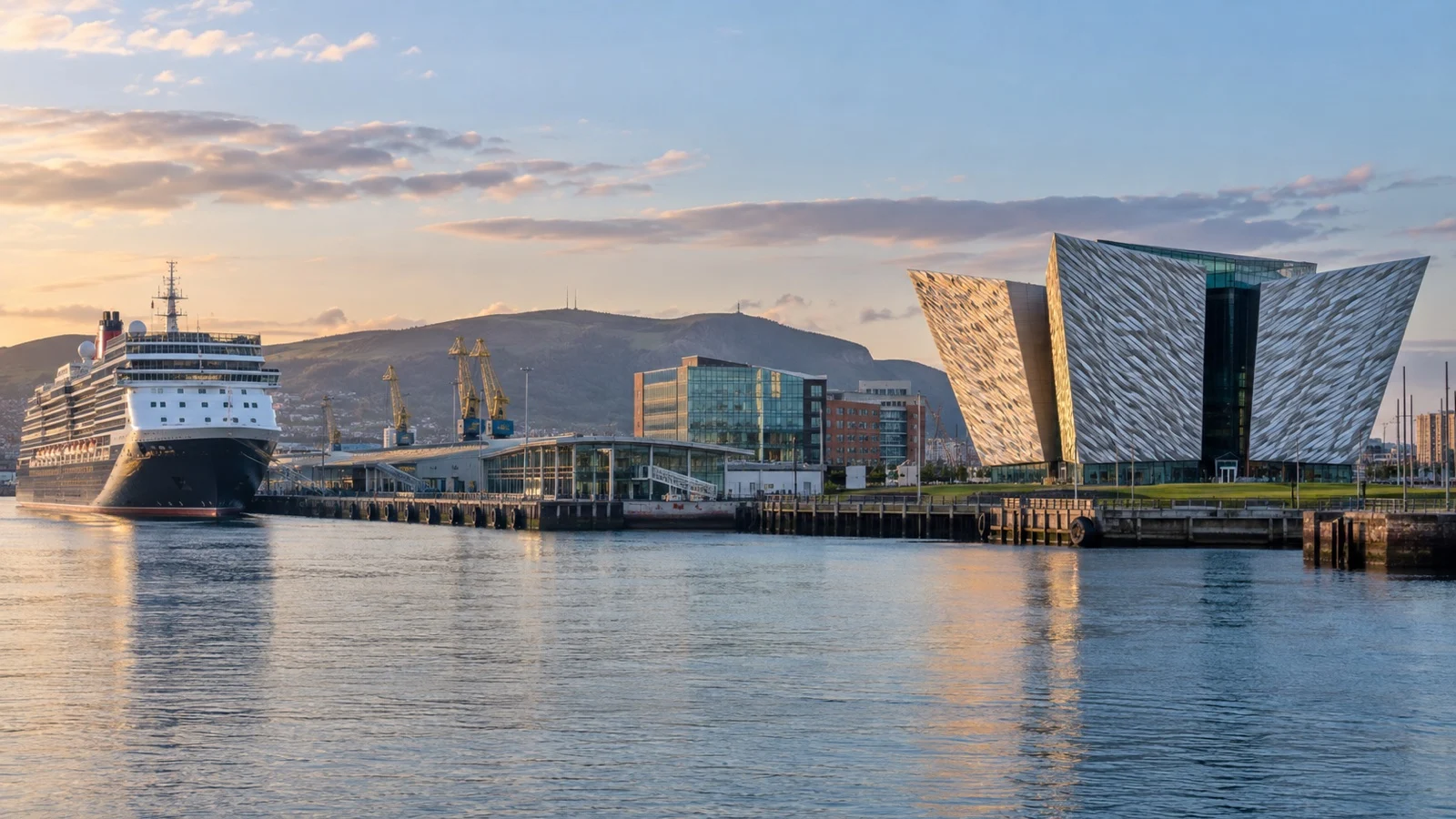
Belfast is a dock port, not a tender port, which removes the single biggest source of lost time in the British Isles. Bigger ships take Stormont Wharf and smaller ones use Pollock Dock, both on the north side of the River Lagan near the Titanic Quarter.
The berths sit inside a working port, so there is no strolling out through a pretty waterfront. You are looking at roughly 2 miles (3 km) to the city center along roads that were not designed for pedestrians, and I would not walk it even in good weather.
Your options are the ship’s shuttle, a taxi from the rank, or a pre booked car. Shuttle pricing and the last return time vary by line and change season to season, so read your day sheet rather than a forum post from two years ago.
Our full Belfast port guide goes deeper on the berths and transfers, and the published call list for the season shows how many other ships share your day.
What Belfast gives you if you never leave town
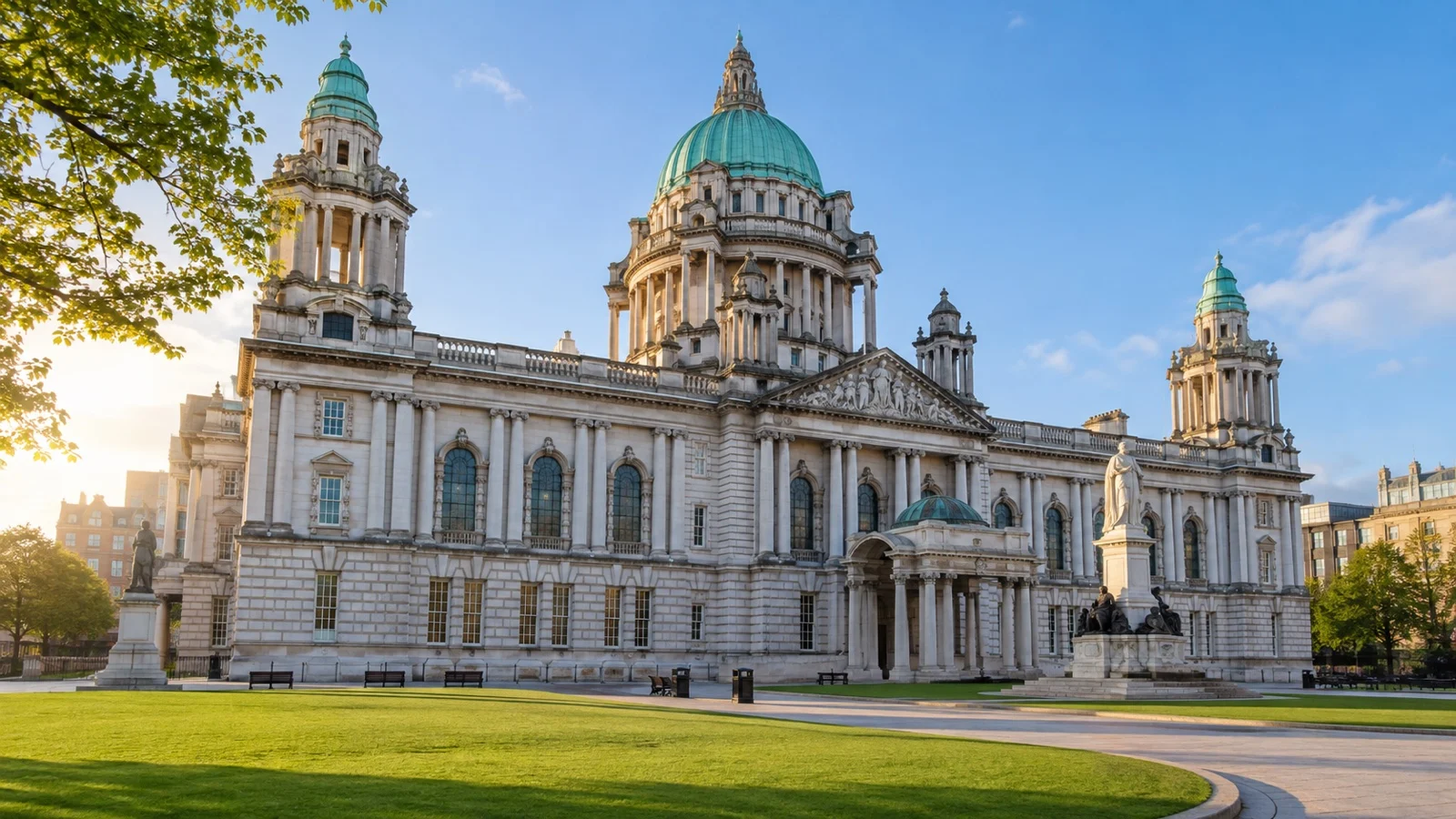
Titanic Belfast sits on the original slipways a short distance from the berth, and it is the rare museum that earns the ticket price. Budget two to three hours inside and expect adult admission in the mid twenties of pounds, with pre booking sensible on a day when two ships are in.
The city center itself is compact and flat. City Hall, the Cathedral Quarter, the Ulster Museum and the Botanic Gardens are all within an easy walk of each other, and none of them will eat your afternoon.
The black cab tours of the Falls and Shankill murals are the thing I would prioritize if history is why you came. They typically run ninety minutes to two hours and give you context a walking loop of the center will not.
Hours and pricing at the Titanic Quarter’s main attraction shift with the season. Confirm both before you commit your morning to it.
Londonderry has three berths and they are not the same day
This is the part people get wrong. Londonderry is not one port, it is three arrangements under one name, and which one you get changes your day completely.
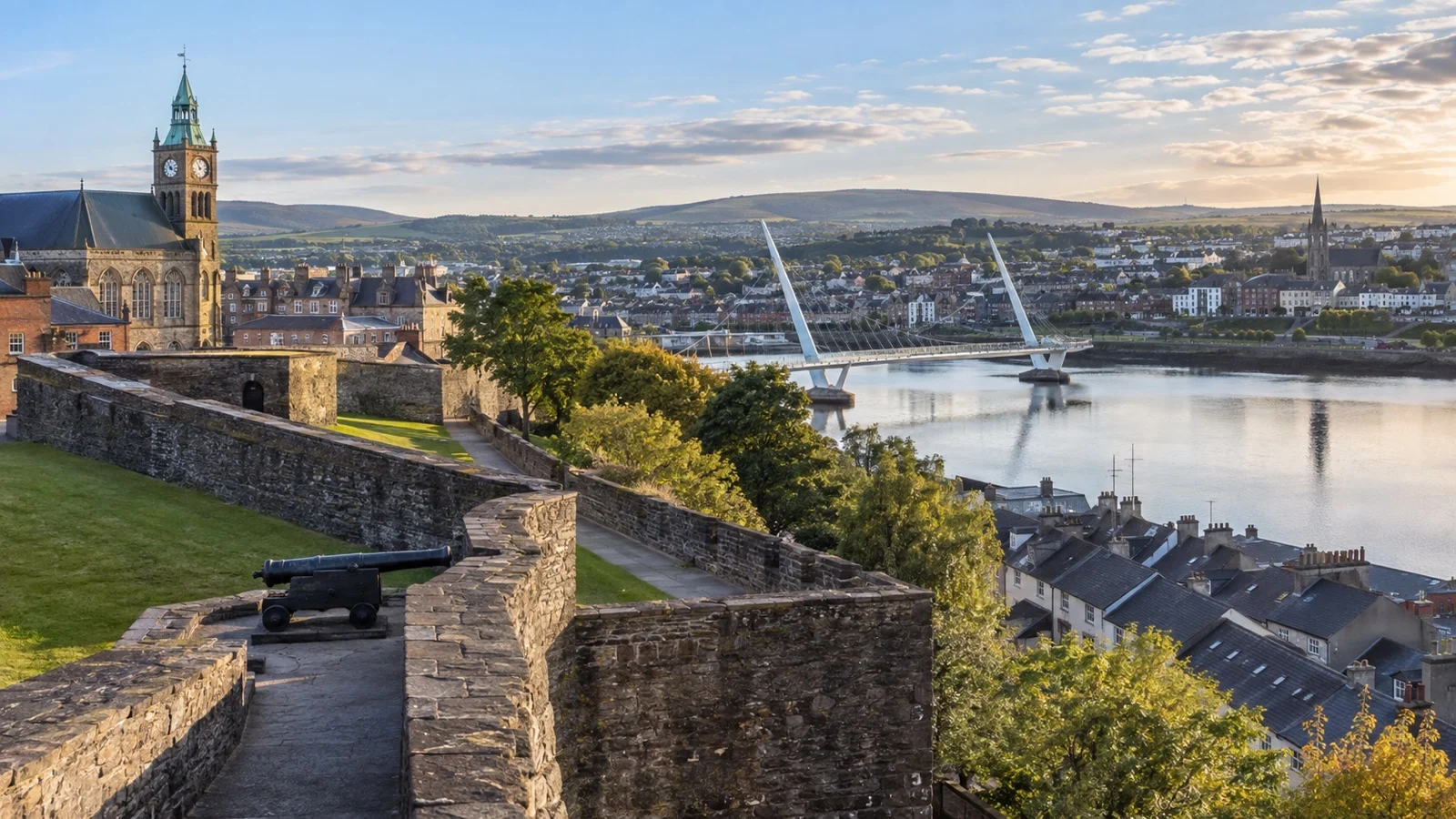
The Fort George berth puts small ships essentially in the city, close enough that the walled center and the Peace Bridge are a walk. Lisahally is the commercial quay several miles downriver, where you are on a shuttle or a coach and the working port scenery is not the draw.
Derry itself rewards a short visit more than its size suggests. The seventeenth century walls make a circuit you can walk in under an hour, the Bogside murals sit just below them, and the Guildhall is a few minutes away.
Check the port’s own listing of which vessels use which berth once your itinerary is confirmed. Ships do get moved between them.
The Greencastle option puts you in a different country
Larger ships that cannot get up the Foyle anchor off Greencastle instead and run tenders ashore. Greencastle is in County Donegal, which is the Republic of Ireland, so a call sold to you as Londonderry can land you in a different jurisdiction with a different currency.
That is not a problem, it is just something to know before you stand on the pier holding only sterling. Cards work fine on both sides, but if you like carrying a little cash, our guide to what to actually carry ashore explains why small bills matter more than a big note.
The other consequence is time. Greencastle is a small harbor at the mouth of the lough, Derry is the better part of an hour away by road, and the tender operation is exposed to weather.
If the forecast is ugly, that is the Northern Ireland call I would expect to wobble. Our list of ports most likely to be missed or canceled explains why anchorage calls carry that risk.
The Causeway is a long way from the pier
Here is the number that decides your day. The Giant’s Causeway sits roughly 60 miles (97 km) north of Belfast, and the drive runs somewhere between an hour and a quarter and two hours each way depending on whether you take the fast inland road or the coast.
Double that, add an hour or more at the stones, and add the shuttle at the Belfast end. On a standard eight hour call you have spent most of the day in a seat, and there is no version where you also do Titanic Belfast properly.
From Londonderry the math is friendlier. The Causeway is around 35 miles (56 km) from Derry, near enough an hour each way, which is why I think a Derry call is quietly the better Causeway day if your itinerary happens to offer one.
Doing the Causeway without the ship’s coach
It is genuinely doable, and I still hesitate to recommend it on a short call. The public route is a train from Belfast up to Coleraine, which takes about an hour and twenty minutes and runs roughly hourly, then a connecting bus out along the coast to the Causeway.
Add the shuttle from the ship to town, the walk to the station and the wait for the bus connection, and your margin gets thin fast. One missed connection on the way back and you are pricing an emergency taxi over the whole 60 miles (97 km).
A private driver or a small group tour splits the difference, giving you flexibility and a return time you can hold someone to. Our breakdown of ship excursion, local tour or do it yourself lays out when each is worth it, and Northern Ireland sits squarely in the middle column.
What the ticket at the stones actually covers
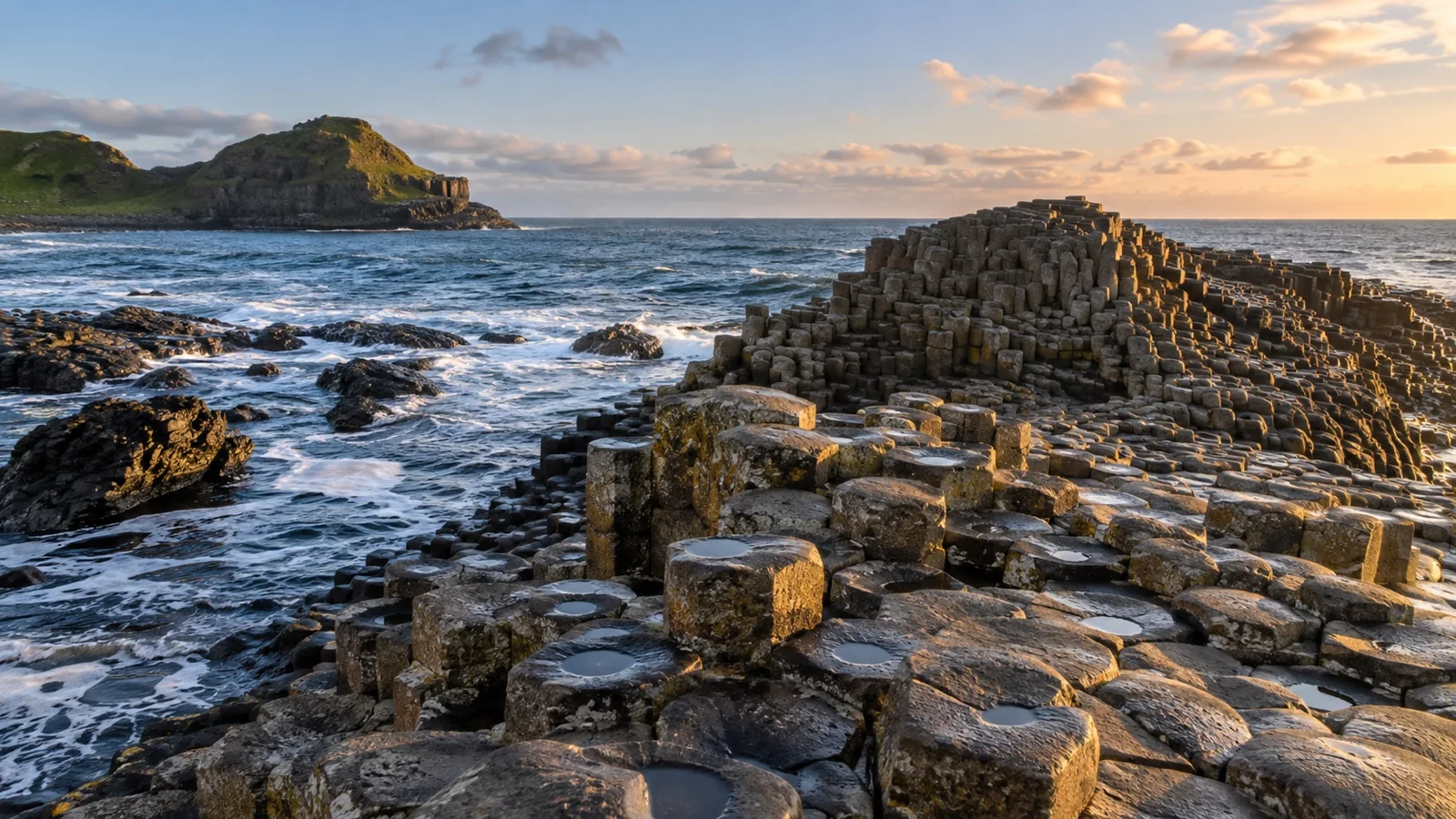
The Causeway is managed as a visitor experience, not a roadside pull off. The standard adult ticket is usually around sixteen pounds and bundles the visitor center, an audio guide, reserved parking and the shuttle bus down to the stones, with family pricing available.
The columns themselves sit at the bottom of a hill, under a mile from the center on the main path. The shuttle exists because that walk back up is steeper than it looks, and I would take it on the return leg even if I walked down.
- Book ahead: Slots and parking are released in advance and cruise days fill early.
- Wear real shoes: The basalt is uneven and it is wet more often than it is dry.
- Budget the time: Ninety minutes on the ground is comfortable, forty five is a photo stop.
- Check the closing hour: The site and the center keep different hours across the season.
Current hours, pricing and booking sit on the official visitor page for the site, and they do change. If your ship’s excursion includes admission, confirm that in writing rather than assuming.
Carrick-a-Rede, Dunluce and the rest of the coast road
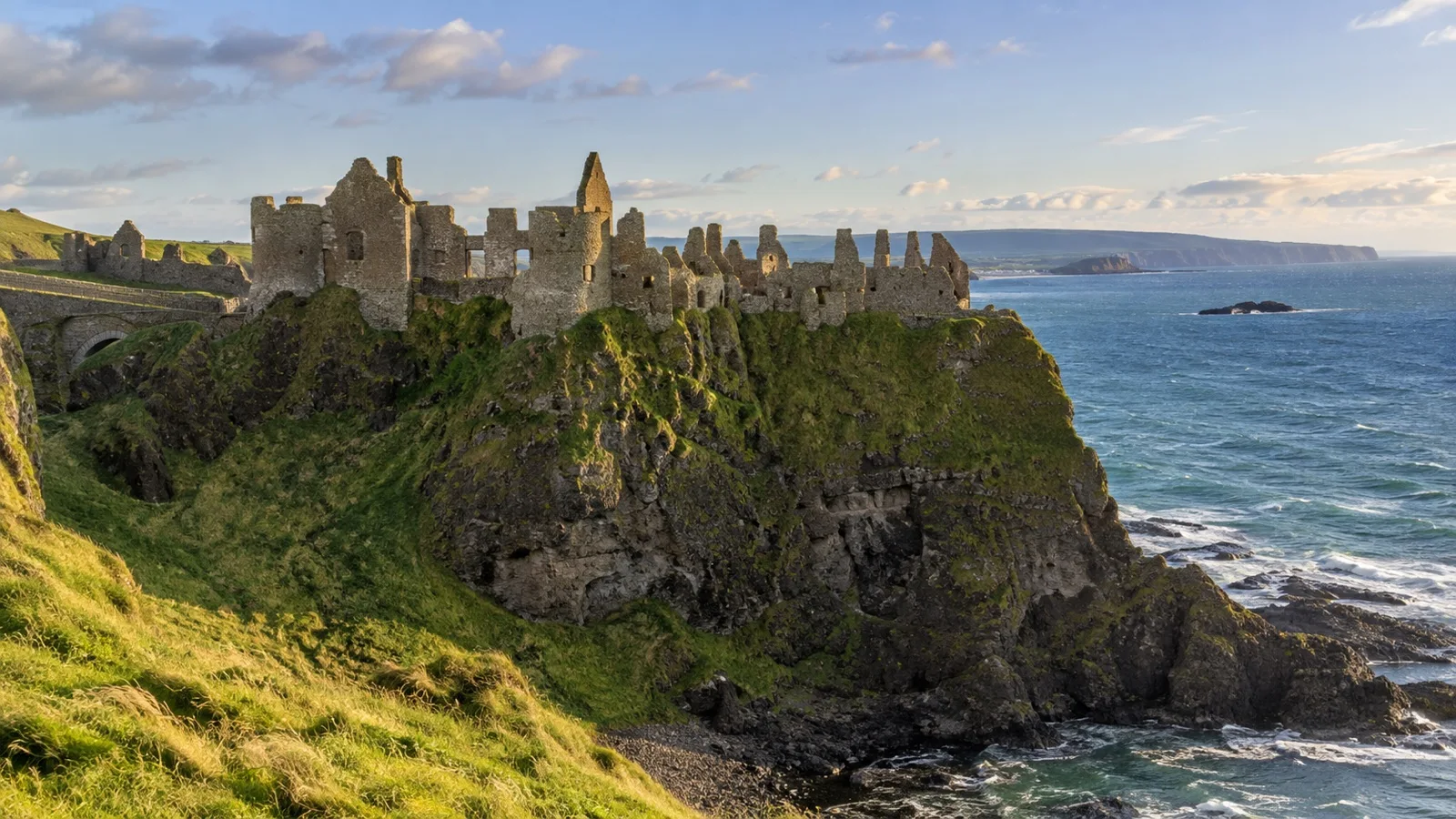
Most Causeway excursions pad the day with a second stop, and the quality varies wildly. Dunluce Castle is a ruin on a cliff edge that photographs beautifully and takes twenty minutes, which makes it the ideal add on.
Carrick-a-Rede is the rope bridge, and it is a timed ticket with a walk of about a mile each way from the parking area. On a tight port day it is the stop I would cut, because the walk plus the line can quietly eat ninety minutes.
Old Bushmills and the Dark Hedges round out the usual list. The coastal route these stops sit on is a legitimate scenic drive in its own right, and if the weather is grim it is often the better half of the day.
Belfast or Londonderry, if you get to choose
If the whole point of your trip is the Causeway, Londonderry wins on distance and Belfast wins on reliability. Derry puts you an hour from the stones instead of two, but a chunk of Derry calls are tender operations at an exposed anchorage, and a tendered call you never get ashore from is worth nothing.
If you want a city day, Belfast is not close. It has the museums, the food, the murals and a berth that ships tie up to in almost any weather.
My pick, for a first visit on a normal British Isles loop, is Belfast for the city and the ship’s Causeway coach if the Causeway is non negotiable. It is the same logic I apply at Greenock for Glasgow and the Highlands, where the headline sight is also further from the pier than the brochure implies.
Money, weather and the small stuff
Northern Ireland uses pound sterling, and you will see locally issued banknotes that look unfamiliar. They spend normally across Northern Ireland, but they can be awkward elsewhere, so I would not carry a stack of them back to the ship.
Cards are accepted almost everywhere, including small cafes and buses, and contactless is standard. Tipping is lighter than at home, with ten percent in a sit down restaurant being generous rather than expected.
Weather is the real variable. Rain here is frequent, light and rarely a reason to cancel anything, so pack a shell rather than an umbrella and read our advice on planning a port day around a wet forecast before you rearrange your whole plan over a percentage on an app.
The mistake I would most like you to avoid
People try to do the Causeway and Titanic Belfast in one call. I have watched the version of this plan that ends with a family arriving back at the shuttle stop at ten past five, sweating, having seen the Titanic gift shop and nothing else.
Pick one. If Northern Ireland is a single stop on a longer loop with Dublin and Liverpool on either side, one well executed thing beats two rushed ones every time.
Quick answers
Can you walk into Belfast from the cruise ship?
Not sensibly. The berth is roughly 2 miles (3 km) from the center through a working port, so take the shuttle or a taxi.
How far is the Giant’s Causeway from the Belfast cruise port?
About 60 miles (97 km), which is an hour and a quarter to two hours each way by road. It is a full day out, not a morning.
Do cruise ships tender in Northern Ireland?
Belfast is always alongside. Some Londonderry calls tender at the Greencastle anchorage instead, and that is the weather sensitive version.
Do I need euros or pounds in Belfast?
Pounds sterling. Bring euros only if your call tenders into County Donegal, and even then a card covers most of it.
Is the ship’s Causeway excursion worth the money?
On a short call, yes, mostly because the ship waits for its own coaches. On a long call or an overnight, a private driver is better value.
Final word
Northern Ireland is a good port day that punishes overplanning. The distances are real, the roads are slower than they look on a map, and the sight everyone wants is the one furthest from the ship.
Decide the Causeway question before you board, book it before you sail, and then let the day be simple. Discovering at nine in the morning on the pier that the coach sold out is the expensive version, and it is entirely avoidable.
How this guide was researched: Berth locations, transfer distances, Causeway visitor arrangements and published cruise schedules for Belfast and Londonderry were checked in October 2026. Excursion pricing, admission costs, shuttle fees and bus and train timetables change every season, so confirm the details that matter for your own sailing before you commit to a plan. See our Editorial Policy.