Brest Cruise Port: The Quays, the Hill and the Cable Car
Brest is not a polished resort pretending to be a port. It is a serious Atlantic harbor, a naval city, and a place where shipyards, stone fortifications, postwar streets, and wild Breton weather all share the same view.
That working-city character is exactly why I like it, but it does shape the day. Your berth, the port shuttle, the climb from the quays, and the live status of public transit matter more here than any perfect sightseeing checklist.
My quick take
A first visit to Brest works best as a compact maritime day. I would combine the Château de Brest and National Maritime Museum with the city center, then cross the Penfeld by cable car to the Ateliers des Capucins if service is running.
I would save Océanopolis for families or travelers who genuinely want an aquarium-focused visit. The farther Breton headlands are beautiful, but a long road excursion only makes sense with enough port time and a very dependable return plan.
Quick Facts
- Port setting: A large commercial and ship-repair harbor on the sheltered roadstead of Brest
- Typical arrival: Alongside at a working quay, with the exact berth assigned operationally
- Town access: Short in distance but uphill from the port
- Best first visit: Château de Brest, National Maritime Museum, central streets, and the cable car
- Best family option: Océanopolis at Moulin Blanc
- Currency: Euro
- Language: French, with English available at major visitor sites
- Planning priority: Confirm the shuttle drop-off, gangway deadline, and Bibus service alerts before leaving
Where cruise ships dock in Brest
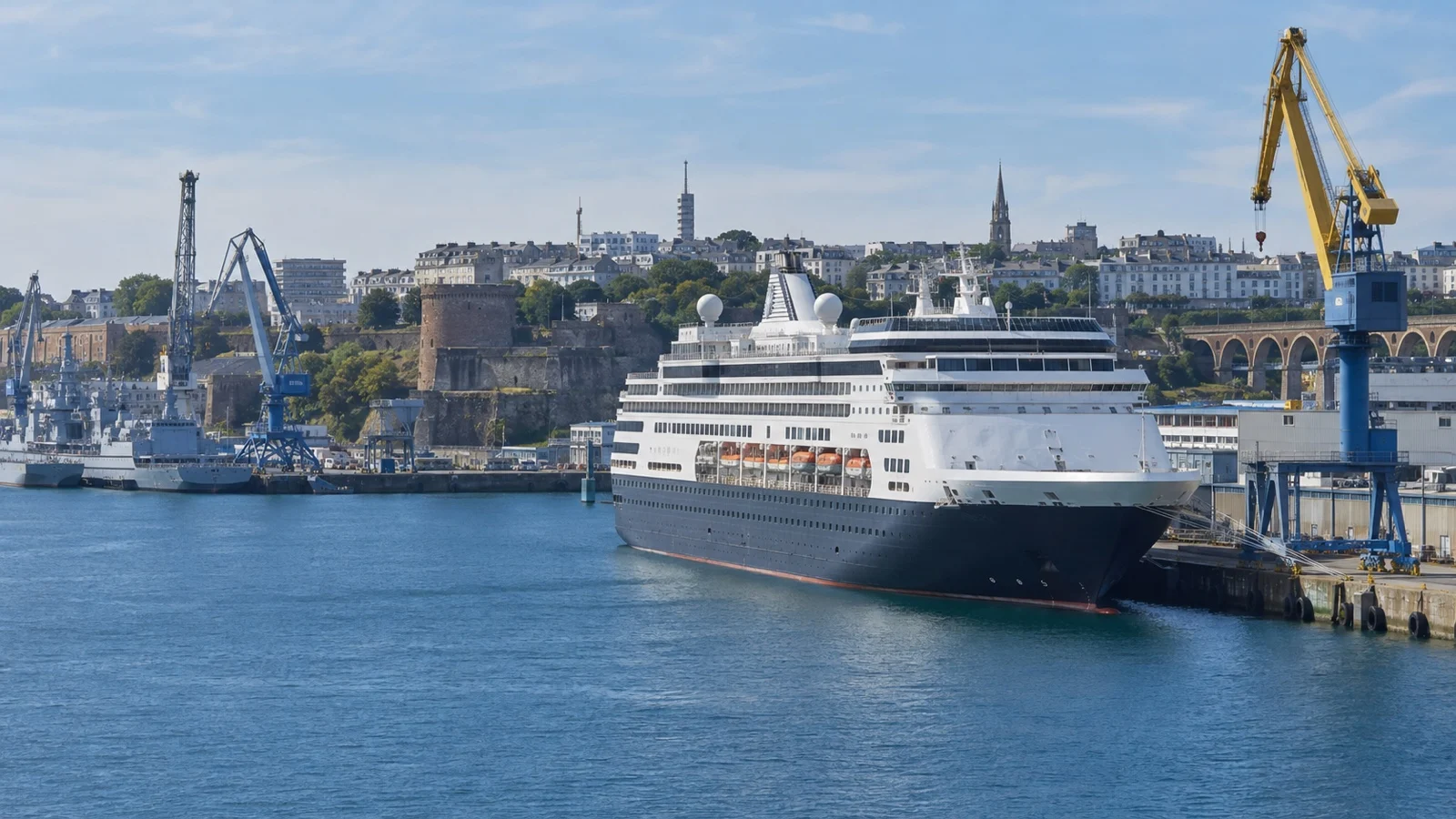
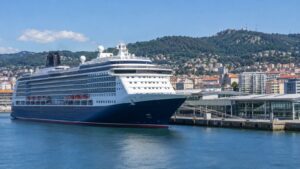
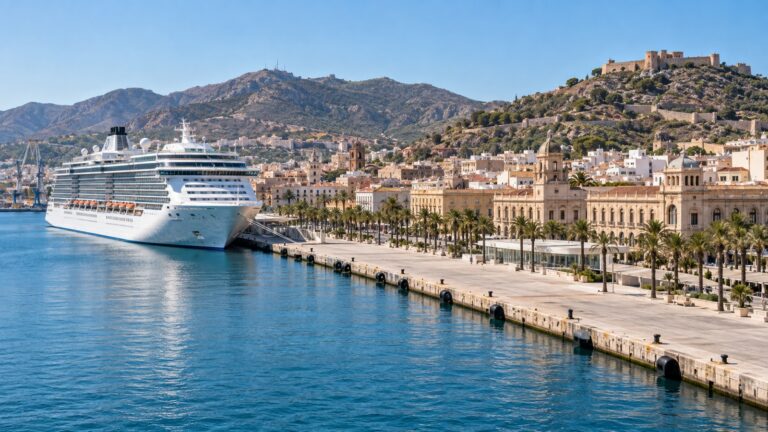
Cruise ships are handled within Brest’s working port rather than at a purpose-built downtown cruise terminal. The assigned quay can vary with vessel size, commercial activity, security, and harbor operations.
That means the useful question is not simply where Brest cruise port is on a map. Ask your ship where its shuttle or walking route reaches the public street, whether independent taxis can enter the controlled area, and where the return check will take place.
Expect industry around the ship
Cranes, repair docks, warehouses, service vehicles, and other vessels are part of the scenery. This is not a waterfront designed entirely for passengers, so follow marked routes and crew instructions even when the city looks close.
Brest’s scale can be deceptive from an upper deck. A landmark may appear nearby across a basin or behind a restricted gate while the legal pedestrian route takes much longer.
The hill between the port and the city
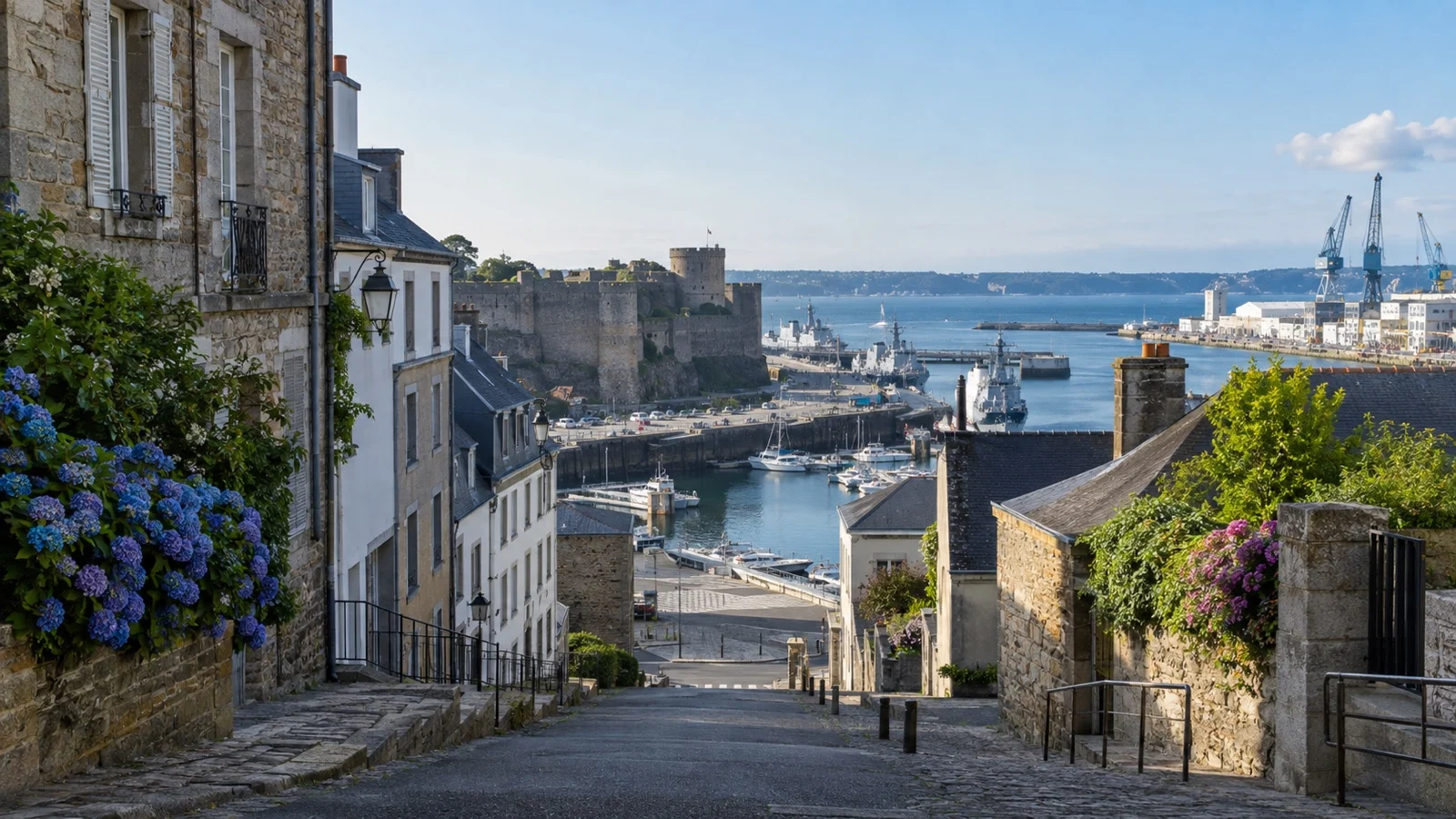
The central practical fact is simple: the quays sit low and much of central Brest sits higher. The distance can be manageable, but the grade changes how that walk feels, especially in rain, wind, or warm sun.
If your cruise line provides a shuttle, find out its exact drop-off before deciding to walk. Travelers with limited stamina may save their energy for the castle or Capucins rather than spending it on the initial climb.
Cours Dajot is worth the effort
Cours Dajot forms a long elevated promenade above the commercial port with broad harbor views. It is a good place to understand Brest’s geography before turning toward the castle and central streets.
The promenade itself is relatively straightforward, but the approaches from the lower harbor can involve slopes or steps. Choose the route that suits your mobility rather than following the first crowd off the shuttle.
The Château de Brest and National Maritime Museum
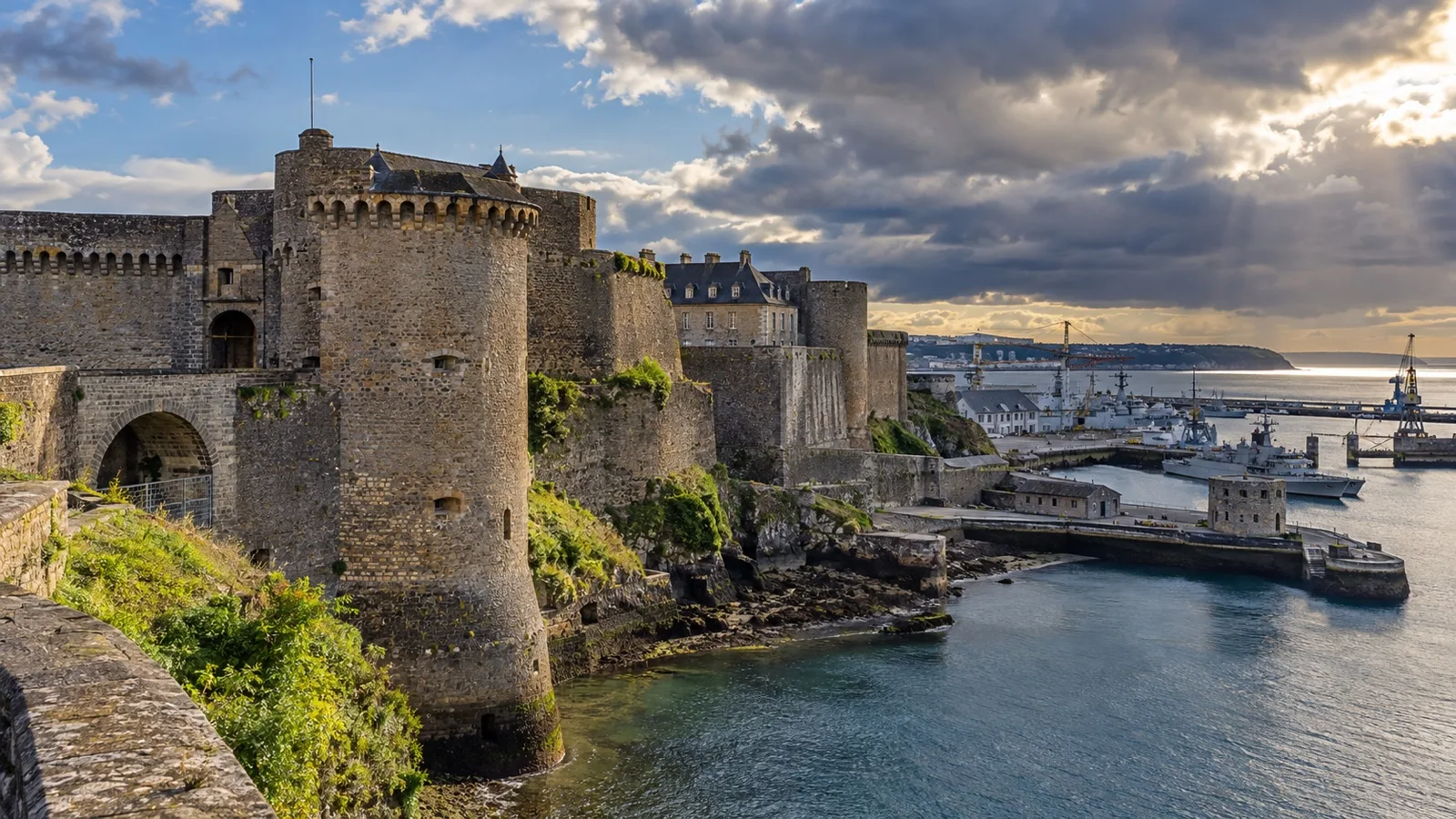
Brest Castle guards the mouth of the Penfeld and contains a branch of France’s National Maritime Museum. The museum presents more than 400 years of maritime history in a setting that is as compelling as the collection.
As currently published, standard admission is €12, with a €10 reduced rate and several free-entry categories. The audio guide costs an additional €2, and online booking can provide more certainty on a busy port day.
Current opening pattern
From April through September, the museum currently opens daily from 10:00 to 18:30, with last entry one hour before closing. From October through March, it currently opens from 13:30 to 18:30 and closes on Tuesdays, with additional annual holiday closures listed online.
Always check the official page for your date because special events, security conditions, and annual closure periods can alter access. A timed ticket is helpful when your ship call is short.
The accessibility warning is important
The museum states plainly that the historic site is not accessible to people with reduced mobility and includes about 500 steps. Only the Madeleine Tower has elevator access to its interpretation area and terrace.
This is not a minor caveat hidden behind a generic accessibility label. If stairs are difficult or impossible, choose an alternative such as the Capucins or Océanopolis and confirm their current access arrangements directly.
The Brest cable car
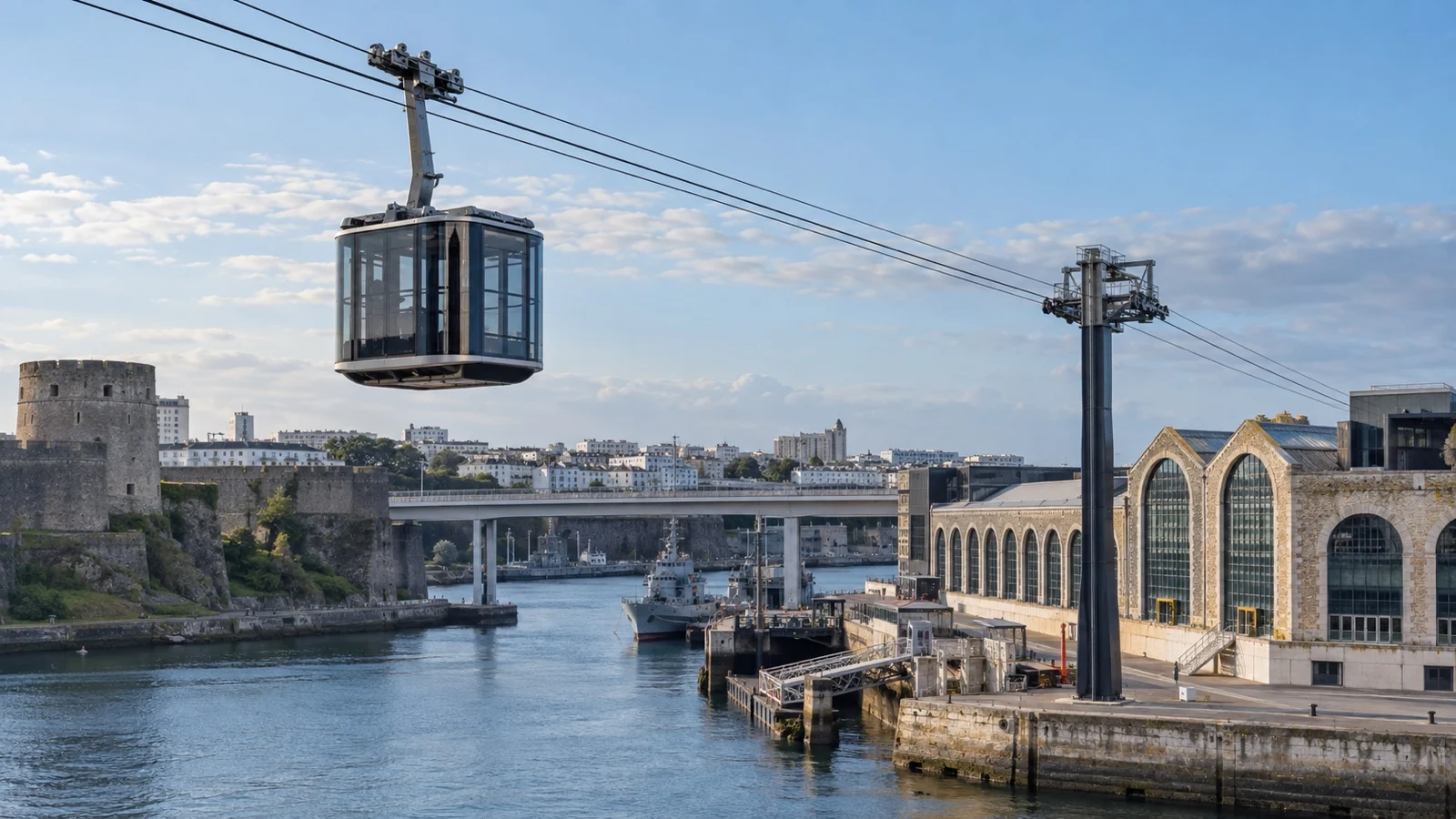
Brest’s urban cable car crosses the Penfeld between the city-center side and the Ateliers des Capucins. The journey takes about three minutes and rises roughly 72 meters above the river, giving a striking view over the naval landscape.
Bibus currently lists normal frequencies of about five minutes at peak times and ten minutes off peak. The published schedule begins later on Mondays and Sundays than on most other days, so a morning arrival does not automatically mean the cable car is running.
What it costs
The current cable-car-only same-day round trip costs €2.20. A regular Bibus ticket costs €1.70 for one hour across bus, tram, and cable car, while the day ticket costs €4.50.
Validate the correct ticket at each required boarding point and confirm current conditions on the official Bibus site. Fares can change, and the lowest-cost option depends on whether you are taking only the cable car or using other transit too.
Maintenance can change the plan
The cable car has planned maintenance closures and can also be disrupted by operations around the Penfeld. Bibus publishes live traffic alerts, so check them before walking to the station.
If the cable car is closed, use the local transit planner or walk across by the street network if your time and mobility allow. Do not wait at the station hoping a clearly announced closure will end early.
Les Ateliers des Capucins
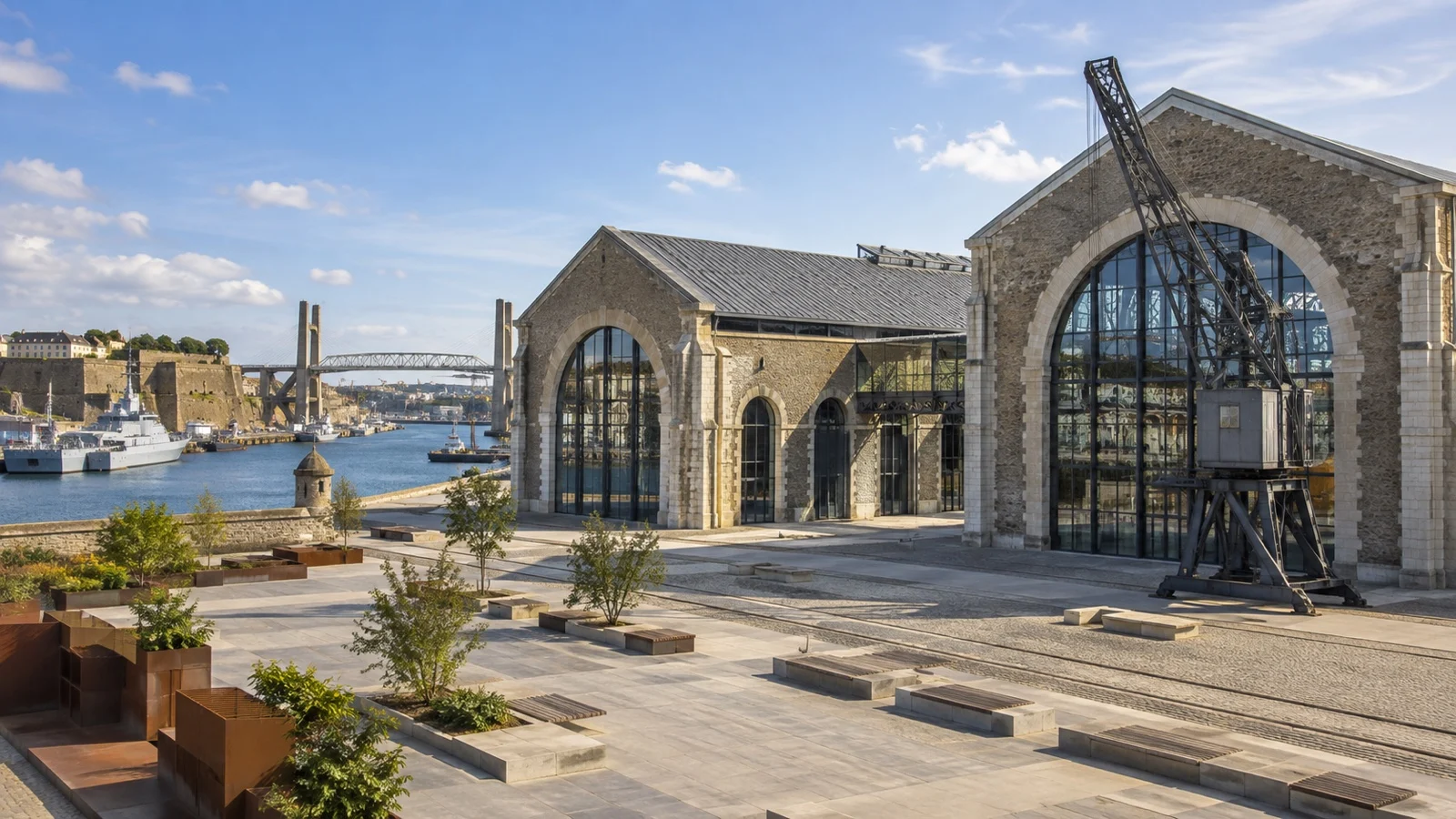
The former naval workshops at the Capucins have been transformed into a vast covered civic space. Original industrial scale and machinery remain visible alongside a library, cultural venues, businesses, and places to pause.
I like the Capucins because it feels distinctly Brest rather than interchangeable with another French city center. The cable car ride is part of the experience, but the building itself rewards time, especially when Atlantic rain arrives sideways.
How much time to allow
A quick look can take 30 minutes, while a relaxed visit with coffee, exhibitions, or the surrounding Recouvrance area can take two hours. Check the opening hours of any specific venue inside because the public building and its individual tenants may not share one schedule.
Walking central Brest
Much of central Brest was rebuilt after wartime destruction, so visitors expecting a preserved medieval core can misunderstand the city. Its interest lies in the harbor views, broad postwar plan, naval story, and the fragments of older Brest that survived.
Rue de Siam forms a useful central spine, while the Recouvrance Bridge and castle area tie the modern city back to the Penfeld. I would walk with the harbor in mind rather than hunting for a single postcard square.
A practical loop
From the castle area, continue toward the Jean Moulin cable car station, cross to the Capucins, and return by cable car or surface transit. This keeps the day compact and gives you both sides of the river without committing to a distant excursion.
Reverse the loop if your shuttle drops you closer to the center or if museum entry times dictate the order. Fixed reservations should come first, while streets and viewpoints can fill whatever time remains.
Océanopolis
Océanopolis is Brest’s major ocean-discovery attraction at Moulin Blanc, east of the central port area. It is not a quick add-on to the castle loop, so treat it as the focus of the day rather than one more box to tick.
Current online prices begin at €22.90 for adults, €18.50 for young people, and €14.60 for children. The attraction strongly recommends advance timed tickets and notes that only an online timed purchase guarantees entry for the selected date and time.
Know what is open
Océanopolis is in a period of redevelopment, and its Austral Pavilion is currently closed with reopening planned for early 2027. The new Tropical Pavilion is open, but visitors should check the official site for the exact experience available on their sailing date.
Rainy days can drive heavier demand, which makes a reserved slot especially useful. Allow enough time for the journey back to the ship rather than booking the latest possible entry.
Pointe Saint-Mathieu and coastal excursions
Pointe Saint-Mathieu brings together a lighthouse, abbey ruins, and exposed coastal scenery west of Brest. It delivers the wild Brittany many visitors imagine, but it requires road transport and a disciplined schedule.
A ship excursion offers the simplest protection against a delayed return. Independent travelers should prebook a reputable driver, confirm the exact meeting point, and avoid combining too many distant stops.
Crozon and other long drives
The Crozon Peninsula and Pointe du Raz can be spectacular, but road time expands quickly when traffic, weather, or a photo stop runs long. I would only choose a wide coastal circuit on a long call with a substantial buffer.
Brest itself is not a consolation prize. The castle, Capucins, cable car, and harbor views tell a coherent story without spending the day watching the clock through a windshield.
Weather in an Atlantic port
Brest’s weather is maritime, changeable, and often windy. A forecast icon that shows only light rain does not describe what a damp gust can feel like on an exposed quay or castle wall.
Bring a waterproof outer layer, shoes with dependable grip, and one warm layer even in summer. An umbrella is less useful than a hood when the wind picks up.
Build an indoor backup
The National Maritime Museum, Capucins, and Océanopolis all provide substantial indoor options, but they are not interchangeable. The museum has major stair constraints, the Capucins is flexible and central, and Océanopolis requires more transit and time.
Choose the backup before leaving the ship. That way a sudden shower changes the order of your day instead of sending you into the first crowded café.
Public transit without guesswork
Bibus operates Brest’s buses, trams, and cable car as one network. The official app and website provide journey planning, real-time arrivals, network maps, and disruption notices.
Brest expanded its network in 2026, so an old printed map or saved blog screenshot may be obsolete. Use live information and look carefully at the direction of travel before validating a ticket.
Do not confuse the cable car with a tourist ride
The cable car is public transportation, which is why its hours and tickets work within the wider Bibus system. It can close for maintenance just like any other transit line, and a sightseeing plan should include a surface alternative.
Accessibility in Brest
The commercial quay may be relatively level, but the route into town can be the harder part. Shuttle lift availability, curb heights, gradients, and the exact gate all depend on the day’s operating plan.
Ask the cruise line about step-free shuttle boarding and the public drop-off before arrival. Then verify the cable car, transit, and attraction access directly for the equipment you use.
The castle museum is the clearest limitation because its own guidance says the full site is not accessible to people with reduced mobility. The Capucins and Océanopolis may be more practical choices, but current elevator status and accessible routes still deserve confirmation.
Three realistic port-day plans
A short call
Take the shuttle or easiest route uphill, see the castle exterior and harbor views, walk part of central Brest, and return early. Add the cable car only after checking live service and your remaining margin.
A classic half day
Reserve the National Maritime Museum, walk to the Jean Moulin station, cross to the Capucins, and return through the center. This plan keeps the moving parts close together while showing both old defenses and modern reuse.
A full day
Choose either Océanopolis or one prearranged coastal excursion as the main event. Trying to combine the aquarium, castle museum, Capucins, and a distant headland creates more transfers than pleasure.
Common questions
Can I walk from the ship to the center?
Possibly, but the answer depends on your assigned quay and the permitted route through the working port. The central climb can make a short distance feel longer, so check the shuttle before declining it.
Do ships dock or tender?
Brest normally handles visiting cruise ships alongside working quays, but marine operations always control the day’s arrangement. Follow the information issued by your ship for your specific call.
Is the cable car worth riding?
Yes, if it is operating and you are already visiting the central area. The crossing is short, inexpensive, and visually memorable, and it delivers you directly to the Capucins side.
Can I do Océanopolis and the castle?
It is possible on a long call with well-timed transportation, but I would not recommend rushing both. Each deserves enough time to justify its admission and travel.
How early should I return?
Follow the ship’s all-aboard time and aim to reach the port transfer point well ahead of it. Add a larger buffer after any coastal drive, timed aquarium visit, or transit disruption.
My last word
Brest makes sense when you stop asking it to be a quaint Breton village. It is a city built around the sea, and its harbor, castle, naval workshops, and weather all belong to the same story.
My ideal day stays focused: castle first, cable car second, Capucins third, then a relaxed return with room for delays. If the coast is your priority, choose one good excursion and let Brest wait for another voyage.
How this guide was researched: This guide was desk-researched on September 12, 2026 using the official Bibus site, the National Maritime Museum’s Brest visitor page, and the official Océanopolis site. It does not claim a personal ship call, berth inspection, cable car ride, or attraction visit.
Berth assignments, shuttle procedures, accessible transfers, excursion timing, attraction schedules, transit disruptions, and the final gangway deadline should always be confirmed directly with your cruise line and the relevant operator.