Skip to Content

Al Khoms Cruise Port — The Ultimate Day-in-Port Guide

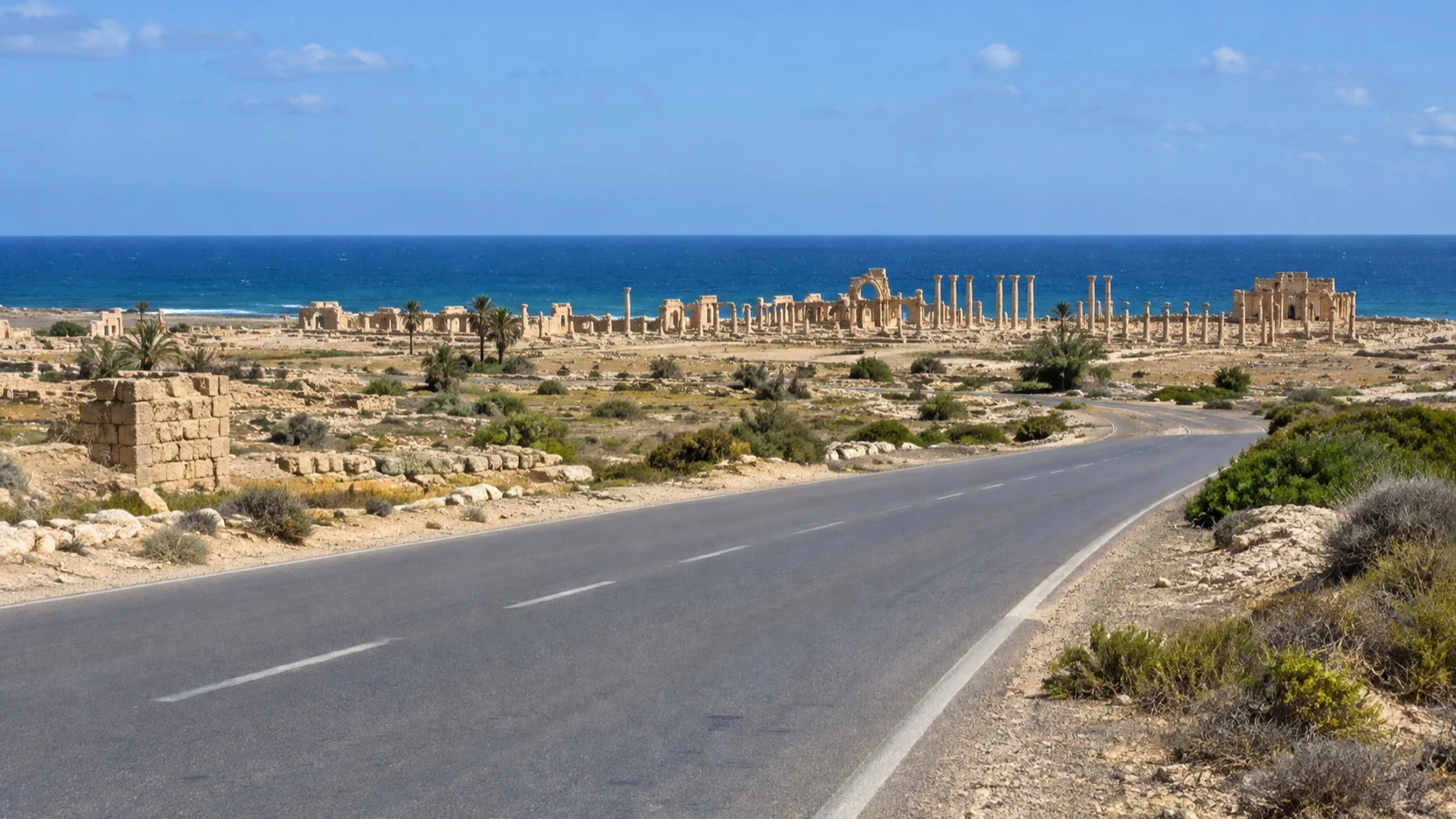
A call to Al Khoms is rare and unforgettable, home base for Leptis Magna, one of the Mediterranean’s most spectacular Roman cities.

This practical guide front-loads logistics (dock vs. tender, shuttles, transit times, access) and then stacks 60 things to do, plus smart itineraries, accessibility notes, and safety tips for a smooth day ashore.


Quick Snapshot

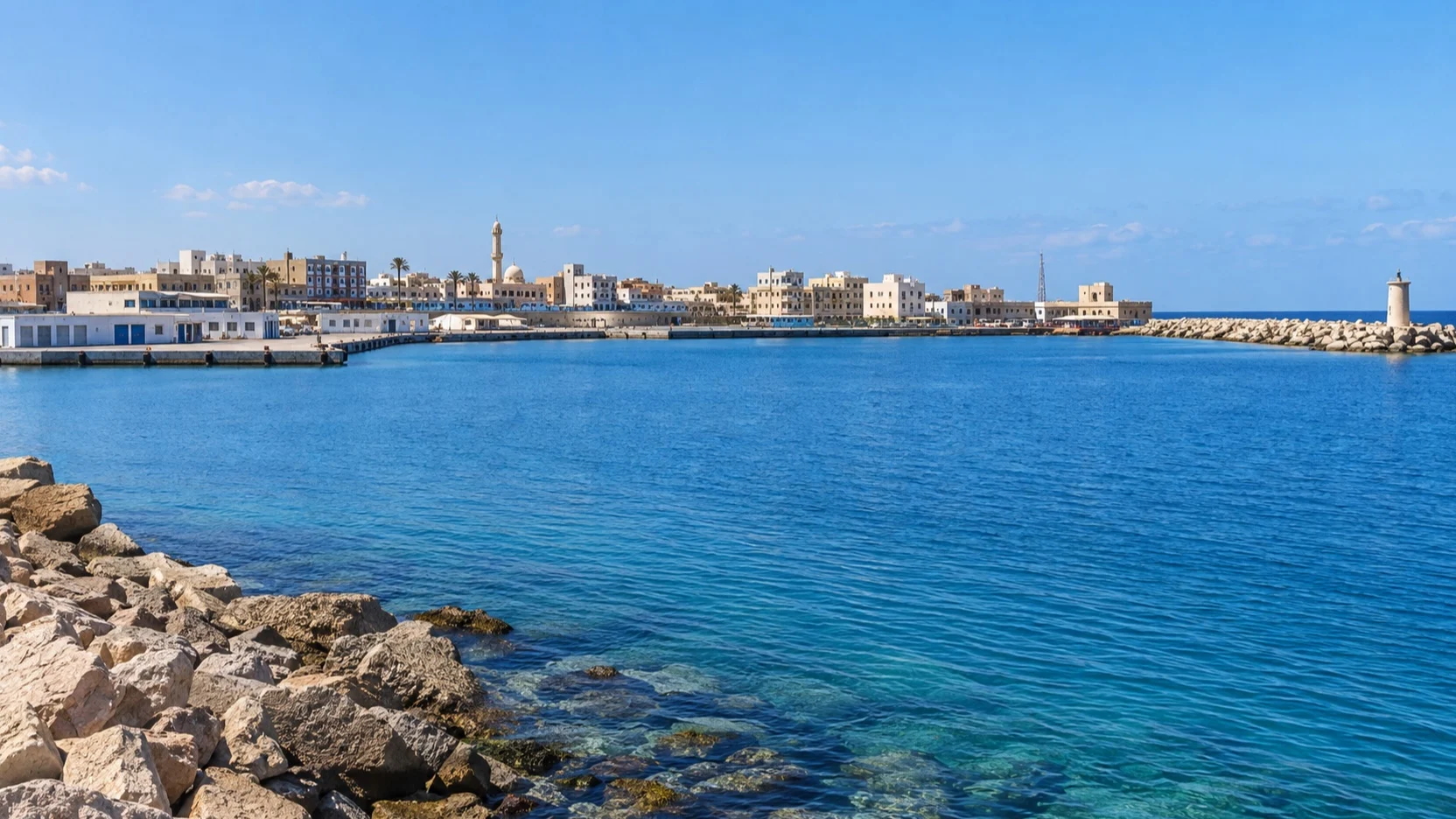
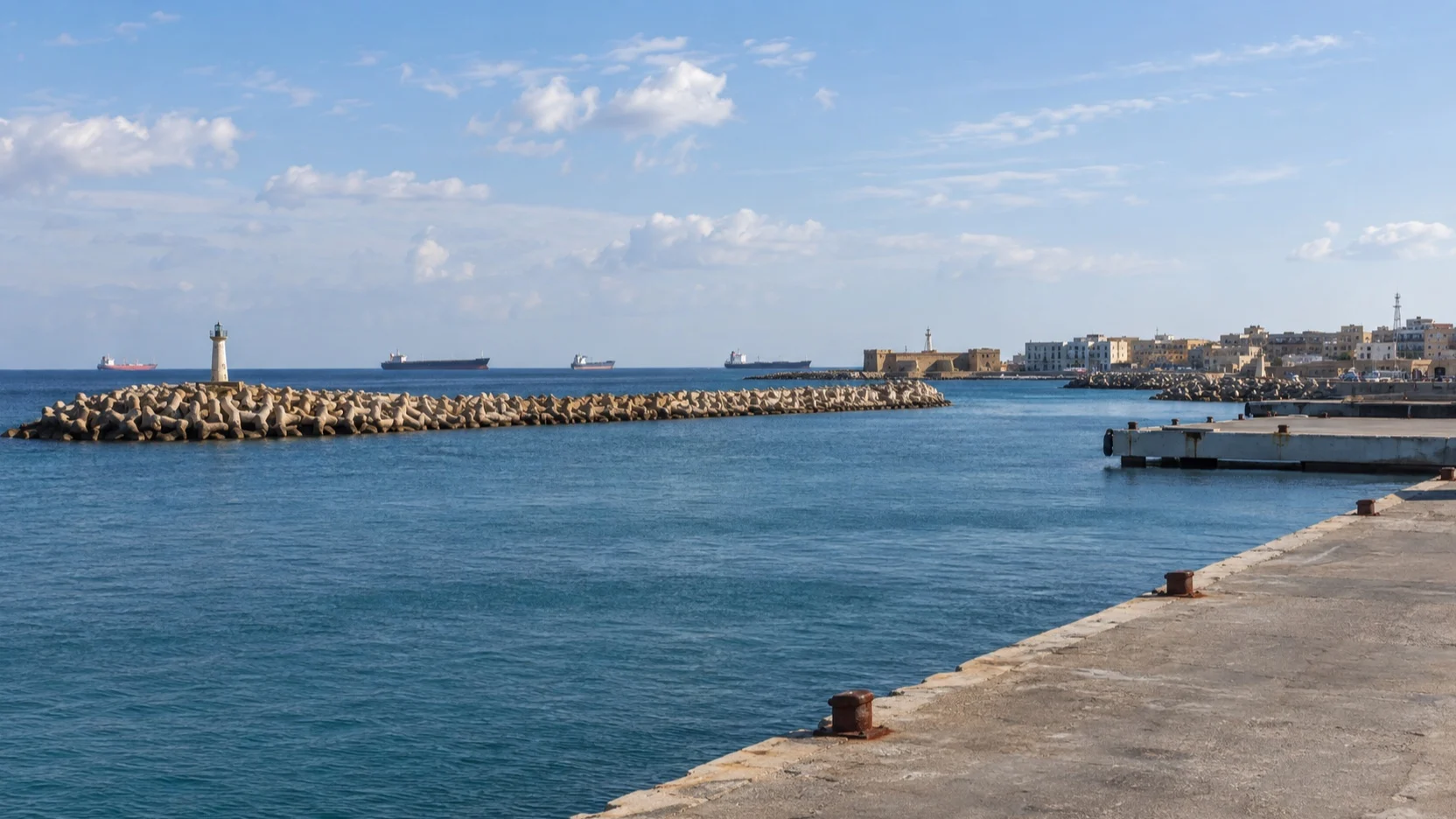
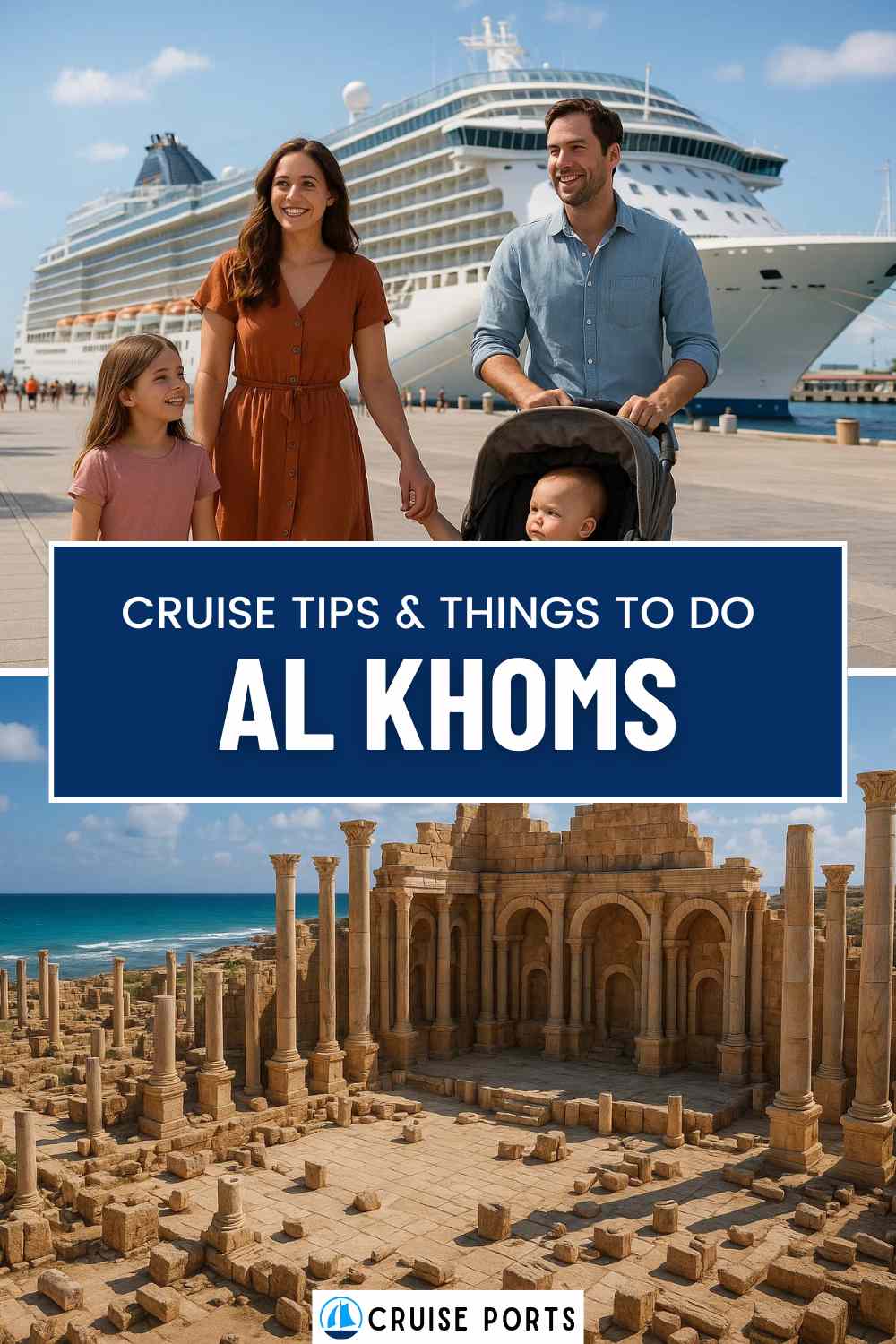
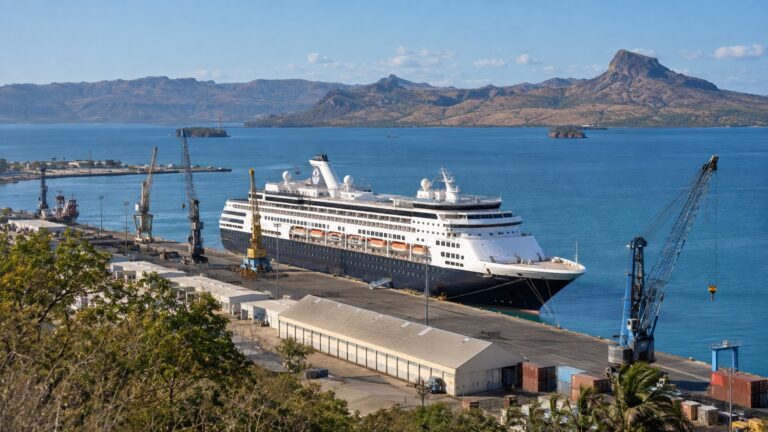
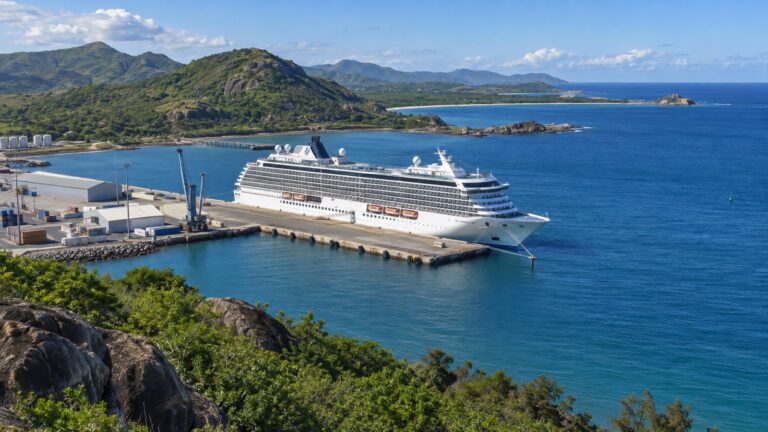
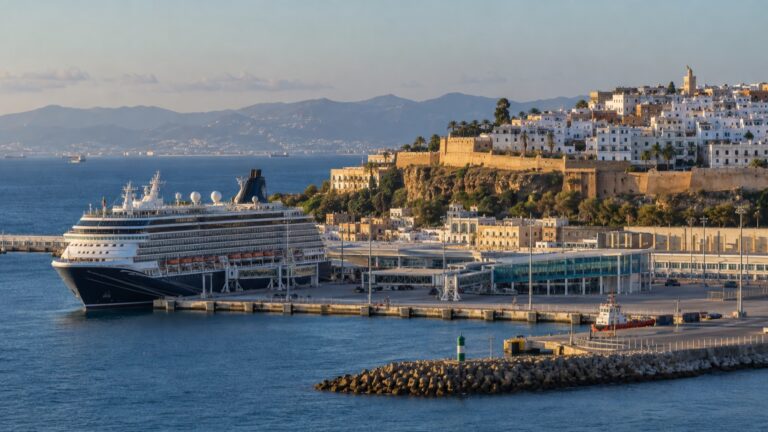
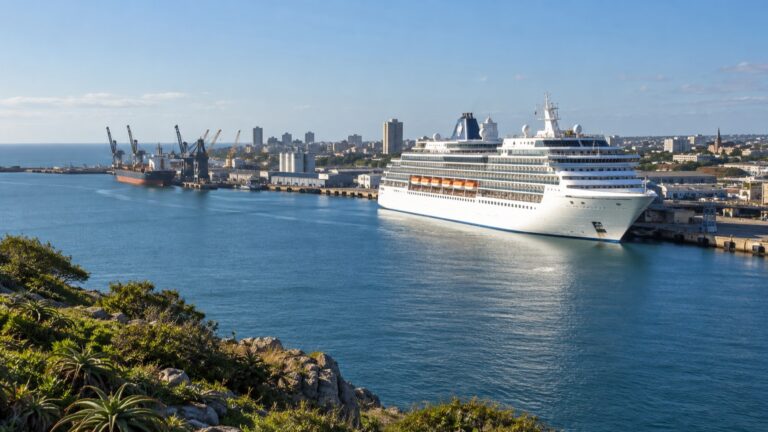
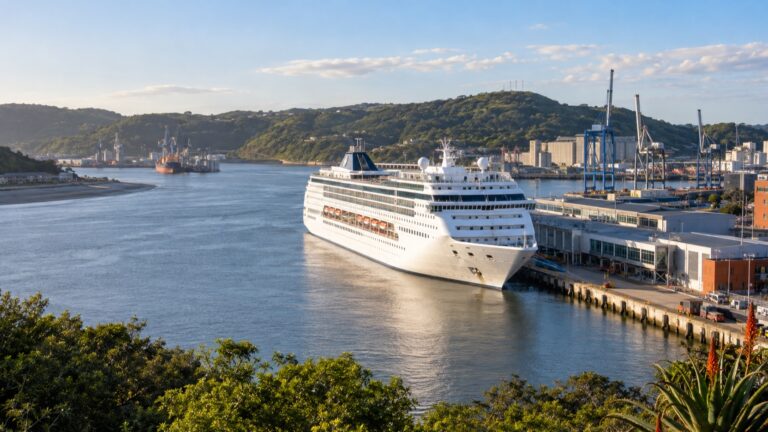
  • Where you’ll dock/tender: Most ships that schedule Al Khoms dock at the industrial Port of Al Khoms. It’s a working cargo harbor a short drive from town and roughly 10–20 minutes by coach to Leptis Magna (traffic, security stops, and convoy procedures can affect timing). Tendering is uncommon.
  • Shuttle situation: Expect coaches loading inside the secure port area; walking through the port is typically not allowed. On cruise days, shuttles often go directly to Leptis Magna’s main entrance or to a nearby staging/parking area. Frequency usually aligns with the ship’s tour schedule; wheelchair-friendly vehicles should be requested in advance.
  • Vibe: Stark working port meets jaw-drop archaeology. The town is low-key; the ruins are colossal.
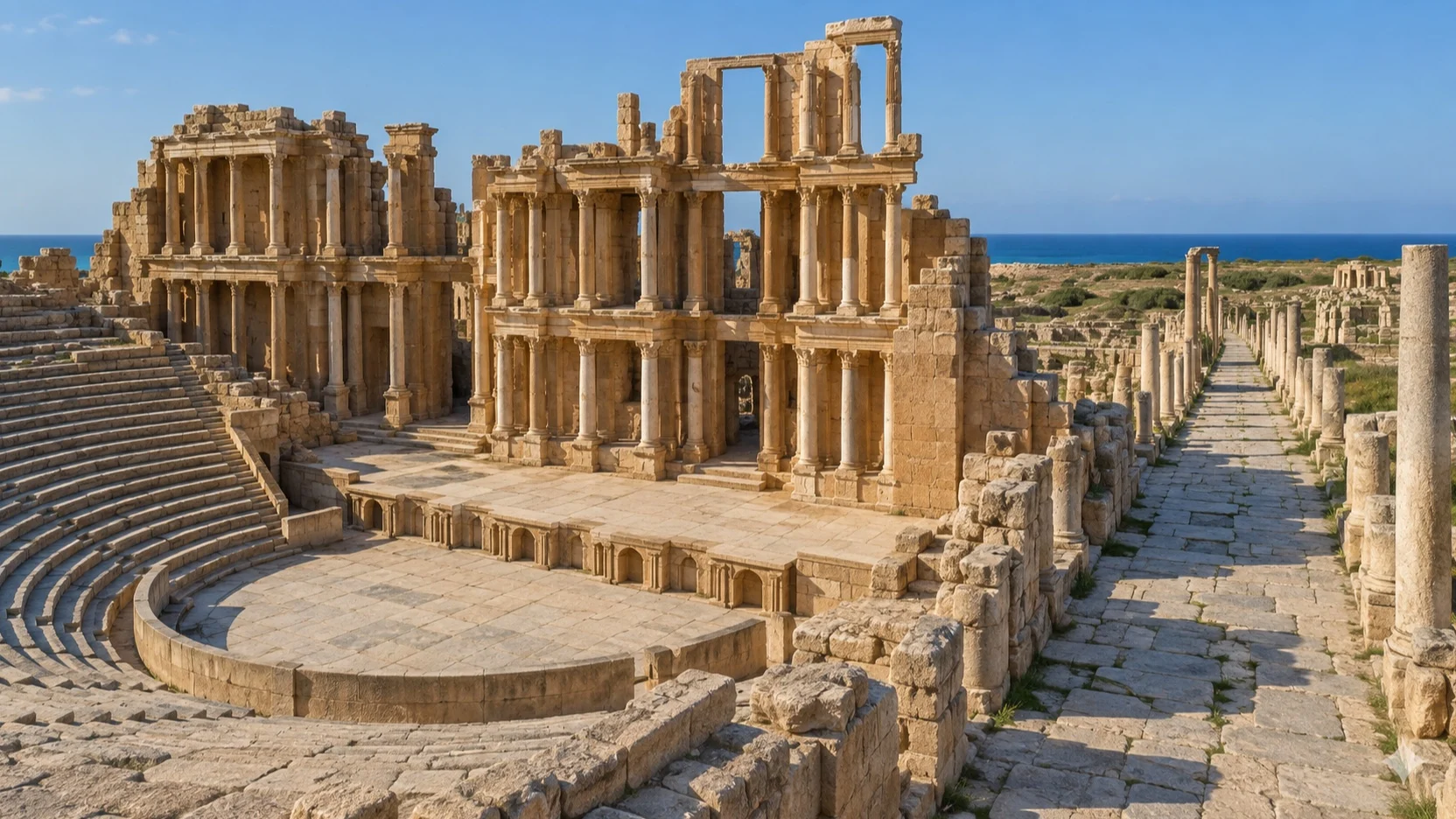
  • Top headliners: Leptis Magna (UNESCO), Arch of Septimius Severus, Hadrianic Baths, Theatre, Amphitheatre & Hippodrome, Ancient Harbour, and the site museum (when open).
Al Khoms cruise port

Port Logistics: Dock, Tender, and Shuttles

  • Berths & terminal feel. You’ll berth alongside in a commercial yard with no showcase cruise terminal. Expect fencing, security kiosks, and bus staging. Facilities inside the port are basic: sometimes portable restrooms, rarely shops.
  • Distance & time. From gangway to Leptis Magna is typically 10–20 minutes by coach depending on traffic and operational procedures that day. Town streets around Al Khoms are simple and spread out; don’t plan to “pop into shops” at the pier—those are outside the secure area.
  • Shuttle drop points. On ship days, coaches generally drop at/near the Leptis Magna entrance by the parking area and ticket booth. From there, it’s a short walk to the first monumental views. Some groups start seaside (amphitheatre/ancient harbour) and work back inland; others start at the Arch and Forum.
  • Tender notes. If rough weather or berth conflicts ever force tendering, the line will issue tender tickets and prioritize ship-run tours. Independents board after. That said, tenders are rarely used here.
  • Security & escorts. Local regulations may require group movement and escorts for coaches traveling between the port and the site. Expect ID/passport checks at controlled points; keep your ship card and a photo ID handy.
  • Restrooms, info, cash. Do not expect restrooms or ATMs at the berth. You’ll find toilets at the Leptis Magna entrance and sometimes within major complexes; carry tissues and hand gel. Cash is king; small bills help. Card acceptance varies day-to-day.
  • Phone/data. Roaming is inconsistent. Download offline maps, keep your ship’s port agent number on paper, and put your phone in airplane mode if data is unreliable.
  • Language. Arabic is the primary language; English is most common with guides and tour staff. Learn two words—shukran (thank you), min fadlak/fadlik (please, m/f)—for a warm exchange.

Getting Around Once Ashore

  • On foot. Leptis Magna is vast yet compact enough to walk between headline monuments. Surfaces vary: flat dirt paths, worn marble, uneven stones, steps, sand. Closed-toe shoes with grip are essential. Wayfinding is usually straightforward once inside the core.
  • Local buses & shared vans. You may see microbuses along the coastal highway, but they’re not suited to cruise timelines (irregular departures, limited signage, cash only). With ship time pressure, don’t rely on public transport.
  • Taxis & ride-hail. Metered taxis are uncommon at the port. Your cruise line or ship agent usually pre-arranges vehicles. International ride-hailing apps are typically not available. If you arrange a private vehicle, confirm round-trip with the driver and build in a time buffer.
  • Bikes/e-bikes/golf carts. Not a typical option here, and midday heat + traffic make cycling impractical.
  • Rental cars. Not recommended for a short port call due to paperwork, road checks, and navigation. If a rental is somehow arranged through your operator, pre-plan fuel and parking near the site gate and keep the route extremely simple.
  • When a two-hour loop makes sense. A drop-and-wait taxi or private car (organized via the ship) can work: Port → Leptis Magna (2–3 hours on site) → Port, with 60–90 minutes of extra buffer before all-aboard.

Al Khoms cruise port

When to Visit: Weather, Daylight, Wildlife/Seasonality

  • Cruise timing. Calls—when scheduled—tend to concentrate in spring (March–May) and autumn (September–November) for manageable heat and steadier winds.
  • Temperatures. Summer: commonly 30–37°C (86–99°F), occasionally higher under hot inland winds. Winter: typically 10–18°C (50–64°F) with periodic showers.
  • Rain & wind. Most rain falls November–March. Winter can see brisk northwesterlies; summer sometimes brings dusty southerly bursts (often called ghibli). Expect clear, hard light most of the year.
  • Daylight. Winter ~10 hours; summer 14+ hours. Midday sun is harsh for photos; mornings and late afternoons bring texture to stone reliefs.
  • Wildlife & sea. Coastal seabirds are common, and you may notice seasonal migration. The sea can look inviting but surf and currents vary; there are no lifeguards.
  • What to pack. Sun hat, high-SPF sunscreen, sunglasses, light scarf/buff (for wind/sand), refillable bottle, electrolytes, light shell for winter days, sturdy shoes, insect repellent, small dry bag for dust protection, and tissues/hand gel.

Respect & Etiquette

  • Modest dress (shoulders/knees covered) is appreciated away from beaches; at the ruins, breathable long sleeves/long shorts work well.
  • Ask before photographing people; be especially considerate around families and security personnel.
  • At the ruins: Do not climb fragile walls or walk on mosaics. Stay on durable surfaces. Drones are typically not allowed without permits.
  • Conservation basics: Pack out your trash, avoid touching carvings, and leave natural items where you found them.

Al Khoms cruise port

Al Khoms: 60 Best Things to Do

On-Water & Wildlife

  1. Watch the Mediterranean from the ancient harbour rim — Stand where merchant ships once loaded grain and marble; feel the sea breeze and imagine the bustle two millennia ago.
  2. Coastal bluff stroll — Between the amphitheatre side and the shore, short sandy paths deliver briny air and wide horizons.
  3. Beach pause near Al Khoms — A simple, sandy stretch for a paddle; go early or late to dodge heat.
  4. Shoreline shell & pebble spotting — Kids love finding smooth pebbles; leave natural items in place.
  5. Wave-watching on the breakwater — If the sea is up, observe safely from distance; use long lenses for spray shots.
  6. Sunset shoreline walk — If your departure allows, the low sun angles warm the stones with golden color.
  7. Birding by the water — Scan for gulls and terns; bring compact binoculars and keep a respectful distance.
  8. Sea-breeze cool-down stop — Mid-loop, retreat to the coast for 10 minutes of wind and shade behind ruins.

Culture, History & Landmarks

  1. Grand tour of Leptis Magna — A comprehensive guided loop: Arch of Septimius Severus → Forum/Basilica → Hadrianic Baths → Theatre → Market → Nymphaeum → Ancient Harbour.
  2. Arch of Septimius Severus (close-up) — Study the triumphal reliefs and the clever four-way design that frames views of the city.
  3. Hadrianic Baths — Walk the towering halls and imagine steam drifting across marble pools.
  4. Severan Basilica — Colossal civic space where law and commerce converged; don’t miss the column bases and floor details.
  5. The Forum — The urban heart; look for paving wear and column fragments lining the square.
  6. Theatre — A sweeping, semicircular cavea with sea-blue backdrops on clear days—bring a wide-angle lens.
  7. Amphitheatre — Partly sunken near the shore; descend carefully and picture the arena at full roar.
  8. Hippodrome (Circus) — Trace the long chariot track; kids love pacing out the length between turning posts.
  9. Nymphaeum & fountains — Decorative water features that softened the city’s stone profile.
  10. Market of Leptis — Marble counters and shop bays make trade feel tangible; great for photos with strong leading lines.
  11. Ancient Harbour quays — Follow cut-stone edges and bollards; look back inland to grasp the city’s scale.
  12. Leptis Magna Museum — When open, see statues, inscriptions, and famous mosaics (including gladiator scenes) rescued from the elements.
  13. Inscriptions hunt — Ask your guide to point out Latin and Greek fragments; spot reused stones in later structures.
  14. Roman city-planning lesson — Track the cardo/decumanus grid; count steps between gates and forums.
  15. Photo study of capitals & cornices — Up close, the stonecarving finesse shines; side-light makes details pop.
  16. Tripoli Old City (ship tour only) — On rare full-day excursions, a medina walk adds Islamic and Ottoman layers to your Roman day.
  17. Martyrs’ Square viewpoint (ship tour only) — A quick photo stop on a longer coach loop if it’s part of your official itinerary.
  18. Khoms town monuments — Short, respectful photo stops can be included on some local tours; ask your guide.

Nature Walks & Hikes (easy → moderate)

  1. Watercourse (wadi) amble — A gentle walk near the seasonal streambed that once fed the ancient port; sandy underfoot.
  2. Clifftop spurs by the amphitheatre — Brief, scenic paths hover above the sea; watch footing in wind.
  3. Dune edge stroll — Contrast stone and sand textures; keep to durable surfaces to protect vegetation.
  4. Forum-to-sea connective path — Link core monuments to the shoreline via sandy lanes for broader context.
  5. Low hill viewpoints inland — Short pulls to modest knolls reward you with city-wide angles; great for panoramas.
  6. Wadi Lebda Dam outlook (time/permission permitting) — A quick viewpoint south of town for a lake-and-hills frame of the region.

Beaches & Coastal Hangouts

  1. Lebda/Al Khoms main beach — Simple amenities at best; bring your own shade and water.
  2. Quiet cove near the ruins — Short walk from the archaeological perimeter; perfect for a 15-minute decompress.
  3. Beach picnic — Simple local bread, dates, and olives—pack out all trash.
  4. Tide-pool peek — After calm spells, look for tiny critters in rock pools; keep kids’ hands off fragile life.
  5. Golden-hour beach photography — Use footprints and ripples as leading lines, keep the horizon level.

Scenic Drives & Viewpoints

  1. Port-to-Leptis scenic coach ride — Sit on the right-hand side heading east for early glimpses of columns and arches.
  2. Headland pull-off — A classic overlook near the amphitheatre side shows surf-line arcs below.
  3. Coastal highway panorama (ship tour only) — On a longer escorted loop, the runway-straight highway delivers sense-of-place views.
  4. Hilltop fort/ruin lookouts — Modest local fort sites sometimes appear on custom tours; ask your guide about access and safety.

Food & Drink Highlights

  1. Libyan tea ritual — Strong, sweet, sometimes minty, often poured from height to make foam.
  2. Couscous with lamb or fish — Weekend staple; regional sauces vary by herbs and heat.
  3. Shorba (soup) — Tomato-based, spiced, and perfect on a cool or windy day.
  4. Asida & magrood — Semolina treats: a pudding and date-filled pastries that travel well.
  5. Fresh flatbreads — Watch them puff on a griddle; irresistible with olive oil and harissa.
  6. Local olives & dates — Snack-size souvenirs (when sales are permitted at the site or nearby markets).
  7. Street-style coffee — Simple espresso-style cups keep your loop moving; carry small bills.
  8. Fish-of-the-day tasting — If your official tour includes lunch, grilled local fish is common along the coast.

Markets, Makers & Souvenirs

  1. Khoms produce stands — Vibrant seasonal fruit stacks; ask before photographing.
  2. Hand-embroidered textiles — Small, packable pieces; seek cooperative makers when available.
  3. Brass and woodwork — Modest trays, carved boxes, and simple inlays make meaningful keepsakes.
  4. Archaeology booklets — Small guidelets from the site kiosk (when open) help decode monuments later on the ship.
  5. Date and olive products — Tastes of the region to share back onboard—pack carefully.

Unique & Immersive

  1. Archaeology deep-dive with a specialist — A slower-paced talk through urban planning, water systems, and imperial propaganda.
  2. Family scavenger hunt — Checklist five: archcolumn capitalmosaicamphitheatre arenaharbour stone—kids stay engaged.
  3. Sketch the forum — Bring a small pad; ten minutes of lines helps you notice proportions you’d miss in a photo.
  4. Photography mini-workshop — Practice framing reliefs with side-light, avoid harsh noon shadows, shoot details not just wide shots.
  5. Quiet gratitude moment — Find a wind-sheltered corner, put the camera down, and just look; it’s a once-in-a-lifetime place.
  6. Tea & conversation — If offered, a few polite minutes over tea can be the day’s warmest memory.

Al Khoms cruise port

Build-Your-Day Itineraries

3-Hour Express (walkable core + one headliner)

  • Coach direct to Leptis Magna gate.
  • Arch of Septimius Severus (10–15 mins): quick orientation and photos.
  • Forum & Basilica (25–30 mins): follow the axis and grab detail shots.
  • Hadrianic Baths (20–25 mins): scale, columns, raking light; pause in shade.
  • Return to coach with a 45–60-minute buffer before all-aboard.

5-Hour First-Timer (signature tour + top sights + snack)

  • Guided loop: Arch → Forum/Basilica → Hadrianic Baths → Theatre → Amphitheatre → Ancient Harbour.
  • Snack stop near the entrance (carry water, simple cash snacks).
  • Optional museum browse (if open, 20–30 mins).
  • Return with 60–90 minutes to spare.

8-Hour Max-Out (culture + coast + buffer)

  • Morning Leptis Magna deep-dive with extended time at the Arch, Baths, and Market (2.5–3 hours).
  • Shoreline break near the amphitheatre (15–20 mins).
  • Museum (if open, 30–45 mins).
  • Optional Wadi Lebda Dam viewpoint (brief, only if permitted and timing allows).
  • Late-day photo return to your favorite monument (20 mins).
  • Back to ship with 90 minutes of cushion.

Rainy-Day Plan (museums + covered viewpoints + cafés)

  • Museum first (if open) for mosaics and statues.
  • Hadrianic Baths & Theatre—large structures offer intermittent cover between squalls.
  • Tea stop in town (pre-arranged on your tour).
  • Short Arch revisit if rain eases for fresh, moody photos.

Budget vs. Splurge

  • Free/low-cost: Self-guided walk inside Leptis Magna (when independent time is permitted), shoreline strolls, photo walks, produce-stand browsing, archaeology booklet.
  • Mid-range: Shared coach tours, guided site walk, simple lunch or tea stop, small handcraft purchases.
  • Splurge-worthy: Private archaeology specialist, dedicated photographer guide, extended escorted loop that includes a broader regional drive (when offered), custom accessibility vehicle.

Accessibility & Family Notes

  • Wheelchairs & mobility: Surfaces include loose sanduneven stonessteps, and occasional slopes. Some key vistas (near the Arch, parts of the Forum, edges of the Baths) are reachable with assistance, but continuous step-free routing is limited. Request low-floor coaches or ramps via the ship well in advance. Bring wide tires or a freewheel attachment if you have one.
  • Seating & shade: Shade is limited. Plan micro-breaks in arcaded areas and along walls. A collapsible cane seatcan be a day-saver.
  • Restrooms: Expect facilities near the entrance; carry tissues and hand gel.
  • Strollers: A compact, all-terrain stroller is best; be ready to carry over short flights of steps and through sandy patches.
  • Sensory notes: Wind and glare can be intense. Sunglasses, hat, and a light scarf help. Pick quiet corners by the ancient harbour or along lesser-visited side lanes for decompression.
  • With kids: Turn the site into a game—count columns, spot carvings, “walk the chariot track,” and reward with a beach paddle. Keep snacks and water handy; aim for morning exploration.

Crowd-Dodging Strategies

  • Be first off the ship and head straight to the Arch before groups pool there.
  • Reverse the common loop: If most tours start at the Baths, begin seaside (amphitheatre/harbour) and work back inland.
  • Use micro-windows: When a guide gathers a group under shade, slip ahead to shoot details without anyone in the frame.
  • Heat management = crowd management: Do long, exposed sections before 11:00; tuck into shaded masonry or the museum around noon.
  • Alternate angles: While the triumphal arch face is busy, photograph side reliefs, column capitals, and paving textures.

Photo Checklist

  • Arch of Septimius Severus framed through a side arch—shoot early or late to avoid harsh overhead shadows.
  • Hadrianic Baths columns in raking light—textures jump at golden hour.
  • Amphitheatre curve leading to blue sea—use the stone seating as a leading line.
  • Forum panorama from a slightly elevated corner—stitch two frames if needed.
  • Ancient Harbour stones with surf blur—¼–⅛s shutter on a mini-tripod or brace against a wall.
  • Mosaic details in the museum—watch reflections, bump ISO modestly, and avoid flash.
  • People-free monuments—wait for group flow to move; 30–60 seconds can transform a frame.

Safety & Common Sense

  • Footing: Expect uneven, sometimes slippery stone. Step deliberately.
  • Sun & heat: Hydrate constantly; add electrolyte tabs to your bottle. Wear a wide-brim hat, reapply SPF every two hours, and carry a light scarf for dusty wind.
  • Sea safety: No lifeguards; watch for surf and currents. Keep kids within arm’s reach at the waterline.
  • Valuables: Keep bags zipped and in front of you. Don’t leave items unattended on the coach.
  • Time management: Aim to be back at the pier 60–90 minutes before all-aboard. If you’re not on a ship tour, build an extra buffer in case of traffic or checkpoints.
  • Local norms: Follow guide and security instructions, avoid photographing security or military posts, and stay within permitted areas.

FAQ

Is Al Khoms a walk-off port or shuttle-only?
It functions as a working cargo port. Expect to board coaches inside the secure area; walking through the port is typically not permitted.

What’s the one must-do if I have very limited time?
Leptis Magna—start at the Arch of Septimius Severus, then loop Forum/Basilica and Hadrianic Baths. If time allows, add the Amphitheatre and a harbour glance.

Can I see wildlife without taking a boat?
Yes—coastal seabirds and the open sea are part of the experience. Bring compact binoculars. Always keep a respectful distance.

Is there a cable car, funicular, or flightseeing option?
No. Views are ground-based. Use headland pull-offs, amphitheatre rims, and slight inland knolls for panoramas.

What can I do if the weather turns windy or rainy?
Start with the museum (if open), then focus on large, built monuments (Baths, Theatre) with intermittent cover. Keep your rain shell and lens cloth handy.

How do I make sure I don’t miss the ship?
Book a ship-run excursion when possible, watch all-aboard time, and return with 60–90 minutes to spare. If touring independently, confirm round-trip with your driver and add an extra buffer.

Are credit cards widely accepted?
Not consistently. Carry cash (small bills) for snacks, tips, and small souvenirs. Keep a backup stash in a hidden pocket.

Is independent exploration allowed?
It can be restricted. Many cruise calls organize escorted movement between the port and Leptis Magna. Follow your line’s guidance for the call date.


One-Look Planning Grid

  • Must-dos: Arch of Septimius Severus; Forum/Basilica; Hadrianic Baths; Amphitheatre; Ancient Harbour; (museum when open).
  • Easy/Accessible: Entrance-area vistas near the Arch; museum first; short, level photo stops with shade breaks.
  • Active: Full ruins loop + clifftop spur + shoreline walk; optional wadi/dam viewpoint.
  • With Kids: “Find five” scavenger hunt (arch/column/mosaic/arena/harbour), pebble-collecting (leave in place), short beach paddle.
  • Rainy: Museum + Baths/Theatre (more cover) + tea stop.
  • Photo Buffs: Side-lit reliefs, amphitheatre curves, harbour stones at slow shutter, mosaic details, raking-light columns.

Final Tips

  • Plan A/B by weather. If it’s scorching or dusty, go museum/covered monuments first, then the Arch when light softens.
  • Pack tiny but smart. Electrolyteslens clothspare batterytissueshand gelinsect wipes, and a fold-flat sun hat.
  • Mind the surfaces. Polished marble can be slick under fine sand—don’t rush.
  • Savor silence. When a tour group moves on, take 30 quiet seconds. The ruins feel different when you give them space.
  • Keep it simple. This is a one-site port for most visitors. Do Leptis Magna thoroughly, add a sea-breeze pause, and return unrushed.

Practical Recap

  • Berthing: Alongside at a working cargo port; no classic cruise terminal.
  • Port → Leptis Magna: ~10–20 minutes by coach, depending on traffic and procedures.
  • Movement: Escorted coaches are standard; walking inside the port is typically restricted.
  • Money & connectivity: Cash-first, roaming/data unreliable; download offline maps.
  • Comfort: Hat, SPF, water, electrolytes, sturdy shoes.
  • Timing: Back at the ship 60–90 minutes before all-aboard.

Enjoy the privilege of standing in Leptis Magna—one of the ancient world’s great coastal cities—and make your short day ashore in Al Khoms count.

Al Khoms cruise port pin
Al Khoms cruise port