Aeroskobing Cruise Port: Denmark’s Fairy-Tale Ærø Town
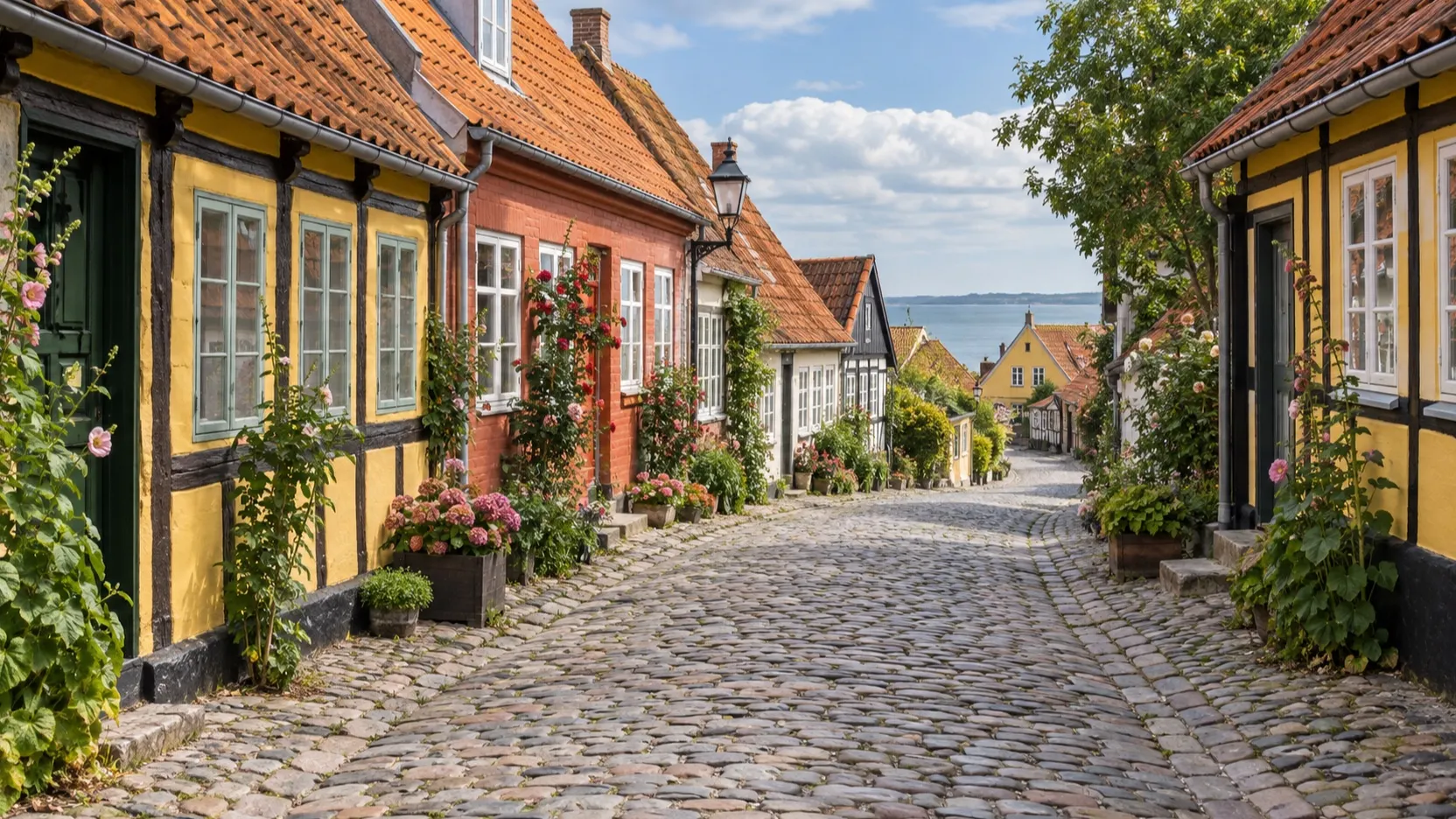
Ærøskøbing feels almost purpose-built for a small-ship port day, even though the town’s appeal comes from looking nothing like a modern cruise destination. Painted houses, cobbled lanes, hollyhocks, low roofs, and a working harbor sit close enough together that the day can begin the moment you step ashore.
This is not a place for a frantic attraction count. The best version combines a slow old-town walk, the beach huts at Vesterstrand, one small museum or church, and enough time near the harbor to protect the tender back to the ship.
My quick take
If it is your first visit, stay with Ærøskøbing rather than crossing the entire island. The town and nearby beach deliver the fairy-tale atmosphere people came for, and they do it without turning every bus connection into a deadline.
A longer call can support Marstal, cycling, or a wider island loop, but only after you understand the final tender and local transport schedule. Ærø is peaceful, yet a delayed bus on an island with limited taxis can create exactly the wrong kind of excitement.
I would walk to Vesterstrand early, return through the oldest streets, and finish with lunch or ice cream by the harbor. That route is simple, beautiful, and easy to shorten if wind changes the ship’s tender operation.
Quick Facts
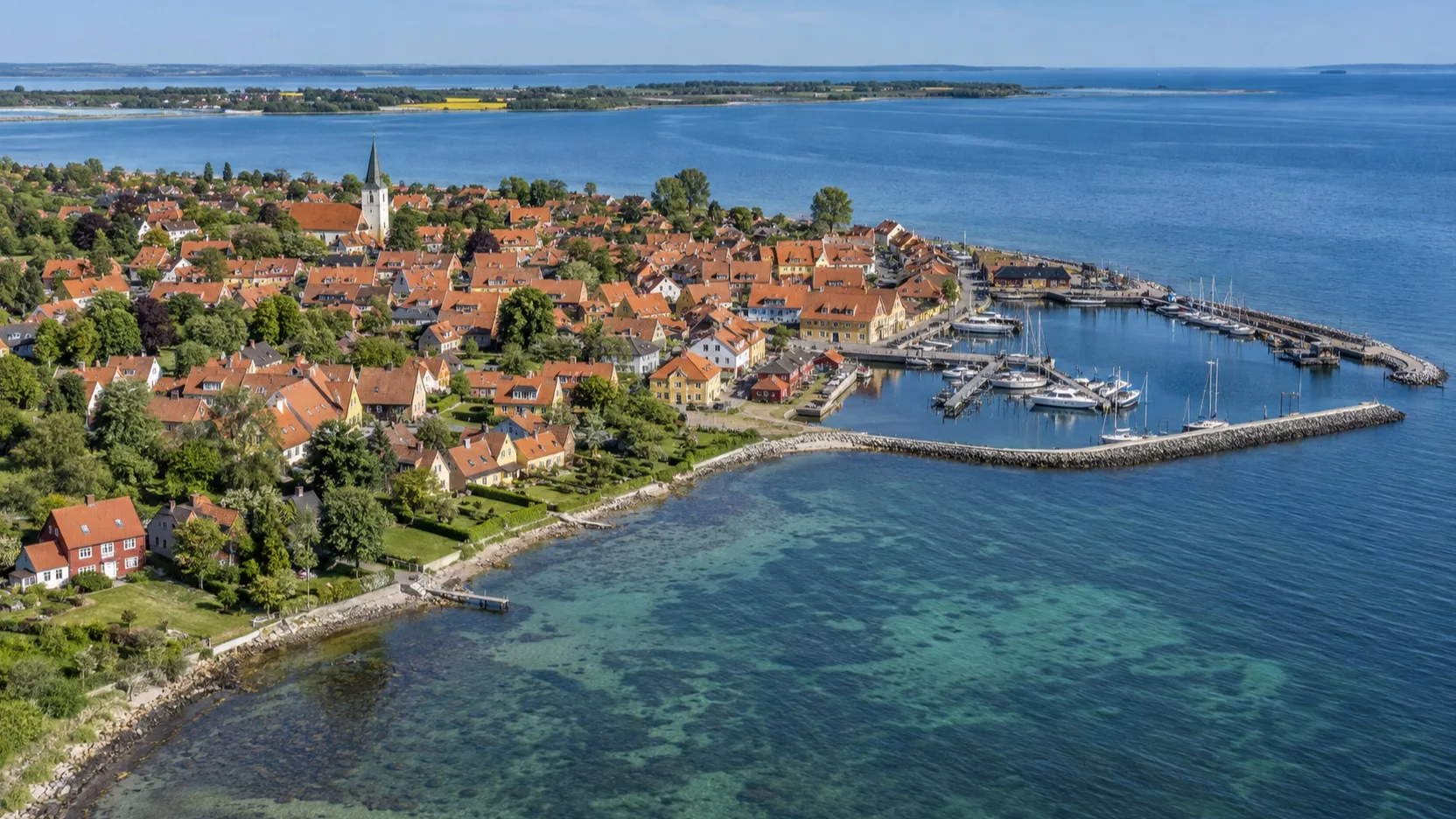
- Where you arrive: Cruise guests generally land at Ærøskøbing’s compact harbor, beside the historic town.
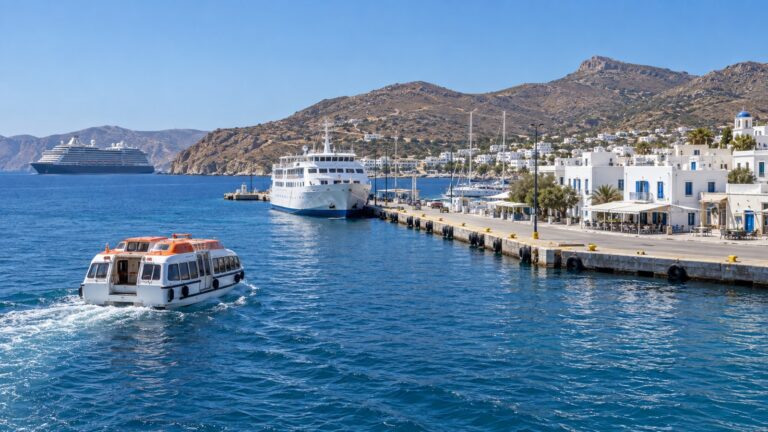
- Dock or tender: Many cruise calls use tenders, while some suitably sized vessels may berth, so follow the ship’s instructions for the specific day.
- Into town: The old center begins beside the harbor and does not require a shuttle.
- Signature walk: Pair the historic lanes with Vesterstrand and its colorful private beach huts.
- Currency and language: Denmark uses the Danish krone, and Danish is the local language, with English widely understood in visitor settings.
- Getting farther: Island buses, bicycles, and limited taxis can connect Ærøskøbing with Marstal, Søby, and rural Ærø.
- Weather risk: Wind and sea conditions can change tender operations, so keep the final return window generous.
- Best planning rule: Save the harbor area for the end of the day and never rely on the final possible bus to reach the last tender.
Arrival and tender logistics
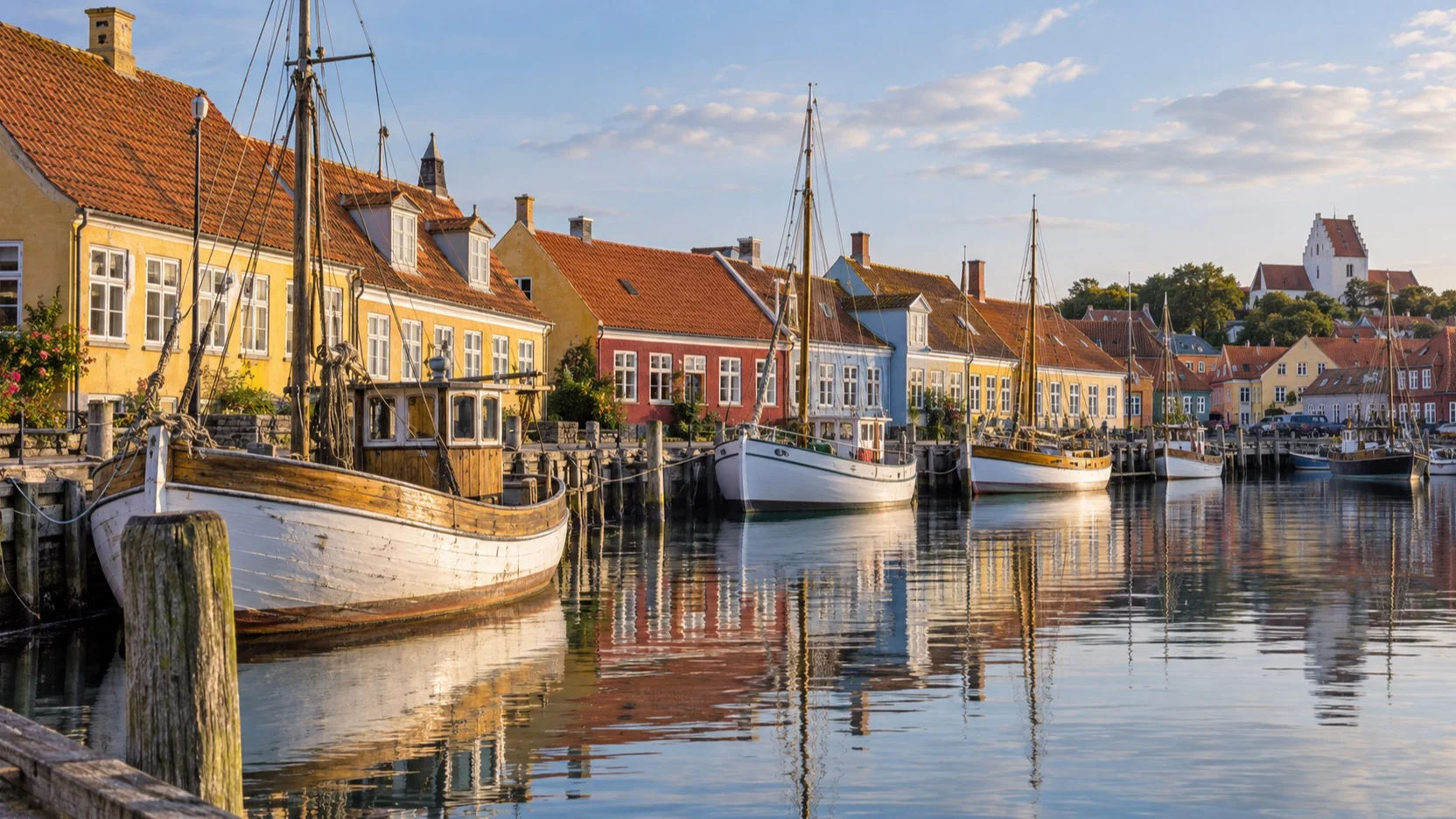
Ærøskøbing does not greet cruise passengers with a large terminal complex. The small harbor is part ferry port, part marina, part working waterfront, and the town begins almost immediately beyond it.
Your ship’s daily program should identify whether you are tendering or coming alongside. It should also give the landing point, final tender time, accessibility arrangements, and any priority-ticket process used for going ashore.
If tenders are operating, wind matters more than the town’s calm appearance suggests. Conditions beside the quay may feel manageable while the transfer between ship and boat is becoming less comfortable farther out.
Go ashore with the last return time written down or photographed. I would aim to be back in the harbor area well before the final boat, particularly when the forecast is unsettled or the ship has warned about changing conditions.
My guide to what a tender port is explains the boarding process if this is your first small-boat transfer. The main practical point is that the tender ride itself and the queue on the pier both consume time.
The harbor has a relaxed scale, but it is still an active transport space. Watch for bicycles, ferry vehicles, mooring lines, and working areas rather than treating every paved surface as a pedestrian promenade.
If your ship berths
A berth removes the boat transfer but not the need to confirm the gangway and final all-aboard time. Smaller vessels can create a wonderfully direct arrival, with the first old-town streets only a short walk away.
Gangway slope and pier access may change with water level and vessel setup. Travelers with reduced mobility should ask the ship about the actual arrangement rather than assuming a docked call is automatically step-free.
The old town is the main event
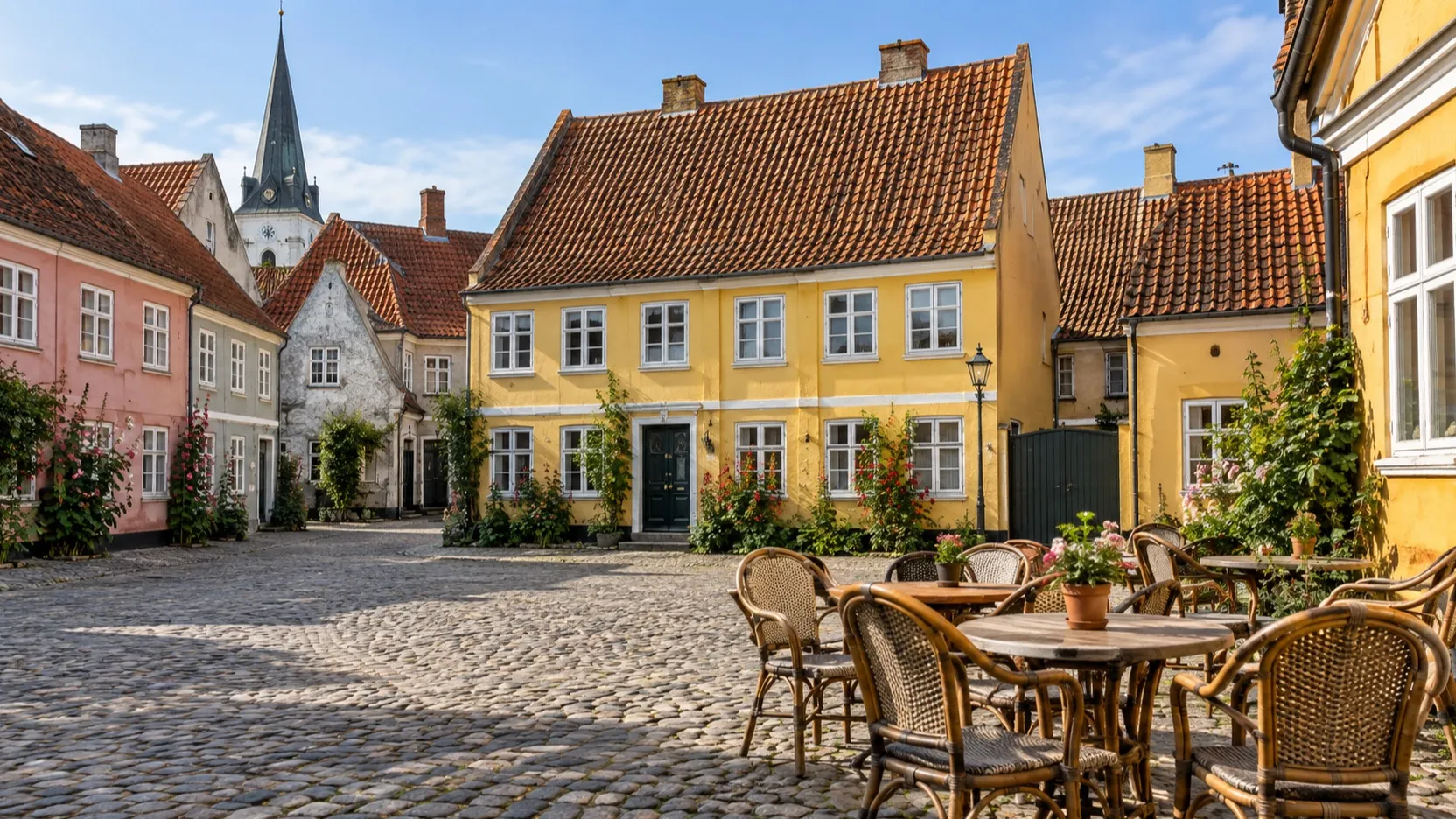
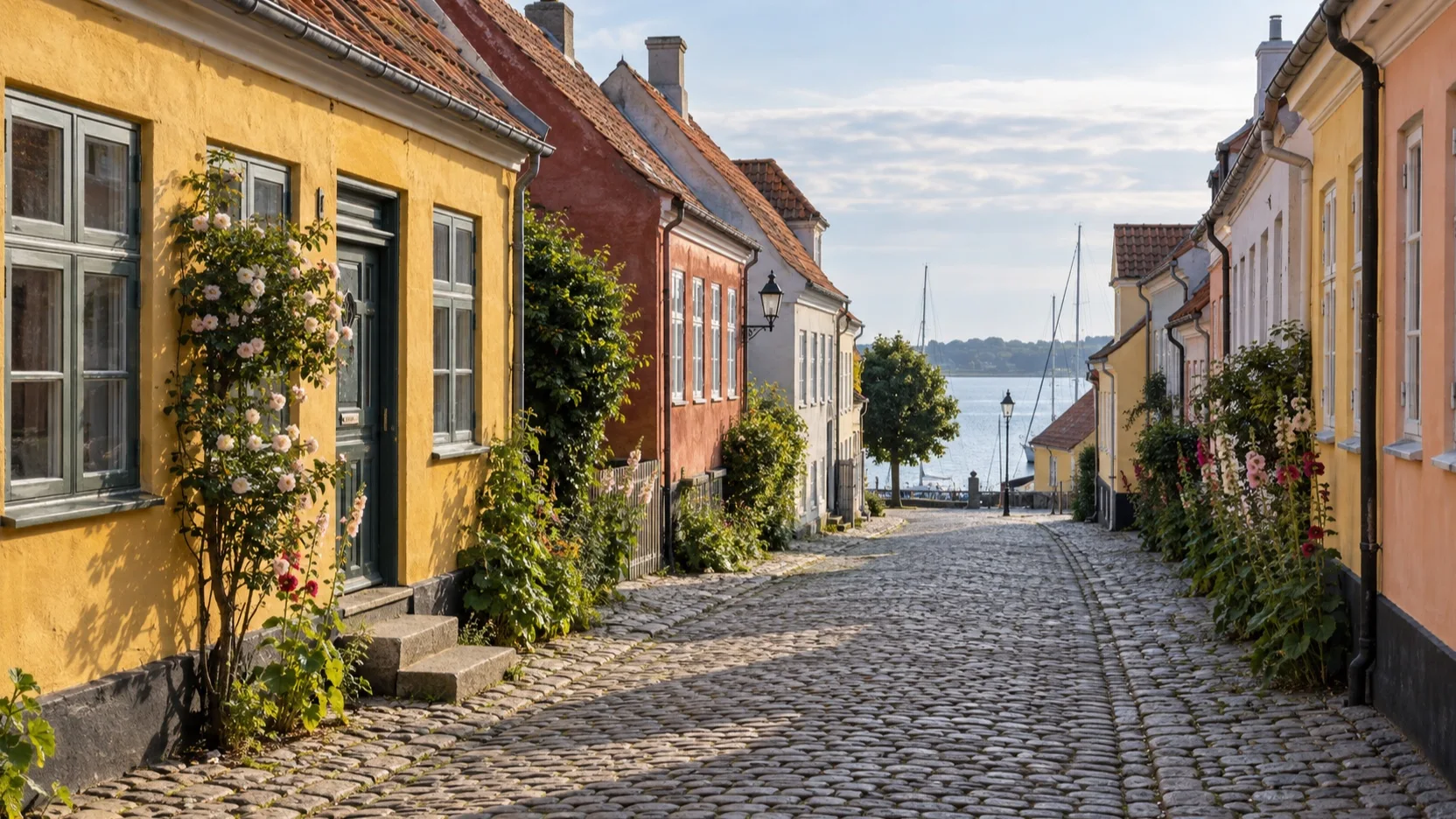
Ærøskøbing’s historic center is a web of short lanes, modest houses, courtyards, and painted doors. Its beauty comes from the whole streetscape, so the most rewarding activity is simply paying attention.
Start around the harbor and move toward the town square, then drift along Brogade and the smaller side streets. You cannot get seriously lost in the center, which makes this an ideal place to put away the checklist for a while.
The architecture spans several periods, but many buildings share a low, intimate scale that survived because the town never expanded into a large industrial center. Official VisitDenmark information on Ærøskøbing emphasizes the preserved townscape and its long history.
Look for half-timbering, carefully painted plaster, old shop signs, small-paned windows, and roses or hollyhocks in season. The details reward slow walking far more than a straight march from one named sight to another.
These are homes and working businesses, not a film set. Keep doorways clear, avoid leaning on private windows, and take photographs from public streets without turning someone’s front step into a portrait studio.
The cobbles look wonderful after rain and can also become slippery. Shoes with grip are much more useful than anything chosen mainly for a cruise-ship dinner.
Ærøskøbing Church
The church provides a quiet contrast to the colorful streets. Opening access can vary around services and local events, so enter only when invited by posted hours and keep voices low.
Even a short exterior pause helps place the town’s civic and religious center. If the doors are closed, move on without letting one unavailable interior reshape the day.
The town square and cafés
The central square is a natural place to reset your bearings, check the clock, and decide whether to continue inland or turn toward the beach. Small cafés and shops make it easy to stop, but opening hours can be seasonal.
I would not reserve the entire morning around one restaurant unless it is truly important to you. On a short cruise call, flexibility is worth more than chasing a specific table.
Vesterstrand and the beach huts
Vesterstrand is the obvious companion to the old town. A straightforward walk west from the harbor leads to a gentle shoreline and rows of brightly painted wooden bathing huts.
The huts are one of Ærø’s most recognizable sights, and official Visit Ærø beach-hut information explains their local tradition. They are privately owned, so admire them from public paths and do not use steps, decks, or furniture without permission.
Go early if you want quieter photographs and soft light. Later in the day, the beach can still feel peaceful, but fellow visitors naturally gather around the most colorful rows.
The walk is more exposed than the old lanes, and wind off the water can make a mild day feel cool. Carry a light layer even when the harbor looks sunny.
Swimming may tempt confident visitors in warm weather, yet a cruise call is not the moment to underestimate cold water or changing conditions. Use designated access, follow local signs, and keep enough dry clothing for the tender ride back.
Vesterstrand and the old town form the best short itinerary because they point in the same general direction and require no transport. If you have only a few hours, this pairing gives you the island’s clearest visual identity with minimal risk.
Small museums with real personality
The bottle-ship collection
Flaske-Peters Samling is the wonderfully specific attraction that suits Ærøskøbing perfectly. The collection preserves ships built in bottles and other models associated with Peter Jacobsen, known as Bottle Peter.
The official Ærø Museum page for the bottle-ship museum is the right place to check current opening days. Small island museums may have seasonal or limited hours, so never build the entire port call around an unverified listing.
The appeal is in the patience and maritime imagination behind the models. Even travelers who normally skip specialist collections may find this one compact enough to be charming rather than exhausting.
Ærø Museum
The local museum adds context to the island’s domestic, maritime, and social history. Its exhibits help explain why Ærøskøbing looks preserved rather than merely decorative.
Check which museum locations are open during your visit because institutions on small islands often operate across several sites. A closed door is easy to absorb when the surrounding streets are already the main attraction.
Maritime history beyond town
Ærø’s seafaring story becomes even more prominent in Marstal, where the harbor and maritime museum focus on generations of island sailors. It is a worthwhile extension for a long call, but it is not essential to understanding Ærøskøbing itself.
If your interests lean strongly toward ships, Marstal may deserve the middle of the day. If you came for storybook streets and beach huts, stay local and enjoy the slower pace.
Going farther across Ærø
The island is small enough to tempt ambitious plans and large enough for transport delays to matter. Before leaving Ærøskøbing, check the live bus timetable, travel time in both directions, and the final service you are genuinely willing to use.
Municipal bus fares and operating patterns can change, so use current official information rather than an old claim that every ride is always free. Save or screenshot the return schedule in case mobile service is uneven.
Taxis may be available, but supply is limited compared with a mainland city. A taxi is a useful planned transfer and a weak emergency strategy if several cruise passengers need one at once.
Marstal
Marstal offers a saltier counterpoint to Ærøskøbing, with a larger maritime identity, harbor activity, and access to the long shore at Eriks Hale. It is the best second town for travelers who want more than a single preserved center.
The maritime museum can occupy serious enthusiasts for longer than expected. Decide in advance whether the museum or the outdoor harbor is the priority, then protect the bus back to Ærøskøbing.
A one-way bus delay should not be able to cost you the ship. Choose a return that leaves another workable service behind it whenever the timetable allows.
Søby and Skjoldnæs
The western end of Ærø has a quieter landscape, and Skjoldnæs lighthouse is an attractive goal for a private tour, bicycle trip, or carefully planned island day. It is too far from Ærøskøbing for casual improvisation on a short call.
Opening access to a lighthouse tower can be seasonal or weather-dependent. The headland and coastal landscape should be enough to justify the trip even if the interior is unavailable.
Rural villages and roadside stops
Between the island’s main towns, farms, hedges, churches, and sea views create a gentle landscape rather than one dramatic scenic reveal. A private guide can connect these places without making you decode every bus.
Farm stands and small shops may not share city opening hours. Carry a payment card, a little Danish currency if you prefer, and the willingness to move on when something is closed.
Cycling the island
Ærø is naturally appealing to cyclists because distances are approachable and the landscape changes between coast, fields, villages, and small harbors. The roads are not a closed bike trail, so traffic awareness and route judgment still matter.
Rent from an established operator and ask for a lock, helmet, repair support, route map, and realistic assessment of wind. An electric bicycle can make headwinds and rolling terrain easier, but it does not create extra tender time.
Choose a loop that returns the bicycle to the same place unless the rental company explicitly supports another arrangement. A one-way ride dependent on bicycle space aboard a bus is too fragile for most cruise calls.
Check the brakes, tire pressure, saddle height, battery level, and display before leaving town. Photograph the rental contact details and save enough time to return the bike, settle any issue, and walk back to the harbor.
The best cruise-day route is often shorter than the distance a fit rider could technically cover. Frequent photo stops, weather, wrong turns, and café time all reduce average speed.
If wind rises or rain makes the road unpleasant, turn around early. Ærøskøbing’s lanes and museums provide an excellent fallback, which removes any need to prove something on a bicycle.
Three realistic port-day plans
A relaxed first visit
Walk to Vesterstrand soon after landing, photograph the huts from public areas, and return through the old town. Add the church or bottle-ship collection if it is open, then have lunch near the harbor.
This plan keeps every major decision within walking distance and leaves the easiest possible finish. It is the one I would recommend to most first-time visitors.
A culture-focused day
Begin with a slow architectural walk, then visit the local museum and bottle-ship collection according to current hours. Use the remaining time for the church, town square, and a café rather than forcing a bus journey.
The result is more coherent than a rushed island circuit. You leave understanding how the town developed, not just with photographs of painted walls.
A longer island day
Travel to Marstal early by confirmed bus, private guide, or bicycle route, then return to Ærøskøbing with substantial margin. Save the old town and harbor for the final part of the day so any shortened schedule still ends near the ship.
I would only add Søby or Skjoldnæs with a long call and dependable private transport. Two distant corners plus a tender return is more logistics than leisure.
Food, shopping, and local etiquette
Ærøskøbing suits an unhurried lunch, especially when the weather makes a warm indoor table appealing. Menus may feature seafood and Danish staples, but seasonal supply and opening days vary.
Tell the server if you are working around a tender deadline. A relaxed island kitchen is not the place to order several courses with twenty minutes to spare.
Shops tend toward crafts, design, gifts, food, and practical island needs rather than duty-free cruise retail. Buy something because it reflects Ærø, not because you feel obliged to fill a bag.
Cards are widely useful in Denmark, but a small amount of Danish currency can help at a tiny stand or event. Do not count on foreign cash being accepted.
Cyclists, residents, delivery vehicles, and visitors share narrow streets. Walk predictably, keep groups from blocking the lane, and step aside before studying a map.
Danish island life can feel informal, but privacy still matters. Keep cameras out of open residential windows and treat beach huts as someone else’s property.
Accessibility and comfort
The harbor and central town are compact, which helps travelers who cannot manage long distances. The challenge is the historic surface, because cobbles, thresholds, narrow doorways, and uneven edges can make a short route tiring.
A wheelchair or scooter user should ask the cruise line about tender boarding, lifting policies, sea-state limits, and pier access for the specific call. Tender accessibility can change even when the destination itself is manageable.
Historic museums and shops may have steps or tight interiors. Contact the venue directly if an exhibit is a priority, and build a satisfying outdoor route in case access is limited.
Island buses require confirmation for ramps, mobility-device space, and the exact stop environment. A low-floor vehicle does not guarantee that every rural stop has a level platform.
Vesterstrand is reachable by a generally manageable town walk for many visitors, but beach surfaces and hut paths can be soft or uneven. The waterfront and old-town edge still provide excellent views without committing to sand.
For anyone with limited stamina, alternate cobbled streets with benches, cafés, and smoother harbor pavement. The goal is to enjoy the scale of the town, not cover every lane.
Weather and what to wear
Ærø’s Baltic setting brings changeable wind, sun, cloud, and showers. The old streets can feel sheltered while Vesterstrand or the tender landing feels considerably cooler.
Wear layers and carry a light waterproof shell with a hood. An umbrella can be awkward in wind and on a crowded tender.
Shoes should have cushioning and grip for cobbles rather than polished soles. After rain, slow down on stone and allow extra time for anyone using a cane or pushing a stroller.
Bright sun can reflect strongly from water and pale buildings, so sunglasses and sunscreen still belong in the bag. A cloudy start does not predict the whole day.
If tender service is paused or adjusted, follow the ship’s announcements immediately. Do not assume the schedule will recover exactly as originally printed.
Common mistakes I would avoid
The first is leaving the old town too quickly. Ærøskøbing itself is the attraction, and a bus ride should add to the day rather than replace the reason you came.
The second is relying on the final bus back from Marstal or Søby. Leave at least one practical backup whenever the timetable permits.
The third is treating private beach huts as props. Photograph them respectfully from public ground and keep hands, bags, and picnics off someone else’s space.
The fourth is underestimating cobbles and wind. Comfortable shoes and a proper layer improve this port more than an elaborate excursion does.
The fifth is returning at the printed last-tender minute. Wind can change boarding conditions, and the harbor queue itself needs time.
Finally, resist filling every pause. Ærøskøbing’s magic lives in painted doors, crooked rooflines, and the quiet between named sights.
Quick answers
Will my ship dock in Ærøskøbing?
It depends on vessel size and the day’s operating plan. Many cruise calls tender, while some smaller ships may berth, so follow the ship’s instructions.
Do I need a shuttle into town?
No in the usual harbor arrival, because the historic center begins beside the waterfront. A shuttle is only relevant for a specific ship arrangement or a farther island excursion.
What should I see first?
Walk to Vesterstrand and its colorful beach huts, then return through the old lanes. That pairing captures the town’s coastal and architectural character without transport risk.
Can I visit Marstal on a cruise day?
Yes with enough time and a confirmed bus, bicycle, or private transfer plan. Return early enough that a missed connection does not threaten the tender.
Is Ærøskøbing accessible?
The compact harbor and town help, but cobbles, historic thresholds, beach surfaces, and tender boarding can create barriers. Confirm the exact ship and venue arrangements for the traveler’s needs.
What currency should I use?
Use Danish kroner or a payment card accepted by the merchant. Denmark does not use the euro as its domestic currency.
What if it rains?
Keep the town walk, church, museums, shops, and cafés as flexible pieces. A waterproof layer lets you move between them without sacrificing the whole day.
The last word
Ærøskøbing is at its best when you leave room for it to be small. Walk to the huts, wander the lanes, choose one thoughtful stop, and let the harbor clock protect the journey back.
For a broader Danish itinerary, compare this gentle call with my guides to Copenhagen, Aalborg, and Aarhus. My wider European cruise ports guide helps place Ærø’s quiet scale among the region’s larger gateways.
How this guide was researched: This guide was independently researched using official Danish tourism, local museum, municipal transport, harbor, and attraction sources. Logistics and time-sensitive details were reviewed in September 2026; see our Editorial Policy.