Can You Visit Pompeii Independently From Naples?
Yes, you can visit Pompeii independently from Naples, and it is one of the more practical world-famous ruins to reach from a Mediterranean cruise port. The day succeeds when you match the right train to the right entrance, reserve enough time for the site, and protect the return to your ship.
Pompeii is enormous, exposed, and physically demanding, so independence should not mean trying to see everything. I would build the day around one focused archaeological route and treat any second destination as optional.
Quick Facts
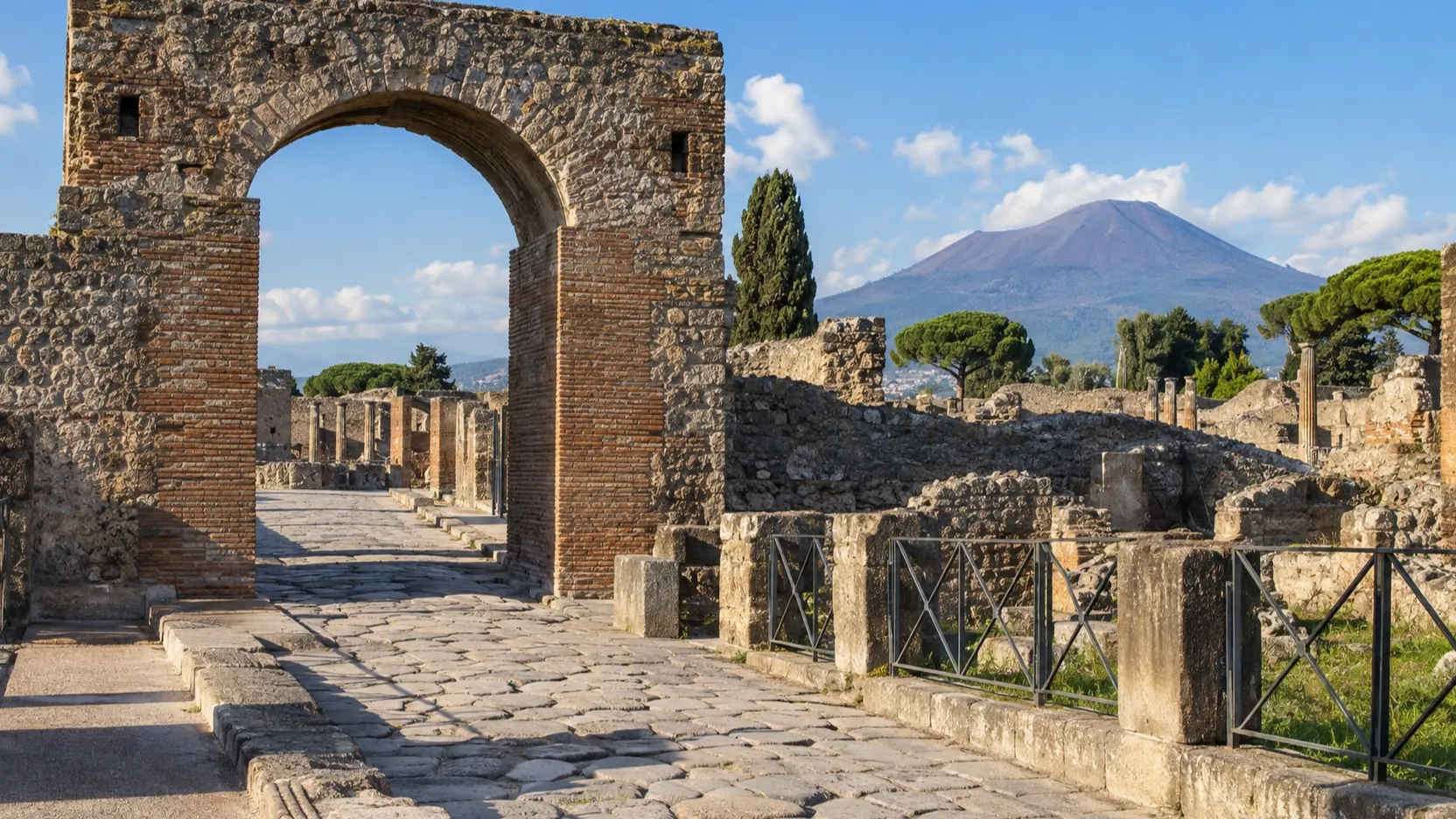
- Independent verdict: Realistic for travelers comfortable with local transportation and substantial uneven walking.
- Most direct rail approach: EAV Circumvesuviana service toward Pompei Scavi Villa dei Misteri, near the Porta Marina side of the park.
- Alternative rail approach: Trenitalia service to Pompei in the modern town, which requires a different walk and entrance plan.
- Best use of time: Several hours inside Pompeii with a short list of priorities.
- Best reason to book a tour: Expert interpretation, simpler transportation, mobility support, or a carefully managed combination day.
- Major challenges: Heat, sun, crowds, rough ancient paving, station confusion, and return timing.
- Ticket rule: Use the official archaeological park and verify current entrance, time-slot, and identification requirements.
- Return rule: Work backward from all aboard and keep a backup train or road option.
Start with your Naples arrival
Many cruise passengers begin at the central Naples waterfront near the Stazione Marittima, but the assigned berth and exit route can vary. Confirm the gangway, terminal, local time, and all-aboard time before committing to a train or timed admission.
The port is not the train station. You still need to reach an EAV departure point such as Napoli Porta Nolana or the Piazza Garibaldi area, or reach Napoli Centrale for national rail service.
Walking, the metro, a taxi, or a combination may work depending on mobility, luggage rules, construction, and current traffic. Build this city transfer into both directions instead of counting only the minutes printed beside the train.
Take a photo of the ship’s port information and save the port-agent number offline. The terminal name matters if you need to explain your return destination to a driver.
Choose transportation before buying admission
The word Pompeii appears in several station and stop names, and they do not put you at the same gate. Decide which rail system you will use, identify the station at each end, and only then choose an archaeological-park entrance.
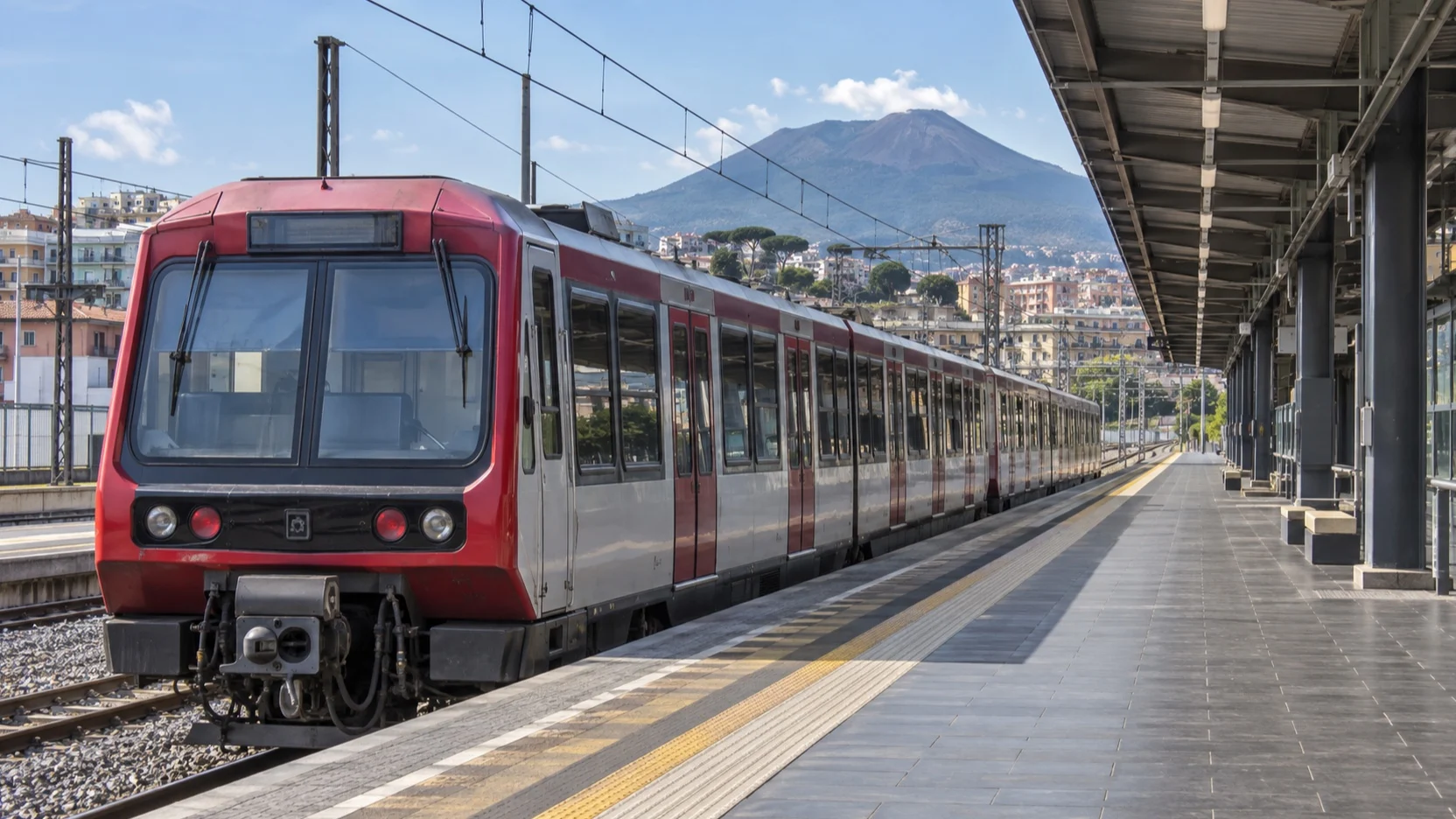
EAV Circumvesuviana
The local EAV route commonly used by visitors runs from Naples toward Sorrento and serves Pompei Scavi Villa dei Misteri. This station is close to the Porta Marina side of the archaeological park, making it the most intuitive rail approach for many first-time visitors.
Check current service, strikes, planned work, and timetable notices on the official EAV site. Local trains can be crowded, and platform information may change, so arrive with time to read the departure board instead of chasing the last possible service.
Validate or activate the correct ticket as instructed for the product you buy. Keep the ticket available through the journey and use normal city awareness in busy stations and trains.
Trenitalia regional service
Trenitalia can serve Pompei station in the modern town, which is not Pompei Scavi Villa dei Misteri. This route may suit travelers entering near Piazza Anfiteatro, but it requires a different walk and should not be judged by an EAV guide’s directions.
Use the official Trenitalia journey planner for current departures, platform information, and ticket conditions. Search the complete station names and verify whether a proposed journey is direct or requires a change.
Regional ticket rules can depend on whether you hold a paper or digital ticket. Follow the operator’s current validation or check-in instructions rather than assuming the system works like an intercity train.
Taxi or private transfer
A taxi or private transfer costs more but removes the city-to-station transfer and reduces navigation. It can be good value for a family or small group, especially when door-to-door simplicity matters more than the lowest fare.
Agree on the complete price, pickup point, waiting arrangement, and return time before leaving. Traffic can vary, so a vehicle is more comfortable but does not justify a smaller ship buffer.
Use the official Pompeii information
The Pompeii Archaeological Park publishes current hours, ticket information, entrances, maps, visitor rules, accessibility guidance, and notices. It should be your final source before travel because openings, routes, houses, and conservation restrictions can change.
Buy through the official route linked by the park and check the ticket’s date, time, entrance conditions, and refund terms. Be wary of reseller pages whose search placement or polished design makes them look like the monument’s official site.
Download the current official map before leaving the ship and keep an offline copy. Mobile service and battery life are poor things to depend on when you are already deep inside a large archaeological landscape.
Choose the entrance that matches your station
Porta Marina is the natural choice for many travelers arriving at Pompei Scavi Villa dei Misteri. Piazza Anfiteatro may make more sense when arriving through the modern town or when your desired route begins in the eastern part of the site.
Piazza Esedra can also appear in current visitor information, but gate operations and ticket services should be checked for your date. Do not select an entrance simply because it is listed on an old map.
The correct entrance can save energy as well as time. Pompeii is not a flat museum where every route returns quickly to the lobby, and crossing the site after a navigation mistake is tiring in summer.
Plan a focused route inside Pompeii
Choose a few themes rather than a huge checklist. The Forum and civic center, streets and water systems, domestic houses, baths, theaters, food shops, gardens, and the amphitheater each tell a different part of the city’s story.
Begin with the structures that matter most to you and use whatever is open that day. Individual houses can close for conservation, staffing, or safety, so a route that depends on one room is fragile.
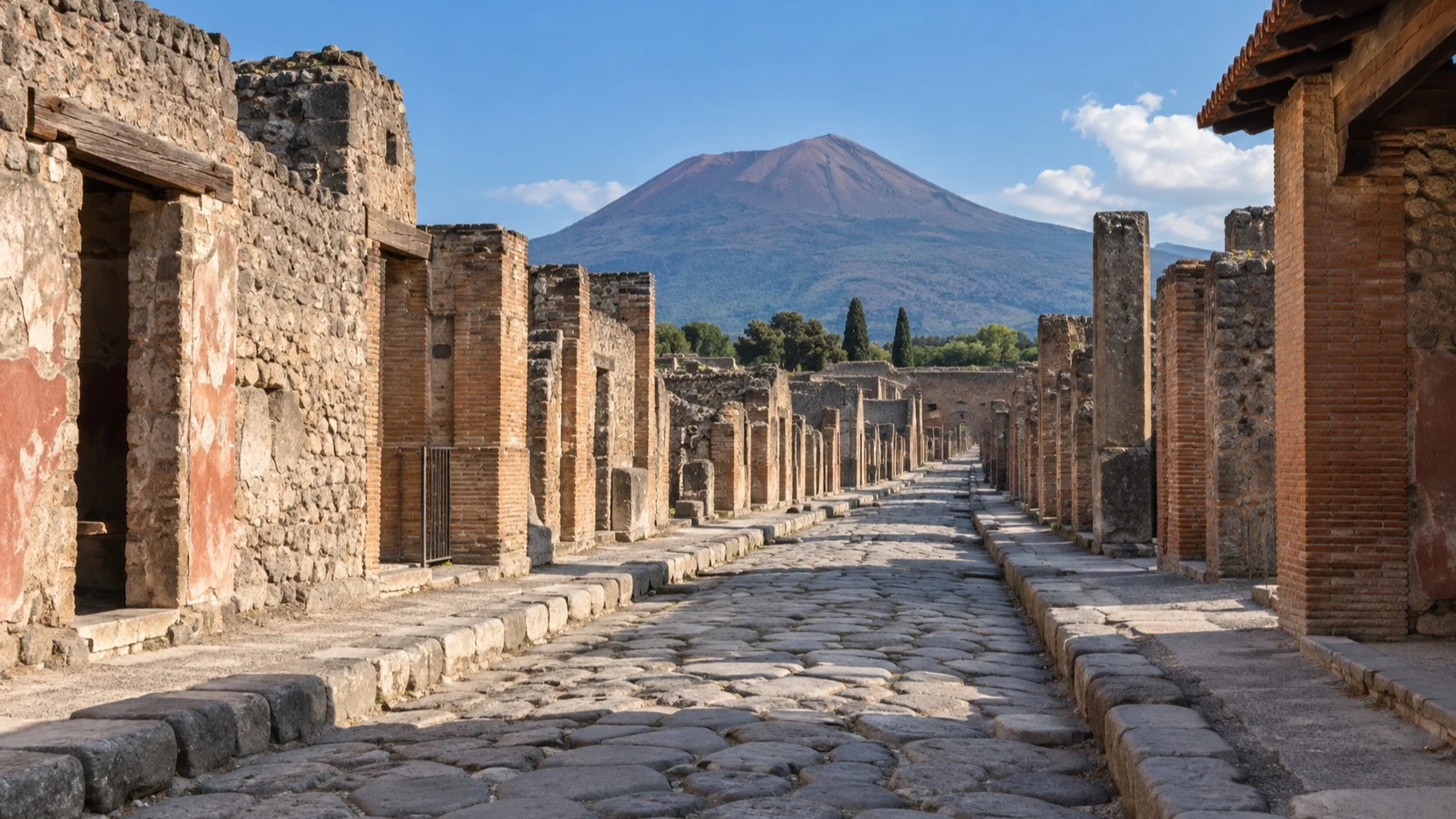
Several hours allows a meaningful visit, but even a full day would not reveal every excavated street. On a cruise call, stop while you still have energy for the station, train, Naples transfer, port security, and gangway.
If you enter at Porta Marina, the western civic core is a logical anchor. If you enter at Piazza Anfiteatro, use the amphitheater and eastern streets as the start rather than immediately marching across the entire park.
Why a guide can be worth it
Pompeii’s ruins are visually powerful, but the preserved stones do not explain themselves. A qualified guide can show how homes, commerce, religion, entertainment, water, status, and public life connected before the eruption.
You do not need a full transport excursion to get that value. Independent travelers can arrange an official or properly credentialed guide at the site, then handle the train and return on their own.
Confirm the meeting entrance, duration, language, group size, accessibility expectations, and what happens if your train is delayed. A lower-priced group tour is not a bargain if you miss it because the meeting instructions were vague.
Heat and terrain are the real physical test
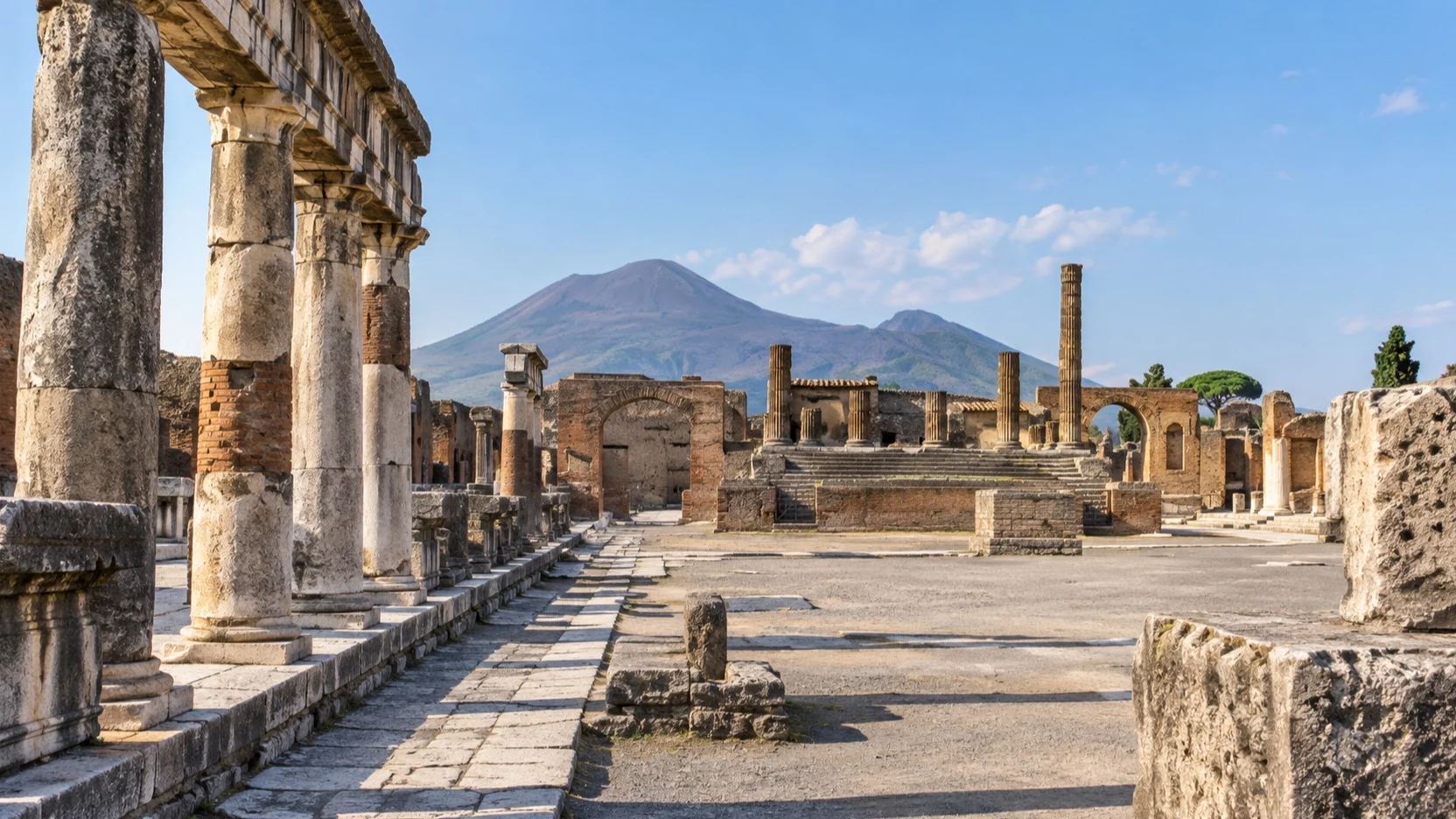
Ancient paving stones, curbs, steps, loose surfaces, and long exposed stretches make Pompeii demanding. Comfortable closed shoes matter more than trying to look polished for photographs.
Bring water, sun protection, and only what you can carry comfortably within current visitor rules. Check seasonal heat guidance, severe-weather notices, and any park restrictions on the morning of your visit.
Shade and seating are not available exactly when you may want them. Schedule deliberate pauses and do not wait for exhaustion before turning toward the exit.
Summer heat can also affect trains, crowds, and the walk back through Naples. A plan that works in mild spring weather may be too ambitious during a hot afternoon call.
Accessibility at Pompeii
The park’s official visitor information describes Pompeii for All as a dedicated accessible itinerary. That is valuable, but it does not mean every excavated building, street, or threshold is step-free.
Review the current accessible route and entrance before selecting the train station. Ask separately about the ship gangway, Naples transportation, station lifts, train boarding, vehicle transfers, restrooms, and any mobility-device constraints.
A private accessible transfer may solve more of the day than an ordinary group excursion. Get the vehicle type, ramp or lift details, equipment dimensions, walking distances, and assistance limits in writing.
Can you combine Pompeii with another stop?
You can combine destinations on paper, but every addition shortens the archaeological visit and weakens the return margin. I would add a second stop only on a long call after checking current transport in both directions.
Pompeii and Naples
Naples is the easiest pairing because you return through the city on the way to the ship. A pizza, church, market street, or waterfront walk can remain optional, which lets you drop it without harming the main plan.
Pompeii and Herculaneum
Herculaneum is smaller and preserves a different urban story, but two archaeological sites produce a long day of walking and interpretation. The combination suits serious history travelers with a comfortable port window, not anyone trying to collect famous names.
Pompeii and Mount Vesuvius
Vesuvius adds timed access, uphill transportation, exposed terrain, and another weather-sensitive component. A coordinated excursion is generally more sensible than assembling separate tickets during a cruise call.
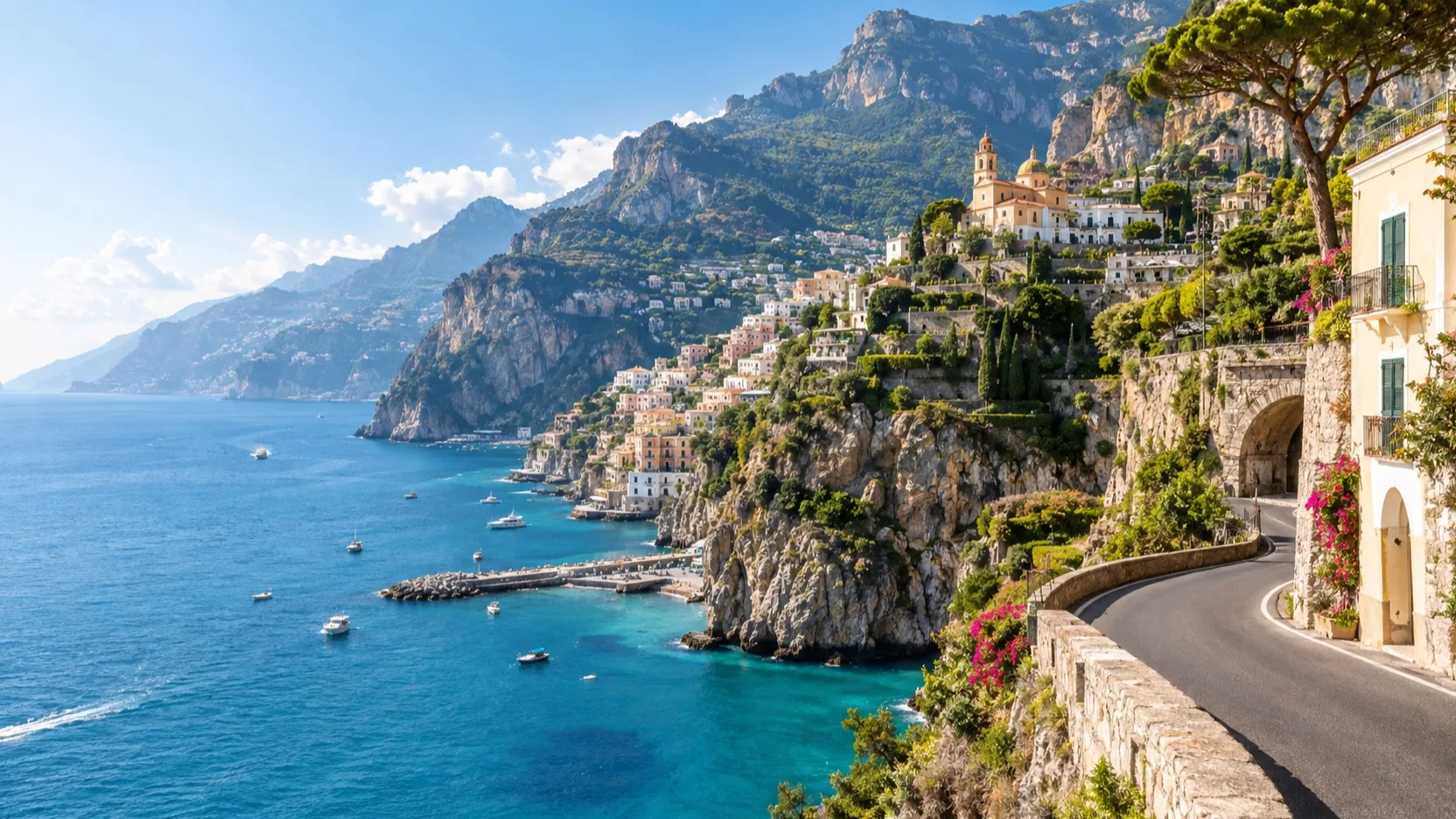
Pompeii and the Amalfi Coast
The Amalfi Coast is beautiful, but road traffic can be slow and unpredictable. Combining it with Pompeii often reduces both places to highlights and is not a plan I would attempt independently from a cruise ship.
If the coast is your priority, give it the day and save Pompeii for another visit. Trying to force both into one call may deliver more vehicle time than either destination deserves.
A realistic independent timeline
Leave the ship promptly without booking a train that requires a perfect disembarkation. Reach the selected Naples station, take the planned service, and know the next departure in case the first option fails.
At Pompeii, use the entrance matched to your station and begin with your highest priorities. Set an alarm for the time you must stop exploring, because ancient streets make it surprisingly easy to drift farther from the exit.
Return on a train that leaves at least one later realistic backup before your hard deadline. Once in Naples, move directly toward the port and treat any final city stop as a bonus.
What to carry
Bring official tickets, identification required by the booking, a downloaded map, water, sun protection, and a charged phone with an offline route. Keep the bag small and confirm the park’s current restrictions on luggage, food, glass, and other items.
Carry a payment backup and enough flexibility to buy a taxi if rail service changes. Store the ship, terminal, port-agent, and emergency contact details somewhere that does not require internet access.
Return safeguards
Use all aboard as the deadline, not the ship’s scheduled sailing time. Include the archaeological exit, station walk, wait, train, Naples transfer, port security, and gangway in the return calculation.
Check rail alerts again before leaving the site and know where taxis are legitimately available. If disruption appears, act early rather than watching several trains disappear while hoping the next one will be normal.
Keep the cruise line’s port-agent number ready, but do not treat it as permission to cut the margin. Independent travelers are responsible for reaching the ship on time.
Who should choose an excursion
Choose a guided transport excursion if local rail navigation causes anxiety, the call is short, or your group needs coordinated mobility support. It is also sensible when the itinerary includes Vesuvius, the coast, or another stop that multiplies the connections.
Compare site time, group size, guide credentials, audio equipment, walking distance, entrance handling, meals, and shopping stops. A longer tour description can conceal a shorter visit inside Pompeii.
Ask what the operator changes if the ship docks late or park access shifts. The quality of the backup plan is one of the clearest differences between a serious excursion and a pretty sales page.
My final recommendation
Visit independently if Pompeii is your main event, your port call is comfortable, and your group can handle the transportation and terrain. Pair EAV with Pompei Scavi Villa dei Misteri and the Porta Marina side, or deliberately pair Trenitalia’s Pompei station with the modern-town approach.
Reserve several hours, choose a focused route, and leave while you still have a later backup home. The winning day is not the one that sees the most ruins, but the one that gives Pompeii enough attention and returns to Naples without drama.
Book a tour when interpretation, transport simplicity, accessibility, or a complex combination is worth paying for. Either way, verify the official park and rail information close to your sailing because small operational changes can alter the entire route.
How this guide was researched
This guide was checked in September 2026 against current information from Pompeii Archaeological Park, EAV, and Trenitalia. Entrances, tickets, accessible routes, house openings, weather measures, trains, and port procedures can change, so confirm details for your sailing and read our Editorial Policy for sourcing and corrections.
More on this topic: browse every guide on shore excursions and DIY port days.