Dahabiya Nile Cruise or Standard Boat: Which Should You Book?
Choosing between a dahabiya and a standard Nile cruise boat is really choosing between two completely different travel rhythms. Both can show you temples, palm-lined banks, and the extraordinary corridor between Luxor and Aswan, but they deliver those experiences in very different ways.
A dahabiya is small, slow, and intimate, often sailing between Esna and Aswan with village walks and quiet island moorings. A standard motor ship carries many more guests, covers the classic route efficiently, and usually offers a broader range of facilities at a lower price per night.
The quick take
Book a dahabiya if you value quiet, a small group, flexible river stops, and long hours watching the landscape. Book a standard Nile boat if you want an efficient temple itinerary, more onboard amenities, easier availability, and a wider choice of prices.
Neither category is automatically luxurious or authentic. The operator, guide, cabin position, maintenance, food, excursion design, and actual guest count matter more than the label alone.
Dahabiya versus standard Nile boat quick facts
- Dahabiya size: Commonly a handful of cabins with a small guest group
- Standard boat size: Often several dozen cabins across multiple decks
- Typical dahabiya route: Esna to Aswan or the reverse
- Typical standard route: Luxor to Aswan or the reverse
- Dahabiya pace: Slower, with rural moorings and smaller stops
- Standard pace: Faster, with a concentrated schedule of major temples
- Propulsion reality: Dahabiyas use sails when conditions allow and may receive tug assistance
- Best for accessibility: Usually a carefully selected standard boat with an elevator, but details vary
- Cost pattern: Dahabiyas generally cost more per person for space, staffing, and small-group touring
- Most important comparison: Ask for the exact boat, cabin, itinerary, inclusions, and transfer plan in writing
What is a dahabiya?
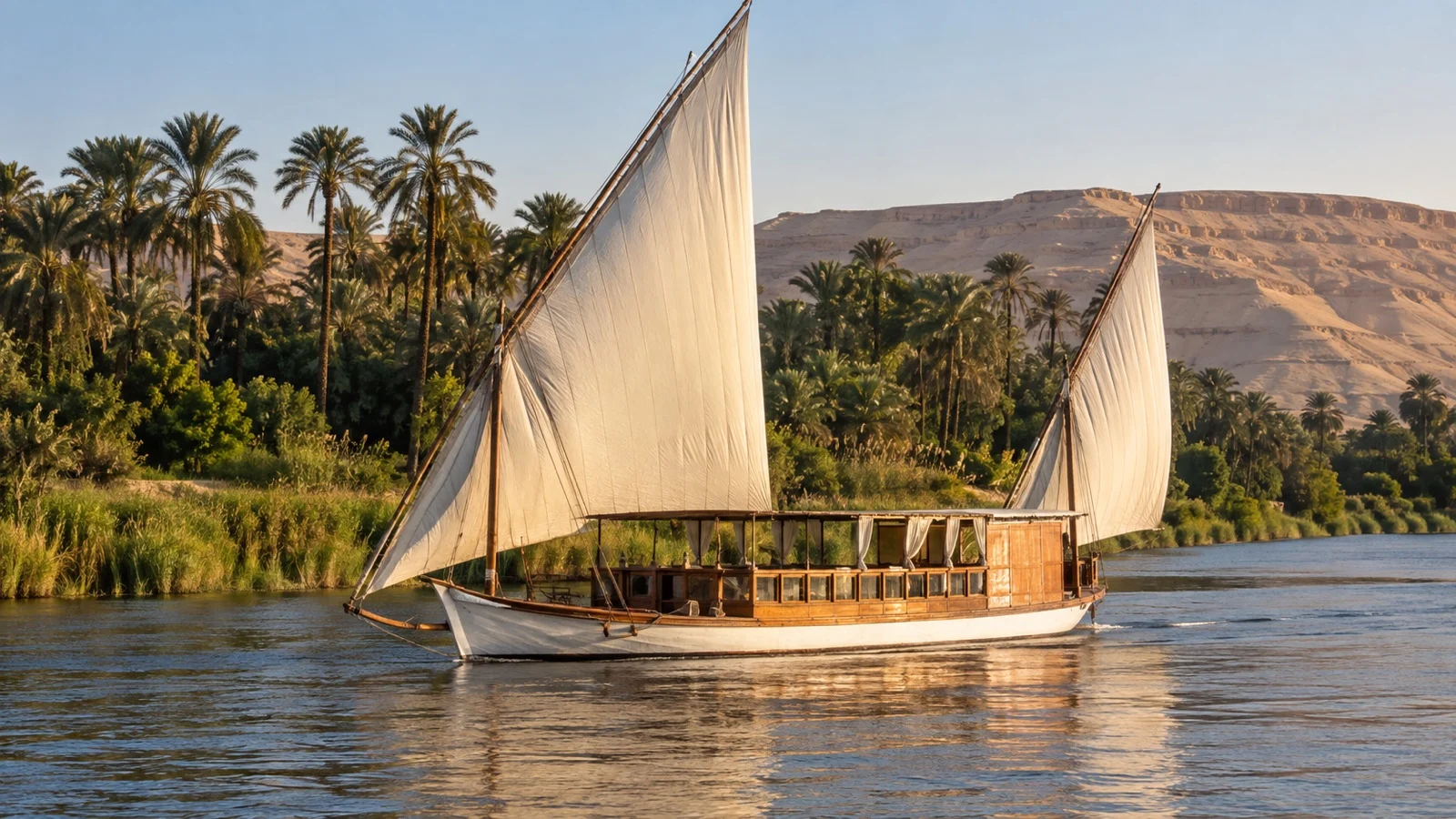
A dahabiya is a shallow-draft sailing vessel inspired by the elegant boats that carried travelers along the Nile before large motor cruisers dominated the route. Modern examples usually have two masts, a broad shaded deck, private cabins, a dining area, and a small crew.
Most carry far fewer guests than a conventional cruise ship. Depending on the vessel, you might share the trip with fewer than twenty travelers, although sizes and charter arrangements vary.
The sails are not a guarantee of silent wind-powered travel all day. Wind direction, river current, navigation rules, schedules, and narrow channels can require assistance from a tug or another powered craft.
That distinction matters because some marketing implies an entirely engine-free journey. Ask how often the vessel typically sails under canvas and whether the assisting tug remains alongside, ahead, or available only when needed.
Why many dahabiyas start at Esna
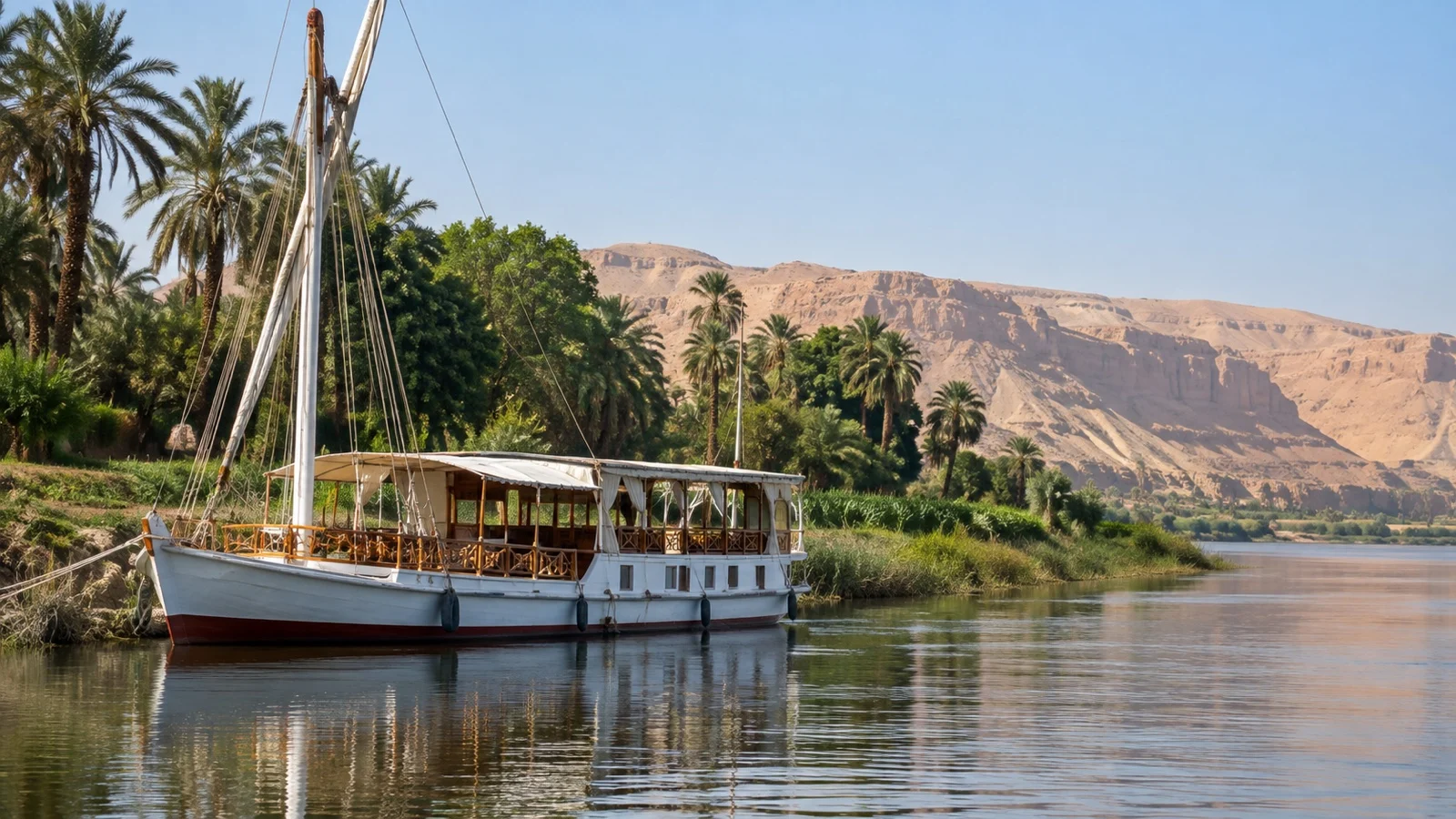
Esna sits south of Luxor and its lock can create delays for larger traffic. Many dahabiya programs transfer guests by road from Luxor to Esna, board below the lock, and devote the cruise itself to the quieter stretch toward Aswan.
This does not mean you lose Luxor’s temples. Operators often arrange Luxor hotel nights or land touring before embarkation, but you should verify whether those days are included in the quoted cruise price.
What is a standard Nile cruise boat?
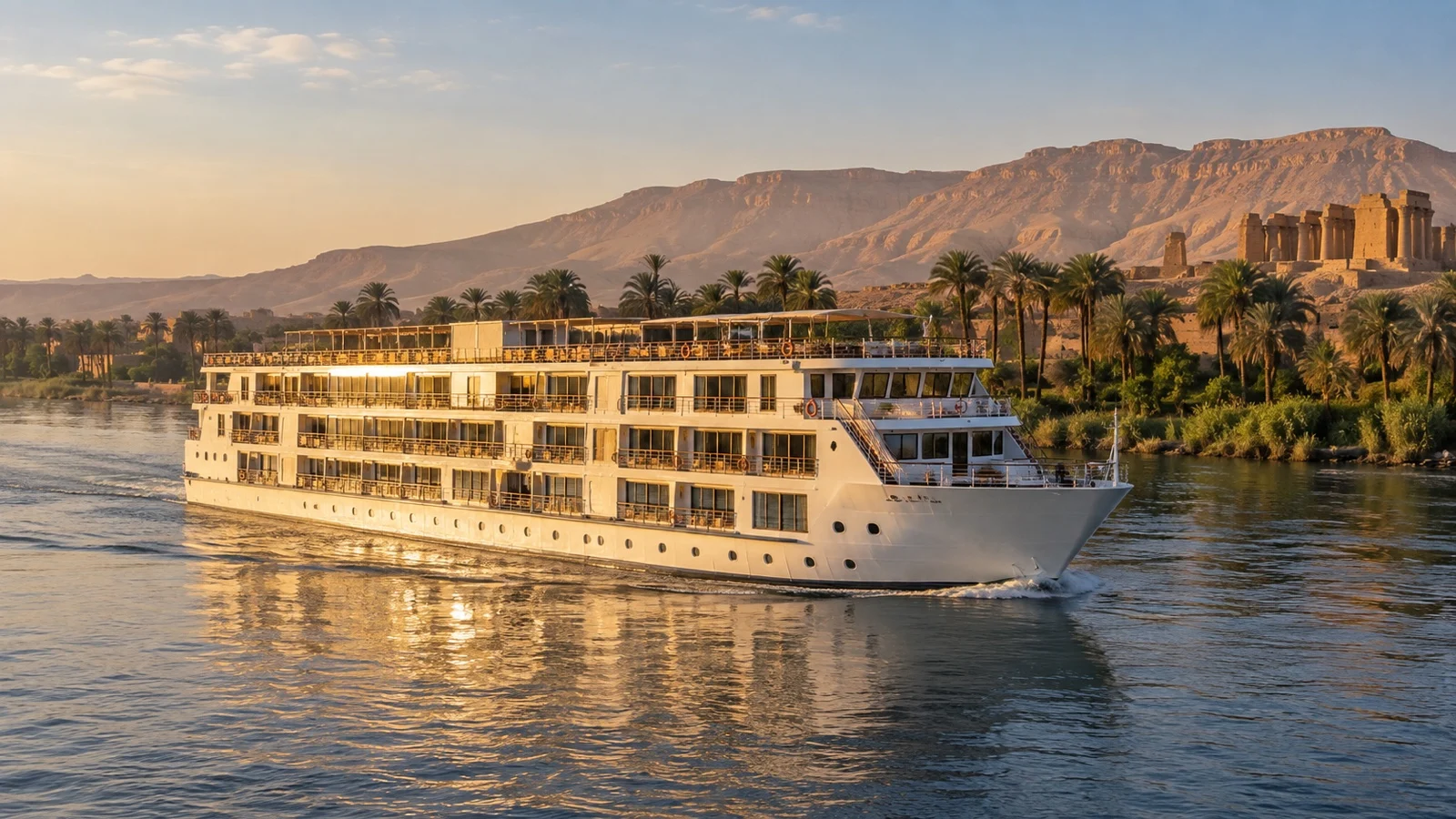
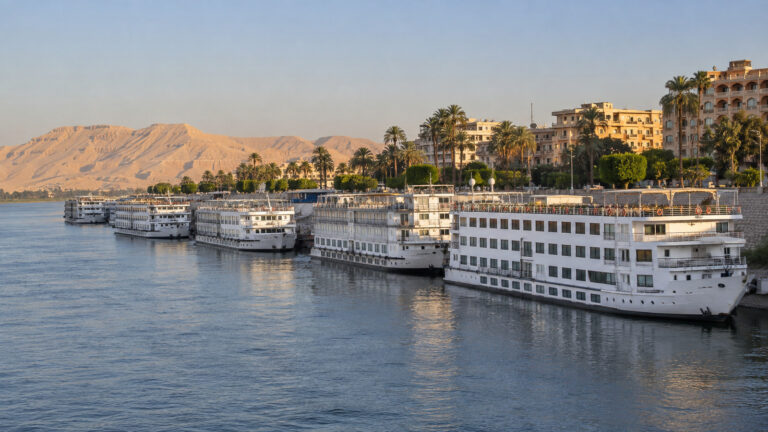
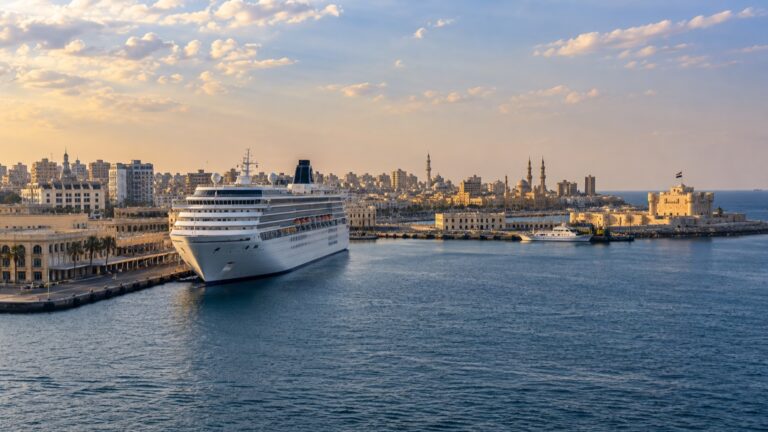
A standard Nile boat is a powered, multi-deck hotel vessel built to move efficiently between Luxor and Aswan. It commonly has several dozen cabins, a dining room, lounge, sun deck, small pool, reception desk, and scheduled shore excursions.
The category ranges from tired budget boats to polished high-end vessels. Star ratings and online photographs can be inconsistent, so recent reviews and the exact assigned ship matter.
Motor boats usually follow a familiar three-night or four-night pattern, with the direction determining which schedule is shorter. They can cover Luxor, Edfu, Kom Ombo, and Aswan in a tight sequence.
Efficiency is the main advantage. You see major sites with transfers and guiding coordinated for a larger group, then return to a familiar cabin rather than changing hotels.
The itinerary difference
A dahabiya itinerary tends to build around the river itself. Between the major temples, it may include islands, agricultural villages, quarries, small shrines, riverbank walks, or meals ashore.
A standard itinerary prioritizes the monuments that most travelers expect. Karnak, Luxor Temple, the West Bank, Edfu, Kom Ombo, Philae, and Aswan highlights can be fitted into a compact trip, although not every item appears on every package.
Both styles normally use vehicles for some sightseeing. Temples are not always beside the mooring, and sites on Luxor’s West Bank require road transfers.
Read the day-by-day schedule line by line. Phrases such as “time permitting,” “optional,” and “visit from Luxor” reveal what is truly included.
Edfu and Kom Ombo
The Temple of Horus at Edfu is one of the best-preserved ancient temples in Egypt. Large ships often arrive in waves, while a dahabiya may have more flexibility to time the visit around crowd patterns.
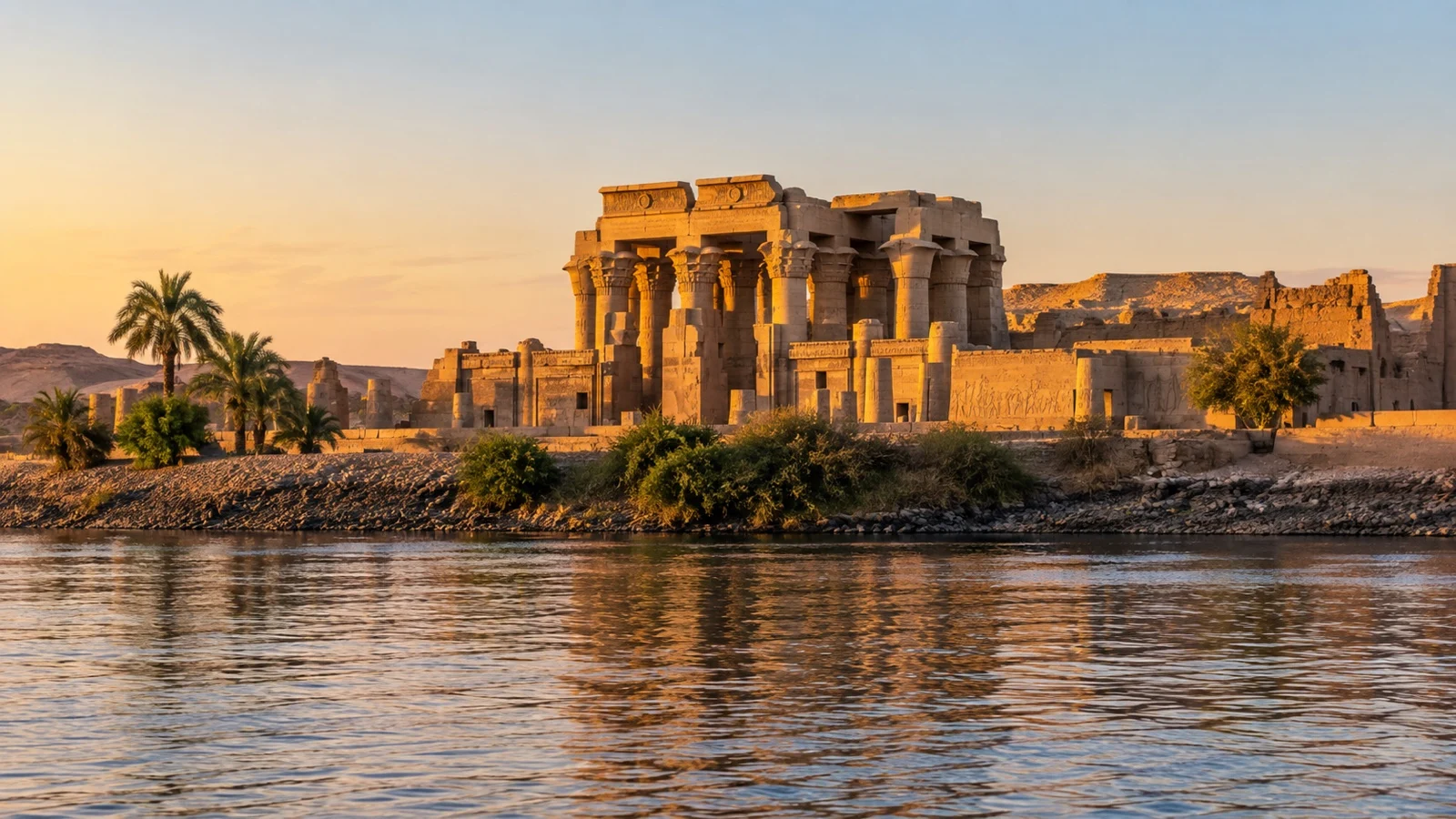
Kom Ombo stands dramatically beside the river and is dedicated to two divine triads associated with Sobek and Haroeris. Its riverside position makes it a natural stop for both vessel types.
Site hours, ticketing, and access routes are controlled by Egyptian authorities and can change. Your guide or operator should confirm the current plan rather than relying on an old printed itinerary.
Guest numbers and atmosphere
A dahabiya creates a small social world. You will likely dine with the same guests, share one guide, and spend long stretches together on deck.
That intimacy can be delightful when the group gels, but there is less anonymity if personalities clash. A private charter solves that issue at a much higher total price.
A standard boat gives you more room to move between social and private time. Larger lounges and sun decks provide choices, although popular areas can fill when everyone returns from an excursion.
Large tour groups also create waiting time. Boarding buses, distributing tickets, using restrooms, and moving through security all take longer with forty people than with twelve.
Cabins and sleep
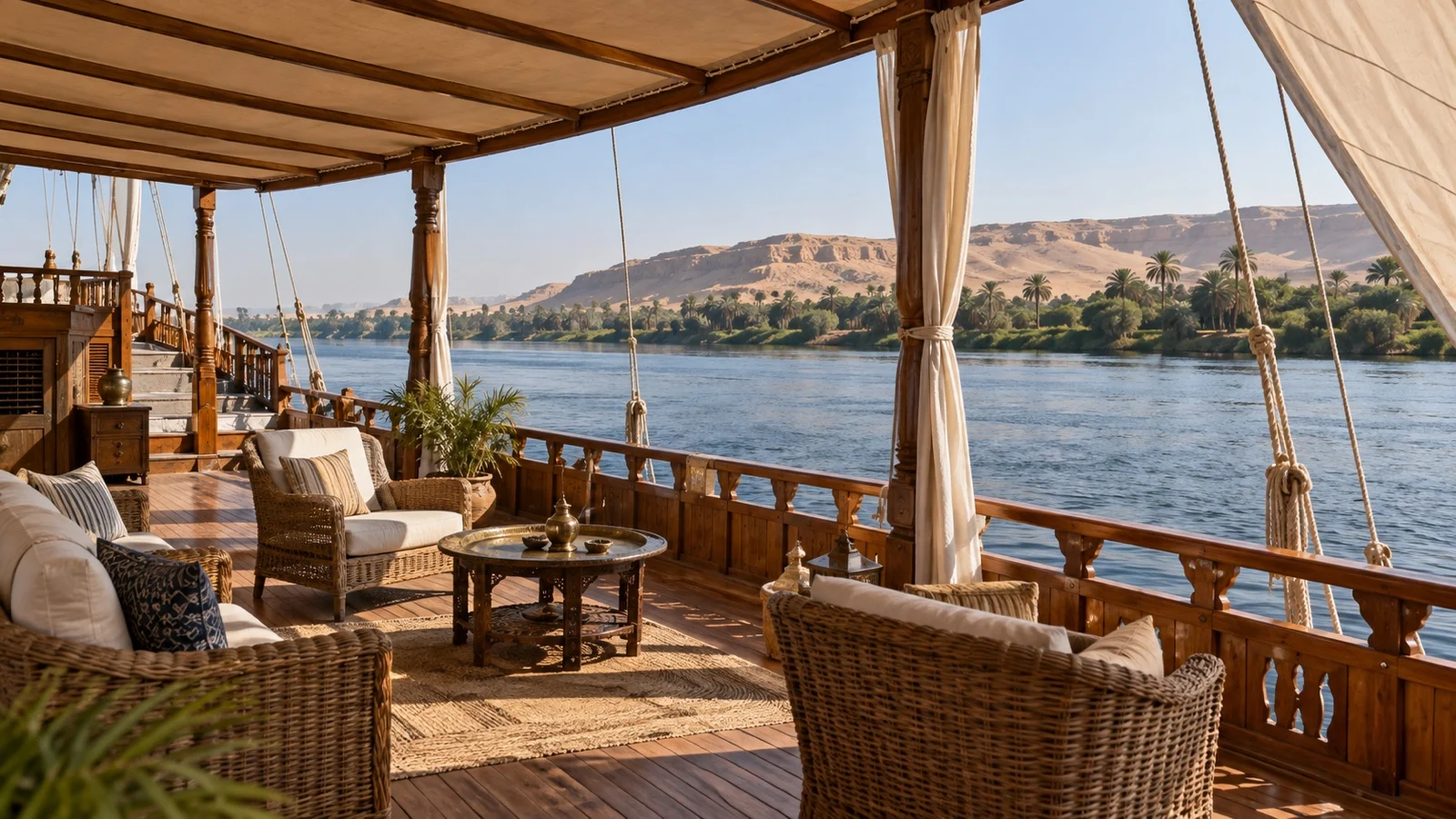
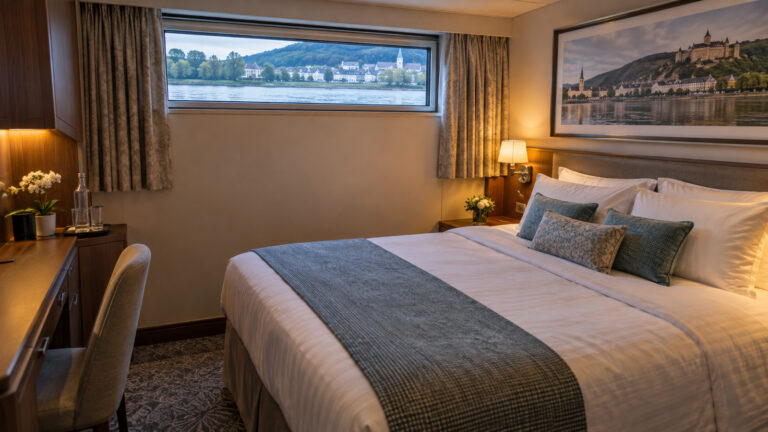
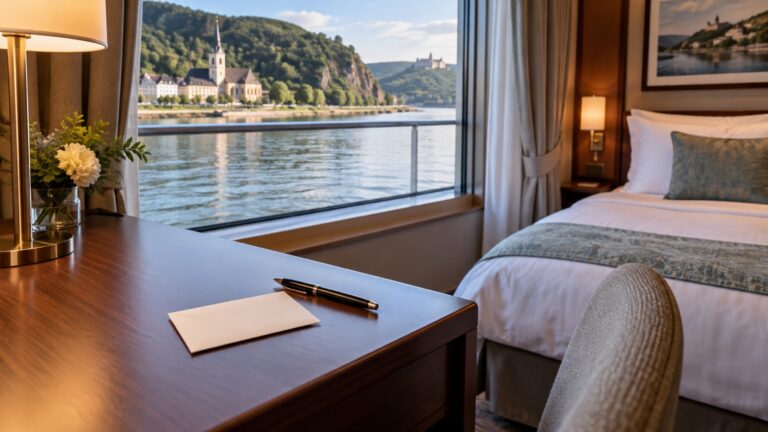
Dahabiya cabins are often individually finished and full of character, but dimensions vary. Some have large opening windows and generous bathrooms, while others are compact because the vessel’s shallow hull limits space.
Standard boats usually offer more predictable hotel-style cabins, yet the lowest deck can suffer from engine vibration, dock noise, or limited views. Cabins beneath the sun deck may hear chairs moving early in the morning.
On either vessel, ask for the exact cabin number and its location relative to engines, generators, kitchen, stairs, lounge, and crew areas. “Nile view” is not meaningful because almost every outside cabin faces the river.
Standard boats frequently moor side by side in Luxor and Aswan. Your window may face another ship at close range, and you may walk through several lobbies to reach shore.
Noise is not one simple comparison
A dahabiya avoids the main propulsion engine found on a large ship, but it still needs power for lights, refrigeration, pumps, and air conditioning. Generator placement and operating hours can affect quiet cabins.
A standard vessel makes more mechanical noise while underway and during docking. Modern high-end boats can be well insulated, while an older ship may transmit vibration throughout the lower decks.
Food and service
Dahabiya meals are usually prepared for a small group and served communally. Menus often emphasize Egyptian dishes, fresh bread, vegetables, grilled meats, soups, and desserts.
A good crew can adapt to dietary needs with advance notice, but a tiny galley cannot offer endless alternatives. Confirm allergies and restrictions before departure.
Standard ships commonly use buffets for breakfast, lunch, and dinner. The variety may be broader, although quality can dip when food sits out for a large group.
Service style also differs. Dahabiya crew members become familiar faces quickly, while larger ships offer more formal departments and a conventional hotel structure.
The scenery and sailing experience
The strongest reason to choose a dahabiya is the amount of time devoted to the Nile landscape. The low deck brings you close to reeds, farmers, fishing boats, villages, desert edges, and changing light.
Because the vessel moves slowly, the view feels like the main event rather than scenery between temples. Quiet island moorings can produce memorable evenings under the stars.
A standard boat sits higher above the water and moves with a clear schedule. The sun deck still provides beautiful views, but announcements, music, other ships, and port activity create a busier atmosphere.
If you love unstructured deck time, do not underestimate its value. If you become restless without facilities or programmed entertainment, the intimacy of a dahabiya may feel limiting.
Excursions and guiding
Dahabiya groups generally share one Egyptologist for the voyage. The small number makes it easier to ask questions and adjust pacing within the constraints of site operations.
Standard cruise packages may divide passengers by language or tour company. Group size and guide quality depend on the booking arrangement rather than the ship alone.
Some fares include all major visits, while others price the cabin and sell an excursion package separately. Entrance fees, guide gratuities, vehicle transfers, and optional experiences can materially change the final cost.
Ask whether guides accompany rural walks as well as temple visits. Small stops are most rewarding when someone can interpret local life respectfully instead of treating villages as scenery.
Cost and value
Dahabiyas generally cost more per person because fixed costs are shared among fewer guests. A private or nearly private experience, high staff ratio, slower schedule, and specialized provisioning all influence the rate.
Standard boats cover a huge price range and benefit from scale. Entry-level packages can be very affordable, while top suites on luxury ships may cost more than many dahabiya cabins.
Compare total trip cost rather than nightly rate. Include Luxor and Aswan hotels, airport transfers, temple tickets, excursions, drinks, Wi-Fi, laundry, gratuities, and any domestic flights.
A four-night dahabiya that includes extensive guiding can be better value than a cheaper cruise with every visit charged separately. The reverse is also true when a standard package bundles flights, hotels, and tours efficiently.
Accessibility
Neither category is automatically accessible. Historic sites have uneven paving, sand, steps, heat, and long approaches, while changing river levels affect gangway angles.
A standard boat is more likely to have an elevator between passenger decks, but it may not reach the sun deck. Rafting can require crossing other vessels with thresholds and narrow gangways.
Most dahabiyas rely heavily on stairs and may use simple riverbank landings without a formal pier. Their small size allows personal assistance, but the physical infrastructure is usually more limited.
Request measurements and photographs of the actual cabin, bathroom, stairs, and boarding route. Also ask how the operator handles a guest who chooses to skip a difficult landing.
Families and solo travelers
A dahabiya can work beautifully for an older multigenerational family or a private group. Young children need close supervision because railings, stairs, and river access may differ from a large modern ship.
Standard boats offer more public space and sometimes a pool, which can help families during breaks. Formal children’s programs are uncommon, so do not expect an ocean-cruise kids club.
Solo travelers may find dahabiya dining naturally social, but single supplements can be high. Larger boats offer more departure dates and occasional single pricing, though the atmosphere may be less personal.
Ask about the expected group language and composition if conversation is important to you. A small multilingual group can enrich the trip, but guiding arrangements should still be clear.
Weather and the best season
October through April is the most comfortable period for many travelers, with cooler temperatures than the intense summer. Winter mornings and evenings on the river can feel genuinely cold, especially with wind.
Late spring and early fall can be hot but may offer lower prices and fewer visitors. Summer requires a high tolerance for heat, careful hydration, and realistic expectations for exposed archaeological sites.
A dahabiya’s open deck is magnificent in mild weather and more challenging in wind, dust, or unusual cold. A standard boat gives you more indoor public space when conditions are uncomfortable.
Water, wind, lock traffic, and operational rules can alter timing in any season. Flexibility is part of Nile travel.
Safety, health, and practical planning
Use Egypt’s official eVisa information and current government travel advice when preparing documents. Requirements depend on nationality and can change.
Drink sealed or properly treated water and follow the operator’s food-safety guidance. Bring routine medication, sun protection, hand sanitizer, and a simple stomach-care kit discussed with your clinician.
Heat can affect travelers who feel fine at breakfast. Carry water, wear a hat, and accept shade breaks during temple visits.
Travel insurance should cover medical treatment, trip interruption, and the activities on your itinerary. Keep policy details available offline.
Questions to ask before booking
Ask for the vessel name, construction or refurbishment date, cabin number, deck plan, and recent unedited photographs. A brand name may represent several boats with different layouts.
Request the exact embarkation and disembarkation points. “Luxor to Aswan” can include a road transfer to Esna before the sailing portion begins.
Confirm the maximum guest count, typical group size, guiding language, meal plan, drink policy, Wi-Fi, air-conditioning hours, and generator routine. These details shape daily comfort more than decorative styling.
Finally, ask what happens when wind, low visibility, lock delays, or security instructions affect the plan. A trustworthy operator will describe contingencies without promising perfect conditions.
Who should book a dahabiya?
Choose a dahabiya if your favorite travel moments come from quiet observation, conversation, and unscheduled-looking stops. It suits repeat visitors who already know Luxor, but it can also work for first-timers when land touring is thoughtfully included.
You should be comfortable with a small social group, limited facilities, stairs, and a flexible schedule. Paying more makes sense when you will actually use the deck time and appreciate the slower pace.
Who should book a standard boat?
Choose a standard boat if you want to see major temples efficiently and prefer the support of a larger hotel operation. It is also the practical choice when dates, budget, elevators, a pool, or wider cabin availability drive the decision.
Do not assume larger means impersonal. A good guide and well-run ship can deliver an excellent trip, while a poorly managed boutique vessel can disappoint.
Common mistakes
The first mistake is comparing only the headline price. Inclusions, hotel nights, transfers, entrance fees, and excursions determine real value.
The second is believing every dahabiya sails silently all day. Tug assistance and generators are normal operational tools, so ask direct questions about noise and propulsion.
The third is assuming “five-star” means the same thing across every booking platform. Verify the exact vessel through recent evidence.
Finally, do not pack the itinerary too tightly. Egypt’s monuments are intense, and the river’s quiet hours are part of what you paid to experience.
Quick answers
Is a dahabiya worth the extra cost?
It is worth it for travelers who value small groups, rural stops, deck time, and quiet moorings. It is poor value if your only goal is to see the major temples as quickly as possible.
Does a dahabiya include Luxor?
Many programs begin with a road transfer from Luxor to Esna, so Luxor sightseeing may sit outside the sailing itinerary. Check whether hotels, guides, and entrance fees in Luxor are included.
Will a dahabiya sail the whole way?
Usually not under sail alone. Wind and navigation conditions can require assistance from a tug or powered support boat.
Which option has better cabins?
There is no category-wide winner. Compare the actual cabin size, window, bathroom, climate control, noise sources, and deck location.
Which is better for a first trip to Egypt?
A standard boat is the easiest way to cover the classic monuments efficiently. A dahabiya can be more memorable if the package also includes complete Luxor and Aswan sightseeing.
The last word
The dahabiya offers intimacy, river time, and a sense that the journey matters as much as the temples. The standard boat offers reach, convenience, facilities, and a proven way to connect Egypt’s greatest Nile sites.
Choose the experience that matches how you actually travel, then investigate the exact vessel before paying. A clear-eyed booking decision matters far more than whether the boat has sails or an engine.
Planning details were checked against Egypt’s Ministry of Tourism and Antiquities, the official eVisa portal, the University of Chicago’s Institute for the Study of Ancient Cultures, and current vessel information.
Information was reviewed on September 13, 2026; confirm the exact vessel, route, inclusions, site hours, visa rules, and accessibility before booking, and see our editorial policy for how we research cruise guides.
More on this topic: browse every guide on river cruise planning.