River Cruise Ship Swap: Bus Days, Hotel Nights and How Lines Handle a Blocked River
The river cruise ship swap is the industry’s neatest trick and its least explained one. When water levels close a stretch of river, the best possible outcome is that you get off your ship, ride a motorcoach past the blockage, and board a near-identical sister ship that has been waiting on the other side.
The catch is that this only works if your line happens to own two matching ships on opposite sides of the problem. That single fact, more than anything printed in the brochure, decides whether your week is mildly rearranged or largely spent on a bus.
My quick take
Fleet size is the thing I would check before booking a European river cruise, and almost nobody does. A line with forty ships on the Rhine and Danube has options; a line with four does not.
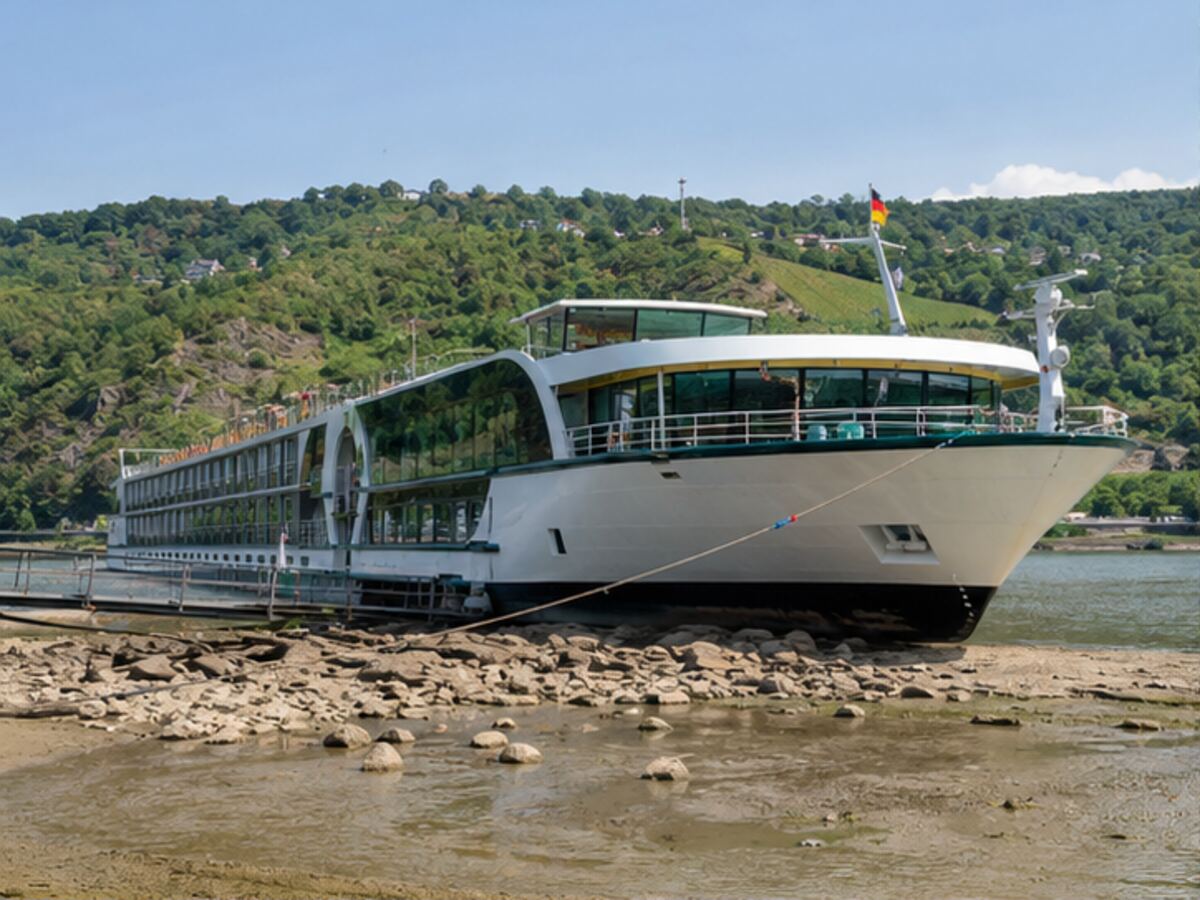
What I would brace for is the version where no sister ship is available. That is the motorcoach day, the hotel night, the ship that stays tied up at Passau for four days while you commute to the sights by road.
My blunt advice is to read the line’s terms before you pay the balance and ask what it does when water blocks the route. Compensation depends on the contract, departure market, timing, and scale of the change, so do not assume either a refund or no refund.
The quick facts
- What a swap is: two ships trade passengers by motorcoach, so each continues in the direction it can still navigate. Cabin category and deck plan are meant to match; the ship name changes.
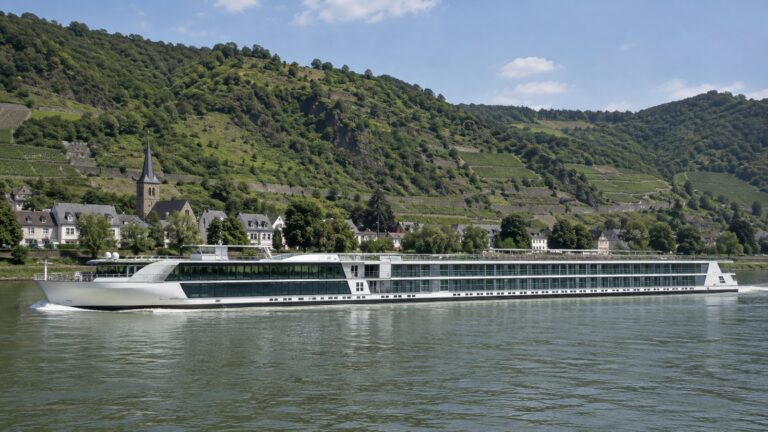
- Why it is possible: some operators run large fleets of matching ships on connected rivers. Neptun Werft lists its Viking Longships at about 443 feet, with a roughly 5.25-foot design draft, and says it has delivered over 60 structurally identical hulls.
- The fallback: a motorcoach day out and back from a ship that cannot move, or a hotel night ashore. Refund rights depend on your contract, departure market, and whether the change is considered significant.
- What the terms say: read the current contract for your operator and departure market. AmaWaterways’ current EU conditions provide choices for a major predeparture change and alternative arrangements when a significant part of the trip cannot be delivered after departure, while circumstances beyond the operator’s control can limit compensation.
- Where a swap is harder: the Douro, Elbe, and Po use specialized or geographically separate fleets, so operators have fewer replacement options than on the connected Rhine, Main, and Danube system. Ask the line for its river-specific contingency rather than assuming a sister ship will be available.
- Insurance reality: coverage is policy-specific and normally requires a named covered reason and documented loss. A changed itinerary may not qualify if the trip continues, so ask the insurer how its cancellation, interruption, missed-port, and itinerary-change benefits apply.
- How often it happens: no dependable systemwide ship-swap frequency is published. Water levels and forecasts can change quickly, and the operator decides whether to sail, swap, use coaches, or provide hotels.
What a river cruise ship swap actually is
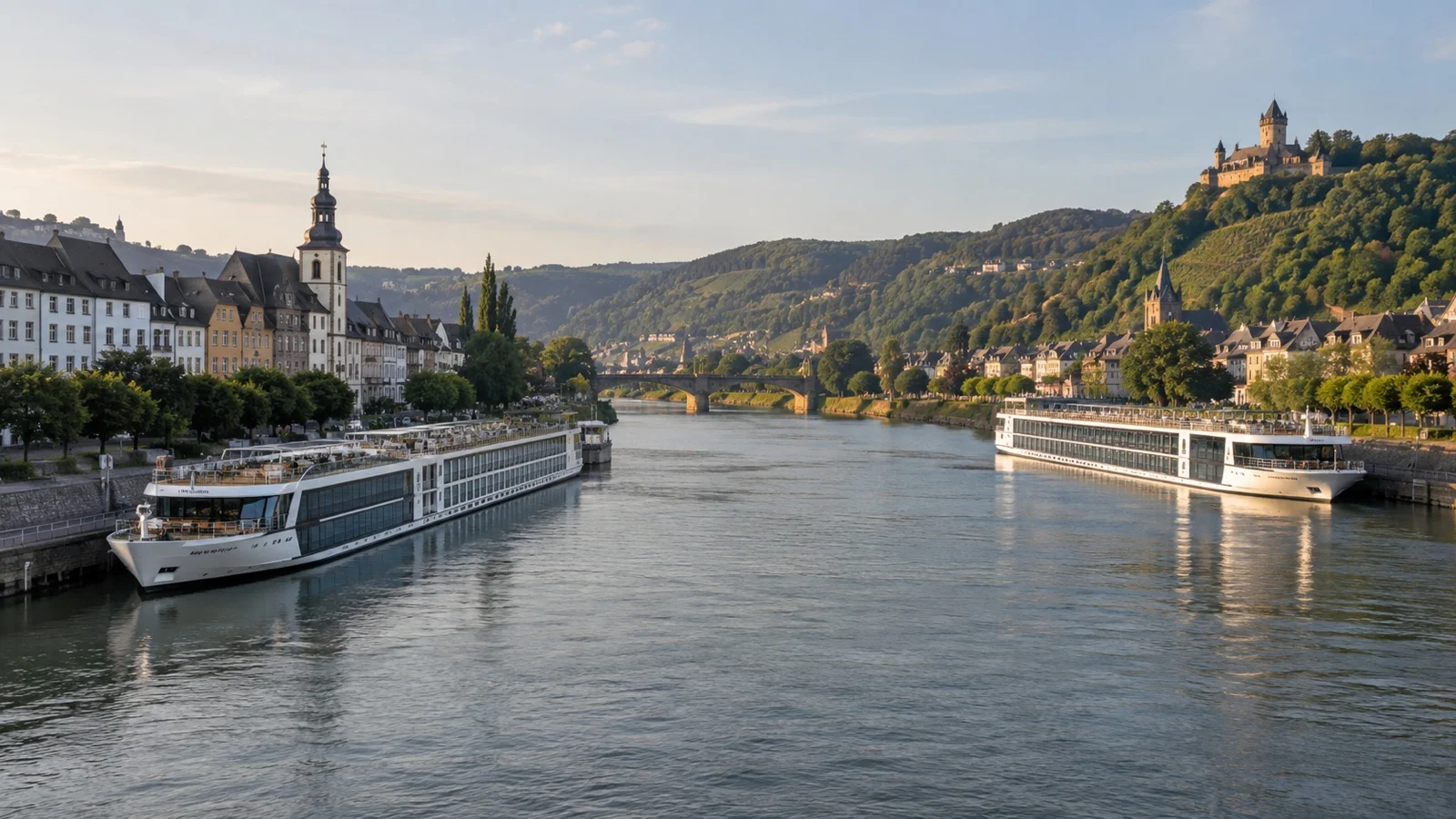
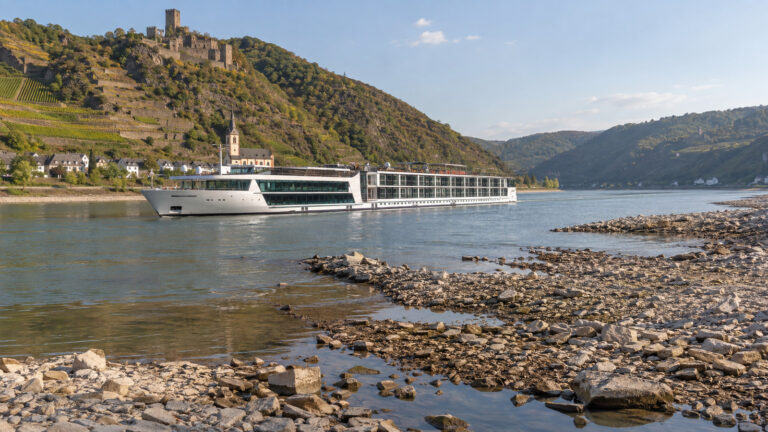
Picture a shallow stretch on the Middle Rhine, or a bridge clearance problem after heavy rain. Ships upstream cannot get down, ships downstream cannot get up, and both are full of passengers who booked the whole route.
The swap moves the people instead of the hulls. Your ship takes the other group back the way you came, while you board their ship and carry on in the direction you were always going.
In practice you get a letter under the door the night before, a packing deadline, and a motorcoach transfer of thirty minutes to four hours. Luggage is moved for you to the matching cabin number.
This is why structural identity matters. If cabin 312 is a French balcony on the middle deck, cabin 312 on the sister needs to be the same, or the line has a hundred and ninety reallocation arguments to referee.
Why fleet size predicts your outcome
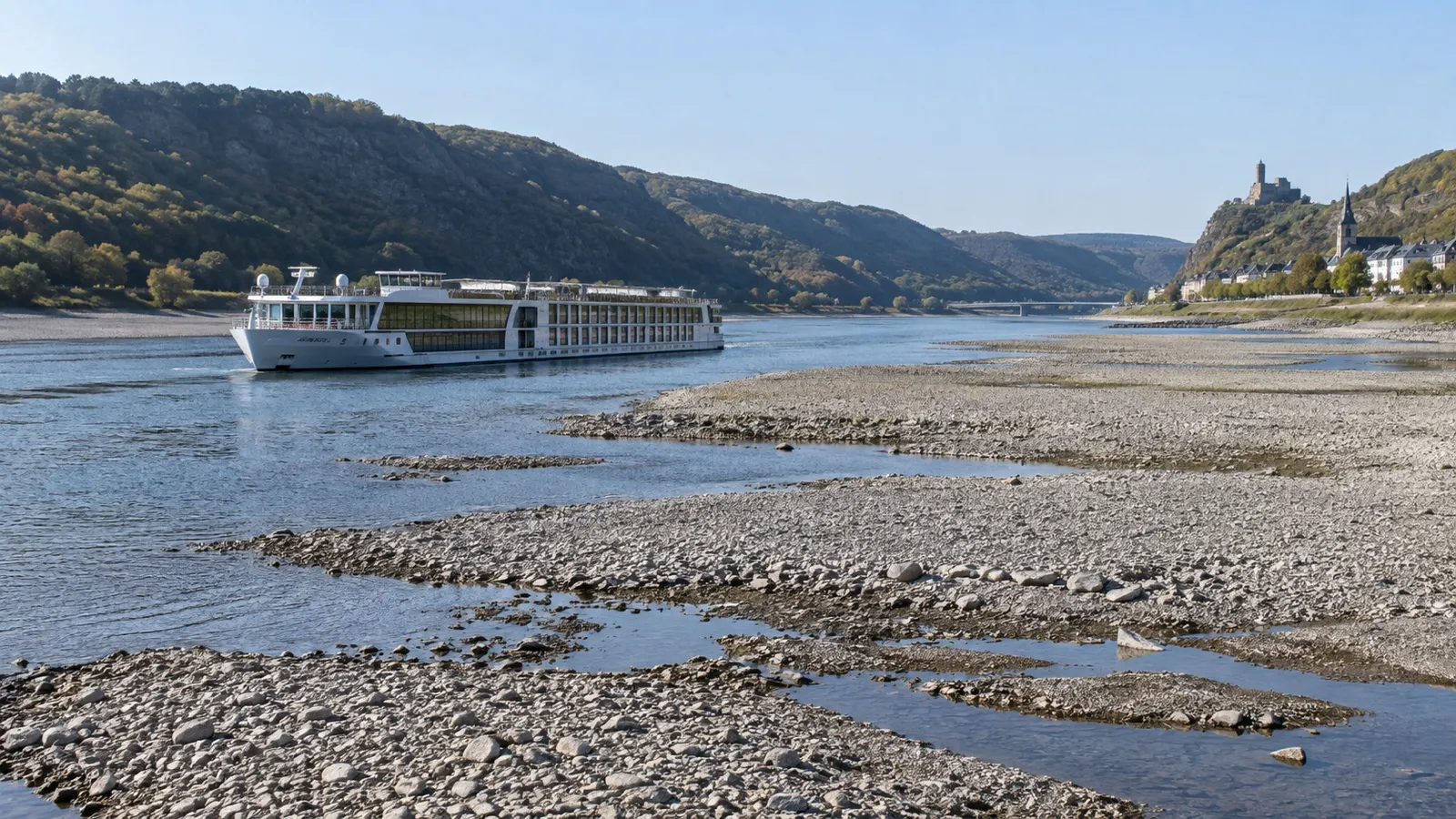
A swap needs two conditions at once. There must be a near-identical ship on the far side of the blockage, sailing the mirror itinerary in the same week.
That is a coincidence a large fleet manufactures deliberately and a small fleet cannot. Lines running dozens of identical ships in overlapping weekly rotations have several candidates at any moment.
The reason the Rhine and Danube are the swap-friendly rivers is the Main-Danube Canal. Britannica records it as roughly 106 miles, with 16 locks, opened in 1992, linking the North Sea and the Black Sea into one continuous network.
Before booking, ask the line how many of its own ships are scheduled on that river during your sailing week. A travel agent can find out, and a vague answer is itself an answer.
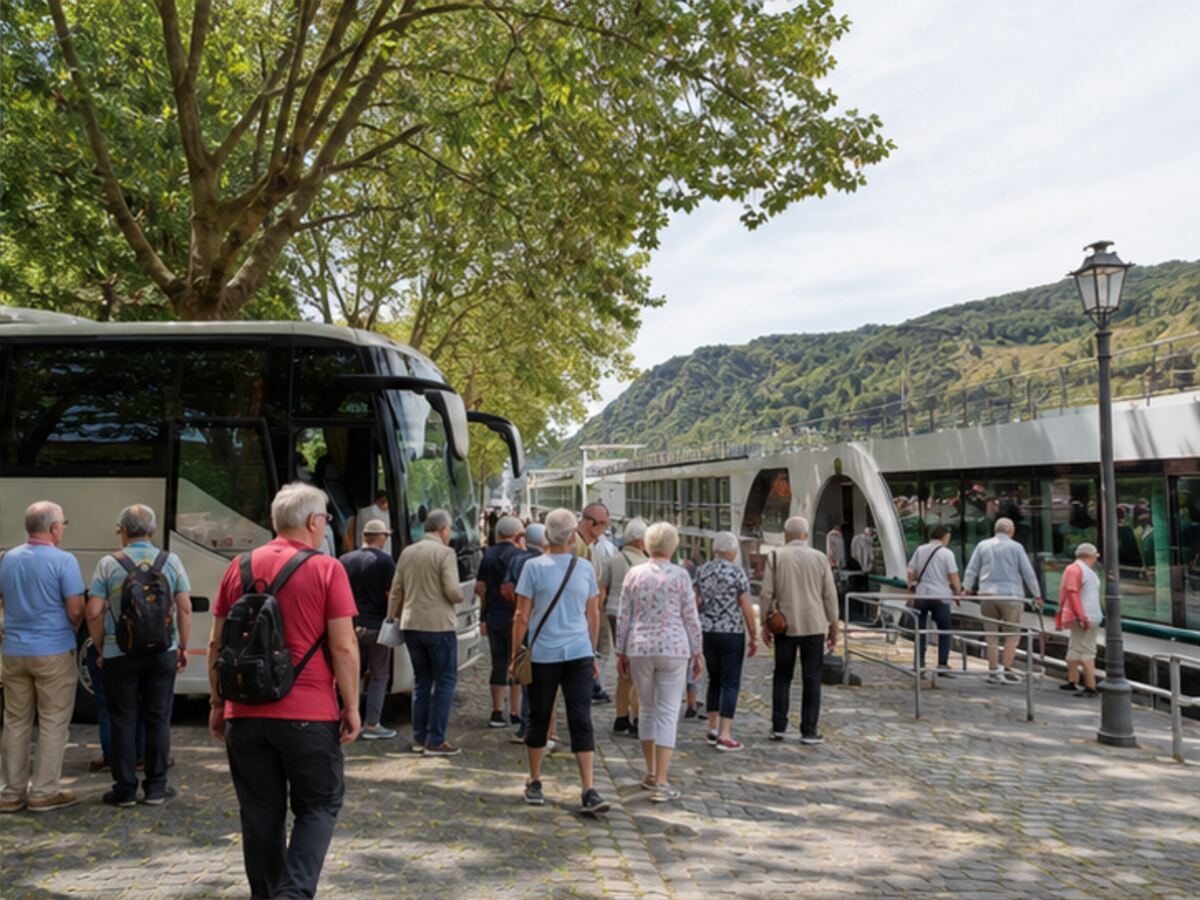
Motorcoach days, hotel nights and the partial refund
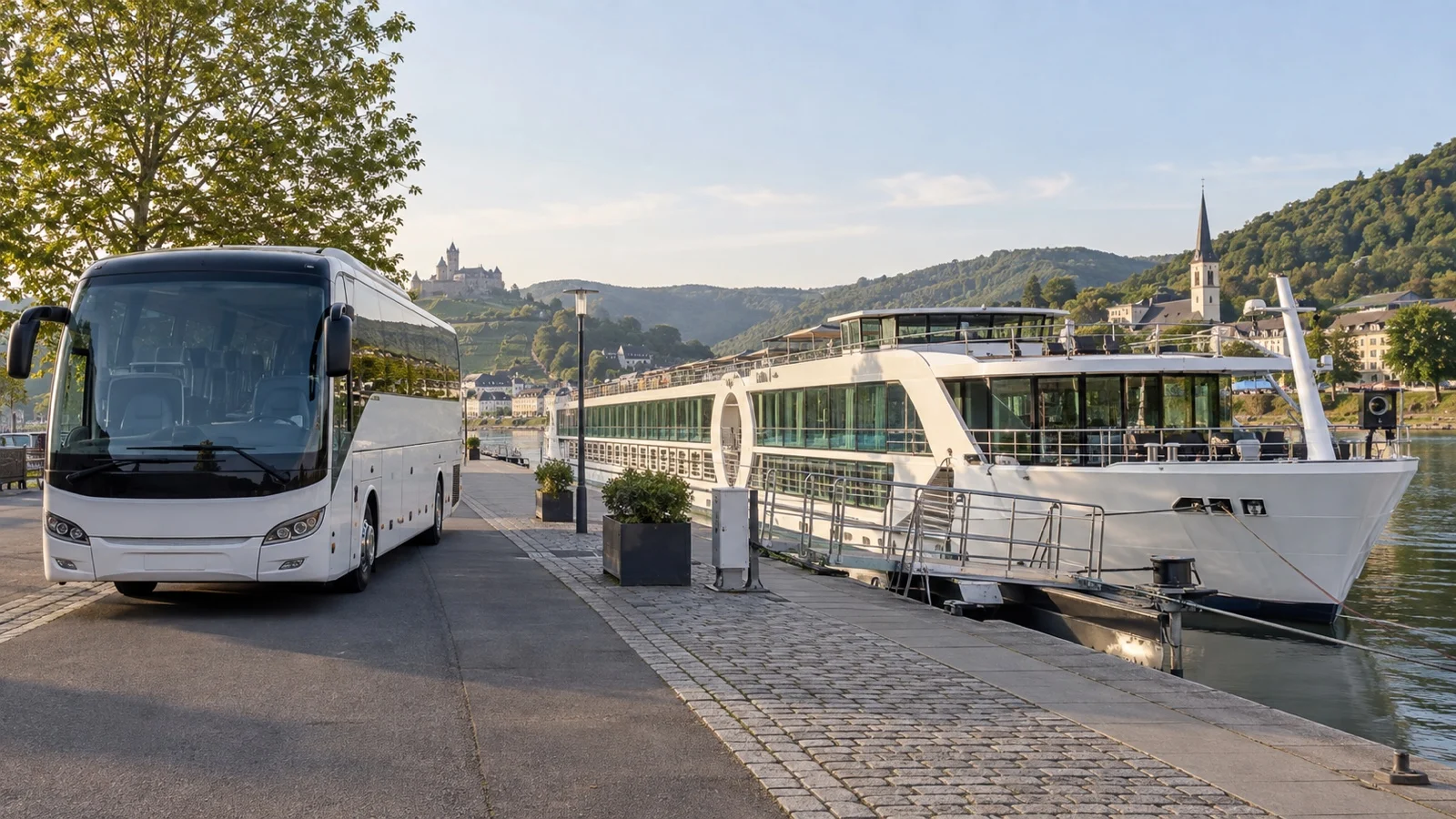
When no sister is available, the ship becomes a floating hotel and the itinerary continues by road. You sleep aboard in the same berth for several nights and travel by motorcoach to each day’s town.
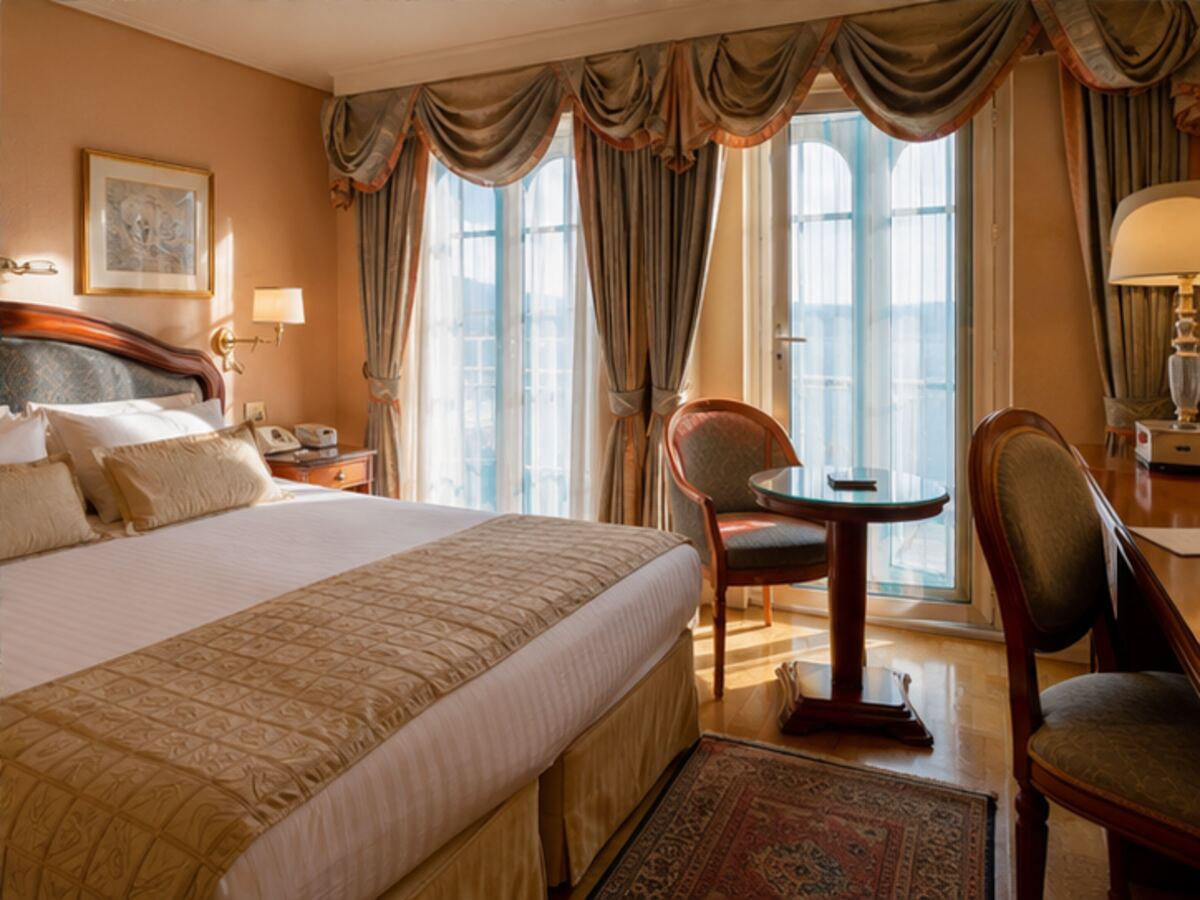
The hotel night version happens when the ship cannot stay where it is, or the motorcoach distance becomes absurd. Lines put you in a land hotel, usually a decent one, and the cruise quietly becomes a motorcoach tour.
On refunds, read the contract rather than the sales page. AmaWaterways’ UK booking conditions list “adverse weather conditions, high or low water levels, mooring restrictions and lock closures” among circumstances for which it accepts no liability, while committing it to alternative arrangements at no extra charge where possible.
Viking’s booking and sale terms go further and state that no refunds are made for interruption or cancellation by a passenger after the cruise has started. If the entire cruise is canceled by the line, the stated remedy is a full refund of the cruise fare and nothing more.
Goodwill payments do happen, usually as onboard credit or a future cruise credit. Treat them as discretionary, because contractually that is what they are.
The rivers where a swap is harder
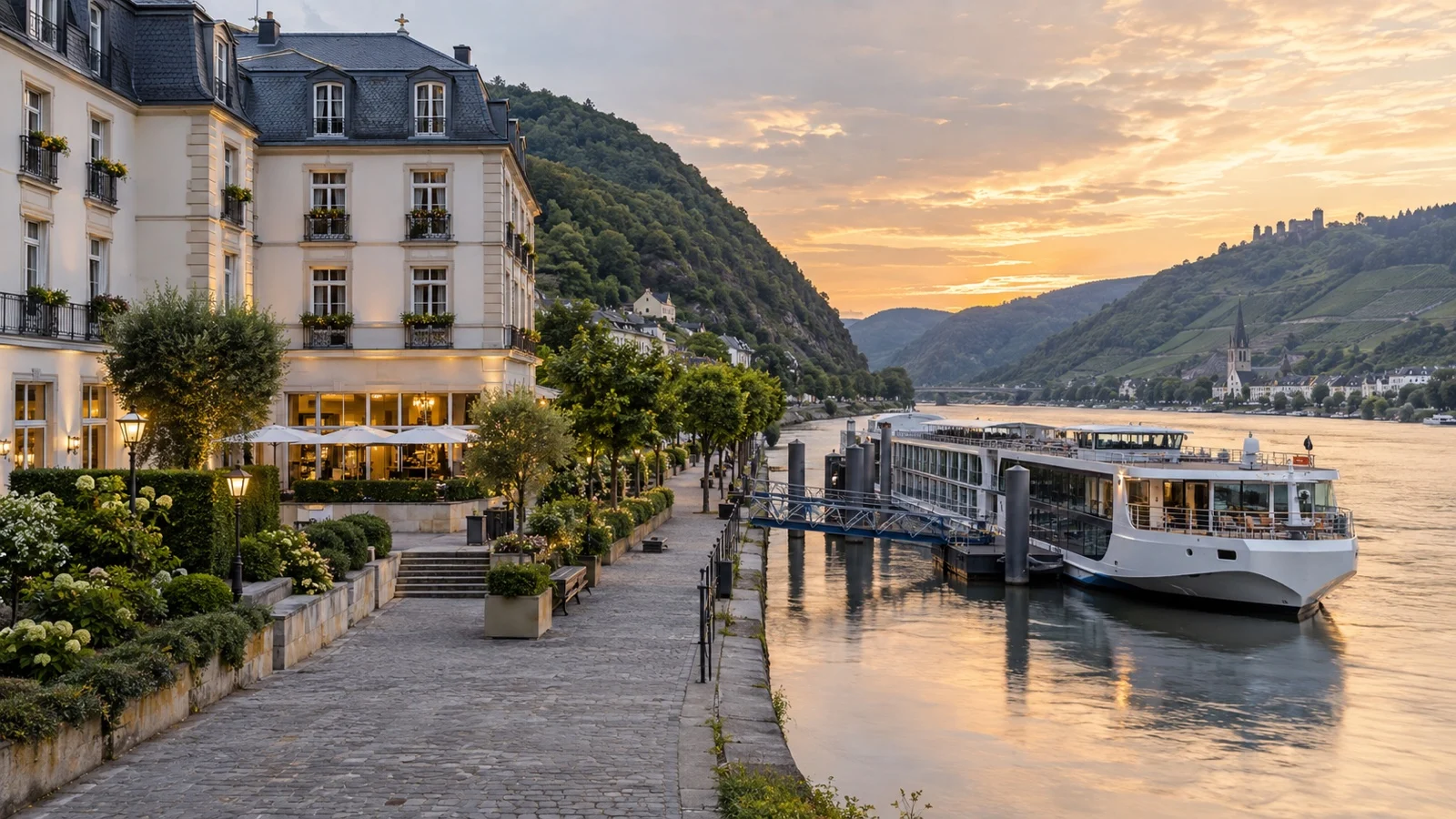
The Douro is the clearest case. Port authority APDL describes the Douro navigation channel as about 129 miles, with five locks climbing roughly 410 feet and chambers about 37.4 feet wide that cap vessels at roughly 272 feet.
That is about 170 feet shorter than a standard Rhine ship. Douro cruise vessels are built around those lock limits and operate on a separate waterway, which is worth knowing before you compare them with the Douro’s own sequence of ports.
The Elbe is a different problem. Germany’s Gesamtkonzept Elbe program sets the target for the inland Elbe at a fairway depth of at least about 4.6 feet on 345 days a year in the long-term average, which is shallow enough that the river needs its own ultra-low-draft ships.
Specialized low-draft vessels can work this route, but the replacement pool is much smaller than on the Rhine and Danube. When the Elbe drops, coaches may replace some sailing, and my guide to the Elbe’s cruise ports is written with that in mind.
The Po is the third. Italy’s river agency AIPo puts the waterway from Cremona to the sea at about 174 miles, with a class Va target of roughly 8.2 feet of depth on at least 250 days a year.
It links to the Venice lagoon through the Volta Grimana lock, but not to the Rhine or Danube. That separation gives Po operators fewer ship-repositioning options, so ask the line whether its backup is another vessel, coaches, hotels, or a revised route.
What insurance does and does not do
- Trip cancellation: reimburses pre-paid, non-refundable costs when a covered reason stops you traveling at all. Water levels are almost never a covered reason for you to cancel.
- Trip interruption: pays out when a covered event cuts your trip short. A rerouted cruise that still runs is not usually an interruption in the policy’s sense.
- Itinerary change: generally excluded outright, or covered only by a specific named benefit. If it matters to you, find that clause before you buy rather than after.
- Cancel for any reason: an optional upgrade that may reimburse a stated percentage when its deadlines and conditions are met. Benefits vary, and a policy may offer other specifically named itinerary-change or missed-port coverage, so compare the actual wording.
- The regulator’s framing: the National Association of Insurance Commissioners describes this cover as reimbursing pre-paid, non-refundable expenses when you are prevented from taking all or part of a trip. It stresses that every policy is different, which is not a throwaway line.
- If you booked in the EU or UK: package travel rules give you stronger footing. The European Commission’s Your Europe guidance says the organizer must resolve a failure to deliver agreed services at no extra cost, though compensation falls away where the cause is outside their control.
Fun fact: the German federal waterways administration publishes live gauge readings for its rivers free of charge through PEGELONLINE, with data going back to January 2000. You can therefore watch the exact number your captain is watching, several days before anyone on board mentions it.
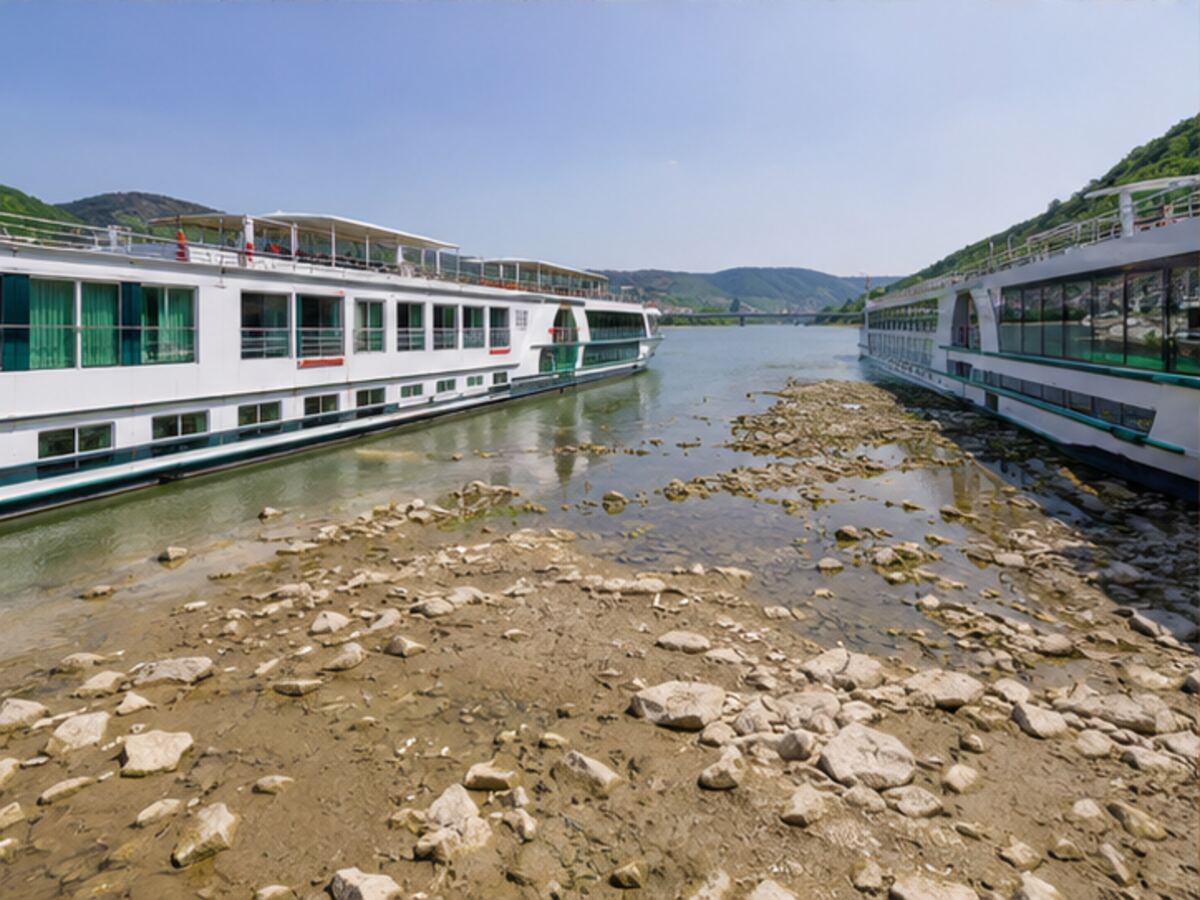
How I would actually decide
If the river cruise is the point, book on the Rhine or Danube with a line that has a genuinely large fleet there. That is the only booking decision that meaningfully improves your odds.
If the destination is the point and you want the Douro, Elbe, or Po, book it and accept the risk knowingly. Those are wonderful rivers with fewer ship-swap options, so the operator’s backup plan matters.
On timing, remember that no month removes navigation risk. Low water is often the summer concern, while high water can create bridge-clearance and lock problems after heavy rain or snowmelt.
One concrete thing to do today: find your line’s booking terms, search the document for the phrase “water levels”, and read the surrounding paragraph. It takes two minutes and it will tell you more than any review.
A realistic word on accessibility
A ship swap is much harder for anyone with limited mobility, and lines are not always upfront about it. The motorcoach is a standard European touring motorcoach with steps.
River ships have small elevators that often do not serve every deck, so a cabin that worked on one hull can be awkward on its sister. Ask whether the replacement cabin sits on the same deck relative to the elevator, not just the same number.
The motorcoach-day fallback is worse in some ways, because it repeats. A single transfer is one hard morning, while five consecutive days of motorcoach excursions from a stationary ship is a week of them.
If you use a wheelchair or scooter, get the line’s disruption policy in writing at booking. Most river lines carry collapsible chairs only, and a motorcoach substitution does not change that or improve it.
When to go, and the weather
The European river season runs from late March to the end of December, with Christmas market sailings at the tail. Water risk is not evenly spread across it.
Spring rain and snowmelt can raise rivers enough to create bridge-clearance and lock problems. The duration depends on the river, weather, and affected infrastructure, so there is no reliable two-or-three-day rule.
Summer and early fall can bring low water after prolonged heat and limited rain. Conditions vary by basin and year, so check the specific river rather than relying on a seasonal average.
Fall and Christmas-market sailings can also be disrupted by low water, high water, fog, ice, or lock restrictions. Choose those dates for the itinerary and atmosphere, not because navigation is guaranteed.
The practical checks I would make before accepting a ship swap
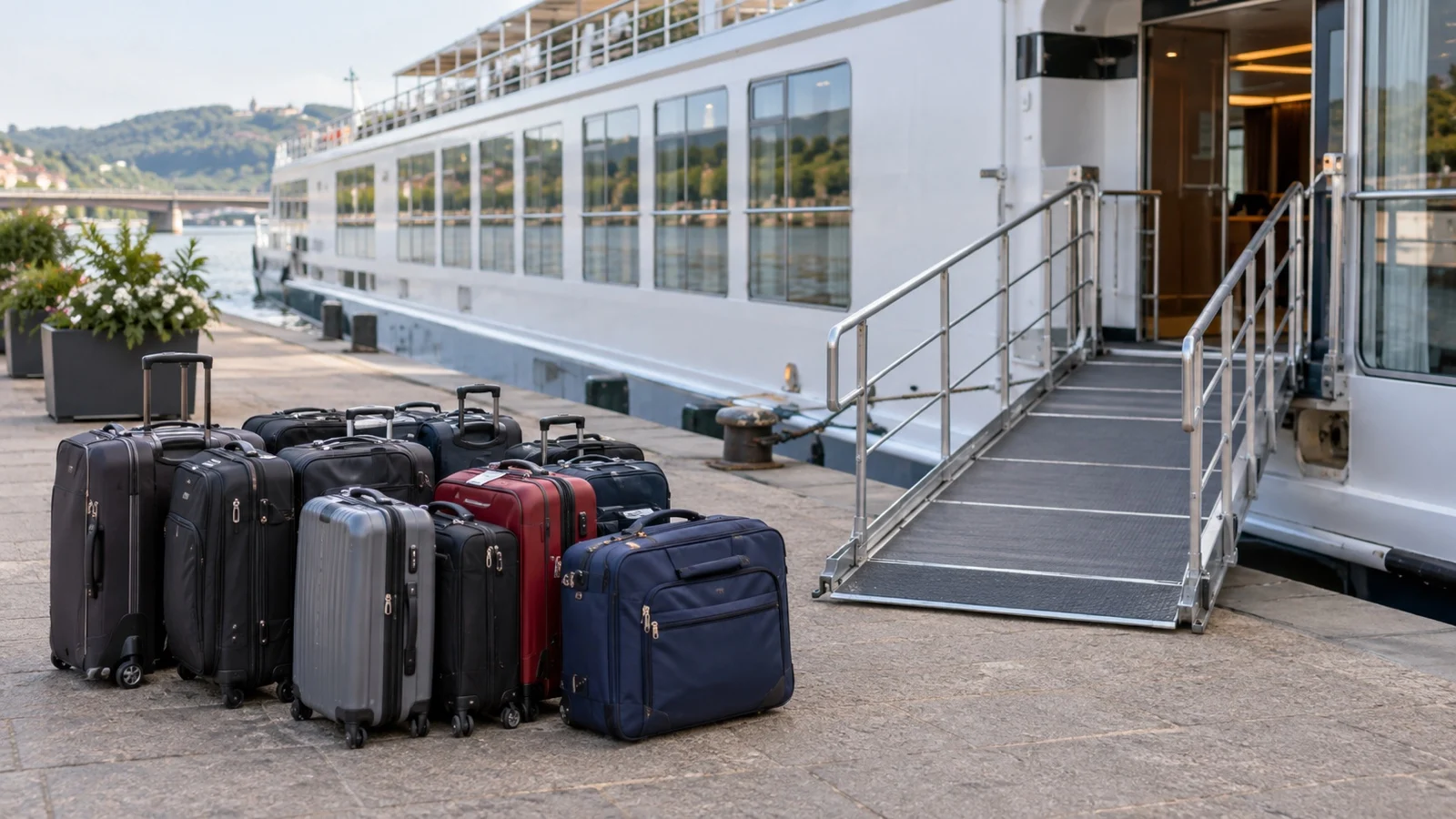
Read the cruise contract for the operator and departure market because itinerary-change, hotel, transport, and refund rights are not identical across lines or countries. A sister-ship swap is an operational option, not a promise, and matching cabin numbers do not guarantee matching accessibility or bed configuration.
Keep passports, medication, mobility supplies, chargers, and one change of clothes in a personal bag that stays with you. Before boarding a substitute coach, confirm the hotel, meals, luggage delivery, restroom stops, step-free boarding, and emergency contact in writing.
Travel insurance may cover a specifically named delay or interruption, but dissatisfaction with buses is not automatically an insured loss. Save the original itinerary, change notices, receipts, and written line response, then ask the insurer before paying for an independent hotel or abandoning the trip.
Quick answers
What is a river cruise ship swap:
It is when your line moves you by motorcoach to a near-identical sister ship on the other side of an unnavigable stretch, and moves that ship’s passengers onto yours. Both ships then sail back the way they came with new guests aboard.
Do I get a refund if my river cruise is changed to a bus tour:
Not automatically in every case. Your rights depend on the contract, departure market, and whether the change is legally or contractually significant, while any goodwill credit is discretionary.
How much notice will I get before a swap:
There is no standard notice period because the decision depends on changing river, weather, lock, and berth conditions. Ask when luggage must be ready and keep essentials with you.
Does travel insurance cover low water levels:
Only if the policy wording and circumstances trigger a covered benefit. Ask specifically about cancellation, interruption, itinerary change, and missed-port coverage before buying.
Which rivers are safest for avoiding disruption:
No river is disruption-proof. Large fleets on the connected Rhine, Main, and Danube system can create more swap options, while the Douro, Elbe, and Po generally offer fewer.
The last word
River cruising sells itself on the idea that you unpack once and the scenery comes to you. That promise is written on water, and every line’s contract says so in the small print.
None of that is a reason to avoid it. It is a reason to book the right river, on the right line, in the right month, and to understand how low water actually stops a ship before you are standing on a quay with your suitcase.
Ocean cruisers will recognize the shape of this, since a missed call for weather works the same way, as I covered in my piece on rough seas canceling a tender operation. The difference is that an ocean ship goes somewhere else, while a river ship simply stops.
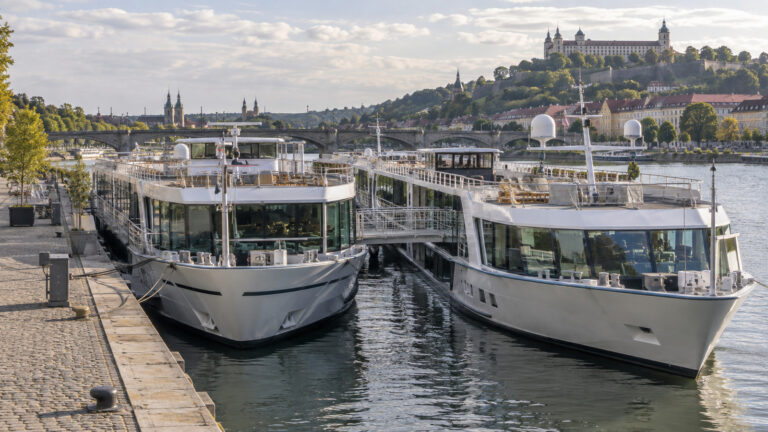
If you are still weighing where in Europe to spend your week, my overview of cruise ports across Europe is the place to start. Just remember that the ship in the photograph might not be the one you finish on.
How this guide was researched: This guide was independently checked on September 12, 2026, against current AmaWaterways booking conditions, NAIC travel-insurance guidance, EU package-travel guidance, shipbuilder specifications, and the official waterway sources linked in the article. Reconfirm the ship, transfer, hotel, waterway status, accessibility, insurance coverage, and contract terms because live operations and passenger rights can change.
More on this topic: browse every guide on river cruise planning.