River Cruise Overnight Stays in Port: How to Use the Evening
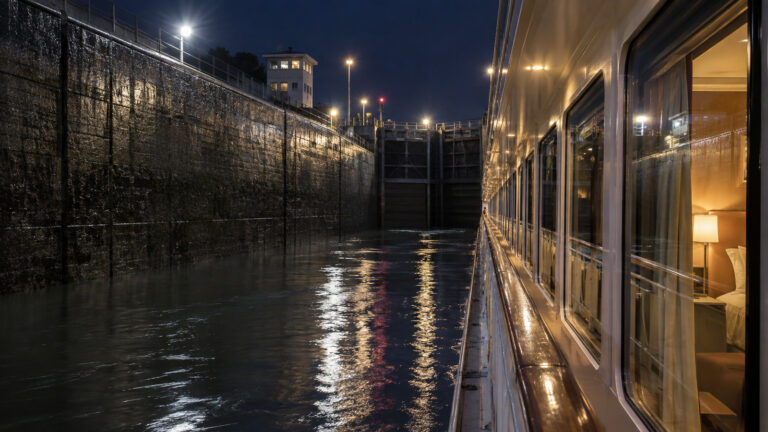
A river cruise overnight in port gives you something daytime tours cannot: dinner, lights, music, and a city after the commuter rush fades. It does not automatically mean the gangway is open all night or that the ship cannot move.
The winning plan starts with the daily program, the exact berth, and a realistic route home. Sort those three details first, then enjoy the lovely business of having a floating hotel in town.
The short answer
Use an overnight for one or two evening priorities, not another full sightseeing shift. A neighborhood dinner plus a waterfront walk usually works better than racing between reservations across an unfamiliar city.
Before leaving, photograph the ship’s berth and daily contact details, confirm the return deadline, and check whether the vessel may reposition. Save a taxi backup even when transit runs late.
If an evening ashore feels like too much after a long tour, staying aboard is not wasting the port. A quiet ship and illuminated skyline can be the clever choice too.
The quick facts
- What an overnight means: the published itinerary schedules the ship in the same port across midnight. It does not guarantee unrestricted gangway access, a downtown berth, or the same position all night.
- What it does not mean: a late departure before midnight is not an overnight, and a hotel night on a cruise-tour extension is not a ship overnight. Embarkation and disembarkation cities are not automatically overnights.
- The time that matters: follow the return or all-aboard time in the current daily program and any update announced onboard. The brochure is not the final operating instruction.
- The berth question: harbor authorities and operations can change docking locations or raft vessels side by side. Confirm the ship’s live location before going ashore and again if you will return late.
- Night transport: service depends on city, route, day, construction, and special events. Use the official journey planner for the night you are going out and keep enough money or battery for a taxi.
- If you are late: call the ship or cruise director immediately and follow their instructions. Never assume the vessel will wait, remain at the same berth, or send someone to find you.
First, confirm what “overnight” means on your sailing
A true overnight normally shows the same port on two consecutive calendar days, but even that needs a glance at the notes. The ship might arrive late on day one, leave very early on day two, or reposition within the port.
A “late stay” or “evening in port” may end before midnight. A pre-cruise hotel in Budapest, Amsterdam, Paris, or Porto gives you an evening in the city, but your bed is not yet on the ship.
Do not assume the embarkation port creates an overnight by definition. Some ships board passengers and sail that afternoon or evening, while others stay until the next morning.
Compare the dated itinerary, travel documents, and daily program. If they disagree, the onboard instruction wins because river conditions, lock slots, and berth assignments can change.
Why an overnight can change at the last minute
River itineraries are working navigation plans, not hotel reservations carved in stone. Water levels, traffic, lock schedules, port orders, weather, and berth availability can shorten, extend, or move a stay.
A ship may also shift a short distance along the quay or move from an outside raft to another position. That is why a saved pin from dinner time may be wrong at midnight.
Uniworld’s current passenger FAQ explains that local harbor authorities determine docking locations and that ships may berth farther from the center or alongside other vessels. The same practical uncertainty applies beyond one cruise line.
The guide to where river cruise ships actually dock explains why a city name is not a street address. At night, that distinction matters much more.
The five-minute check before you leave
- Read the current return or all-aboard time and photograph it.
- Ask whether the ship expects to move or change its raft position.
- Save the ship’s phone number, cruise director contact, berth name, and port-agent details provided onboard.
- Drop a map pin, take a wide photo of the quay, and note a nearby street address.
- Check the official transit planner for the return journey, not only the outbound one.
- Carry the ship card and the identification the crew tells you to take ashore.
- Tell reception about any plan that takes you well beyond the immediate waterfront.
Take a charged phone and a small power bank, then download the local map for offline use. A berth pin is surprisingly unhelpful when the phone battery is at one percent.
If you just embarked, check the river-cruise embarkation and airport-transfer guide before planning the evening. A delayed flight, safety briefing, luggage arrival, or early sailing can shrink that first night.
Budapest: easy lights, berth permitting
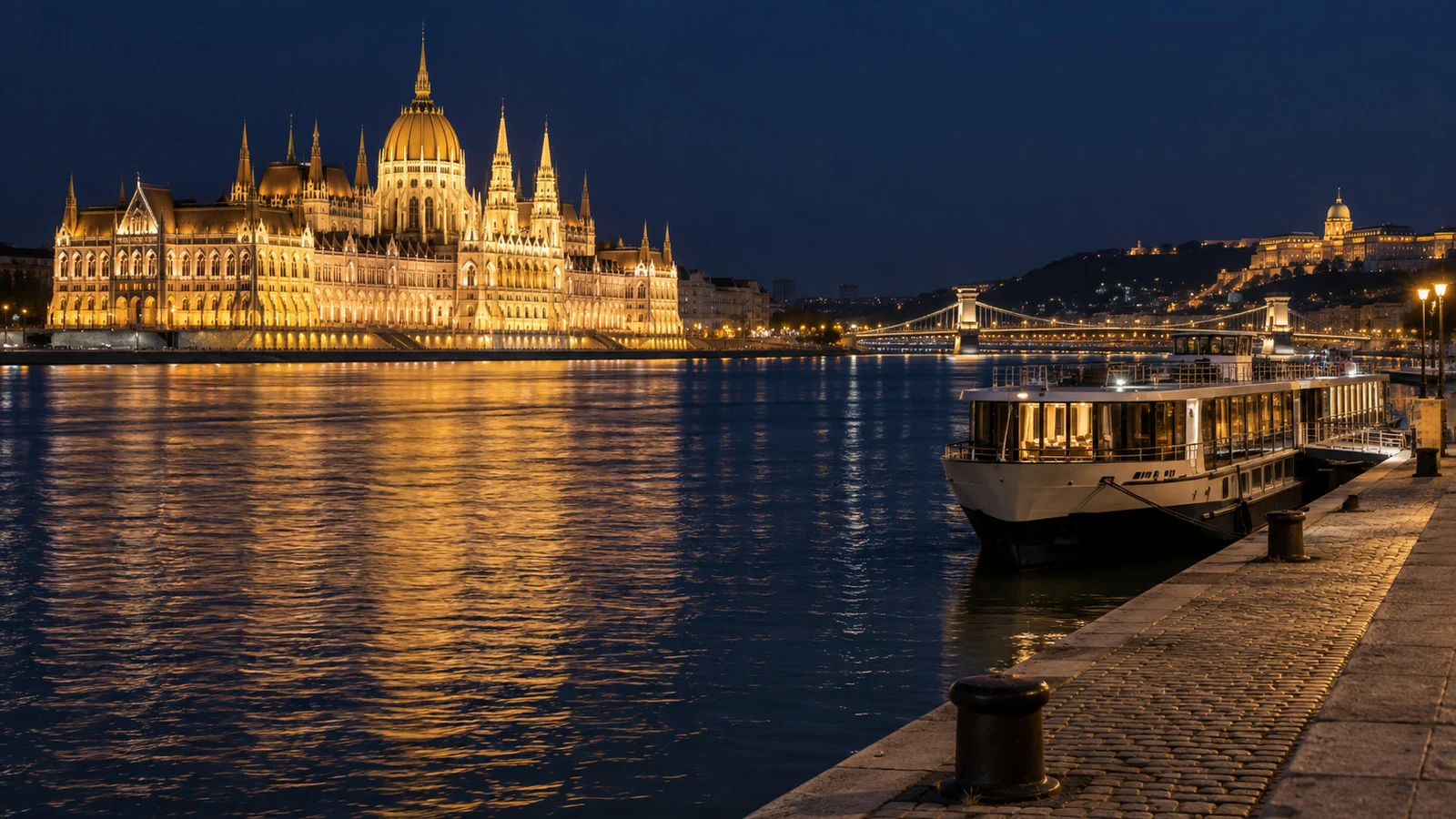
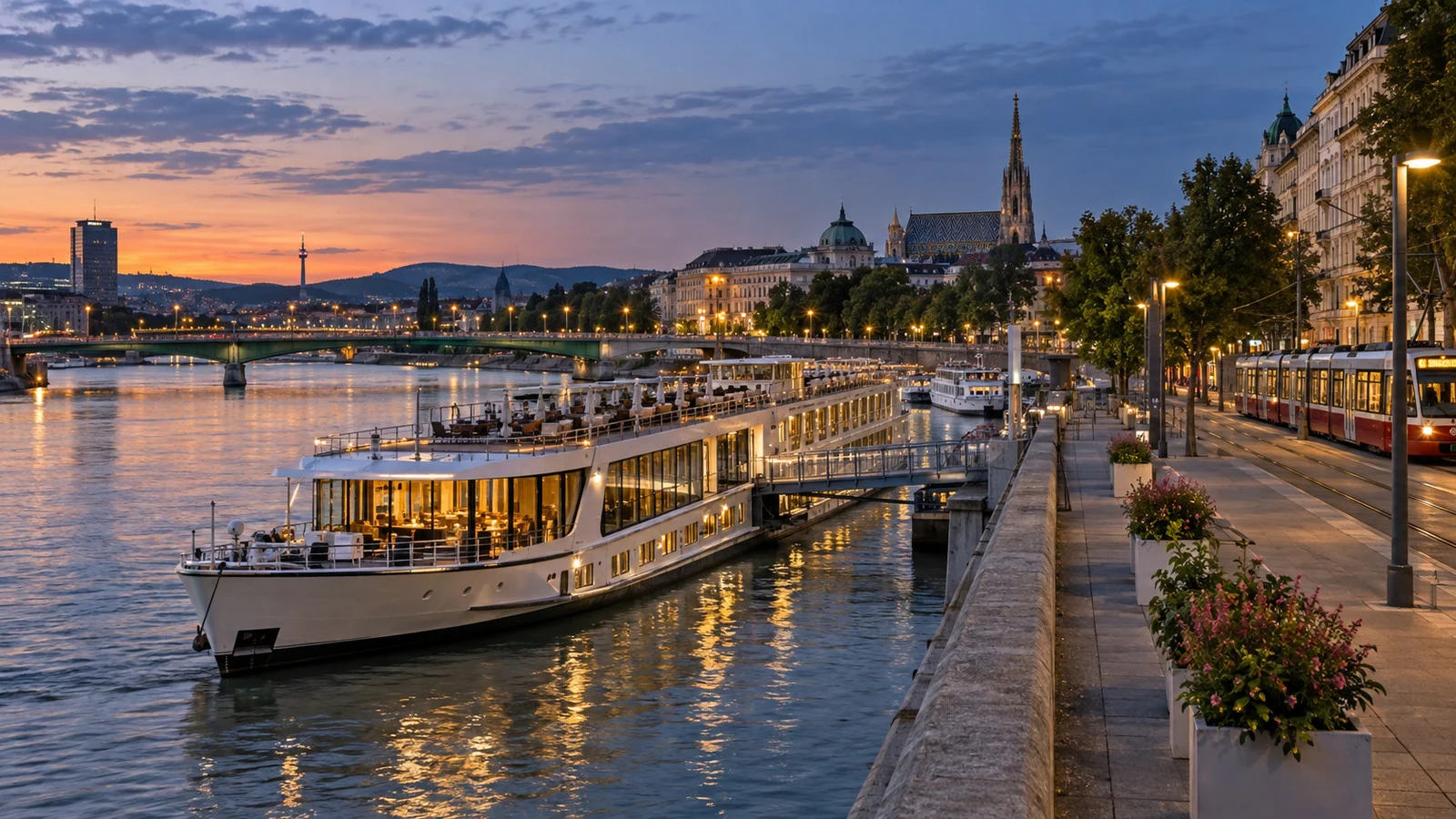
Budapest is a superb overnight when the ship has a central Danube berth. Parliament, the bridges, Buda Castle, and the riverfront lighting give you a complete evening without booking another cruise.
The catch is that not every berth is beside the same sights or on the same bank. Use the Budapest river-cruise port guide to understand the likely zones, then confirm the live berth onboard.
Budapest has genuine overnight transit, but the route still matters. The city’s BKK night-transport page says tram 6 operates around the clock and advises passengers to use BudapestGO because the night-bus network changed in July 2026.
A simple plan is an early evening walk along the river, one dinner or drink near a well-connected district, then a direct return. Save the official journey in BudapestGO before leaving the restaurant.
Vienna: wonderful, but usually a transit plan
Vienna rewards an overnight with concerts, cafés, illuminated architecture, and a less hurried city center. The berth may be near the Danube rather than the Ring, so the trip back deserves as much attention as the reservation.
The Vienna Tourist Board says U-Bahn trains generally run from about 5 a.m. to midnight. Subway service continues around the clock on Friday and Saturday nights and nights before public holidays, while night buses operate daily.
That does not make every berth a one-train trip, and schedules can change. Check the exact route in the Wiener Linien planner and keep a taxi option for a missed connection.
The Vienna river-cruise port guide explains the major docking areas. Read it before booking a nonrefundable late performance across town.
A concert needs a bigger buffer
Check the performance finish time, cloakroom queue, route back, and ship deadline before purchasing tickets. A 10 p.m. curtain call is only convenient if the gangway and berth still work afterward.
A cruise-line evening excursion can be easier because the operator coordinates the group with the ship. Read the excursion terms, because “ship-sponsored” does not excuse ignoring crew instructions or wandering away from the guide.
Porto and the Douro: confirm which bank and which night
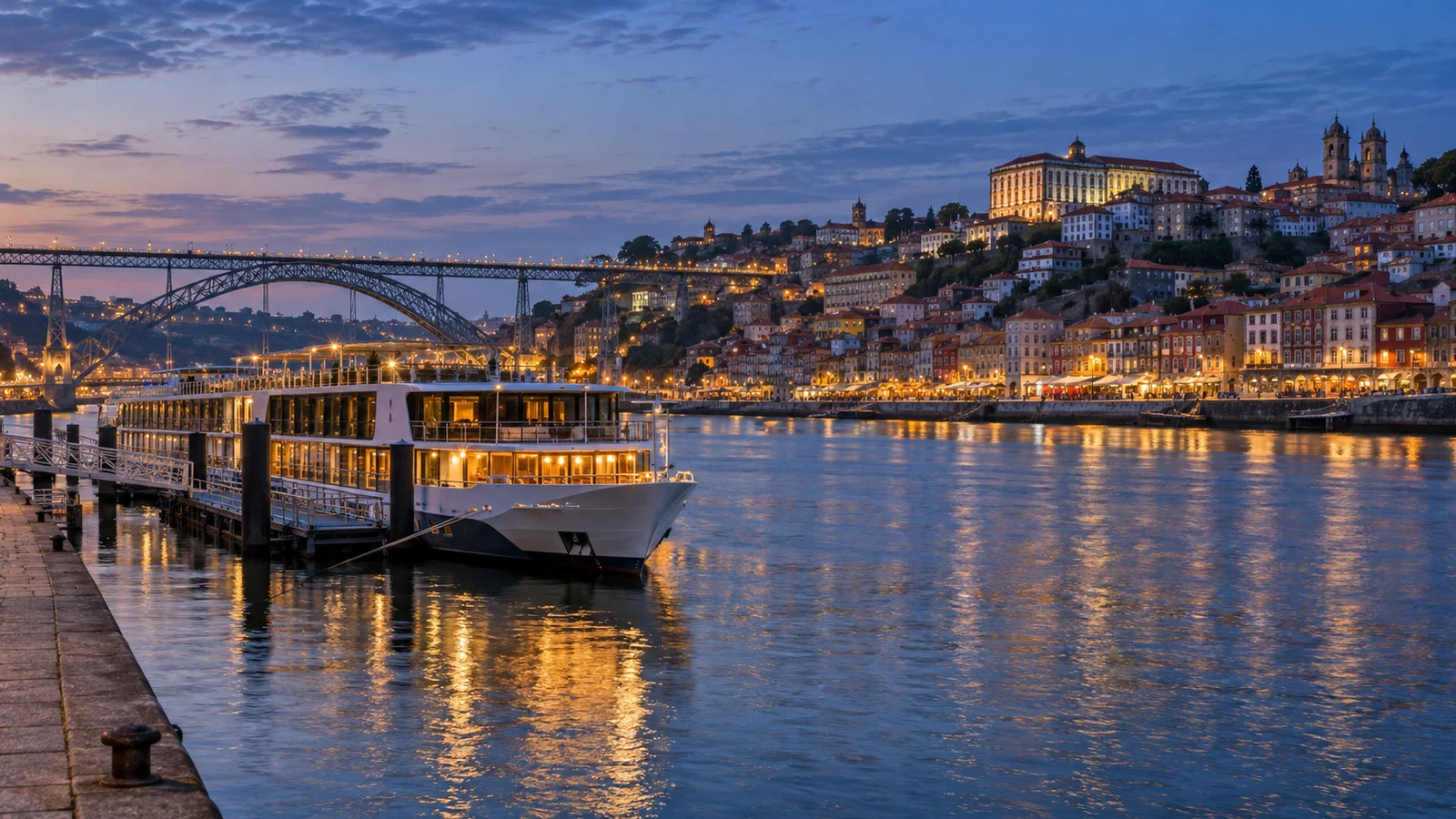
Douro itineraries often begin or end in the Porto area, and some use quays in Vila Nova de Gaia across the river. Do not assume every ship spends both its first and last nights there, because packages, hotel stays, and sailing schedules differ.
If the berth is in Gaia, the port lodges and riverfront may be close, while Porto’s Ribeira is across the Douro. The Dom Luís I Bridge has upper and lower crossings, so check gradients, stairs, and the best return route for your mobility and the hour.
Book tastings and dinner only after checking current opening times and distance from the live berth. The romantic hillside becomes much less charming when the last convenient ride has gone.
Bordeaux: central possibilities, several river stops
Bordeaux-area river cruises use the Garonne, Dordogne, and Gironde, so the word “Bordeaux” can describe the region or the city stop. The official Port of Bordeaux cruise page lists eight river stopover sites, including Bordeaux, Libourne, Cadillac, Blaye, and Pauillac.
A city berth can put the lit waterfront and restaurants within easy reach, but local assignments still vary. Verify whether the overnight is in Bordeaux itself before planning a city dinner.
Tides and operating needs can shape the schedule in this basin. Keep an eye on onboard updates even when the printed itinerary shows two consecutive days with the same city name.
Lyon: make dinner the main event
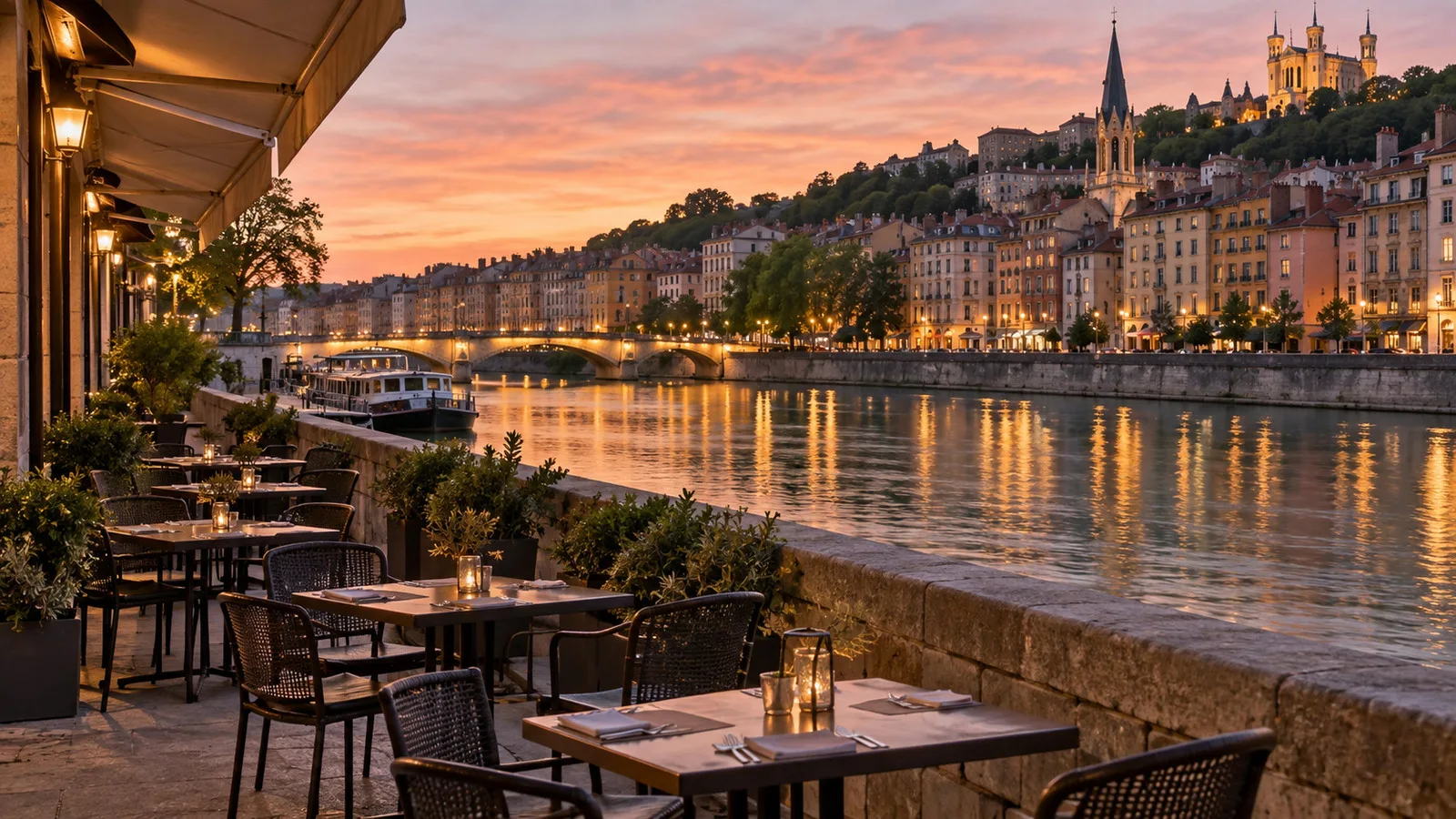
Lyon is made for a focused food evening, but Rhône and Saône berths are not all in one place. Start with the Lyon river-cruise port guide, then match the live berth to the restaurant rather than the other way around.
The official TCL night-service page says all four metro lines run until 2 a.m. on Friday and Saturday. Its Pleine Lune buses operate on selected overnight schedules from September through June, so use TCL’s planner for the exact date.
Choose one neighborhood and reserve enough time for a relaxed meal. Crossing the city for a second venue adds little except a more exciting glance at the clock.
Paris: the port name can hide a long ride
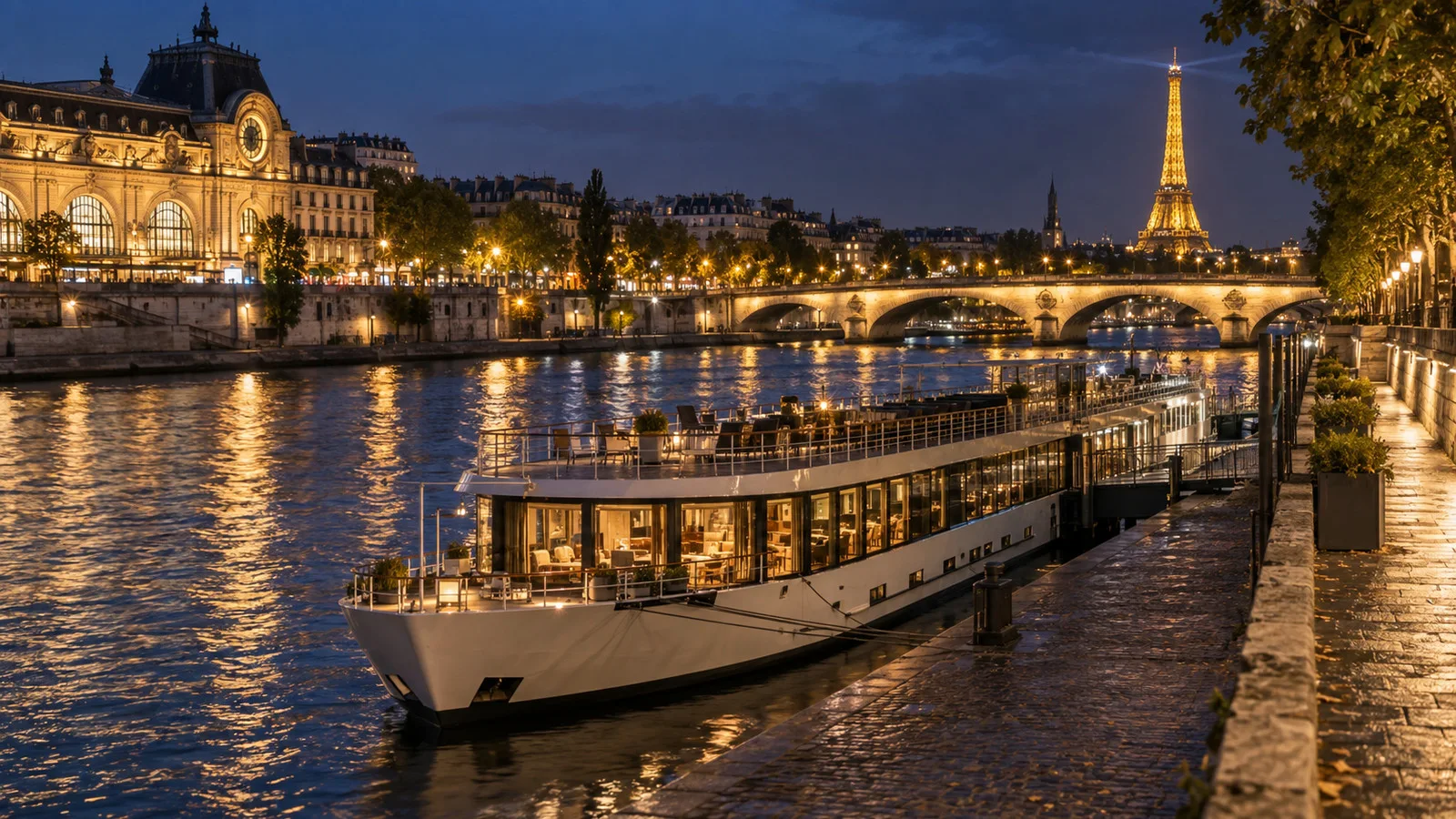
A Seine itinerary may use a berth within Paris or a location farther west, depending on the vessel and route. An overnight labeled Paris is therefore not a guarantee of a moonlit walk back from the Eiffel Tower.
The guide to Paris river-cruise berths explains the common city and suburban possibilities. Confirm the address before making a late reservation, then check the current RATP or regional transit planner.
If the berth is far from the center, use the included evening program or return well before the last convenient train. A taxi across Greater Paris can erase the charm and the budget in one efficient swoop.
Amsterdam and other turnaround cities
Amsterdam often appears at the start or end of Rhine itineraries, but that does not guarantee the ship stays through the night. Check whether the cruise sails on embarkation day, then look up the actual passenger-terminal or quay location.
Basel, Nuremberg, Passau, Cologne, and other endpoints may also appear overnight on selected schedules. Treat every overnight as a dated itinerary feature, not a permanent property of the city.
If the ship remains, keep the first evening gentle after a long-haul flight. A nearby meal and early night may do more for the cruise than collecting one extra monument while half awake.
Dinner ashore without sabotaging tomorrow
Dinner on the ship is normally still served during an overnight, and skipping it usually does not create a refund. If the crew asks guests to indicate dining plans, tell them early so the galley and service team can plan.
Reserve close to the berth or along a direct return route, and allow for the local dining pace. Do not schedule the final course at the same time as the ship’s return deadline.
Keep tomorrow’s excursion in mind. A 7 a.m. departure is a persuasive argument for one excellent glass rather than a grand tour of the wine list.
Independent evening or cruise-line excursion?
Go independently when the berth is central, the route is simple, and you want dinner or a walk at your own pace. Use the cruise-line option when the venue is distant, the return is late, or step-free transport needs to be confirmed.
A ship-arranged excursion reduces logistical guesswork, but check its walking, stairs, transportation, and return details. “Panoramic” can still include a long walk from the bus to the venue.
Third-party tours need a larger time buffer because the provider may not coordinate directly with the ship. Give the operator the ship’s deadline and berth, then build a backup return plan.
If you are running late
Call the ship or cruise director as soon as a delay appears likely. Give your name, location, phone number, and realistic arrival time, then follow the instructions you receive.
Do not wait until the deadline has passed, and do not rely on a headcount to hold the vessel. The ship may have a lock slot, navigation order, or berth move it cannot casually postpone.
If the ship has moved, use only the verified new location from crew or the port agent. A map pin from earlier in the evening is not proof that the gangway is still there.
If you miss departure, transport and hotel costs may become your responsibility under the passenger contract. Contact the line immediately rather than trying to chase a moving ship without instructions.
How to plan the right-sized evening
If you are still choosing between the Rhine, Danube, Douro, and Rhône, compare the actual overnights rather than counting city names. A central three-hour evening may be more useful than a nominal overnight with an early return deadline and remote berth.
One hour
Walk the nearest well-lit waterfront or historic square, take a few night photographs, and return. This is ideal after embarkation, before an early tour, or when the berth is unfamiliar.
Three hours
Choose dinner, a concert, or a neighborhood walk as the anchor, then add one nearby stop. This is the sweet spot for most river-cruise overnights.
A late night
Use it only when the ship’s deadline, transit, berth, energy, and next morning all agree. Confirm the route home again before the last normal service ends.
Accessibility after dark
An accessible daytime excursion does not prove that an independent evening will work. The cruise-line coach and guide may be gone, public elevators can close, and a rafted return may require crossing another vessel.
Ask reception about the expected gangway slope, raft position, quay surface, elevator access, and any planned berth move. Check the city’s official accessible-route planner for both directions and confirm whether a taxi can carry the mobility device.
Take a companion if the route or transfer cannot be managed independently, and stay close when conditions are uncertain. The best evening is the one that ends back at the correct gangway without a heroic final chapter.
Noise, light, and a moving view
An overnight berth can be noisier than a sailing night. Expect possible street noise, quay deliveries, neighboring ships, gangway traffic, generators, and an early engine start.
Rafting can replace a river view with another ship a few feet from the window. Close curtains before changing clothes, even if the cabin faced open water at dinner.
Pack earplugs and keep anything needed before breakfast easy to reach. The vessel may sail before you wake, so shoes and loose items should not be balanced near a sliding door.
Weather and personal safety
Night temperatures, rain, wind, and daylight vary too much by river and month for one useful rule. Check the official hourly forecast and take a light layer or rain shell even when the afternoon felt warm.
Use well-lit routes, watch for bicycles and streetcars, and avoid isolated industrial stretches of quay. Keep valuables discreet and use licensed taxis or official ride-booking channels.
Do not step between rafted ships, cross a crew-only area, or use a gangway marked closed. Ask the watchkeeper for the approved route whenever the berth looks different on return.
Quick answers
Can I leave a river cruise ship during an overnight?
Usually, but only during the access hours and under the security instructions set for that call, so confirm the current return deadline before leaving.
Can I stay out all night?
Only if the crew explicitly confirms that access remains available and no earlier return time applies, because “overnight” alone is not permission.
Which cities always have river-cruise overnights?
None should be treated as guaranteed because schedules vary by date, direction, line, water conditions, and berth availability.
Does the ship still serve dinner?
Normally yes, although service details belong to the line and ship, and an unused included meal generally has no cash value.
What if the ship changes berths?
Use the verified location sent or given by the crew, then call the ship if anything is unclear rather than relying on an old map pin.
Will the ship wait if I am late?
Do not assume it will, because navigation, lock, and berth schedules may require departure, so call immediately when a delay develops.
Is a ship-sponsored evening tour safer for timing?
It usually gives the cruise line more visibility into the group’s return, but passengers must still follow the guide and the operator’s instructions.
The last word
A river-cruise overnight is permission to slow down, not a challenge to conquer the city after dark. Pick one thing worth staying out for and protect the return trip before ordering dessert.
The daily program and live berth beat every generic promise about a city. Confirm both, save the phone number, and let the evening feel like a bonus instead of a race.
How this guide was researched: Transit and port details were checked against current BKK, Vienna Tourist Board, TCL, Port of Bordeaux, and cruise-line passenger information. Schedules, berths, and gangway rules can change for each sailing, so verify the daily program and live ship location; see our Editorial Policy.
More on this topic: browse every guide on river cruise planning.