Rhine vs Danube vs Douro vs Rhone: Picking a First River Cruise
The Rhine, Danube, Douro, and Rhône are not four versions of the same vacation. The best first river cruise depends on whether you want castle scenery, capital cities, vineyard time, or French food and Roman history.
For the easiest all-around introduction, start with the Rhine between Amsterdam and Basel. Choose the Danube for cities, the Douro for scenery and wine, or the Rhône and Saône for Provence, Burgundy, and food.
The short answer
Pick the Rhine if you want the broadest mix of small towns, major cities, castles, and scenic cruising. It is the least specialized choice, which is exactly why it works so well for many first-timers.
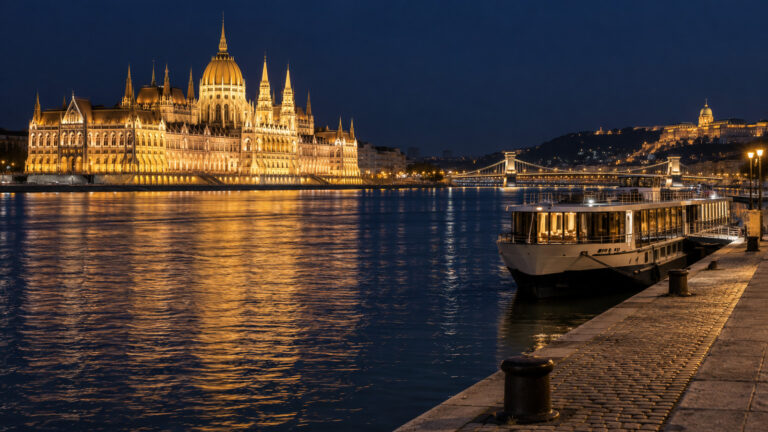
Pick the Danube if Vienna, Budapest, Bratislava, abbeys, and imperial history sound better than a week of tiny villages. It usually feels more urban and excursion-heavy, although the exact pace depends on the route.
Pick the Douro if the river itself, terraced vineyards, port wine, and a slower-feeling landscape are the main event. Expect steep terrain ashore and at least one long coach option on many itineraries.
Pick the Rhône and Saône if you want Lyon’s food, Burgundy or Beaujolais wine, Provençal markets, and Roman sites around Arles. It is the most cuisine-led choice of the four, with a pleasing mix of compact towns and bigger cultural stops.
The quick facts
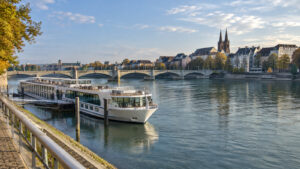
- Rhine: the classic first-timer route is Amsterdam to Basel or the reverse, often sold as about a week aboard. Expect a balanced mix of cities, old towns, castles, and the Upper Middle Rhine Valley.
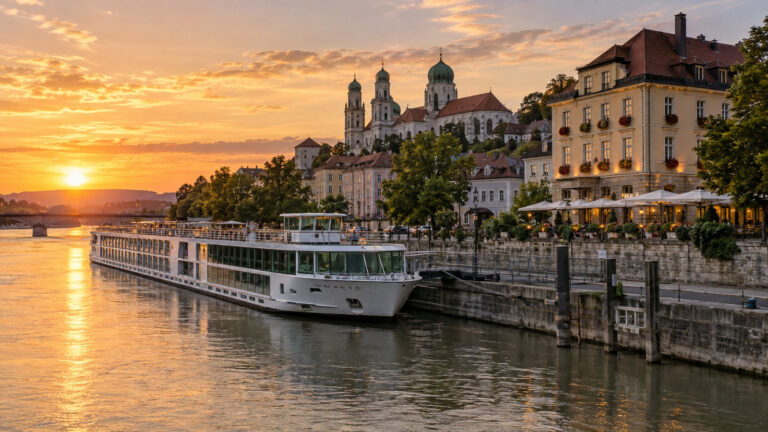
- Danube: common first-cruise routes link German or Austrian embarkation points with Vienna, Bratislava, and Budapest. Read the endpoints carefully because Passau to Budapest and Nuremberg to Budapest are not the same cruise.
- Douro: itineraries usually use Porto or nearby Vila Nova de Gaia as their base and travel east through Portugal’s wine country. Many return west rather than continuing as a one-way trip into Spain.
- Rhône: many cruises pair the Rhône with the Saône and connect Lyon with Avignon or Arles. Some extend north toward Burgundy, so “Rhône cruise” can describe more than one route.
- Best scenery: choose the Rhine for castles concentrated into one celebrated stretch, the Danube for the Wachau, and the Douro for vineyard scenery spread across much of the sailing.
- Biggest planning variable: berth location, rafting, excursions, and coach transfers can change the day more than the river name. Compare the actual itinerary and ship, not only the brochure headline.
- Water disruption: all four rivers can face operational changes from high water, low water, wind, lock closures, or local navigation restrictions. Regulation by dams and locks does not make a river disruption-proof.
Rhine: the best all-around first choice
A typical Amsterdam-to-Basel itinerary mixes Amsterdam, Cologne, smaller German river towns, the Rhine Gorge, Strasbourg-area sightseeing, and a Basel finish. The exact ports vary, and Heidelberg or the Black Forest may be reached by coach rather than from a downtown gangway.
The Rhine’s advantage is variety without requiring one obsession. You can have cathedrals, wine villages, castles, city time, and one major scenic stretch in the same week.
Its tradeoff is that the famous scenery is concentrated rather than continuous. Outside the gorge, working ports, industrial banks, and overnight sailing are part of the real river.
Choose the Rhine if
- You want a balanced first taste of European river cruising.
- Castles and compact historic towns matter more than capital-city museums.
- You want many cruise lines, ships, dates, and cabin categories to compare.
- You like a trip that mixes guided mornings with manageable independent wandering.
Skip it as your first choice if Amsterdam and Basel are doing most of the emotional work but the intermediate German stops do not interest you. A river cruise is a poor way to pay for two endpoint cities while ignoring the river in between.
Danube: best for capitals and cultural ambition
The Danube wins when the wish list starts with Vienna and Budapest. Many central Danube itineraries also include Bratislava, the Wachau, Melk, and a German embarkation or disembarkation point.
Route names can hide meaningful differences. An itinerary beginning in Nuremberg uses the Main-Danube Canal before reaching the Danube, while one beginning in Passau joins the river farther east and spends its week differently.
The Danube can feel busier because the marquee cities reward longer tours, museums, evening programs, and more walking. It also offers more route families than the familiar central stretch, including lower Danube cruises toward the Iron Gates and the Black Sea.
Choose the Danube if
- Vienna, Budapest, music, architecture, and imperial history are the priority.
- You enjoy full sightseeing days and do not mind using transit or a coach.
- You want the option to return later for a very different lower Danube itinerary.
- You are willing to inspect the exact endpoints instead of treating every Danube cruise as interchangeable.
Skip it if a string of major-city tours sounds exhausting. You can choose only one included excursion, but the temptation to collect every palace is strong.
Ports and pace: walk-off town or coach day?
No river guarantees a downtown berth. River levels, local assignments, ship traffic, construction, and rafting beside other vessels can change where and how you step ashore.
The Rhine often offers compact stops where independent exploring is practical, but some headline excursions leave from a different river port. The Danube’s larger cities may require a shuttle, public transit, or a longer walk, depending on the berth.
Douro quays beyond Porto can be small, with attractions or wineries uphill from the water. Salamanca is not on the Douro cruise route in Portugal, so itineraries that include it usually make it a substantial coach excursion from the Spanish-border area.
Rhône and Saône itineraries often pair approachable historic centers with coached visits to vineyards or Provençal sights. Lyon berth locations vary, and the words “Lyon” or “Avignon” on an itinerary do not promise a gangway beside the old town.
Before paying, read where river cruise ships actually dock and ask the line for its usual berths. Treat the answer as typical rather than guaranteed.
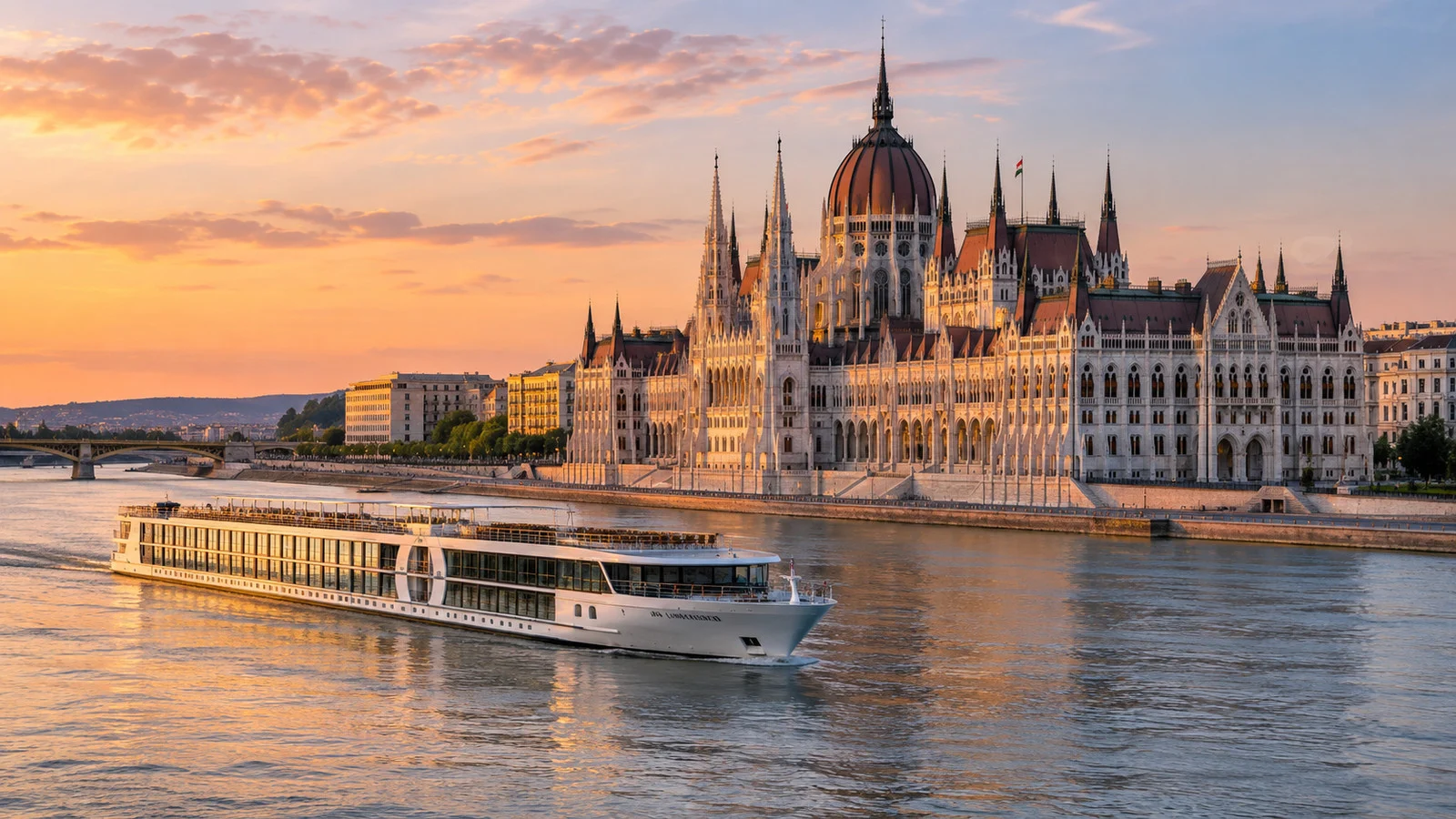
Scenery: castles, vineyards, or Provence
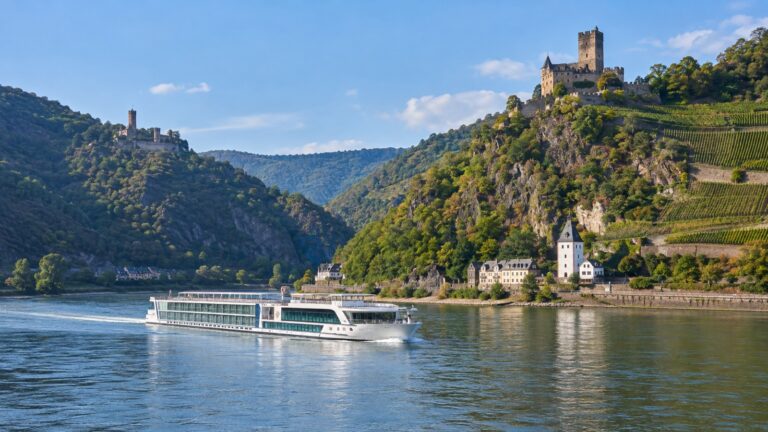
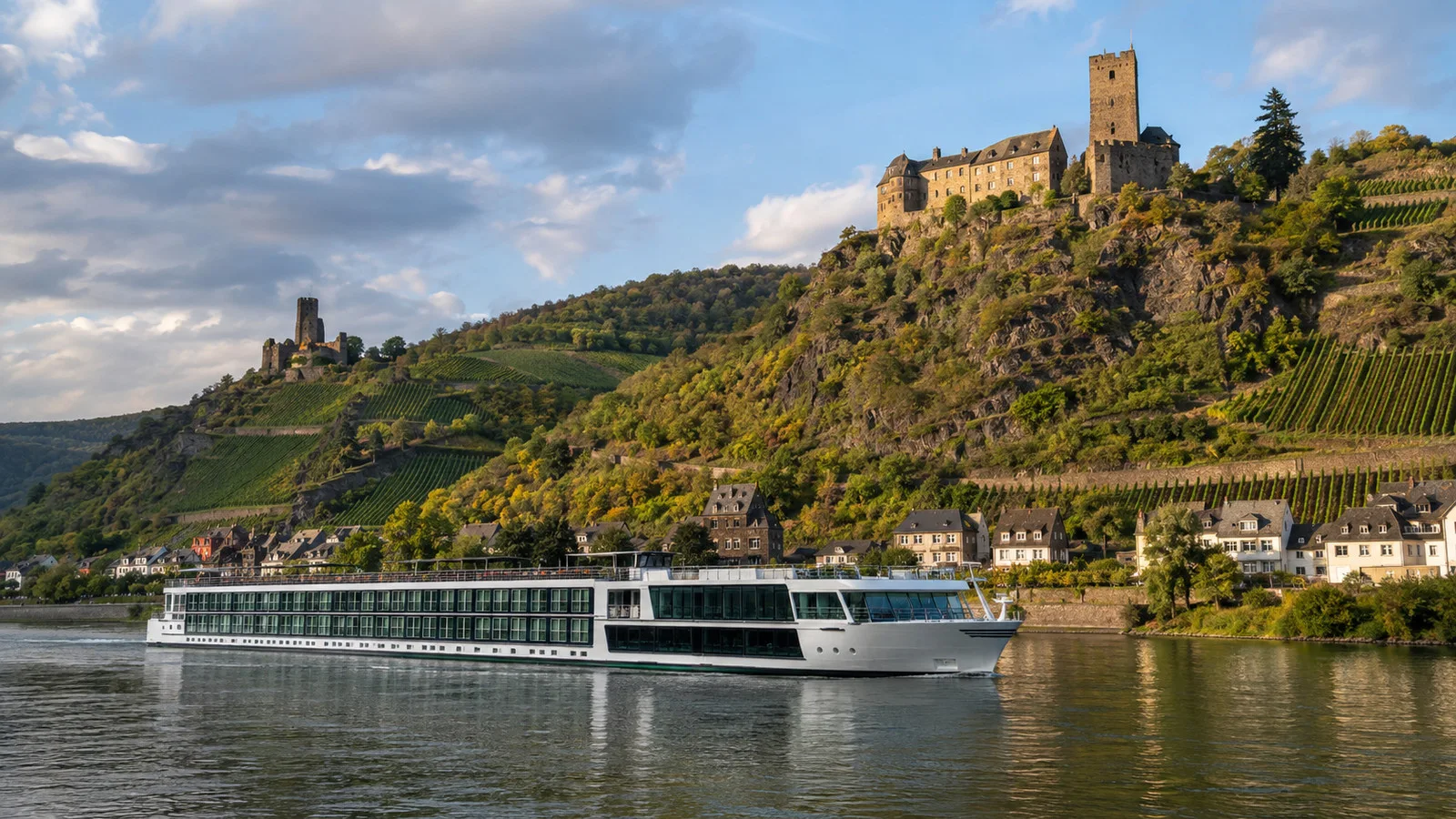
The Rhine’s signature is the UNESCO-listed Upper Middle Rhine Valley. UNESCO describes a 40-mile stretch between Bingen, Rüdesheim, and Koblenz with historic towns, terraced vineyards, and about 40 hilltop castles and fortresses.
The separate guide to Middle Rhine Gorge scenic cruising explains what to watch for and where to sit. Confirm the estimated passage time onboard because river traffic and schedules can shift it.
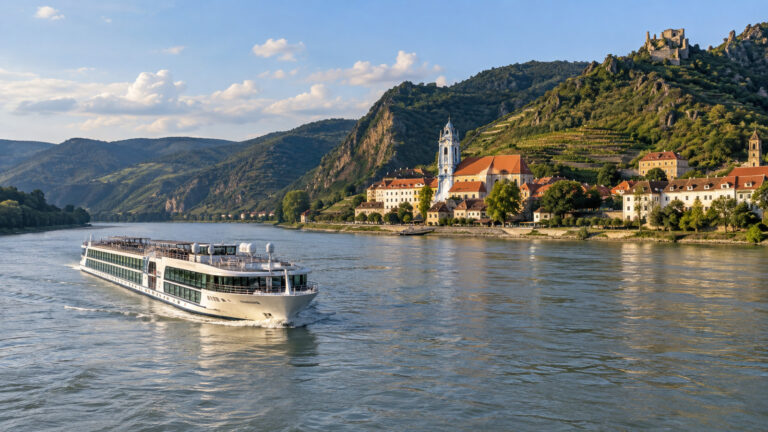
The Danube’s central showpiece is the Wachau Cultural Landscape between Melk and Krems. It combines vineyards, villages, monasteries, castles, and ruins, while lower Danube itineraries may add the much larger drama of the Iron Gates.
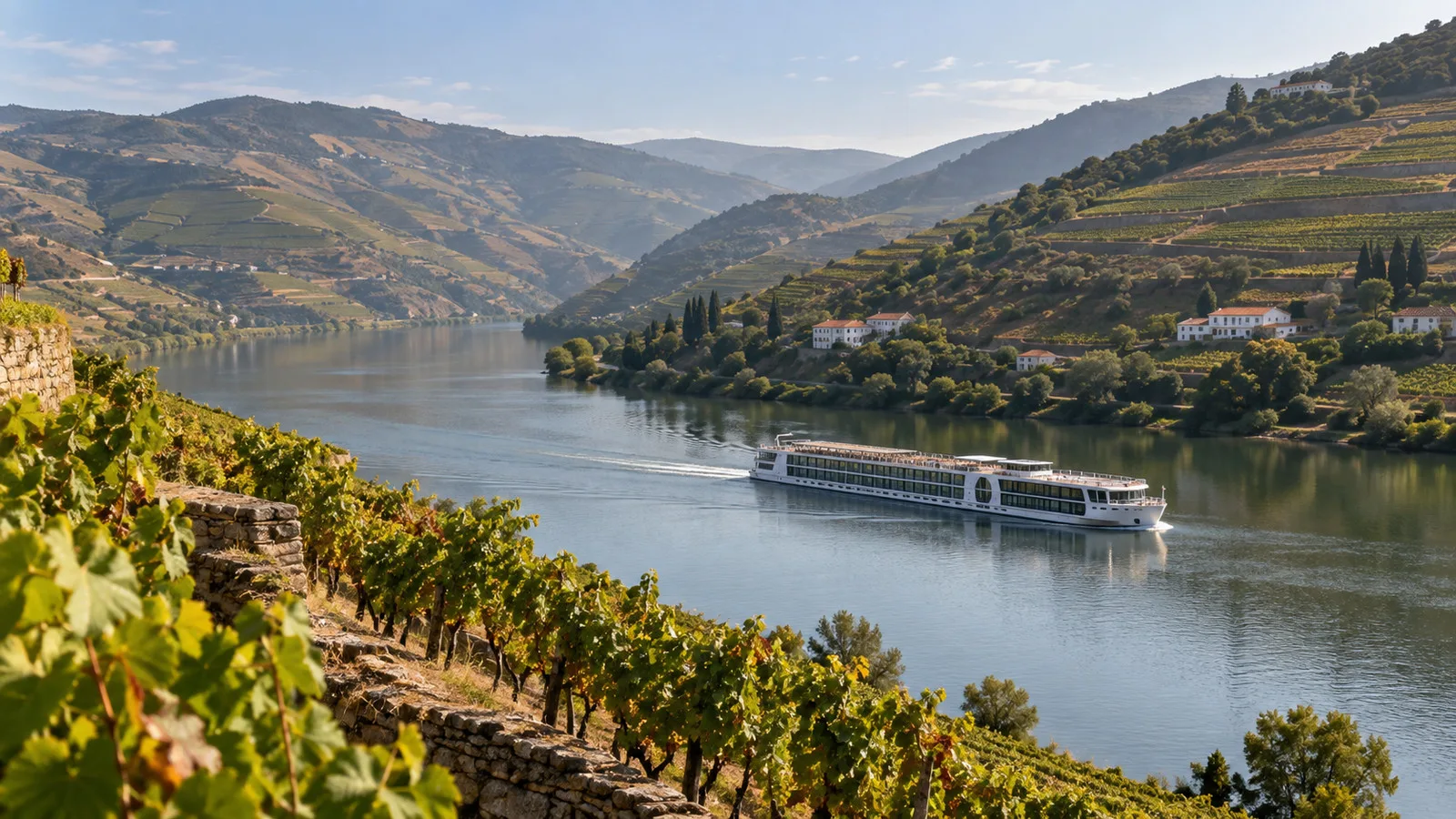
The Douro offers the most sustained vineyard scenery of the four. UNESCO describes the Alto Douro Wine Region as a steep terraced cultural landscape shaped by roughly 2,000 years of wine production.
The Rhône and Saône are less about one castle-packed gorge and more about changing regions. Look for vineyard country north of Lyon, river landscapes farther south, and strong destinations ashore in Lyon, Avignon, and Arles.
Douro: best when the landscape is the destination
The Douro feels different because ships generally travel east from the Porto area into a narrowing valley, then return west. The journey is closely tied to wine estates, terraced slopes, and the engineering that made the waterway navigable.
The APDL Douro waterway authority provides official waterway and quay information. Five major dams and locks shape the navigable route in Portugal, but the daily timing of lock passages belongs to the actual itinerary.
Cruise schedules often emphasize daylight scenery, yet “never sails at night” is too absolute for every operator and operational change. Check the day-by-day program if sleeping through movement or lock noise would bother you.
Choose the Douro if
- You want vineyard landscapes and scenic sailing to carry the week.
- Wine-focused excursions sound better than a parade of large museums.
- You are comfortable with hills, steps, coach rides, or choosing gentler alternatives.
- A round-trip route from the Porto area suits your flight plans.
Skip it if you need mostly flat independent walks from every quay. The river is gorgeous partly because the terrain rises so dramatically around it.
Locks: compare the route, not a headline number
Lock counts depend on the exact endpoints and whether the itinerary also uses the Main, Main-Danube Canal, or Saône. A number attached to an entire river is almost always less useful than the day-by-day route.
An Amsterdam-to-Basel Rhine cruise has several lock passages in its southern section, while the Middle and Lower Rhine portions have a different rhythm. A Nuremberg-to-Budapest trip includes canal locks that a Passau-to-Budapest trip never encounters.
The Douro’s five major Portuguese locks are memorable because of their scale. Rhône and Saône cruises use multiple locks too, with the total changing when a sailing extends north or uses a different turnaround point.
Locks may cause vibration, engine noise, bright light, or brief contact sounds, especially at night. The guide to European river cruise locks explains why a midship cabin away from the engines can help a light sleeper.
Do not choose a river solely because someone posted a lower lock count. Cabin location, overnight schedule, and whether the ship is rafted beside another vessel can matter more to sleep.
Water, wind, and itinerary changes
Every one of these rivers can disrupt a cruise. The cause and vulnerable stretch vary, and no responsible line can promise that dams or a particular month will eliminate the risk.
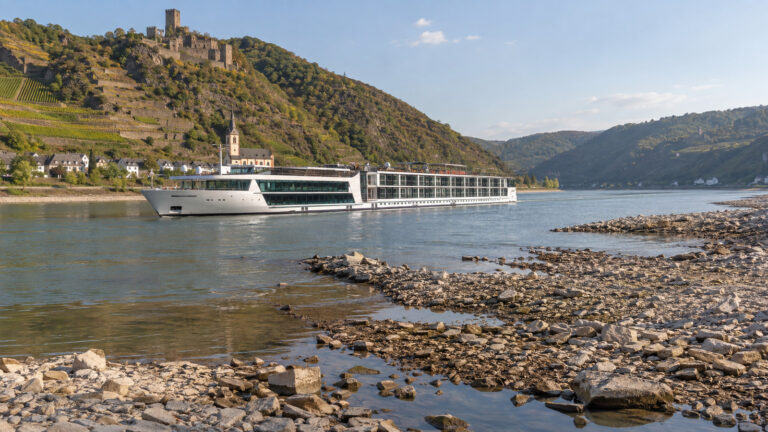
Low water receives the most attention on the Rhine and Danube because ships need enough under-keel clearance on shallower free-flowing reaches. High water can also stop navigation when bridges lack clearance, locks close, or authorities restrict traffic.
Austria’s viadonau waterway authority publishes current depths and short forecasts for the free-flowing Wachau and the Danube east of Vienna. Those official navigation figures are useful near departure, but they are not a passenger forecast months ahead.
The Douro and Rhône are heavily regulated, yet high flow, maintenance, lock issues, wind, or navigation orders can still alter plans. The mistral can affect southern Rhône operations, but it is not the only possible disruption there.
Read river-cruise water levels by month for seasonal context, then use the guide to what low water actually does to a cruise. Averages help with tradeoffs, but current flow and the line’s response plan control the real trip.
Ask the cruise line these questions
- Can the line swap ships, change ports, use hotels, or substitute coach touring?
- When does a material itinerary change allow cancellation or a credit?
- Does the travel-insurance policy cover only a canceled trip or also a changed one?
- Who pays for extra transfers if embarkation or disembarkation moves?
Get the answers from the current passenger contract and insurance policy, not a travel-forum memory. Policies differ by brand, country of booking, fare, and date.
Rhône and Saône: best for food, wine, and Roman France
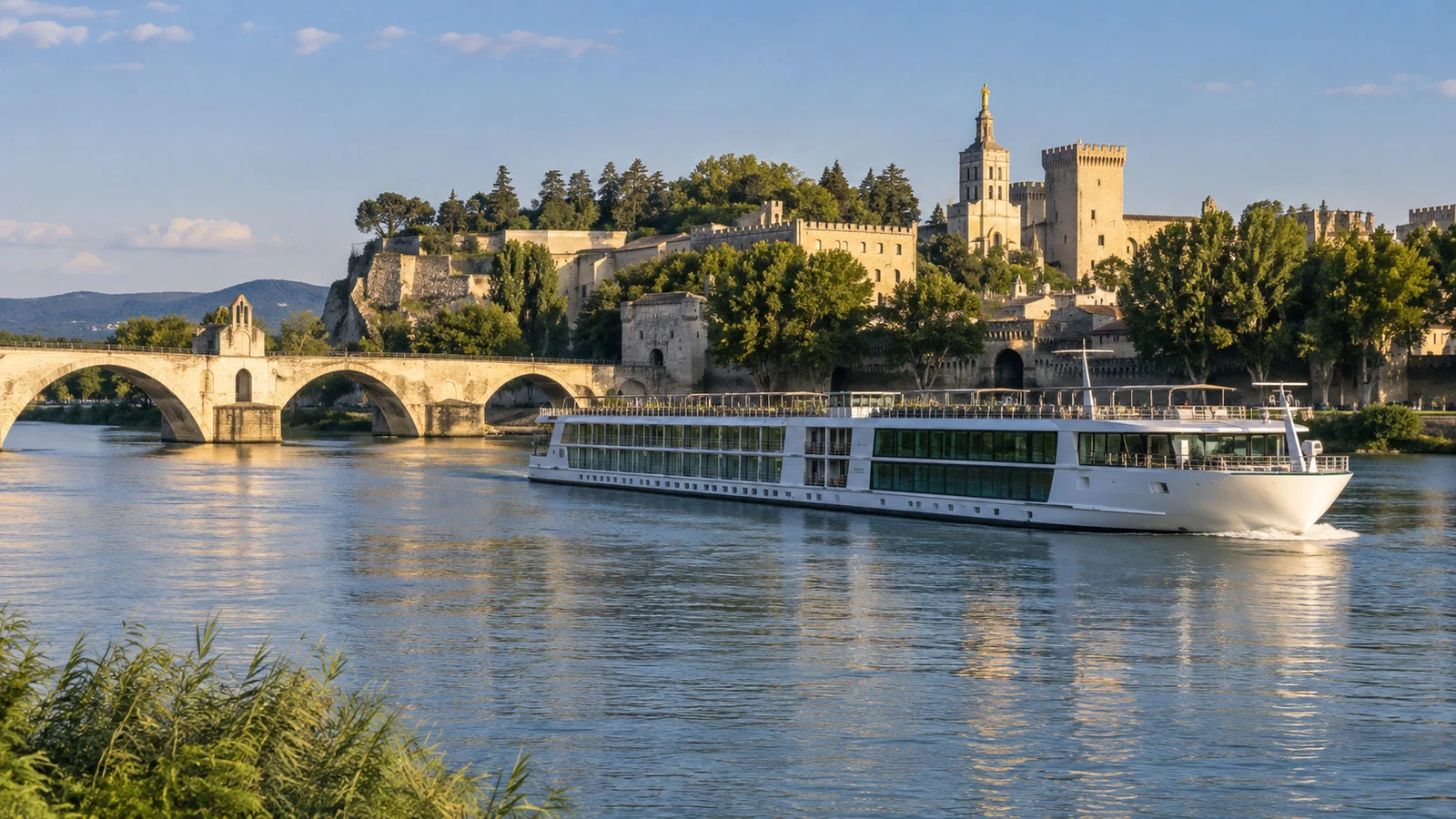
A Rhône cruise commonly links Lyon with Avignon or Arles, but many itineraries also travel north of Lyon on the Saône. That extension adds Burgundy or Beaujolais flavor and changes the number of sailing days, locks, and excursions.
The strongest reasons to choose it are ashore: Lyon’s food culture, vineyard visits, the historic core of Avignon, and Roman monuments around Arles. The river scenery is attractive, but it should not be sold as a nonstop gorge.
French navigation authorities and the Compagnie Nationale du Rhône manage infrastructure and navigation conditions along these waterways. Operational notices can affect a particular sailing, so the cruise line remains the passenger’s first contact.
Choose the Rhône and Saône if
- Food markets, regional wine, and Roman or medieval sites lead the wish list.
- You prefer a regional France trip to a multi-country itinerary.
- You want a mix of guided cultural days and smaller towns.
- You are happy to check whether the route includes the Saône, Burgundy, or only the lower Rhône.
Skip it if castle density or capital-city collecting is the dream. The Rhône’s personality lives in food, history, and the places reached from the quay.
Accessibility: the ship matters more than the river
None of these four rivers is automatically accessible or inaccessible. Gangway slope changes with water level, vessels may raft side by side, and an elevator may not serve every deck or the sun deck.
Historic centers can add cobbles, steps, steep grades, and buses that are not lift-equipped. The Douro’s hills deserve special attention, while large Rhine and Danube cities may offer more transit choices but longer distances.
Before booking, give the line the exact dimensions and weight of any mobility device and describe transfer abilities plainly. Ask about the named ship, elevator stops, cabin thresholds, gangway assistance, rafted docking, tender use, coach lifts, and whether a companion is required.
Request answers in writing and recheck if the ship changes. A line’s general accessibility statement is not enough to prove that one cabin, excursion, or berth will work.
When to go
Spring and fall usually bring milder sightseeing temperatures on all four rivers, but they do not guarantee ideal water. Summer offers long daylight and busy schedules, with hotter conditions on the inland Douro and in southern France.
The Rhine and Danube also have Christmas-market cruises, which trade warm sun-deck time for decorated cities and short winter days. Douro and Rhône schedules vary more by line outside the main season, so check actual departure calendars rather than assuming year-round service.
Direction matters less than the ports and times printed in the itinerary, but it can affect daylight scenic passages and flight logistics. The guide to choosing upstream or downstream explains what can change and what usually does not.
The booking checklist that settles the choice
- Circle the three places you care about most. If none appears on the detailed itinerary, choose another river.
- Count full coach days and optional excursions. A port name alone does not show how much time will be spent in transit.
- Check the exact endpoints. Nuremberg, Passau, Budapest, Basel, Porto, Lyon, Avignon, and Arles create very different flight and transfer plans.
- Read the docking language. “Visit” may mean a berth, a shuttle, or a coach excursion from another town.
- Compare the named ships. Cabin location, elevator reach, maximum passengers, and accessible features matter more than fleet-wide adjectives.
- Read disruption terms before the deposit. Look for ship swaps, hotel stays, coach substitutions, refunds, and responsibility for changed transfers.
- Protect the flights. Arrive near embarkation at least one day early and avoid a tight same-day connection after disembarkation.
How to choose in one minute
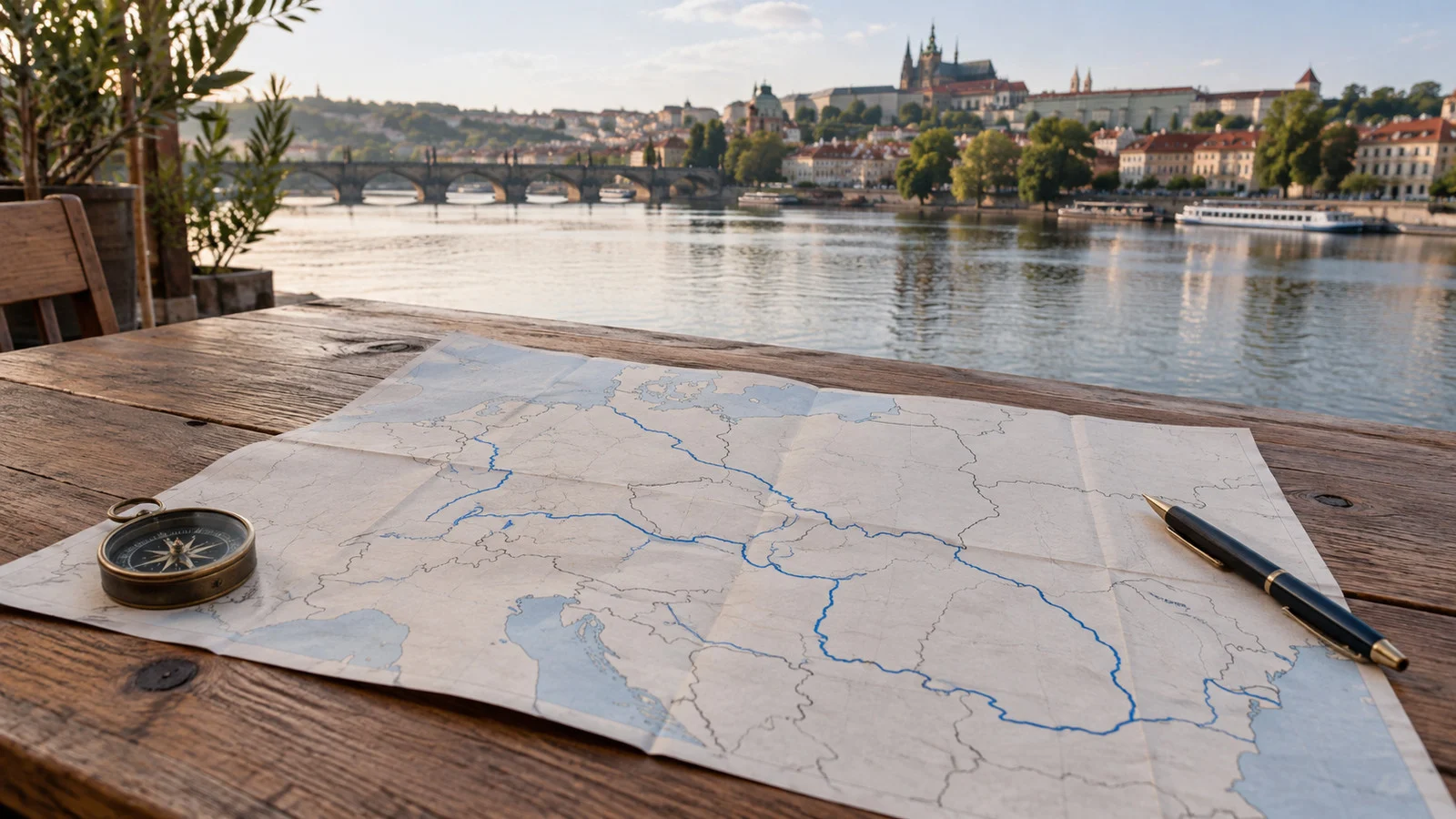
Choose the Rhine for the most balanced first cruise. Choose the Danube when Vienna and Budapest are nonnegotiable.
Choose the Douro when vineyard scenery and wine matter more than big-city variety. Choose the Rhône and Saône for French food, wine regions, Provence, and Roman history.
Then compare two real itineraries port by port. The river name gets you to the right shelf, but the schedule, ship, excursions, and contract choose the actual book.
Quick answers
Which river is best for a first European river cruise?
The Rhine is the strongest all-around choice for many travelers because it balances scenery, towns, cities, and itinerary choice without requiring one special interest.
Is the Rhine or Danube more scenic?
The Rhine concentrates castles in its UNESCO-listed gorge, while the Danube combines the Wachau with grand cities and can add the Iron Gates on lower-river routes.
Is the Douro too quiet for a first cruise?
No, if scenery, wine, and a less urban week are the goal, but travelers seeking several large cities may prefer the Danube or Rhine.
Does every Douro cruise sail only in daylight?
Daylight scenic cruising is a major feature of typical itineraries, but passengers should verify the operator’s current schedule rather than treating “no night sailing” as universal.
Which river is easiest with limited mobility?
No river wins automatically because the named ship, gangway, berth, rafting, coach, and excursion terrain determine whether the trip works.
Which river is safest from water-level changes?
None is disruption-proof, including the regulated Douro and Rhône, so compare the line’s written response plan instead of relying on a simple risk ranking.
The last word
The Rhine is the easy recommendation, not the mandatory one. A first cruise on the Danube, Douro, or Rhône can be better when its particular cities, landscape, or food match the reason you are going.
For a closer look, compare the main Douro river-cruise stops with the Rhône river-cruise ports. A pretty river is lovely, but a well-matched week is better.
How this guide was researched: Route and scenery details were checked against current UNESCO, viadonau, APDL, VNF, CNR, and cruise-line information. Itinerary details and operating conditions can change by date and ship, so confirm the exact sailing before paying; see our Editorial Policy.
More on this topic: browse every guide on river cruise planning.