River Cruise Locks: How Many on Each European River, and Why It Matters at 3am
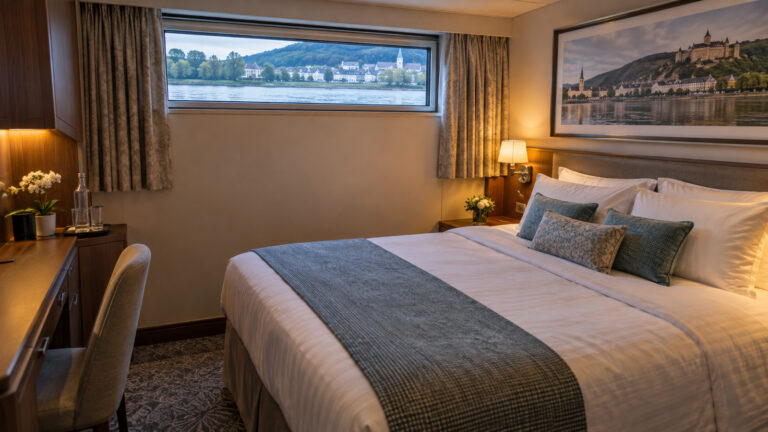
River cruise locks are water elevators for ships, and Europe uses them on a scale that is hard to appreciate until a steel gate fills your cabin window at 3 a.m. One itinerary may pass only a handful, while a route across the Main and Main-Danube Canal can make lock transits part of the nightly rhythm.
The useful number is never simply “locks on the river.” You need the count on the exact navigable segment between your embarkation and disembarkation points, including any canals and tributaries the itinerary uses.
European river cruise locks quick facts
- What a lock does: Raises or lowers a vessel between two water levels
- Main River benchmark: 34 locks on the navigable Main between the Rhine and Bamberg
- Main-Danube Canal benchmark: 16 locks between Bamberg and Kelheim
- Danube benchmark: 18 locks from Kelheim to Sulina, with 16 on the Upper Danube
- Upper Rhine benchmark: 10 lock complexes between Kembs and Iffezheim
- Moselle benchmark: 28 changes of level on the canalized waterway to Neuves-Maisons
- Rhône benchmark: 14 large-gauge locks on the 330-kilometer CNR navigation system
- Douro benchmark: Five navigation locks in Portugal
- Cabin issue: Bow thrusters, engines, gates, announcements, and close concrete walls can interrupt sleep
- Best quiet-cabin strategy: Choose a cabin away from the bow and stern, then add earplugs or white noise
- Why your count varies: Route endpoints, detours, maintenance, river levels, and port changes
The practical takeaway
Locks are fascinating in daylight and surprisingly physical at night. You hear water, machinery, engine corrections, lines, gates, and the occasional bump of fenders while the ship sits inside a chamber with very little space to spare.
There is no need to avoid a great itinerary because it has many locks, but it is smart to choose a cabin with them in mind. Midship is the safest general preference for light sleepers, while the lowest deck may wake to a concrete wall where it had a river view minutes earlier.
How a river lock works
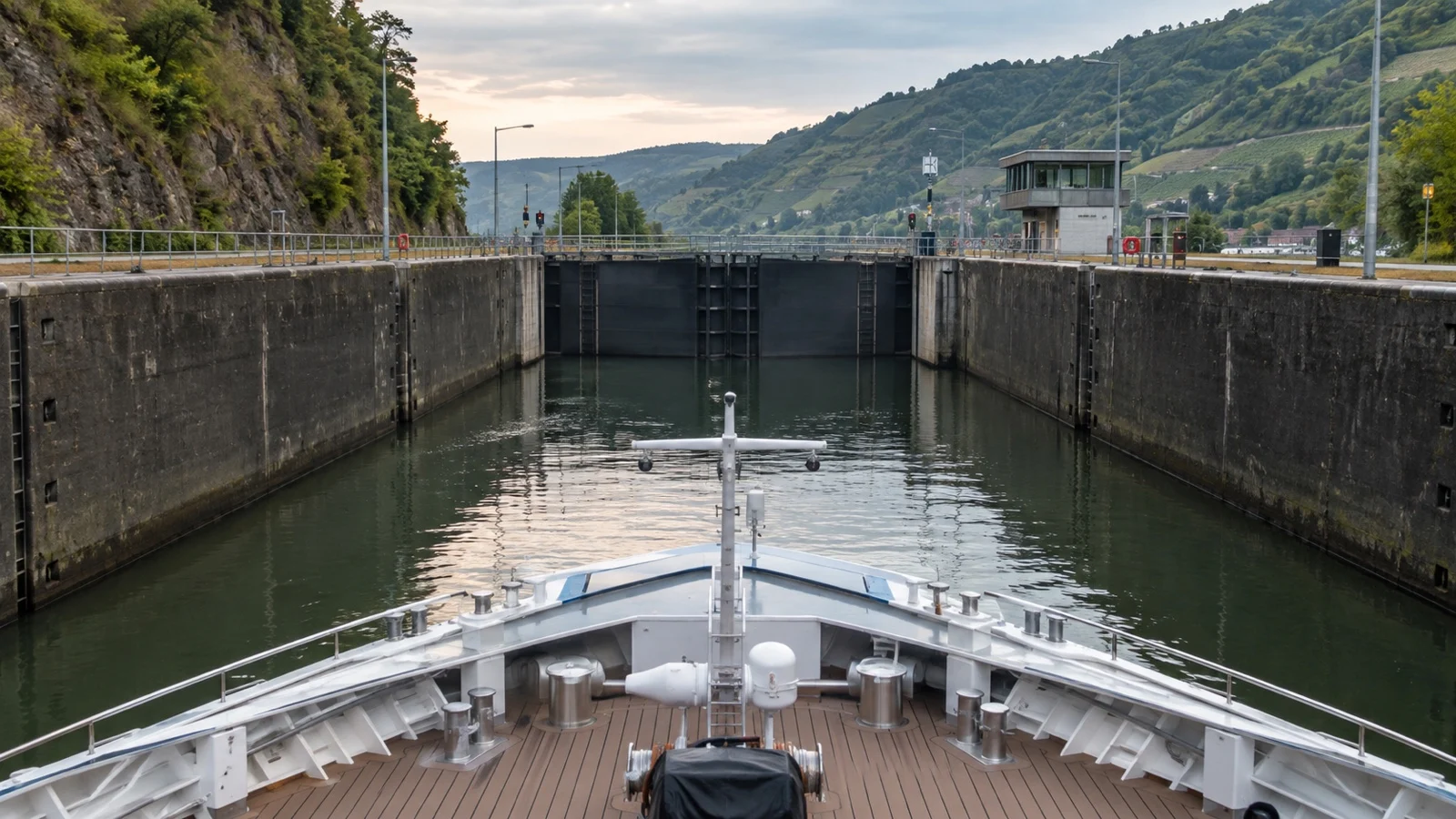
A ship enters a chamber whose water level matches the river reach it has just traveled. The gates close, valves move water into or out of the chamber, and the vessel rises or falls until the level matches the next reach.
The far gates then open and the ship continues. The crew may use engines, thrusters, lines, and fenders to hold position because wind, current, water movement, and another vessel can all affect the transit.
Most large European locks do not lift the ship with a mechanical platform. They move the water, and the floating ship follows the surface.
Why the walls feel so close
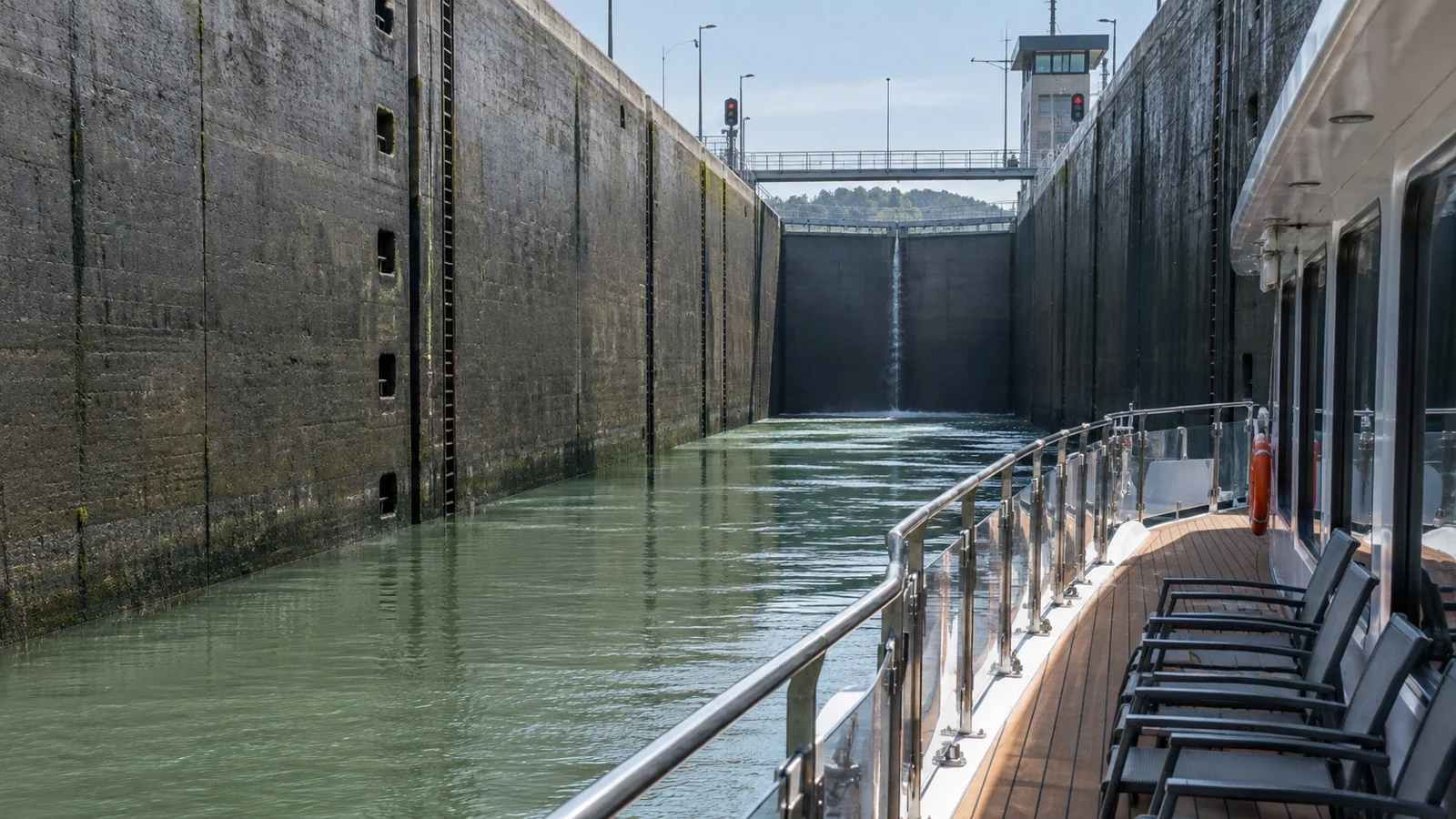
River ships are designed around waterway limits, including lock width, bridge clearance, and permitted length. A 135-meter vessel can look elegant on open water and enormous inside a narrow chamber.
Your balcony or window may sit only a short distance from wet concrete, ladders, bollards, or another vessel. Never reach outside, lean over a rail, or place belongings beyond the cabin boundary during a lock transit.
Why ships sometimes share a chamber
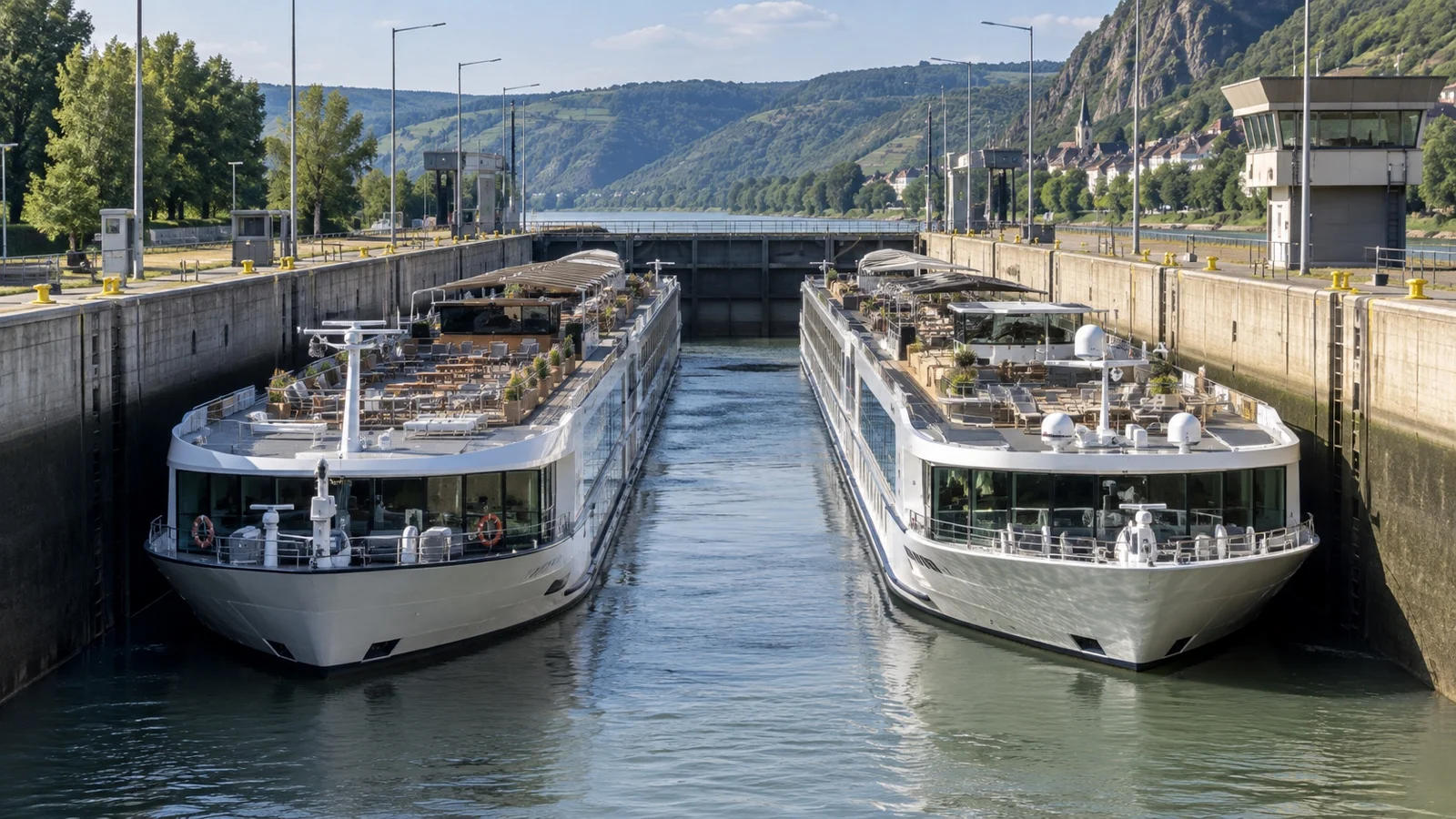
Lock operators manage commercial traffic, passenger vessels, and other authorized craft according to local rules and traffic conditions. Two compatible vessels may enter together when the chamber and schedule allow.
Sharing does not mean the ships are improperly close. The masters and lock staff work within operating dimensions that passengers cannot judge from a cabin window.
Why lock counts are easy to get wrong
Cruise marketing often names the Rhine, Danube, or Rhône even when the ship also uses a canal, a tributary, or only one portion of the named river. A total copied from the whole waterway can therefore overstate what your ship will encounter.
Direction usually does not change the number of structures, but embarkation points do. Basel to Amsterdam crosses the regulated Upper Rhine, while Amsterdam to Cologne stays below the Iffezheim lock system and normally uses no main-stem Rhine locks.
Maintenance, damaged infrastructure, high water, low water, and route substitutions can change the actual trip. A cruise line may transfer guests by coach, swap ships, or use an alternate port rather than send the vessel through every planned lock.
Rhine River locks
The Rhine is mostly free flowing between Iffezheim and the Netherlands, which surprises travelers who expect constant locks on a Rhine cruise. The lock-intensive section is the Upper Rhine between the Basel area and Iffezheim.
Official Rhine navigation rules identify the complexes at Kembs, Ottmarsheim, Fessenheim, Vogelgrun, Marckolsheim, Rhinau, Gerstheim, Strasbourg, Gambsheim, and Iffezheim. That gives a benchmark of ten lock complexes for a cruise using the full regulated section.
The Central Commission for the Navigation of the Rhine publishes navigation rules and special provisions for the Basel to Iffezheim reach. Current closures and restrictions should be checked through official river-information services rather than assumed from the normal count.
What this means for common Rhine itineraries
A Basel to Amsterdam or Basel to Cologne sailing may traverse the ten Upper Rhine complexes before entering the long free-flowing section. A cruise that starts in Strasbourg or Breisach uses only the locks between that point and its direction of travel.
An Amsterdam to Basel cruise normally saves the lock-rich section for later in the itinerary. That can make the final nights busier than the early days, depending on the sailing schedule.
Main River locks
The navigable Main between the Rhine near Mainz and Bamberg is controlled by 34 locks and weirs. A through cruise heading toward the Main-Danube Canal may use all 34, while an itinerary ending in Frankfurt, Würzburg, or another Main port uses only the relevant portion.
The Federal Waterways and Shipping Administration manages the German federalway. Its Main waterway office is the authoritative place for current lock notices, maintenance, and navigation restrictions.
Main locks often arrive in close enough succession that several transits occur overnight. The ship may spend much of the night adjusting speed to meet assigned lock slots.
Main-Danube Canal locks
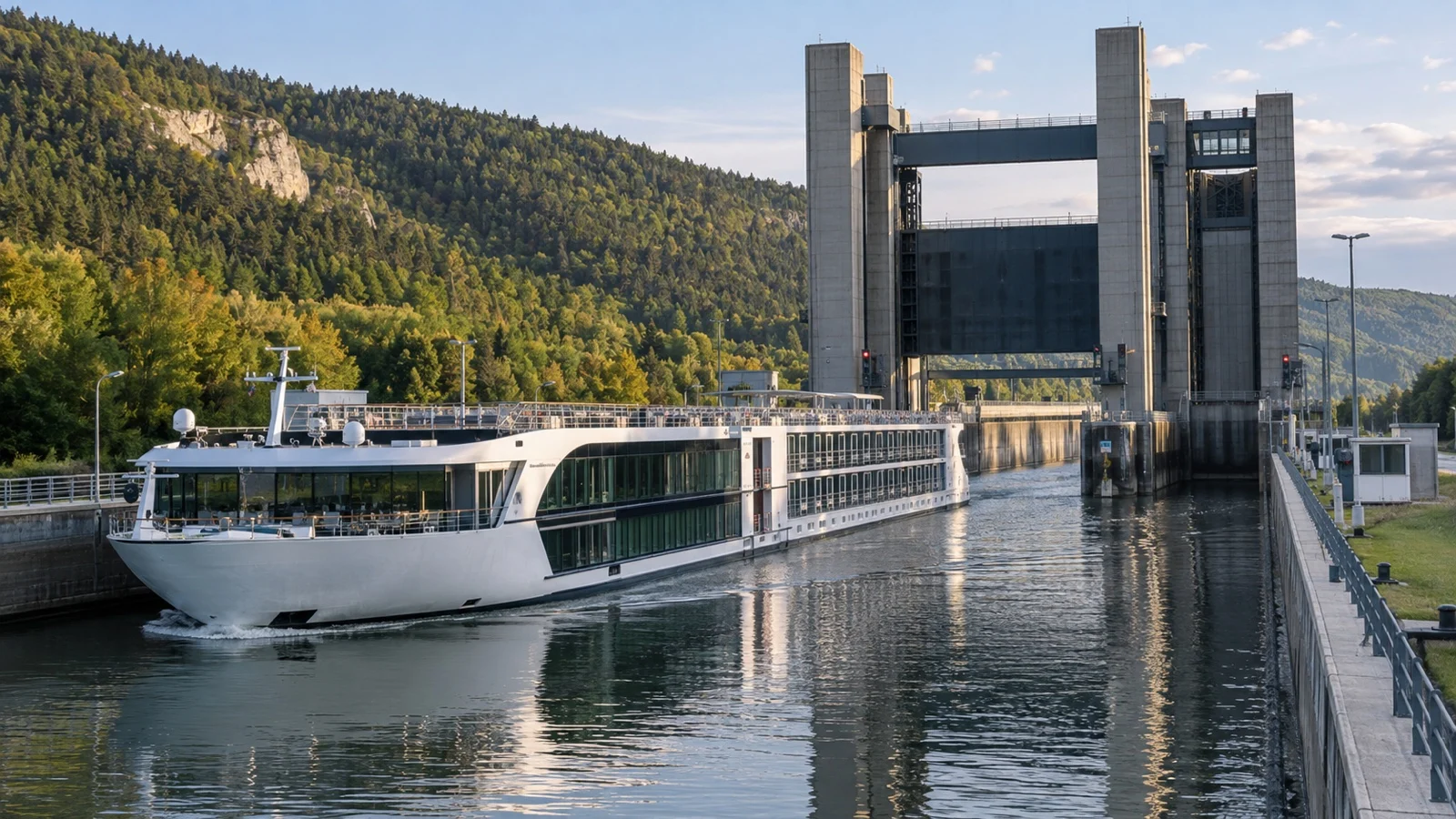
The Main-Danube Canal crosses the European watershed between Bamberg and Kelheim. It has 16 locks, including high-lift chambers that raise the ship to the summit level and lower it toward the Danube.
Eleven locks climb from the Main side to the summit reach, while five descend toward the Danube. The largest lifts approach 25 meters, which makes the chamber walls especially dramatic from lower-deck cabins.
The Danube and Main-Danube Canal waterway office publishes official operational information. The normal count remains 16, but a cruise timetable can change when maintenance or traffic affects a chamber.
Why this canal creates late-night noise
Through itineraries cannot treat the canal as a sightseeing stop that closes after dinner. The vessel keeps moving toward scheduled ports, and lock transits may continue around the clock.
Tall structures and limited clearance also influence sun-deck access. Crew may lower railings, shades, antennas, or other equipment, and passengers must obey closures even when the night appears calm.
Danube River locks
The Danube count depends enormously on the segment. Official Austrian waterway operator viadonau states that there are 18 locks from Kelheim to Sulina, with 16 on the Upper Danube between Kelheim and Gönyű and two at the Iron Gates.
The viadonau lock overview also notes that 14 of the 18 facilities have two chambers. Nine of the Danube locks are in Austria, where viadonau supervises daily operation.
A classic cruise between Regensburg and Budapest uses the Upper Danube system but does not continue to the Iron Gates. A lower-Danube itinerary may use the Iron Gate I and II complexes without traveling through every Upper Danube lock.
Amsterdam to Budapest
A full through route typically combines three major components: 34 locks on the Main, 16 on the Main-Danube Canal, and the applicable Upper Danube locks after Kelheim. The Rhine portion below Mainz does not add main-stem locks.
That arithmetic explains why different brochures and travel blogs publish totals that do not match. Some count structures, some count chamber transits, some include Dutch approach waterways, and some use a different embarkation or disembarkation berth.
Moselle River locks
The canalized Moselle has 28 changes of level between Koblenz and Neuves-Maisons. Ten are in Germany, two sit on the Luxembourg-Germany boundary reach, and 16 are in France.
Many leisure itineraries sail only between Koblenz and Trier or Luxembourg, so they use a subset rather than all 28. The Moselle Commission, the intergovernmental body for Germany, France, and Luxembourg, provides rules, traffic reports, and scheduled closures.
The Moselle’s incident history is a useful reminder that one damaged lock can affect the entire route. A vessel may not have a parallel channel or practical bypass, making coach transfers and itinerary changes necessary.
Rhône and Saône locks
CNR, the French company responsible for developing and operating the Rhône navigation system, reports 14 large-gauge locks across 330 kilometers of navigable river. It also lists five smaller leisure locks on the Upper Rhône, which typical hotel ships do not treat as part of a standard Lyon to Provence count.
A cruise between Lyon, Avignon, Arles, and the lower river uses only the large locks along its actual path. It may also sail the Saône north of Lyon, adding a different set of structures depending on the itinerary endpoint.
The official CNR navigation page says the large locks are remotely controlled from Châteauneuf-du-Rhône. CNR also schedules coordinated maintenance closures, which is why operators plan seasons around the navigation calendar.
Why Rhône nights can feel different
The Rhône can carry a strong current, so engine and thruster corrections may be more noticeable around approaches. Wind in the valley adds another variable even when the water level looks normal from the deck.
Do not interpret engine noise as a sign that something has gone wrong. The bridge team is managing current, traffic, and lock instructions that passengers cannot see.
Douro River locks
Portugal’s navigable Douro has five major locks at Crestuma-Lever, Carrapatelo, Régua, Valeira, and Pocinho. A cruise sailing the full navigable route toward Barca d’Alva normally uses all five in each direction.
Carrapatelo has the largest lift, about 35 meters, and can feel like entering a narrow concrete canyon. The other chambers are also substantial because the dams step the river through steep wine country.
The Douro waterway is managed by APDL, and current navigation schedules can be affected by dam operations, weather, maintenance, and river conditions. Count each structure once per passage, then double the number for a round-trip cruise that returns through the same five locks.
Seine, Dutch waterways, and smaller canals
The Seine has locks between Paris and the sea, but the exact number depends on whether the ship starts in central Paris, another Seine berth, Rouen, or a coastal transfer point. Itineraries can also reverse or alter turnaround locations.
Dutch river cruises may use locks on canals, branches, and flood-control waterways even when the headline says Rhine. The Netherlands is a network, so a lock count requires the actual routing rather than a single river name.
Smaller French, Belgian, and central European waterways can add locks rapidly over short distances. The cruise line’s nautical route is the only sensible basis for a precise cabin-night estimate.
What you may hear at 3 a.m.
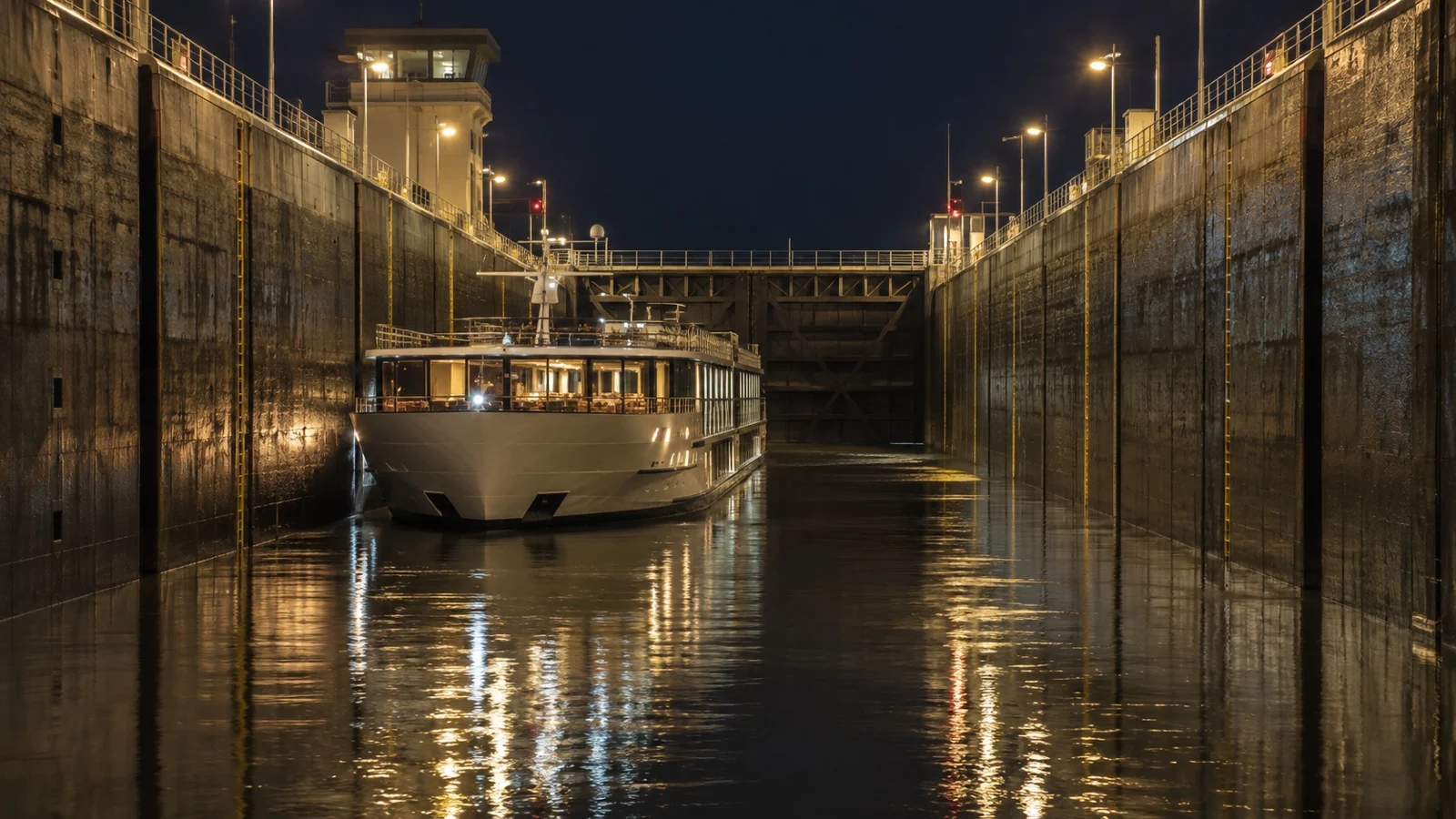
The most common sounds are a change in engine tone, bow-thruster vibration, water rushing through the chamber, gate machinery, and fenders rubbing against a wall. Crew radios and exterior announcements can occasionally carry through an open window.
A short bump does not necessarily indicate a collision. Fenders are designed to protect the hull while the vessel settles against a wall or another compatible craft.
The loudest phase may be the approach rather than the lift itself. Thrusters work hard when the captain needs precise sideways movement in current or wind.
Why opening the window is a bad idea
A French balcony or opening window can face a damp wall at arm’s length. Keep your body, camera, phone, and clothing inside the cabin throughout the transit.
The ship may post specific instructions or lock the opening mechanism. Follow them immediately because clearance can change from one chamber to the next.
Which cabins are quietest around locks
A midship cabin generally sits farther from the bow thrusters and stern propulsion equipment. It cannot eliminate water, gate, or wall noise, but it avoids the strongest mechanical sources on many vessels.
Bow cabins can feel thruster vibration during approach, while aft cabins may hear engines and propellers more clearly. The exact machinery layout differs by ship, so a deck plan alone cannot guarantee silence.
Lower-deck cabins place you close to the waterline and chamber wall. Higher decks may reduce the enclosed feeling, but they can pick up deck equipment and crew activity near the top of the lock.
Practical sleep strategy
Pack comfortable earplugs and use a white-noise app or small approved machine. Close curtains before bed because chamber lighting can suddenly brighten a dark cabin.
Secure loose items that might rattle when thrusters start. If vibration matters because of a medical condition, ask the cruise line about machinery locations before choosing a cabin.
Watching a lock transit safely
A daylight transit is one of the best free demonstrations on a river cruise. Watch from an open deck only when it is accessible and the crew has not closed it for low bridges, lock clearance, or operational work.
Keep hands, cameras, and straps inside the railing. Mooring lines can tighten without warning, and crew work zones must remain completely clear.
Notice the water marks on the chamber wall, the changing height of ladders and bollards, and the way gates hold back the next reach. The scale becomes obvious when a neighboring vessel enters beside you.
Lock delays and itinerary changes
A lock can be delayed by traffic, maintenance, technical failure, water levels, an incident, or a scheduled closure. Ships may wait in an approach area until the operator assigns a chamber.
One delay can move an excursion, shorten free time, change a berth, or require a coach transfer. River cruise schedules contain recovery time, but no operator can guarantee every published arrival after a major navigation restriction.
Use the cruise director’s updates as live information. Independent tours should have flexible cancellation terms and enough return buffer for a changed docking location.
Locks, high water, and low water
Locks manage differences in water level created by dams and river engineering, but they do not make the whole route immune to hydrology. High water can reduce bridge clearance or close a reach, while low water can limit safe draft between controlled sections.
A lock may remain physically operational even when the approach channel is restricted. The ship’s dimensions, draft, onward route, and local rules all matter.
There is no honest fixed percentage for whether a particular cruise will be disrupted. Conditions develop across the watershed, and operators may solve the same event in different ways.
Why river ships have their distinctive shape
Locks and bridges help explain the long, low proportions of European river ships. Length, beam, draft, air draft, and turning space are constrained by the route in ways that ocean vessels never face.
Sun-deck railings, shades, and navigation equipment may fold down for low clearances. The ship is not becoming unsafe when the top deck closes, but passengers must give the crew room to reconfigure it.
A vessel built for the Douro may differ from one designed for the Rhine-Main-Danube network. Do not assume every river ship can simply substitute onto every waterway.
Accessibility during lock-heavy sailing
Passengers do not normally disembark inside commercial locks, so the transit itself requires no walking. The challenge is vibration, noise, temporary deck closures, and reaching an indoor viewing area if elevators do not serve every level.
Ask whether the elevator connects your cabin with the lounge and restaurant, and whether it operates while the ship is underway. Some vessels restrict elevator use during certain operations or emergencies.
If sudden noise or vibration affects balance, stay seated during approaches and use handrails when moving. A nighttime transit is not the moment to navigate an unfamiliar exterior deck alone.
Common lock questions
Does every Rhine cruise pass through ten locks?
No. Ten is the benchmark for the regulated Upper Rhine between Kembs and Iffezheim, while itineraries using only the Rhine below Iffezheim normally avoid those main-stem locks.
How many locks are on the Main-Danube Canal?
There are 16 between Bamberg and Kelheim. A through cruise normally uses all of them unless the itinerary changes or part of the journey moves by land.
How many locks are on the Danube?
Viadonau counts 18 from Kelheim to Sulina, including 16 on the Upper Danube and two at the Iron Gates. Your cruise will use only the facilities between its actual endpoints.
How many locks are on the Douro?
There are five navigation locks on the Portuguese route. A round trip toward the Spanish border can pass each one twice.
Will locks wake me?
They may, especially in a bow, stern, or lower-deck cabin. Earplugs, closed curtains, secured loose objects, and a midship location reduce the disruption.
Can I watch at night?
Only from an area the crew leaves open. Obey deck closures and keep every part of your body and equipment inside the rail.
Why is the published count different from my actual trip?
The sailing may cover a shorter segment, add another waterway, reverse at a different port, or change because of operations. Count the route, not the marketing title.
The last word
Locks are not background infrastructure on a European river cruise. They shape the vessel, the schedule, the cabin experience, and the route between seas and watersheds.
Learn the segment count, choose your cabin with machinery in mind, and expect a few nighttime transits on lock-heavy itineraries. Then watch one in daylight, because the engineering is far more interesting when you are awake for it.
About the author: Ellie writes practical river cruise guides that connect the engineering outside your window with the choices you make before booking.
Lock operations, closures, routes, and river conditions change, so confirm current navigation details with your cruise line.
More on this topic: browse every guide on river cruise planning.