Port or Starboard on a River Cruise: Does Cabin Side Matter?
Port or starboard usually matters much less on a river cruise than cabin location, deck, window type, and accessibility. A vessel can dock on either bank, turn, raft beside another ship, and pass scenery on both sides.
Side can still affect a particular view for a few minutes or hours, plus sunlight, quay noise, and privacy while docked. None of those is reliably fixed for a whole itinerary.
My quick take
Choose the quieter or more accessible cabin position first, then treat side as a free preference. Do not pay a meaningful premium solely for port or starboard unless the line can explain a ship-specific benefit you value.
For scenic stretches such as the Upper Middle Rhine, Wachau, or Douro valley, use the lounge or open deck when accessible and permitted. Important sights appear on both banks, and the ship’s direction determines which bank faces each cabin side.
For port views, expect uncertainty. A harbor authority can change the berth, another vessel can raft alongside, or the ship can turn before departure.
The quick facts
- Port means left and starboard means right: the reference is always a person facing the bow. The labels do not change when the ship travels upstream.
- Riverbanks use a different reference: left bank and right bank are named while facing downstream. A right-bank landmark is starboard on a downstream passage and port on an upstream passage.
- Berth side can change: local harbor authorities control docking availability, and the vessel can approach or leave in the direction operations require. A cabin may face the quay at one stop and open water at the next.
- Rafting can block either side: Uniworld says ships may moor next to or between other vessels, while Avalon warns that this can temporarily obstruct views. The outside neighbor is not predictable from your cabin booking.
- Scenic valleys have sights on both banks: one side may see a named landmark first or more directly, but no cabin side owns the entire Rhine Gorge, Wachau, or Douro landscape.
- Cabin position usually matters more: compare machinery, public rooms, stairs, elevators, sun-deck activity, and the gangway route. Those features affect more hours than one bank view.
Port, starboard, left bank, and right bank
Stand facing the bow and port is on your left, while starboard is on your right. Those ship terms stay fixed regardless of the vessel’s course.
Riverbanks are named as if you are facing downstream. This convention prevents the bank name from changing when a vessel reverses direction.
On a downstream passage, the river’s right bank appears on the ship’s starboard side. On an upstream passage, that same right bank appears on the port side.
This is why advice copied from the reverse itinerary can point you toward the wrong cabin. Confirm which direction the ship travels during the scenic segment rather than relying only on the route’s start and end cities.
A round-trip itinerary may show the same reach from both directions. In that case, each cabin side can receive a second chance at the opposite-bank view.
Why a ship may face different ways
The vessel follows navigation rules, traffic, current, berth design, and the port’s operational plan. It may turn before docking, after departure, or during a sightseeing pass.
The quay can be on either bank, and the gangway can be set from the side the vessel and berth support. A line cannot promise that one cabin side will always face the city.
Uniworld’s current FAQ says docking locations are determined by local harbor authorities rather than the line or captain. It also tells guests to contact the ship for the current location before traveling to the berth.
The guide to river-cruise berth changes explains why a ship can move while passengers are ashore. A side preference cannot control that decision.
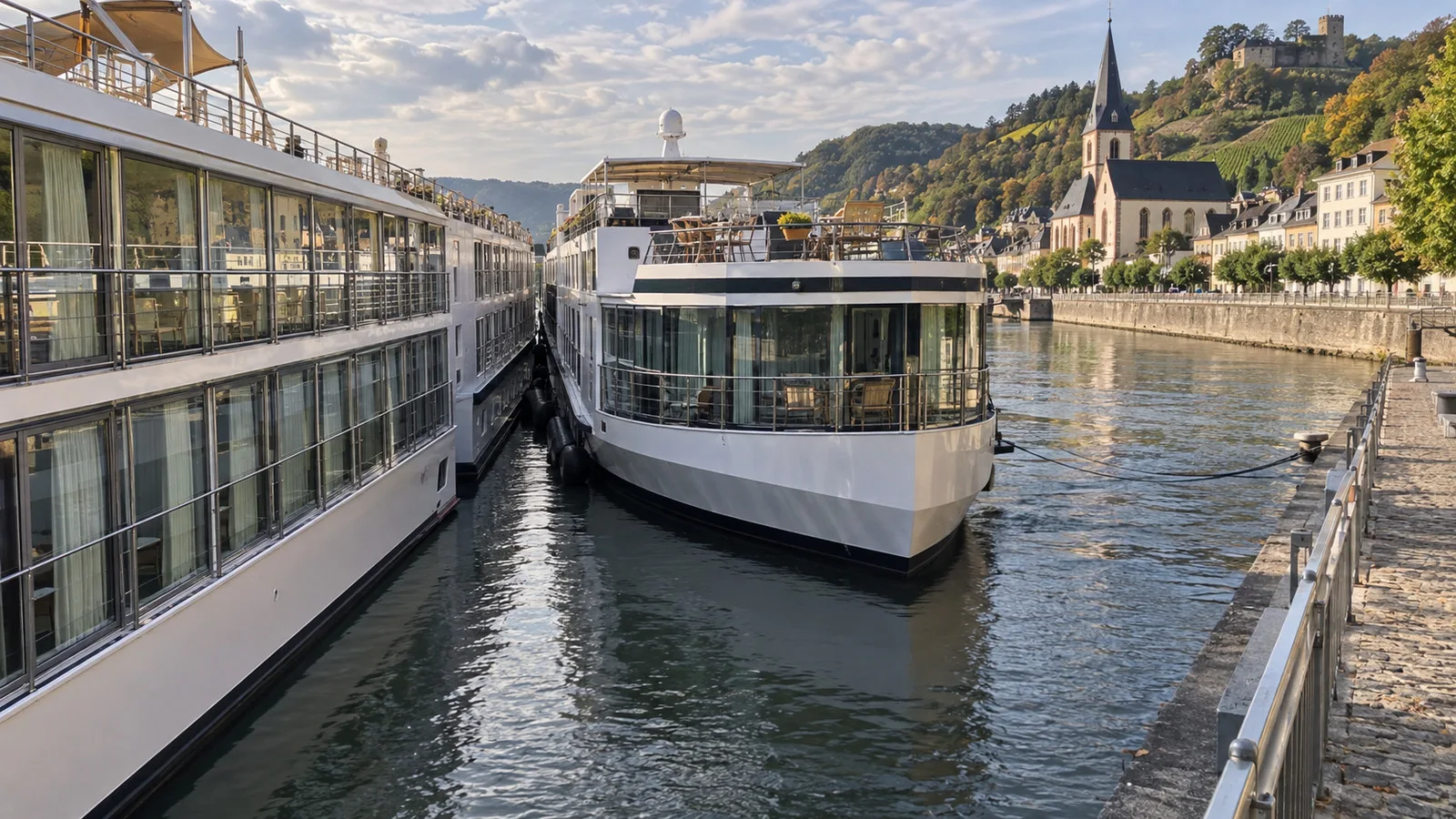
Rafting can erase the expected view
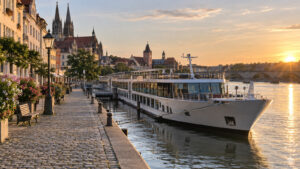
Busy river ports sometimes place vessels side by side at one quay. Passengers on the outside vessel may cross another ship, while passengers inside may see the neighboring hull or cabins.
Uniworld warns that ships can moor next to or between other ships, and Avalon notes that views may be temporarily obstructed. Neither practice assigns one permanently better side.
Rafting can also change daylight and privacy in a French-balcony or panoramic-window room. Close the curtain when another vessel is directly alongside.
The gangway route may pass through one or more ships. This matters more than the view for travelers who use mobility equipment or cannot manage changing steps.
Review the guide to river-cruise rafting for the access and etiquette details. Ask onboard how the current arrangement affects your route ashore.
Dockside versus waterside tradeoffs
The quay-facing side may hear luggage, supplies, excursion groups, crew work, or a public promenade. The waterside may offer more privacy until another vessel rafts outside.
Which side faces the quay can change at every call. Even an overnight berth may change after bunkering, water-level adjustments, or local instructions.
A waterside cabin is not necessarily quieter because passing vessels, current, pumps, propulsion, or another ship can create noise. A quay-side cabin is not necessarily noisy when the berth is quiet and operations occur elsewhere.
If dockside noise matters greatly, choose a room away from likely gangway and service positions rather than choosing port or starboard. The exact deck plan is more useful than a side label.
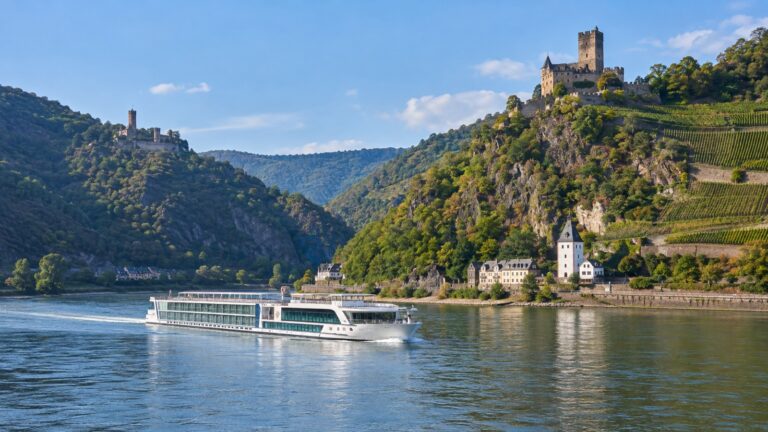
The Upper Middle Rhine Valley
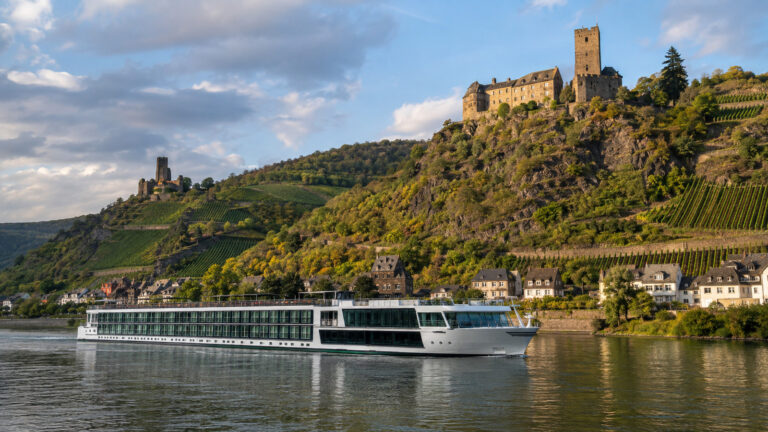
UNESCO’s Upper Middle Rhine Valley covers a landscape of castles, historic towns, vineyards, and steep slopes. The important point for cabin choice is that features are distributed across both banks.
The Loreley is on the right bank, so it appears starboard downstream and port upstream. Other castles and towns alternate, which makes a one-side-only plan a poor way to see the whole valley.
The ship may also turn, pass traffic, or adjust position during commentary. A public viewing area gives you the freedom to change sides.
Ask when the scenic commentary begins and whether the open deck will be available. Weather, bridge clearance, and crew operations can restrict access.
The Rhine Gorge scenic-cruising guide explains the landmark sequence. Use that sequence to choose where to stand rather than treating one cabin side as correct.
The Wachau
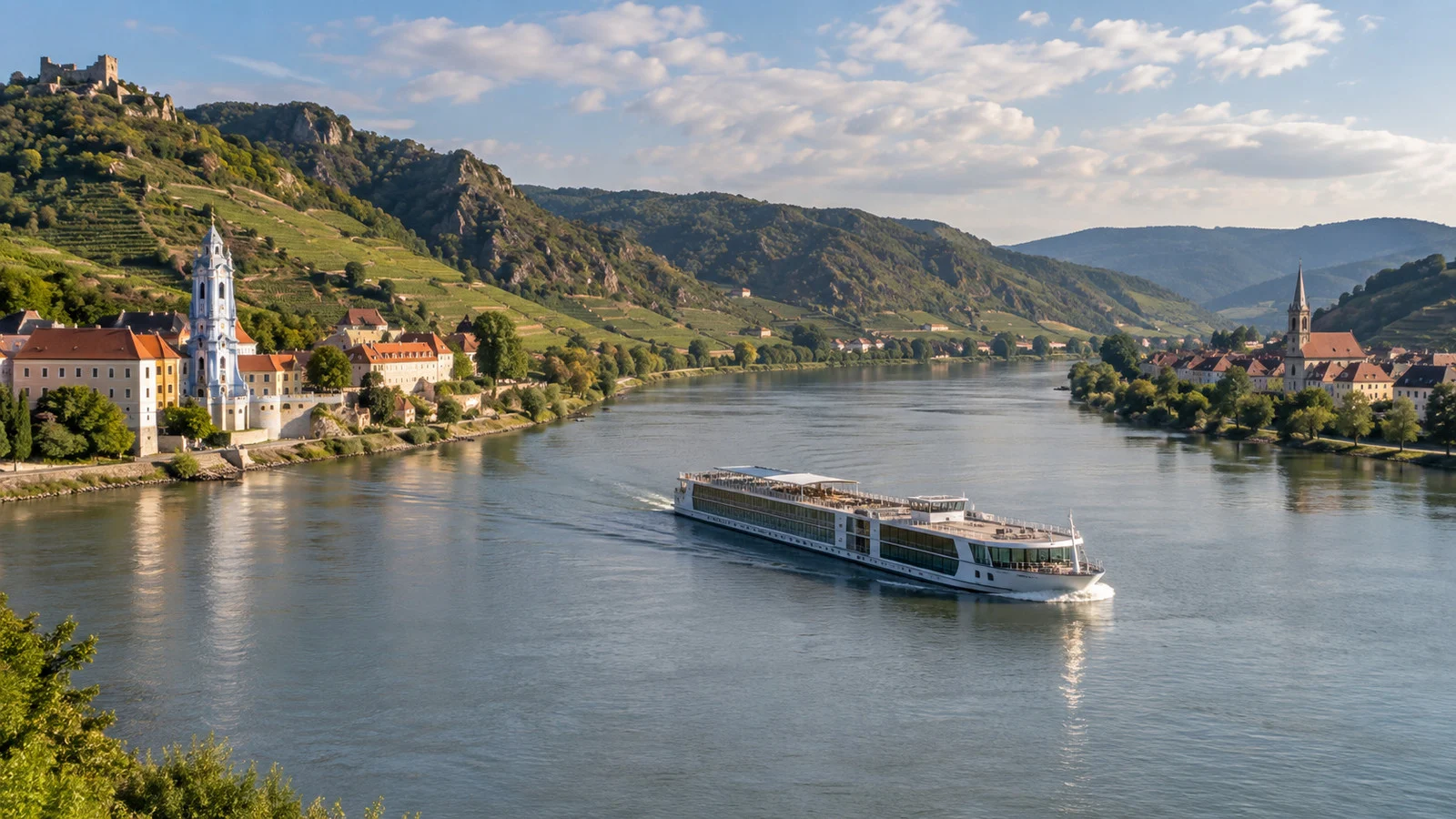
The Wachau Cultural Landscape follows the Danube between Melk and Krems. Its villages, vineyards, monasteries, ruins, and river scenery appear on both banks.
Melk and Dürnstein are not on the same bank, so one downstream cabin side cannot face both in the same way. The ship may also stop at one or both, changing the value of a passing view.
The lounge or open deck is again the flexible choice, especially during commentary. If you must remain in the cabin, use the sailing direction to identify a priority landmark and accept the tradeoff.
The guide to Wachau river ports covers Melk, Dürnstein, and other stops. Match it to the operator’s current route.
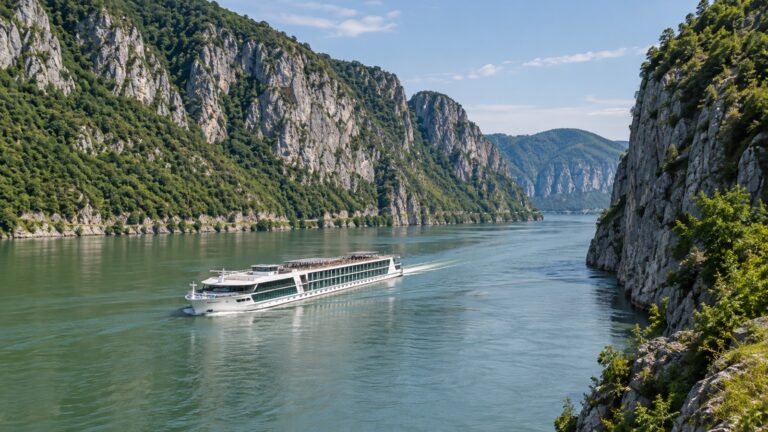
The Douro
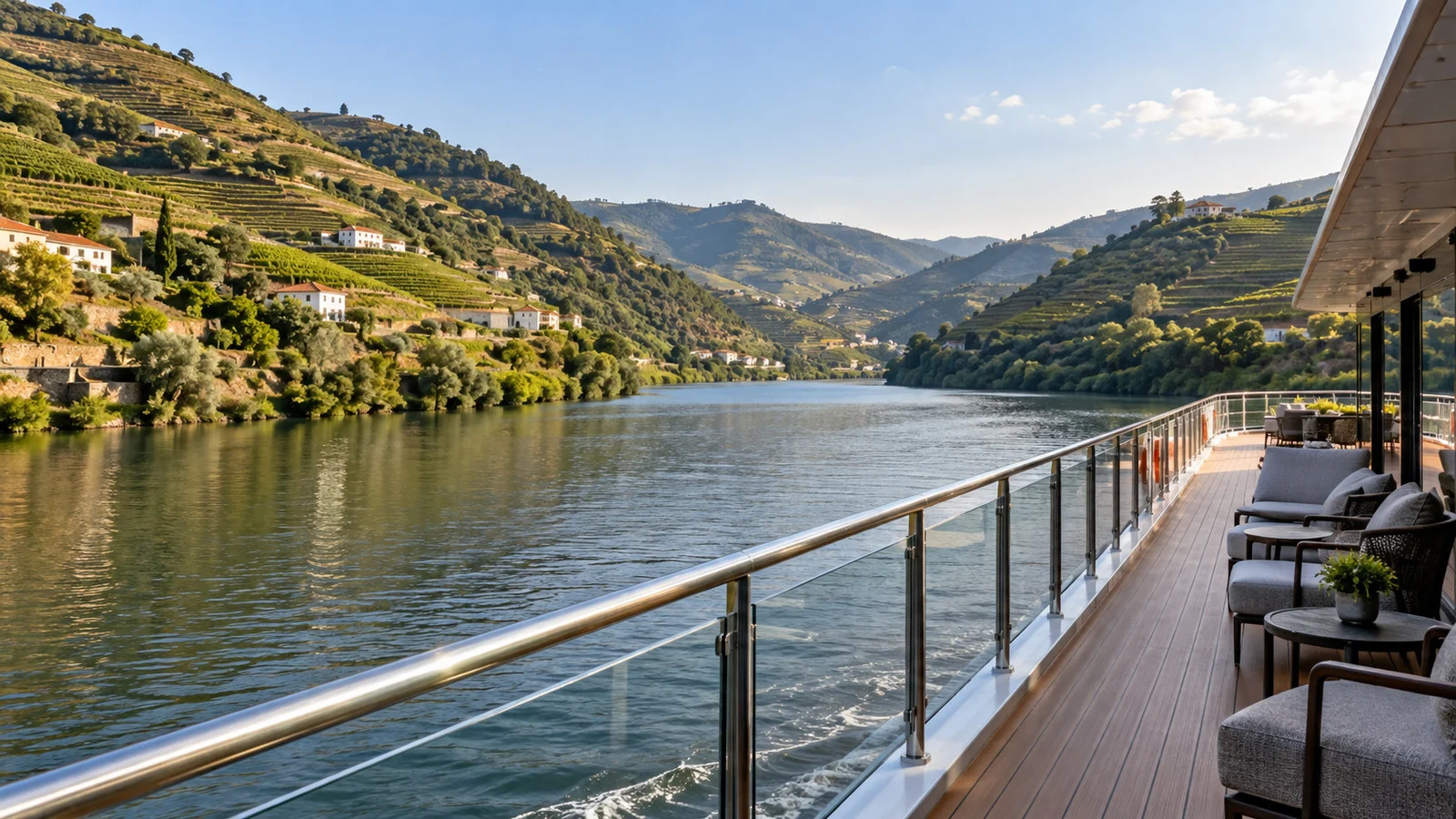
The Douro’s terraces, villages, rail line, roads, dams, and quays shift from bank to bank. The most interesting view is not fixed to port or starboard for the full cruise.
Many Douro itineraries travel out and back along part of the same river. The return can reverse which side faces a landmark, although stops and daylight may differ.
Sun angle can matter in the hot valley, but it changes with direction, time, bends, and season. Do not promise that one booked side will remain shaded.
If heat or glare affects you, ask about cabin curtains, climate control, shaded public areas, and the timing of scenic sailing. Those features are more dependable than a north-facing shorthand on a winding river.
Budapest, Vienna, Cologne, and major ports
Major cities can have several berths, rafting, and operational turns. A booking agent cannot guarantee the castle, cathedral, bridge, or skyline outside one side of your room.
Budapest may provide memorable river views, but the assigned embankment and neighboring ships decide what the cabin sees while docked. Evening scenic sailing, when offered, can show both banks from public spaces.
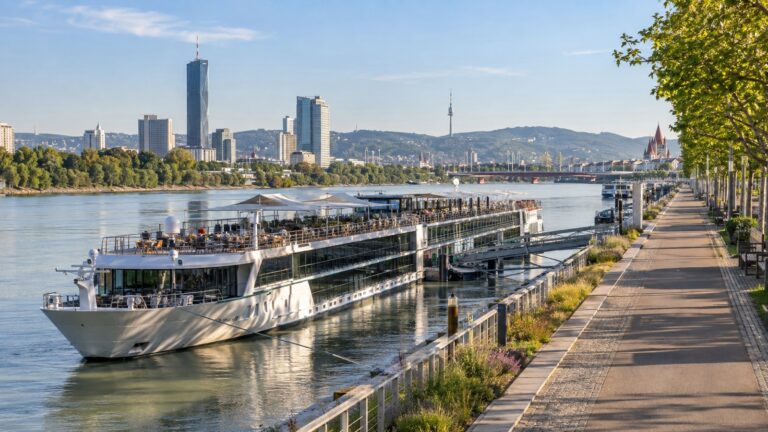
Vienna’s river berths are separate from many central sights, so transit matters more than window direction. The Vienna river-cruise guide covers berth and transport planning.
Cologne, Amsterdam, Passau, Nuremberg, and Basel also have assignment and access variables. Ask where the ship is rather than trying to reserve the side facing a landmark.
The broader guide to where river ships dock explains how central, urban, and outer berths change a port day. Berth location affects your trip more than which window faces it.
Fun fact: riverbank names do not follow the direction your ship is traveling. Left and right are always defined while facing downstream, so reversing the cruise swaps the bank seen from each cabin side.
Cabin choices that usually matter more
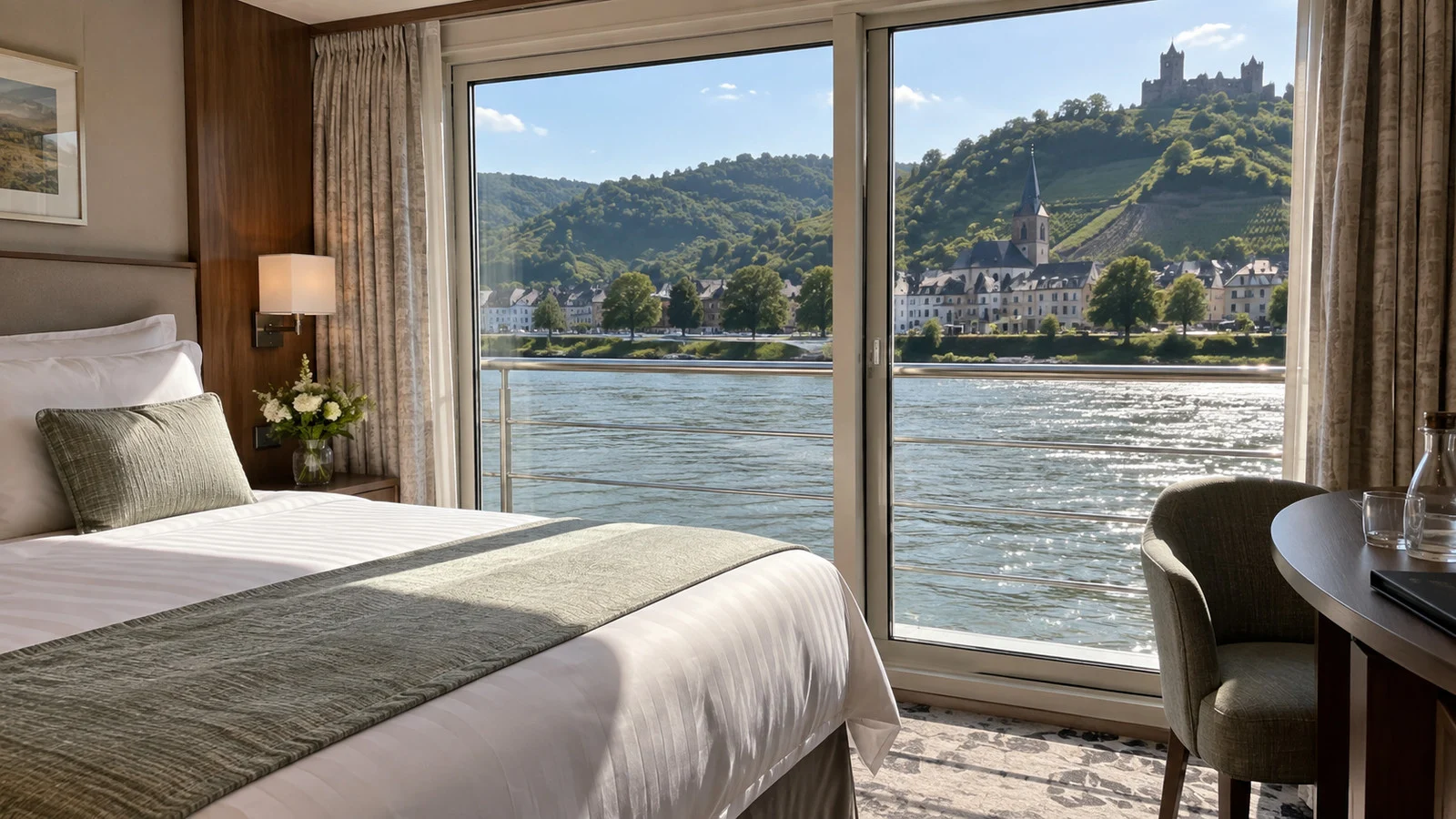
Position along the ship can affect exposure to propulsion, maneuvering equipment, mooring work, public rooms, and exterior doors. The exact vessel layout matters more than a universal rule about bow, middle, or stern.
Deck level changes the window, waterline relationship, stairs, elevator route, and possible sun-deck noise. The lowest category may have a high fixed window, while upper categories can sit beneath walking areas.
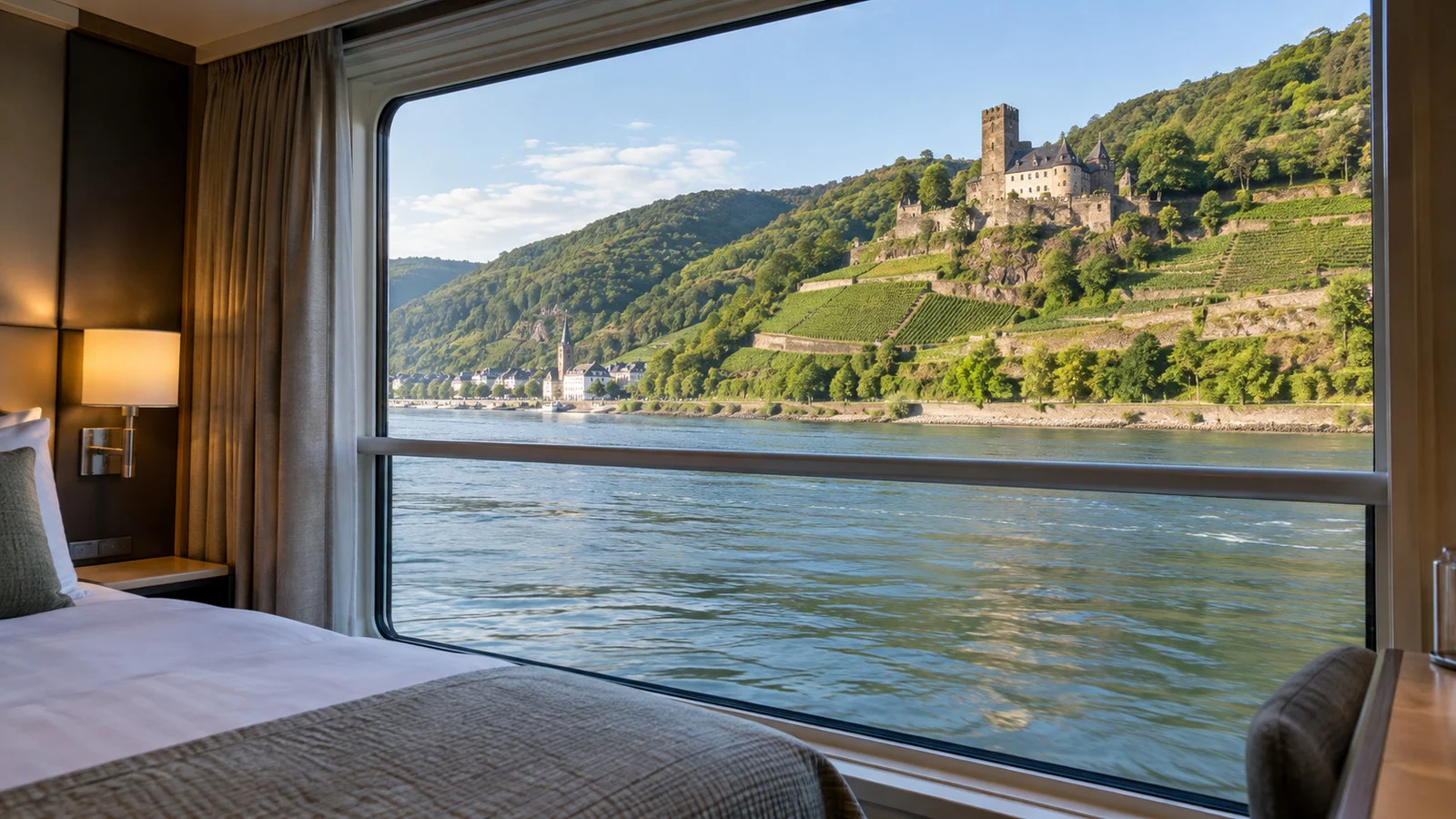
Window type changes how you use the room. A fixed window, opening panoramic window, French balcony, and step-out balcony offer different ventilation, space, and privacy.
A room near the lobby may shorten the route to dining and the gangway but add passing traffic. A farther room may be quieter yet difficult for someone with limited stamina.
Use the river-cruise sailing schedule guide to see when you are likely to use the cabin view. Do not assume most movement always occurs at night because the schedule varies by itinerary.
What to ask before choosing a side
- Which direction is the scenic segment: ask whether the vessel passes the Rhine Gorge, Wachau, or other priority stretch upstream or downstream. Confirm the date and approximate time.
- Which public viewing areas are accessible: check lounge windows, deck access, elevator coverage, seating, shade, and bridge-clearance restrictions. Do not assume the sun deck is always open.
- Is the room number guaranteed: a side preference attached to a category guarantee may disappear when the final cabin is assigned. Ask what happens after a vessel substitution.
- What surrounds the room: review spaces above, below, and beside it, including stairs, service rooms, lounge, galley, gangway, and machinery. The guide to river-cruise cabin noise provides the full check.
- What matters most to you: rank view, quiet, sunlight, window style, walking distance, and price. Side should usually come after the needs that affect every day.
How to decide
If the side preference is free, choose one based on a priority scenic feature and the sailing direction. Treat it as a request rather than a promise.
If the side costs more, spend only when the specific room also improves location, deck, window, or accessibility. A higher fare for side alone rarely controls enough of the itinerary to justify much.
If you plan to watch scenery from public areas, side matters even less. Choose the cabin that best supports sleep, mobility, and budget.
If you expect to remain in the cabin during scenic sailing, ask for the detailed route direction and landmark sequence. A panoramic lounge may still offer the better two-bank view.
For a round-trip Douro or other out-and-back route, check whether the return passes the same scenery in daylight. That can reduce the risk of choosing the “wrong” side.
Accessibility
Do not choose side before confirming the accessible cabin and onboard route. River ships may have very few suitable rooms, and elevators may not serve every deck.
Ask which deck normally hosts the gangway, while understanding that river level and rafting can change it. A cabin close to the lobby can reduce repeated walking but cannot guarantee step-free shore access.
When rafting, passengers may need to cross another ship with different thresholds, stairs, or deck levels. Ask how the operator handles an arrangement you cannot navigate.
If you are Deaf or hard of hearing, confirm the room’s visual or vibrating emergency-alert system before using headphones during scenic sailing. Public commentary should also be available in a format you can use.
The river-cruise accessibility guide covers the full vessel and port test. Get essential arrangements in writing and recheck after a ship change.
Season, daylight, and sun
Season can change daylight, foliage, heat, and how long passengers want to stay on deck. It does not make one cabin side universally better.
The river bends repeatedly, so a cabin that faces sun at breakfast may face shade an hour later. Weather and the ship’s course matter more than a fixed north-or-south label.
In cold or rainy weather, the lounge may become crowded during scenic commentary. Arrive early for a seat with a view in both directions.
During hot periods, ask about shaded seating and climate-controlled observation spaces. Do not rely on one cabin side to stay cool through a winding valley.
Short winter days can place planned scenic sections near darkness if operations run late. Check the daily program rather than assuming brochure timing.
Quick answers
Whether side matters on a river cruise:
Usually not for the trip as a whole. Docking direction, rafting, river bends, and sights on both banks limit what side can guarantee.
The best side for the Rhine Gorge:
There is no best side for every landmark. The Loreley is on the right bank, while other castles and towns appear on both sides.
The best side for the Wachau:
No single side captures every major view. Use the sailing direction for one priority landmark or watch from a public area.
Whether a side can be requested:
Often yes when cabins are sold by number, but assignment and vessel-change terms vary. A request cannot control how the ship berths.
Whether dockside cabins are noisier:
They can hear quay activity, but the dockside changes by port and other noise sources vary. Choose a ship-specific cabin location rather than a side for quiet.
The last word
Port or starboard can improve one particular glance, but it cannot control a week of changing banks, berths, turns, and rafting. Cabin location and accessibility usually deserve your attention first.
Choose a side for free if you enjoy the planning puzzle, then spend scenic hours where you can look both ways. That is the best answer on the Rhine, Danube, Douro, Rhône, and almost every other river.
For route-specific planning, compare upstream and downstream sailings before choosing the room. Direction explains the bank view, while the berth still decides what appears outside the window in port.
How this guide was researched: This guide is based on official cruise-line and cultural-landscape information. Docking and rafting cautions were checked against Uniworld and Avalon Waterways, while scenic context was checked against the UNESCO listings for the Upper Middle Rhine Valley and Wachau; details were reviewed in September 2026 under our Editorial Policy.
More on this topic: browse every guide on river cruise planning.