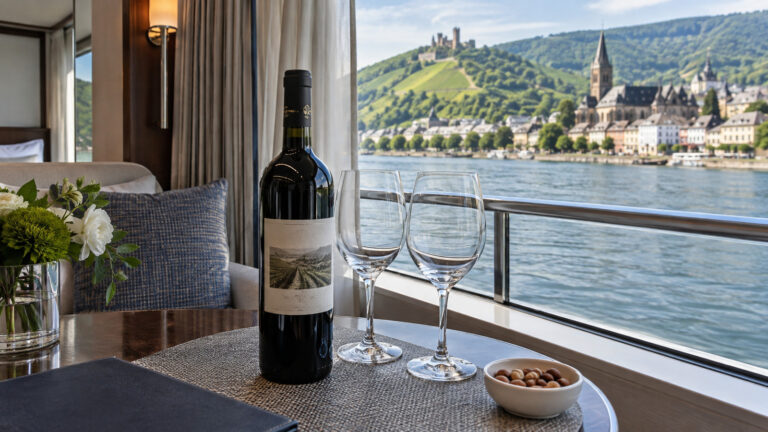
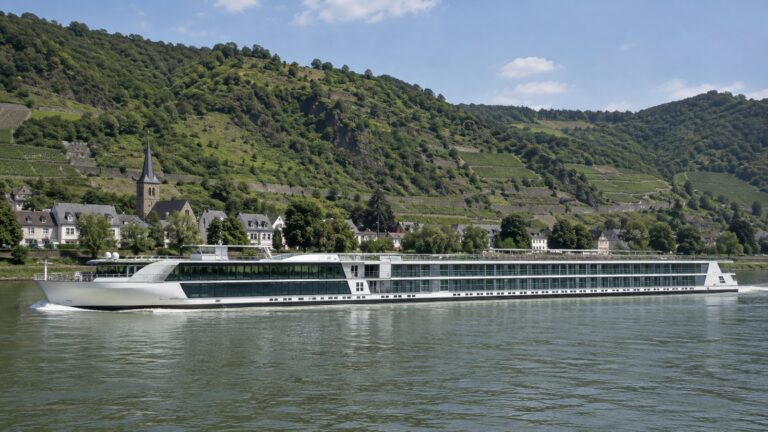
River Cruise Sailing Schedule: Sail at Night, Dock at Dawn
Many river cruises sail while you sleep and reach the next port before breakfast, but “sail at night, dock at dawn” is a pattern rather than a promise. Short distances, scenic stretches, locks, water levels, berth availability, and local navigation rules can all move the sailing into daylight.
Your real timetable is the daily program issued onboard, not the sample schedule saved months ago. Read the arrival, tour departure, all-aboard, sail-away, and berth-change notes every evening.
The quick take
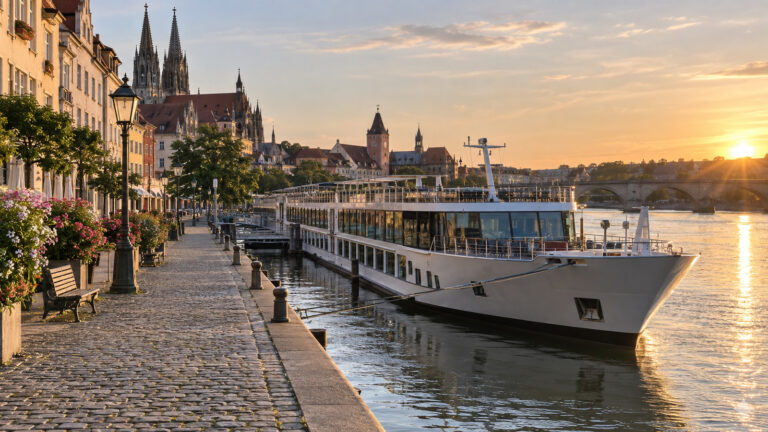
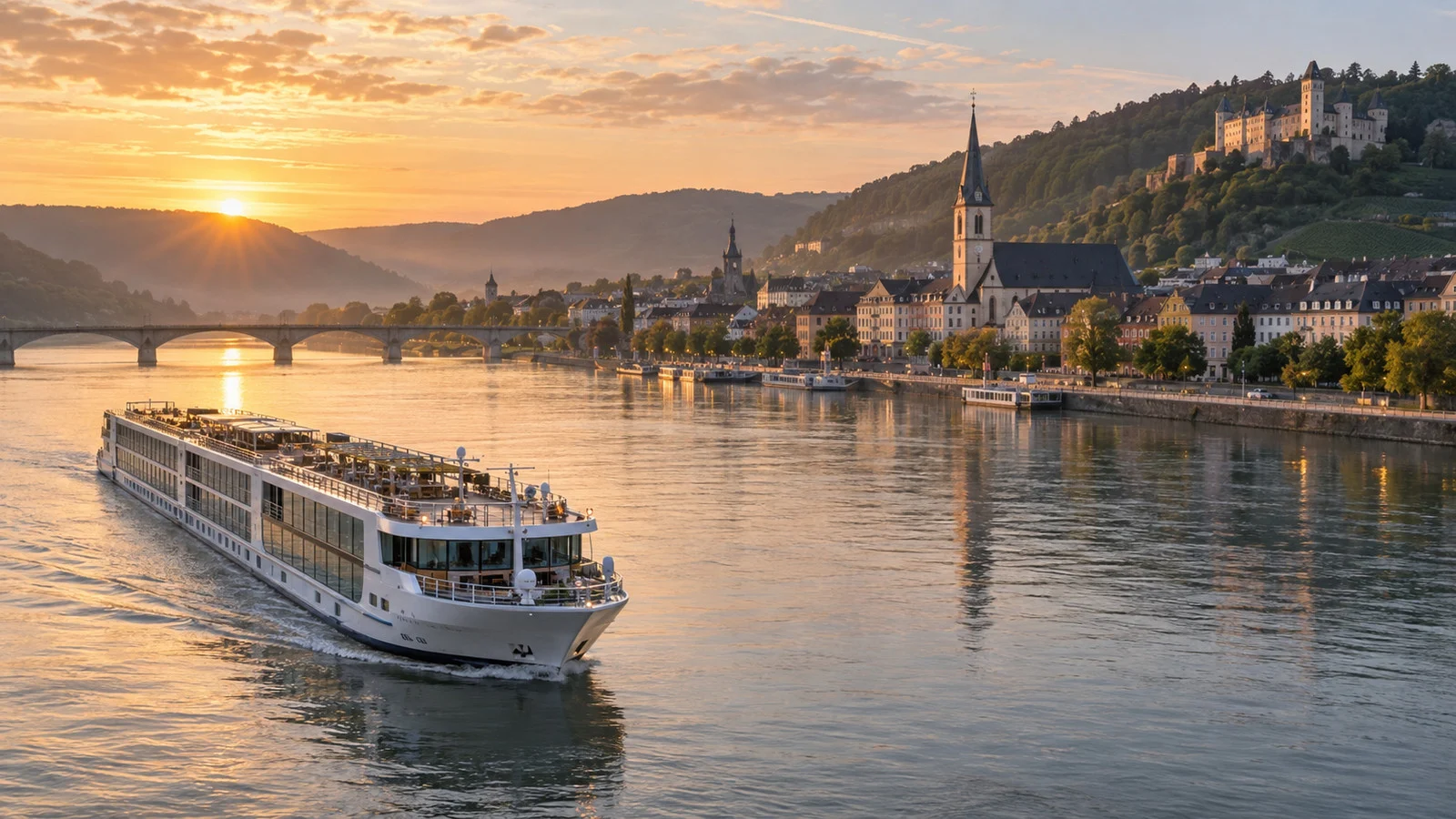
Overnight sailing is one reason a river cruise can deliver a destination-heavy week without packing and unpacking. It turns the transfer between towns into sleep time, while the line can reserve daylight for tours and the most scenic river sections.
Do not assume every night moves or every morning starts in a new city. Some ships remain in port overnight, change berths before breakfast, sail only a short distance, or spend much of a day underway.
The quick facts
- The common pattern: sail after an afternoon or evening all-aboard, travel for part of the night, and arrive before morning excursions. Exact times vary by itinerary and operating conditions.
- Why it works: overnight movement preserves more daytime for ports. It also lets the line schedule scenic sections such as the Middle Rhine Gorge, Wachau, or Iron Gates when guests can see them.
- Crew rules: current Rhine personnel regulations define operating modes of up to 14, 18, or 24 hours in a 24-hour period, with minimum crew and rest requirements. Continuous operation therefore requires the appropriate staffing and documented rest, not one person steering all night.
- Locks: shared navigation infrastructure can add waiting time and noise. Austrian waterway manager viadonau says it schedules lock sequences and monitors traffic using radio, vessel-position data, and radar.
- The Douro difference: the Douro authority classifies navigation between sunset and sunrise as nocturnal and routes commercial navigation requests through its port system. Many passenger itineraries concentrate sailing in daylight, but the legal rule is more nuanced than “no ship may sail at night.”
- Your control sheet: Avalon says its onboard daily schedule includes activities, excursions, and departure times, while Uniworld says it provides a printed program with updated weather. Your line may use paper, an app, cabin television, or a combination.
- The firm deadline: treat the announced all-aboard time as mandatory and earlier than sail-away. If the ship changes berth while you are ashore, use the pickup or meeting instructions in the program.
What a normal river-cruise day can look like
A typical day might begin with the ship already alongside, breakfast from 7 a.m., and an included tour around 8:30 or 9. The afternoon may bring free time, another excursion, scenic sailing, or an early departure for the next port.
The ship may sail during dinner, after an evening event, or in the middle of the night. Arrival can come before breakfast, after breakfast, or even after lunch when distances and lock sequences demand it.
Upstream travel can take longer than the same route downstream because current affects speed. The upstream versus downstream guide explains when direction changes port hours and when the difference is too small to matter.
Treat any hour-by-hour example as an illustration, not an operating promise. The line’s contract and itinerary terms normally allow changes when navigation, weather, safety, or local authorities require them.
Why ships can operate after dark
Major commercial rivers support navigation beyond daylight hours, subject to vessel, crew, equipment, traffic, and local rules. Passenger ships share the waterway with freight vessels rather than using a private cruise lane.
The Central Commission for the Navigation of the Rhine’s regulations, current from January 2026, define operating modes of up to 14 hours, 18 hours, and 24 hours within a 24-hour period. They also prescribe rest and minimum-crew requirements for passenger vessels.
That supports continuous navigation when the ship is staffed and operated for it, but it does not prove that every sailing uses the 24-hour mode. Crew titles and watch arrangements vary, so avoid counting captains from a marketing description.
Radar, navigation lights, electronic charts, radio, local traffic systems, and trained watchkeepers support safe operation. Reduced visibility, closures, maintenance, floods, ice, or an authority’s instruction can still slow or stop movement.
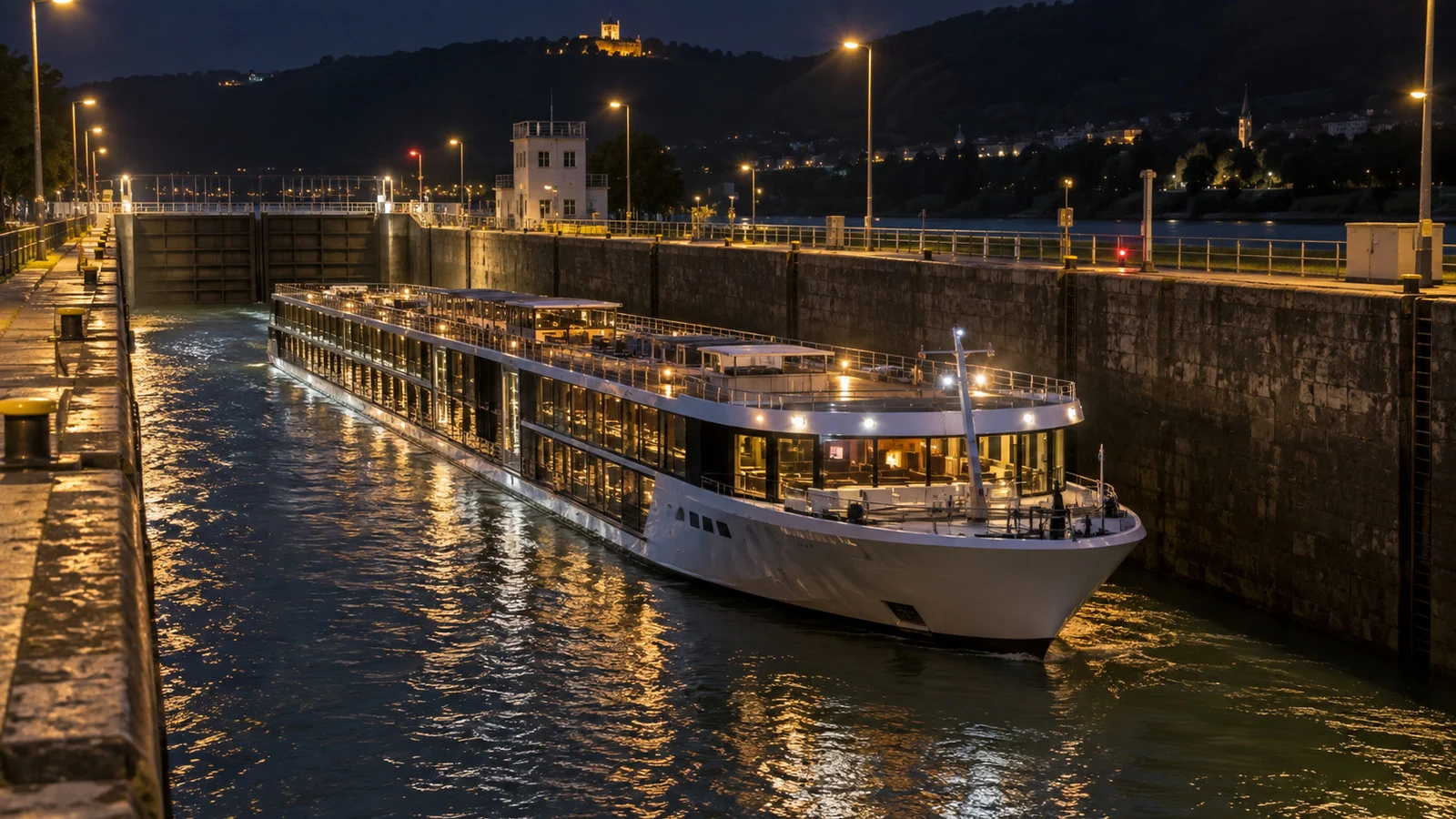
Locks are the timetable’s wild card
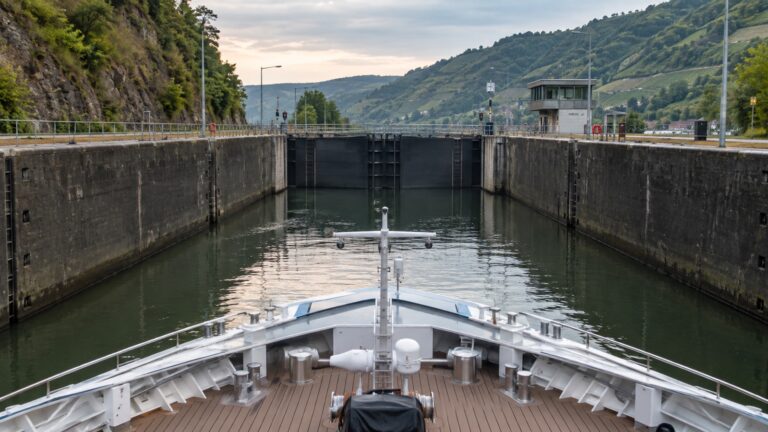
A lock raises or lowers the ship between water levels, and the chamber is shared with other traffic. Approaching, waiting, entering, securing, filling or emptying, and exiting all take time.
In Austria, viadonau supervises traffic at nine Danube power-plant locks and the Nussdorf lock on the Danube Canal. Its staff schedule locking sequences and monitor vessels by radio, position data, and radar, with special procedures for failures, floods, or ice.
That is a much better explanation than saying a captain “lost a coin toss” or failed to call first. Passenger-facing arrival times can move because the sequence depends on real traffic and operating conditions.
Lock transits may bring engine changes, thruster noise, water movement, lights, or contact with fenders. Some guests barely notice and others wake easily, so the river-cruise cabin-noise guide is more useful than a universal “quiet deck” rule.
Lock density changes by river and route. The European river lock guide helps identify itineraries where repeated nighttime transits are more likely.
The Douro concentrates more sailing in daylight
Douro itineraries often feel different because guests see more of the river while the ship moves between vineyard towns and large locks. Port calls and coach excursions may be arranged around that sailing rather than every transfer happening overnight.
The Douro authority says navigation from sunset to sunrise is considered nocturnal and that maritime-tourism and commercial requests use the Single Port Window. Recreational craft are prohibited from night navigation unless exceptionally authorized, which should not be misquoted as a blanket ban on every passenger ship.
Lock plans, flow restrictions, maintenance, and breakdowns can interrupt or restrict navigation. The same official FAQ directs operators to daily lock plans and notices to skippers.
For passengers, the practical takeaway is to expect more daytime scenery and to read the next day’s departure plan carefully. A morning coach tour may meet the ship farther upriver instead of returning to the original quay.
The scenic stretches are scheduled to be seen
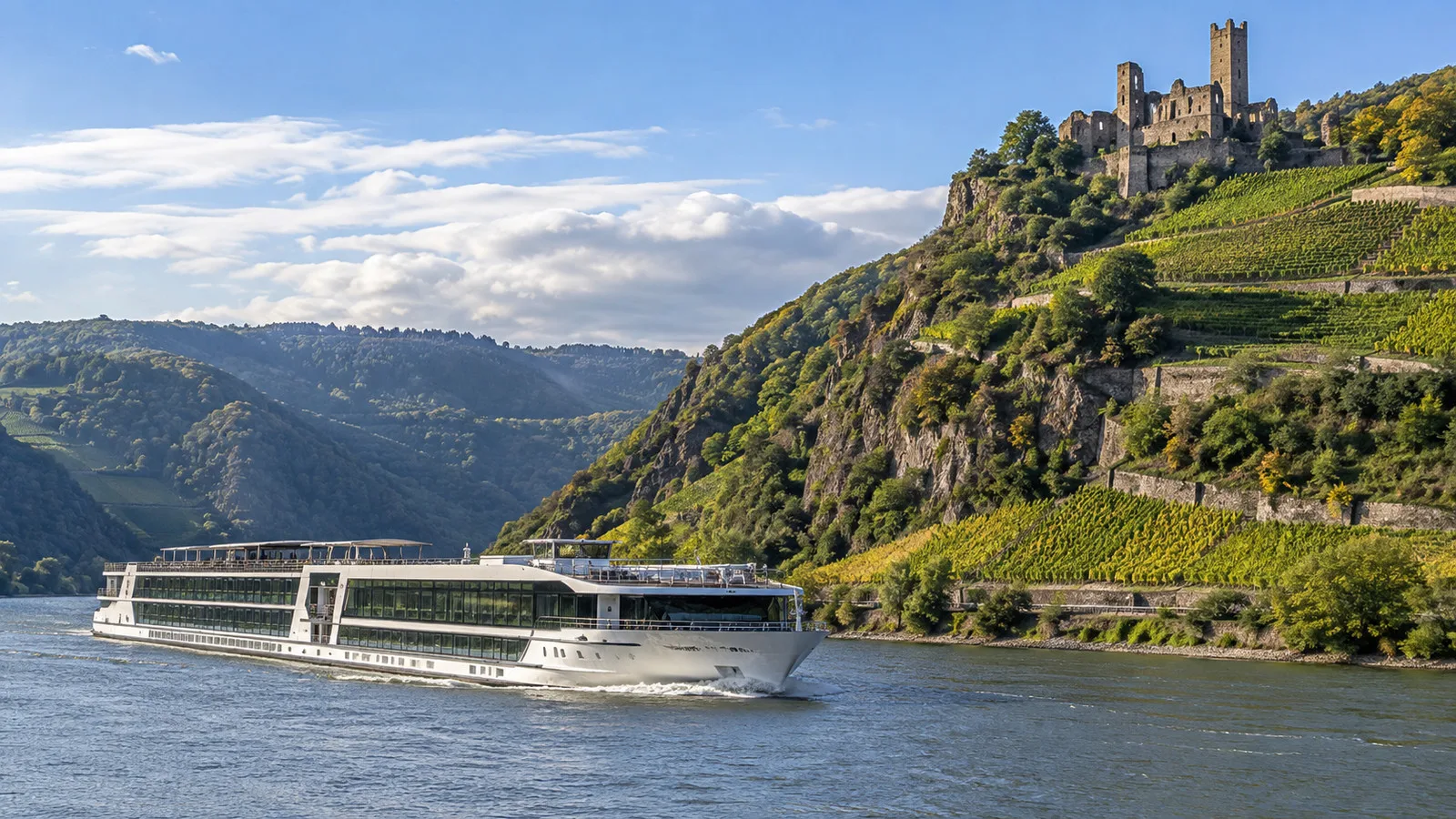
Cruise lines usually identify important daytime sailing in the itinerary with phrases such as “scenic cruising.” That label tells you to protect the time rather than booking spa appointments or assuming it is a transfer day.
Middle Rhine Gorge
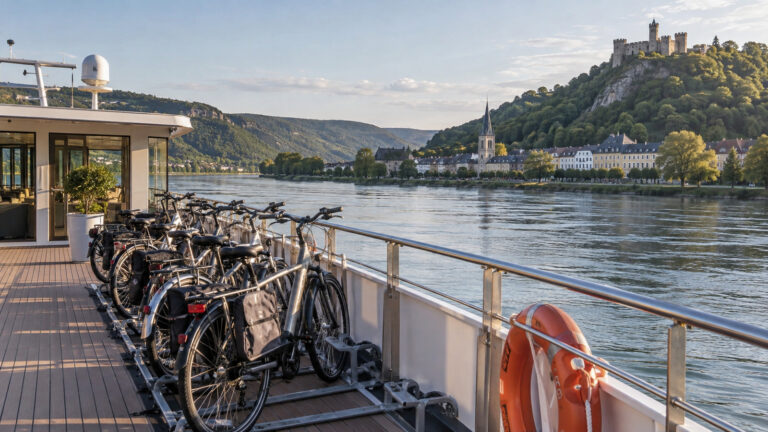
The castle-lined Rhine between the Koblenz area and Rüdesheim is commonly presented as a featured daytime passage. Exact direction and timing vary, so consult the onboard announcement and the Middle Rhine Gorge seating guide.
Wachau Valley
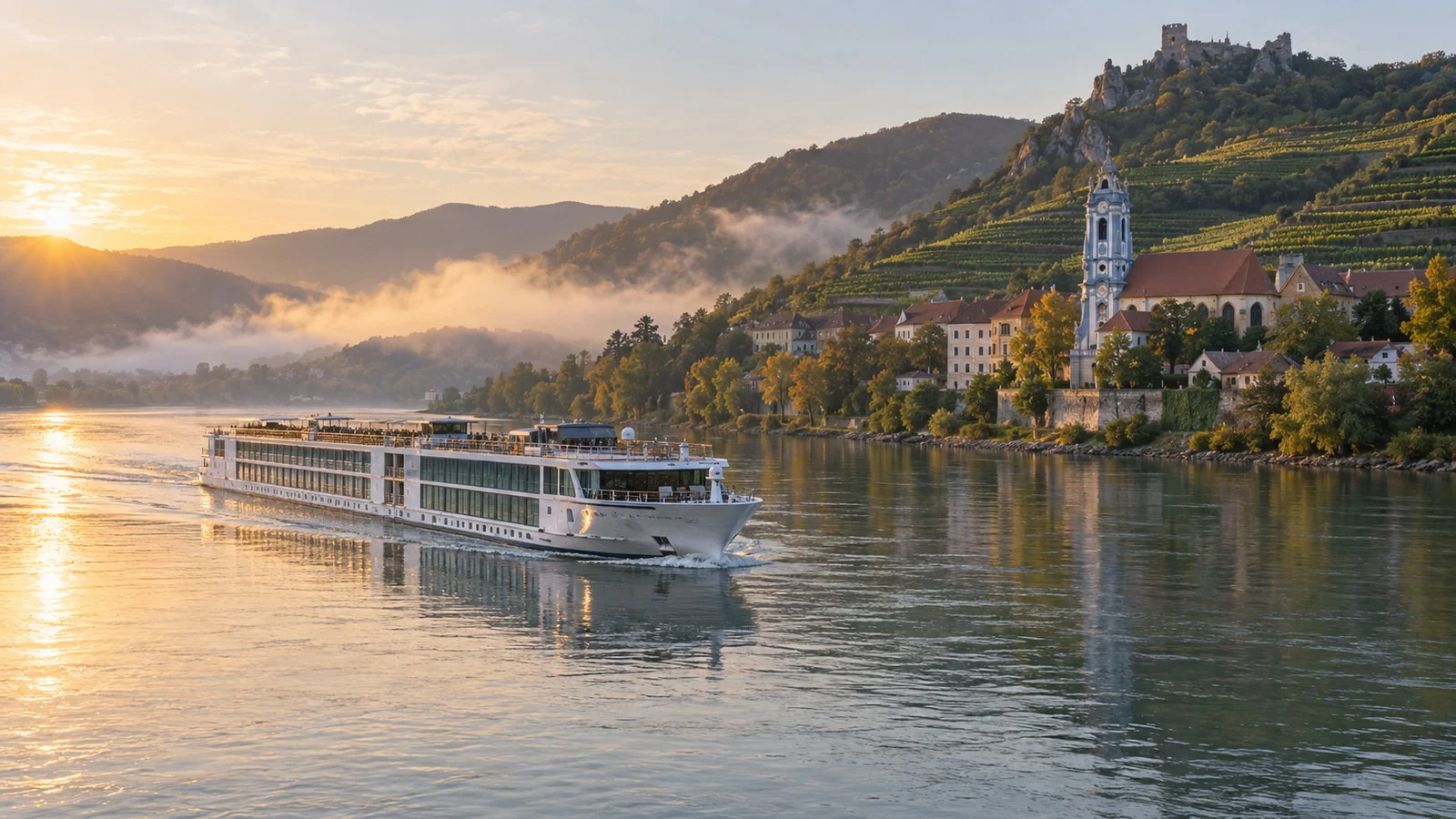
The Danube between Melk, Dürnstein, and Krems is short enough to pair sightseeing ashore with scenic sailing. The Wachau port guide helps explain why a ship may drop guests in one town and meet them in another.
Iron Gates
The Danube’s Iron Gates combines gorge scenery with major navigation works and deserves deck time. Review the day’s timing and the Iron Gates scenic-cruising guide because the full transit can span many hours.
How to read the daily program
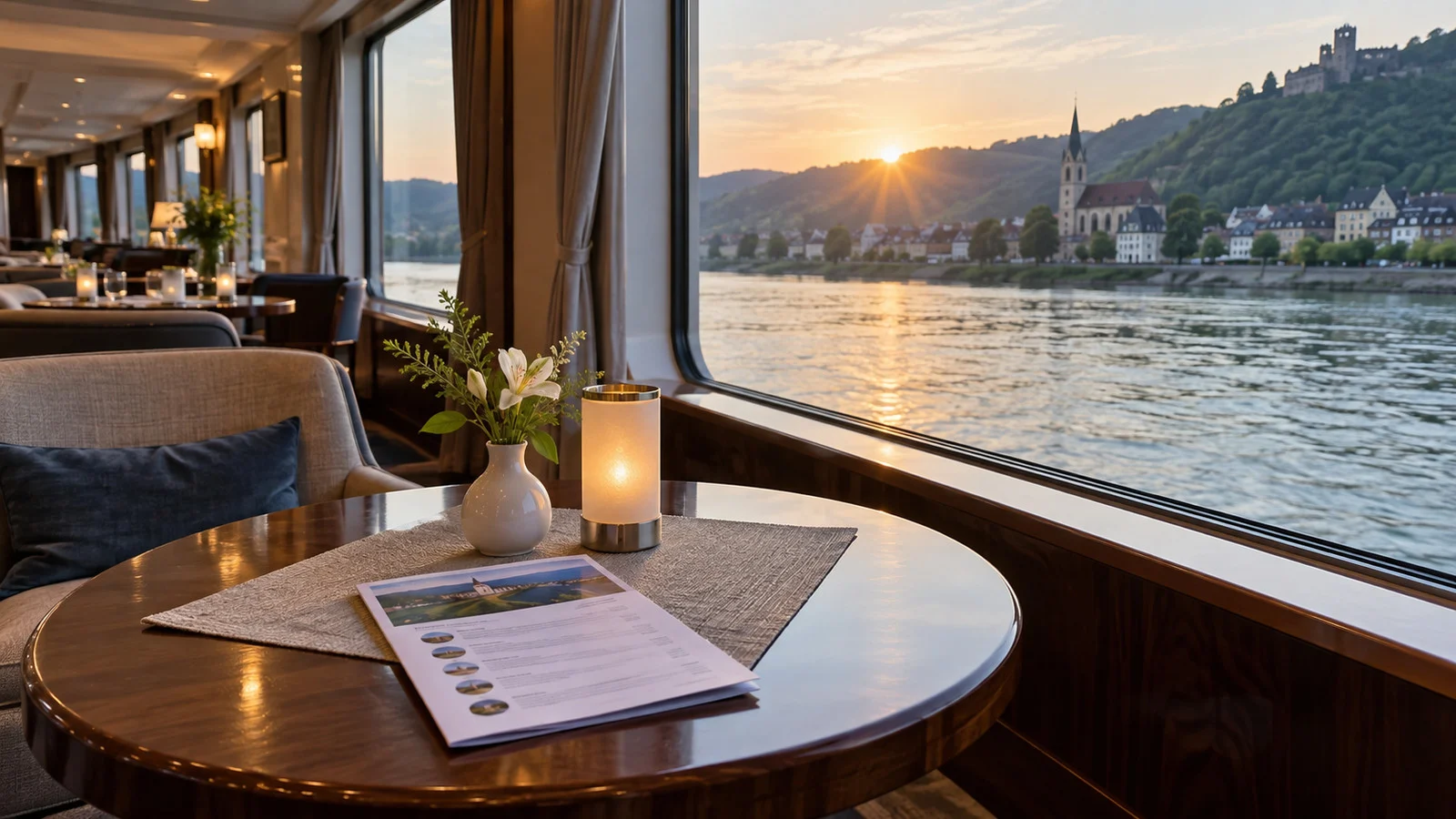
The daily program is the operational truth for tomorrow, although it can still change overnight. Photograph it or save the app page before leaving the ship.
- Arrival: when the ship expects to reach the port, which may be approximate.
- Gangway open: when guests may actually go ashore, which can be later than arrival.
- Tour meeting time: when and where your group assembles, not merely when the vehicle leaves.
- All-aboard: the deadline for every guest to return, usually before sail-away.
- Sail-away: the planned departure, which may occur during a meal, talk, or excursion.
- Berth or ship move: whether the vessel relocates while guests tour and where they will rejoin it.
- Ship time: whether watches need to change and whether local time differs.
- Scenic commentary: the announced time and deck location for a featured passage.
Avalon’s current FAQ says its onboard daily schedule contains activities, excursions, and tour departure times. Uniworld confirms a daily printed program with updated weather, and other lines may use a similarly named bulletin or app.
If the paper and app disagree, ask reception before going ashore. A crew announcement or revised notice always outranks yesterday’s screenshot.
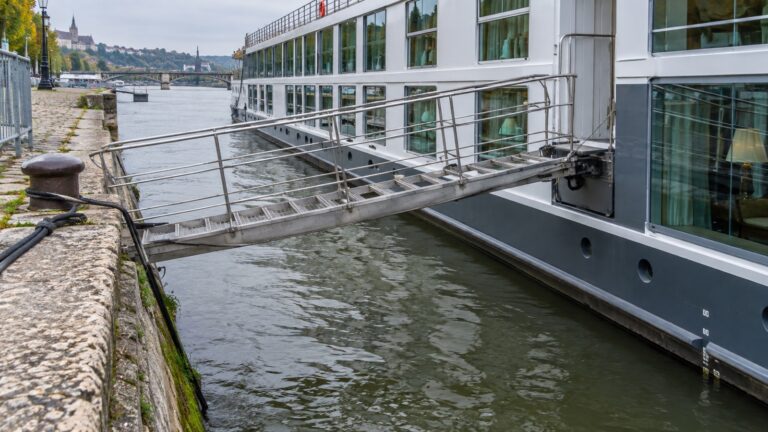
Arrival, docking, and gangway are different moments
A ship can reach a city and still wait for its berth, customs or port formalities, another vessel, or safe gangway setup. “Arrive 7 a.m.” therefore does not guarantee independent walking at 7:01.
River berths can also change at short notice or require rafting alongside another ship. The berth-change guide explains how to find the vessel again, while the double-docking guide covers crossing through a neighboring ship.
Tour groups may leave on time even when independent guests cannot yet walk off, or the schedule may be compressed for everyone. Listen for the cruise director’s briefing rather than planning a private ticket to the minute.
What changes when the ship runs late
A delay can shorten free time, move a tour, combine two activities, change the berth, or replace a port entirely. The line decides based on navigation and local arrangements, and the result is not always a simple late arrival.
If you booked independently, contact the provider as soon as the revised time is announced. Flexible cancellation and a meeting point near the berth are far safer than a nonrefundable ticket across town.
A ship-operated excursion usually offers stronger coordination with the vessel, but “the ship waits” is still too simple. The operator may hold the ship, revise the excursion, or arrange onward transportation depending on the circumstances and contract.
Cabin choice and nighttime noise
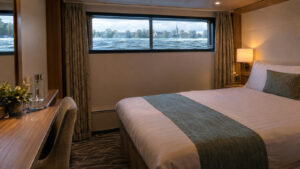
Open-river motion is often gentle, but docking and locks can be noticeable. Thrusters, mooring work, machinery, water movement, and voices on the quay can matter more than waves.
No deck is universally quiet because equipment placement differs by ship. Ask where the bow thrusters, engines, crew doors, gangway, lounge, and public restrooms sit relative to your cabin.
Earplugs and white noise help with sound, but vibration travels through the hull. A cabin farther from major machinery may be worth more than a premium view on a lock-heavy itinerary.
Accessibility and the changing schedule
Overnight movement can reduce exhausting road transfers, but a changed berth can create a steeper gangway, rafted crossing, or longer walk. Ask reception each evening what is known about the morning setup.
Do not assume a “gentle” group leaves later or uses an accessible vehicle. Request the meeting time, pace, steps, surfaces, restroom plan, and coach lift in writing before sailing.
If medication or care depends on a fixed local time, set your own alarms and confirm any ship-time change. A schedule update should not be allowed to move a medical routine by accident.
Season, daylight, and river conditions
Long summer daylight gives the line more flexibility to place scenic cruising early or late, while winter darkness narrows the viewing window. Christmas-market cruises often rely heavily on nighttime transfers because the most useful daylight belongs ashore.
High water, low water, fog, ice, heat restrictions, maintenance, and temporary navigation closures can all alter speed or access. The effect may be a delayed arrival, a coach transfer, a ship swap, or a revised itinerary rather than one predictable outcome.
Do not assume low water always makes a ship slower or high water always stops it. Draft, bridge clearance, river section, vessel design, authority limits, and forecast all matter.
A simple evening routine
- Read the next day’s program before bed.
- Circle the tour meeting time and all-aboard deadline.
- Note whether the ship sails, changes berth, or picks you up elsewhere.
- Set one alarm for breakfast and another for the tour meeting time.
- Save the ship’s emergency number and photograph the berth.
- Lay out a warm layer if scenic sailing or a lock transit is announced.
This tiny ritual prevents most schedule surprises. It also tells you when a late independent evening is sensible and when the ship will slip away during dinner.
Quick answers
Do river cruise ships always sail at night?
No. Many Rhine, Danube, Main, Seine, and Rhône itineraries use overnight movement, but short hops, scenic passages, port overnights, and operating restrictions create plenty of daytime sailing.
Why does the ship sail while guests sleep?
It preserves more daylight for ports and turns the transfer into part of the hotel night. Cruise lines can then highlight the prettiest stretches during waking hours.
Does the Douro ban all night sailing?
No blanket statement is safe. The authority classifies sunset-to-sunrise navigation as nocturnal, routes commercial requests through its system, and prohibits recreational night navigation unless exceptionally authorized.
Will locks wake you?
They can, especially if your cabin is near working equipment or you are sensitive to vibration. Ship design, lock sequence, berth location, and individual sleep all matter.
What time do ships arrive?
There is no dependable universal window. Check the itinerary for planning and the onboard program for tomorrow’s best current estimate.
Can the berth move while you tour?
Yes. Follow the line’s pickup instructions, carry the emergency number, and do not return automatically to the morning gangway.
The last word
Night sailing is an elegant part of river cruising, not a guaranteed daily formula. It lets the floating hotel cover ground while you rest, then gives daylight back when the scenery or port deserves it.
Plan from the published itinerary, live by the daily program, and leave room for the river to edit both. That is how a moved berth or delayed lock becomes a change of plan instead of a ruined day.
Current planning sources
- Central Commission for the Navigation of the Rhine personnel regulations, January 2026
- viadonau lock operations
- Douro waterway authority navigation FAQ
- Avalon Waterways passenger FAQ
- Uniworld passenger FAQ
Checked September 2026. Navigation rules, river conditions, berths, tour times, and sailing schedules can change, so follow the current onboard program.
See the CruisePorts editorial policy.
More on this topic: browse every guide on river cruise planning.