Aquarium-Deck Cabins on River Cruises: Windows, Noise, Price, and Who Should Book
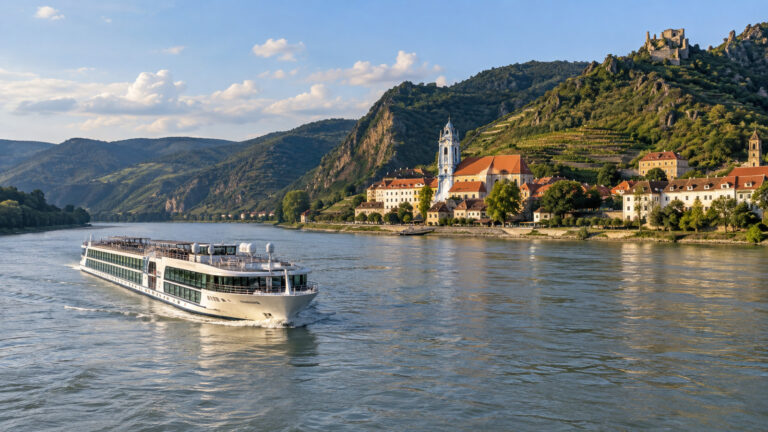
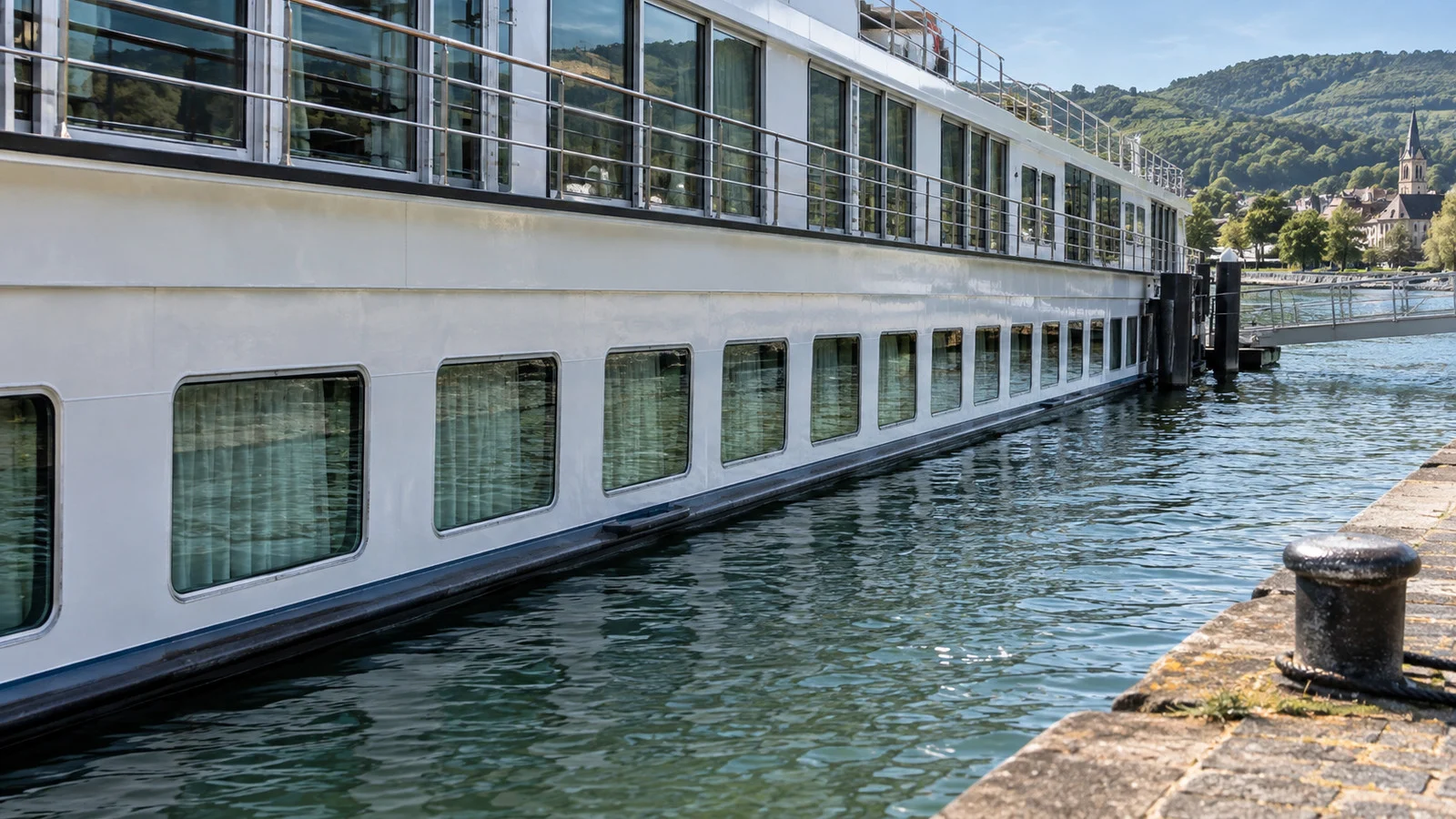
“Aquarium deck” is the passenger nickname for the lowest cabin deck on some river ships, where fixed windows sit close to the waterline. It can be a clever value or the wrong place to economize, depending on the exact ship, cabin number, itinerary, and traveler.
The window and deck are the real tradeoff, not a lower standard of service. Before booking, compare the cabin itself and the route rather than assuming every lowest-deck room is dark, noisy, tiny, or accessible.
The quick facts
- It is a nickname: Cruise lines usually call these Standard, Classic, Deluxe, or fixed-window cabins rather than aquarium cabins.
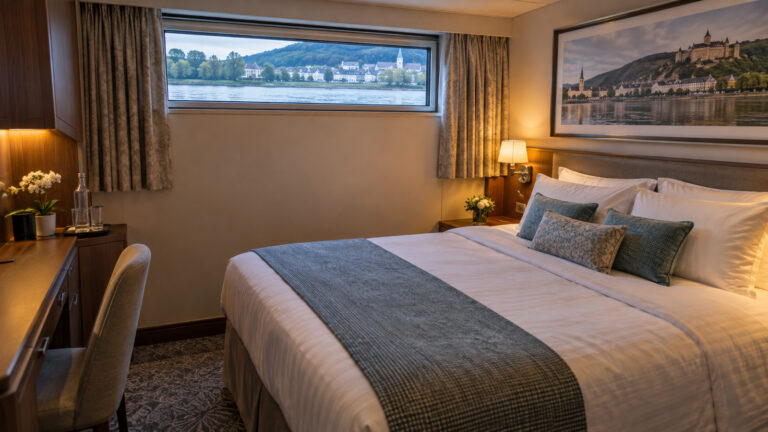
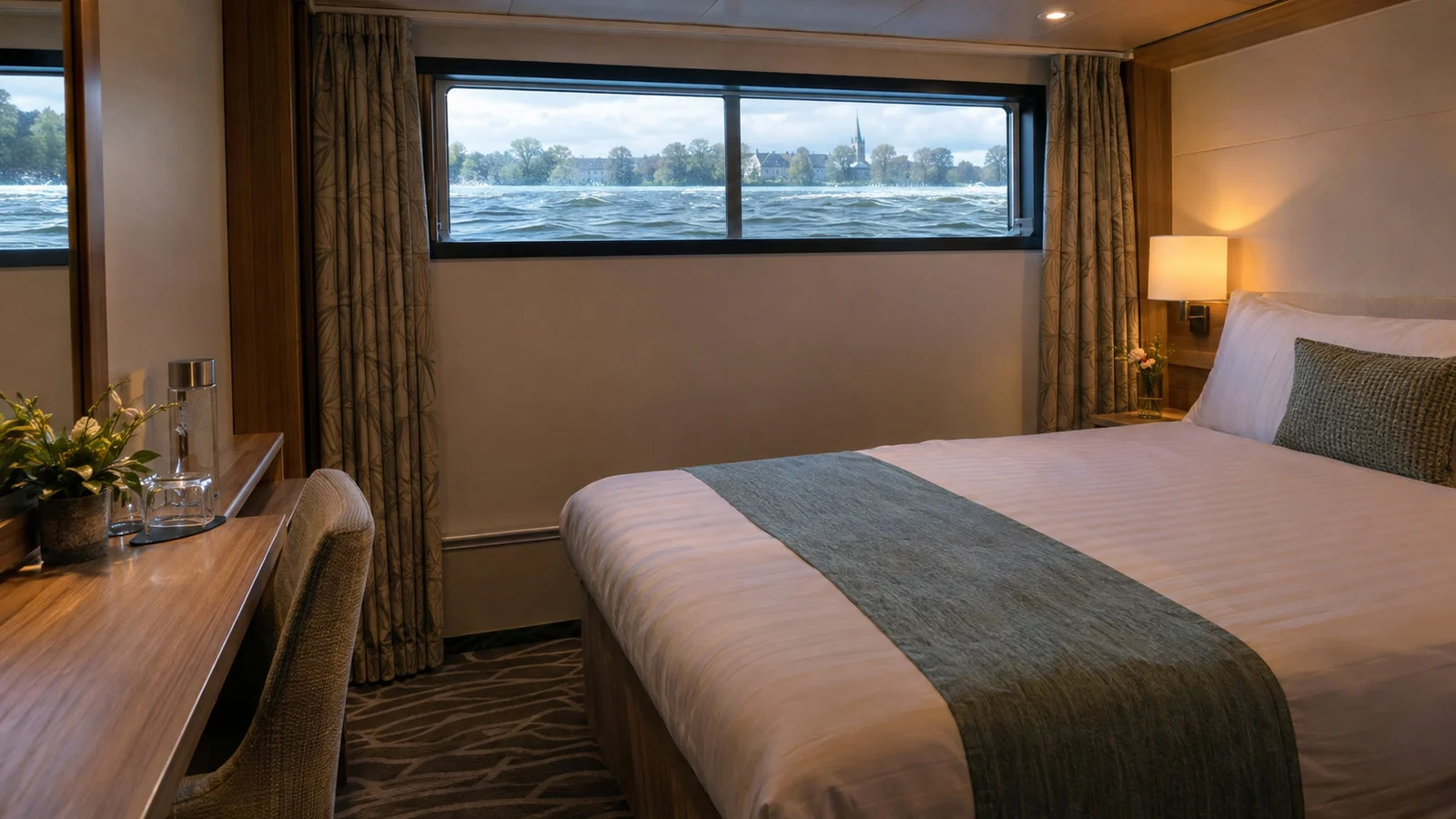
- The window: It is normally fixed and smaller or higher than the French-balcony windows on upper passenger decks.
- The size: A lowest-deck cabin may be the same size as an upper category or even larger, so compare square footage ship by ship.
- The view: Water, a quay wall, another rafted ship, darkness, or a perfectly pleasant riverbank can fill the same window at different times.
- The noise: Thrusters, engines, locks, crew areas, and stairs are ship- and cabin-specific; “lower deck” alone cannot predict sleep quality.
- The price: The upgrade gap changes by line, date, promotion, and occupancy, so compare the total price for the exact sailing.
- Accessibility: Some lower decks have no elevator access, making them a poor choice for anyone who cannot manage stairs.
What an aquarium-deck cabin actually is
European river ships are designed around bridges, locks, and river depth, so their lower passenger cabins sit much closer to the water than ocean-cruise cabins. Our river ship size and lock guide explains the broader design limits.
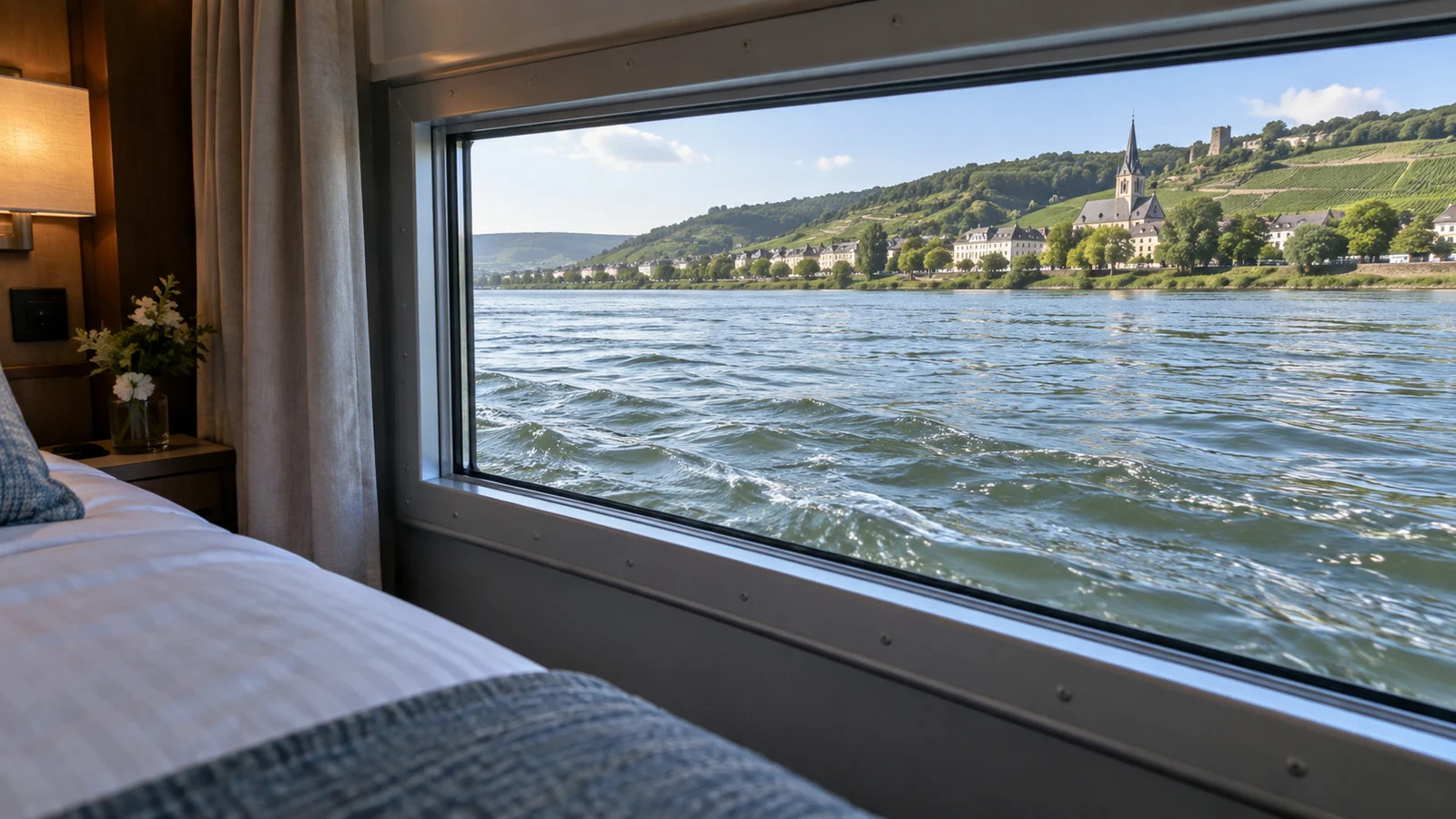
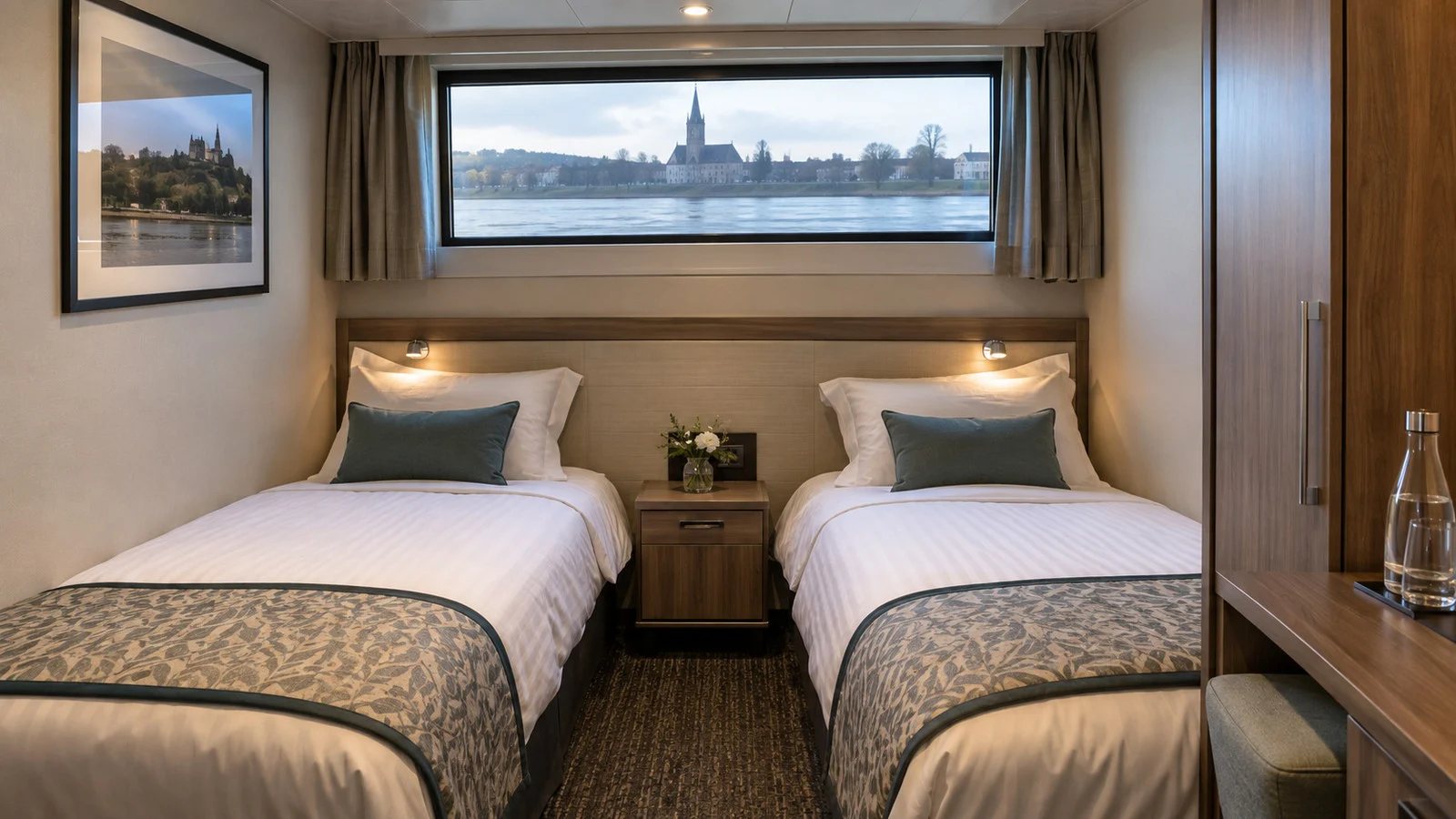
A fixed window provides daylight and a river view without opening like a French balcony. Its exact height, shape, and sight line vary by ship, and brochure terms such as “river view” do not tell you how much glass is visible from the bed.
Ask for a current photo or virtual tour of the exact category, not a generic cabin gallery. Also confirm that the photo matches the ship and sailing year because fleets are renovated and categories can change.
What the window may show
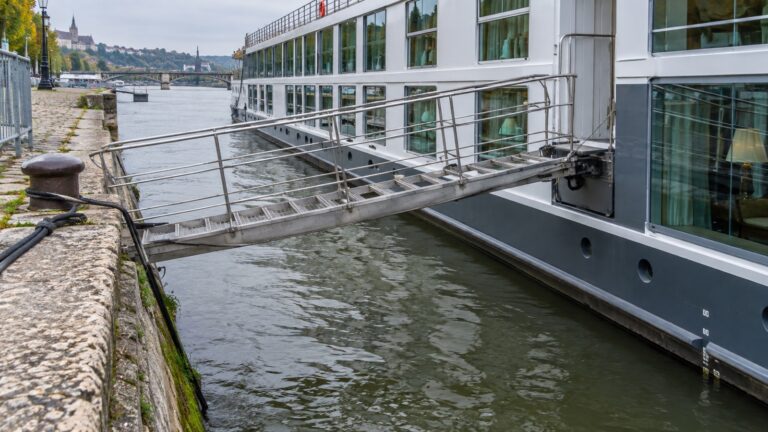
Underway in daylight, the view may include moving water low in the frame and riverbanks above it. At a berth, the same window can face a quay wall or sit near the feet of people on the promenade.
Inside a lock, a wall may fill the glass as the water level changes. When another river ship rafts alongside, its hull or lower-deck windows may replace your river view until one ship moves.
Upper-deck cabins can also lose privacy and views during river cruise rafting, so an upgrade is not a guarantee of open scenery at every berth. The advantage upstairs is usually larger glass, an opening window or door, and a higher sight line while underway.
The window does not open
A fixed-window cabin relies on the ship’s ventilation and climate-control system rather than fresh air from the window. Travelers who need an opening window for comfort should treat that as a decisive reason to choose another category.
Do not assume a French balcony is a walk-out balcony. It is generally a floor-to-ceiling opening door or window with a railing, while a veranda category provides actual exterior floor space.
Current ship examples
Viking Longships
Viking’s current Viking Ve page lists Standard categories E and F at 150 square feet with a half-height picture window. Its French Balcony categories C and D are 135 square feet, proving that the less expensive category is not automatically smaller.
The same page says the elevator runs only between the Middle and Upper Decks and does not serve categories E and F. That detail matters more than the cabin’s distance from reception for anyone who cannot reliably use stairs.
AmaWaterways
AmaWaterways identifies fixed-window staterooms on AmaCerto’s Piano Deck and balcony categories on the Cello and Violin Decks. It also states that the elevator does not reach the Piano Deck or Sun Deck.
Uniworld
Uniworld’s SS Beatrice page lists Classic, French Balcony, and Deluxe French Balcony cabins at 150 square feet for 2026. Size alone does not explain the category gap, so compare window design, deck, position, and price.
Avalon Waterways
Avalon’s current stateroom guide lists Deluxe Staterooms at 172 square feet and Panorama Suites at 200 square feet. The Panorama category adds Avalon’s wall-to-wall opening window, so the upgrade changes both space and the connection to the view.
These examples are useful comparisons, not fleetwide promises. Verify the operator, ship name, deck plan, category, and sailing year before using any number.
Noise: cabin number beats deck label
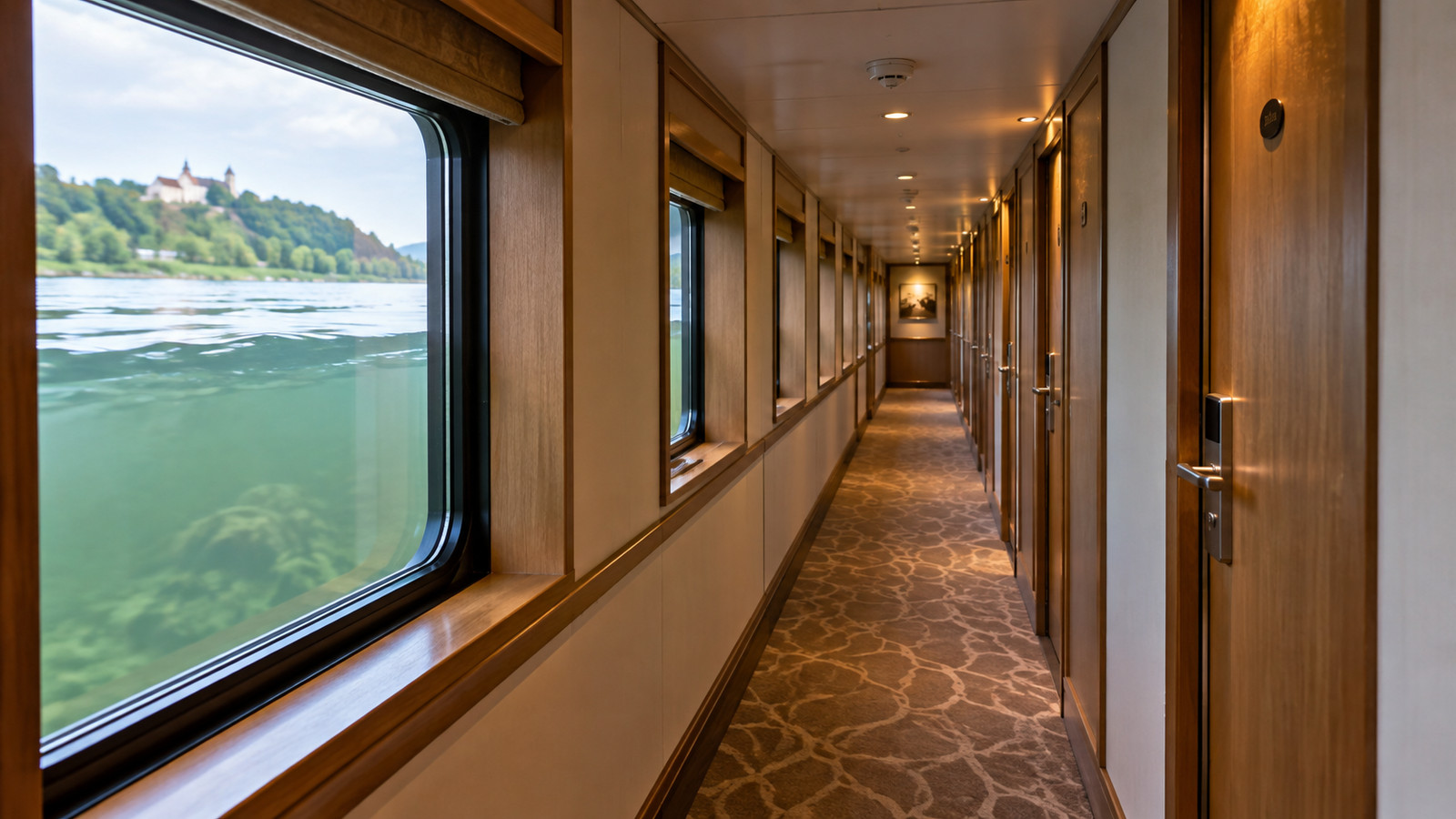
Mechanical sound and vibration can be more noticeable near engines, thrusters, machinery spaces, crew doors, and stairs. The exact locations vary, and a deck plan may not show every service area.
Locks can add changes in engine or thruster sound, fender noise, voices, and contact with the lock wall or neighboring ship. A lock-heavy night can be audible on more than one deck, and no cabin number is guaranteed silent.
If you are sensitive to noise, ask the line what is immediately beside, above, and behind the proposed cabin. Our guide to the loudest river cruise cabin locations provides a checklist without pretending every ship shares one blueprint.
An amidships cabin may reduce exposure to machinery at either end, but it can introduce other neighbors or traffic. Pack earplugs or white noise if small overnight sounds wake you easily.
How much is an upgrade worth?
Ignore generic claims about a four-figure gap and price the exact sailing for your party. Promotions, cabin inventory, solo pricing, taxes, and included extras can change the effective difference.
Divide the total upgrade cost by the number of nights, then ask what the money actually buys on that ship. More glass, an opening window, a better deck, more floor space, extra amenities, or earlier cabin access are different benefits.
If the upgrade only changes the window and you expect to spend waking hours ashore or in the lounge, the fixed-window cabin may be excellent value. If private daylight, fresh air, or quiet retreat time shapes your vacation, the upgrade may earn its keep every day.
When the lower deck is a smart buy
- Your days are city-heavy: You plan to tour ashore, dine in public spaces, and use the cabin mainly for sleeping and changing.
- The ship sails overnight: Little of the route you value is scheduled during the hours you would sit in the cabin.
- The cabin is well located: The deck plan and line’s guidance do not reveal a machinery, stair, or service-area concern for that room.
- The savings improve the trip: The price difference funds a meaningful hotel night, excursion, flight, or simply keeps the vacation comfortable.
- You do not need an opening window: Fixed glass and climate-controlled air suit the way you sleep.
When to upgrade
- Scenic cruising is the point: You want a private view during the Rhine Gorge, Wachau, Iron Gates, Douro Valley, or another named daylight segment.
- You spend time in the room: Reading, resting, remote work, or mobility needs will keep you there during daylight.
- You need fresh air: A fixed window will annoy you every night, regardless of the savings.
- Stairs are a barrier: The lower category is not served by the elevator on your ship.
- The upgrade adds real space or amenities: The category difference goes beyond window style and matters to your comfort.
For a scenic Danube route, check when the ship expects to pass the Iron Gates. For any river, compare the timetable with our river sailing schedule guide before paying for a view you may be asleep during.
Season matters less than your habits
A warm-weather sailing may put you on the Sun Deck more often, making the cabin window less important. It can also bring early sunrise, long daylight, heat, crowding, and rafting, so “summer is best downstairs” is too simple.
Cool or rainy weather may increase cabin time, but a cozy lounge can still be your preferred retreat. Christmas market cruises have short daylight and cold evenings, yet some travelers spend nearly every waking hour ashore.
Choose around your actual behavior: how much you sleep, read, rest, work, and watch scenery from the room. Climate averages cannot answer that for you.
Accessibility: inspect the route, not the brochure label
A lower deck is not automatically closest to the gangway, reception, or elevator. On Viking Ve, the elevator does not reach Standard categories E and F, and AmaCerto’s elevator does not reach its fixed-window Piano Deck.
Ask whether your exact deck requires stairs and whether the elevator reaches the restaurant, lounge, gangway level, and Sun Deck. Then confirm door width, bathroom layout, shower threshold, grab bars, and mobility-device storage for the cabin itself.
An “accessible” or “mobility-friendly” claim should be tied to a named cabin and measurements in writing. Our accessible river cruising guide covers gangways, rafting, coaches, and shore excursions that a cabin description leaves out.
The exact checklist to send the cruise line
- Is this window fixed, and what are its dimensions and height above the floor?
- What is the cabin’s interior square footage, excluding any exterior balcony?
- What spaces are directly beside, above, behind, and below this cabin?
- Does an elevator reach this deck, and are stairs required to reach public rooms or the gangway?
- Which scenic segments are scheduled in daylight, and on which day?
- What does the higher category add besides a different window?
Save the answers and the deck plan that applied when you booked. A specific written answer is much more useful than “most guests love it.”
Quick answers
What is an aquarium cabin?
It is an informal name for a lowest-deck river cabin with a fixed window close to the waterline. Cruise lines use their own category and deck names.
Can the window open?
The windows marketed as fixed, picture, or half-height picture windows do not open. Confirm the exact category because a similar ship may use different terminology.
Are lower-deck cabins smaller?
Not necessarily. Viking Ve lists its Standard cabin at 150 square feet and its French Balcony cabin at 135 square feet, while other ships use different dimensions.
Are aquarium-deck cabins noisy?
They can be close to mechanical or crew spaces, but noise depends more on the exact cabin and ship layout than on the nickname. Ask what surrounds the room and plan for lock noise if the itinerary has overnight transits.
Is the lower deck good for limited mobility?
Sometimes, but not by default. Some fixed-window decks are stair-only, so verify the elevator route and adapted cabin features before booking.
The bottom line
Book the aquarium deck when the exact cabin works, the view is not central to your vacation, and the savings matter. Upgrade when you need an opening window, elevator access, private daylight, more space, or simply a room you are excited to return to.
The little waterline window is neither a secret bargain nor a floating basement sentence. It is one cabin design with very specific tradeoffs, and a five-minute deck-plan check usually tells you which side you are on.
How this guide was researched: Cabin sizes, window descriptions, deck names, elevator reach, and category features were checked against current Viking Ve, AmaCerto, SS Beatrice, and Avalon stateroom pages. Ship layouts and sailing-year categories can change, so verify the exact vessel before booking; see our Editorial Policy.
More on this topic: browse every guide on river cruise planning.