How Far Ahead to Book a River Cruise: The Lower-Deck Trap
How far ahead should you book a river cruise? Aim for 12 to 18 months if you want a particular itinerary, departure, or cabin, and start even sooner when accessible space, adjoining rooms, or a holiday date is nonnegotiable.
If your dates and deck are flexible, six to nine months can still offer a healthy choice. Waiting until the final 90 days is a price gamble, not a reliable booking strategy.
The lower-deck trap is simple: a late offer may be cheaper because the cabins you wanted have already sold. Before celebrating the fare, compare the exact cabin number, deck, window, cancellation terms, and total trip cost.
The quick facts
- Best all-purpose window: 12 to 18 months for a specific peak-season sailing or cabin, and 6 to 9 months when you can compromise on date or deck.
- No universal release day: river cruise lines publish schedules in batches, often multiple seasons ahead, so join the line’s email alerts or ask an agent to watch a specific itinerary.
- Book first for scarce needs: accessible cabins, suites, solo inventory, neighboring cabins, and a specific ship or departure can disappear before the cheapest category does.
- Do not assume deck order: demand varies by ship and market; check the live deck plan and available cabin numbers rather than relying on a top-deck-first rule.
- Current deposit examples: Avalon lists a $250 per-person deposit for most cruises, while AmaWaterways lists $400 per person for Europe, Colombia, and Asia.
- Final payment is the real deadline: Avalon and AmaWaterways currently list 90 days before travel for standard river bookings, while Viking publishes promotional pay-in-full dates that vary by sailing year.
- Last-minute savings are not guaranteed: a cancellation can return a good cabin to inventory, but the remaining choice may be a fixed-window lower-deck room or an inconvenient date.
Pick your booking window by what you cannot change
There is no magic number that works for every river cruise. The right lead time depends on how many parts of the trip are fixed.
- Book 12 to 18 months ahead: you need a particular week, a named ship, a suite, an accessible cabin, solo space, or two cabins close together.
- Book 9 to 12 months ahead: you want a popular Rhine or Danube date, a Christmas market sailing, or a preferred balcony category but can shift by a week.
- Book 6 to 9 months ahead: you are flexible on date, direction, and deck, and you are comfortable choosing from what remains.
- Book inside 90 days: only when price matters more than cabin, flights, and itinerary, and you can act quickly after checking the full terms.
These are planning ranges, not sellout forecasts. A charter, group allotment, holiday week, or unusually popular itinerary can tighten inventory much earlier.
Why companywide booking figures need context
In August 2026, Viking reported that 96 percent of its 2026 capacity and 53 percent of its 2027 capacity for “Core Products” had been sold. That is useful evidence of strong advance demand, but Core Products includes river, ocean, expedition, and Mississippi cruises.
Those percentages do not prove that a particular Rhine balcony category is nearly full. Use them as a reminder to shop early, then confirm actual cabin availability for your ship and date.
Why small ships make cabin choice disappear quickly
A river ship has far fewer cabins than an ocean ship, so a small number of bookings can remove an entire category. Ship layouts also vary, as explained in our guide to why river ships are shaped by locks and bridges.
Popular cabin types are not always the most expensive. Solo cabins, accessible rooms, connecting arrangements, and entry-level balcony cabins can be scarcer than suites.
Open the deck plan before paying a deposit and note two or three acceptable cabin numbers. That simple step is more useful than a generic claim that every ship sells from the top down.

The lower-deck trap, without the drama

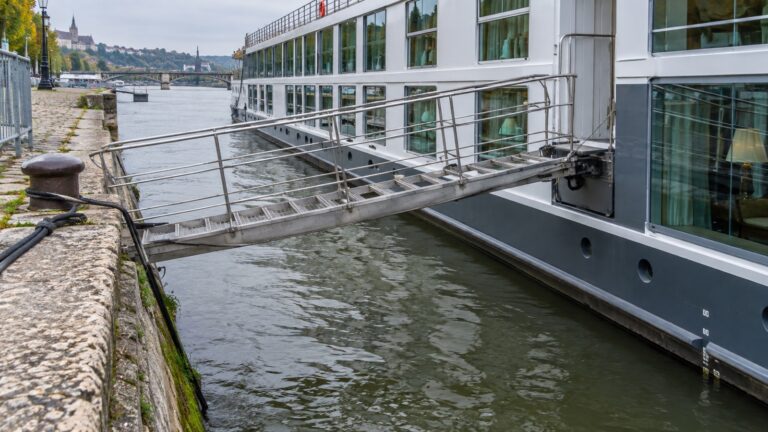
On many European river ships, the lowest passenger deck sits partly below the waterline and has smaller fixed windows. Cruise fans often nickname these aquarium-deck cabins.
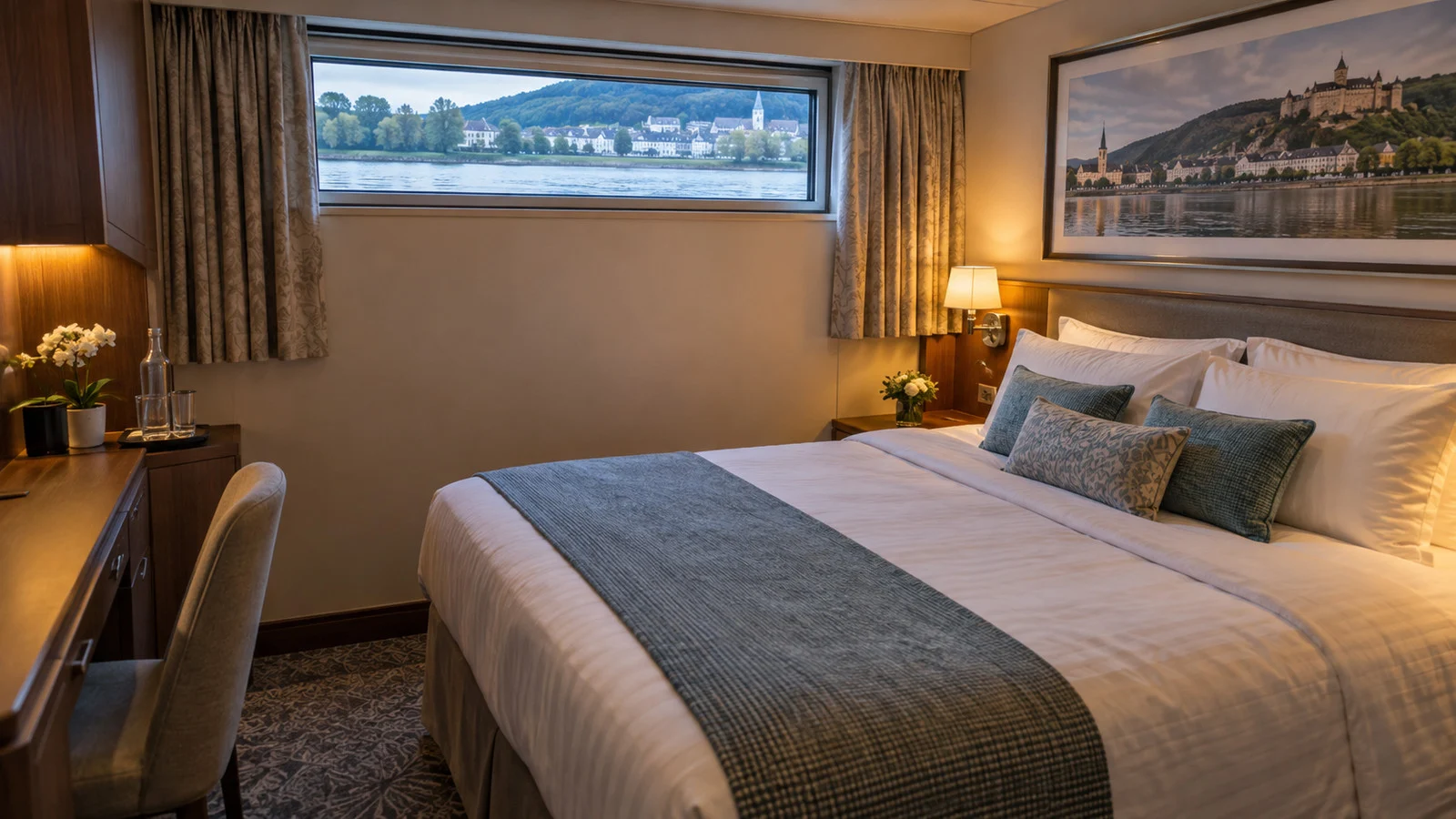
A late fare can look like the same cruise for less, but the remaining cabin may have less daylight, no opening window, and a view close to the water. It may also be perfectly comfortable for a traveler who plans to use the cabin mainly for sleeping.
Do not assume every sale is lower deck, and do not assume lower deck is unwanted. The trap is comparing prices without comparing the exact product.
When a lower-deck cabin is a smart buy
Choose it confidently when you value the itinerary more than the view, enjoy the public lounges and sun deck, or would rather spend the savings on flights and extra nights. You receive the same dining, service, and included touring as guests in many higher categories, subject to the line’s inclusions.
A fixed-window cabin can also be easier to justify on routes with evening sailing, busy days ashore, or frequent rafting beside another ship. Our guide to river cruise double docking explains why even an upper-deck view can temporarily become another cabin.
Think twice if natural light matters to you, you plan to relax in your room during scenic cruising, or lock noise will disturb your sleep. See the guide to the loudest river cruise cabins before choosing a room near mechanical areas or a busy gangway.
Deposits, cancellation fees, and final payment
A small deposit does not make a reservation risk-free. Read whether the deposit is refundable, transferable, or immediately subject to a cancellation charge.
Avalon’s current United States terms say most cruises require a nonrefundable $250 per-person deposit and list final payment 90 days before travel for Avalon Waterways. Its cancellation schedule for 2026 and 2027 begins at the final-payment date, while revisions and airfare can have separate fees.
AmaWaterways’ current United States terms list a $400 per-person deposit for Europe, Colombia, and Asia, final payment 90 days before travel, and a $200 cancellation charge for those regions at 121 days or more. Air, protection plans, special programs, and other destinations have additional rules.
Viking’s offers and payment dates can be promotional and year-specific. A $25 deposit offer or a distant pay-in-full date should be treated as the terms of that quote, not as a permanent line policy.
Save the invoice and take a screenshot of the fare rules you accepted. Recheck the final-payment date after any change because a rebooking can carry new pricing or penalties.
A practical way to book without overpaying
- Choose the nonnegotiables: rank itinerary, dates, cabin type, ship, and budget before opening the booking engine.
- Compare identical cabins: match the ship, sailing date, cabin category, taxes, air, transfers, gratuities, and included excursions.
- Check the deck plan: confirm window type, elevator access, nearby stairs, crew areas, and acceptable cabin numbers.
- Price the whole trip: late cruise savings can vanish when last-minute airfare or hotels cost more.
- Read the terms before paying: note deposit status, final payment, cancellation penalties, airfare rules, and travel-protection conditions.
- Monitor, do not assume: ask whether a new promotion can be applied to an existing booking before canceling and rebooking.
- Set a walk-away point: if only cabins you dislike remain, change the date or ship instead of buying a compromise you will resent.
Should you wait for wave season?
January through March is commonly marketed as wave season, and cruise lines may advertise airfare, onboard credit, or deposit offers. The headline promotion is not automatically the lowest total price.
If the exact cabin and date matter, book when the acceptable price and terms appear. If you are flexible, compare several dates during the promotion and again after calculating air and cancellation costs.
Should you wait until final payment?
Cancellations sometimes return cabins to sale near a final-payment deadline, but there is no guaranteed release of discounted inventory. The cabin may return at the prevailing fare, and another traveler can book it before you do.
Waiting works best for travelers who can accept any deck, arrange flights cheaply, and leave on short notice. It is a poor plan for school breaks, celebrations, accessible travel, or a long international flight itinerary.
Families, solos, groups, and accessible travel
Book early when several people must travel together. Neighboring cabins and family configurations are limited, and a small ship may have no arrangement that fits your group.
Solo inventory can also be restricted even when twin cabins remain. Compare the single supplement and total price rather than assuming an advertised per-person fare applies to one guest.
For mobility needs, ask the cruise line which decks the elevator reaches, whether the gangway can accommodate your device, and how shore access works at each stop. Our river cruise accessibility guide explains why the ports and gangways can matter more than the cabin.
Get the agreed cabin number and assistance notes in writing. Do not rely on a generic accessibility label because ships, docks, water levels, and excursion vehicles differ.
How season and itinerary change the answer
Holiday sailings, limited-event departures, and school-break dates can justify booking at the early end of the range. Shoulder-season departures may leave more choice, but no month guarantees a bargain.
Water levels can affect any sailing and cannot be predicted reliably at booking time. Read our guide to river cruise low water, then evaluate the line’s contingency language and your travel insurance.
Scenic stretches such as the Middle Rhine Gorge can make an opening window or balcony more valuable to some travelers. Others prefer the open sun deck and would rather put the cabin budget toward a longer trip.
Quick answers
How far in advance should I book a river cruise?
Book 12 to 18 months ahead for a specific date or cabin, but start when sales open for scarce accessible, solo, suite, or neighboring-cabin inventory.
Is one year ahead too early?
No, one year is a sensible lead time when your date, itinerary, or room category matters.
Do river cruises get cheaper near departure?
Sometimes, but treat a late deal as a different product until you compare its cabin, airfare, and cancellation terms.
Are lower-deck cabins bad?
No, they can be excellent value if you accept less daylight and a fixed window in exchange for a lower fare.
When do river cruise schedules open?
There is no industrywide release date, so monitor your specific itinerary and ask to be alerted when the preferred season appears.
Should I use a travel agent?
An experienced cruise agent can watch inventory and explain fare rules, but the written confirmation controls whether you book direct or through an agent.

The bottom line
Book early for scarcity and book late only for flexibility. For most travelers who care about both date and cabin, 12 to 18 months is the comfortable target.
A cheaper lower-deck room can be a smart choice, but it is not the same product as a balcony cabin. Compare the cabin number, window, total trip price, and cancellation rules before you call any fare a deal.
For more context, see how European river locks affect the onboard experience and how river cruises differ from ocean cruises.
How this guide was researched: This guide uses current United States booking terms from Viking, AmaWaterways, and Avalon Waterways, plus Viking Holdings’ second-quarter 2026 investor release. Terms and promotions can change, so confirm the quote and invoice before paying, following our Editorial Policy.
More on this topic: browse every guide on river cruise planning.