River Cruise Tipping: What Each Line Actually Expects
River cruise tipping looks simple until two perfectly sensible travelers receive opposite advice. One sailed with gratuities included, while the other found separate guidance for the crew and cruise manager in the final documents.
The only dependable starting point is your own cruise line, market, itinerary, and booking confirmation. Use this guide to build a budget, then check the current official policy before you leave home.
River cruise tipping quick facts
- First check: Your invoice, booking terms, and final travel documents
- Main question: Are onboard and onshore gratuities included, suggested, or excluded?
- Possible separate recipient: Cruise manager or tour director
- Local guides and drivers: May be included, covered by the line, or tipped separately
- Common payment choices: Shipboard account, credit card, cash, or a combination
- Useful currency: Small notes in the local currency
- Important distinction: Port and city taxes are charges, not gratuities
- Best final check: Ask reception how the pool is divided before settling the account
- Budget rule: Keep a contingency even when the brochure says tips are included
My quick take
I would never copy a generic daily tipping figure into my travel budget without checking the cruise line first. River cruise brands package gratuities very differently, and even one brand may use different terms for a promotion, region, charter, or land extension.
If tips are included, I treat the matter as settled unless someone provides truly exceptional personal help. If they are not included, I use the line’s current recommendation as the baseline and adjust only for service, not because another passenger announced a different custom at dinner.
Why river cruise tipping feels confusing

A river ship is small enough that you quickly recognize the people serving breakfast, cleaning cabins, handling ropes, and answering questions. That personal contact makes many guests want to thank individuals, but most operators prefer a shared crew pool so behind-the-scenes employees are not forgotten.
The cruise manager may sit outside that pool because the role belongs to the cruise line rather than the vessel’s hotel operation. Local guides and drivers may also be employed by contractors, which creates another possible tipping category.
Nationality adds noise to the conversation. American travelers often expect to tip, while guests from countries with service-inclusive pricing may reasonably assume the fare covers it.
The five cruise-line policies to know

The examples below use official pages available when this guide was updated. Policies can change, so follow the linked source and your final documents if the two do not match.
AmaWaterways
AmaWaterways describes gratuities as discretionary but publishes a recommendation for European cruises. Its official first-time cruiser FAQ currently recommends €125 per guest for the ship’s crew on a seven-night European sailing, or €145 on AmaMagna.
The same page recommends €30 per guest for the cruise manager on a seven-night cruise, with additional guidance for pre-cruise and post-cruise land days. Ama says guests may charge gratuities to a credit card or give cash.
Those amounts are useful for planning, but they are not universal rates for every AmaWaterways destination or trip length. Check the material for your exact river and sailing before multiplying anything.
Uniworld
Uniworld’s 2026 United States terms define a river cruise of seven nights or more as including onboard gratuities. The same terms say that any gratuities not included in a specific itinerary remain at the guest’s discretion.
That wording is a good reminder to read the itinerary overview, especially for land arrangements, short products, add-on nights, or a booking made through another sales market. I would not create a second general crew tip when my confirmed fare already includes it.
You can still recognize extraordinary personal service if you want to, but an included-gratuity promise should mean exactly that. Ask reception before handing over extra cash if you are unsure whether a person participates in the included arrangement.
Viking River Cruises
Viking’s current United States booking and sale terms state that gratuities onboard and on land are not included in the cruise fare. That answers the inclusion question, but your itinerary documents and onboard information should supply the practical recommendation for the destination.
Do not assume a figure from a friend’s older Rhine cruise applies to the Nile, Mekong, Mississippi, or a future European sailing. Currency, trip length, staffing, and sales market can all change the instructions.
Viking may offer a way to prepay or settle gratuities through the shipboard account, depending on the booking. Compare the amount, currency, recipients, and refund terms before choosing convenience over flexibility.
Scenic
Scenic’s official river cruise FAQ lists all tipping and gratuities onboard and onshore among the inclusions. For a standard Scenic booking covered by that promise, there should be no required crew, guide, or driver tip to add.
I would still check whether independently booked activities, private transfers, spa services, or time outside the Scenic program fall beyond that inclusion. An all-inclusive cruise cannot cover a supplier you hired on your own.
Avalon Waterways
Avalon’s United States terms say gratuities for the cruise director, local hosts, local guides, drivers, and ship’s crew are not included unless the pricing details say otherwise. They also describe those gratuities as discretionary.
That means the booking-specific pricing page matters as much as the general terms. Save a copy of the inclusions attached to your reservation, then use the final documents for any suggested amounts and payment procedure.
Crew pool versus cruise manager

The crew pool generally covers the hotel team, including visible and less visible roles. A pooled system helps share recognition with housekeeping, galley, maintenance, and nautical staff who may have contributed without serving you face to face.
The cruise manager or cruise director can be handled separately because that person coordinates the wider itinerary, briefings, excursions, and disruptions. If your line publishes two recommendations, do not assume one envelope covers both.
Before paying, ask one precise question at reception: who receives the pooled amount? The answer matters more than whether the line uses an envelope, a box, or a charge on your folio.
Local guides, drivers, and optional tours
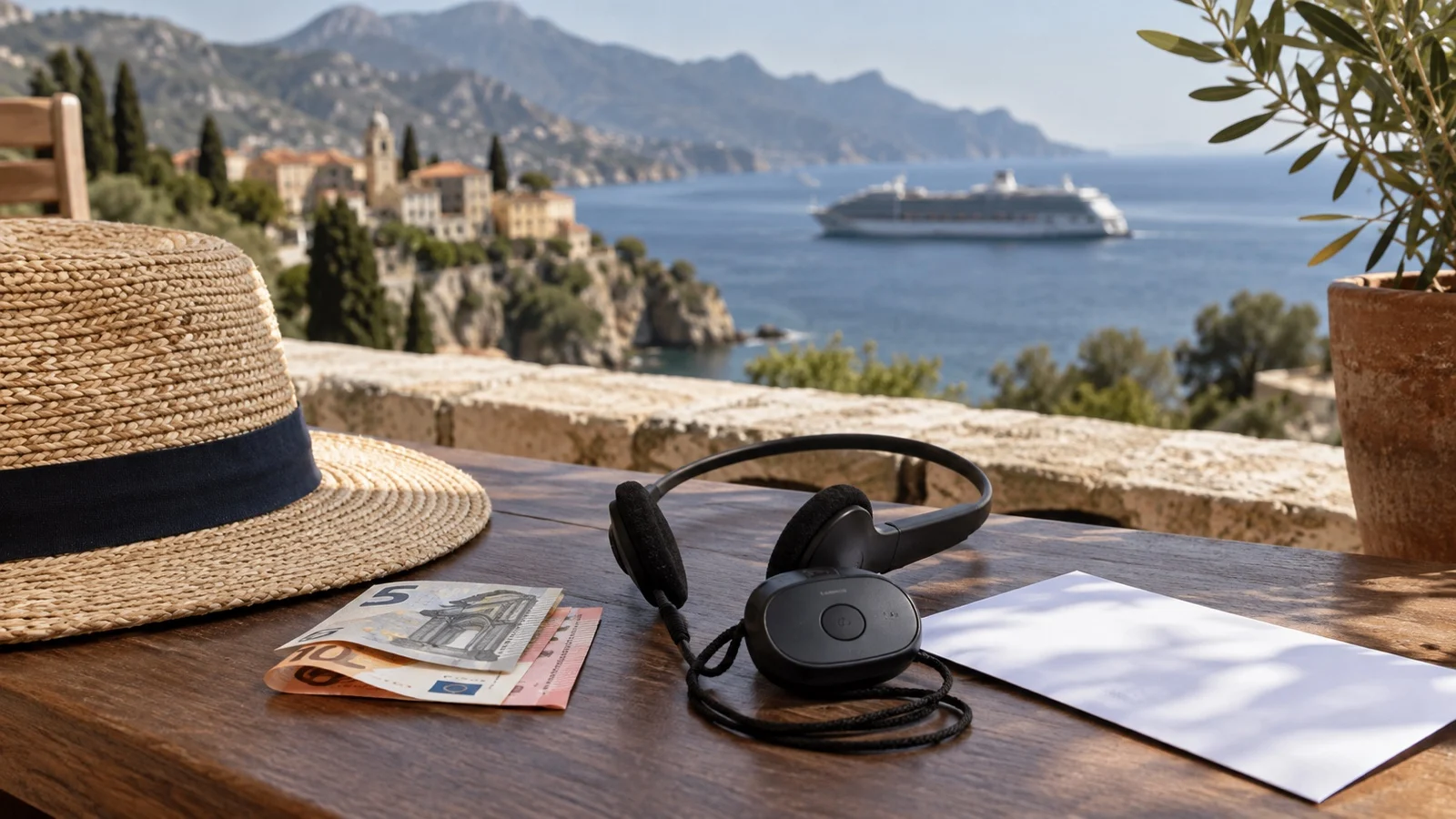
An included walking tour may use a local guide who is not a ship employee. Some lines cover that gratuity, some provide a guideline, and others leave it entirely to the guest.
Listen to the cruise manager’s briefing because the arrangement can vary by day. A ship-organized guide, an optional paid excursion, and a private guide you booked yourself may all follow different expectations.
For an independently booked tour, ask the operator whether gratuities are included. If they are not, decide based on local custom, group size, trip length, and the quality of the service.
Cash, card, and currency
A shipboard account is the easiest option when the line allows it. You receive a record of the charge, avoid carrying a large amount of cash, and can usually review the total before disembarkation.
Cash offers flexibility for a cruise manager, local guide, driver, or exceptional individual service. Small notes are more useful than large denominations, particularly when you need to divide money among several days or recipients.
Euros are practical on much of the Rhine, Main, Moselle, Danube, Seine, Rhône, and Dutch and Belgian waterways, but they are not the local currency everywhere. Use the destination’s currency or another currency the recipient can readily spend.
A credit-card charge may be converted using the ship’s exchange method or your card issuer’s rules. Check the currency shown on the folio before approving it, and avoid dynamic conversion when your own card offers a better rate.
When and how to give the tip
Pooled gratuities are usually handled near the end of the cruise, either through reception, a designated box, or the shipboard account. Follow the line’s instructions so the money reaches the intended team.
A cruise manager’s gratuity may have its own envelope or payment line. Write your name or cabin number only if the process requests it, since a gratuity is not meant to become a public performance.
Local guides and drivers are commonly thanked at the end of the excursion. Prepare small notes before leaving the ship so you are not searching for an ATM while the group boards the coach.
How I build the budget

I start with the line’s current published recommendation and multiply it by the number of guests and eligible cruise days. Then I add any separately recommended amount for the cruise manager and a modest cash allowance for independent services.
For a couple, the total can be meaningful, so it belongs in the trip budget before final payment. An all-inclusive line may reduce that category dramatically, but I still carry small cash for situations outside the package.
I also keep the gratuity budget separate from drinks, laundry, spa appointments, optional excursions, and taxes. Combining all onboard spending into one vague number makes it difficult to spot a billing mistake.
Taxes and fees are not tips
A city, port, or tourist tax is a mandatory public charge when the local rules apply. It does not reward the crew, and paying it does not replace a gratuity that your cruise documents say is separate.
Amsterdam is a useful example because the Port of Amsterdam publishes a day tourist tax for transit sea and river cruise passengers mooring inside the municipality. The official page currently lists €14.50 per person age two and older for each day or part of a day.
The operator declares passenger numbers and pays the authority, but how that cost appears in your fare or account depends on the cruise contract. Ask the line whether applicable local taxes are included instead of assuming every reception charge is optional.
How service should affect the amount
A suggested gratuity is guidance, not a fee disguised as a kindness, unless your contract makes it a service charge. I begin with the published recommendation when service is competent and considerate.
For a serious service failure, raise the issue while the team still has a chance to fix it. Silently removing a pooled gratuity at the end can penalize employees who had nothing to do with the problem.
Exceptional help may justify an additional personal thank-you if the line permits direct tips. A handwritten note naming the employee can also matter because managers often use guest feedback in recognition and promotion decisions.
Solo travelers, families, and children
Most guidelines are stated per guest, not per cabin. A solo traveler therefore usually budgets one share, while a couple budgets two, even though both occupy one room.
Children may be charged or recommended at the same, reduced, or no amount depending on the line. Families should check the age rule rather than assuming a hotel-style percentage.
If a child receives extensive attention from dining or activity staff, a personal note can be especially thoughtful. Keep any extra cash within the cruise line’s policy.
Land extensions and hotels
A pre-cruise or post-cruise extension can introduce tour directors, coach drivers, hotel staff, and local guides who are outside the ship’s pool. AmaWaterways, for example, publishes separate cruise-manager guidance for additional land days.
Uniworld and other inclusive brands may cover some elements but not every independent service. Read the extension inclusions as a separate product rather than carrying the shipboard assumption onto land.
Hotel porterage, restaurant service, and private transfers follow the destination’s norms and your package terms. The cruise line’s onboard policy is not a universal tipping pass.
Accessibility and tipping
Travelers who need mobility assistance should not feel pressured to turn routine, promised access into a series of compulsory cash payments. Accessible service is part of the product when it has been arranged and confirmed.
You may choose to recognize unusually patient or skilled help, but never hand money over in an unsafe moment on a gangway or moving coach. Thank the person, note the name, and settle it later when you are stable.
If a companion, guide, or crew member handles equipment, clarify what assistance the operator authorizes. Gratuities should never substitute for an accurate accessibility plan.
Common river cruise tipping mistakes
The first mistake is assuming every line works like the last one you sailed. The second is treating a suggested amount from a social-media post as more authoritative than the documents attached to your booking.
Another mistake is forgetting that the cruise manager may be separate from the crew pool. Travelers also confuse city taxes, port fees, service charges, and gratuities even though they serve different purposes.
Finally, do not wait until the final morning to find cash, dispute a charge, or learn who shares the pool. Reception is busiest when everyone is checking out.
What to check before departure
Open your invoice, terms, itinerary inclusions, and final travel documents. Search for the words gratuity, tip, service charge, cruise manager, tour director, guide, driver, prepaid, and discretionary.
Confirm whether amounts are per person or per cabin, per day or per cruise, and whether embarkation and disembarkation days count. Note the required currency and whether a card payment becomes part of your shipboard account.
If anything conflicts, send the cruise line or travel advisor a written question and keep the answer. A screenshot of an old public page is less useful than booking-specific confirmation.
Common questions
Are gratuities mandatory on a river cruise?
It depends on the contract. Some lines include them, some publish discretionary recommendations, and some may apply a service charge or prepaid arrangement.
Should I tip when gratuities are included?
You do not need to duplicate an included crew or onshore gratuity. Extra recognition is optional and should be reserved for service you personally consider exceptional.
Can I remove an automatic gratuity?
Ask reception how the charge is classified and what your contract allows. Raise service concerns promptly and avoid making a decision that unintentionally affects the entire crew pool.
Do I tip the cruise manager separately?
Often, but not always. Follow the line’s current instructions because the cruise manager may not participate in the ship’s crew pool.
Are local-guide tips included?
Scenic says onboard and onshore gratuities are included, while other lines may handle guides separately. Your daily briefing and excursion description should settle the question for each tour.
What if I have only large notes?
Ask reception to make change before the final day or use the shipboard account when available. Do not expect a guide or driver to break a large note in a crowded departure.
The last word
River cruise tipping becomes manageable as soon as you stop looking for one universal number. Identify what your fare includes, who sits outside the crew pool, and how your line wants payment handled.
My rule is simple: trust the current booking documents, budget before sailing, and ask reception one clear question if the wording is vague. That leaves room for generosity without turning the final evening into an accounting exercise.
About the author: Ellie writes practical cruise guides that turn changing policies into clear decisions travelers can use.
How this guide was researched: This guide was checked on September 12, 2026, against current AmaWaterways, Uniworld, Viking, Scenic, Avalon Waterways, and Port of Amsterdam policies. Gratuities, taxes, and payment procedures can change, so confirm the rules in your booking documents before departure.
More on this topic: browse every guide on river cruise planning.