River Cruise Excursion Groups: Gentle Walkers and Headsets
River-cruise excursion groups are simply a way to match guests with guides, vehicles, languages, interests, and walking needs. The details are not standardized, so the most useful information is in your line’s current excursion description and daily program.
A “gentle walkers” option can be slower and include more stops without being step-free or wheelchair accessible. A headset can make a guide easier to hear, but it does not change cobblestones, stairs, standing time, or the distance back to the ship.
My quick take
Choose the excursion by route, terrain, and standing time rather than the flattering name of the pace. A regular city walk may be easier than a “gentle” castle visit if the city is flat and the castle has unavoidable steps.
Do not assume every line uses an evening paper sign-up sheet. Some choices are made online weeks before departure, some optional tours are booked onboard, and some assignments happen on the morning of the tour.
If you are unsure, choose the more conservative pace on the first demanding port and ask the cruise manager about later days. Switching may be possible when space remains, but it is not a guaranteed right once a tour or vehicle is full.

The quick facts
- Group size: there is no universal river-cruise number. It depends on guide and vehicle capacity, language, demand, port conditions, and whether the product is sold as a small-group or private excursion.
- Gentle walkers: AmaWaterways says its gentle tours typically move at a comfortable pace and stop more often, but it also warns that excursions can include steps and uneven terrain.
- Activity labels: Viking describes included and optional excursions, while individual listings provide the details you need. Never infer accessibility from “easy” or “included” alone.
- Avalon choices: Avalon uses Classic, Discovery, and Active to describe different interests and styles, not just three walking speeds.
- Headsets: Uniworld says each sightseeing group has its own guide and complimentary QuietVox audio headsets. Other lines and tours may use different equipment or none at all.
- Selection timing: Riviera Travel asks guests to select preferred included excursions at least four weeks before departure, while Uniworld says many optional tours are booked onboard.
- Participation: excursions are generally optional. AmaWaterways and Riviera both explicitly allow independent exploration, but you remain responsible for knowing the ship’s departure time and location.
How excursion groups are actually formed
A ship may divide guests by excursion choice, language, vehicle, pace, or special interest. The number of people in your group can change from port to port, so a group size from one morning is not a fleetwide promise.
Local guide availability and motorcoach capacity matter as much as ship size. When a berth is outside town, transportation can make the day more structured than a walk-off call.
Some departures use colored cards, numbered signs, bus numbers, or app assignments, but the method varies. Follow the daily program and the cruise manager’s instructions rather than expecting one universal system.
If group size is important, ask whether the published number is a maximum or an average. “Small group” is useful only when the line defines it for that exact excursion.
Book before the cruise when the line asks
Excursion selection can open before departure, and popular or capacity-limited choices may fill. Save confirmation screens and recheck them after any schedule change.
Riviera’s current FAQ asks guests to choose preferred included excursions at least four weeks ahead. Uniworld’s FAQ says many optional excursions are booked onboard, with select Masterpiece Collection tours available in advance.
Those two approaches are a good reminder that one line’s routine is not the industry’s routine. Check your account, app, final documents, and cancellation deadline instead of waiting for a sign-up sheet that may never appear.
What gentle walkers really means
AmaWaterways describes its gentle walkers tours as moving at a comfortable pace with more frequent stops. The same page warns that land packages and shore excursions may require moderate-to-challenging walking, steps, and uneven terrain.
Gentle therefore describes pace, not accessibility. A gentle tour can still include cobblestones, curbs, standing, a gangway, a bus step, and a walk from the drop-off point.
Ask for distance, maximum continuous standing time, stairs, surface, grade, restroom availability, seating, and vehicle access. “About a mile” is much more useful when you also know whether it is level pavement or an uphill medieval lane.
A slower group can suit anyone who wants more time for footing, photos, or listening. It is not a medical category, and there is no prize for choosing a faster group than you will enjoy.
In Bratislava, for example, the old town and castle can create very different mobility demands. Read the route rather than treating the city name as one excursion.
Active, Classic, and Discovery are not universal pace tiers
Avalon Choice currently describes options for movers, hands-on doers, and travelers drawn to icons and history. Its Classic, Discovery, and Active labels are about the experience as well as physical effort.
An Active option may be a hike, bike ride, or other genuinely physical activity rather than a faster version of the city walk. A Discovery option can involve food, art, or culture without saying much about steps or standing.
Other brands use their own rating scales, and even similar words can mean different things. Read the distance, duration, surfaces, transportation, and special requirements on every listing.
For bike tours, ask about traffic, helmet provision, e-bike availability, hills, and what happens if you cannot finish. The guide to river-cruise bikes and cycling ports covers the extra questions.
Headsets help, but they do not erase the route
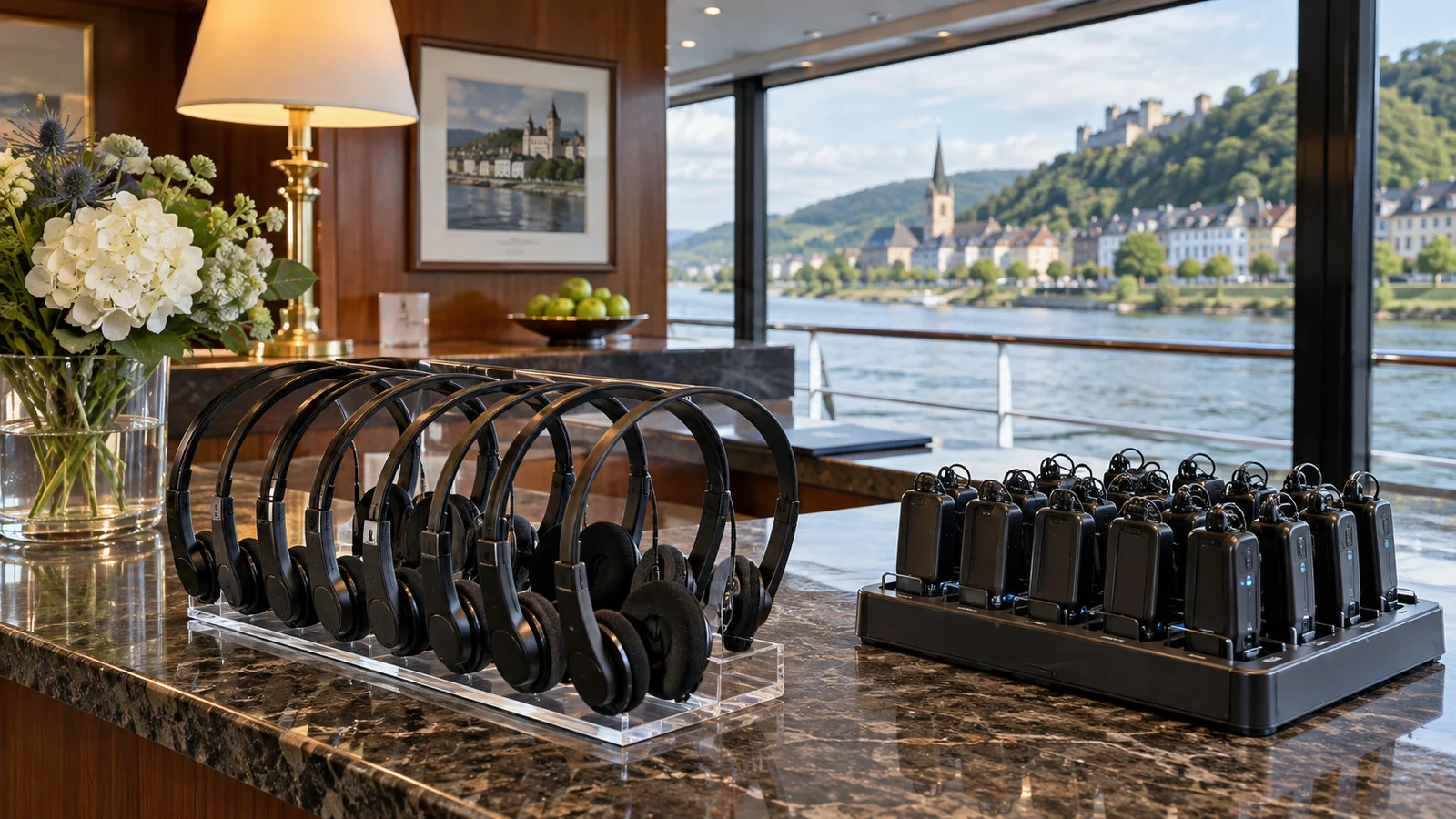
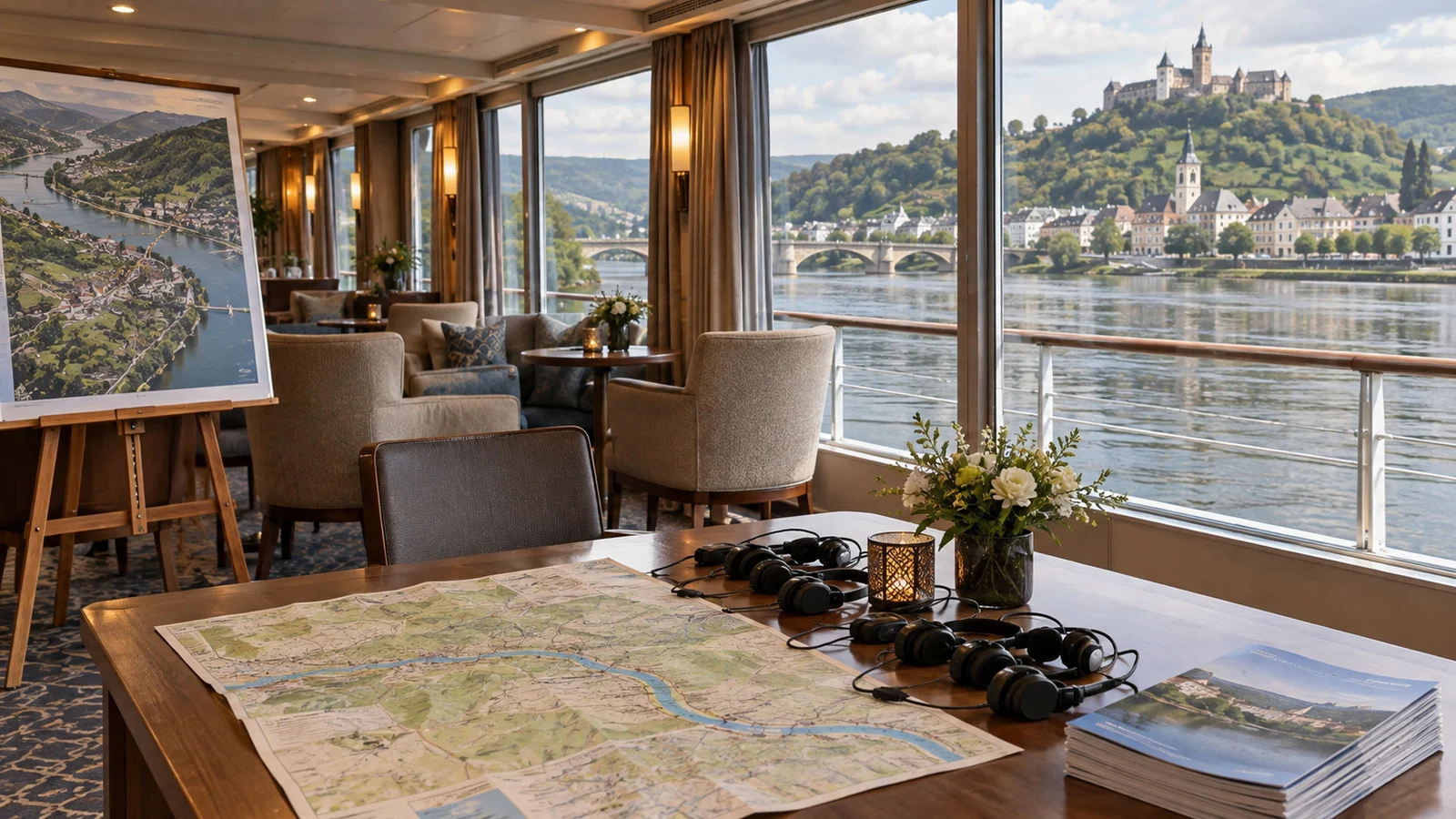
A tour headset usually has a receiver and earpiece tuned to the guide’s transmitter. It lets guests hear without crowding tightly around the guide, although range, controls, and accessories vary by system.
Uniworld confirms complimentary QuietVox headsets and one English-speaking guide for each sightseeing group. AmaWaterways also describes a personal audio device on select rivers and itineraries, with location-based prerecorded commentary available in limited cases.
Check the device before leaving the ship or bus, and tell the guide immediately if the sound is weak or the channel is wrong. Do not wait until the group is several blocks away to solve it.
If you use hearing aids or need a different earpiece, contact the line before departure. Ask whether a neck loop, your own wired earbud, a standard audio jack, or another accommodation is compatible with the exact receiver.
A headset may let you listen from a nearby bench, but range is not guaranteed and the guide may move. Agree on the route and meeting point before stepping away.
The daily briefing matters more than the label
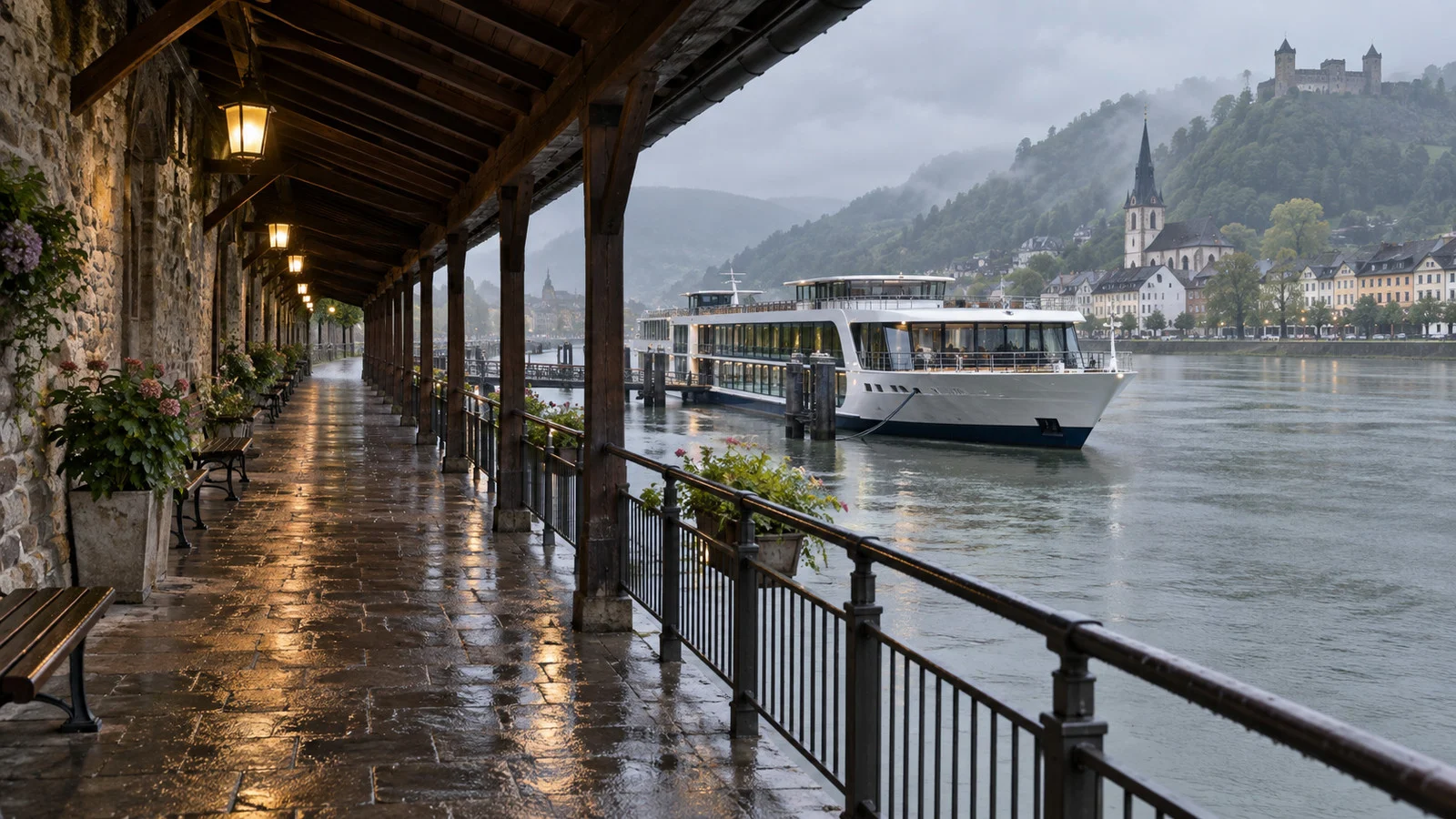
Water levels, berth assignments, traffic, closures, and guide availability can change an excursion. The daily program is the operational version, even when the website originally described something different.
Listen for departure time, meeting place, transportation, restroom stops, free time, return method, and the ship’s next movement. A walk that ends downtown is a different commitment from a bus that must return everyone to an outlying berth.
The guide may not know where the ship will berth later if local authorities change the assignment. Save the ship’s contact number and use the line’s map or port instructions if you leave the group.
This guide to river ports that are not walkable helps identify calls where the included transportation may be especially valuable.

Can you switch groups?
Ask, because the answer depends on capacity and timing. A cruise manager may move you to another pace or tour when a seat and guide are available, but full vehicles and timed admissions can make a late change impossible.
Raise the issue as soon as you realize the original choice is wrong. Waiting at the gangway can leave the team no time to rebalance groups or tickets.
Couples do not necessarily have to choose the same excursion, but confirm meeting points and return plans. Two tours may end in different places or at different times even when they start together.
Special-interest visits, cooking sessions, private access, and bike tours often have tighter capacity than a city walk. Book those first, then adjust ordinary walking choices if the line permits.
Skipping the included tour
An included excursion is not compulsory. AmaWaterways says guests may explore independently, while Riviera says guests may explore on their own or stay aboard.
Included also does not mean free of opportunity cost. If the tour consumes the only hours an attraction is open, an independent plan may fit you better.
Tell the cruise manager when you are skipping or leaving a group, and learn the all-aboard time and ship location. The ship can move between the morning drop-off and afternoon return on some itineraries.
Use the guide to skipping a river-cruise included tour to plan transportation, buffers, and contact details. Do not disappear from a guided group without telling the guide.
A practical selection checklist
- Distance: ask for the total and the longest stretch without a stop.
- Terrain: check cobblestones, stairs, slopes, gangways, and bus steps.
- Standing: ask how long visits spend without seating.
- Transportation: confirm motorcoach time, restroom access, and the return method.
- Timing: note selection and cancellation deadlines before the cruise.
- Capacity: learn whether “small group” has a published maximum.
- Equipment: ask about headsets, hearing support, walking poles, bikes, and helmets.
- Independence: save the ship’s number, berth instructions, and all-aboard time.
Photograph the meeting point and the guide’s sign if the tour includes free time. A square can look very different when several ships’ groups return at once.
Carry water, weather protection, required medication, and a little local currency. A headset does not help much if heat, rain, or an urgent restroom search becomes the real challenge.
Accessibility requires a separate conversation
A gentle group is not the same as an accessible excursion. AmaWaterways explicitly warns that its excursions can involve steps and uneven terrain, and that some embarkation points and vehicles may not accommodate mobility devices.
Ask the line in writing about the complete route from cabin to motorcoach to attraction and back. Include the dimensions and weight of any wheelchair or scooter, and ask whether assistance with steps or transfers is actually provided.
The guide to what “accessible excursion” should mean gives you a sharper list of questions. The broader river-cruise accessibility guide covers gangways, rafting, and elevators.
Do not count on a shorter loop being invented on the day. A private vehicle or independent accessible guide may need advance booking and enough buffer to return to the ship.
Guides and gratuities
Local guides may be contractors, destination partners, or line staff, and gratuity treatment varies. Some fares include guide gratuities, while others publish suggested amounts or leave the decision to guests.
Check your line’s current policy before carrying cash for every tour. The river-cruise tipping guide separates crew, cruise manager, driver, and local-guide practices.
A clear thank-you and specific feedback to the cruise manager also help a good guide. Do not let a generic “tips included” assumption replace the line’s written terms.
Weather changes the right group
Heat, rain, cold, and slick cobblestones can make the same route feel completely different. Choose the pace after checking the local forecast and the day’s terrain.
A slower option may offer more stops, but it can also mean more time standing outdoors. An active option keeps moving, yet it may add hills or distance, so neither label is automatically better in bad weather.
Pack shoes with reliable traction, a compact rain layer, sun protection, and water. For a cold-weather sailing, gloves that let you handle the receiver and phone are surprisingly useful.
Tours can be shortened, rerouted, moved by coach, or canceled for operational reasons. Keep a simple independent backup near the berth rather than assuming the published route will run unchanged.
Quick answers
How large is a river-cruise excursion group?
There is no industrywide size, so ask whether your line publishes a maximum for the exact tour rather than relying on a 20-to-30-person rule.
Do I have to join an included excursion?
No, and both AmaWaterways and Riviera explicitly allow independent exploration, but you are responsible for the departure time and ship location.
What does gentle walkers mean?
It generally means a more comfortable pace and more stops, not a step-free or wheelchair-accessible route.
What is a QuietVox?
It is a brand of personal audio receiver used to hear the guide, and Uniworld currently says it provides complimentary QuietVox headsets to sightseeing groups.
Can I change groups during the cruise?
Often you can ask, but space, vehicles, tickets, and guide capacity determine whether the change is possible.
When do I choose excursions?
It varies by line, with Riviera asking for preferred included choices at least four weeks before departure and Uniworld booking many optional tours onboard.
Is an Active tour just a faster walk?
No, because it may be a hike, bike ride, or other distinct activity, and Avalon uses Active alongside Classic and Discovery as experience styles.
The last word
The best excursion group is the one that fits the actual day, not the one with the most flattering label. Read the route, ask about terrain and standing, and choose early when capacity is limited.
Use the headset, save the meeting point, and speak up as soon as the pace feels wrong. In a spread-out port such as Vienna, understanding the transportation plan can matter more than the group name.
How this guide was researched: Walking levels, independent exploration, selection timing, and personal audio guidance were checked against current passenger information from AmaWaterways, Riviera Travel, Avalon Waterways, Uniworld, and Viking. Policies and excursion details can vary by itinerary, ship, departure, and operating conditions.
See our Editorial Policy for the sourcing and correction standards used on this guide.
More on this topic: browse every guide on river cruise planning.