What Does ‘Wheelchair Accessible’ Mean on a Cruise Excursion?
The wheelchair symbol on a shore excursion listing is usually a statement about the vehicle. It is rarely a promise about the sidewalk, the ruin or the restroom at the other end.
Here is what each line’s label actually means, and what to ask before you pay.
The short answer
On most cruise lines, “accessible” is a transportation rating. Royal Caribbean and Celebrity Cruises both sort their accessible tours by whether you can climb motorcoach steps, not by what the destination is paved with.
Carnival comes closest to describing the ground itself. Its fully accessible category says the tour route avoids steps and stairs, which is a claim about the place and not only about the bus.
So the useful question is never “is this tour accessible”. It is “accessible for whom, over what surface, and for how far”, and the shore excursion desk can answer that if you make them.
I checked every policy below against each line’s own published pages in September 10, 2026. Lines rewrite these pages often, so confirm the current wording with the line in writing before you book.
How it actually works
A ship’s tour is not run by the ship. Royal Caribbean’s published shore excursion terms state that the providers of these services are independent contractors and are not agents or representatives of Royal Caribbean Group.
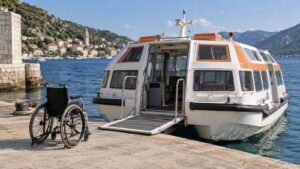
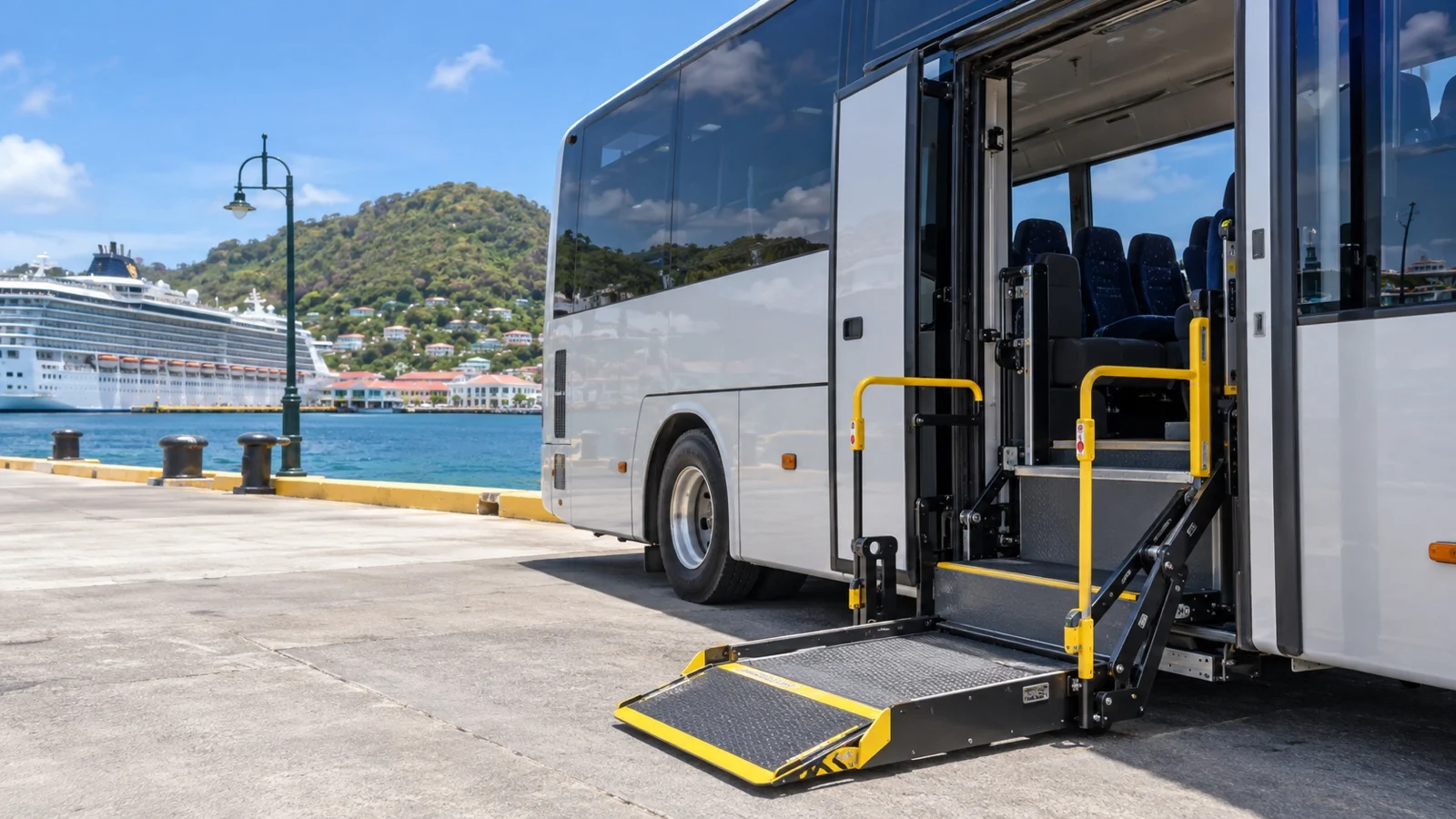
That matters because the accessibility label comes from what the local operator reports about its own fleet, so if the operator has a minibus with a ramp, the tour can carry the symbol.
Do not assume the line has measured every doorway or counted every step. Royal Caribbean specifically warns that historic sites, uneven terrain, inclines, steps and narrow sidewalks can limit wheelchair or scooter access.
The symbol answers one question well and stays quiet on three others.
What each line’s symbol actually says
Royal Caribbean publishes two levels. Level 1 covers tours recommended for guests who can walk short distances, can manage the steps of a motorcoach, and travel with a standard collapsible manual wheelchair or scooter that fits in the luggage compartment.
Level 2 is the one designed for guests who cannot manage those steps or who use a wheelchair or scooter full time, on a vehicle adapted with an access ramp or, where available, a lift. Note that the higher number is the more accessible option, which trips up a lot of people who assume Level 1 means best.
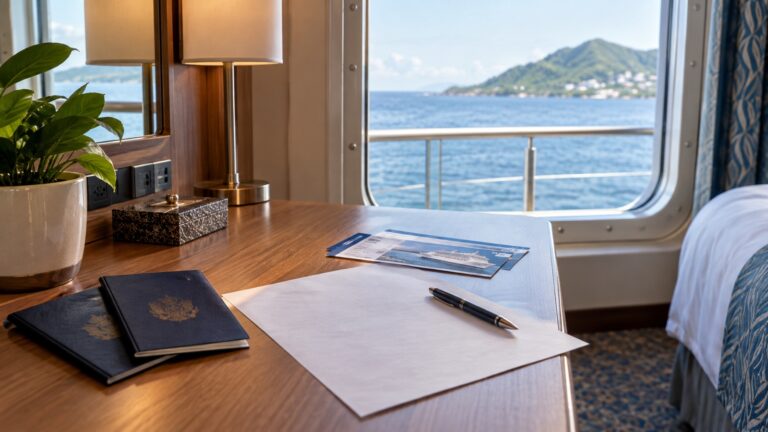
Celebrity Cruises uses the same two-level structure and adds group sizes: Level 1 tours run 15 to 45 guests, Level 2 tours run 4 to 12. Celebrity asks for the completed accessible shore excursion form no later than 10 business days before the cruise starts.
Carnival splits its accessible tours into two named types. Ambulatory accessible means you must be able to take a few steps up and down, walk short distances and transfer to a seat; fully accessible means a tour route that avoids steps and stairs, on transportation with a lift or ramp.
Princess Cruises does not publish an equivalent accessible-tour grade. Its accessibility page tells you to note the excursion’s activity level, listed as Easy, Moderate or Strenuous, and says the line can request accessible vehicles from its tour operators if motorcoach steps are an issue.
Holland America Line grades tours by activity level with icons at the start of each description, and prints the sentence I wish every line printed. It says tour operators follow the disability accommodation laws of their own country, which may be less stringent than United States standards, and that it cannot promise every provider offers accessible facilities.
Norwegian Cruise Line does not publish a comparable accessible-tour grade in its guest FAQ. It says instead that inherent tour venue and tour operator limitations exist that are beyond Norwegian’s control.
Why a lift on the bus does not help at a ruin
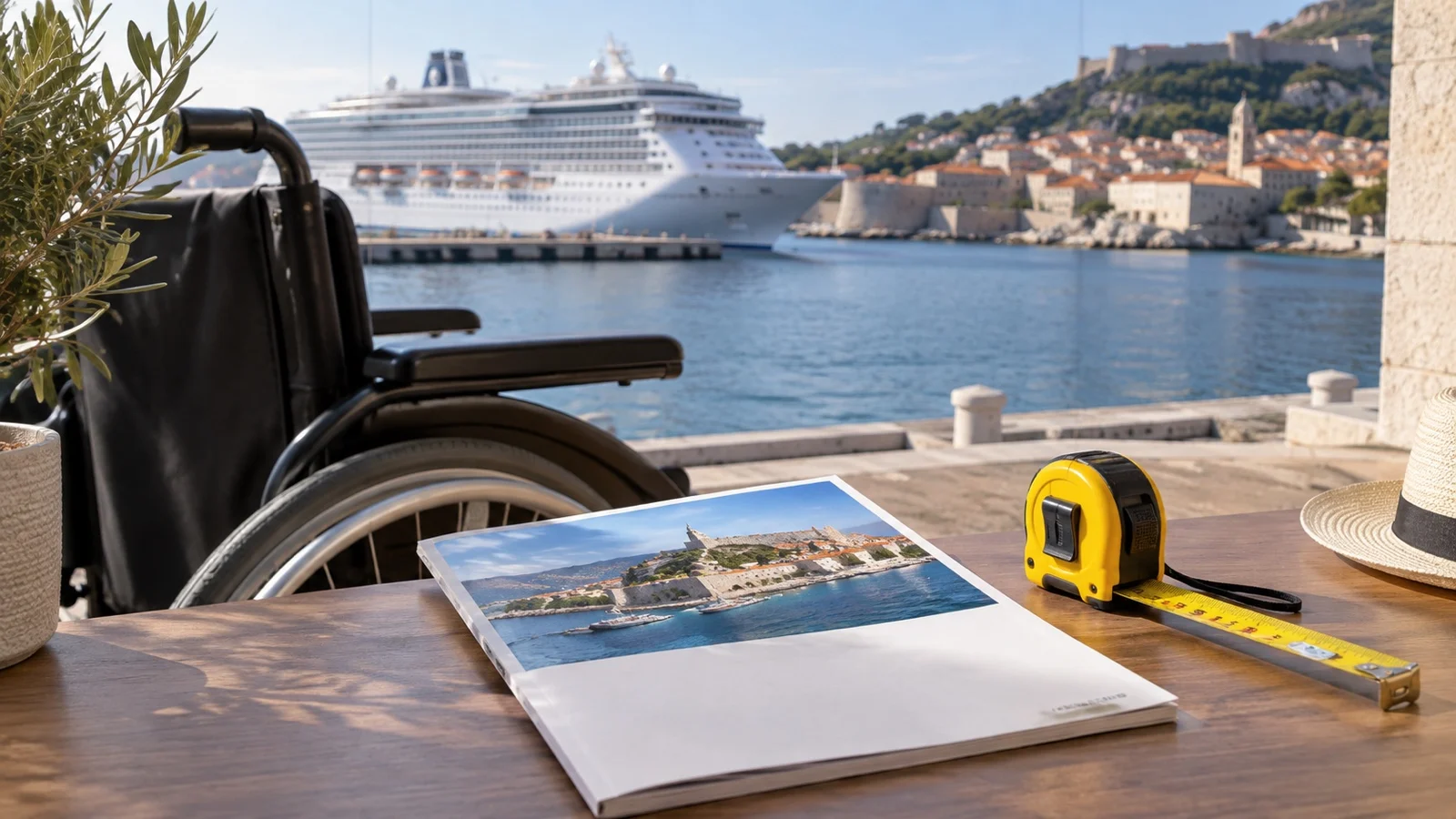
The ramp solves the 18 inches between the curb and the vehicle floor. It does nothing about the 400 yards of Roman basalt, the eight steps at the ticket gate or the gravel path that starts where the parking lot ends.
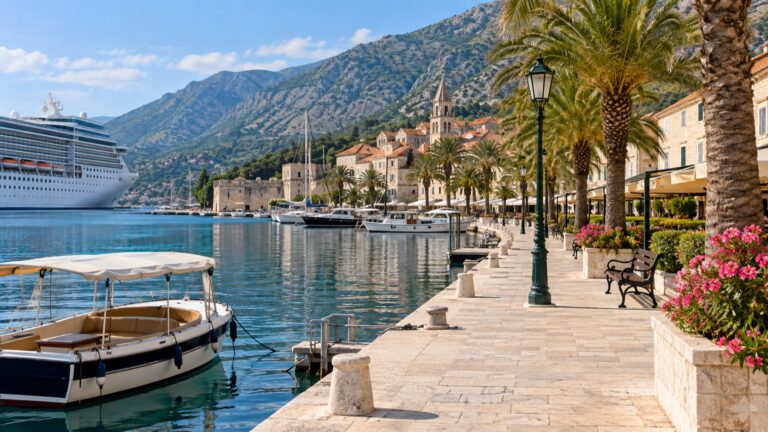
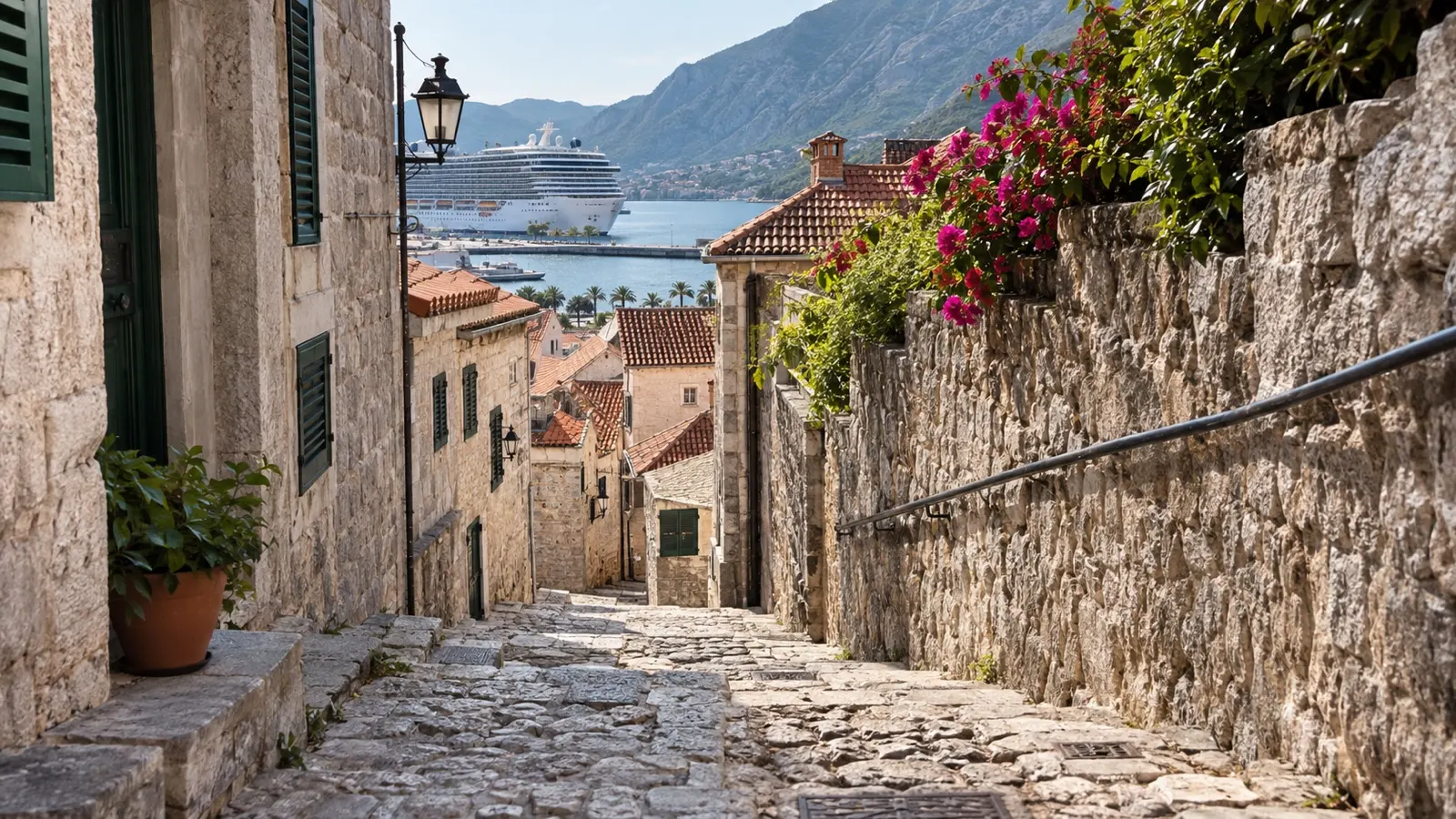
Think about the specific sites your itinerary sells, because the port list matters more than the ship long before any tour is booked. Ephesus has long stretches of polished marble street, Dubrovnik’s walls are reached by stairs, and the old towns of Kotor, Mykonos and Charlotte Amalie are cobbled and stepped by design.
Fun fact: the Pompeii archaeological park publishes a mapped accessible route called Pompeii for All that runs about 2.2 miles (3.5 km) from the Piazza Anfiteatro entrance to the Sanctuary of Venus. The park is refreshingly blunt about it, warning that some ramp inclines exceed 8 percent, that there are sudden height changes of under 2 inches (5 cm), and that stretches of ancient uneven paving remain.
That is a site doing this well, and it is still a warning label rather than a promise.
Limited walking is a phrase, not a measurement
Activity grades like Easy, Moderate and Strenuous are written for a general audience with ordinary knees, and no line I checked publishes a number of feet behind them. Easy on a Caribbean beach transfer might mean 60 feet of flat boardwalk, while Easy on a European city tour can mean a mile spread across four stops.
The phrase “limited walking” has the same problem, because it describes the tour designer’s intent rather than the surface, the grade, the shade or the number of places to sit down. When a description mentions walking over uneven surfaces, read it literally, because it usually means cobbles.
Questions to ask the shore excursion desk
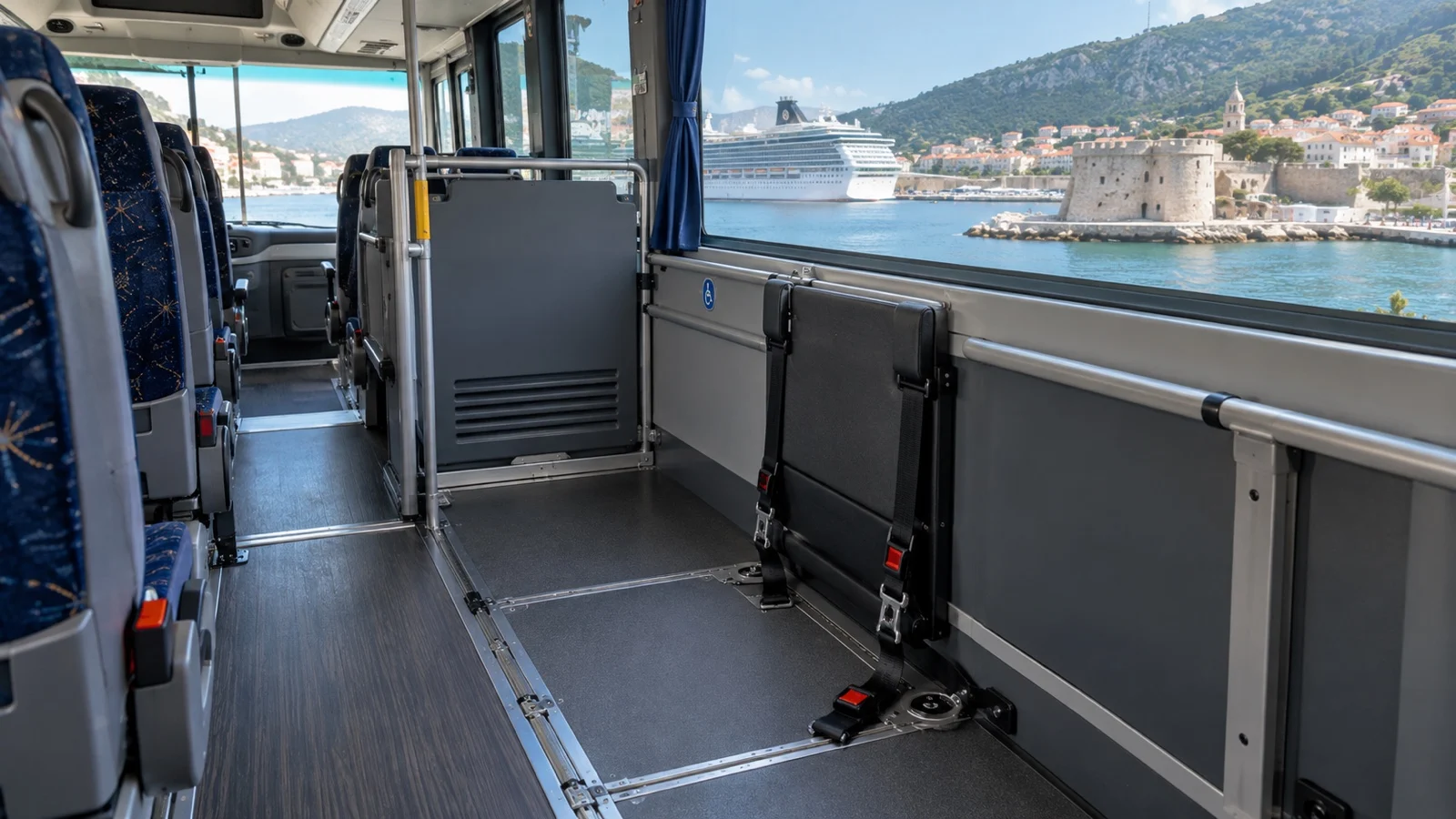
Ask what vehicle will be used and whether the accessible unit is guaranteed for your departure. Then ask for the distance in feet from the drop-off point to each stop, the surface, the steepest grade and where passengers must transfer.
Ask how many unavoidable steps appear at each stop, whether handrails are available and whether the accessible route skips part of the attraction. Confirm a specific accessible restroom rather than assuming a museum, cafe or department store will have one.
Finally, ask where the vehicle meets the ship because some terminals require a shuttle or long pier walk. Request the answers in writing and make sure they refer to your departure, not the same tour in another port.
What recourse you actually have
Your best lever is timing. Royal Caribbean’s shore excursion terms allow most tours to be modified or canceled up to 48 hours before arrival in that port without penalty, with longer windows for tours involving flights, trains, special events or overnight stays.
That is the window in which an email is worth more than a complaint later, because once you are on the bus the leverage drops sharply.
Royal Caribbean’s terms limit its responsibility for independent operators, but that does not mean every refund is discretionary. Carnival explicitly says it will provide a full tour refund if it determines a fully accessible tour is unsafe for a guest with a disability.
United States disability law is a thinner lever than people expect. The Supreme Court held in Spector versus Norwegian Cruise Line in 2005 that Title III of the Americans with Disabilities Act applies to foreign-flag cruise ships in United States waters except where it would regulate a vessel’s internal affairs, and that ruling does not reach a tour operator working in Cozumel or Kusadasi.
If a tour turns out to be unusable, go to the shore excursion desk the same day rather than at the end of the cruise. Photograph the obstacle, note the guide’s name, and put the request in writing.
Four situations, and what I would do in each
- You use a manual folding chair and can transfer to a seat: you are the target market for Carnival’s ambulatory accessible tours and Royal Caribbean’s Level 1, and you have the widest choice of any group. I would still ask about steps at each stop, because transferring into a bus is easier than climbing a flight of stone stairs at a cathedral.
- You use a powered scooter full time and do not transfer: you need the ramp or lift category, which is Level 2 on Royal Caribbean and Celebrity or fully accessible on Carnival. Send your scooter’s exact width, length and weight when you submit the form, because vehicle ramps have limits and a large four-wheel scooter is the usual sticking point.
- You are traveling with someone who walks but slowly: the accessible tour categories may not fit, because they assume a mobility device. Look instead at private or small-group tours where the itinerary can slow down, and read my guide to choosing excursions across different activity levels before you split the group up.
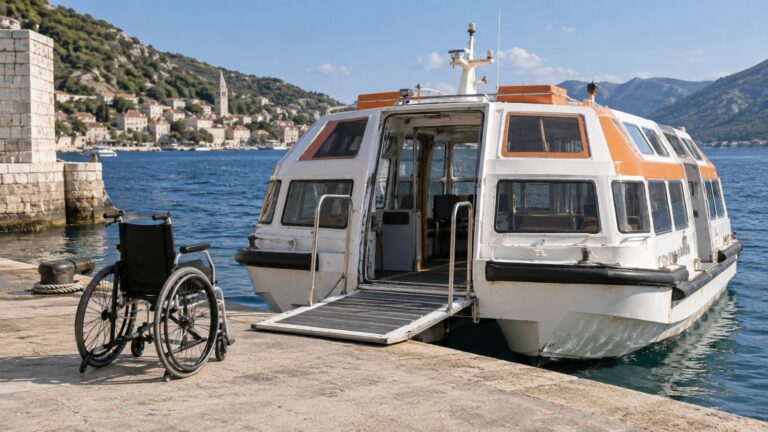
- Your port is a tender port: the excursion label becomes secondary, because the transfer to the tender boat is decided on the day by the captain. Carnival states plainly that whether a guest with mobility limitations can board a water shuttle depends on factors including weather and tidal conditions, and that crew are prohibited from carrying people on or off.
Where people get burned
The first trap is the numbering, because on Royal Caribbean and Celebrity, Level 2 is the more accessible tier and people book Level 1 assuming lower means easier. The second is timing, since Celebrity’s Level 2 tours carry 4 to 12 guests and those seats disappear early.
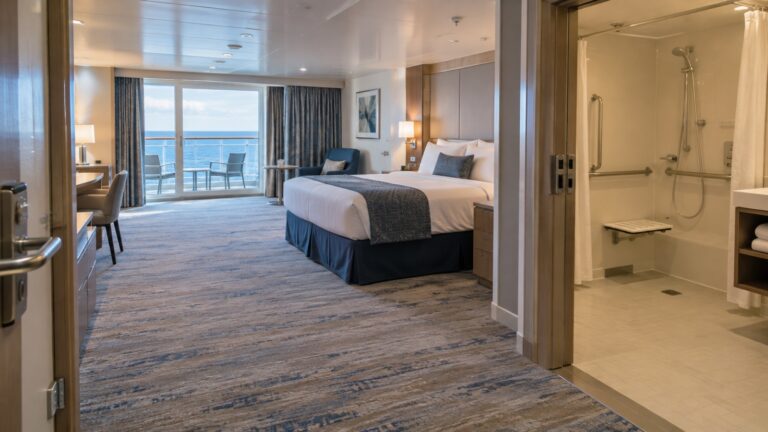
The third is equipment size. Lines ask for your device’s dimensions and weight for a reason, and a heavy scooter that clears the wide door of an accessible cabin will not automatically clear a minibus ramp.
The fourth is assuming a third-party tour sold as accessible has been vetted by anyone, and booking outside the ship also gives up the line’s cancellation window.
A realistic word on accessibility
Access on an excursion is conditional, and every line says so in its own words. The vehicle can be right, the crew can be willing, and the tide, the berth or a 700-year-old staircase can still end the plan.
Royal Caribbean and Carnival both state that staff are not permitted to lift guests into or out of vehicles, and Carnival adds that guides do not push wheelchairs. Plan on the assumption that the person pushing is someone you brought.
Royal Caribbean asks that full-time wheelchair users travel with an able companion on its adapted tours, which is a booking condition worth knowing before you plan a solo port day.
If the ship’s tour list looks thin at a given port, an independent day is often the better answer. My roundups of port-day activities that work with limited mobility and the most wheelchair-friendly cruise ports are built around exactly that decision.
Quick answers
Does the wheelchair symbol mean the whole tour is step-free? Carnival explicitly defines its fully accessible category as a route that avoids steps and stairs; Royal Caribbean and Celebrity use vehicle and transfer-based levels, so the destination surface and route still need separate confirmation.
Is Level 1 or Level 2 the accessible one?
Level 2 on both Royal Caribbean and Celebrity; Level 1 assumes you can walk short distances and manage motorcoach steps with a folding device stowed in the luggage compartment.
How far ahead do I need to request an accessible excursion?
Royal Caribbean and Celebrity both point to a completed accessible shore excursion form roughly 10 business days before the sailing; Carnival recommends pre-arranging accessible tours before the cruise rather than at the desk onboard.
Will the line refund an excursion that turns out to be unusable? Policy and facts matter; Carnival promises a full tour refund when it determines an accessible tour is unsafe, while other cases depend on the line’s terms, evidence and whether you canceled inside the published window.
Can I bring my scooter on a ship’s tour?
Sometimes, and it depends on the vehicle rather than the line; Send exact width, length and weight when you request the tour, because ramp capacity and luggage compartment size are the real constraints.
The last word
The label is a starting point and not an answer, and the lines writing the clearest definitions are the ones being most careful with you. Carnival’s step-free wording and Holland America’s note about foreign accommodation laws are both worth more than a symbol.
What I would actually do is stop shopping by icon and start shopping by port. Some stops are easy without any tour at all, which is the argument in my guide to choosing between a ship excursion, a local tour and a do-it-yourself day.
And if walking distance is the constraint rather than a wheelchair, the planning changes shape entirely, which is what my post on planning a port day when you cannot walk far is for. Ask the awkward questions at the desk, get the answers written down, and let the port decide the day rather than the icon.
How this guide was researched: Excursion definitions and terms were checked against current official information from Royal Caribbean, Celebrity, Carnival, Princess, Holland America and Norwegian, with site details from Pompeii and legal context from the U.S. Supreme Court. Details were rechecked on September 10, 2026, but operators and routes can change by departure, so confirm the vehicle, route and cancellation terms in writing.
More on this topic: browse every guide on accessible and family cruise planning.