How to Choose Excursions When Someone in Your Group Has a Different Activity Level
A group with different activity levels does not need one heroic compromise that leaves the active travelers bored and everyone else exhausted. The best port day has a shared core, optional branches, transport planned around the least flexible need, and a reunion that happens before the ship deadline becomes interesting.
Fair does not mean everyone completes the same route for the same number of hours. It means each person gets at least one experience they chose, nobody is pressured beyond a stated limit, and every branch has a safe return.
Mixed-activity excursion quick facts
- Replace labels with facts: Ask about distance, standing, steps, surfaces, heat, boats, and vehicle access
- Choose one shared core: Select an experience accessible to everyone and interesting to most
- Add intensity: Let active travelers add a climb, trail, swim, or longer loop from the same base
- Keep branches close: Separate within one district or attraction rather than across an island
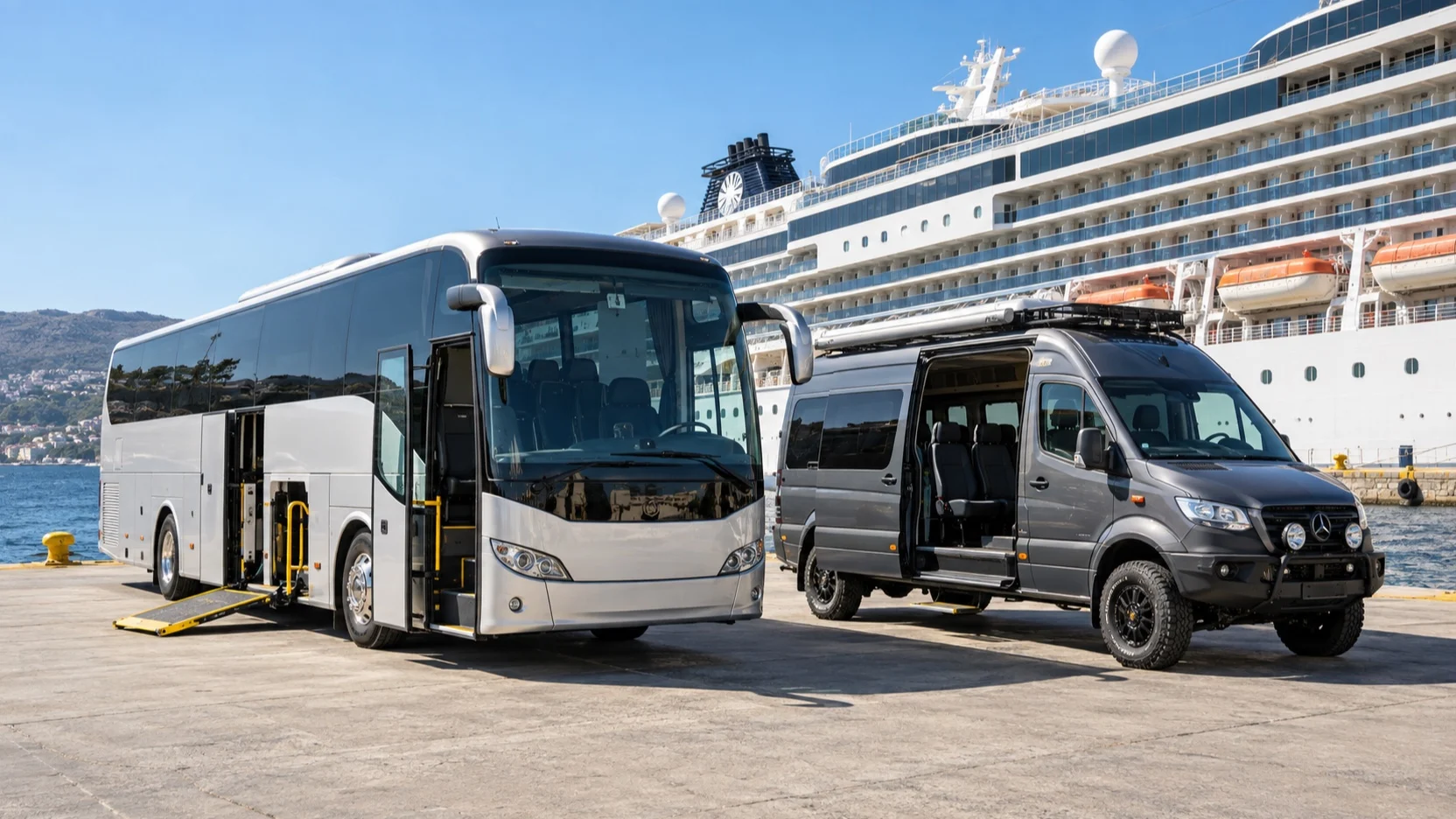
- Book the hardest transport first: Secure the lift, equipment space, or close drop-off before admission
- Protect an early return: Lower-energy travelers need a route back that does not depend on the active branch
- Write the reunion: Use one exact place, one time, and the ship as the fallback
- Divide costs clearly: Share the common core and price optional upgrades separately when appropriate
- Stay flexible: The second activity remains disposable until the group sees its real pace
Start with capacity, not personality labels
Active, relaxed, fit, slow, and easygoing are not useful excursion data. One traveler may handle a long flat walk but struggle with stairs, while another can climb quickly but cannot stand in a museum line.
Ask each person how far they can comfortably walk, how long they can stand, and whether cobbles, sand, slopes, motorcoach steps, boat boarding, heat, cold, rain, heights, or motion change their ability. Those answers reveal the real route more clearly than a cruise line’s single difficulty icon.
Also ask about scheduled food, restrooms, medication, shade, sensory load, and recovery after exertion. Someone may complete the main attraction well but need a seated lunch and direct return rather than another shopping loop.
Finish with two positive questions: which one experience matters most, and what are you genuinely happy to skip? The overlap between answers becomes the foundation of the day.
Audit the route from gangway to gangway
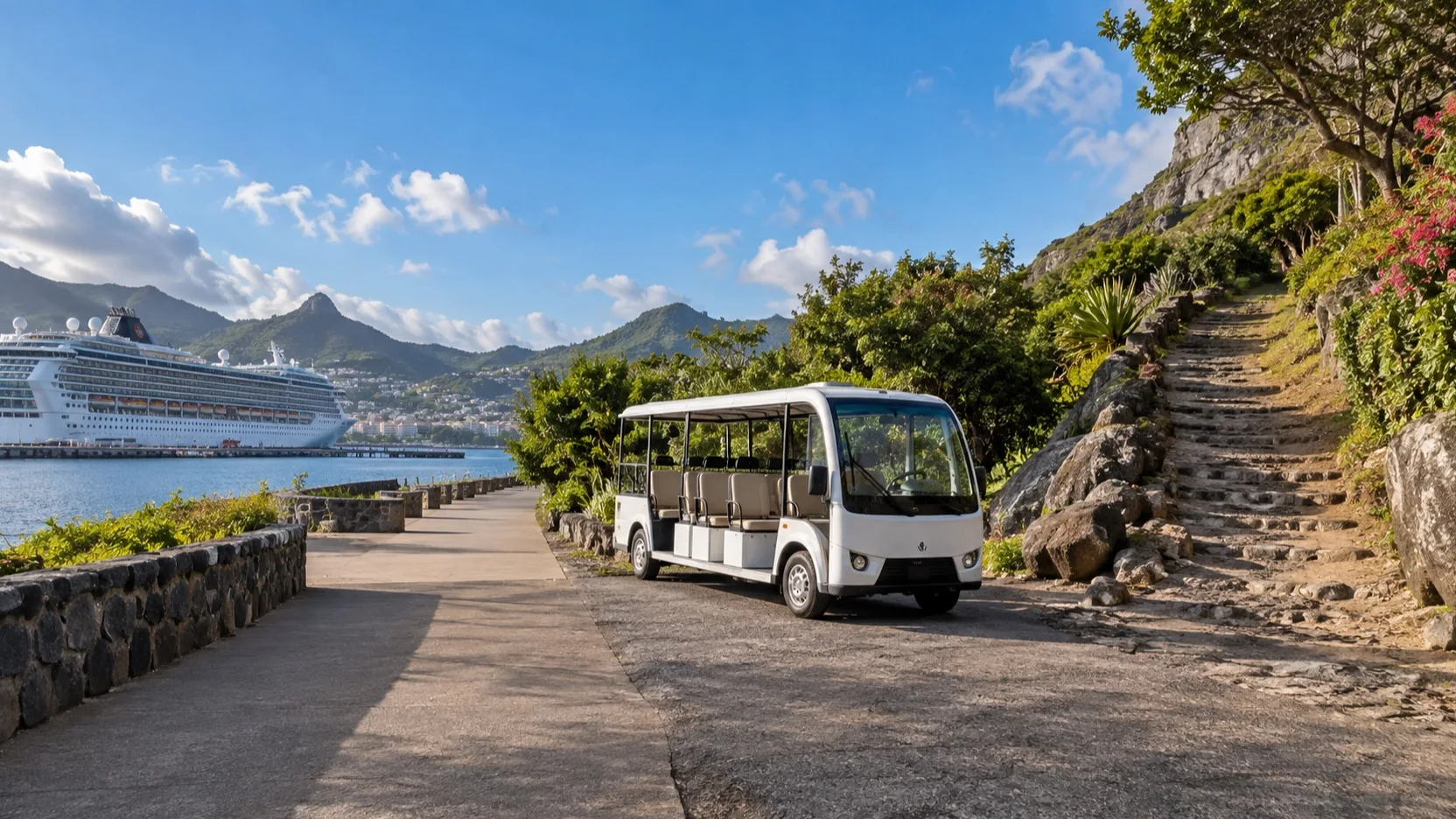
Only a little walking is not enough information. Count the path from cabin to gangway, port shuttle, vehicle, attraction entrance, internal route, restroom, meeting point, and the entire return.
Ask for distance, surface, slope, steps, handrails, seating frequency, shade, standing time, vehicle entry height, boat transfers, and legal drop-off. A route described as 500 yards can still include cobbles, a steep ramp, two flights of stairs, and nowhere to rest.
Port arrival conditions also matter. A tender, steep gangway, long industrial shuttle, or crowded security zone may consume more energy than the attraction itself.
Reconfirm onboard because berth, water level, weather, equipment, and local operations can change. The ship’s accessibility team and crew make the final decisions about gangway or tender safety.
Choose a common core that works for everyone
The shared experience should be accessible to every participant and interesting to most. Strong cores include panoramic drives, scenic rail, wildlife viewing from a stable vessel, food tastings with seating, accessible museums, gardens, compact city routes, and facility-rich beach bases.
Avoid making the most demanding attraction the common core. It is much easier for an active traveler to add exertion than for a lower-energy traveler to remove unavoidable stairs or a two-hour hike.
The core works best when it includes restrooms, shade or indoor shelter, seating, food, and a simple exit. Those practical features turn extra time into a choice rather than a test of endurance.
Keep the core short enough that branches remain possible. A scenic rail ride plus town time creates more freedom than an eight-hour fixed coach that demands the same pace from everyone.
Three group structures that work
Stay together with optional intensity
Choose one venue with several effort levels, such as a park with a shuttle and trails, a historic district with a vehicle loop, or a beach club with loungers and water sports. Everyone arrives and leaves together.
More active travelers add a hill, swim, viewpoint, or loop while others rest nearby. This structure succeeds when the branch uses no separate return transport and the meeting point is unmistakable.
Share the first half, split the second
Begin with the group’s top shared experience, then divide after lunch. One branch might visit a museum or cafe while another hikes, cycles, snorkels, or adds a second site.
The day still has a common memory, but nobody must continue after their energy drops. Place the split near dependable transport so an early return does not rely on the active group’s vehicle.
Split completely and reunite aboard
Some ports present two genuinely incompatible experiences, such as a strenuous mountain hike and a slow accessible drive. Separate without guilt when both subgroups can travel safely and independently.
Share itineraries, identification, payment, contact details, all aboard time, and port-agent information. Meet on the ship so a delay in one branch never forces the other to wait on the pier.
Design a branch that does not become another expedition
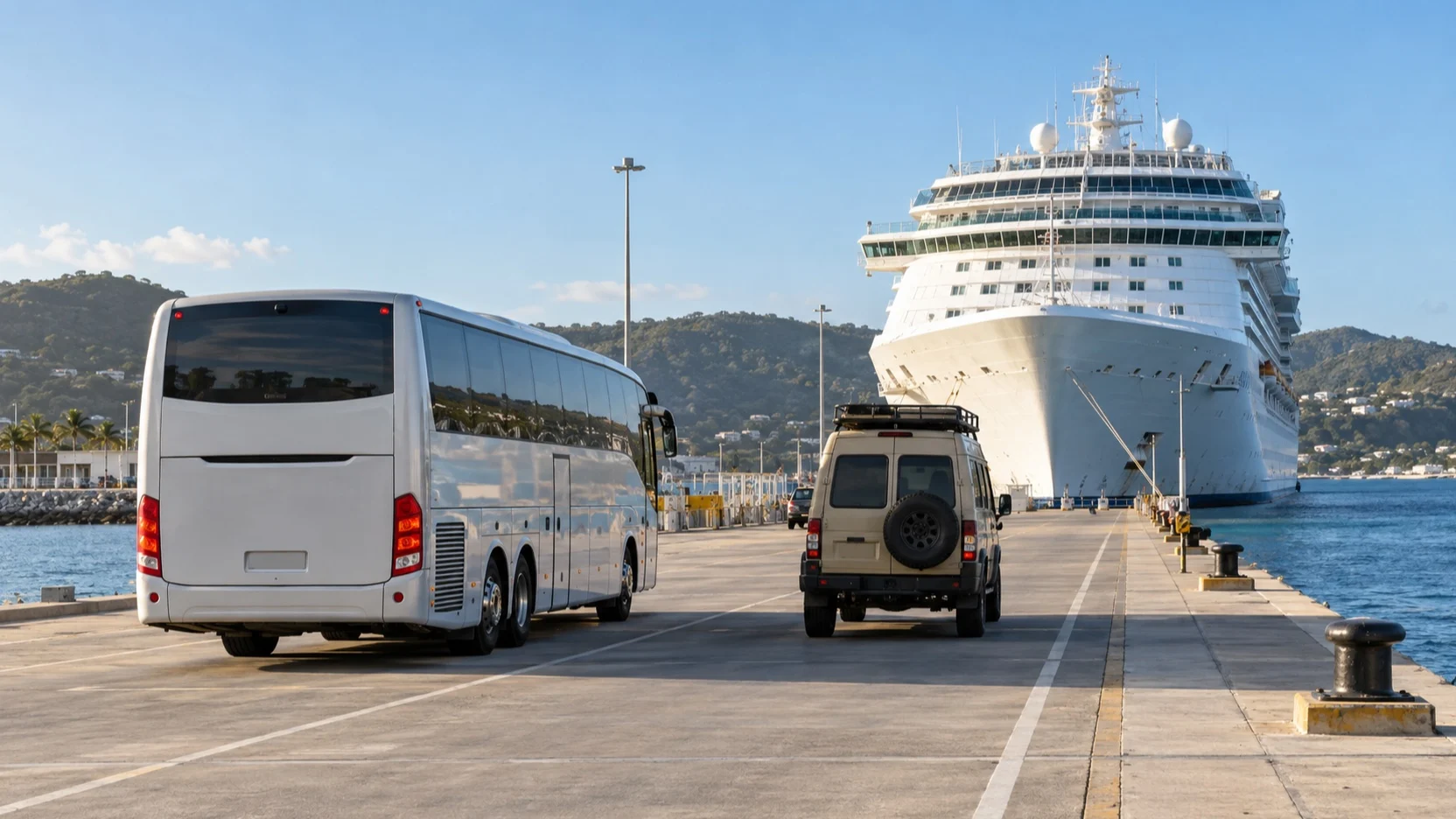
A good branch begins and ends at the shared base. At a beach, swimmers can snorkel while others use shade and lunch, while in a city one group can enter a tower as another visits the cafe below.
The branch needs a precise duration and reunion point. Back near the entrance is not enough when an attraction has several doors, coach lots, and phone service that disappears inside stone walls.
Do not let a short branch quietly become a separate cross-town itinerary. Every new train, ferry, taxi, or remote trail multiplies the return risk the structure was meant to reduce.
Confirm whether someone may remain with the vehicle or at a visitor center while others walk. Parking, staffing, insurance, and security rules may make that impossible even when the guide seems flexible.
Excursion formats that adapt well
Private driver with modular stops
A private vehicle can keep the group together while changing intensity at each stop. Request close drop-offs and seated viewpoints, then add optional walks from the same parking area.
Confirm the actual vehicle, step height, accessibility equipment, storage, air conditioning, seating, driver credentials, and whether one traveler can return early. A private booking is flexible only when those options are agreed before payment.
Scenic train plus town time
Everyone shares the rail journey, then travelers choose a short cafe stop or a longer town route. This format limits connections and lets the landscape create the central memory.
Check station steps, platform access, boarding gap, reserved seating, restrooms, and the return schedule. Heritage equipment may be far less accessible than a modern commuter train.
Resort or beach base
A resort can provide shade, food, restrooms, pools, and optional water activities from one home base. It works only when non-swimmers and lower-energy travelers would still enjoy the facility.
Verify paths, accessible restrooms, pool entry, beach wheelchairs, chair availability, changing rooms, activity age rules, and return transfer. A day pass does not always include transportation.
Museum district or compact old town
One central landmark can support galleries, shops, cafes, viewpoints, and different walking loops. This format works best where maps are clear, mobile service is reliable, and legal vehicle access is close.
Cobbles, slopes, and security lines can change the calculation, so use our walkable cruise ports guide for ideas rather than as proof that every route is accessible.
Wildlife or harbor cruise
A larger vessel with indoor seating can give everyone a signature experience while active travelers add a walk before or afterward. Ask about the boarding ramp, movement, guaranteed seats, restrooms, shade, and transfer assistance.
A small rigid inflatable or wet beach landing belongs to a different activity category. Never assume the word boat means the same physical demand across products.
Tours that resist compromise
Some experiences have one fixed pace and no graceful exit, including long guided hikes, cave routes with unavoidable stairs, cycling tours, zipline circuits, snorkeling boats centered entirely on water, and remote small-boat trips. These are excellent for the right person and poor shared cores for mixed groups.
Full-day coaches with many walking stops can also be surprisingly difficult because passengers repeatedly board, stand, follow a guide, and return on a rigid schedule. A seated vehicle does not make the whole product low effort.
Never ask someone to just wait for hours without shade, seating, a restroom, food, or independent transport. Split the group or choose a different common experience.

Wildlife drives and vehicle-based sightseeing
A scenic or wildlife drive can bridge different activity levels because the vehicle delivers the shared experience. Australia, Alaska, Africa, islands, and mountain ports often provide views or animals without requiring a long trail.
The details still matter. Confirm window visibility, time seated, road surface, vehicle step, seat belt, restroom stops, photography pauses, motion, and whether passengers may skip a short walk.
A four-wheel-drive vehicle can be harder to enter than a coach, while rough roads may aggravate pain or motion sickness. Ask for the exact vehicle rather than assuming every scenic drive is gentle.
Active travelers can add a short trail from one stop if the route and reunion are controlled. The rest of the group should retain access to the guide, shelter, and return rather than being abandoned beside the parking area.
Accessible transport comes before attraction tickets
If one traveler needs a lift-equipped vehicle or space for a mobility device, secure it first. Accessible excursion capacity can be limited, and cruise lines often require equipment measurements, weight, and transfer information in advance.
Celebrity Cruises currently distinguishes between tours for travelers who can manage some coach steps and products using ramp- or lift-equipped vehicles. Its guidance asks for device dimensions and weight, plus combined passenger details when the traveler must remain seated while boarding.
That example illustrates why accessible is not a single category. A traveler who walks short distances but cannot climb coach steps may need the same specialized vehicle as someone who uses a wheelchair full time.
Also confirm whether a guide is permitted to push a wheelchair or provide physical assistance. Many operators require a companion to handle personal mobility support, which must be planned before the group separates.
Cruise-line programs and availability vary by sailing and destination. Contact your line early, keep written confirmation, and verify the exact shore product rather than relying on general ship accessibility.
Ship tour, private tour, or independent route?
Cruise-line excursion
A ship excursion becomes attractive when the destination is distant, accessible transport needs coordination, the call is short, or the group wants one return structure. It can also reduce the number of meeting points and providers.
Read the current line terms and exact product description. Protected return does not make every step, restroom, vehicle, or pace suitable, and the advertised duration may include substantial loading time.
Private local tour
A private tour can adapt stops, narration, walking, and vehicle choice around the group. It often offers better value when several people would otherwise buy separate coach seats.
Verify licensing where applicable, port pickup authority, the actual vehicle, accessibility, cancellation, included admission, guide role, early return, and what happens after a late ship arrival. Put the important promises in writing.
Independent exploration
A do-it-yourself plan is strongest in compact ports where branches remain nearby and every traveler can return without a fragile transport chain. It gives the group the freedom to slow down or stop.
It becomes harder when ferries, remote roads, trains, weather, or language create fixed connections. Independence should reduce pressure, not turn one person into a full-time dispatcher.
Build two return plans
The lower-energy branch needs a safe early return that does not depend on the active group finishing. The active branch needs a conservative cutoff that protects traffic, tendering, port security, and all aboard.
Save the ship’s port-agent contact, berth, exact meeting point, local transport details, and all aboard time on every phone. If only one person holds the plan, the group is not truly independent.
At tender ports, agree whether subgroups reunite ashore or onboard. Water-shuttle lines make exact pier meeting times less reliable, so the ship may be the safer fallback.
No branch should wait past its personal cutoff for the other group. The missed-ship risk of one itinerary must never spread to everyone.
Handle budget without creating resentment
A private accessible tour can cost more than a standard motorcoach, while an active add-on may require another ticket. Decide before booking how the group shares the common transport and who pays for optional branches.
One model divides the shared core evenly and asks individuals to fund upgrades. Another treats accessible transportation as a group cost because it makes the shared day possible.
There is no universal formula, but silence is the worst one. Share the price, inclusions, cancellation policy, currency, gratuity expectations, and nonrefundable amount with everyone paying.
Do not make a traveler apologize for an accommodation that enables participation. Likewise, do not force a lower-energy participant to subsidize an expensive activity they have clearly declined unless the group agreed.
Use language that does not create guilt
Ask what pace would make this enjoyable instead of asking whether someone can keep up. Replace fear of missing everything with agreement on the one experience everyone wants to protect.
Do not describe a mobility aid, rest break, medication stop, or early return as ruining the day. The purpose of advance planning is to keep those normal needs from becoming a public negotiation.
Active travelers also deserve clear choices. They should be able to add a challenge without being cast as selfish when the common core, support roles, reunion, and return remain secure.
Invite people to change their own plan without voting on another person’s body. Capacity can vary from day to day, and the traveler is the best source for their current comfort.
Weather and changing energy
Heat, cold, rain, wind, altitude, humidity, and sea state can shift activity levels after tickets are purchased. A person who walks comfortably at home may need a much shorter route on hot stone or at elevation.
Build an indoor, shaded, or seated backup into the same area. The group should know which optional branch disappears first and how an early return works.
Keep water, appropriate clothing, food, and scheduled medication accessible rather than buried in a vehicle. Travelers should follow their own clinician’s advice and never alter medicine to fit an excursion.
If energy changes, end the day after the shared core without apology. A successful anchor is designed to feel complete even when every extra vanishes.
Examples by destination type
Alaska
Share a scenic railway, larger whale-watching vessel, or accessible cultural program, then split for a forest walk and town cafe. Confirm boarding, vehicle or vessel access, restrooms, and indoor seating for the least mobile traveler.
Our Icy Strait Point guide shows how wildlife, cultural activities, trails, and higher-intensity attractions can coexist, while the Skagway guide offers a similar rail, history, and outdoor mix.
Mediterranean city
Share a timed museum, accessible panoramic route, or neighborhood meal in the morning. After lunch, one group explores a compact district while another visits a cafe, indoor attraction, or returns aboard.
Check cobbles, restricted vehicle zones, heat, stairs, and museum elevators. Close on a map does not guarantee a low-effort route.
Caribbean island
Use a resort, garden, harbor, or central facility as the shared base. Some travelers can snorkel, kayak, or hike while others use shade, food, pools, shopping, or a scenic vehicle loop.
Confirm boat boarding, currents, life jackets, age rules, beach access, and the return vehicle. A water-focused venue must still offer a satisfying day to people who stay dry.
Distant gateway port
Stay together for the long transfer because splitting becomes harder away from the ship. Choose a tour with free time near one precise meeting point, then let people walk at different paces within that zone.
The La Spezia cruise port guide illustrates why distant regional choices need stronger coordination than an easy walk-off city.
Questions the operator must answer
Ask for the total walking distance, longest continuous standing period, number of steps, surfaces, slopes, and exposed weather. Request the actual vehicle or vessel, not a general category.
Confirm whether one person may skip a stop, remain with the vehicle, or take an early return. Ask who provides physical assistance and whether mobility devices can be carried, lifted, or secured.
Verify accessible restrooms, seating, shade, meals, activity age rules, group size, admission, and the exact port return target. Ask what changes when rain, heat, wind, or a late ship affects the plan.
Send relevant needs in one written message and keep the reply with the reservation. If the operator will not answer specific questions, choose a product that will.
Common mistakes
The first mistake is choosing the easiest tour for everyone without asking what anyone values. A shared gentle core should still be interesting, with optional intensity available to people who want it.
The second is choosing the demanding tour and telling someone to wait. Waiting is not participation when there is no seat, shade, restroom, information, or way back.
The third is assuming private automatically means adaptable. A fixed itinerary in a small high-step van may be less accessible than a cruise-line product using specialized equipment.
The fourth is splitting at a remote attraction where one subgroup controls the vehicle. Branches need independent return or a common base.
The fifth is using one vague reunion point and one phone. Every subgroup needs the same clear location, time, ship information, payment, and backup.
The sixth is making the second attraction nonrefundable. Energy and weather can change, so extras should remain disposable whenever possible.
Frequently asked questions
Must everyone choose the low-intensity tour?
Only if everyone wants it. A shared gentle core with optional active branches usually protects inclusion and choice, while a complete split can be kinder when no suitable overlap exists.
Are private tours always best?
No. A private tour is best only when the operator confirms suitable pace, vehicle, close drop-offs, equipment access, and early-return options.
What if someone’s energy changes?
Keep extras optional, protect a safe early return, and choose a common core that still feels complete if the day ends after it. The traveler should decide when their limit has changed.
Can a group split in a foreign port?
Yes, when each branch has identification, communication, payment, directions, comfort, and an independent safe return. Consider disability, age, language, local conditions, and mobile coverage.
Who should accompany a traveler who needs support?
Decide before leaving the ship and confirm that the companion agrees. A guide may not provide personal mobility assistance, and a support role should never be improvised during a split.
How should we divide the cost?
Agree which transport and shared anchor count as group expenses, then price optional branches separately. Accessibility costs can reasonably be shared when they enable the common day.
The bottom line
Different activity levels do not require one bland compromise. They require a shared experience that truly works, exact route information, optional intensity, and returns that remain safe when people separate.
Plan around the least flexible need, then let everyone else add rather than forcing one person to subtract. A group that reunites happy with different stories has not failed to travel together.
Planning note: Berths, tenders, excursion ratings, vehicles, accessible capacity, site rules, and return arrangements can change. Confirm sailing-specific details with your cruise line, operator, port, attraction, and transport provider before travel.
How this guide was researched: This guide was checked against current official accessible-shore-excursion guidance from major cruise lines plus port, transport, activity, and destination planning information. Logistics and time-sensitive details were reviewed September 11, 2026; see our Editorial Policy.
More on this topic: browse every guide on accessible and family cruise planning.