Which Port-Day Activities Work Best With Limited Mobility?
The best port-day activity with limited mobility is the one whose entire chain works, not just the attraction entrance. The gangway, terminal, vehicle, restroom, route surface, seating, and return all need to match what your body and mobility device can manage.
Scenic drives, accessible harbor cruises, compact museums, waterfront promenades, private adapted tours, and seated cultural experiences are often excellent choices. The key is asking precise questions before booking because labels such as easy or panoramic reveal very little.
Quick Facts
- Best low-walking option: A scenic drive with confirmed vehicle access
- Best flexible option: A level waterfront or central district near the ship
- Best weatherproof option: An accessible museum with seating and restrooms
- Best customized option: A private adapted vehicle and guide
- Highest access risk: Tender transfers and small local boats
- Most misleading label: Panoramic, which may still include coach steps
- Essential detail: Mobility device dimensions and weight
- Best energy strategy: One priority with planned rest
- Return strategy: Finish close to the ship and before the final rush
Accessibility is a chain
A museum may have an elevator, but the coach may require five steep steps and stop two blocks away. A beach may advertise a boardwalk, but the restroom can sit across soft sand.
Trace the day from cabin door to attraction and back. One inaccessible link can make the entire excursion unsuitable.
Start with the ship and gangway
Ask the cruise line about the expected berth, gangway slope, terminal distance, port shuttle, and assistance available. Tide, berth position, and security procedures can change the route even at a familiar port.
Crew may assist according to company policy, but they cannot always lift a guest or heavy device. Provide needs in advance rather than assuming help will appear at the gangway.
Tender ports require separate planning
A tender transfers passengers between the ship and a smaller boat, often across moving surfaces. Sea conditions, tender design, local landing, device size, and a traveler’s ability to step or transfer determine whether boarding is safe.
Approval on one day does not guarantee access on another because wind and swell change. The master and crew make the final operational decision.
Mobility devices on tenders
Some tenders accept a folding manual chair but cannot carry a large scooter or power chair. Others may have lifting equipment, yet the shore landing remains stepped or uneven.
Give the cruise line exact dimensions, battery type, weight, folding ability, and transfer needs before sailing. Ask what happens if the device cannot go ashore.
Scenic coach tours
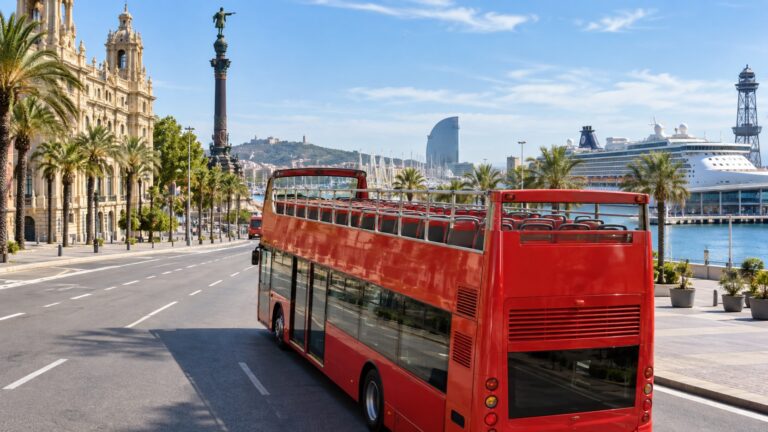
A panoramic drive offers seated sightseeing, broad coverage, and weather protection. It works best when the vehicle has a lift or low entry, the stops include seating, and the commentary begins from the port.
The phrase panoramic often describes what you see through a window, not how you board. Standard coaches can have narrow aisles and several tall steps.
Questions for the coach
Ask the number and height of steps, whether there are handrails, whether a lift is available, and whether the device rides in the cabin or luggage compartment. Confirm if the chair must fold and whether the traveler must transfer to a seat.
Also ask about restroom access and the duration between stops. A long tour without an accessible toilet can be impractical even when boarding works.
Private adapted vehicle tours
A private driver offers the strongest control over pace, rest, and stop selection. An adapted van may carry a wheelchair without transfer, but vehicle specifications and securement systems differ.
Book early because accessible vehicles are limited in many ports. Put the ship name, berth, all aboard time, device details, and planned return in writing.
Customize the route
Choose two or three stops with known accessible entrances and nearby restrooms. Ask the driver to minimize steep streets, cobbles, long approaches, and remote drop off points.
Keep one stop optional and finish near the port. A private tour should feel flexible rather than become a rigid list.
Harbor and river cruises
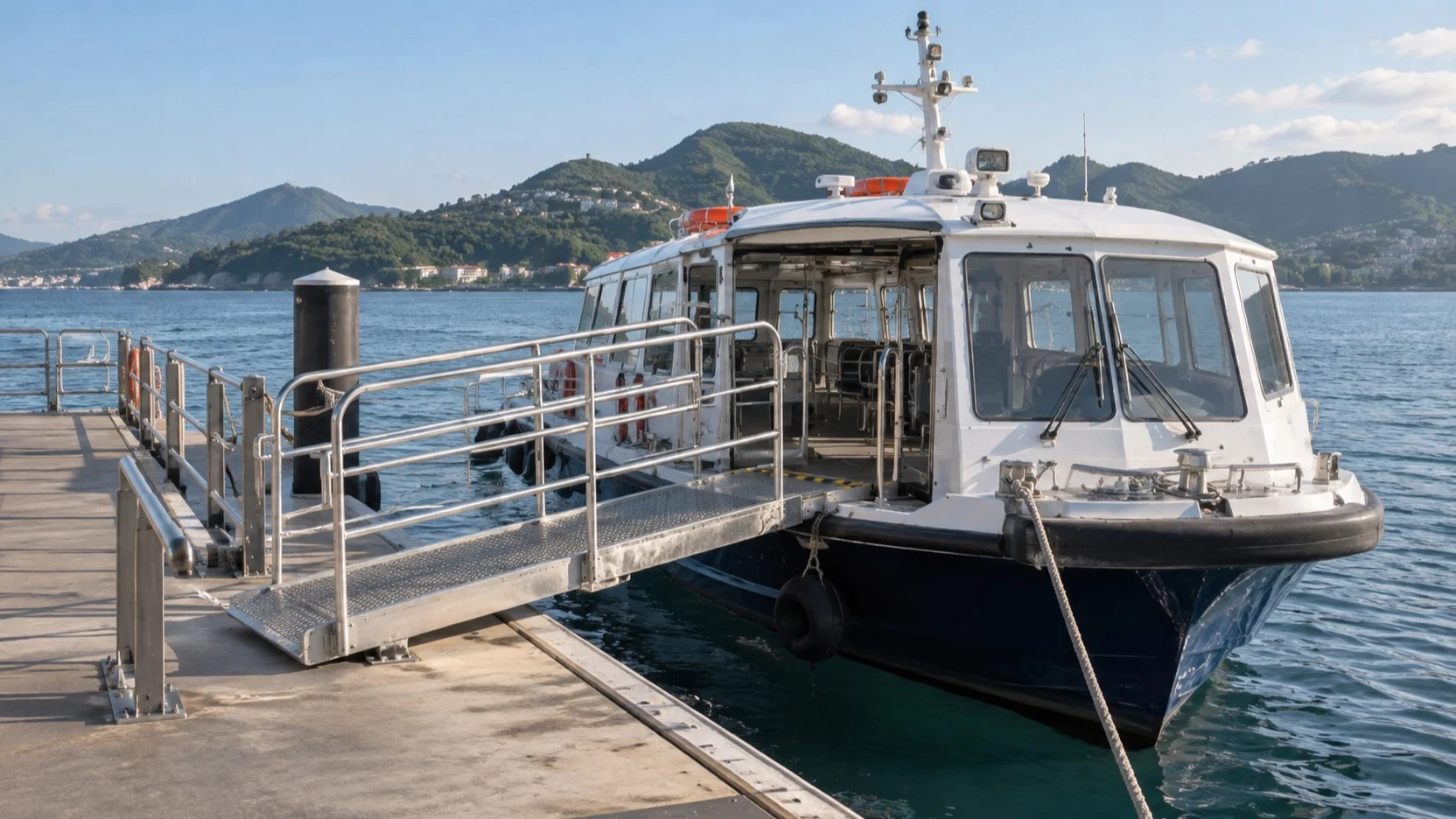
A sightseeing boat can deliver scenery while seated and avoid difficult city streets. The challenge is boarding, since a vessel may use a ramp, steps, moving gangway, or narrow doorway.
Ask about ramp slope, threshold width, wheelchair securement, weather cover, restroom accessibility, and whether tide changes the setup. A large modern vessel and a small historic boat may offer completely different access.
Stay aboard options
Some boat tours advertise stops where passengers may disembark, but remaining aboard can still provide the best views. Confirm that the vessel returns directly and that staying aboard is permitted.
Do not assume crew can carry a passenger down steps. Safe assistance needs the right equipment and procedure.
Accessible waterfront promenades
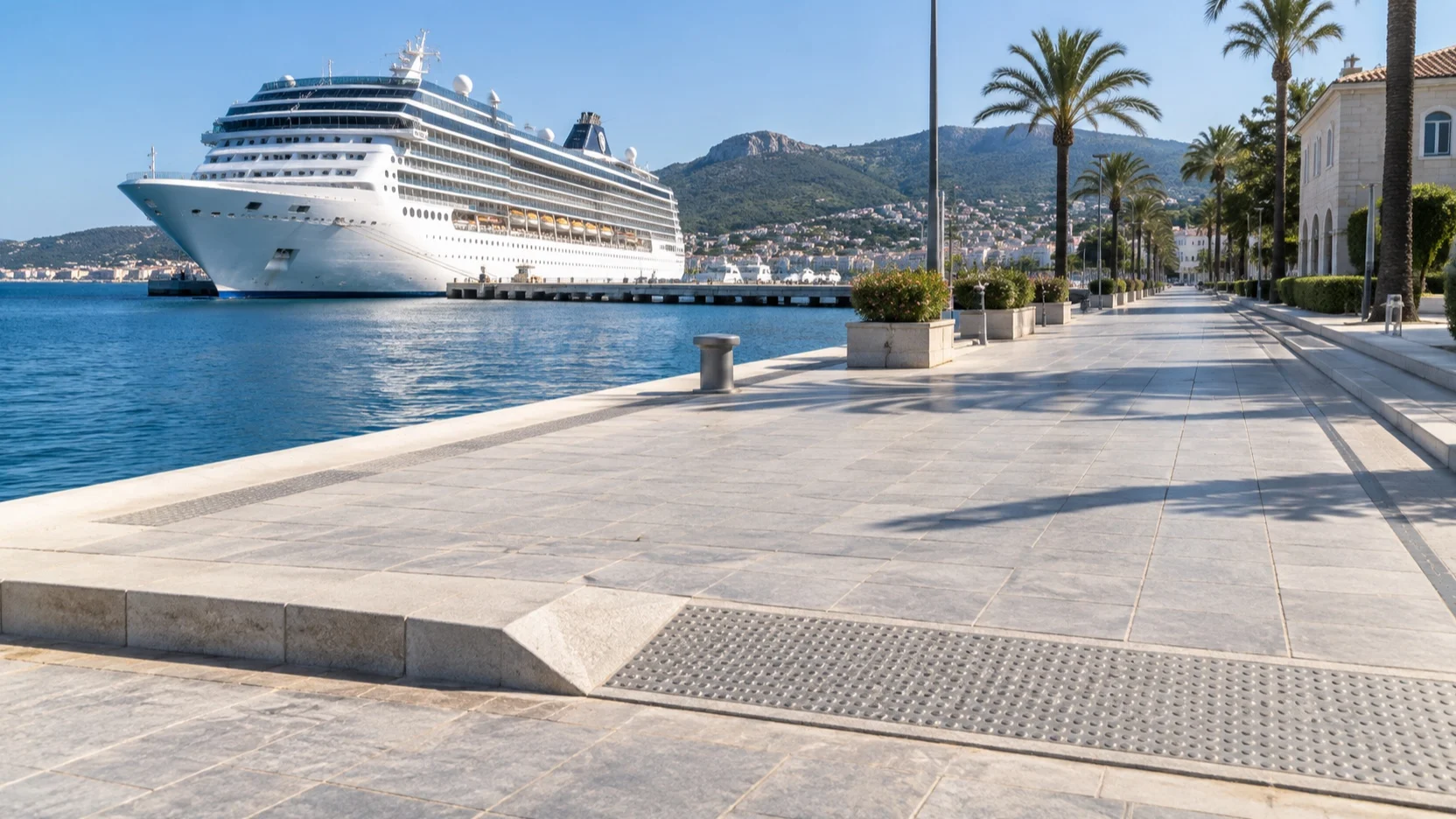
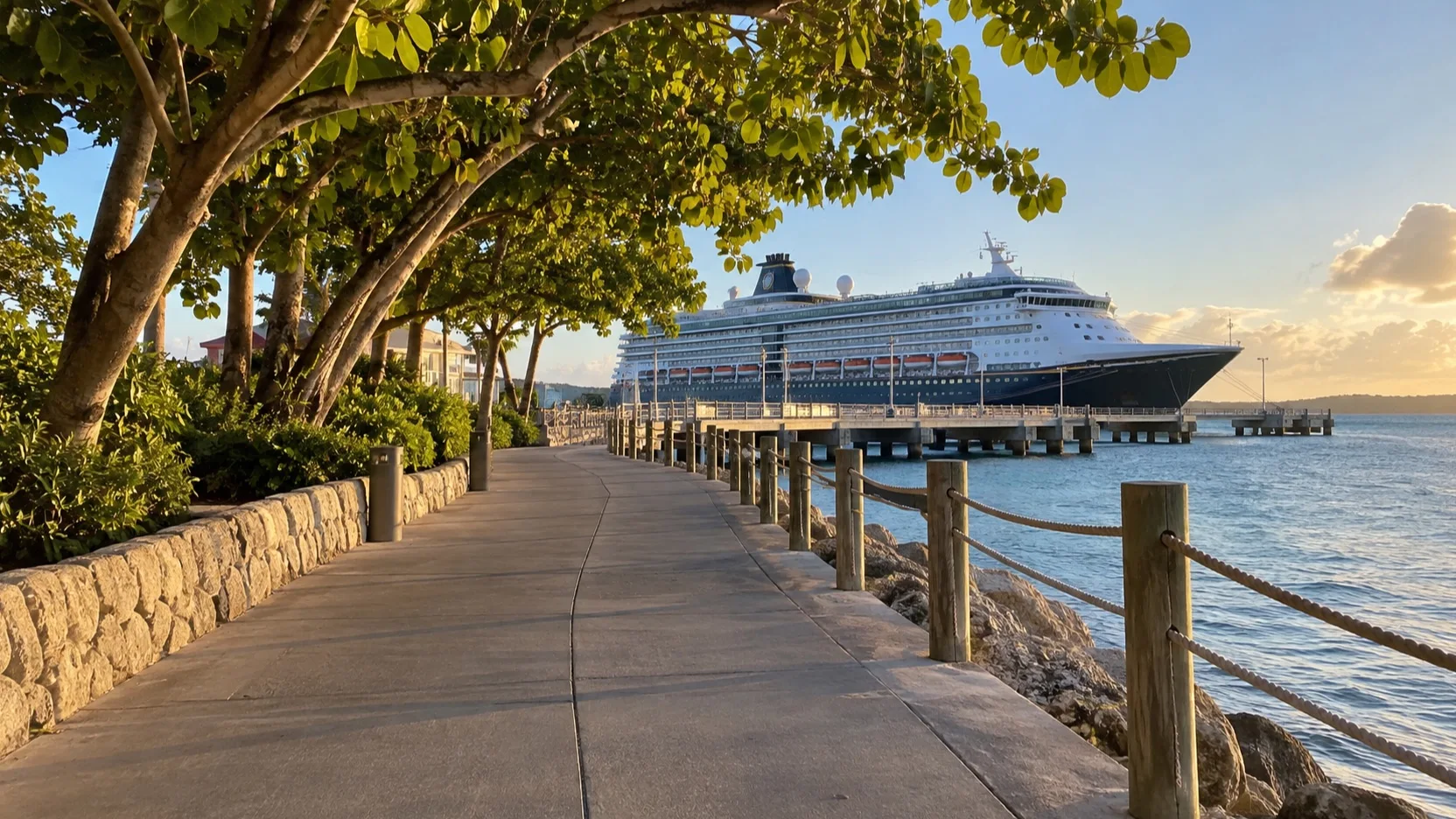
A level harborfront near the cruise berth is often the most reliable independent activity. Benches, cafes, public restrooms, shops, and the option to turn back create useful control.
Check distance from the gangway rather than from the terminal gate. Construction, security fencing, curb cuts, and bridge gradients can change an apparently flat route.
Weather and surface
Rain makes stone, metal ramps, and painted surfaces slippery, while heat can make an exposed promenade exhausting. Shade and seating matter as much as distance.
Use the official access map when available and identify an indoor reset point. A cafe with an accessible restroom can anchor the route.
Museums and galleries
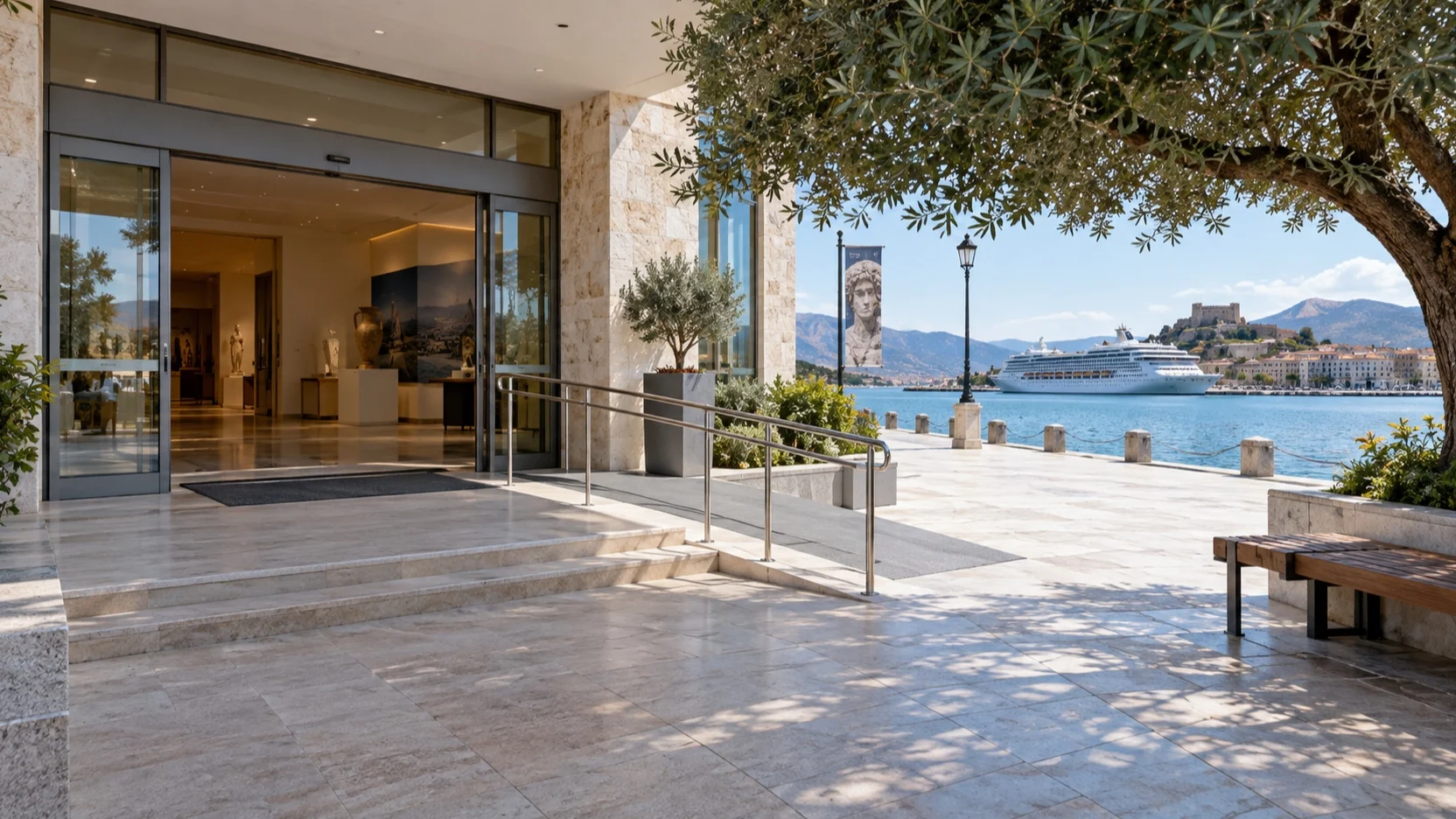
Modern museums often provide elevators, seating, accessible restrooms, and climate control. They are strong choices when rain, heat, or fatigue makes outdoor sightseeing difficult.
Historic museums may have adapted only part of the building. Ask which floors and exhibits are reachable, whether the accessible entrance is separate, and whether companions need different tickets.
Borrowed wheelchairs and seating
Some venues loan wheelchairs or portable stools, but supply is limited and reservations may be required. A loan chair may not meet positioning or support needs.
Bring the device you rely on when possible and confirm storage for any backup walker. Use seating before fatigue becomes pain.
Churches, cathedrals, and historic interiors
A grand church can offer a meaningful low-distance visit, but old thresholds, crypts, towers, and side chapels may not be accessible. The main nave can still provide a complete experience even when optional areas do not.
Check service times, security, dress requirements, and step free entrance location. Do not assume a ramp visible in photographs is available to tourists all day.
Scenic railways
A scenic train offers seated landscape views and a fixed route, making it appealing for limited mobility. Platforms, boarding gaps, reserved wheelchair spaces, and accessible toilets need confirmation.
Book through the official railway and request assistance within its required time. Leave a backup train before the ship deadline rather than using the last theoretical return.
Hop-on, hop-off buses
A sightseeing loop can reduce walking, but only when the bus accepts the device and space remains available. Low floor access, ramps, securement, and audio systems vary by operator and vehicle.
Peak cruise days can fill wheelchair spaces or leave guests waiting at exposed stops. A complete loop from the port may be safer than getting off far away and depending on a later bus.
Gardens and parks
Botanical gardens and formal parks can offer smooth paths, benches, shade, and mobility rentals. Hills, gravel, long distances, and inaccessible greenhouses can still create barriers.
Ask for the accessible route rather than the general visitor map. A small central garden is often more enjoyable than a famous estate requiring a long transfer.
Viewpoints reached by vehicle
A driver or coach can reach an overlook with minimal walking when parking sits beside the view. The final surface may still include gravel, steep ramp, high curb, or a crowded narrow platform.
Request a recent photograph of the drop off when the view is the main purpose. Keep a lower accessible viewpoint as a weather and crowd backup.
Cable cars and funiculars
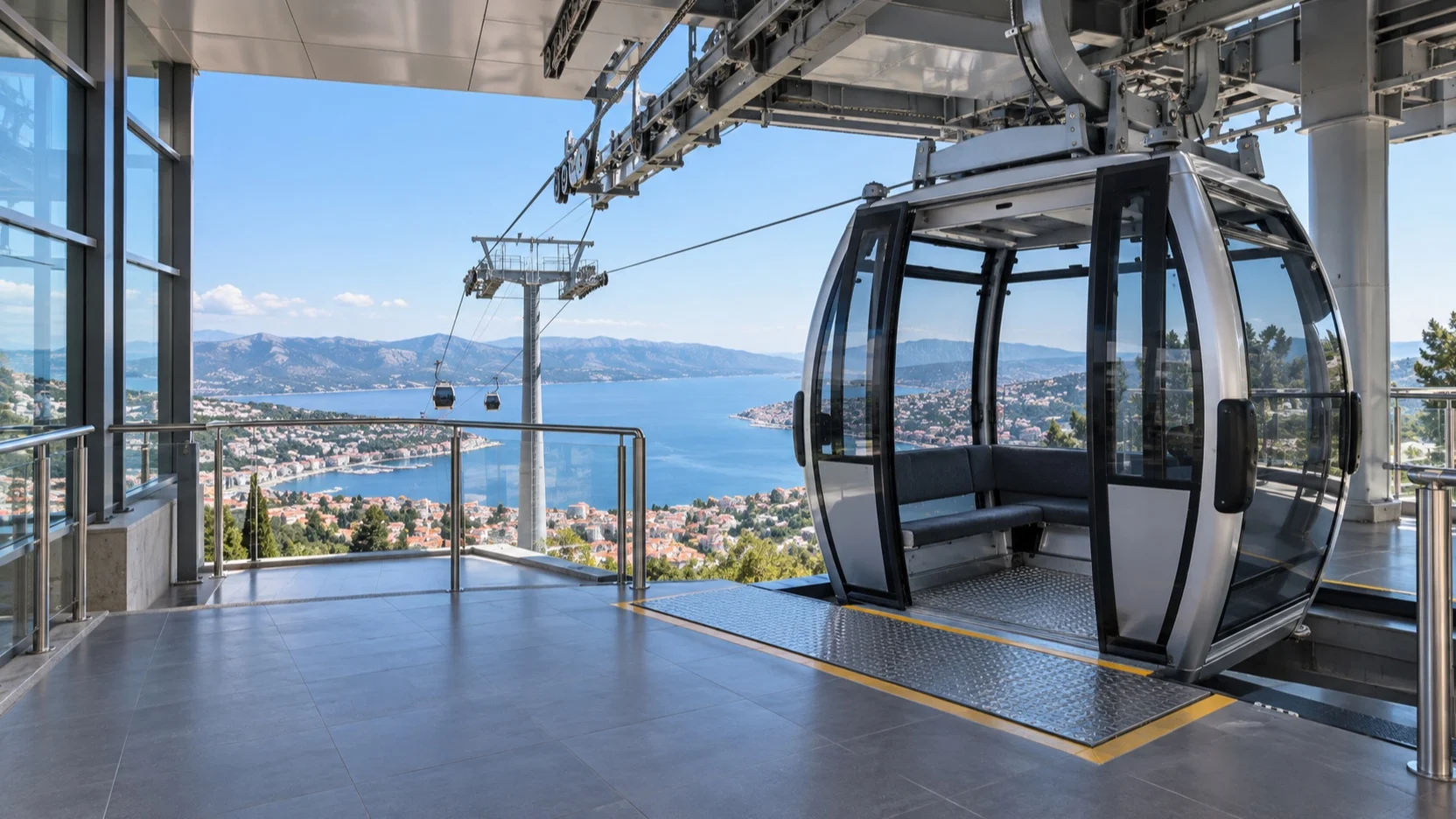
A cable car can bypass a steep hill, but station stairs, narrow cabins, device limits, and long queues may create new barriers. Wind or technical issues can stop service without warning.
Ask whether the cabin takes an occupied wheelchair and whether both stations have step free access. Never depend on a lift whose alternative is a long staircase or steep road.
Beach promenades and accessible beach programs
A waterfront boardwalk can provide ocean views without crossing sand. Some destinations offer beach wheelchairs, mats, ramps, or assisted water entry through seasonal programs.
Reserve equipment when required and ask who provides assistance, what surfaces are covered, and where the accessible restroom is located. A beach wheelchair does not automatically include a trained attendant.
Water access
Entering water adds waves, current, temperature, and transfer risks. Use lifeguard and program guidance, and do not treat flotation as a substitute for supervision.
A shaded promenade lunch may be the better beach experience when conditions are rough. Enjoying the sea does not require entering it.
Food tours and tastings
A seated tasting, cooking demonstration, or accessible market visit can create a strong local experience with limited distance. Ask about high stools, narrow aisles, restroom access, and dietary needs.
Walking food tours often cover more ground and cobbles than the description suggests. Request the route length, longest standing period, and whether the group can sit at each stop.
Cultural performances
A dance, music, storytelling, or craft demonstration can be ideal because the experience comes to a seated audience. Venue access and transport remain the critical pieces.
Ask about companion seating, wheelchair positions, hearing assistance, captioning, lighting, and sensory environment. Arrive early enough to use the accessible entrance without the main crowd.
Markets and shopping districts
A compact market near the port offers flexibility, food, and opportunities to sit, but narrow aisles and uneven paving can become difficult when crowded. Visit early and leave before tour groups peak.
Keep purchases light enough to carry with the mobility device. Arrange delivery only through a trusted seller that can meet ship security requirements.
Staying aboard
Staying on the ship is a valid port-day choice, especially after several demanding excursions or when a tender is inaccessible. Quiet decks, spa appointments, dining, and familiar facilities can provide genuine rest.
Check which venues remain open while the ship is in port. A restorative day can make the next accessible outing far more enjoyable.
Activities that often need extra caution
Old towns with steep cobbles, ruins with natural surfaces, beaches reached across sand, small boat trips, and crowded cable cars often demand more than their marketing suggests. A low walking label does not address balance, joint pain, standing, or transfers.
Helicopters, rigid inflatable boats, animal rides, and high clearance vehicles can have strict physical requirements. Read the operator’s rules and discuss medical suitability with an appropriate clinician when needed.
Understand activity labels
Cruise-line activity ratings are useful screening tools, but they are not universal engineering standards. Two tours marked easy may involve completely different step heights, distances, and surfaces.
Read the full description, then ask the access desk and operator for measurable details. Words such as short, few, and minimal need numbers.
Measure your needs
Describe how far you can walk on level ground, how long you can stand, whether you can climb steps, and what assistance you use. Include pain, fatigue, balance, heat sensitivity, and the need for frequent restrooms.
A traveler who walks at home may still need a chair on a long hot pier. Planning for the harder environment preserves energy for the attraction.
Device details
Record width, length, height, weight, folded size, battery type, turning space, and whether the user can transfer. Photograph the device and any removable part.
Carry charger information, basic repair items, and the manufacturer’s contact details when practical. Never allow staff to lift a device by a fragile seat, joystick, or armrest.
Medication and health
Carry essential medication in original labeled packaging according to destination rules, along with the amount needed for delays. Keep it with you rather than in vehicle storage.
Ask a clinician about travel when a condition is unstable or an activity poses specific risk. Port staff and tour guides cannot provide individualized medical clearance.
Heat, cold, and fatigue
Weather changes the physical cost of every transfer. Heat increases dehydration and fatigue, while cold rain stiffens joints and makes ramps slippery.
Use layers, water, shade, and scheduled rest. Shorten the plan before symptoms become difficult to reverse.
Restrooms
An accessible restroom should be on the route, not merely somewhere at the attraction. Ask about doorway width, grab bars, turning space, changing facilities, and whether a key is required.
Coach toilets are rarely equivalent to a spacious accessible facility. Plan a confirmed stop before and after long transport.
Return timing
Travelers who need elevators, accessible vehicles, or a slower pace should return before the peak rush. The final shuttle may have no remaining mobility space even when the timetable says it operates.
Use ship time and build a private margin that protects gangway distance and security. Finish with a cafe or viewpoint near the terminal.
A strong low-energy plan
Leave after the first gangway rush, take confirmed accessible transport to one museum or scenic route, and schedule a seated lunch nearby. Return to the waterfront with enough time for a short promenade or immediate boarding.
Keep the final stop optional and save energy for the ship. Port days include the walk back to the cabin, not only the time ashore.
A strong independent plan
Choose a central dock with a level official route, identify restrooms and seating, and set a turnaround alarm. Use public transit only after confirming step free stations and current elevator status.
Carry the port agent information and a backup taxi number. Independence works best when the return has more than one accessible option.
Frequently asked questions
What is the best activity for limited mobility?
A scenic drive in a confirmed accessible vehicle is often easiest, followed by a modern museum or level waterfront. Personal transfer needs determine the actual answer.
Does easy activity mean wheelchair accessible?
No, it may describe walking distance while ignoring vehicle steps or device storage. Ask for specific measurements and procedures.
Can crew carry me into a tender?
Do not assume they can, because safety policy and conditions may prohibit lifting. Ask the cruise line about the exact transfer method before sailing.
Should I book through the cruise line?
It can simplify coordination and access questions, especially in restricted ports. Private adapted tours may offer better customization when carefully verified.
What if my device cannot go ashore?
Use a safe backup device only if it meets your needs, or remain aboard. Never accept an unsafe manual transfer to avoid missing a port.
How early should I return?
Return before the largest crowds and protect extra time for elevators, shuttles, and gangway distance. The exact margin depends on the port and ship instructions.
My take on accessible port days
The best limited mobility day is not defined by how many miles you cover. It is the day that provides comfort, dignity, a real sense of place, and enough energy to enjoy the evening.
Ask for measurable details, reserve the difficult link, and keep the route simple. Accessibility improves when the plan has room to adapt.
Before booking, confirm gangway, tender, mobility device, and excursion policies with your cruise line’s access department, then verify each operator and attraction directly. Use official port and transit accessibility pages for the current route, and seek qualified medical advice for health questions specific to your condition.
More on this topic: browse every guide on accessible and family cruise planning.