Which Cruise Lines Are Autism Friendly, and What Do You Get?
“Autism friendly” can mean anything from a sensory bag to a staffed respite program, so the label is not enough. The useful question is exactly what the cruise line promises on your ship, for your sailing, and whether it is included or requires a separate booking.
Carnival has the clearest fleetwide sensory certification, while Royal Caribbean publishes the longest autism-specific list of standard accommodations. Disney, Norwegian, and Holland America offer useful request pathways, but they do not publish the same package of autism-specific benefits.
The quick take
Start with the support you need, not a league table. A sensory bag, flexible youth grouping, a quieter safety briefing, and one-on-one care are four different services, and no mainstream line promises all four as part of a standard booking.
Send specific requests to the access desk before the deadline and ask for a written reply tied to the ship and sail date. Bring your own essential regulation tools anyway, because “available” and “guaranteed” are not the same word.
The quick facts
- Royal Caribbean: its Autism Friendly Ships page lists expedited check-in, boarding and departure; autism-friendly films; toy lending; parent pagers or phones subject to availability; and flexible Adventure Ocean grouping by ability for ages 3 to 11.
- Royal Caribbean youth-program exception: the line publishes a toilet-training policy exception for Adventure Ocean when its stated conditions are met. Confirm the current conditions in writing because the exception is not one-on-one care and does not override pool health rules.
- Carnival: its fleet is KultureCity Sensory Inclusive certified, with trained guest-facing crew, ship-specific social stories, complimentary first-come sensory bags, youth-program tools, and a private safety briefing available for discussion with Guest Services.
- Disney: its neurodivergent guest support page helps families anticipate sensory conditions and contact Special Services. Disney does not promise one-on-one youth counselor care or specialty-trained counselors.
- Norwegian and Holland America: both use general accessibility teams and advance forms rather than publishing Royal- or Carnival-style autism packages. Norwegian recommends 45 days for most needs, and Holland America recommends submitting its form when booking or at least 45 days before departure.
- One-on-one help: mainstream cruise staff generally do not provide personal care or dedicated supervision. Autism on the Seas staffed sailings are a separate product with group staffing and respite, while dedicated one-on-one service costs extra and must be arranged through that organization.
Best published autism-specific list: Royal Caribbean
Royal Caribbean publishes the broadest autism-specific list among the major lines reviewed. It names expedited check-in, boarding and departure; autism-friendly movies with lower lighting and sound plus freedom to talk or move; toy lending; and flexible Adventure Ocean grouping by ability for ages 3 to 11.
Parents may be offered a pager or phone while a child is signed into Adventure Ocean, subject to availability. That helps communication, but it is not a promise of dedicated supervision or personal care.
The line also publishes a toilet-training policy exception for Adventure Ocean under specified conditions. Ask the Access Department how it applies to your child, ship, and sailing, and remember that youth-program flexibility does not change public-health rules for pools and water attractions.
Submit Royal Caribbean’s Guest Special Needs Form when booking or no later than 30 days before sailing. Sign-language requests have a 60-day deadline, and the form says the line does not require information about the extent of a disability.
The practical verdict: Royal Caribbean is the strongest starting point when expedited transitions, autism-aware youth programming, and movement-friendly movie screenings matter most. Verify which benefits are scheduled or available on the exact ship instead of treating the webpage as a reservation.
Best fleetwide sensory package: Carnival
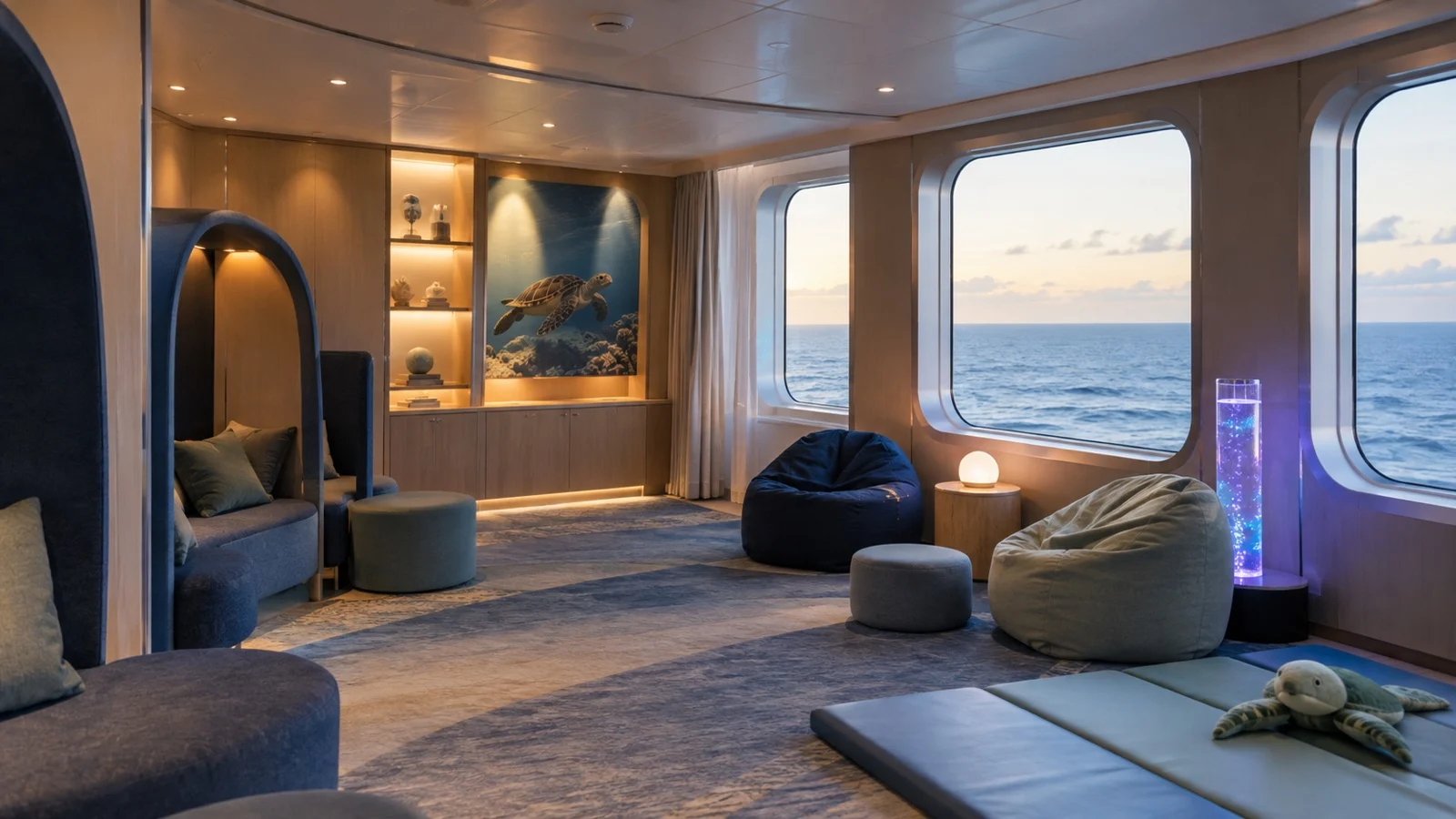
Carnival says its fleet is certified Sensory Inclusive by KultureCity and that guest-facing crew are trained to help guests with sensory and cognitive needs. Certification signals training and tools, not a low-stimulation ship or clinical expertise.
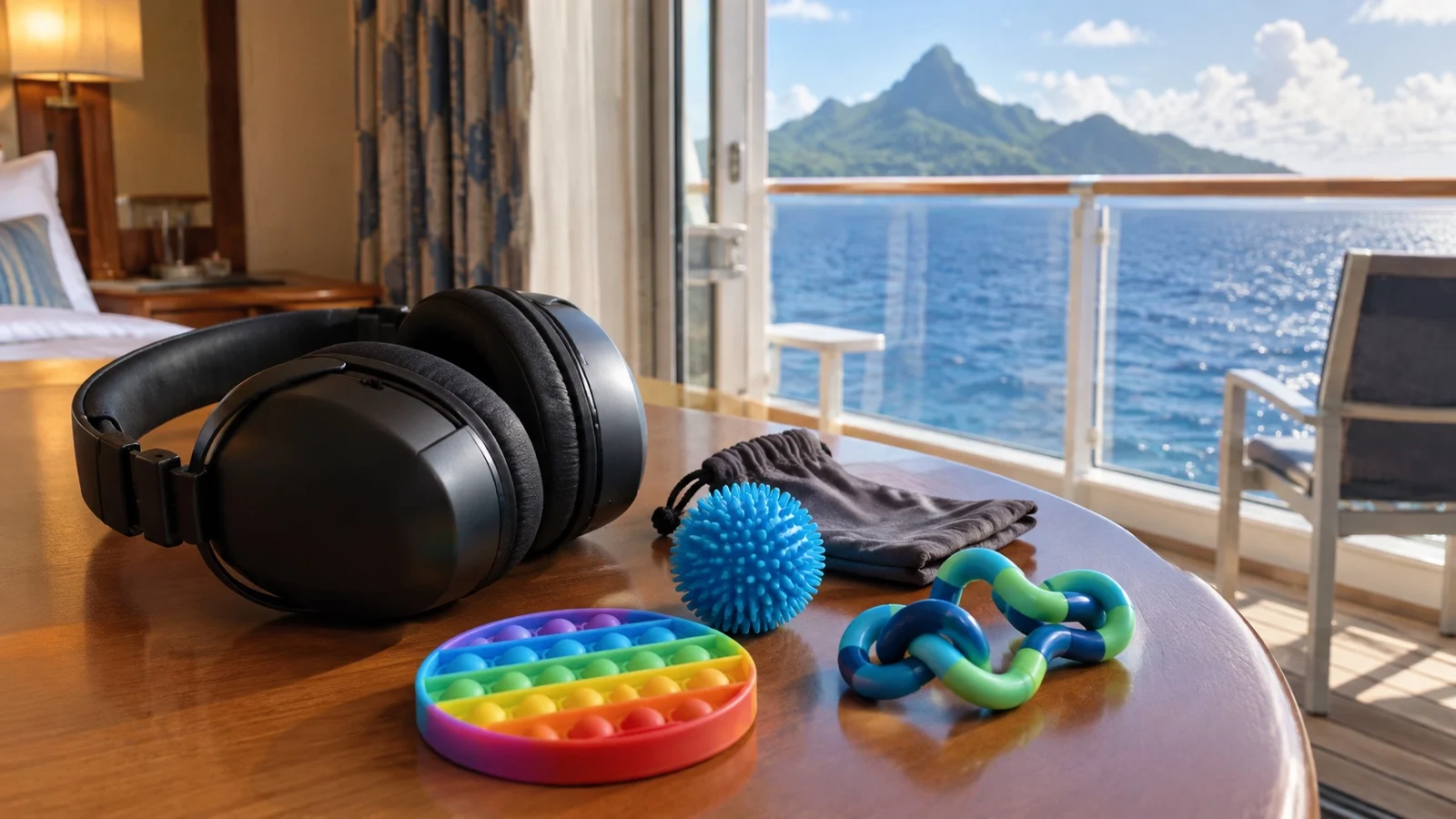
A complimentary KultureCity sensory bag can be checked out for the cruise from Guest Services or a youth program on a first-come basis. Carnival lists noise-canceling headphones, fidget tools, a visual feelings thermometer, and a KultureCity VIP lanyard inside.
Each ship also has a social story on KultureCity’s website or app. Youth staff may have weighted vests, conversation cards, sensory games, and other aids, though each child’s participation is assessed case by case and ordinary age, safety, and conduct rules still apply.
Carnival tells guests with sensory or cognitive needs to meet Guest Services after boarding to discuss accommodations, including a private safety briefing. Complete the adult or child sensory, cognitive, and invisible-disability form before sailing, then carry the confirmation offline.
Carnival does not provide one-on-one attention or personal care, but a parent or guardian may stay and participate in youth activities. Staff do not administer routine medication, feed a child who needs assistance, or provide toileting care beyond the line’s narrow published procedures.
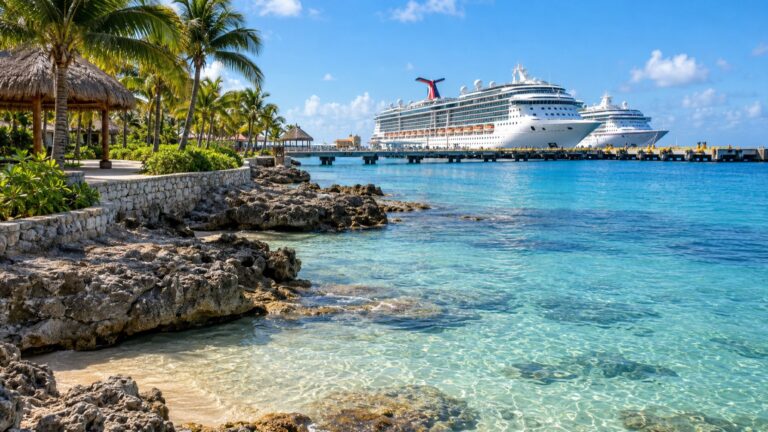
Celebration Key is also KultureCity Sensory Inclusive certified, with trained team members and sensory bags. Carnival’s April 2026 announcement described a sensory-room pop-up for one specific event date, so do not assume a permanent sensory room is available.
The practical verdict: Carnival is the most concrete choice when borrowable sensory equipment, visual preparation, and a private safety-briefing request are the priorities. Pack backup headphones and regulation tools because bags are first-come, not reserved.
Disney: strong preview information, fewer promised accommodations
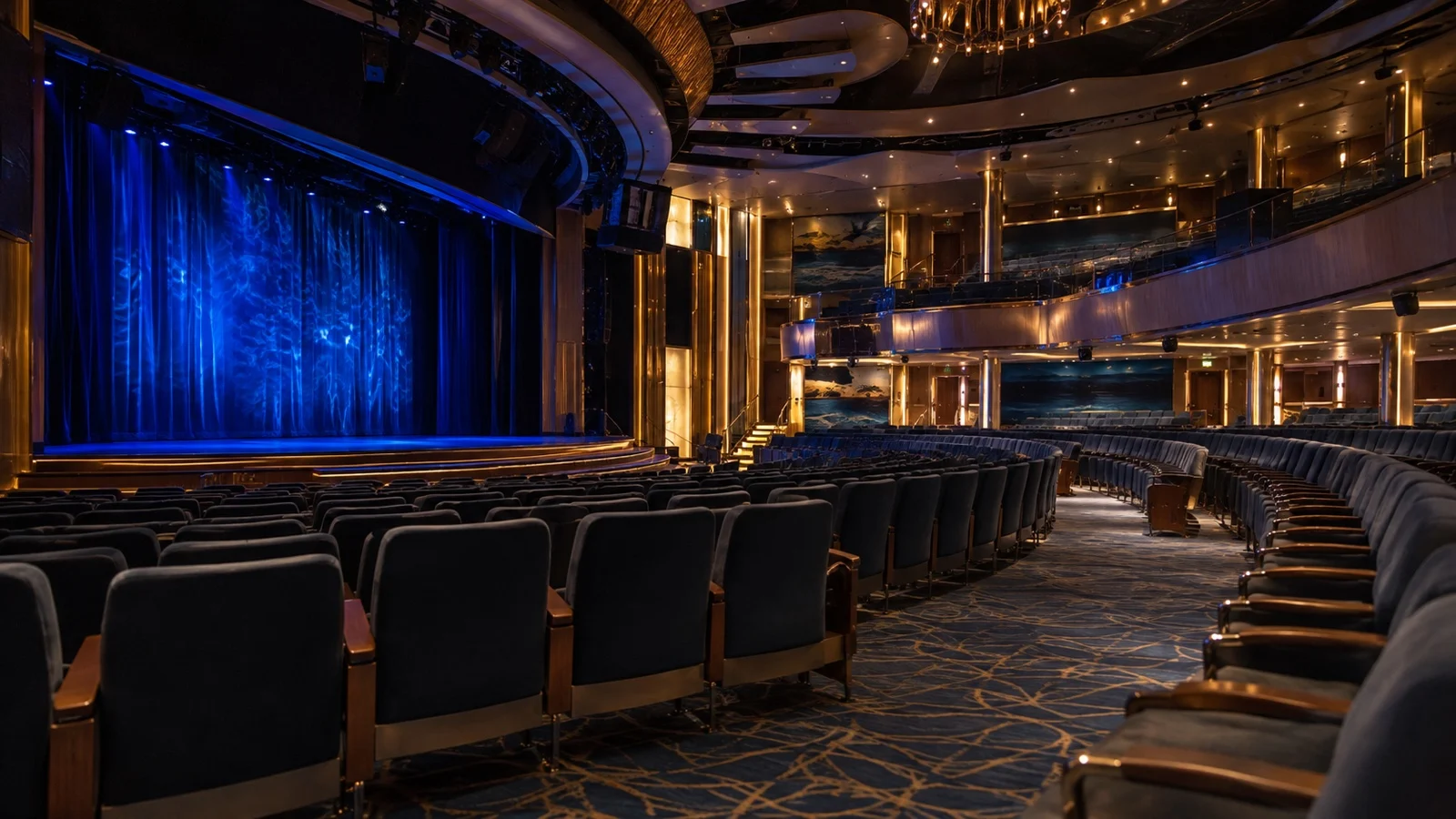
Disney Cruise Line publishes support information for neurodivergent guests and describes sensory conditions instead of presenting a certification package. Its page warns that theaters can include sudden flashes, strobe effects, loud sounds, and stage fog, which is genuinely useful when deciding what to skip.
Contact Disney Special Services before the cruise and ask for ship-specific answers on boarding, shows, dining, youth clubs, and the safety drill. Disney says it cannot provide one-on-one youth counselor care or guarantee a counselor with specialty training, so a family that needs dedicated support must plan another layer.
Open-house periods can be useful for exploring youth spaces together when offered, but they are not the same as secure drop-off programming. Confirm current schedules and participation rules on the exact ship.
The practical verdict: Disney can be a good fit when advance familiarity with venues and clear entertainment warnings are valuable. It is not the strongest published choice when the deciding need is a sensory kit, respite, or one-on-one youth support.
Norwegian and Holland America: request-based support
Norwegian does not publish a comparable autism-specific package on its main accessibility page. It does publish a meaningful support chain: an Access Desk records requests, an accessibility coordinator follows up after the questionnaire, and onboard Access Officers manage documented needs.
Submit Norwegian’s Accessibility and Medical Questionnaire at least 45 days before sailing for most needs and 90 days for interpreters. Ask what can be arranged for boarding, muster, dining, youth programming, shows, and shore excursions, then save the reply.
Holland America likewise routes requests through its Guest Accessibility Department and Special Requirements Information form. The line recommends submitting it when booking or at least 45 days before departure, and its Kids Club does not accommodate a child who requires one-on-one care unless a parent or guardian remains present.
The practical verdict: these lines may accommodate individual requests, but a helpful access desk is not the same as a published sensory program. Book only after the line answers the needs that could make or break the trip.
What a staffed Autism on the Seas sailing adds
Autism on the Seas is an independent specialist organization, not a benefit automatically supplied by Royal Caribbean, Celebrity, Norwegian, or Carnival. Its staff-assisted departures are selected sailings booked through the organization, and ordinary passengers on the same ship do not receive that service package.
The published package includes priority check-in support, private activities, transition help, group staffing, and scheduled respite for children and adults with developmental disabilities. Autism on the Seas publishes a usual ratio of one staff member per two guests with special needs, while noting that a sailing can run slightly above that ratio.
Dedicated one-on-one service is a separate paid option, and respite remains subject to safety, venue, and staffing conditions. Read the specific sailing’s inclusions and terms instead of assuming every departure has the same schedule.
This is the clearest choice when caregiver respite or hands-on transition support is essential rather than merely helpful. Compare the total specialist-package price and available dates with the cost of bringing a trusted support person.
Boarding and the safety drill
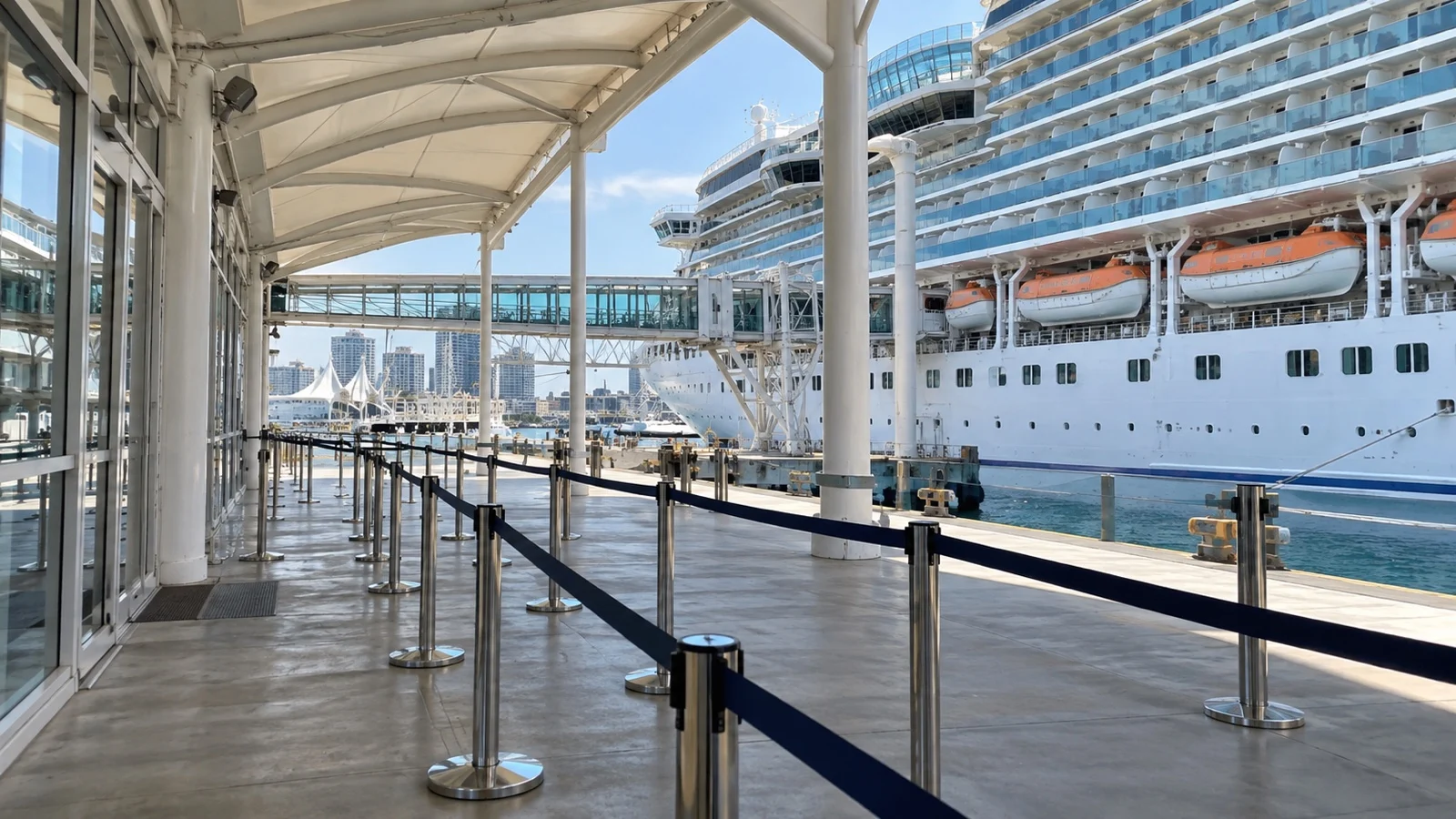
Embarkation bundles security lines, announcements, crowding, unfamiliar rooms, and a mandatory safety process into a few hours. Ask the access desk what expedited or quieter process is actually documented for your booking, because general priority status does not automatically equal an autism accommodation.
Carnival expressly tells guests to discuss a private safety briefing with Guest Services after boarding. Royal Caribbean publishes expedited check-in, boarding, and departure, but you should still ask separately how the required muster process works on that ship.
Watch any required safety video early, visit the muster station before the last rush when the line permits it, and keep headphones within reach. No accommodation means skipping a legally required safety briefing.
The port day is a separate accessibility decision
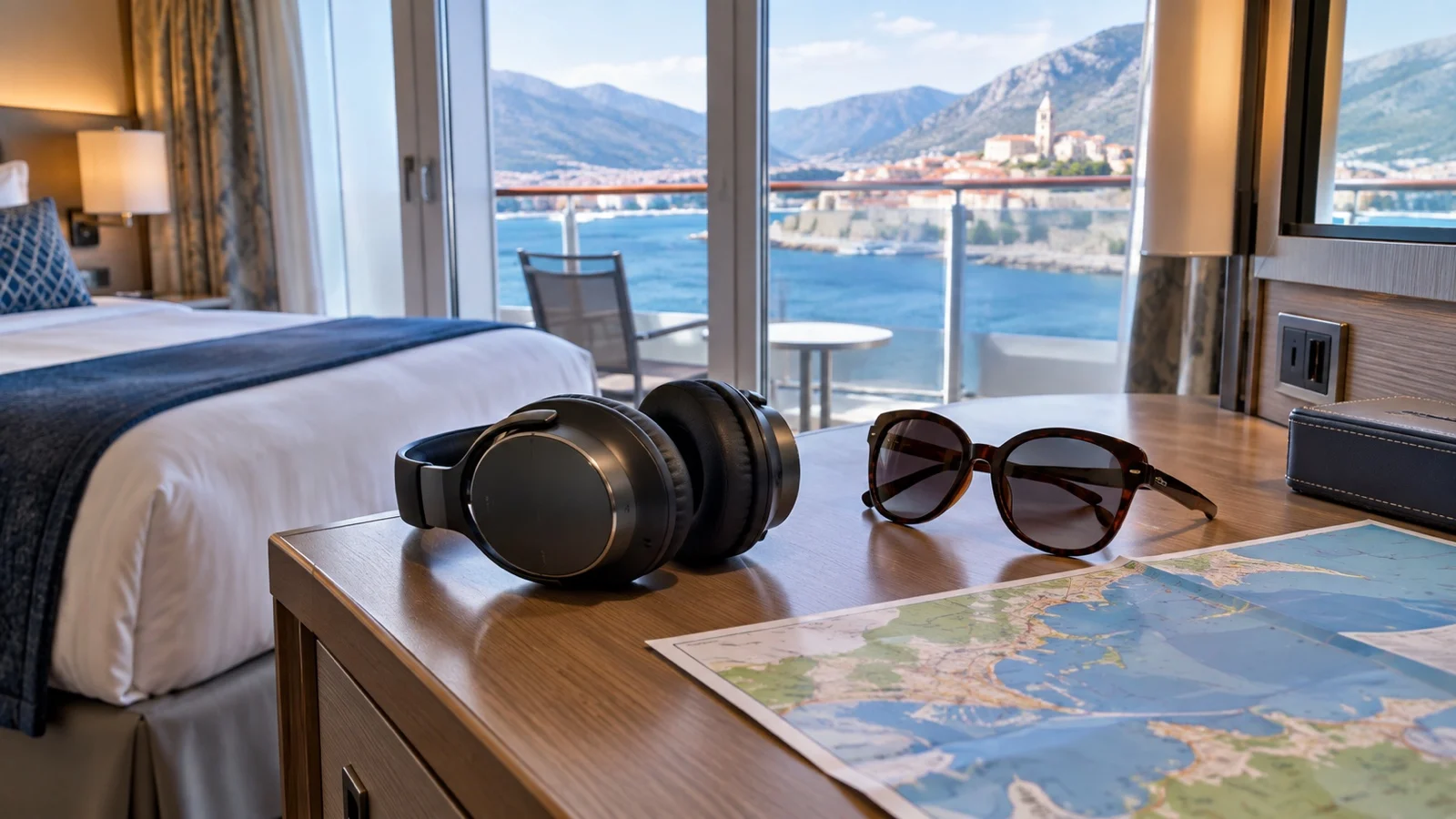
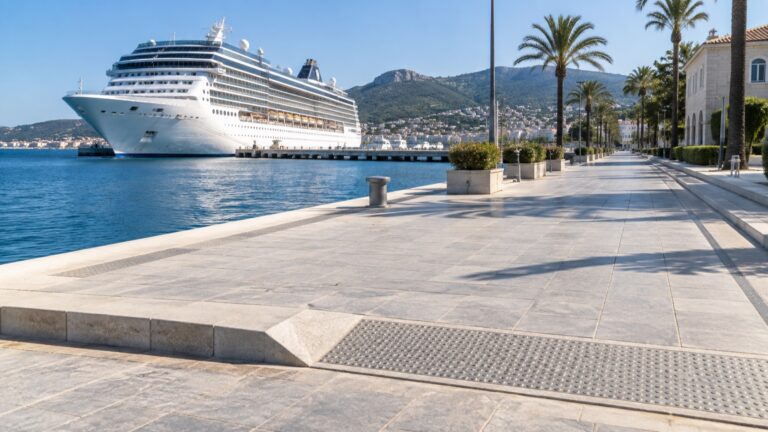
A ship’s sensory certification does not certify the terminal, bus, tour operator, tender boat, or port. Ask the excursion desk about group size, transportation, ride time, restroom access, amplified narration, waiting, shade, escape options, and whether you can return early.
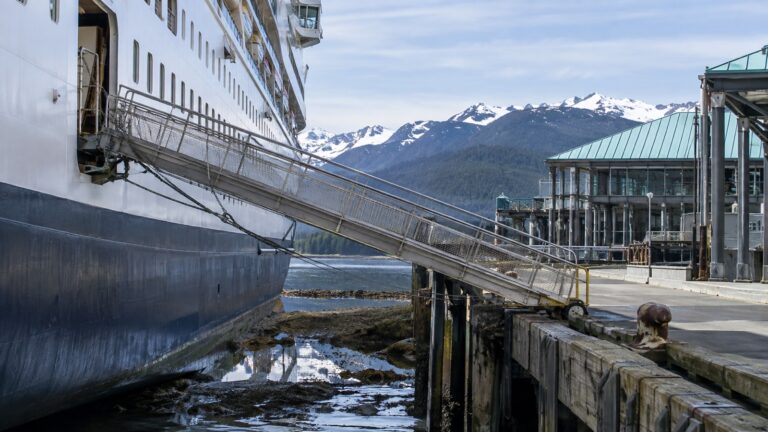
Tender ports add a small moving boat, engine noise, close seating, and waits at both ends. A traveler who is comfortable on the ship may still find that transfer to be the hardest part of the day.
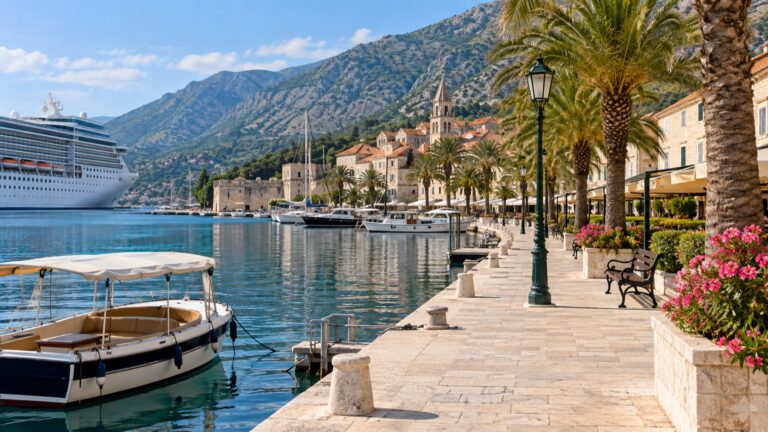
Busy downtown calls can mean several ships unloading into the same few blocks, while a private destination can still have loud music, beach crowds, and long walks. Check the day’s ship count and map the route from gangway to a quieter fallback before leaving.
Staying aboard is a valid port plan and often produces the quietest ship of the week. The guide to crowded cruise ports and how to beat the crowds helps identify the day when that option may be most valuable.
A booking checklist that gets useful answers
- Describe function, not just diagnosis: explain the exact difficulty and requested support, such as “cannot wait in a dense standing line,” “needs movement during a movie,” or “requires an adult for toileting.” Autism varies widely, so a diagnosis alone does not tell the crew what will help.
- Name every transition: ask separately about terminal check-in, boarding, muster, youth-club registration, dining, shows, tendering, excursions, and departure. A benefit that covers embarkation may not cover any other queue.
- Confirm youth-program limits: ask about age grouping, toilet-training rules, communication devices, medication, feeding, parent participation, pickup expectations, and whether staff can provide dedicated attention. Get the answer for the child’s actual age and ship.
- Build a portable kit: bring familiar headphones, preferred fidgets, communication supports, snacks that meet dietary needs, backup chargers, and a change of clothes in a carry-on. Borrowed gear should be a bonus, not the only plan.
- Use visual preparation: download deck plans, photos, menus, daily-program examples, and any ship social story before travel. The CDC notes that consistency and visual instructions can support autistic people, but the format should match the traveler’s own preferences.
- Save the paper trail: keep request forms, confirmation emails, and access-desk contacts offline. Reconfirm at check-in and Guest Services without assuming the shoreside note reached every onboard team.
How to choose the line
Choose Royal Caribbean when its named autism accommodations directly match your needs, especially expedited transitions or flexible Adventure Ocean grouping. Choose Carnival when fleetwide sensory training, ship social stories, borrowable sensory tools, and a private-briefing request are the better fit.
Choose Disney when the entertainment, familiar characters, and published sensory previews outweigh the absence of a comparable equipment package. Consider Norwegian or Holland America only after their access team confirms your must-haves in writing.
If respite or direct transition assistance is non-negotiable, compare staffed Autism on the Seas dates before choosing a mainstream sailing on its own. The right answer may be a specialist departure, a trusted companion, or a simpler itinerary rather than a different ship logo.
Then judge the itinerary with equal care. Fewer ports, more sea days, docked calls instead of tenders, and an easy option to stay aboard can matter more than a dozen attractions.
A realistic word on safety and personal care
Cruise lines can make reasonable accommodations, but they are not substitutes for a caregiver, therapist, or personal attendant. If a traveler needs help with eating, dressing, toileting, medication, transfers, elopement prevention, or continuous supervision, confirm the line’s boundaries and bring qualified support.
Carry essential medication in its original labeled container and keep enough for delays, following the line’s medical and security instructions. Ask the treating clinician about travel-specific medication timing or health risks rather than relying on cruise staff for individualized medical advice.
Create a simple reunion plan for separation, including a recent photo, cabin number, caregiver contacts, communication method, and what helps during distress. Share only the necessary information with the access desk, youth team, and trusted travel party.
When to sail
School vacations, holiday weeks, and short weekend cruises often bring fuller ships and busier terminals. Shoulder-season sailings can reduce crowds, but weather, shortened operating hours, and school schedules create their own tradeoffs.
A longer itinerary is not automatically calmer, and a private island is not automatically quiet. Compare ship capacity, port load, tender calls, sea days, cabin location, and the specific activities that will be hard to avoid.
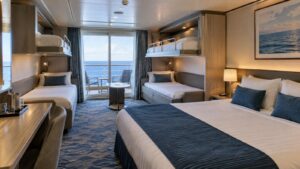
Pick a cabin away from elevators, stairwells, theaters, kids’ clubs, service spaces, and late-night venues when noise is a concern. Study the decks above and below, not just the hallway on the cabin’s own deck.
Quick answers
Which cruise line is best for autism and sensory needs?
Royal Caribbean has the broadest published autism-specific accommodation list, while Carnival has the clearest fleetwide sensory package. The best choice is the line that confirms your non-negotiable needs on the exact sailing.
Does “autism friendly” mean one-on-one care?
No. Mainstream line programs generally provide accommodations, tools, and trained staff awareness, not a dedicated caregiver or personal attendant.
Do I have to disclose a diagnosis?
Ask the line what information its process requires and describe the requested accommodation precisely. Royal Caribbean’s form says it does not require information about the extent of a disability, but policies and requests differ.
Can we skip the muster drill?
No, but the process may be modified. Carnival publishes a private safety-briefing option to discuss with Guest Services, while other lines should be asked before sailing.
Do Carnival sensory bags cost extra?
Carnival lists them as complimentary and first-come, first-served for the duration of the cruise. They are checked out onboard, so bring essential backup tools.
Is Autism on the Seas included with Royal Caribbean?
No. Its staffed cruises are separately arranged specialist departures, even when they sail on Royal Caribbean or another partner line.
Which port days are easiest?
Usually the ones with a docked ship, short flexible outing, smaller crowds, and a simple return route. Staying aboard is often the calmest option and needs no apology.
The last word
Royal Caribbean and Carnival make the strongest published cases, but neither can tell you what “friendly” means for one traveler. Match the written benefit to the actual need, then design the cabin, schedule, and port days around recovery time.
For mixed ages and energy levels, the guide to choosing port activities for a multigenerational family helps turn that plan into workable days ashore.
How this guide was researched: This guide uses official accessibility information from Royal Caribbean, Carnival, Disney Cruise Line, Norwegian Cruise Line, and Holland America, plus Autism on the Seas and CDC guidance, with program details reviewed in September 2026. Reconfirm ship- and sailing-specific accommodations in writing, and see our Editorial Policy.
More on this topic: browse every guide on accessible and family cruise planning.