Gangway Angles and Tidal Cruise Ports: What to Know
A cruise ship can be tied securely to the pier and still have a gangway that is too steep, stepped, narrow, or slippery for you to use safely. Tide matters, but it is only one piece of the setup.
The useful question is not, “Is this port accessible?” It is, “Can I use the actual ship-to-shore route at my berth, with my device, at the time I need it?”
My quick take
Do not try to predict a yes-or-no answer from a tide table alone. The crew may use a different shell door, a longer gangway, an accommodation ladder with steps, a floating pontoon, or another berth entirely.
Before sailing, send the access desk your mobility device’s exact size, weight, battery type, and whether it folds. Once onboard, ask the ship’s staff about each port the day before arrival and again before you leave the ship.
That sounds repetitive, but the setup can change during the call. A safe route in the morning is not a promise that the same route or assistance will be available later.
The quick facts
- What changes the angle: the height difference between the ship and pier, the length of the gangway, the ship door being used, tide, draft, swell, surge, and whether the landing floats with the water.
- What tide tables can tell you: when predicted water levels rise and fall at a nearby station. They cannot tell you which berth, door, gangway, or assistance plan your ship will use.
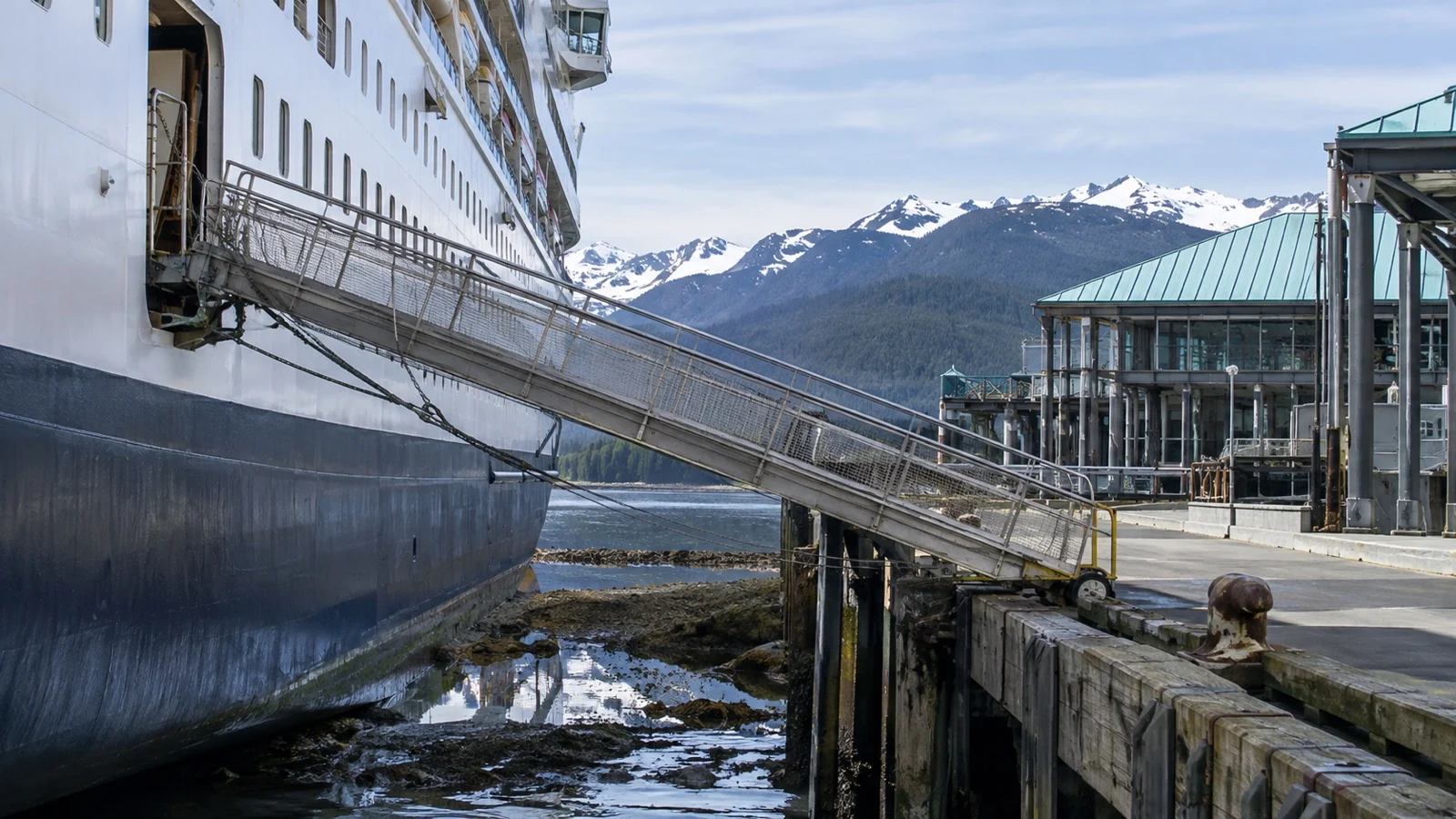
- What “gangway” may mean: a ramp-like bridge, a stepped accommodation ladder, or a combined route with thresholds and turns. A route that works for a cane may not work for a scooter.
- What the cruise lines say: access can depend on the gangway angle, weather, tide, sea conditions, device, and local facilities. The captain and crew make the operational safety decision.
- What to send before sailing: your device’s length, width, total weight with batteries, battery type, turning needs, and whether you can transfer to a manual chair if required.
- Best planning rule: get the line’s answer in writing, then reconfirm onboard. Treat every port answer as conditional until the gangway is rigged.
What actually changes the gangway
A ship moves vertically relative to a fixed pier as the water level changes. Its draft can also change as fuel and water are used, although the tide is usually the more obvious movement during a port call.
The crew is not powerless here. Staff choose approved access equipment, rig it within its rated limits, monitor conditions, and may move access to another ship door or close the route if it is unsafe.
Gangway length matters just as much as height difference. A longer ramp can cover the same rise more gently, while a short route may become steep quickly.
The route may also include a raised threshold, a tight turn, nonrigid handrails, or an interior stair after you enter the ship. Ask about the complete route rather than focusing only on the visible slope outside.
Why low tide is not automatically the worst time
Many guides say low tide always creates the steepest gangway, but that is too simple. It depends on whether the ship’s access door sits above or below the pier and which end of the route is higher.
At one berth, falling water may create a steeper climb back onto the ship. At another, high water may push the ship door above a low pier or force the crew to use a stepped accommodation ladder.
Use the tide table as a warning that the geometry will change, not as a personal access guarantee. The officer or security team at the gangway can tell you far more about the actual setup than an app can.
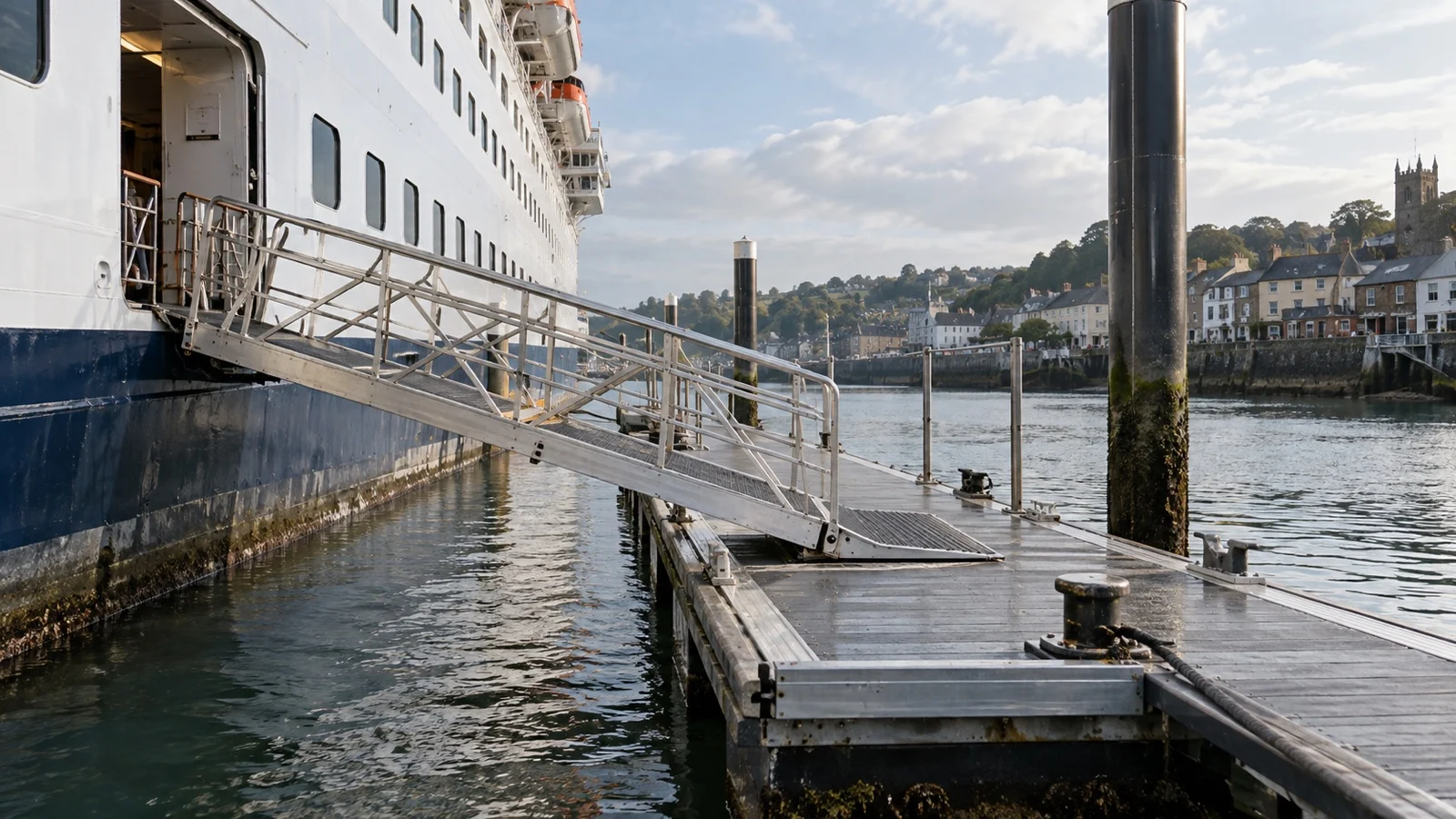
Fixed piers, floating pontoons, and locked basins
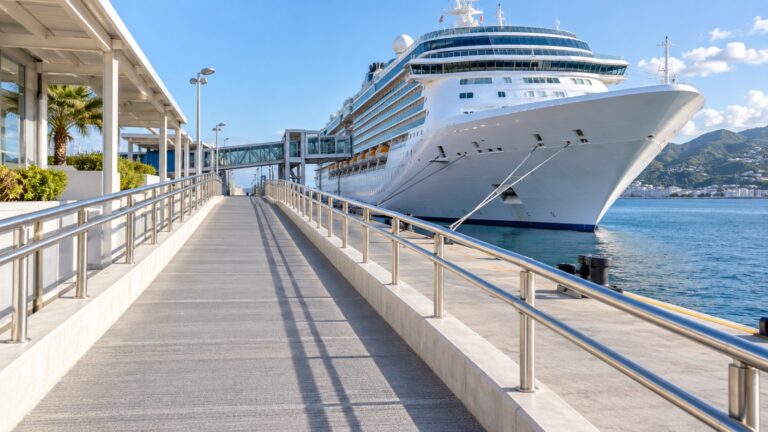
A fixed pier stays at one elevation while the ship rises and falls. This is the arrangement most likely to create a noticeable change in the ship-to-pier angle over a long call.
A floating pontoon rises and falls with the ship, so the short gangway between them may remain fairly level. The changing slope then moves to the longer bridge between the pontoon and shore.
A berth inside a locked or impounded basin is protected from the full outside tide. That can reduce the vertical change at the berth, although lock timing may affect arrival or departure.
None of those labels proves a route is wheelchair-friendly. Surface grip, width, thresholds, handrails, turns, and shore transportation still matter after you cross the water’s edge.
The tide numbers that are useful
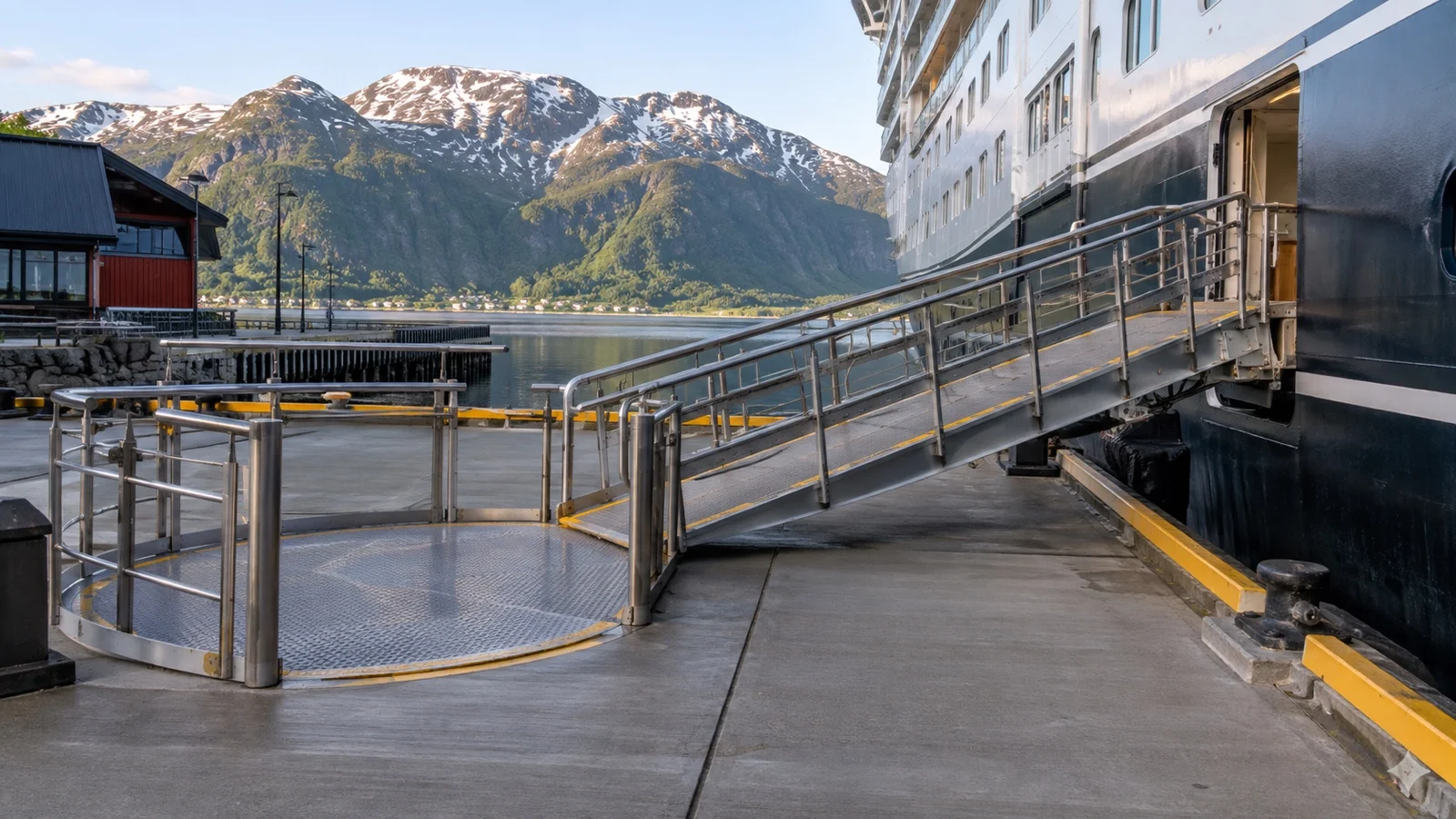
NOAA Tides and Currents publishes official predictions and station datums for United States ports. Canada’s Canadian Hydrographic Service and the United Kingdom Hydrographic Office’s EasyTide provide equivalent tools.
Large ranges deserve extra questions because the ship-to-shore geometry can change more during the call. Alaska, Atlantic Canada, the Bay of Fundy, the English Channel, the Bristol Channel, and tidal estuaries are the obvious places to pay attention.
NOAA station datums show mean tidal ranges around 13 to 14 feet at several southeast Alaska ports, while Saint John can experience swings above 20 feet. Those figures explain why access changes, but they do not calculate your gangway slope.
Predictions describe astronomical tide at a station, not the exact water level under your ship. Wind, atmospheric pressure, river flow, swell, and distance from the station can shift real conditions.
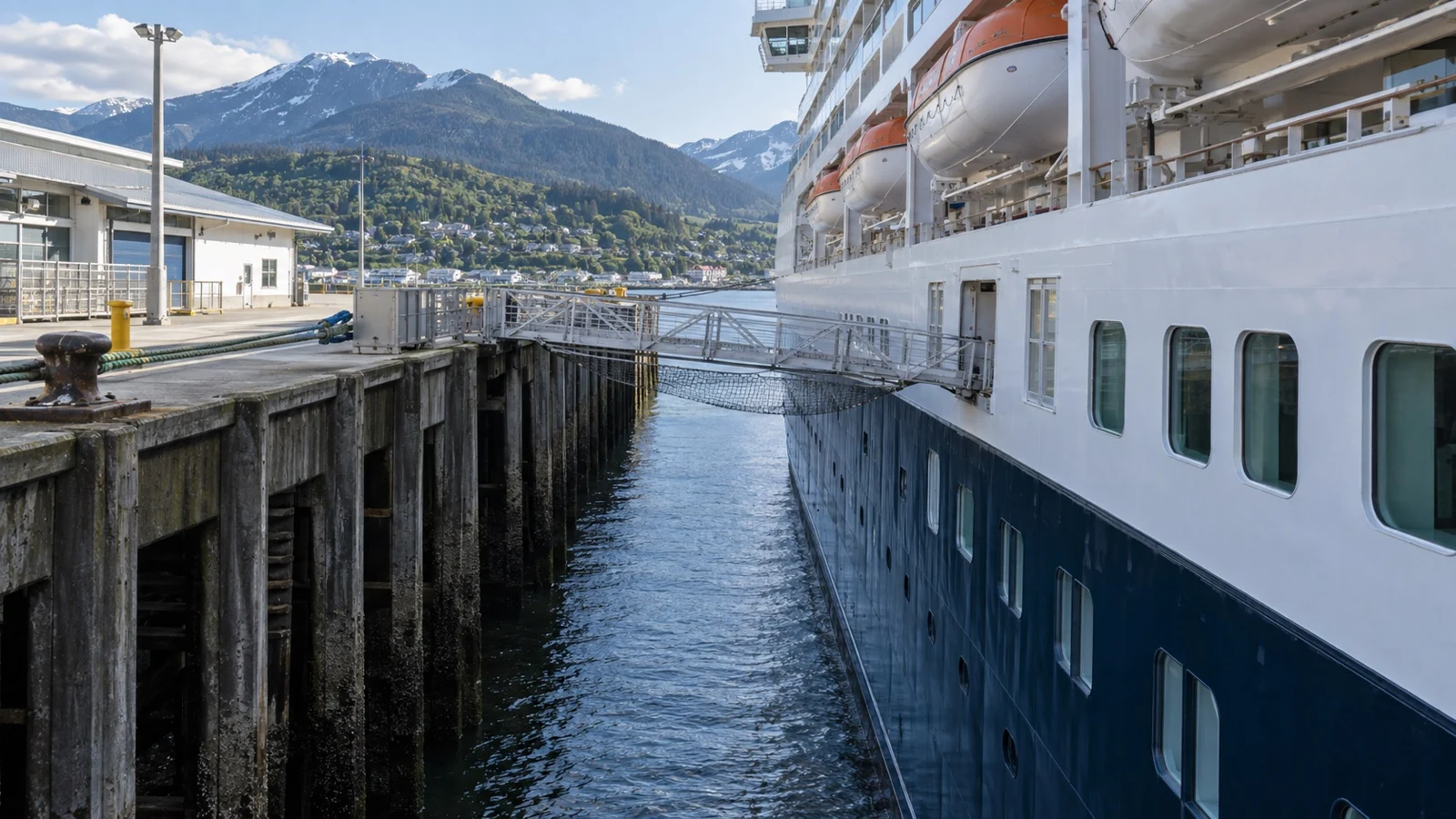
The angle numbers you should not use as a cruise guarantee
You may see 30, 40, or 55 degrees quoted online as legal gangway limits. Those numbers appear in Transport Canada’s TP 15697, but the document explicitly says it does not cover access to passenger vessels.
They describe equipment types and workplace vessel-access guidance, not a passenger promise for your cruise. I would not use them to decide whether a wheelchair, scooter, walker, or your own balance can manage a particular port.
The familiar 1:12 slope from shoreside accessibility standards is not proof that a ship’s temporary gangway will meet that angle. The United States Access Board says its passenger-vessel accessibility guidelines are still proposed rather than final.
Your practical standard is simpler: the equipment must be used safely, and the cruise line may restrict access when conditions or the device make the transfer unsafe. Get a port-specific answer from the line rather than trying to turn unrelated numbers into permission.
What cruise lines actually promise
Carnival says guests using their own mobility devices must be able to navigate the gangway safely at ports of call. It also says its wheelchair assistance is available for embarkation and debarkation at the home port, not as a general service onboard or in ports.
Holland America warns that some gangway and tender operations may not be fully accessible to wheelchairs or scooters. Its broader accessibility guidance also notes that steep gangways and steps can create problems at either low or high tide.
Those policies do not mean the crew will shrug and leave you alone. They mean help, device handling, shore facilities, and safe access vary, so you need the line’s current answer for your ship and itinerary.
Do not assume a travel companion will be allowed to control a heavy chair or scooter on a difficult slope. Nobody should be expected to improvise a risky transfer because the excursion starts in ten minutes.
What to ask before you book
- Ask the access desk, not only reservations: name the ship, sailing date, and ports that concern you. Request the answer in writing and save it offline.
- Send exact device details: include length, width, weight with batteries, battery chemistry, ground clearance, turning radius, and whether the device folds.
- Explain your transfer ability: say whether you can walk a few steps, use stairs, transfer to a manual chair, or need to remain in your device.
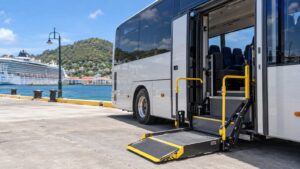
- Ask about every handoff: ship door, gangway, terminal ramp, shuttle bus, excursion vehicle, and return route. An accessible pier does not make an inaccessible bus disappear.
- Ask what happens if access fails: find out whether an accessible excursion is refunded and whether the ship offers an alternate viewing option. Do not assume either one.
What to do onboard
Visit Guest Services or the accessibility contact early in the cruise with your port list. Ask when the team expects to confirm the berth and whether your notes from the pre-cruise access desk are visible onboard.
The evening before a port, ask which deck will be used, whether the route has steps, and whether your device can remain occupied. Also ask whether a floating landing, terminal ramp, or mandatory shuttle sits between the gangway and town.
Before leaving the ship, ask whether the gangway location or route may change before all-aboard. If staff expect a difficult change, follow their recommended return window rather than inventing one from the tide chart.
Give yourself extra time and keep essential medication, device keys, and emergency contact information with you. If the route becomes unsafe, follow the crew’s instructions instead of trying to force a transfer.
How I would choose an itinerary
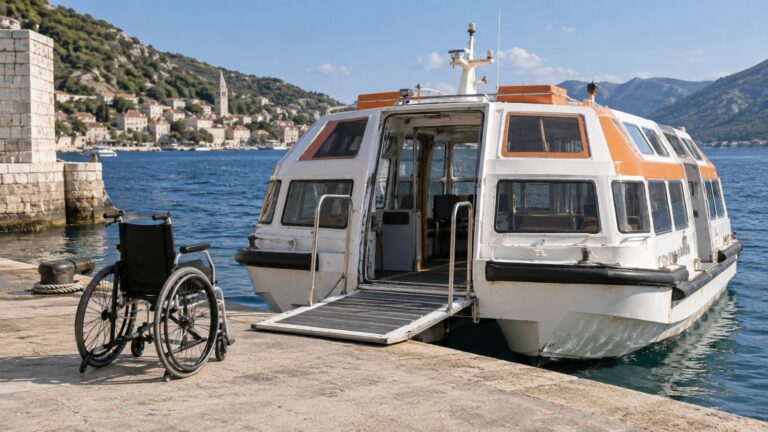
First, remove tender ports that your line cannot support for your mobility needs. Tendering usually creates a bigger barrier than a steep alongside gangway because it adds a moving-boat transfer.
Next, favor longer calls at ports with modern terminals and multiple access options. More time gives the ship greater flexibility, but it still does not guarantee a workable slope.
Large-tide destinations can still be wonderful choices if the cruise line can support your specific device and transfer needs. I would never reject an entire region based on tidal range alone.
Our guide to choosing a cruise with mobility needs helps with the wider itinerary decision. The companion guide to tender ports explains the extra transfer that matters even more.
A realistic word on accessibility
“Accessible ship” and “accessible port” are incomplete labels. Your real route is a chain, and one steep or stepped link can stop the day.
A manual wheelchair, rollator, power chair, and scooter do not behave the same way on a slope. Front caster size, braking, weight, width, and ground clearance all affect what is safe.
Cruise staff may be able to steady a manual chair or arrange a transfer chair, but policies and conditions vary. Crew generally cannot lift a guest or heavy device as a workaround, so ask specifically what assistance is permitted.
If the answer is uncertain, make an onboard backup plan that you would actually enjoy. That is not surrendering the port day; it is refusing to let one ramp turn the whole cruise into a disappointment.
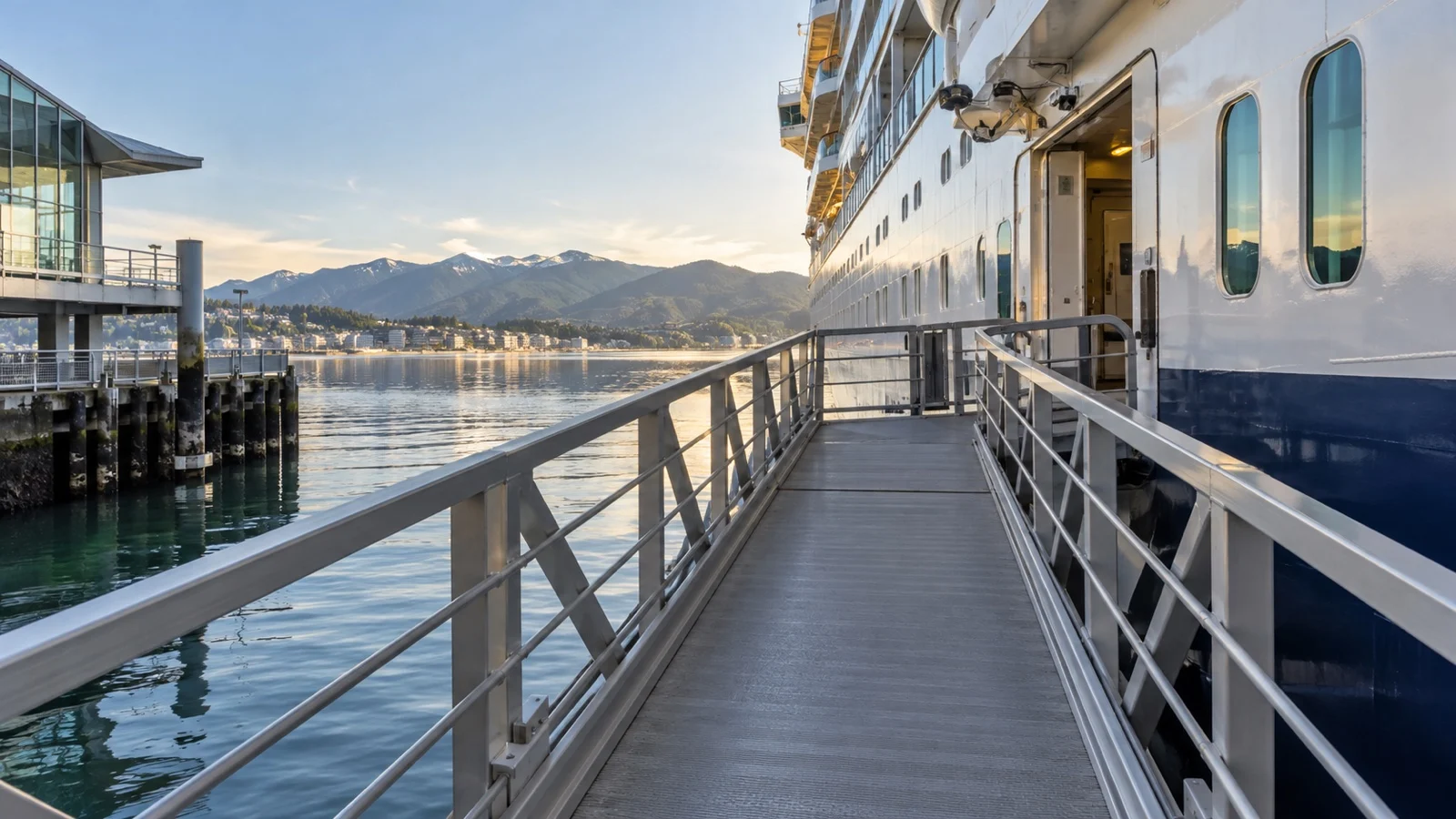
Weather, spring tides, and other moving pieces
New and full moons produce spring tides with larger ranges, while quarter moons produce smaller neap ranges. That monthly pattern is useful context, but local geography and weather decide how dramatic the difference becomes.
Do not assume the largest tide of the year always occurs at an equinox. Lunar distance, weather, and local timing also matter, which is why official station predictions beat a calendar shortcut.
Rain can make metal surfaces slick, strong wind can change safe operating conditions, and swell or passing traffic can move the ship at the berth. A tide that looks favorable on paper can still produce a closed or restricted route.
Quick answers
Can I calculate the gangway angle from the tide table?
Not reliably. You would also need the exact berth, pier elevation, ship door, gangway length, draft, and rigging plan, and some of those are not final until arrival.
Is low tide always the hardest time?
No. Low tide often creates a larger height difference at a fixed pier, but the direction and steepness depend on the ship door and pier geometry.
Is there one legal maximum angle for cruise passengers?
Do not plan around one universal number. The widely quoted Transport Canada angles come from guidance that explicitly excludes passenger-vessel access, while United States passenger-vessel accessibility guidelines remain proposed.
Will crew push my wheelchair or carry my scooter?
Assistance policies vary, and heavy devices or lifting passengers may be prohibited. Give the line your exact device and transfer details before booking, then reconfirm onboard.
Does a floating pontoon solve the problem?
It can keep the ship-to-pontoon connection gentler, but the pontoon-to-shore bridge may still steepen. You also need to check width, thresholds, handrails, and the route beyond it.
Where should I check official tide times?
Use NOAA for the United States, the Canadian Hydrographic Service for Canada, and EasyTide for the United Kingdom. Then ask the ship how those conditions affect your actual access route.
The last word
Tide tables are useful because they warn you that the ship-to-shore geometry will change. They are not accessibility certificates.
Send your device details early, ask port-specific questions, and reconfirm the real route onboard. That gives you a much better plan than chasing a magic tide time or a misleading angle limit.
How this guide was researched: This guide uses current official cruise-line accessibility policies, official tide services, Transport Canada’s vessel-access guidance, and the United States Access Board’s passenger-vessel status page. Policies and operating conditions were reviewed in September 2026, but your ship’s crew makes the final safety decision for the route in use.
More on this topic: browse every guide on accessible and family cruise planning.