How to Choose Port Activities for a Multigenerational Family
A good multigenerational port day creates one shared memory without requiring identical knees, appetites, attention spans, or ideas of fun. I choose one common anchor, plan around the hardest real constraint, and add nearby branches that let people do more or less without splintering the family across an island.
The goal is not to make every person love every minute. It is to design a day where nobody is unsafe, trapped, hungry, exhausted, or responsible for a return plan they cannot manage.
Multigenerational port-day quick facts
- Start with limits: Identify mobility, supervision, food, medical, sensory, and transport constraints before attractions
- Ask for priorities: Give each person one must-have rather than inviting ten complete itineraries
- Choose one anchor: Build the shared day around a place with seating, restrooms, shade, food, and an easy exit
- Add one branch: Let energetic and lower-energy travelers separate briefly within the same district
- Plan for the least flexible traveler: The full route must work for the person with the fewest safe alternatives
- Verify transport: Confirm vehicle steps, restraints, mobility-equipment space, and tender requirements
- Protect the return: Give each subgroup ship details, payment, communication, and its own safe way back
- Budget fairly: Shared spending does not have to be identical when accessibility or age changes participation
- Keep extras optional: The family decides on a second stop only after seeing its real pace
Begin with what cannot work
Do not open planning by asking a large group what everyone wants to do. Start by identifying what the family cannot safely or happily tolerate, such as a long stair climb, an unrestrained vehicle, deep-water swimming, six hours without a restroom, a missed nap, or extreme heat.
These are not negative details because they reveal the design brief. Once the limits are visible, whole categories disappear and the remaining options become easier to compare.
Ask each traveler for one priority and one concern. A grandparent may want history and shade, a teenager may want local food and photographs, while a preschooler may simply need open space and predictable snacks.
The planner’s job is to find the overlap rather than fulfill every request. A waterfront district with a museum, market, cafe, scenic promenade, and playground may satisfy more people than the region’s single most famous monument.
If water activities are creating the conflict, our guide to cruise destinations for non-swimmers can help separate a good beach base from a day that pressures everyone into the sea.
Audit the arrival before the attraction
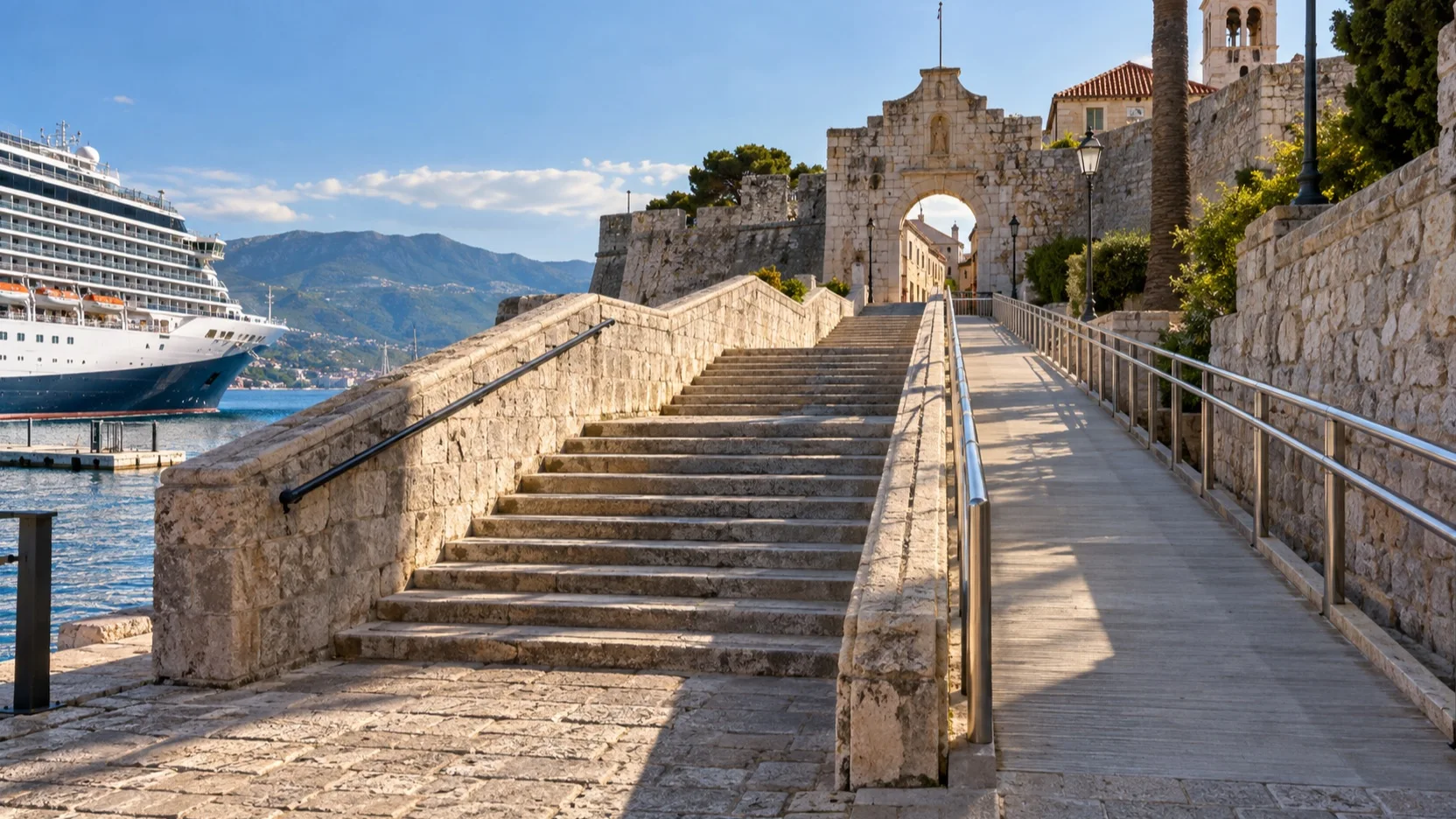
The ship-to-shore transfer can be the most demanding part of the day. A long gangway, industrial-port shuttle, crowded pier, or tender boat may eliminate an activity that looks easy once you reach it.
Ask the cruise line about the assigned berth, gangway slope, terminal assistance, shuttle accessibility, and distance to independent transport. Reconfirm onboard because equipment, weather, water level, and berth can change.
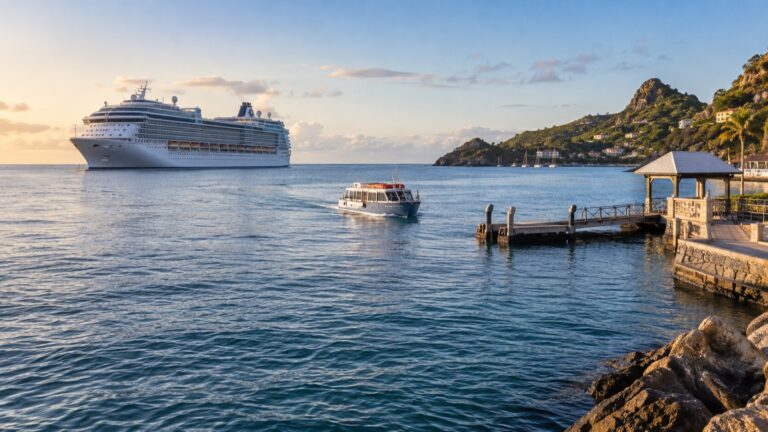
Tender ports require special attention because boarding may involve steps, handholds, and movement between vessels. Crew make the final safety decision, and a passenger who tendered comfortably on one cruise may face different conditions on another.
Read our guide to how tender ports work before choosing an inflexible early tour. The transfer already consumes part of the family’s time and physical budget.
Build around one shared anchor
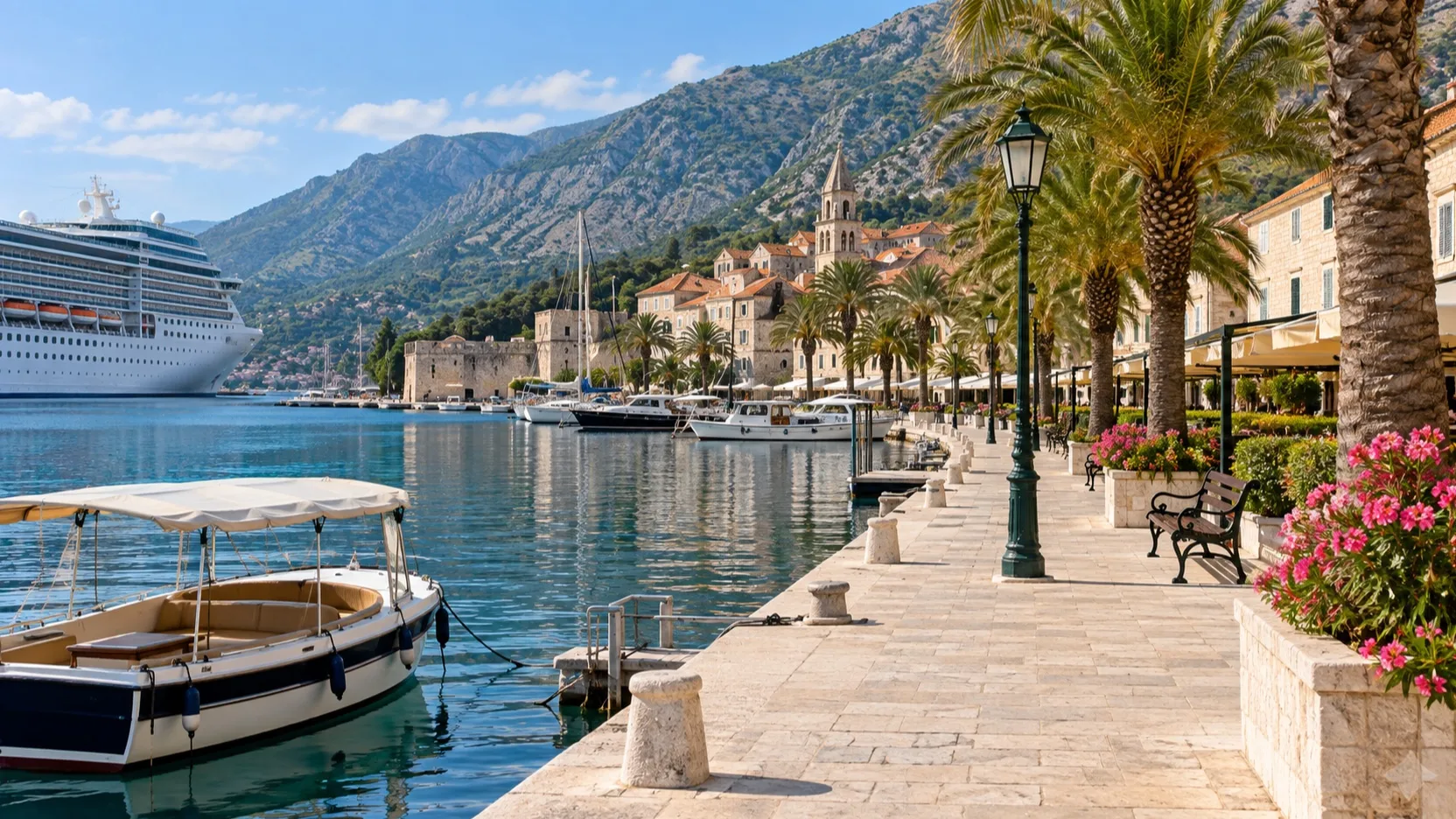
A shared anchor is the part of the day that almost everyone can enjoy together. It might be a scenic drive, accessible heritage site, harbor cruise, beach base, food experience, garden, aquarium, market district, or short city walk.
The best anchor offers seating, restrooms, food, shade or indoor shelter, and a straightforward way to leave. These unglamorous features allow the family to stay by choice instead of being forced out when one person needs something basic.
Keep the anchor meaningful but not all-consuming. A two-hour attraction plus lunch gives the family space to recover, adjust, or split briefly without turning every pause into a schedule crisis.
Reserve the hardest-to-get element first only after verifying the arrival and return. Timed admission should support the family, not become a command that everyone must obey despite a slow tender or tired child.
Our guide to choosing one major attraction or several stops explains the broader tradeoff. Multigenerational groups should lean even more strongly toward one center and disposable extras.
Plan for people, not age labels
Age does not predict interest or stamina perfectly. One grandparent may want the zipline, one teenager may adore the museum, and one young child may handle a long meal better than a crowded shuttle.
Ask individuals what they enjoy and what makes them uncomfortable. Then verify the practical requirements, including age, height, weight, swimming ability, supervision, medication, sensory load, footwear, and the ability to remain seated during the activity.
Young children
Solve nap, food, changing, shade, stroller, carrier, and child-restraint questions before buying tickets. A parent should know where the quietest break can happen and what the family does if the child cannot continue.
Do not assume a tour labeled family-friendly supplies a legal or correctly fitted child seat. Ask the actual transport provider which restraint is available, whether you may bring your own, and how it is installed.
Teenagers
Offer meaningful choice without handing a minor the return risk. A teenager can choose between two screened activities, manage a modest spending allowance, research lunch, or help navigate with adult oversight.
Photo time, independent browsing, and food can matter more than formal interpretation. Build those interests into the shared route instead of treating them as rewards after an adult-only history lecture.
Older adults
Ask about recovery as well as maximum walking distance. Someone may complete a major attraction comfortably but need a quiet lunch and direct return rather than another hour of shopping.
Medication, hearing, vision, heat tolerance, balance, and joint pain can affect the route in ways a generic activity level does not capture. Let the traveler describe what helps without making assumptions based on age.
Adults with different roles
Parents and grandparents should decide who is supervising each child, who carries essential medication, and who can accompany a person returning early. Those roles must remain clear if the group divides.
No one should spend the port day as the default helper without agreeing to it. Fair planning includes the energy and interests of the people providing support.
Audit the complete physical route
Only a little walking is not a useful description. Ask for distance, surface, slope, steps, handrails, gangway conditions, vehicle entry height, seating frequency, restroom spacing, shade, and the walk from the final stop back to transport.
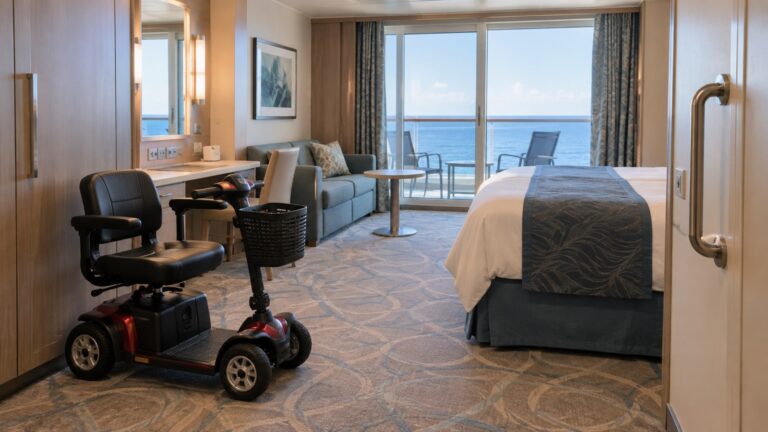
A wheelchair, walker, stroller, carrier, and tired child interact differently with cobbles, sand, tender boats, bus aisles, and historic thresholds. Review our stroller-friendly port criteria because many of the same details also matter to older adults.
Do not assume a private vehicle solves access. Restricted historic centers may require a long walk from the legal drop-off, while a compact van may be harder to enter than a full-size coach.
Ask whether a traveler can remain comfortably at a viewpoint, cafe, visitor center, or vehicle while others complete a short trail. The provider must approve this because parking, staffing, and safety rules may prevent an informal split.
Together or split?
An all-together port works best when the transport chain is short and the destination supports several energy levels. Compact waterfronts, accessible scenic drives, private destinations, museums with cafes, and facility-rich beach bases often fit this model.
A split port offers two strong but incompatible experiences, such as a strenuous hike and a relaxed town day. Separating can be kinder than asking one generation to endure an activity selected for another.
Do not split when someone needs physical help, a minor would be left without the agreed adult, communication is unreliable, or both groups depend on different high-risk return connections. Independence should reduce friction without multiplying missed-ship risk.
The same-district split
The safest branch keeps everyone in one neighborhood. One subgroup can enter a museum while another uses a nearby cafe, market, garden, or playground, then everyone reunites before beginning the return.
Choose one exact meeting place and a time earlier than necessary. A landmark with a fixed name and map pin is better than somewhere near the fountain.
The same-base split
At a beach facility, swimmers might snorkel while non-swimmers use shade, lunch, or a pool. Confirm supervision, life jackets, water conditions, age rules, storage, and the point where everyone checks back in.
At an attraction complex, energetic travelers can add a tower or short trail while others rest. Nobody should have to buy the optional activity simply to retain access to seating or the return vehicle.
Separate itineraries
Two fully separate port days can work for capable adults when each subgroup has transport, money, ship information, communication, and a safe return. It is a poor choice when one group holds every ticket, phone charger, credit card, or child document.
Reunite near the ship rather than at a distant restaurant. If either group is delayed, the other can continue to the terminal without creating a second problem.
Transport for the whole family
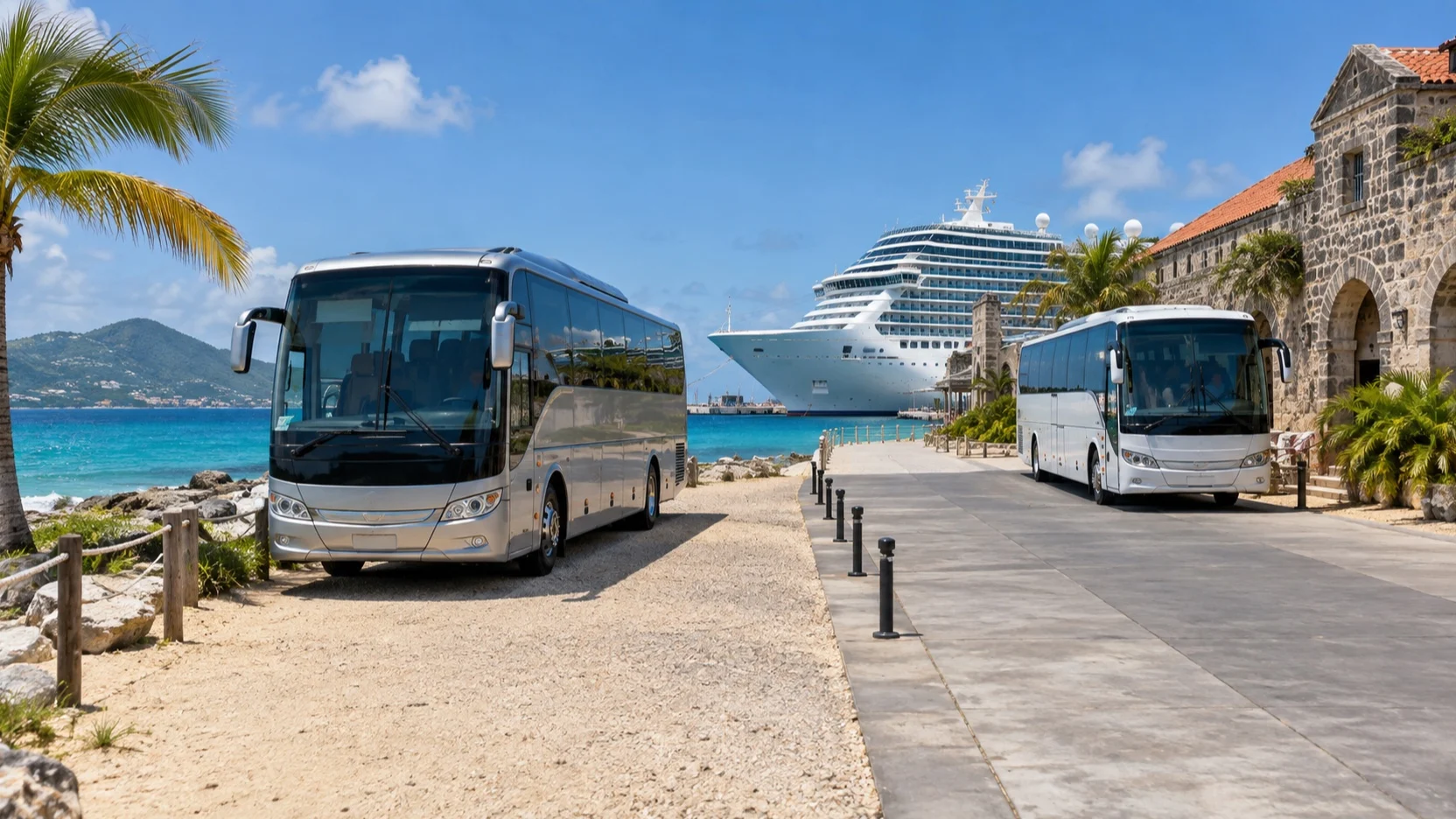
The transportation chain should work for the person with the fewest viable alternatives. If someone cannot step into a shared taxi, stand on a tender platform, ride backward, or travel without a suitable restraint, solve that before comparing attractions.
Ask the actual provider what vehicle or boat will be used. A booking agent’s promise that families are welcome does not confirm that a mobility device fits, a child seat is correct, or shade exists on the boat.
A direct ride that costs more can be better value than a cheaper route with several changes. Calculate the group’s total effort, boarding time, waiting, and risk rather than only the fare per person.
For a large family, one private vehicle can simplify head counts and pacing. Confirm luggage or equipment capacity, air conditioning, seat belts, steps, securement, guide credentials, and where the vehicle can legally drop passengers.
Ship tour, private guide, or independent day?
Ship excursion
A cruise-line tour becomes attractive when the destination is distant, the call is short, the group is large, or accessible transport needs direct coordination. It also gives the family one meeting instruction and a defined return structure.
Read the details because the advertised duration may include gathering, boarding, shopping, and coach time. A protected group return does not make the walking level, child restraint, or restroom pattern suitable.
Royal Caribbean’s current guidance confirms that passengers may explore independently but remain responsible for returning before the ship sails. Policies vary by line, so read the instructions and tour terms for your own sailing.
Private local guide
A private guide can adapt the pace, vehicle, narration, stops, and meal around the family. This is often the strongest value for a larger group when the alternative is buying many individual coach seats.
Request the exact vehicle, pickup authority, credentials, admission plan, accessibility information, cancellation terms, child-seat arrangement, and cruise-return target in writing. Agree that optional stops disappear before the buffer does.
Independent exploration
A do-it-yourself day works best in a compact port where the family can shorten the route, branch briefly, and return without several fixed connections. It becomes harder when everyone depends on ferries, long trains, mountain roads, or separate tickets.
Independence is valuable because the group can stop when a child melts down or an adult tires. It is not valuable when one planner spends the whole day watching five apps and moving ten people between platforms.
Budget so the day still feels fair
Discuss what the shared trip budget covers before anyone falls in love with a premium activity. Transport, admission, food, equipment, gratuities, lockers, shade, accessibility services, and child restraints can change the real total.
Fair does not always mean identical spending. One person may require accessible transport, another may skip the paid attraction, and a teenager may use a small personal allowance.
Make optional upgrades genuinely optional without teasing or pressuring the person who declines. A grandparent enjoying coffee during a zipline and a teenager browsing a market can both participate in the family day without buying the same ticket.
Keep one adult responsible for the booking record, but share prices, inclusions, and cancellation terms with every paying household. Surprise fees create resentment faster when several families divide the bill.
Heat, hydration, meals, and quiet time
A group can disagree about attractions and still become hungry at the same moment. Choose a likely meal window, identify one reliable option, and carry permitted backup snacks for medical or age-related needs.
The Centers for Disease Control and Prevention advises staying cool, staying hydrated, and knowing symptoms when it is hot. Its guidance notes that heat can affect anyone, while young children, older adults, pregnant travelers, and people with some chronic conditions may need additional precautions.
Build shade, fluids, restrooms, and an indoor or seated pause into the route before anyone feels unwell. A planned cafe break feels pleasant, while an emergency search for air conditioning makes the day feel as though it has collapsed.
Some family members may need quiet time without conversation or decision-making. Treat thirty minutes of rest as normal recovery rather than a lack of gratitude for the trip.
Ask a traveler with medication how heat and timing affect storage or dosing, and follow their health professional’s advice. Do not change medication because of a port schedule.
Sensory and communication planning
Crowds, bells, traffic, heat, unfamiliar food, loud guides, and rushed transitions can overwhelm children and adults. Ask what helps, such as headphones, a visual schedule, predictable meals, a quiet branch, or advance photos of transport.
Write the day in simple stages and identify the parts that can disappear. People cope better with change when they know the anchor remains secure even if an optional market or viewpoint is removed.
Each adult subgroup should carry the ship name, berth, all aboard time, port-agent contact, local emergency number, payment, and offline map. Do not let one phone become the family’s only connection to the vessel.
Choose a communication plan that works without mobile data. A fixed time and exact reunion point are more dependable than a group message in a port with weak service.
Four port-day shapes that work
The walkable city
Share one historic or cultural anchor, eat nearby, then let energetic travelers complete a short viewpoint loop while others browse or rest. Everyone remains in the same district and returns from the same side of town.
This plan thrives on optionality. If cobbles, heat, or a slow meal consume the afternoon, the extra disappears without damaging the shared memory.
The beach base
Choose one facility-rich location with shade, food, restrooms, safe water access, and confirmed return transport. Add snorkeling, kayaking, or equipment only for eligible family members who truly want it.
Non-swimmers should receive a good day rather than a plastic chair beside someone else’s activity. A garden, pool, lunch, accessible promenade, or cultural stop can make the base meaningful for them too.
The tender port
Keep the activity close, avoid a fragile early independent reservation, and return before the final tender crowd. The boat transfer itself may be the day’s greatest mobility and timing challenge.
If sea conditions exclude one traveler, decide in advance who stays with them and whether the ship has a satisfying backup. Never improvise supervision on the tender platform.
The distant landmark
Use coordinated transport, make the landmark the only major goal, and let the meal support the route. Read our guide to planning crowded cruise ports before adding timed admissions that depend on perfect arrival.
Set the vehicle’s return target in writing and remove shopping or scenic stops as soon as delay appears. The family should understand that the famous landmark is the success, not the number of pins collected afterward.
A decision process everyone can live with
First, the organizer screens out unsafe or logistically impossible ideas. This prevents the family from voting for an excursion that never had a workable vehicle, tender transfer, or return.
Second, each person names one priority and one limit. The organizer looks for overlap such as food plus history, water plus shade, or scenery plus low walking.
Third, the family selects one anchor and one optional branch. Any third activity stays unbooked unless it sits nearby and can vanish without cost.
Fourth, the group agrees on budget, roles, reunion, and personal pier time. The personal target should be earlier than the cruise line’s all aboard instruction.
Finally, everyone receives the plan in writing and knows what will be dropped first. A family that agrees on the fallback is less likely to argue when weather changes.
Return planning for one group or several
The ship’s all aboard time is not the time to reach the port district. Set a family target that covers transport delays, restroom stops, head counts, security, tender queues, and the walk from terminal to gangway.
Each independent subgroup needs its own return money and method. A family has not truly split safely when one group can only get back by finding the other group’s driver.
Count people at every major transition without making the process theatrical. One adult can own the count, while another checks bags, mobility equipment, and documents.
If someone needs to return early, decide who accompanies them before leaving the ship. Childcare and physical support should never be assigned during a stressful exit.
Common multigenerational planning mistakes
The first mistake is choosing by majority vote. The option preferred by seven people can still be impossible for the one traveler who needs their assistance.
The second is accepting labels such as easy, accessible, or family-friendly without exact route details. Distance, steps, sand, vehicle height, restrooms, and shade are the information that matter.
The third is making every stop compulsory because everyone paid. Sunk cost should not force a tired child or unwell adult through an activity.
The fourth is separating across distant parts of the destination. Branches should simplify different energy levels, not create two independent missed-ship risks.
The fifth is skipping breaks until someone demands one. Schedule food, water, shade, and quiet before the group becomes unable to make calm decisions.
The sixth is giving one organizer all the information. Every subgroup needs the booking, ship, return, communication, and emergency basics.
Frequently asked questions
Must everyone stay together?
No. Stay together when care, supervision, or transport requires it, but use nearby branches when different interests or energy levels would otherwise make someone miserable.
Who should choose the activity?
One planner should screen logistics, then every traveler should name one priority and one limit. The final choice should maximize shared value without overruling the least flexible person.
Is a private tour worth it?
It can be excellent value for a larger family needing pace control, a specific vehicle, or flexible stops. Confirm the complete price and exact access details before paying.
How many activities should we plan?
Plan one shared anchor and one optional nearby branch or extra. A third fixed activity is usually where flexibility disappears.
What if someone needs to return early?
Choose transport that permits a safe subgroup return and decide who accompanies the traveler before leaving. Never improvise childcare or mobility support during the exit.
How do we plan for a non-swimmer?
Select a water destination that offers shade, food, scenery, pool or land activities, and safe participation without pressure to enter deep water. Verify boat transfers and life-jacket rules separately.
The bottom line
A multigenerational family does not need one perfect activity for every person. It needs one good shared anchor, honest physical information, a branch for different energy levels, and a return plan that works even when the group divides.
Plan around the person with the fewest alternatives, then use flexibility to give everyone some ownership. That approach produces a better memory than forcing ten people through the same ambitious checklist.
Planning note: Berths, tenders, tour rules, age limits, transport, accessibility, weather, and venue services can change. Confirm time-sensitive details with your cruise line, operator, transport provider, attraction, and relevant health or accessibility source before travel.
How this guide was researched: This guide was checked against current official cruise-line shore-excursion information, government accessibility guidance, public-health heat guidance, and destination-planning resources. Logistics and time-sensitive details were reviewed September 11, 2026; see our Editorial Policy.
More on this topic: browse every guide on accessible and family cruise planning.