Seven, Ten or Fourteen Nights: What Actually Changes
The difference between a seven night and a fourteen night cruise is not seven more nights of the same thing. It changes the sea day ratio, where the ship can physically reach, and what your flights cost you per night.
My quick take
Seven nights is the right answer more often than cruise forums admit, mostly because of vacation days rather than money. Ten is the length I think people underuse, and fourteen is the one that either transforms the trip or exposes that you did not actually want to be on a ship that long.
The longest sailing I have done ran down the west coast of South America, and what surprised me was how ordinary the ship felt by the second week. That is the real variable here, and no fare comparison tells you which way you go.
The quick facts
- Sea days: More nights does not automatically mean a higher share of sea days, because lines spend the extra time on either reach or ports.
- Reach: Seven nights caps how far the ship can get from the turnaround port, and ten nights is where the map opens up.
- Fare per night: Usually softens a little as length grows, though longer sailings also attract premium pricing.
- Daily costs: Gratuities, drinks packages and wifi are per day and never get cheaper with length.
- Packing: Around the ten day mark you stop packing outfits and start planning laundry.
What the extra nights actually buy you
Every night a line adds gets spent on one of two things. Either the ship goes farther from the turnaround port, or it fits more ports into the same patch of ocean.
Those produce completely different vacations at the same price point. A ten night that reaches the Southern Caribbean is mostly about distance, and a ten night Mediterranean is mostly about density.
Read the day-by-day before you read the fare. The number of nights tells you almost nothing about what the trip feels like.
The sea day ratio does not move the way people expect
A standard seven night Caribbean sailing usually runs two sea days against four or five ports. That is roughly a quarter to a third of your cruise spent at sea, which is the ratio most people have in their heads.
Ten nights often holds a similar ratio and sometimes improves it, because the extra time goes into ports the shorter version could not reach. Fourteen is where it splits hard, since a port intensive Mediterranean fortnight and a transatlantic crossing with six consecutive sea days are both fourteen nights.
If you have never done more than two sea days in a row, find that out on a shorter sailing first. My comparison of sea days against a port intensive itinerary goes through who actually enjoys which.
How far the ship can physically reach
This is the least discussed and most useful difference. Seven nights from Florida gets you the Bahamas, the Western Caribbean or the Eastern Caribbean, and it does not get you the ABC islands without gutting the port time.
Ten or eleven nights unlocks the Southern Caribbean, a partial Panama Canal transit, and Alaska itineraries that run up the coast from California rather than starting in Seattle or Vancouver. Fourteen unlocks the full canal transit, a crossing, and the combination itineraries that stitch two regions together.
- Seven nights: One region, a tight loop, and a turnaround port you can usually drive to.
- Ten to eleven nights: The far edge of a region, or two adjacent ones done properly.
- Fourteen nights: Crossings, full transits, and the itineraries that only exist at this length.
The rule that quietly shapes American itineraries
Foreign flagged ships cannot simply carry you from one United States port to another. The federal statute covering passenger transportation between US ports is why so many longer domestic itineraries either loop back to where they started or add a stop somewhere far away.
It shows up as a port call that looks like filler and is actually a legal requirement. I wrote up why your Alaska cruise stops in Victoria, which is the version of this most cruisers meet first.
The practical effect is that longer one-way options are shaped by this rule rather than by geography. Worth knowing before you write off an itinerary as oddly routed.
Price per night, and the part that never amortizes
Cruise fare per night usually drifts down as the sailing gets longer, because the line is selling a harder product to fill. That drift is real but it is smaller than people assume, and premium demand on long voyages pushes back the other way.
What does not drift at all is anything charged per day. Crew appreciation on mainstream lines usually sits somewhere in the high teens to low twenties of dollars per person per day, and drinks packages and internet are priced the same way.
So doubling the length roughly doubles that whole layer. A fourteen night cruise with two people, gratuities, a drinks package each and wifi can add well over a thousand dollars on top of the fare before you buy a single excursion.
What the flying really costs you per night
This is the strongest argument for going longer and the one people run past. Your flights, your pre-cruise hotel night, your airport parking and your transfers are a fixed lump that does not care how long the cruise is.
Say that lump comes to 900 dollars per person for a European sailing. Spread over seven nights that is about 129 dollars a night, and spread over fourteen it is about 64.
That gap is usually larger than the difference in fare per night, which is why a long overseas cruise can genuinely be better value and a long drive-to-the-port cruise often is not. I also budget for the return leg properly, and my post on how late to book your flight home covers why the cheap early flight is a false saving.
Vacation days are the real constraint
A seven night cruise costs most working people five vacation days. A fourteen night with travel days on both ends usually costs ten or eleven, which for a lot of people is the entire year.
That is the actual reason seven nights dominates, not fare. If you are retired, working remotely or have flexible leave, the whole calculation changes and ten to fourteen becomes obviously better value.
If you cannot get the leave, the ten night is the underrated compromise. It buys you the reach of a longer itinerary for two or three extra workdays.
Packing stops being a list and becomes a system at about ten days
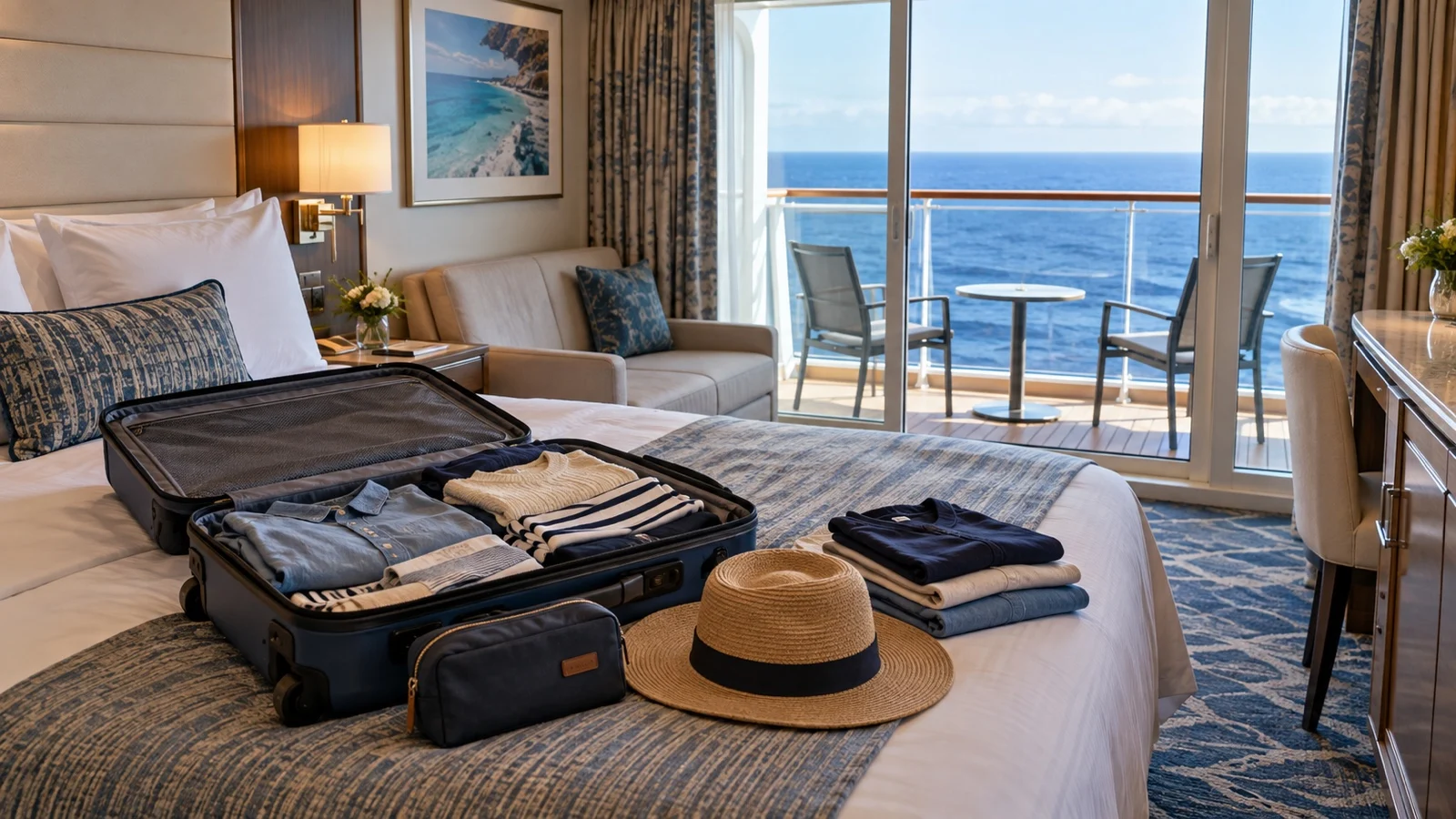
Up to about a week you can pack a clean outfit per day and never think about it again. Past ten days that stops fitting in one bag unless you are unusually disciplined or unusually small.
The fix is not a second suitcase, it is packing around a laundry plan and repeating bottoms. I pack for roughly eight days regardless of cruise length and treat everything past that as a wash cycle.
Carry-on rules do not change with cruise length, so the quart bag limit on liquids in your carry-on applies the same on a fourteen night as on a three. Everything else goes in the checked bag, including the sunscreen you will otherwise buy at ship prices.
Dressier evenings scale with length too, usually two on a seven night and three or four on a fourteen. That is a second jacket or dress, and it is exactly what pushes a bag over the weight limit.
Laundry, and the day everyone discovers the machines
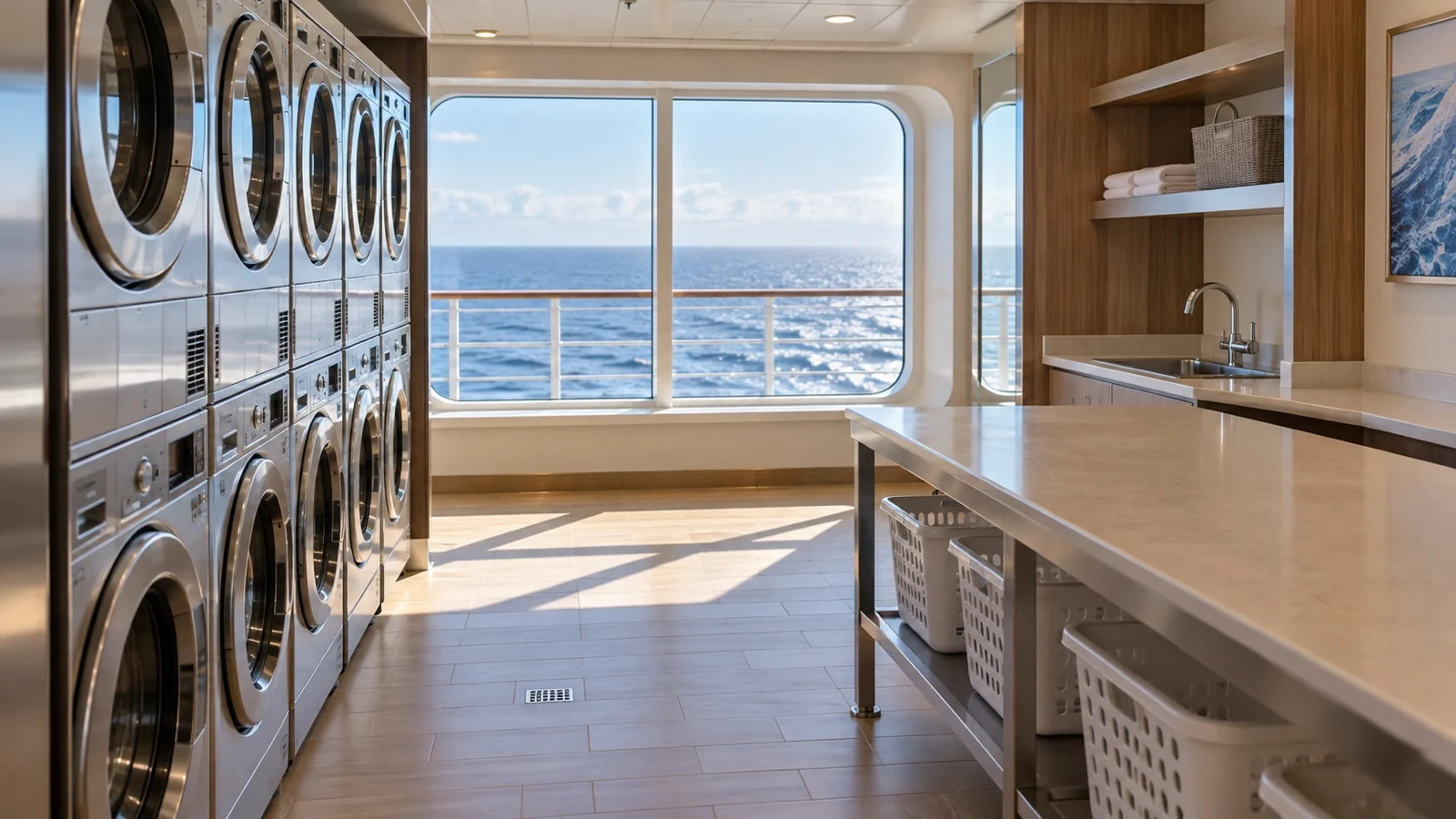
Some lines have self-service laundry rooms and some have none at all, so check yours before you build a plan around it. This is the single detail I would verify before booking anything over ten nights.
Where the machines exist, they are free-for-all on sea days in the second week and empty on port days. Going during a port call while everyone else is ashore is the whole trick.
The alternative is the wash-and-fold bag, usually sold at a flat price for however much you can stuff into it. On a fourteen night it is often worth one round of it around day eight, and loyalty tiers frequently discount or include it.
What a longer cruise does to your pace
Seven nights makes people frantic. You feel the clock, you book something in every port, and you come home needing a vacation from the vacation.
Somewhere in the second week that pressure comes off and you start skipping ports on purpose. That shift is the actual product a fourteen night sells, and it is worth more than the extra port stamps.
It also means a longer cruise is more forgiving of a bad day. One rained-out port out of five hurts, and one out of eleven does not.
The excursion budget behaves differently too
On seven nights people book almost every port because each one feels like a scarce opportunity. On fourteen that instinct would ruin you financially, so you have to pick.
I plan a long cruise with a fixed excursion budget and about three real splurges, and I let the other ports be walking days. That is a better trip and a cheaper one, and it only works when you have enough ports that missing a few costs you nothing.
If you are sailing in Europe, add this to the math
Longer European itineraries cross more borders, and the border process itself has changed. Biometric entry and exit registration replaced passport stamping at external borders, and the first registration takes longer than a stamp did.
This is not a reason to pick a shorter cruise. It is a reason to allow more time on your arrival day.
Where the value actually flips
The flip happens when your fixed travel cost stops dominating the per night number. If you are driving to the port, that never really happens and seven nights stays efficient.
If you are flying transatlantic or transpacific to reach the ship, seven nights is close to a waste of the airfare and ten is the sensible floor. Fourteen is where a long-haul cruise stops feeling expensive per night and starts feeling like the cheapest way to see a region.
The other flip is the itinerary itself. If the fourteen night version is the only one that includes the thing you actually want to see, length is not really the decision you are making.
What I would book at each length
For a drive-to-port Caribbean or Alaska sailing, seven nights, and I would not feel like I was missing anything. For anything that needs a long flight, ten nights minimum and fourteen if the leave exists.
If I had to name one, ten nights is the length I think is most underbooked. It reaches most of what fourteen reaches, it costs three or four fewer vacation days, and it stays short enough that you never get bored of the ship.
The one exception is a crossing, which cannot be shortened and should not be attempted as a first long cruise. If you want that, look at how a crossing differs from a repositioning sailing before you commit two weeks to it.
Quick answers
Are longer cruises cheaper per night?
The fare usually is, modestly. Your total per night only drops meaningfully once you fold in flights and hotels, because gratuities, drinks and wifi cost the same every day regardless of length.
How many sea days are on a 10 night cruise?
Usually three or four, but it depends entirely on whether the line spent the extra nights reaching farther or adding ports. Read the day-by-day rather than trusting a ratio.
Is a 14 night cruise too long for a first timer?
Usually yes, unless the itinerary is port heavy. Find out how you feel about three consecutive sea days before you buy eleven of them.
Do you need to do laundry on a two week cruise?
Almost certainly, unless you check a second bag. Confirm whether your ship has self-service machines before you sail, because plenty of ships do not.
Is it better to do two 7 night cruises or one 14 night?
Two sevens back to back give you more ports and one strange day in the middle, while one fourteen usually reaches farther. My guide to how a back-to-back turnaround day works covers what that middle day involves.
Final word
Length is not a comfort setting, it is an itinerary constraint with a cost structure attached. Pick the length that reaches the places you want, then check whether your fixed travel costs make the longer version cheaper per night than it looks.
Most people should book seven and stop apologizing for it. The ones who should go longer already know it, and they are usually the ones flying furthest to get to the pier.
How this guide was researched: Itinerary patterns, sea day ratios, per day onboard charges, laundry arrangements and the current rules affecting US and European itineraries were checked in October 2026. Fares, gratuity rates, package pricing and ship laundry facilities change often and vary by line, so confirm the details for your own sailing before you book. See our Editorial Policy.
More on this topic: browse every guide on choosing a cruise.