Back-to-Back Cruises: How Turnaround Day Actually Works
A back-to-back cruise is two consecutive bookings, and turnaround day is where those two reservations meet. The exact routine changes by cruise line, ship, port, itinerary, nationality, and the immigration or customs checks required that morning.
The useful rule is simple: treat the second sailing as a new cruise, then follow the ship’s written in-transit instructions instead of somebody else’s timeline.
Why this is worth ten minutes
Most back-to-backs are pleasantly uneventful, especially if you keep the same cabin. The snags come from assuming your reservations, travel documents, onboard account, packages, luggage, and new key card will link themselves.
Turnaround day is not one universal hour-by-hour routine. The cruise line manages the shipboard handoff, while border, customs, port, and security authorities control any required clearance.
Your goal is not to memorize a magic meeting time. It is to know what must be confirmed before sailing and which piece of paper controls the morning.

What a back-to-back booking really means
You have two reservation numbers even when the same ship, room, and guests continue without a hotel night. The second leg can require its own online check-in, travel information, payment setup, packages, dining choices, waivers, and boarding documents.
Ask the line or travel advisor to mark the bookings as consecutive and verify that every guest appears correctly on both. Then check in for both sailings and save both sets of documents offline before leaving home.
Royal Caribbean’s current guidance promises a special notice explaining immigration requirements and whether guests may remain onboard or go ashore. It also describes continued stateroom access, a hot breakfast, and receipt of the new SeaPass card before disembarking, but those are Royal Caribbean procedures rather than industry-wide guarantees.
Norwegian Cruise Line’s FAQ is a good reminder of the variation. It says guests may need to disembark, reembark, and complete a customs declaration depending on the port and rules, and reboarding can wait until a ship inspection ends.
Before sailing: link, check, and document both legs
Confirm in writing that the line recognizes you as a consecutive cruiser, but do not confuse “linked” with “combined.” Each booking can still have a separate balance, cancellation rule, check-in record, onboard credit, package, and cabin assignment.
Check the entry rules for the full route on both legs, including any country visited only after turnaround. Royal Caribbean’s travel-document guidance says guests are responsible for the identification, visas, and other permissions required by every destination and should keep those documents on their person at the terminal.
For a US round-trip sailing, do not assume the closed-loop document exception automatically covers both bookings or your citizenship status. US Customs and Border Protection explains that qualifying US citizens may use certain alternatives, while other itineraries and travelers can require passports, visas, ESTA, permanent-resident cards, or other documents.
A valid passport is the cleanest choice for most international back-to-backs, but it does not replace a required visa or travel authorization. Recheck official requirements close to departure because they can change after you book.
The letter or app notice that controls the morning
The ship normally sends consecutive-cruiser instructions late in the first sailing, sometimes on paper and sometimes through the app or stateroom message system. Read them as soon as they arrive because they override generic advice, including this guide.
Look for the meeting place and time, required documents, whether you must leave the ship, where the new key card comes from, and when the second sailing’s account becomes active. The notice should also explain cabin moves, luggage, meals, shore access, and any turnaround excursion offered.
If nothing has arrived by the afternoon before turnaround, ask guest services to confirm that both reservation numbers are linked. Do not wait until the gangway opens to discover that the consecutive-cruiser list missed you.
Turnaround morning, step by step
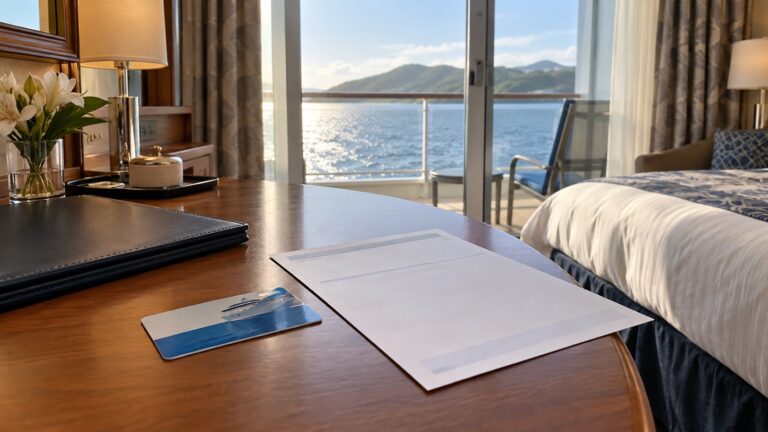
Eat breakfast within the special hours stated by the ship, settle any question on the first folio, and carry your passport or required ID. Add both key cards or boarding documents, medication, phone, wallet, and anything you need ashore to a small day bag.
Go to the designated in-transit meeting point on time. The crew may process you onboard, escort the group through the terminal and back, or release you ashore with instructions for returning as a guest on the new sailing.
Do not build plans around a promised 45-minute wait or a 10:00 release. A late departing guest, border check, terminal queue, ship inspection, or delayed clearance can stretch the process.
Lunch is equally variable. Some lines offer a dedicated consecutive-cruiser meal, some keep a limited venue open, and others direct you to whatever is serving once boarding begins, so check before making the morning’s only important sandwich decision.
Why the port and itinerary change the process
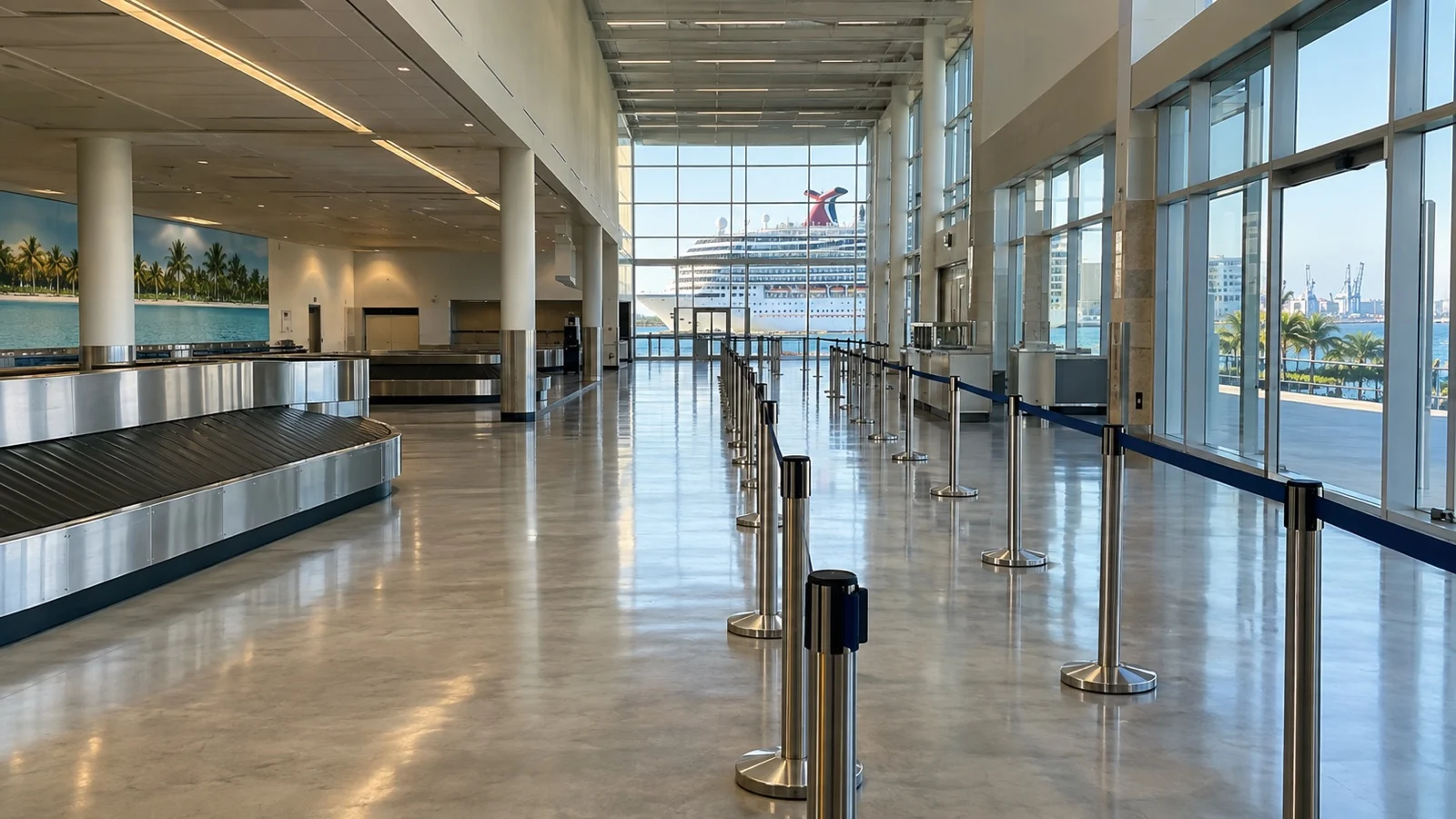
A US turnaround can require CBP processing before you continue, but the exact route through the terminal is determined locally. Do not assume PortMiami, Port Everglades, and Seattle will use identical timing or technology.
At Seattle’s Smith Cove terminal at Pier 91, for example, the port identifies the terminal, transportation, and accessibility facilities, but your ship still supplies the consecutive-cruiser procedure. The day of the week can also affect terminal traffic, as our guide to turnaround-day crowds explains.
European handling depends on the itinerary, your nationality, and whether the relevant arrival crosses an external Schengen border. There is no safe blanket rule that Barcelona guests can simply flash an in-transit card, just as there is no single process across Southampton’s terminals.
Australia can add immigration, customs, and biosecurity requirements according to the arriving itinerary and your status. Sydney’s Overseas Passenger Terminal is wonderfully central, but its location does not guarantee a quick release ashore.
Same cabin or cabin move?
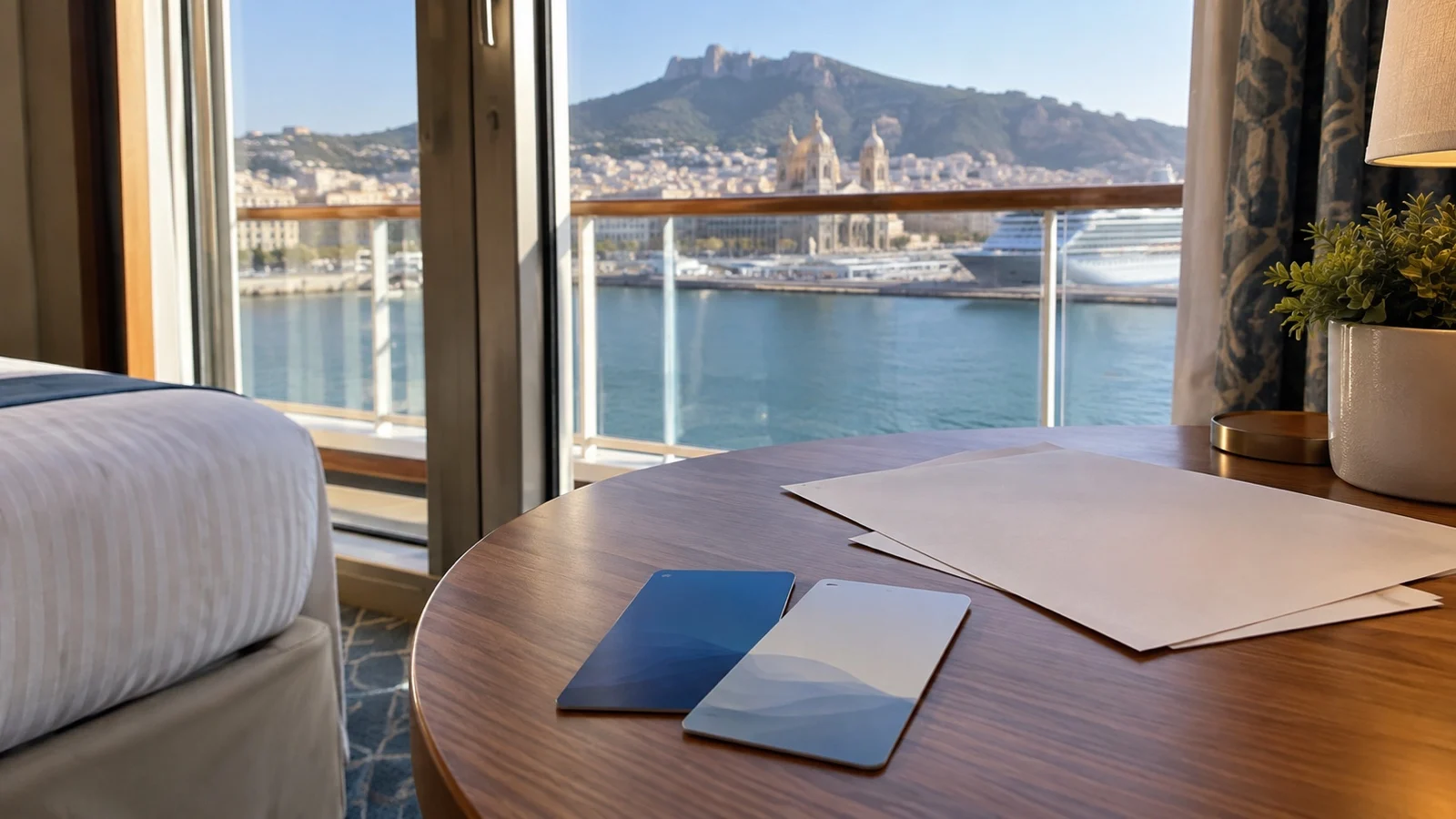
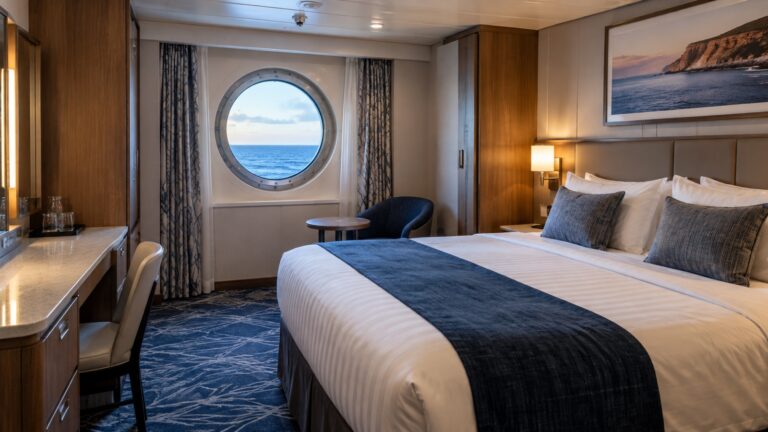
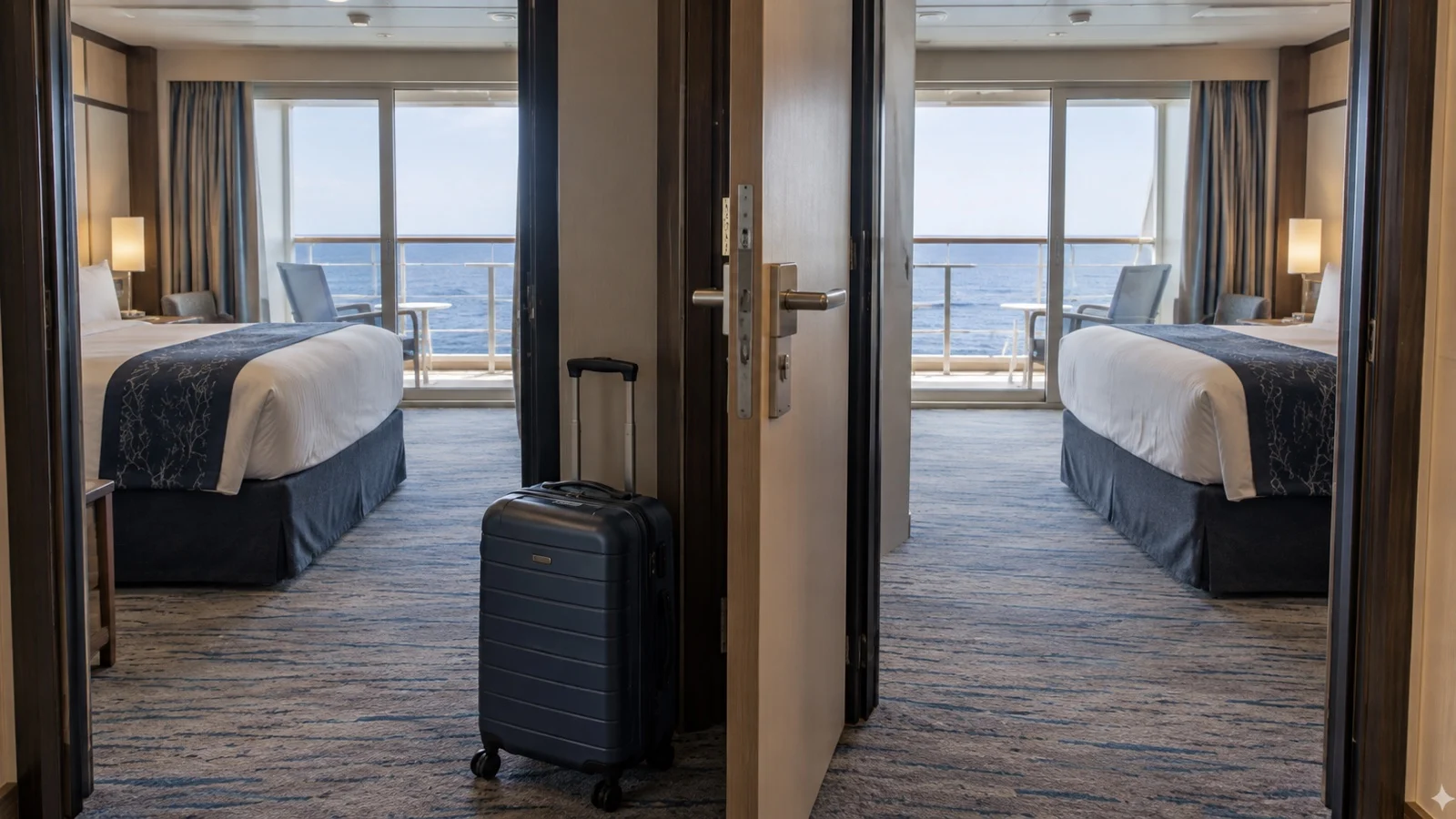
If the exact cabin number matches on both reservations, ask the ship to confirm that you may leave everything in place. Do not put luggage tags on your bags or send them into the terminal unless the crew specifically tells you to.
If the cabin changes, ask your steward and guest services for the ship’s moving procedure before you pack. Some crews move hanging clothes on the rail and tagged suitcases internally, but you should never assume that service or its timing.
Pack drawers, bathroom items, electronics, and loose belongings, then carry passports, medication, valuables, and the next room’s key yourself. Confirm when you must leave the old room and when you can enter the new one, since those times may not match.
Request the same cabin when booking if convenience matters, but treat the number printed on each final confirmation as the answer. A verbal promise is not a cabin assignment.
New key card, new account, new package checks
The first sailing’s onboard account normally closes and a new folio begins for the second reservation. Review the first bill before turnaround, save a copy, and confirm the payment card on the new account.
Check drink, Wi-Fi, dining, photo, laundry, gratuity, and specialty reservations on both booking numbers. Packages, promotional onboard credit, loyalty benefits, and unused balances may reset, expire, or require reactivation according to the fare and line.
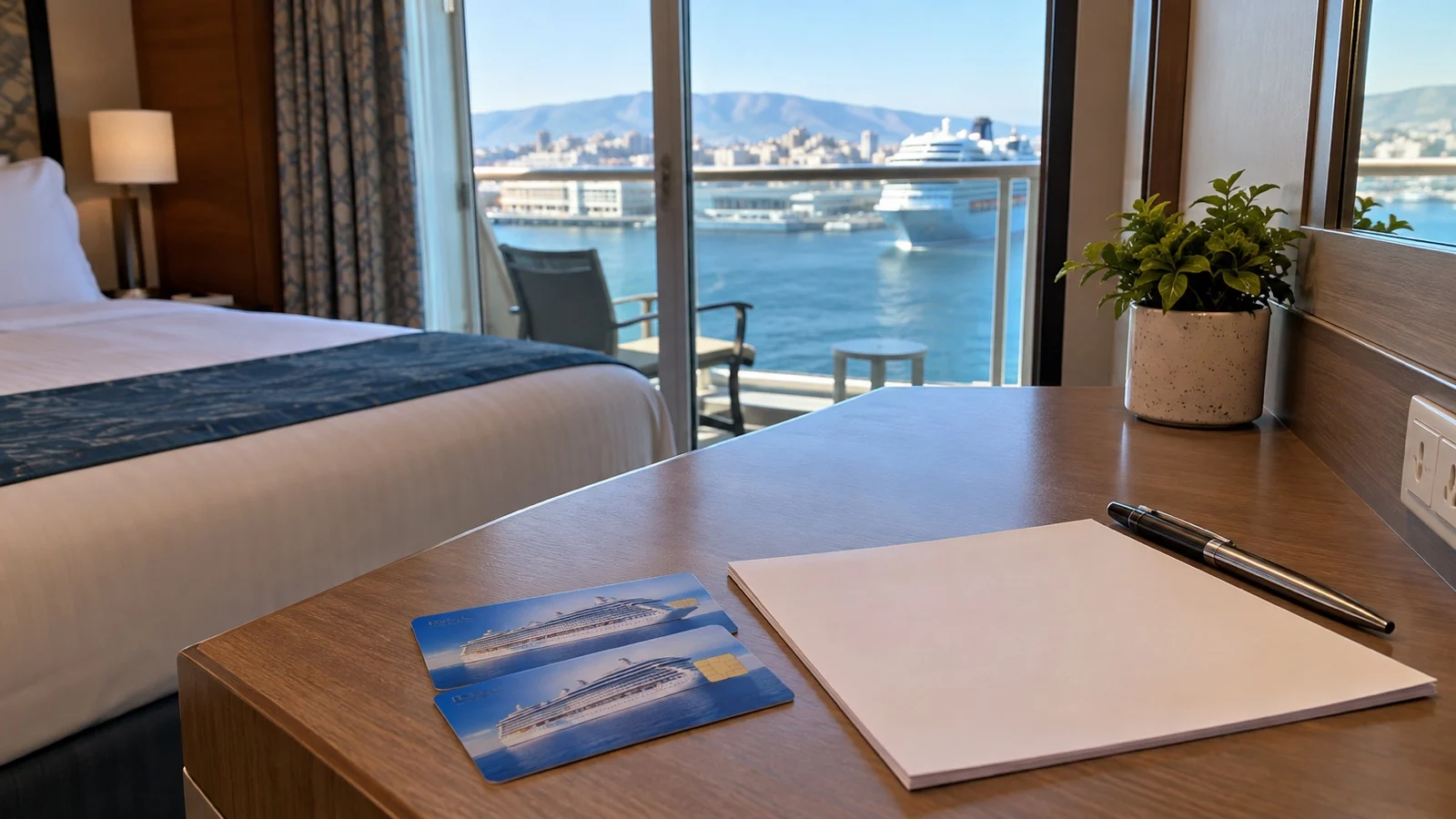
Your old key may stop opening the cabin before the new one works everywhere, so carry both until the crew says otherwise. Test the new card before heading ashore and verify that any companion or child is assigned to the correct room and muster station.
The Passenger Vessel Services Act can affect which US itinerary combinations a foreign-flagged ship may sell, but it does not create one standard turnaround routine for passengers. Leave itinerary compliance to the line and keep the focus on your documents and instructions.
Customs, duty-free purchases, and alcohol
Being a consecutive cruiser does not automatically exempt purchases from customs or biosecurity declarations. If an authority asks what you acquired during the first sailing, answer for that sailing even if you plan to remain on the ship.
Alcohol policies are cruise-line specific, including how much you may bring aboard, when duty-free bottles are returned, and whether allowances are applied per reservation or per physical embarkation. Ask guest services before the end of cruise one and do not plan around the old assumption that every held bottle appears in your cabin that night.
If you bought alcohol ashore or onboard, keep the receipts and follow both the line’s storage rule and the country’s declaration rule. “Duty free” describes how it was sold, not a promise that no declaration or limit applies later.
Going ashore, lunch, and turnaround excursions
You can usually go ashore after the required processing if the ship permits it, but wait for your new key and return instructions. Write down the terminal, gangway, and all-aboard time because the second cruise may use a different check-in flow from a normal port call.
Some lines sell a turnaround excursion that handles the in-transit process and returns before sailing, while others offer nothing. A ship-run option is the safer choice when clearance timing is uncertain, but verify whether lunch, luggage, and terminal reentry are included.
For an independent outing, do not book a nonrefundable early start based on somebody else’s 10:00 release. Keep the plan close to port, allow a large buffer, and obey the new sailing’s all-aboard time rather than a normal port-day schedule.
Barcelona and Sydney can reward a walkable half-day if clearance is prompt, while Seattle, Miami, and Fort Lauderdale often require more transportation planning. In Southampton, keep the day local rather than treating a short turnaround window as a London excursion.
The details that matter most
- Link and check in both bookings: get written confirmation that the line recognizes the consecutive cruises, then complete every required field for each reservation.
- Carry documents for both legs: keep passports or other accepted ID, visas, travel authorizations, and both boarding records with you rather than in luggage.
- Confirm cabin and luggage handling: matching cabin numbers usually mean an easy morning, while a move requires ship-specific packing, timing, and internal transfer instructions.
- Audit accounts, packages, and alcohol: check what closes, restarts, expires, or must be declared instead of assuming any balance or benefit rolls forward.
- Plan lunch and excursions around clearance: use the ship’s letter for meal options, release timing, reentry, and all-aboard, then keep any independent outing flexible.
What I would check, in order
First, confirm the ship, dates, guest names, and cabin number on both reservations. Then ask the line to link the bookings and complete both online check-ins.
Second, verify documents for every country on both routes and keep them accessible. Do not rely on the phrase “closed loop” without checking whether the government’s definition applies to your exact itinerary and status.
Third, compare the account, credit, dining, package, gratuity, and excursion details across both booking numbers. If a benefit appears on only one, assume it applies only there until the line confirms otherwise.
Fourth, read the in-transit instructions and confirm cabin-move help, lunch, shore access, and the new all-aboard time. Our guide to reading a cruise itinerary helps with the printed schedule, but the ship’s turnaround notice wins.
A realistic word on accessibility
Do not assume that remaining on the same ship means remaining onboard all morning. Ask the line’s accessibility desk whether your port requires disembarkation and what distance, ramps, elevators, queues, or security stations are involved.
Request wheelchair or mobility assistance in advance and ask where the helper takes over, since ship and terminal teams may cover different parts of the route. Also confirm whether the crew can move mobility equipment safely during a cabin change.
Onboard access to cabins, elevators, and public rooms can be restricted while the ship turns over. Ask for a specific waiting place, accessible restroom, meal plan, and contact person rather than accepting “we’ll handle it” as the whole answer.
Quick answers
Do I have to get off the ship on turnaround day?
Maybe. The port, itinerary, authorities, and cruise line determine whether you are processed onboard, escorted through the terminal, or permitted to go ashore.
Do I keep the same cabin?
Only if the same cabin number appears on both confirmed reservations and the ship verifies it. If the number changes, get the packing and internal-move instructions before turnaround.
How long does the process take?
There is no reliable universal window. Leave the morning flexible because immigration, customs, inspections, and late disembarking guests can affect release time.
Can I go ashore?
Usually, once required processing is complete and the ship authorizes it. Carry the new card and documents, then return by the second sailing’s stated all-aboard time.
Do packages and onboard credit carry over?
Do not assume they do. Check each reservation because accounts, packages, promotions, and unused credit can be voyage-specific.
What happens to my luggage?
Leave it in place only after the ship confirms the same cabin. For a room change, follow the crew’s internal-move instructions and carry documents, medication, and valuables yourself.
Will lunch be available?
Yes, but the venue and timing vary. The ship may provide a consecutive-cruiser meal, a limited venue, or access after boarding service begins.
The last word
A back-to-back should feel like one long vacation, but the paperwork still sees two cruises. Link the reservations, check in twice, confirm the cabin and accounts, and let the ship’s in-transit notice run the morning.
If you want consecutive sailings with genuinely different regions, our guide to world cruise segments and their turnaround ports covers the bigger version. If food allergies are part of your planning, repeat the notification for both legs and use our cruise food-allergy guide as a checklist.
How this guide was researched: Unless a first-hand visit is explicitly identified above, this guide is based on independent research using official cruise-line, border, and port sources where available. Consecutive-cruise and travel-document details were reviewed in September 2026 under our Editorial Policy.
More on this topic: browse every guide on choosing a cruise.