Best Cruise Cabin Location for Motion, Noise, and Walking Distance
The best cruise cabin location depends on which problem would bother you most: motion, noise, or a long walk. There is no single magic deck, but there is a very reliable way to narrow the choices.
Pick your nonnegotiable first, then inspect the same spot on three deck plans: your deck, the deck above, and the deck below. Five careful minutes here can save seven nights of muttering at the ceiling.
The short answer
- For motion: choose a lower passenger deck near the middle of the ship, away from the bow.
- For quiet: choose a cabin with staterooms directly above and below, no connecting door, and no gray service area next door.
- For less walking: choose the elevator bank closest to the places you will use most, then book within a comfortable number of cabin doors.
- For a view: compare balcony direction, obstruction markings, privacy, and the scenery on your itinerary before paying an aft or corner premium.
- For a guarantee rate: book only if the savings matter more than the exact deck, location, and view.
If motion or mobility can affect the trip, choose the cabin number yourself. A guarantee cabin lets the cruise line assign the location, so it is a poor match for a location-dependent need.
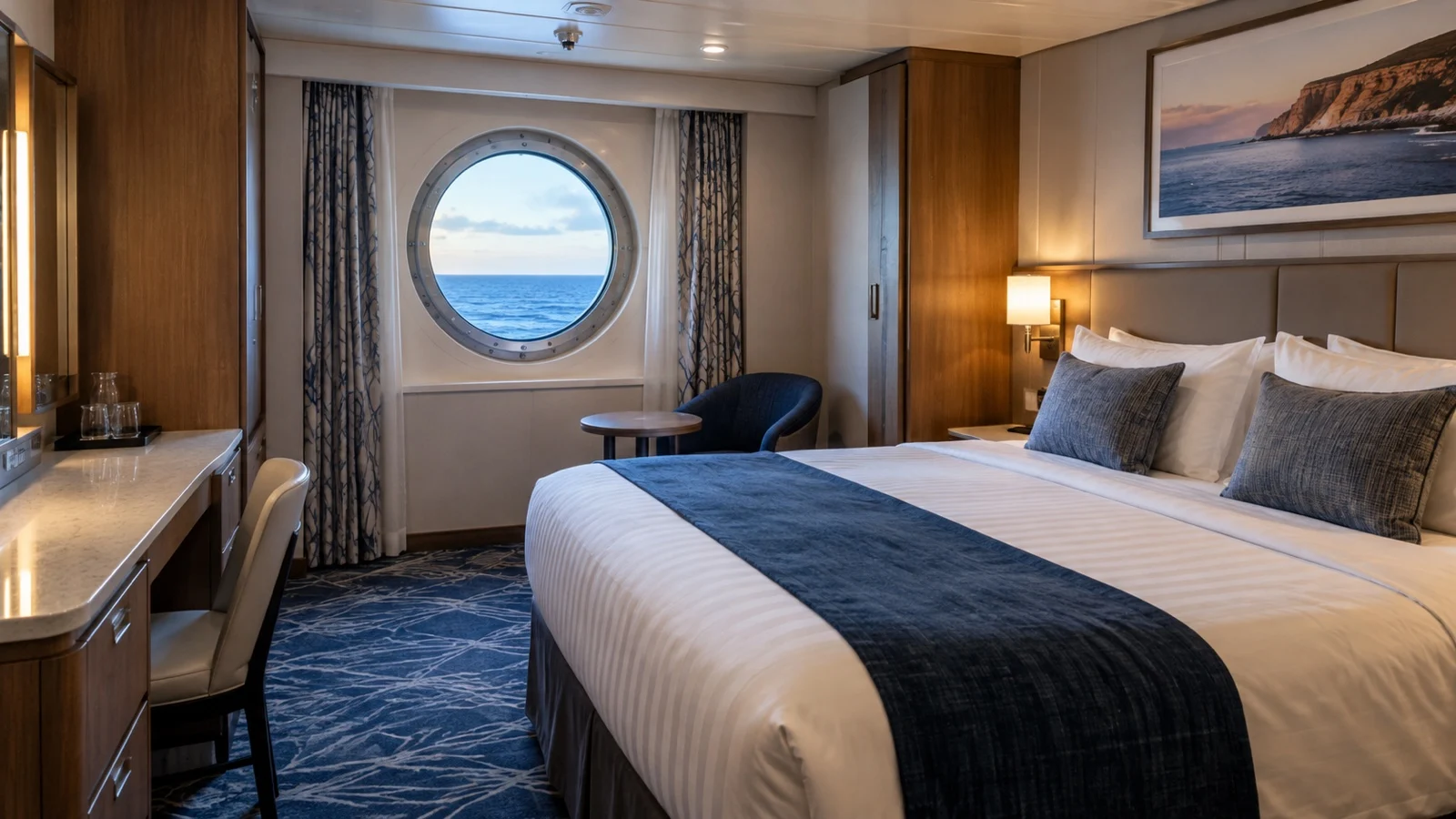
Start with your real priority
A cabin cannot be closest to everything, lowest for motion, highest for views, and farthest from public spaces at the same time. Decide which compromise you can live with before the deck-plan tabs start multiplying.
Motion-sensitive travelers should start with position. Light sleepers should start with neighboring spaces, while anyone who tires easily should start with the elevators and the daily route to dining, the gangway, and favorite venues.
If the balcony is the point of the vacation, let the itinerary drive the choice. A wake view may be lovely on a scenic route, but an aft cabin is not automatically quieter, closer, or steadier.
Motion: lower and near the middle
The CDC’s current motion-sickness guidance recommends avoiding locations of maximum motion and gives the bow of a ship as an example. It also says a view of the horizon can offer some protection by reducing the mismatch between what your eyes and balance system report.
For a cabin, the practical translation is lower and closer to midship. If seeing the horizon helps you, look for a lower ocean-view cabin rather than assuming an inside room is always the best motion choice.
The itinerary can matter more than the room number. An open-ocean crossing exposes the ship to different conditions than a sheltered coastal route, which is why a transatlantic or repositioning cruise deserves extra attention.
No cabin eliminates rough-water motion, including in the Drake Passage. Travelers with a history of significant motion sickness should discuss prevention with a clinician before departure, because the CDC notes that effective medicines work best before exposure and can have side effects.
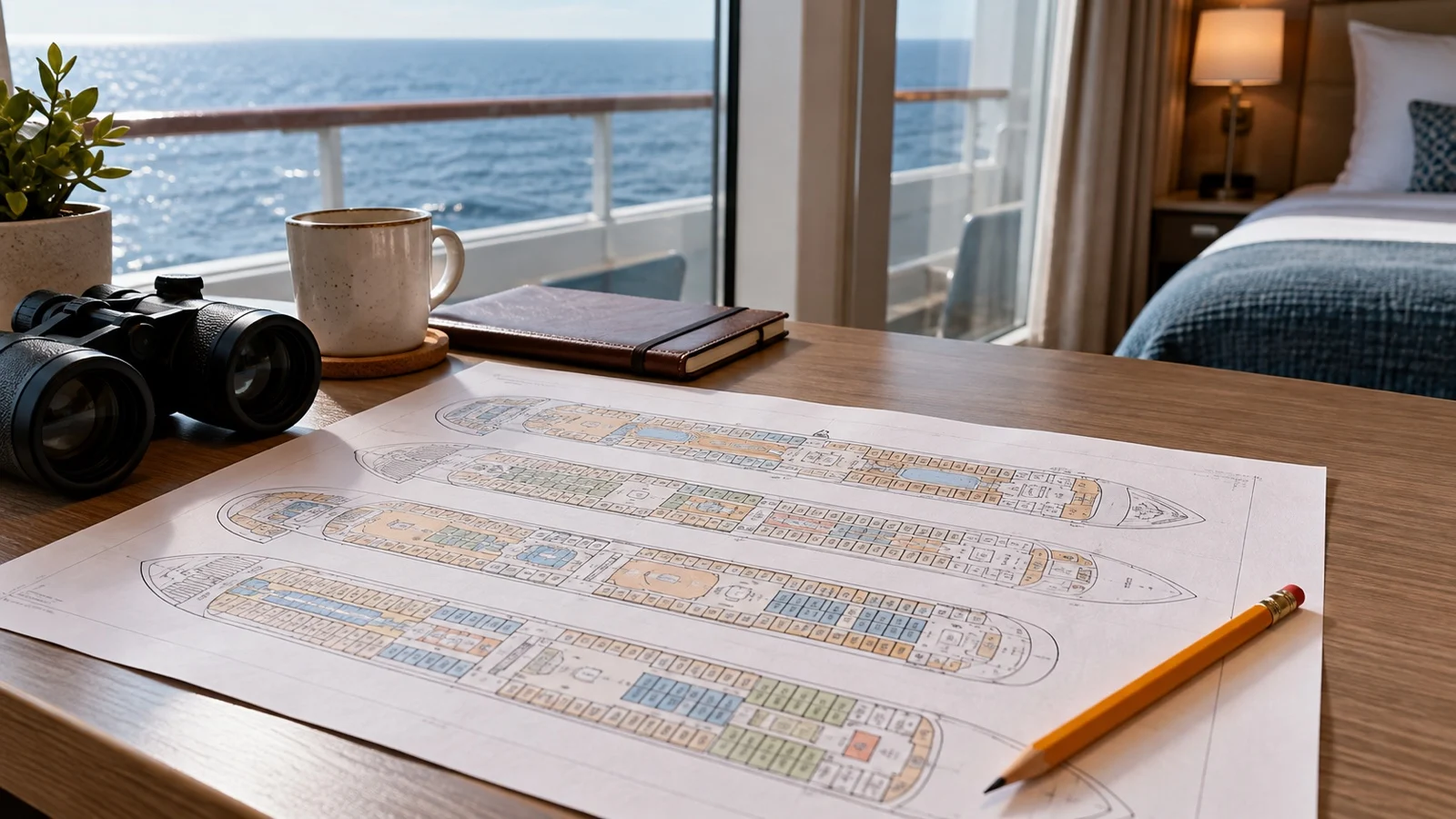
Noise: inspect the neighbors you cannot see
The safest quiet-cabin pattern is a full deck of staterooms above and another below. That buffer reduces the chance of activity from a pool deck, buffet, theater, lounge, fitness room, galley, or kids’ space reaching your room.
Royal Caribbean’s deck-plan guide specifically warns that a cabin beneath the pool deck can hear early-morning chair setup. It also notes that gray or apparently empty areas can hold staff elevators, galleys, or ice machines, so blank space is not proof of silence.
Check both vertical and side-to-side neighbors. Avoid an adjoining-room symbol if you do not need the connection, and be cautious near elevator lobbies, crew doors, housekeeping stations, and unlabeled service areas.
Forward cabins can hear bow operations when the ship anchors or uses thrusters, particularly around an early arrival. That is possible rather than universal, but it matters on an itinerary with several tender ports.
Aft cabins may pick up propulsion vibration on some ships, and the experience varies by vessel and deck. Do not reject the entire aft section from a generic rule, but do look for ship-specific patterns before paying a premium.
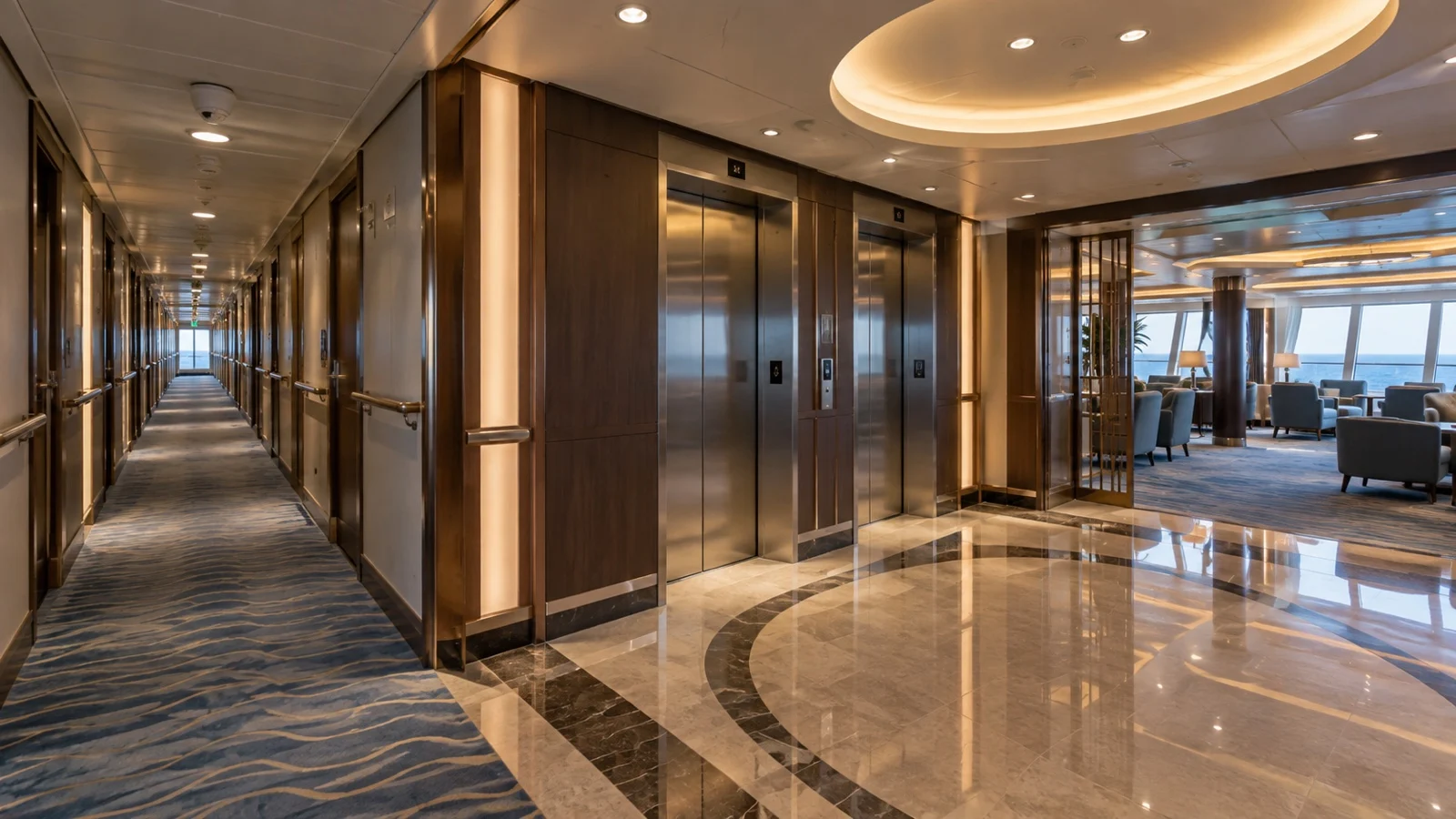
Distance: book for your daily route
Large ships can turn breakfast, the gangway, and dinner into three different walks. “Midship” is a useful starting point, but the best elevator bank depends on the ship’s actual layout and what you plan to use.
Mark the main dining room, buffet, theater, pool, kids’ club, spa, and gangway decks. Then choose the two or three that matter most and find the elevator or stair bank that serves them without a cross-ship detour.
Count cabin doors from the elevator instead of relying on a vague forward, midship, or aft label. A cabin close enough for your body but a few doors away from lobby traffic is often the sweet spot.
Do not assume every elevator reaches every public deck or that an accessible route follows the shortest line on the map. This is one of the structural limits that a ship refurbishment rarely changes.
How to audit a deck plan in five minutes
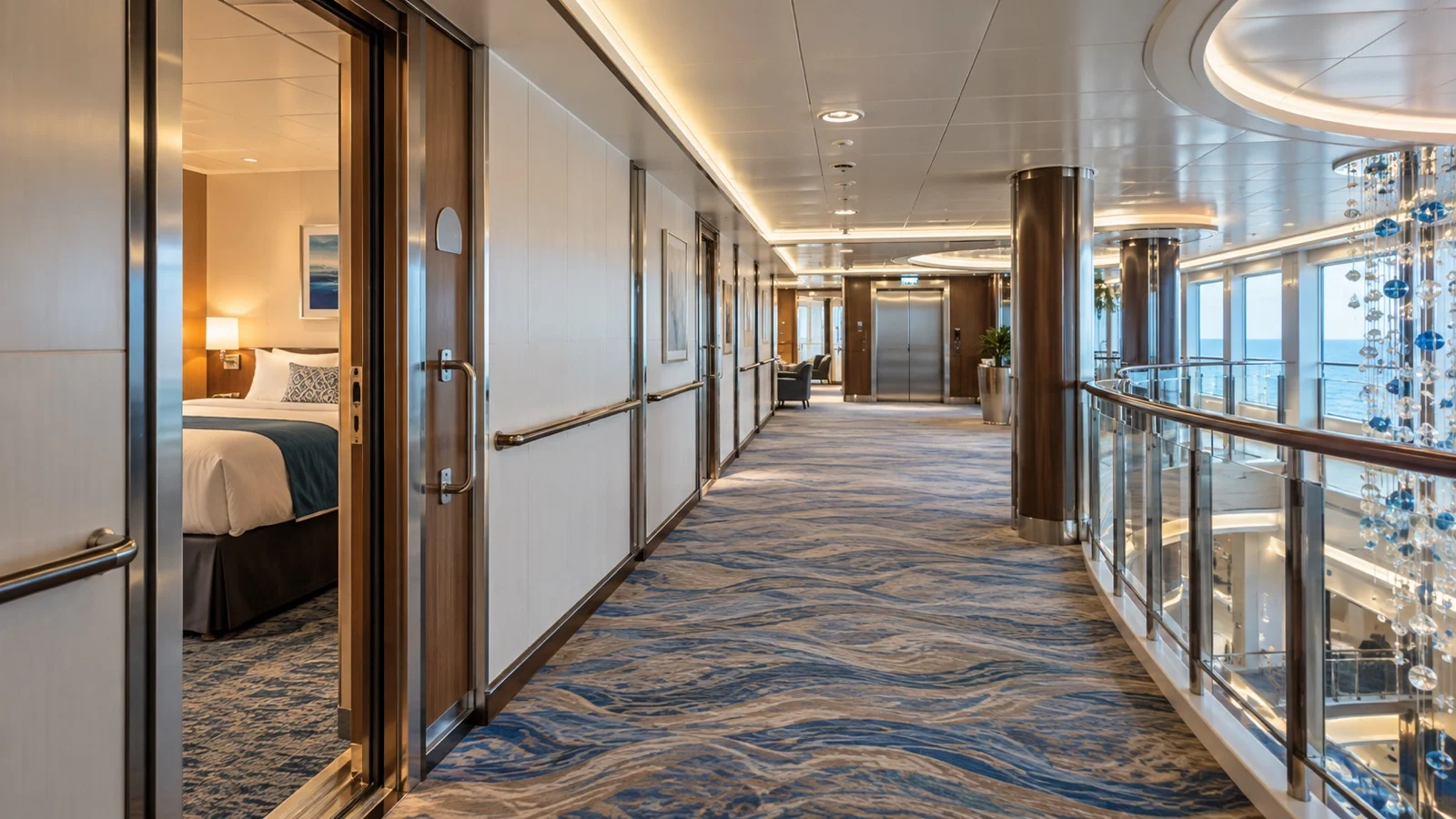
- Open the cruise line’s current plan for the exact ship. Sister ships and ships in the same class can have different venues or cabin numbering.
- Confirm the cabin category and symbols. Look for connecting doors, accessible layouts, sofa-bed or berth markers, and obstructed-view notes.
- Open the decks above and below. Line up the bow, elevator cores, and cabin numbers rather than trusting how the pages happen to be scaled.
- Inspect every edge around the cabin. Check public spaces, stairs, elevators, laundries, blank areas, and service doors on all three plans.
- Trace your daily route. Follow the path to breakfast, dinner, the gangway, and the venue you expect to use most.
- Verify the current plan with the cruise line. Online cabin maps and old videos can lag behind a refurbishment or venue change.
Royal Caribbean says its plans identify adjoining, accessible, and obstructed-view staterooms as well as elevators and stairs. Other lines use their own legends, so read the symbol key on the exact plan rather than borrowing one from another brand.
Connecting, obstructed, and guarantee cabins
A connecting cabin can be convenient for a family and less appealing to a light sleeper who does not need the door. The deck-plan symbol is the fact to trust, while sound transmission varies by ship, door design, and neighbors.
“Obstructed” can mean a lifeboat, davit, or part of the ship blocks some of the view, but the amount is cabin-specific. Ask for the exact obstruction and decide whether daylight, horizon, or an unbroken photograph matters to you.
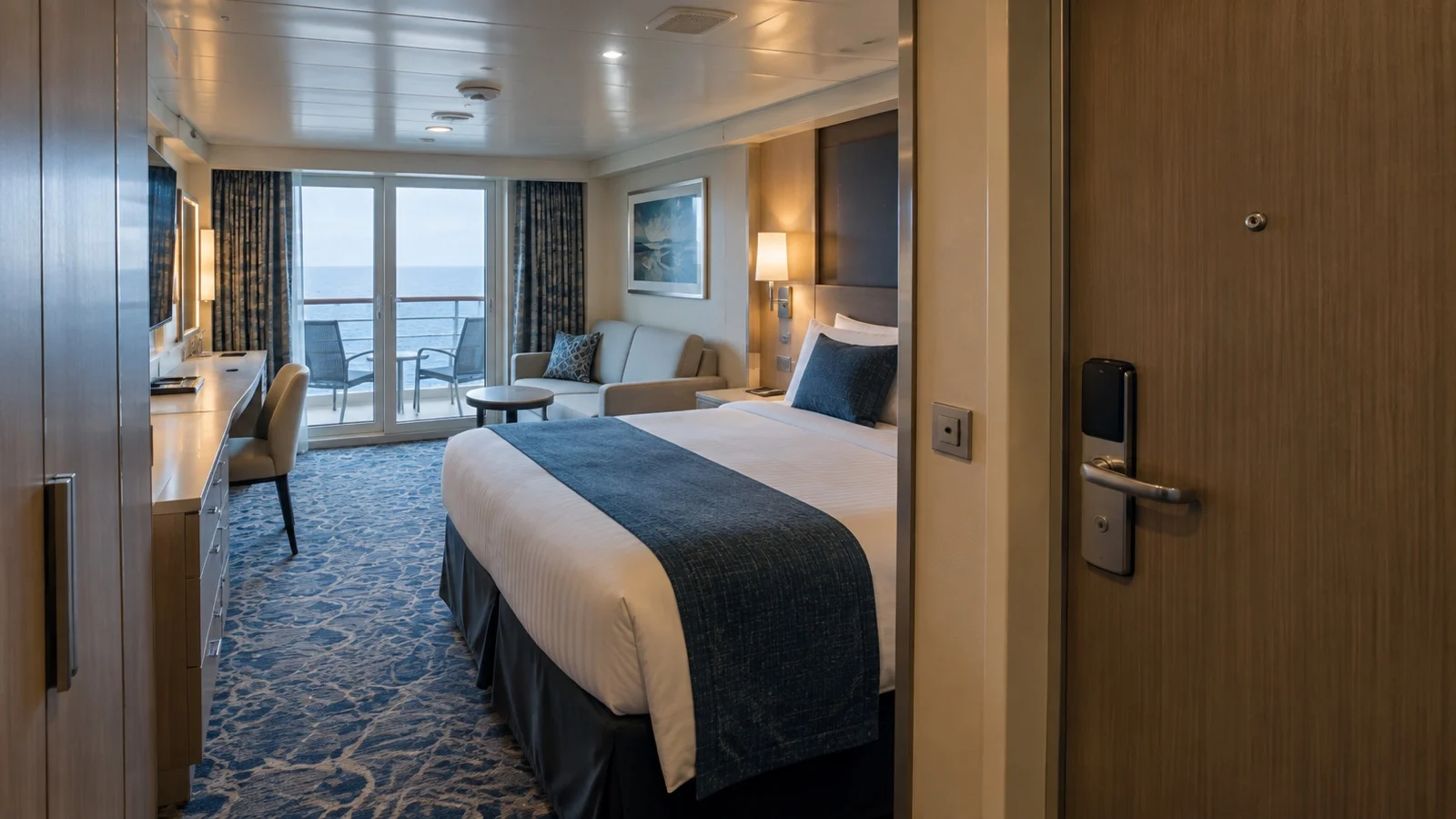
A guarantee, sometimes called “We Pick,” promises the booked category rather than a chosen room. Royal Caribbean’s current FAQ says it can assign the exact number and location at its discretion up to port check-in, and the assigned room may have an obstructed view.
That can be a fair trade when price is the priority and any location in the category works. Skip it when you need a nearby room for another traveler, a specific accessible layout, a quiet zone, limited walking, or the lowest practical motion.
The same location principle applies on smaller vessels, although the layout and tradeoffs change. These guides to booking a river cruise early and waterline river-cruise cabins cover those ship-specific choices.
Four situations, and what I would choose
- You get motion sick and the itinerary crosses open water: choose a lower passenger deck near midship and avoid the forward section. Consider an ocean-view cabin if a horizon reference helps you.
- You are a light sleeper: choose a nonconnecting cabin between two stateroom decks, away from gray service spaces and public-room boundaries. Check the exact decks rather than trusting the category description.
- You tire easily or use a mobility device: map the accessible route to your most-used venues and book near the correct elevator bank. Confirm door widths, thresholds, turning space, and mobility-device storage for that cabin.
- You are paying for a scenic balcony: choose the direction and view that fit the route, then accept its motion, distance, and possible vibration tradeoffs. Aft-facing can be wonderful, but it is a preference rather than a universal upgrade.
A realistic word on accessibility
Accessible cabins are not interchangeable with standard cabins, and features vary by line, ship, and cabin classification. Carnival’s official accessibility page distinguishes fully accessible, single-side-approach, ambulatory-accessible, and standard cabins, with different routes, doorway widths, and bathroom features.
Carnival advises reserving the appropriate accessible stateroom in advance and checking whether the selected room accommodates a scooter on ships with cabin-specific limits. Royal Caribbean likewise asks guests to plan ahead and notes that some equipment or services require advance notice.
Do not book by deck position alone. Confirm the exact cabin’s doorway, bathroom, shower, bed approach, balcony threshold, turning space, and route to the elevator directly with the cruise line.
If port-day distance matters too, use the guide to cruise-port activities for limited mobility and the roundup of wheelchair-friendly cruise ports before locking the itinerary.
Quick answers
What is the best cabin location for seasickness?
Choose a lower passenger deck near the middle of the ship and avoid the bow. A horizon view can help some travelers, and no cabin can remove motion in rough water.
What is the quietest part of a cruise ship?
Look for a nonconnecting cabin with staterooms above and below and no public or gray service space next door. The exact deck plan matters more than a blanket forward, midship, or aft label.
Should I avoid cabins near elevators?
Not automatically. A cabin a few doors from an elevator can cut walking without sitting directly beside lobby conversation, but inspect the ship’s layout and nearby service areas.
Are aft cabins noisier?
Some aft cabins have noticeable propulsion vibration, while others do not. Check the ship and deck specifically, plus the public space above and below, instead of treating the whole aft section alike.
Is a guarantee cabin worth it?
Yes, when the savings beat every location preference and any cabin in the promised category will work. It is not a smart gamble when motion, sleep, mobility, party proximity, or view is a firm requirement.
The last word
Choose the problem you most want to prevent, then read three deck plans around the exact cabin. Motion points you lower and toward the middle, noise points you between cabin decks, and distance points you toward the elevator that serves your real routine.
The itinerary still outranks the room number when the sea is rough. The guide to rough seas and tender disruptions explains why weather can reshape the day even after you choose well.
How this guide was researched: Unless a first-hand visit is explicitly identified above, this guide is based on independent research using current official health guidance and cruise-line deck-plan, guarantee-cabin, and accessibility information.
Motion-sickness advice was checked against the CDC Yellow Book; deck-plan reading and guarantee assignments against Royal Caribbean; and accessible-cabin classifications and planning steps against Carnival and Royal Caribbean.
Ship layouts, cabin categories, and policies change, so confirm the exact ship, sailing, and cabin with the cruise line before booking. See the Editorial Policy.
More on this topic: browse every guide on choosing a cruise.