World Cruise Segments: The Turnaround Ports Where You Join or Leave
World cruise segments let you book one portion of a much longer voyage without committing to the full circumnavigation. You share the ship with full-voyage guests and other segment passengers who join and leave at designated turnaround ports.
Your choice is partly about the route and partly about two airports. A tempting fare can disappear once you add one-way flights, entry paperwork, hotels, and a safe arrival buffer.
My quick take
A segment can be a manageable way to sample a world cruise without committing to the full voyage. You still get long sea stretches and established onboard routines, so choose the leg for its full day-by-day itinerary rather than a few headline ports.
My default is to choose the segment by its two endpoints first and the itinerary second. A leg that starts and ends at a large, well-connected airport is worth more to me than a leg with one extra island in the middle.
Do not assume a segment will be cheaper per night than the full voyage. Compare the same cabin category, taxes, inclusions, flights, hotels, and cancellation terms before deciding.
The quick facts
- What a segment is: a bookable portion of a longer world voyage, sold as its own cruise with its own fare, cabin inventory and start and end port. The ship does not change, only your dates do.
- Typical length: There is no standard span. Published segments can range from shorter regional legs to voyages lasting several weeks, depending on the line and itinerary.
- Where they start and end: Major cruise turnarounds and airline hubs such as Fort Lauderdale, Los Angeles, Southampton, Cape Town, Singapore, Sydney, and other cities named in the line’s published itinerary.
- Who else is aboard: a core of full-voyage passengers who have been living together for weeks or months, plus other segment joiners arriving at the same time as you. The ratio shifts at every turnaround.
- Flights: Open-jaw or one-way flights can be a major extra cost when the segment starts and ends far apart. Book only after checking the line’s current itinerary and change terms, and build an arrival buffer that fits your risk tolerance.
- Visas: Entry and transit requirements depend on your passport, route, and whether you arrive by air or sea. Check every country with its government or the cruise line’s designated visa provider.
- What is included: Benefits can differ between a full world voyage and a segment, even on the same ship. Check laundry, gratuities, drinks, Wi-Fi, transfers, air credits, and shipboard events line by line.
- How often plans change: No reliable public percentage applies across lines. Weather, safety, port access, and operational decisions can change calls, so read the cruise and air change terms before booking.
How world cruise segments are actually sold
Cruise lines may sell a full world voyage alongside selected shorter segments, each with its own booking details. Segment boundaries commonly use ports that can support passenger embarkation and disembarkation, but the available cities vary by sailing.
Look at the line’s live booking page rather than assuming every section of a world voyage is sold separately. Departure cities, segment inventory, and fares can change even when the ship’s broader route looks similar.
Scale explains why turnarounds cluster. Holland America Line currently lists long Grand Voyages and a 129-day 2027 Grand World Voyage, but verify the specific ship, departure port, and bookable segments on the live sailing page.
Pacific-focused voyages can also offer more than one departure city or duration. That does not guarantee every advertised departure is a join-or-leave point for the exact segment you want.
Why those specific cities
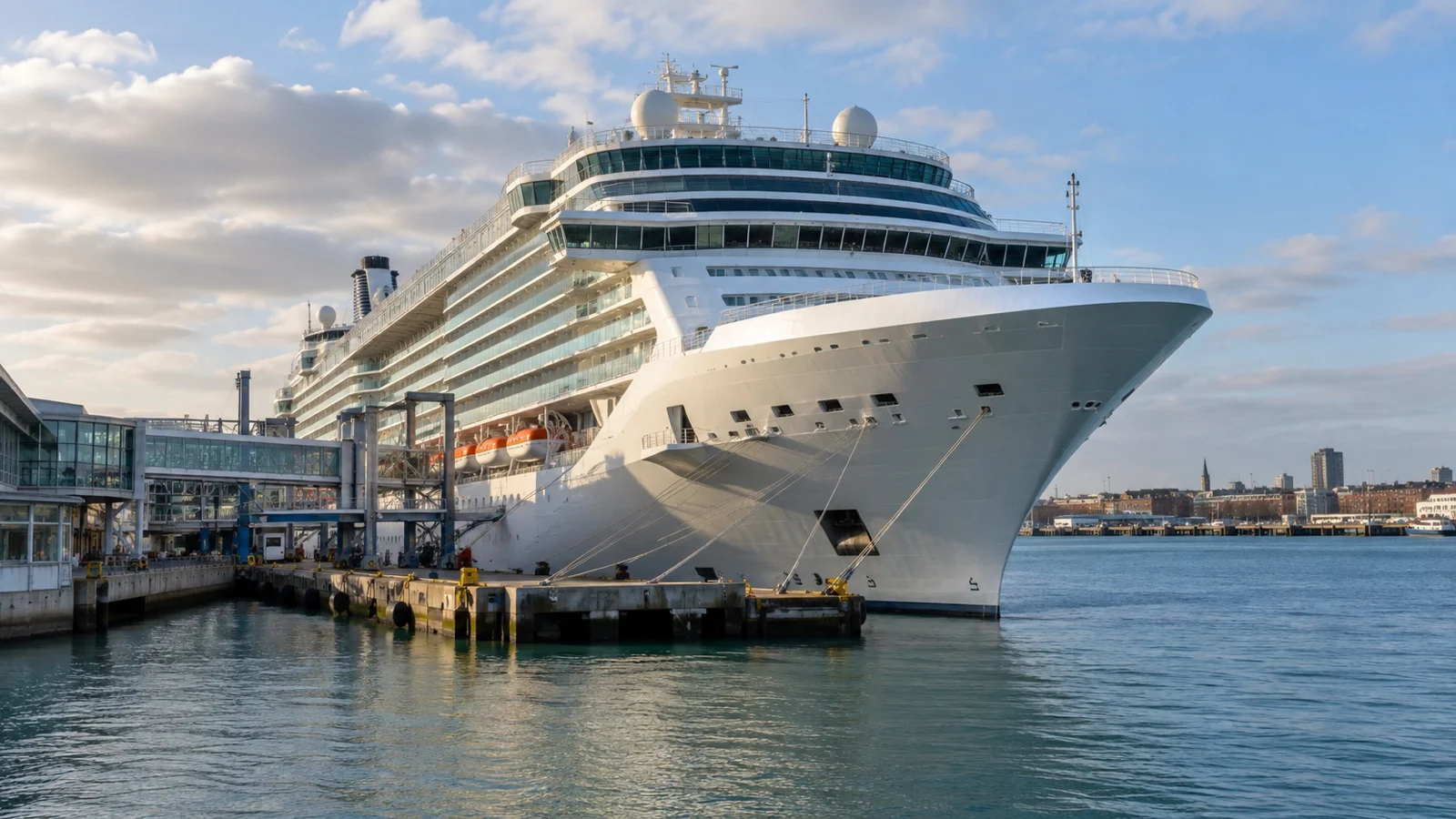
Turnaround planning depends on terminal capacity, border processing, air access, and the cruise line’s operating plan, not scenery alone. A practical endpoint still needs workable flights for your dates and passport.
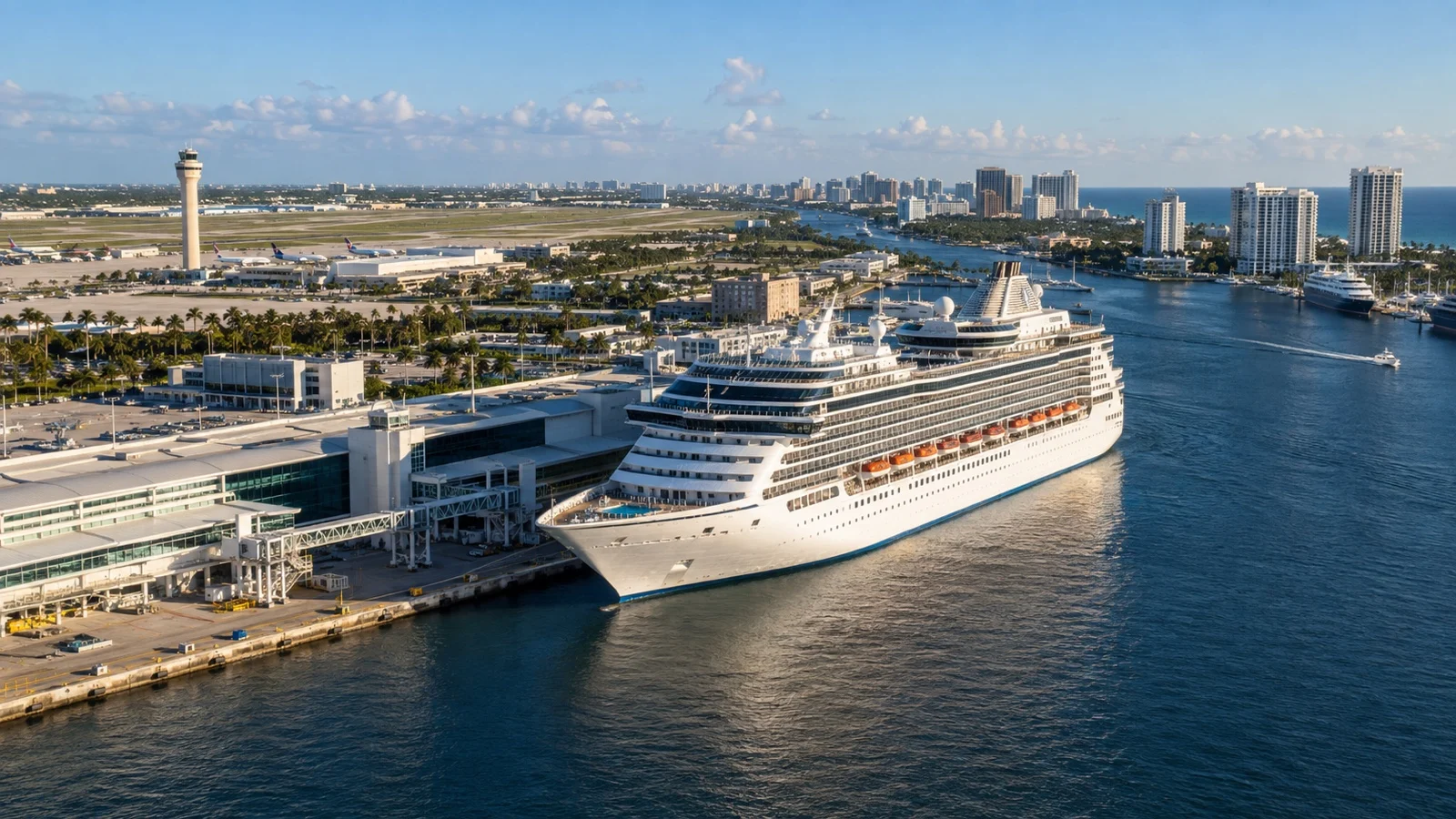
Fort Lauderdale is the extreme case of that logic.
Port Everglades reports more than 4.7 million cruise passengers in fiscal year 2025 and identifies Fort Lauderdale-Hollywood International Airport as next to the port.
Southampton does the same job for Europe. Port operator Associated British Ports describes it as Europe’s leading turnaround cruise port, with five cruise terminals and around three million cruise passengers a year, which is exactly the infrastructure a world voyage needs for a full changeover.
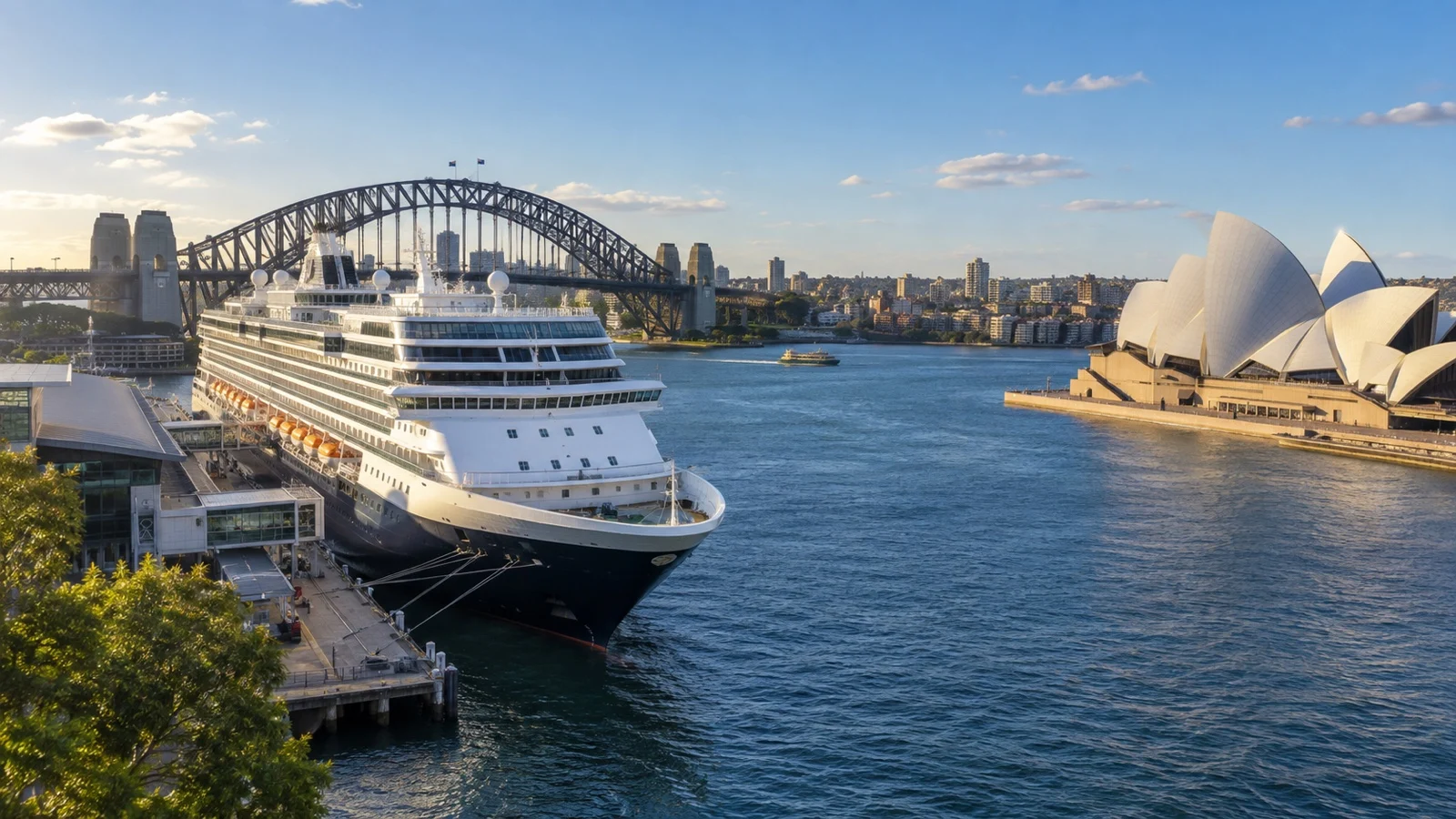
Sydney works for the southern hemisphere leg because it has two purpose-built terminals rather than one. The Port Authority of New South Wales runs both the Overseas Passenger Terminal at Circular Quay and White Bay Cruise Terminal, and which one you get changes your taxi ride considerably.
Joining mid-voyage: flights, visas and paperwork
Joining a ship halfway around the world is a different exercise from showing up at your local port. You are flying one way, long haul, into a country you may never have visited, to meet a ship that has to be there on the day.
Arrive early enough that a major flight disruption does not immediately put embarkation at risk. The right buffer depends on the route, season, ticket flexibility, and what your insurance actually covers.
Entry rules are where segment joiners get caught, because arriving by air can create a different requirement from a same-day cruise call. Check every country against your passport and travel method, then use the government application site rather than an online visa reseller.
For example, flying into India to join a ship is a full entry and may require an Indian visa or e-Visa before departure. Processing windows and eligible nationalities change, so verify them on India’s official e-Visa service when you book and again before travel.
Luggage, laundry and boarding a ship that has been at sea for two months
Segment passengers join an onboard community that may already have been together for weeks. Expect established routines, while remembering that other guests may also be joining at the same turnaround.
Laundry benefits may differ between full-voyage and segment bookings, so ask what applies to your fare. Price any needed laundry into the total rather than assuming it is included.
Use the first two days deliberately. An embarkation event or relevant onboard meetup can make it easier to meet other new joiners and learn the ship’s routines.
The turnaround ports I would actually choose
- Fort Lauderdale: The airport is next to Port Everglades, which can simplify the transfer. Still confirm your terminal, traffic plan, and flight timing rather than treating the connection as automatic.
- Southampton: A major European turnaround port with several terminal possibilities. Check the assigned terminal and allow for the transfer from your chosen London airport or rail station.
- Sydney: The Overseas Passenger Terminal is at Circular Quay, while White Bay Cruise Terminal requires a different transfer plan. Confirm the terminal before booking a hotel or ride.
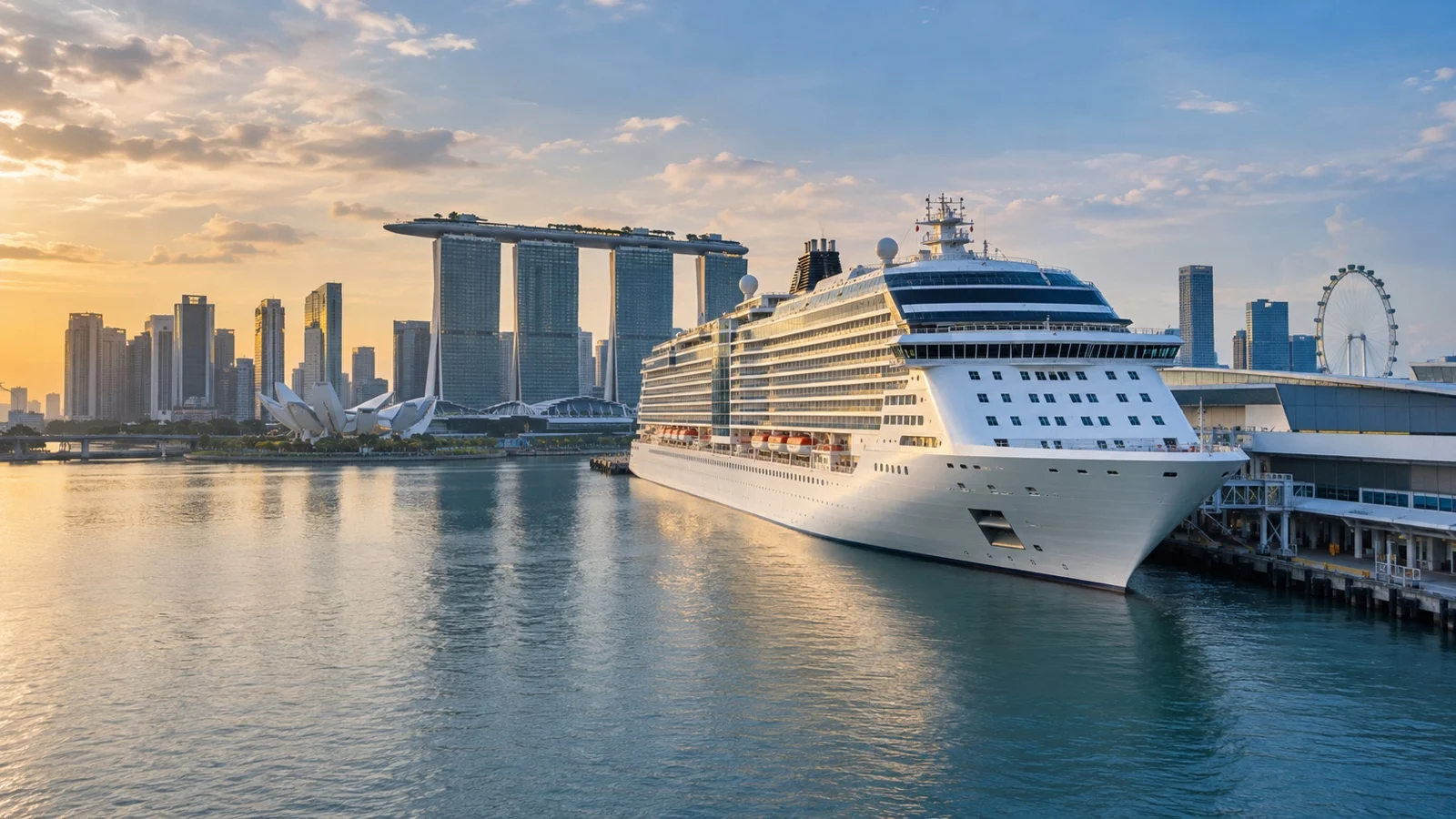
- Singapore: A major air hub that can work well as a segment endpoint. Confirm the cruise terminal and flight schedule because the city has more than one passenger terminal.
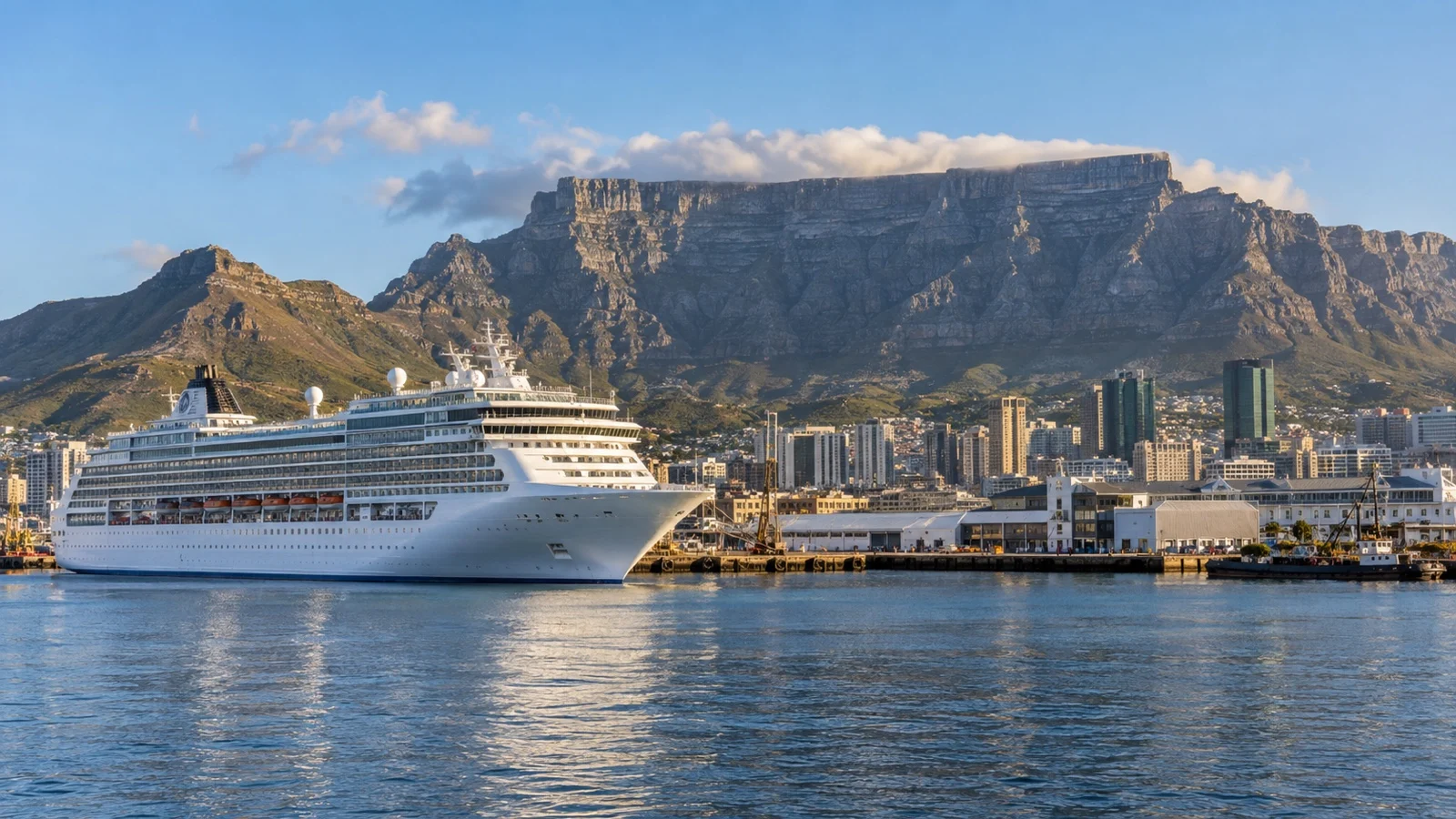
- Cape Town: A scenic endpoint with useful international air links. Keep flexibility around embarkation because weather and operational conditions can still affect the schedule.
Fun fact: Port Everglades describes itself as the only United States seaport adjacent to an international airport. That proximity can simplify a turnaround, but transfer and airport processing times still vary.
How I would actually decide
I would start with the flights and work backward, which is the opposite of how the brochure wants you to shop. Price two one-way long-haul tickets for the exact dates before you fall in love with an itinerary.
Treat a segment as a separate product rather than assuming it is a bargain or a poor value. Compare the live fare and inclusions with the full voyage and other regional cruises for the same dates.
Lines beyond the big three run the same model, and it is worth comparing. Oceania Cruises publishes its around the world itineraries in full, which makes the turnaround points easy to spot even before you look at the segment listings.
A realistic word on accessibility
Segment joining adds a layer of difficulty that a normal cruise does not have. You are managing a long-haul flight, an unfamiliar airport and a transfer, all on the day your body is least cooperative.
Accessible cabin inventory can be limited on a specific segment, especially when some cabins are allocated to full-voyage guests. Confirm dimensions, bathroom setup, and equipment policies with the line before paying.
Ask the port, airline, transfer provider, and cruise line about assistance for each part of the trip. A terminal may be accessible while a transfer vehicle or later tender call presents a different barrier.
Ask specifically about mobility equipment on the flight as well as the ship, because airlines and cruise lines have different rules on batteries and scooters. My wider guide to wheelchair-friendly cruise ports covers what to expect once you are aboard.
When to go, and the weather
Many world cruises depart during the northern winter, but timing and routing vary by line and year. Read the exact segment calendar instead of relying on a regional rule of thumb.
Southern Hemisphere calls may fall in the local summer, but conditions vary across a long segment. Check official forecasts and seasonal climate guidance for each endpoint before packing.
Indian Ocean and Middle East calls can be hot later in the season. Check the forecast close to departure and plan shade, hydration, and shore time around the actual conditions.
The Atlantic legs at either end are the roughest water on most routes, and the ship is large enough to handle it while you may not be. If you are prone to seasickness, pick a segment that avoids a long ocean crossing, and read up on how a transatlantic crossing differs from a repositioning cruise before you commit.
Quick answers
Can you book part of a world cruise?
Yes, on many sailings, although segments are not necessarily how most passengers travel.
Lines sell world cruise segments as standalone sailings between designated turnaround ports, each with its own fare and cabin allocation.
Is a segment cheaper than the full world cruise?
Usually cheaper in total, but not predictably cheaper or more expensive per night.
Compare the live cruise fare, inclusions, hotels, visas, transfers, and any open-jaw or one-way flights.
Where do world cruise segments usually start and end?
At ports the cruise line designates for embarkation and disembarkation, often with substantial terminal and air connections.
The list follows aviation capacity more than geography.
Will I feel like an outsider joining mid-voyage?
It depends on the ship and your preferences.
Every turnaround brings a batch of new joiners, so you will not be the only person learning where the laundry room is.
Do I need a visa if I am only joining for one segment?
Maybe, because the answer depends on your passport, each country, and whether you arrive by air or ship.
Check embarkation, every port, and disembarkation rules as soon as you book.
The last word
World cruise segments can be a smart way to buy the part of a long voyage you actually want, but they are not automatically bargains. You get the interesting third of a circumnavigation, at a fare that reflects convenience rather than a discount.
Choose the ends before the middle, and choose them for their airports. If your segment starts in Florida, my guide to the Fort Lauderdale cruise port covers the terminal layout, and the Southampton cruise port guide does the same job for the European end.
For the Asian and Australian turnarounds, start with the Singapore cruise port guide, since it is the smoothest changeover on the entire route. Sydney is the more scenic option and the more complicated one, thanks to two terminals in very different parts of the harbor.
The full world cruise is a major time and budget commitment, while a segment is a shorter vacation. The better choice is the one that fits your schedule, route, and total trip cost.
How this guide was researched: This guide was desk-researched on September 12, 2026 using current cruise-line, port-authority, and government sources, including Holland America Line, Port Everglades, Associated British Ports Southampton, the Port Authority of New South Wales, and India’s official e-Visa service. It does not claim a personal world cruise, segment sailing, terminal visit, flight, or visa application.
Confirm the live itinerary, segment availability, fares, inclusions, entry rules, terminal, flights, accessibility, and change terms before booking. See our Editorial Policy.
More on this topic: browse every guide on choosing a cruise.