Japan in Spring or Fall: Blossom and Foliage Itineraries Compared
Two people book the same Japan itinerary a year apart, and one gets bare branches while the other gets three straight port days of hillsides going orange. Spring and fall are not the same bet, and only one of them is something a cruise ship can actually chase.
My quick take
If you are booking spring for the blossoms, understand what you are buying. The trees open on their own schedule, your ship sails on a schedule printed twelve months earlier, and no captain is going to sit in Yokohama for an extra four days because March ran cold.
I would book fall, and I would aim at the first half of November. Color slides down the country over roughly two months instead of landing everywhere at once, so a seven or ten day itinerary gets several swings at it rather than one.
The quick facts
- Spring window: Blossoms usually open in southern and central Japan in the last week of March and reach the far north weeks later.
- Fall window: Color starts in Hokkaido in October and works south into Kyushu by around mid December.
- Typhoons: More storms approach Japan in August and September than any other months, and landfalls run on into October.
- Price: Spring sailings open early, fill early, and usually cost more than the same ship in the fall.
- Best odds: Fall color is the easier target because it moves slowly and covers a much longer stretch of the calendar.
What a spring sailing actually gives you
Spring Japan cruises cluster from mid March into May, most of them round trip from Yokohama or Tokyo, some running Japan and South Korea loops out of Kobe. The early ones lean south and central, hitting Kyushu, the Inland Sea and the Kansai ports, because that is where the trees open first.
Late April and May sailings push north instead, into Aomori, Hakodate and Otaru, chasing the same bloom as it climbs. If you want the full picture of what calls where, the site’s overview of Japan cruise ports by region lays out which islands see which ships.
Spring is a good trip even without petals. Gardens are open, temperatures are workable, and the light is better than the flat gray of February.
What a fall sailing actually gives you
Fall in Japan runs from September through late November, and the shape of it is different. Ships coming off an Alaska or North Pacific summer often reposition into Asia in this window, which is why the fall calendar tends to carry more variety of ship and more one way routing.
September and early October sailings weight north, toward Hokkaido and northern Honshu, where color arrives first. November sailings weight central and southern, toward the Kansai ports, the Inland Sea and Kyushu.
That north to south drift is the whole reason fall is the easier season to plan. You are not aiming at one week, you are aiming at a moving front.
The blossom math nobody puts in the brochure
Long term averages for first flowering are published for stations all over the country, and they are remarkably consistent. Here is roughly where the average sits.
- Fukuoka: Around March 22.
- Tokyo: Around March 24.
- Kyoto and Osaka: Around March 26 and 27.
- Aomori: Around April 22.
- Sapporo: Around May 1.
Full bloom usually follows first flowering by about a week, and the good window after that is short. A warm spell pulls the whole thing forward, a cold snap shoves it back, and one hard rain with wind can end it early.
The long run averages for cherry flowering dates are the right planning tool, but they are averages, not promises. In any given year a city can open a week and a half off its own mean.
Why a ship cannot chase the bloom
A land trip can absorb a swing of five or six days. You watch the forecasts in February, move your Kyoto nights, and you are fine.
A cruise cannot do any of that. Your dates were locked when you paid the deposit, the ship calls where it calls, and the only flexibility you have is whether you get off in the morning or the afternoon.
The one real hedge is an itinerary that climbs. A ten day route that starts in Kyushu and finishes in Hokkaido crosses several weeks of blossom timing in one sailing, and that is a much better ticket than a round trip that sits in one region.
Why fall color is the easier target
Autumn works the opposite direction and it works slowly. It starts in the cold interior of Hokkaido in early to mid October, reaches Tohoku around the middle of November, hits Tokyo and the Kansai cities in late November, and does not finish in Kyushu until around the middle of December.
That is a front moving across roughly two months of calendar. A November itinerary touching four or five ports between Tokyo and Kyushu is very hard to miss with entirely, which is the opposite of the spring problem.
The published regional timings for autumn color show the same north to south march every year. The exact peak shifts, but the order never does.
Typhoon season does not stop because the calendar says fall
This is the honest cost of picking fall, and it deserves a straight answer. Storm approaches to Japan peak in August and September, and landfalls keep happening into October.
On average roughly a dozen storms come close enough to Japan each year to matter, and about three of those actually make landfall. Those long term monthly storm averages are the number I would look at before booking a September sailing.
What it means in practice is a reordered itinerary, a skipped port, or a lumpy sea day rather than a canceled cruise. I would still take the risk, and I would take it in November rather than September, where the odds drop sharply and the color is better anyway.
The ports you get in spring
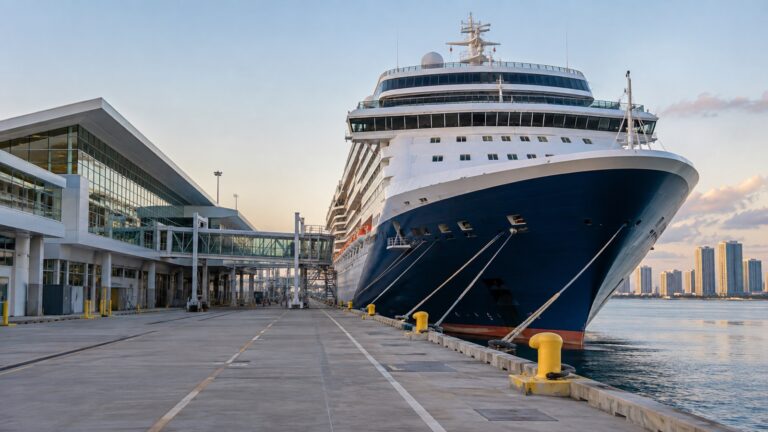
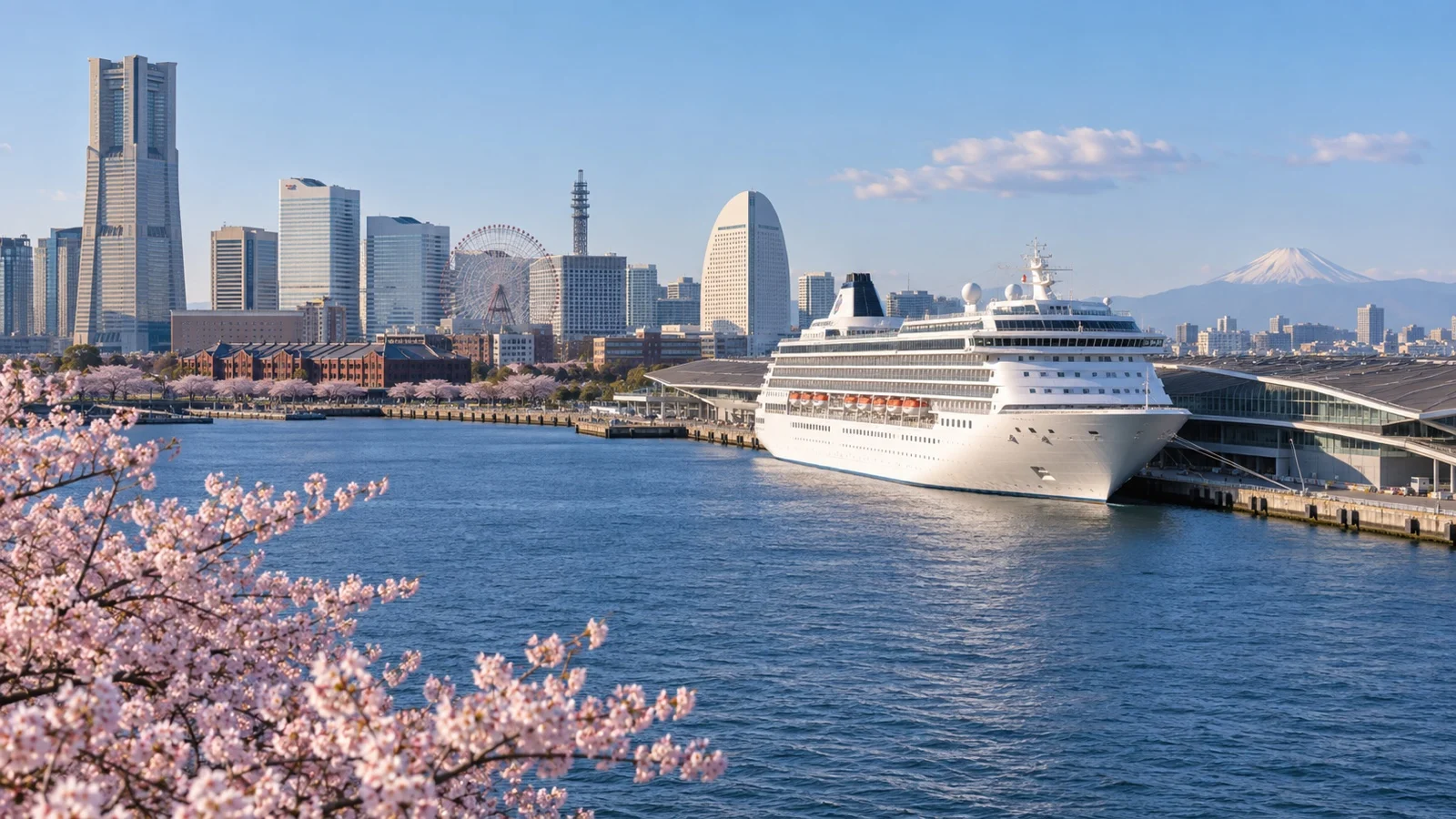
Yokohama is where a lot of these sailings start and end, and the terminal you draw matters. Osanbashi puts you a flat five to fifteen minute walk from the waterfront, while the largest ships use Daikoku Pier out in Tsurumi, and the difference between the two Yokohama berths is the difference between walking off into the city and waiting for a shuttle.
Kobe and Osaka are the Kansai pairing, and they are the ports where people most often overreach. The trains to Kyoto are easy on paper, but it is worth reading whether Kyoto really fits in a port day before you build your blossom photos around it.
Aomori is the spring port I would actually get excited about, because Hirosaki Castle is one of the great blossom sites in the country and it is a manageable day from the pier. That only works if your late April date and the trees agree.
The ports you get in fall
Hakodate is the fall port that earns its reputation. Ships take Wakamatsu Wharf when they can, which is about a ten minute walk to the morning market and the tram, and the practical layout of the Hakodate berths is worth knowing because the outer wharf is a different day entirely.
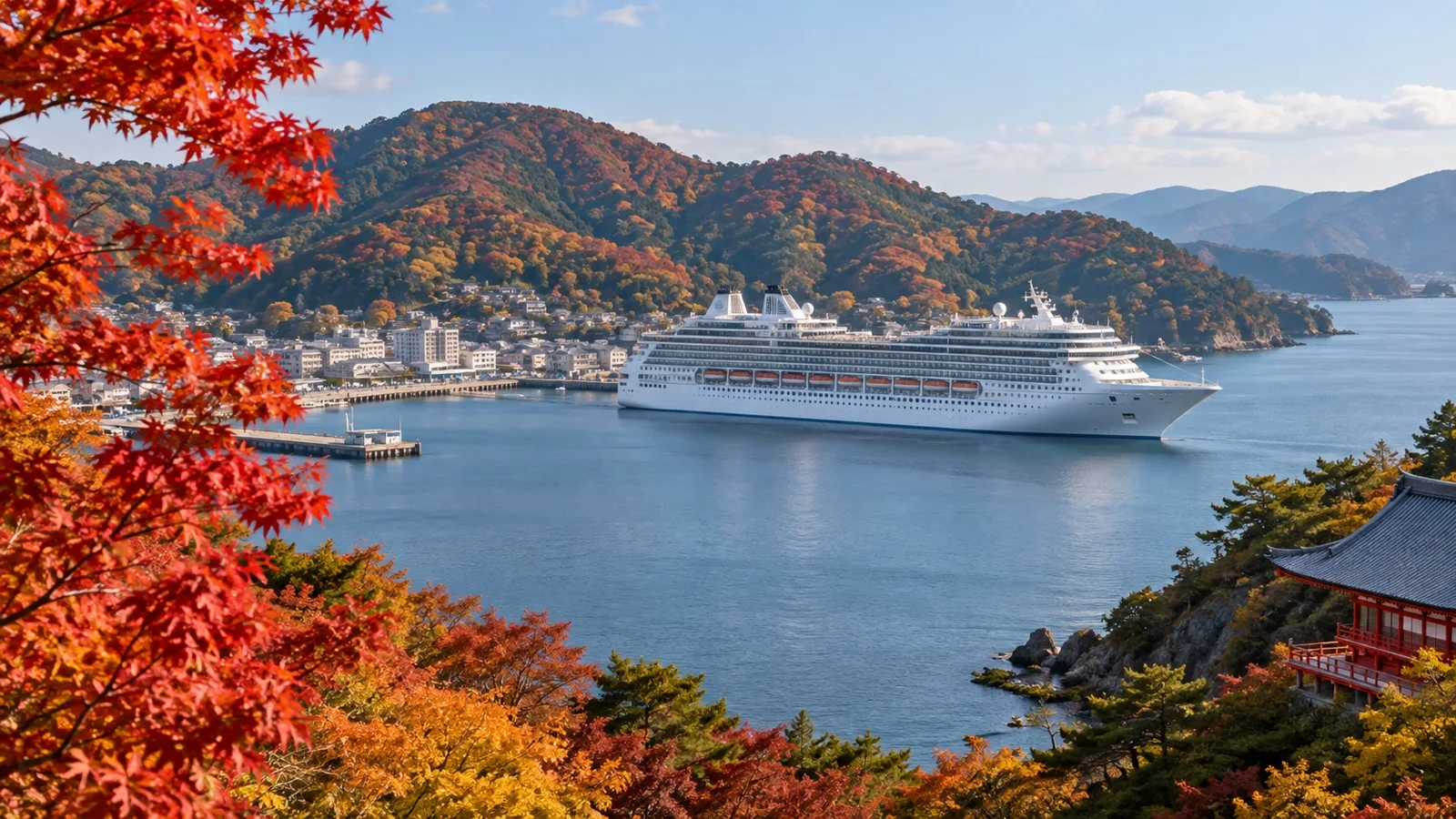
Aomori in October and November is a different port than it is in April. The Hakkoda mountains and Oirase Gorge are the draw, and the walk in from Shin-Chuo Wharf is around twenty minutes to the station with the bayfront attractions much closer.
Further south, the Kansai gardens and the Inland Sea ports come into their own in the last two weeks of November. That is the single best two week block on the whole Japanese cruise calendar, and it is not close.
What you pay, and when the good cabins go
Spring is the premium season and the market knows it. Blossom dated sailings tend to open first, sell first, and hold their price, and the balcony inventory on a late March Yokohama round trip is often gone long before the same ship’s October dates move at all.
Fall is the better value, particularly September and early October, which is exactly the storm exposed part of the season. That discount is not generosity, it is a risk premium, and you are the one carrying the risk.
I would not chase the cheapest week. The gap between a September fare and a mid November fare is usually smaller than the value of the weather you are buying.
The flights are half the decision
This is a long haul from anywhere in North America, roughly eleven hours from the West Coast and a good deal more from the East. Add the time change and you are not a functional human being on your first morning.
Fly in two days early regardless of season, and be aware that transpacific airfare tends to spike around the same spring weeks everyone else wants. A cheap cruise fare in late March can quietly cost you more than a mid November booking once the ticket is priced.
Tokyo has two airports and they are not equivalent for a cruise. Haneda is far closer to the Yokohama terminals than Narita is, and on a tight arrival that difference is worth paying for.
Crowds, and the two weeks I would sidestep
Japan gets very busy in specific, predictable blocks. The cluster of national holidays that runs from late April into the first week of May fills trains, hotels and every famous garden in the country.
Spring adds a second problem, which is that blossom weekends in the big city parks are genuinely packed. If your one port day in Osaka lands on a warm Saturday at peak bloom, you are sharing it with an enormous number of people who did not have to book a year ago.
Fall weekends at the famous maple temples get crowded too, but the season is long enough that the pressure spreads out. That is another quiet point in favor of November.
What people get wrong about this choice
The first mistake is believing that a spring sailing comes with blossoms attached. Cruise lines market these dates hard, and nothing in the marketing is a guarantee that anything will be open when you are standing there.
The second mistake is writing off fall because of typhoons. The storm risk is real in September, it thins out through October, and by mid November it is a minor consideration next to the fact that you are almost certain to see color somewhere on the route.
The third is treating the two seasons as interchangeable in what they show you. Spring is gardens, temples and pale pink at close range, and fall is landscape, mountains and gorges at distance, and those are different vacations.
Paperwork and money, briefly and honestly
Entry is straightforward for most cruise passengers. United States passport holders get a visa free short stay of up to ninety days, and the ship will walk you through the arrival formalities at your first Japanese port.
Money is the part Americans underestimate. Japan takes cards far more widely than it used to, but small restaurants, shrine entries, lockers and some taxis still want cash, and I would land with yen rather than plan on finding an ATM near the pier.
Which one I would book
Fall, on a Honshu weighted itinerary, departing in the first half of November. That combination gives you the best odds on color, the lowest storm risk of the fall season, mild dry weather for walking, and a fare that is usually softer than the spring equivalent.
If you have a specific reason to want blossoms, book spring anyway, but book the longest itinerary you can find and one that moves north rather than sitting in one region. And decide before you pay that you are going for Japan, not for the trees, because the trees may simply not be there.
Quick answers
When do cherry blossoms bloom in Japan?
On long term averages, first flowering lands around March 22 to 27 in Kyushu, Tokyo and Kansai, around April 22 in Aomori, and around May 1 in Sapporo. Full bloom usually follows about a week later and the good window is short.
Is a Japan cruise better in spring or fall?
Fall is the more reliable trip, because color moves down the country over about two months instead of arriving in one narrow week. Spring is better only if blossoms specifically are the point and you accept the gamble.
Can a cruise guarantee cherry blossoms?
No, and nobody selling you one can. Itineraries are set roughly a year ahead and bloom timing swings by a week or more in either direction, so the dates and the trees only sometimes agree.
Do typhoons cancel Japan cruises?
Rarely a whole cruise, but they do reorder itineraries, drop ports and add sea days. The risk is highest in August and September, drops through October, and is small by mid November.
What is the best month for fall foliage on a Japan cruise?
Early to mid November is the sweet spot for an itinerary covering Honshu and points south. October suits you better if your route is weighted toward Hokkaido and Tohoku.
Final word
Spring in Japan is the more famous trip and the worse cruise. You are paying a premium for a fixed set of dates against something that moves, and the version where it does not work out is a lovely, expensive week of looking at branches.
Fall asks you to accept some storm risk in exchange for much better odds and a cheaper fare, and I think that is the right trade. Book the first half of November, fly in early, and let the color come to you.
How this guide was researched: Long run flowering and autumn color averages, monthly storm approach and landfall statistics, entry requirements for United States passport holders, and terminal and walking details for the Japanese ports named here were checked in November 2026. Itineraries, fares, terminal assignments and bloom timing all shift from year to year, so confirm the details for your own sailing before you book. See our Editorial Policy.
More on this topic: browse every guide on choosing a cruise.