Yokohama Cruise Port: Osanbashi, Daikoku & Tokyo Guide
Yokohama can be a walkable waterfront day or a Tokyo gateway, but the terminal decides which plan works. Osanbashi and Shinko open directly into the visitor districts, while Daikoku adds a secured-port transfer.
My quick take on Yokohama
Use Yokohama itself for a short call or a first visit from a central terminal. Attempt Tokyo only with a long stay, a precise station plan, and at least one fallback train.
Check the assigned terminal before choosing tickets or timed attractions.
Yokohama Cruise Port Quick Facts
- Where you land: Osanbashi, Shinko Pier at Yokohama Hammerhead, or Daikoku Pier, according to the official schedule and cruise line. The first two are central; Daikoku is outside the Bay Bridge in a secure port district.
- Dock or tender: Osanbashi, Shinko, and Daikoku use alongside berths, so passengers normally walk off through the assigned terminal.
- Into town: Yamashita Park and the Red Brick Warehouse are walkable from Osanbashi, while Shinko opens beside Minato Mirai. Daikoku requires the ship shuttle or an approved vehicle transfer.
- Currency and language: The Japanese yen (JPY), and Japanese.
- Time zone: Japan Standard Time (JST, UTC+9).
- Weather watch: Typhoons, wind, and port traffic can change a berth or disrupt the call, so recheck the official schedule and onboard notice.
Osanbashi vs Daikoku: know your pier
Yokohama’s official cruise schedule and the cruise line, not ship size alone, determine the terminal. Osanbashi, Shinko, and Daikoku create materially different first and final miles.
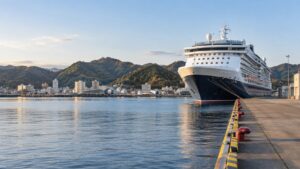
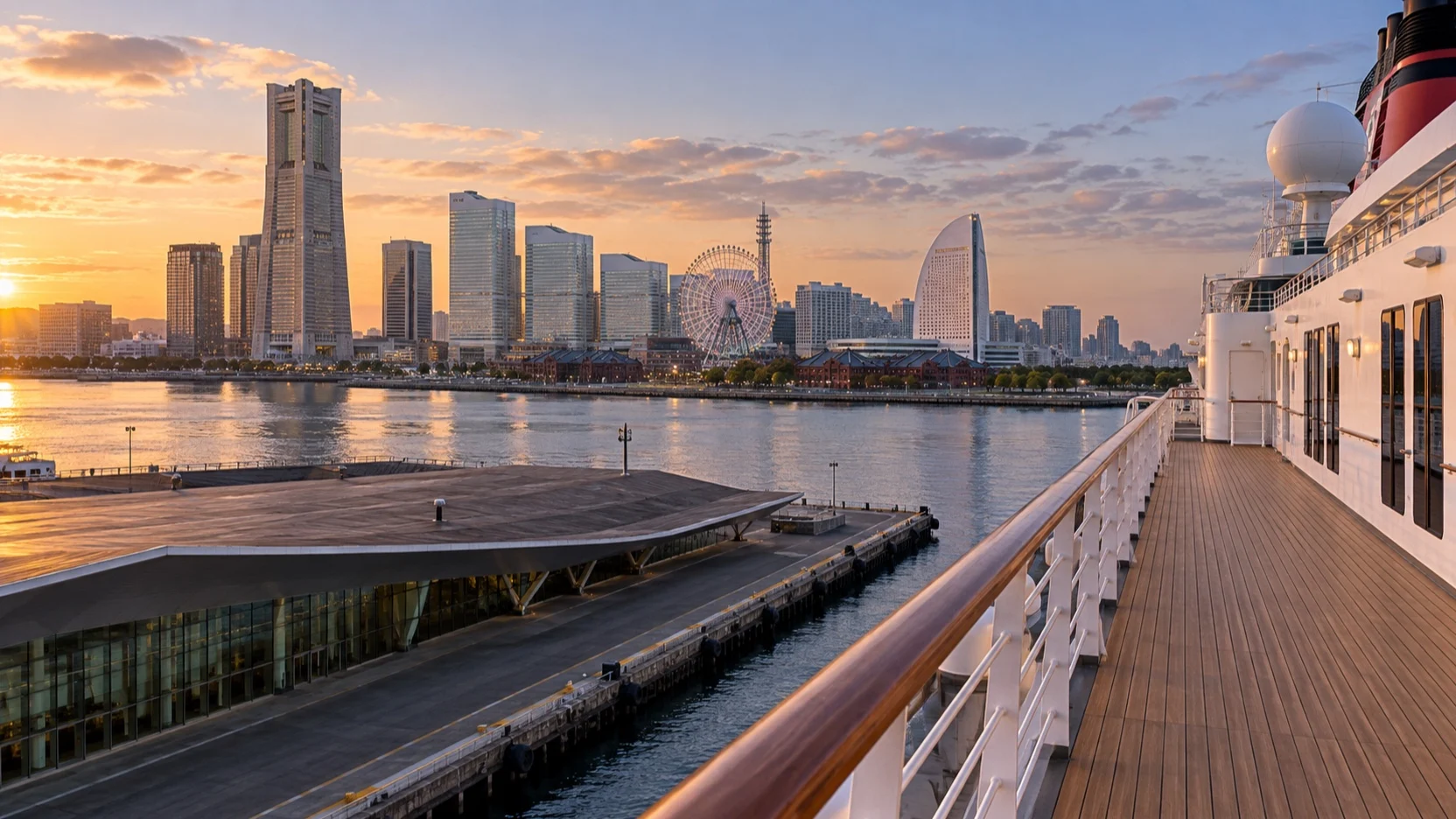
Osanbashi is the iconic one. Its rooftop is a rolling wooden deck locals nickname the “whale’s back,” and it sits right on the harbor at 1-1-4 Kaigandori in Naka-ku.
Fun fact: that undulating timber roof is a free public park with some of the best skyline views in the city. From here you stroll straight into the sights, no transport needed.
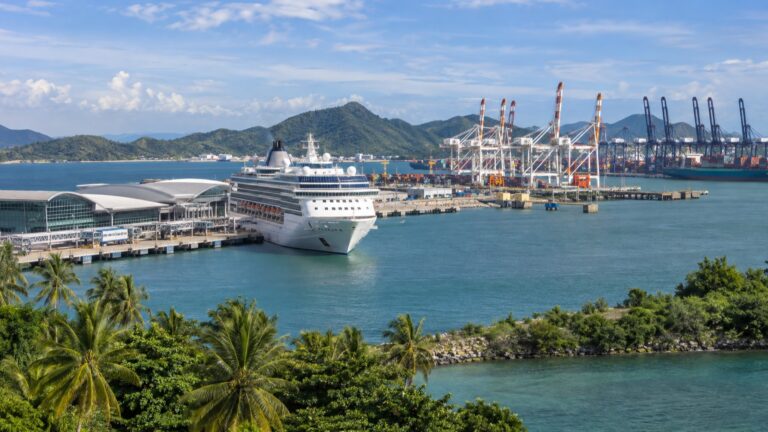
Daikoku opened in 2019 for very large ships unable to pass under Yokohama Bay Bridge. It sits on the outer side of the bridge in a controlled port area with no practical sightseeing on foot.
Confirm the cruise-line shuttle, its city drop, accessible capacity, and final return before leaving Daikoku. Public buses exist near the pier, but they are a poor substitute for a ship-day transfer with luggage, crowds, or a strict deadline.
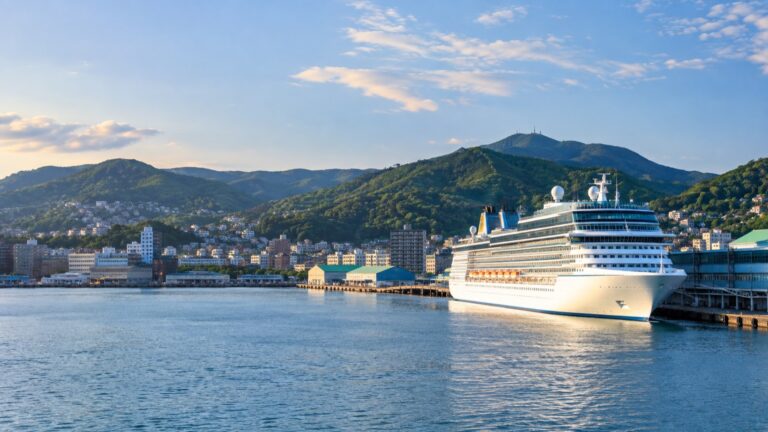
Osanbashi’s rooftop plaza is part of the terminal, so even a very short call begins with a harbor viewpoint before you reach the street. The official visitor guide places Nihon-odori Station about seven minutes away on foot, with Yamashita Park, Chinatown, and the Red Brick Warehouse also within walking range.
Shinko Pier opens beside Yokohama Hammerhead and Minato Mirai, making it another easy starting point. Daikoku is the outlier because it was built on the outer side of the Bay Bridge for ships too large to pass beneath it.
How I would confirm my own terminal
Use the cruise line’s final port document and Yokohama’s official arrival schedule to confirm the terminal. Do not infer Daikoku from tonnage or Osanbashi from a prior sailing.
If it says Daikoku, ask whether a shuttle is included and where it drops you. That one answer reshapes the whole day.
Getting around
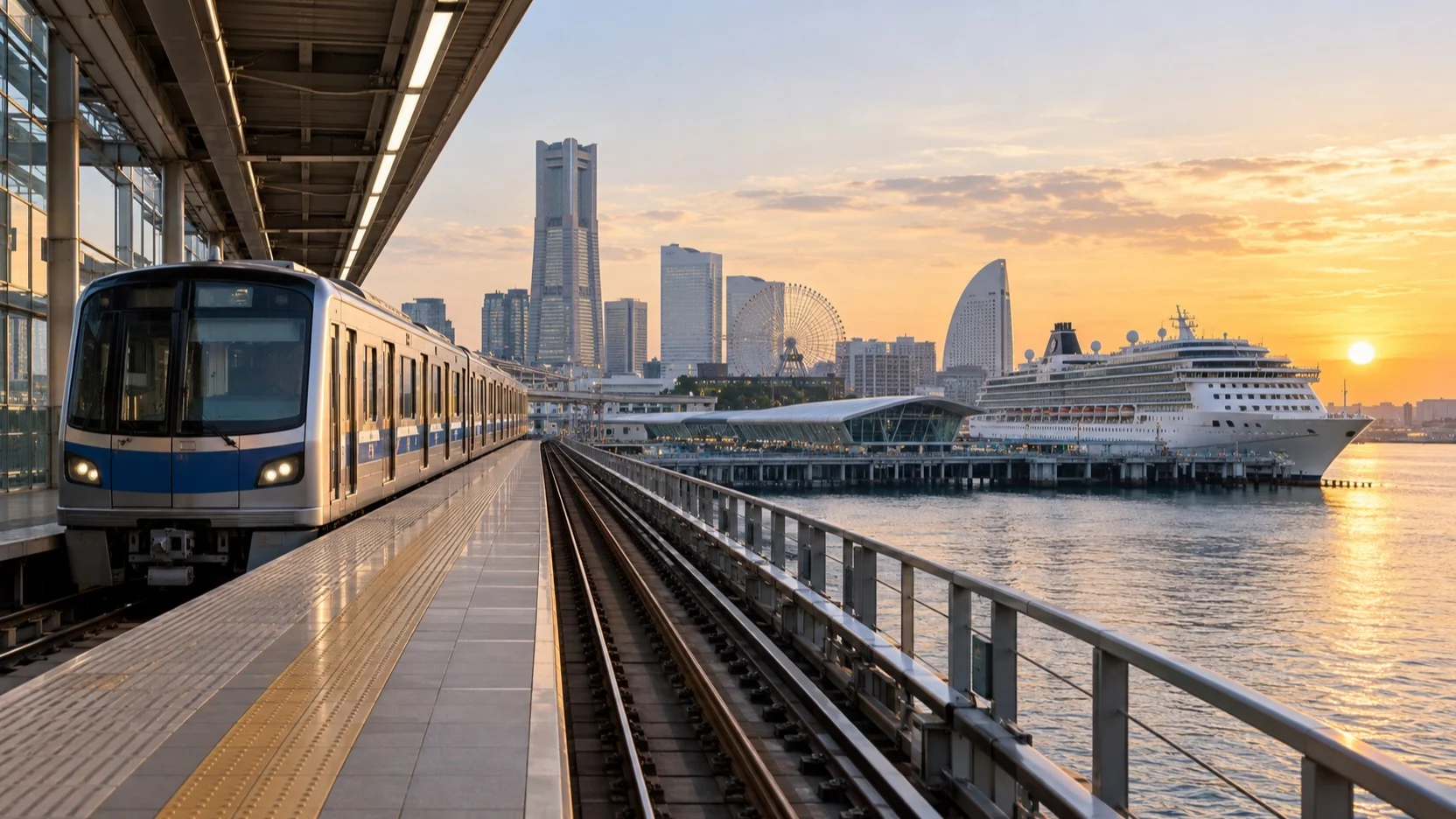
From Osanbashi or Shinko, the waterfront districts are easy to combine on foot and by Minatomirai Line. From Daikoku, begin and end every plan with the shuttle or authorized pickup.
Minatomirai Line: links waterfront districts with Yokohama Station and through services toward Tokyo. Allow time to locate elevators and the correct platform.
JR and private rail: multiple services reach Tokyo, but they stop in different districts and not every train is equally fast. Use an official journey planner for the exact terminal-to-attraction chain.
Akai Kutsu city loop: serves several waterfront sights on a sightseeing route. Check the current route, stop direction, fare, and frequency instead of treating it as an on-demand shuttle.
Taxis: metered and useful for short Yokohama trips, but Daikoku pickup rules and port access can change on cruise days. Use the location approved by the terminal staff.
The stops I’d actually spend time on
These are the verifiable, worth-your-limited-hours places, nearly all walkable from Osanbashi.
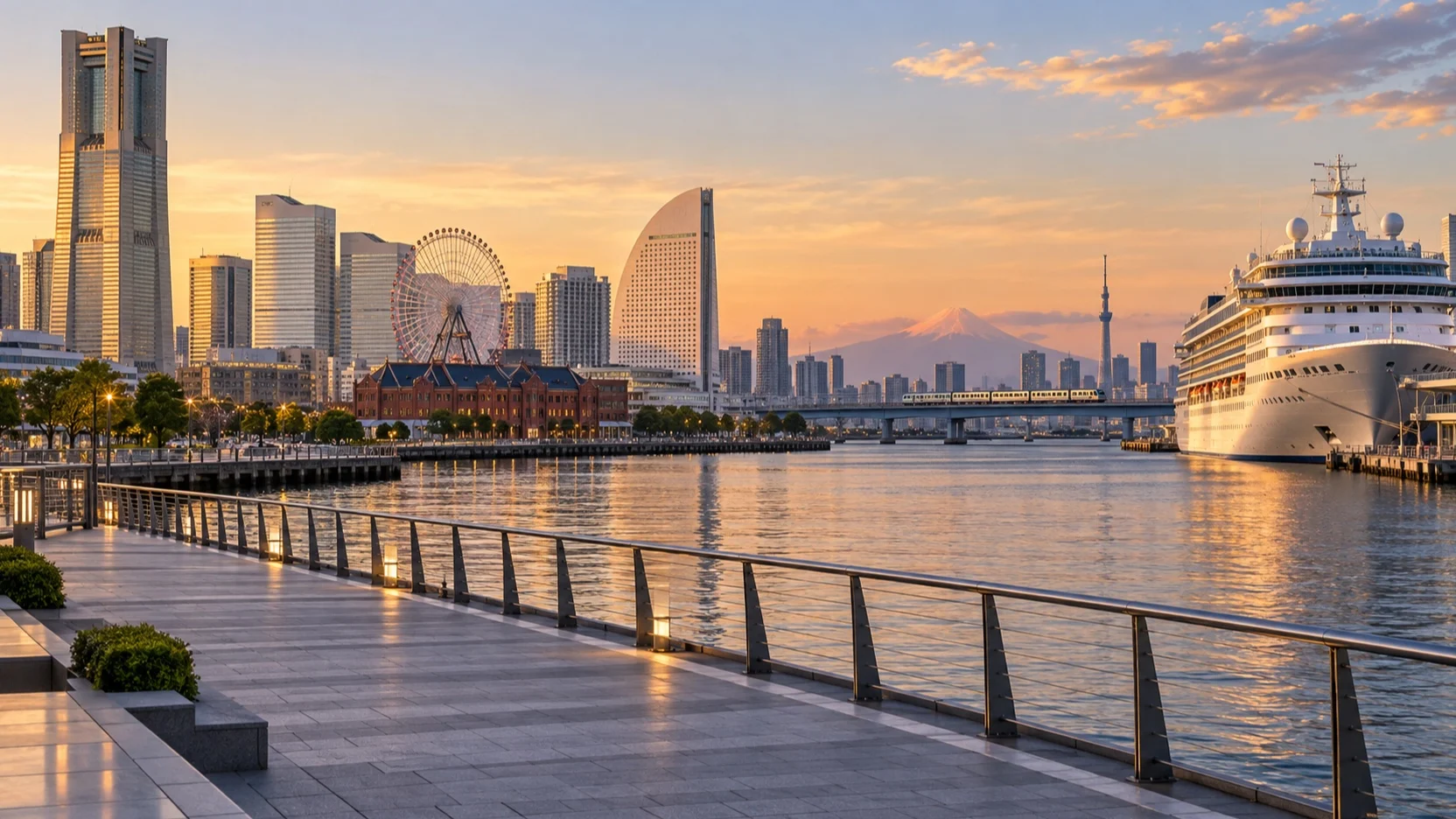
Minato Mirai 21: The futuristic waterfront district that defines modern Yokohama, and the anchor for most of the sights below.
Yokohama Landmark Tower: Its Sky Garden observatory on the 69th floor gives you the whole bay, and Mount Fuji on a clear day.
Cosmo Clock 21: The giant Ferris wheel that doubles as a clock and lights up the harbor after dark.
Cup Noodles Museum: An interactive ode to instant ramen where you can design your own cup. Fun fact: the museum celebrates a food that was invented in Japan and went on to feed the world.
Red Brick Warehouse (Akarenga): Two restored customs warehouses now full of shops, cafes and seasonal events, right on the water.
Nippon Maru: A beautifully preserved sail-training ship moored in Minato Mirai that you can tour.
Yokohama Chinatown: The largest Chinatown in Japan, a dense, delicious grid of gates, street food and restaurants. Fun fact: it grew from the merchant community that arrived after the port opened in 1859.
Yamashita Park & Hikawa Maru: A breezy bayfront park with the historic ocean liner Hikawa Maru permanently docked alongside.
Motomachi & Yamate: A smart shopping street below the Yamate bluff, where Western-style residences recall Yokohama’s foreign-settlement era.
Sankeien Garden: A classical Japanese garden with ponds, teahouses and relocated historic buildings, a short taxi ride from the center.
Yokohama Hakkeijima Sea Paradise: An island aquarium and amusement complex, good if you are sailing with kids.
Yokohama or Tokyo? An honest answer
A fast train can connect Yokohama Station with central Tokyo in roughly 30 minutes, but terminal access, transfers, station navigation, and the final walk make the real door-to-door trip longer. Choose one Tokyo district rather than trying to tour the capital broadly.
Yokohama is the lower-risk choice from either central terminal and still offers a full day of harbor, food, museums, and gardens. Tokyo makes more sense for a long call when it is the trip’s main priority.
Choose the Tokyo neighborhood before choosing the train, because Shibuya, Shinjuku, Tokyo Station, and Asakusa require different connections. Yokohama Station also serves several rail operators, so an offline route screenshot with the line name and destination is more useful than remembering only a departure time.
I would keep one Yokohama fallback ready in case clearance runs late or a rail disruption appears. Chinatown, Minato Mirai, and the waterfront need no long transfer from the central terminals, which makes changing plans painless.
If you go to Tokyo independently, start back about 2.5 hours before all-aboard from your last attraction. Add more for Daikoku because the city shuttle or port access remains a separate final transfer.
How I’d plan the day
About 5 hours from Osanbashi or Shinko: combine Yamashita Park, Chinatown, and the Red Brick Warehouse, dropping the farthest stop if immigration runs late. Return to the terminal about 75 minutes before all-aboard.
About 8 hours: add Minato Mirai and one reserved museum or observatory. Keep indoor tickets flexible because a delayed clearance can consume the first slot.
Long day trip: choose Tokyo or Kamakura, not both, and identify the exact rail line and a backup route before boarding. Be back in central Yokohama about two hours before all-aboard.
For any day trip, build in a generous return buffer. All-aboard waits for no train delay.
A realistic word on accessibility
Osanbashi, Shinko, and much of Minato Mirai have elevators, ramps, and broad promenades. Station elevators can require detours, and rush-hour trains are difficult with mobility devices or fatigue.
Sankeien has slopes and gravel, while Daikoku’s main barrier is the port transfer itself. Confirm accessible shuttle space and gangway assistance with the line before booking an attraction.
When to go, and the weather
Spring (late March to April) brings cherry blossoms and mild days; fall (October to November) is crisp and clear with strong foliage color.
Summer is hot, humid and the typhoon season, so watch forecasts. Winters are cool but generally sunny.
Entry, tickets, and connectivity
Japan’s visa rules depend on nationality and length of stay, while the cruise line controls the ship-arrival process. Check the Ministry of Foreign Affairs before sailing.
Load an accepted IC transit card if practical, but keep yen and a physical or offline backup for every essential return ticket. Large stations have several operators and similarly named platforms, so save the Japanese terminal address.
Summer brings heat, humidity, and typhoon disruption, while clear winter or fall days improve Mount Fuji views without guaranteeing them. Timed indoor attractions are the best bad-weather anchor when cancellation terms are flexible.
Quick answers
Can I walk into town from the ship? From Osanbashi yes and easily, but from Daikoku Pier you will need the shuttle or a taxi.
Is Yokohama a good base for Tokyo? Yes, central Tokyo is roughly 30 minutes by JR train from Yokohama Station.
Do I need cash? Cards are widely accepted, but keep some yen for small eateries and shrines.
Look at nearby Yokohama port hotels if you are arriving early, and see more walkable cruise ports for easy days ashore.
How this guide was researched: Unless a first-hand visit is explicitly identified above, this guide is based on independent research using official port, tourism, transit, government, and attraction sources where available. Logistics and time-sensitive details were reviewed on September 11, 2026; see our Editorial Policy.