Akita Cruise Port: A Practical Guide
Akita is a quiet Sea of Japan port with a city option, the samurai district of Kakunodate, and the Namahage traditions of Oga. Pick one direction, confirm the cruise-day train or bus, and protect the return through the commercial port.
My quick take on Akita
Stay in Akita for a flexible short call, use the reserved-seat shinkansen for Kakunodate, or book a vehicle for Oga. Lake Tazawa and Nyuto Onsen need more time and connections than most port days allow.
If you would rather compare it with other calls in the country, my Japan cruise ports guide and my nearby Aomori write-up both help set expectations for Tohoku.
Quick Facts
Here is what I would want to know before I step off the ship.
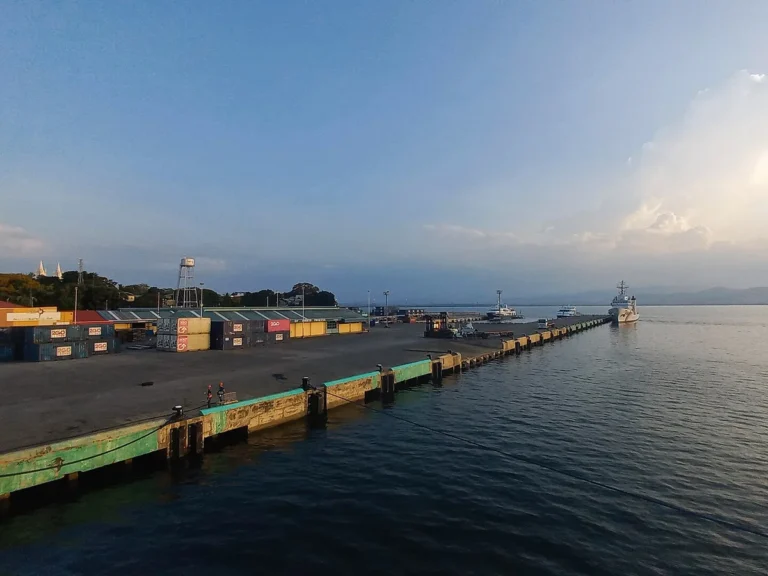
- Where you land: Nakajima Wharf (No. 2 and No. 3 quay) at Akita Port, about 5 miles northwest of central Akita, per the official Japanese port guide. The Port Tower Selion, with a free observation deck about 330 feet up, stands right beside the berth.
- Dock or tender: Ships berth alongside at Nakajima Wharf, so you walk off by gangway and no tender is needed.
- Into town: a special JR East cruise train may run from Akita Port Station to Akita Station in about 15 minutes on selected calls. Otherwise the ship or port may provide a bus, so confirm the exact service onboard.
- Currency and language: The Japanese yen (JPY), and Japanese; carry some cash, since smaller shops and rural stops are often cash-only.
- Time zone: Japan Standard Time (JST, UTC+9).
- Operational caution: Tropical storms, wind, port traffic, and the ship’s operating plan can change a call.
The 15-minute cruise train operates for selected ship calls rather than as an everyday city service. Confirm whether your sailing has the train, a bus, or another shuttle, plus the final port departure.
Getting around from the port
Akita Station is the transfer point for central sights, Kakunodate, and longer regional routes. Keep the port shuttle schedule in hand before boarding any onward train.
Cruise train or bus: use the service assigned to your sailing and record its last port return. Akita Port Station is a cruise-call facility, not a promise of normal all-day rail frequency.
Trains onward: the Komachi shinkansen reaches Kakunodate in roughly 45 minutes, and its seats require reservations. Reserve both directions and keep a later backup that still meets the port transfer.
Taxis: useful for Oga only when the entire route, waiting time, fare, and port return are agreed in advance. Do not expect a quick pickup at a rural museum or coast stop.
On foot: Central Akita around Senshu Park and Kawabata is flat and walkable once you reach the station.
Taxis, trains, and scheduled buses are more dependable than assuming an app car will appear. IC-card acceptance varies by operator and rural connection, so carry yen as a backup.
The stops I’d actually spend time on
These are the named, verifiable places I would build an Akita day around. Pick one direction, city or country, and go deep rather than wide.
Port Tower Selion: beside the port, with a free observation room about 328 feet above ground. It is the best low-risk final stop if the ship transfer leaves spare time.
Senshu Park: The grounds of the former Kubota Castle in central Akita, with restored gates, cherry trees in spring, and lotus ponds in summer. The castle was built in 1604.
Akita Museum of Art: A striking Tadao Ando building beside Senshu Park. Fun fact: it holds a single enormous mural by Leonard Foujita (Tsuguharu Fujita), one of the largest canvas paintings in Japan.
Neburi Nagashi Museum: Where you can see the towering Kanto lantern poles year-round and, on some days, watch performers balance them. It saves you from having to visit only in early August.
Akita Dog Visitor Center: a small station-area facility about the breed. Confirm opening days and any live-dog schedule because an animal appearance is not guaranteed.
Oga Peninsula and Namahage: use a prearranged car or tour for the Namahage Museum and neighboring Oga Shinzan Folklore Museum. Adding the aquarium creates a longer coastal loop and should be reserved for a long call.
Oga Aquarium GAO: On the Oga coast, best known for its polar bears and a huge Sea of Japan tank. A good pairing with the Namahage sites if you have a car or taxi.
Kakunodate: a preserved samurai district roughly 45 minutes from Akita by Komachi shinkansen. Book the return seat first, then choose one or two residences based on current hours.
Lake Tazawa: Japan’s deepest lake at about 1,389 feet, reached by train and then local bus or taxi. It is a long-call alternative to Kakunodate, not an automatic add-on.
Nyuto Onsen: a remote group of mountain inns beyond Lake Tazawa with sparse onward transport and site-specific bathing rules. Save it for an overnight stay rather than a normal cruise call.
Seasonal hours, live-dog appearances, museum demonstrations, and rural buses can change. Check each priority attraction and the official Akita port guide shortly before sailing.
How I’d plan the day
Build the day around the last reliable connection back to Akita Station, then the last ship transfer from the station to the port. A good attraction is not useful if its return leg misses that chain.
Short call (about 3 hours ashore): use the assigned shuttle for Senshu Park and one museum, or stay around Selion if transfer time is tight. Be at the port transport pickup 75 minutes before all-aboard.
Standard call (about 5 to 6 hours): visit central Akita, or take reserved trains to Kakunodate with at least two hours from the district to the gangway. Do not add Lake Tazawa.
Long call (8 hours or more): choose a prearranged Oga circuit or Kakunodate plus one nearby stop. Keep the return route simple enough to survive one missed connection.
Allow about two hours from Kakunodate or an outer Oga stop to the gangway, and more when the itinerary depends on a rural bus. A ship excursion is the safer choice for a short call or an early departure.
What to eat in Akita
Akita is proud rice country, and it shows on the plate. These are the local specialties I would seek out.
Kiritanpo: Pounded rice shaped onto skewers, grilled or simmered in a rich chicken hot pot. The signature comfort dish of the prefecture.
Inaniwa udon: Thin, silky handmade noodles, often served cold with a dipping sauce.
Iburigakko: Smoked and pickled daikon radish, a crunchy snack that pairs beautifully with local sake.
Akita’s clean water and cold winters make it one of Japan’s great sake regions. A tasting near Akita Station is an easy way to sample it without straying far.
A realistic word on accessibility
Ships normally berth alongside, but gangway slope and distance through the terminal area still vary. Confirm wheelchair assistance and accessible port transport with the cruise line.
Akita Station and the shinkansen have elevators, although reserved seating and mobility assistance may need advance arrangement. Samurai houses, castle paths, shrines, aquariums, and hot-spring facilities have different step, shoe-removal, and bathing barriers.
When to go, and the weather
Most cruise calls to Akita fall between spring and fall. Each season changes the day quite a bit.
Spring: Cherry blossoms peak around late April in Senshu Park and Kakunodate, with cool, changeable days.
Summer: Warm and humid. The Kanto Matsuri lights up the city from 3 to 6 August with hundreds of glowing lantern poles.
Fall: Crisp air and strong foliage color inland around Lake Tazawa, my favorite time to visit.
Winters are snowy and cold this far north. Pack layers and waterproof shoes for any shoulder-season call.
Entry, connectivity, and local etiquette
Japan’s visa rules depend on nationality and stay, even when the ship handles arrival processing. Check the Ministry of Foreign Affairs and complete any cruise-line forms before departure.
Carry the ship card, passport copy or original as directed, and offline Japanese addresses for the berth and attractions. Rural staff may speak limited English, and mobile ticket screens should not be your only copy of a return reservation.
Ask before photographing people, demonstrations, or interiors, remove shoes where instructed, and follow onsen rules if a tour includes bathing. Northern weather can be rainy or cool even outside winter, so waterproof shoes and a layer are useful.
Quick answers
Do ships dock or tender at Akita?
They dock alongside at the Nakajima Wharf, so you walk off by gangway.
How do I get into the city? Use the special cruise train when scheduled, or the ship’s assigned bus, and confirm the final return before leaving the port.
City or country for one day? Stay in Akita for flexibility, or reserve both shinkansen directions for the more distinctive Kakunodate samurai district.
How this guide was researched: Unless a first-hand visit is explicitly identified above, this guide is based on independent research using official port, tourism, transit, government, and attraction sources where available. Logistics and time-sensitive details were reviewed in September 2026; see our Editorial Policy.