Atuona (Hiva Oa) Cruise Port: A Cruiser’s Guide to the Marquesas
Atuona is remote even by cruise-port standards. Hiva Oa offers immense ridges, living Marquesan culture, archaeological sites, and the graves of two famous Europeans, but it should not be reduced to Gauguin and Brel.
The quick facts
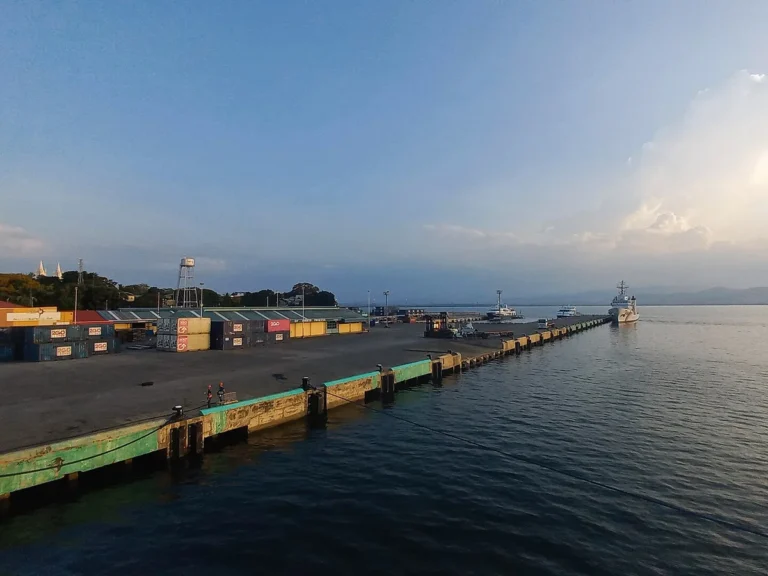
- Where you land: the tender landing in the Tahauku harbor area on Hiva Oa, roughly 2 miles from the center of Atuona. There is no cruise terminal and no shops at the landing itself. Tahiti Tourisme’s Hiva Oa itinerary is a useful primer.
- Dock or tender: Ships anchor off and land guests by small boat, and the Pacific trade swell can make the step between tender and platform move sharply.
- Into town: You will need the ship shuttle or a local vehicle, since Atuona is about 2 miles away with a climb in the heat.
- Currency and language: The CFP franc (XPF), which is fixed to the euro, with French and Marquesan spoken and only limited English.
- Time zone: Marquesas Time (UTC−9:30), an unusual half-hour offset that puts these islands 30 minutes ahead of Tahiti.
- Call reliability: This is a weather-dependent tender call, and wind or swell can delay or halt small-boat operations. Follow the captain and tender crew rather than relying on a generic cancellation estimate.
- Best first visit: Keep a short call around Atuona, the cultural centers, local craft, and Calvary Cemetery. Add Taaoa only with a reliable guide and enough time.
- Return margin: Be back at the tender meeting point well before the ship’s all-aboard time. Leave more margin after Taaoa, Puamau, or a boat outing because roads, sea conditions, and tender queues can all change.
The tender is the day’s first and last boss
Cruise calls use tender arrangements around the Tahauku harbor area near Atuona. Ships, local vessels, and sea conditions differ, so take your operational facts from the crew’s briefing rather than a generic map pin.
The landing is not the center of Atuona, and transfers may be arranged for a particular call. Confirm whether your ship provides a shuttle, whether local vehicles meet the tender, and where the final return line forms.
Trade swell can make the step between tender and platform move sharply. Keep both hands free, follow crew instructions, and wear shoes that grip when wet.
If the captain suspends landing, there may be no safe workaround. Hiva Oa’s remoteness is part of its character, and it also means the island lacks the redundant transport systems of a large resort port.
The cultural story is bigger than two artists
Paul Gauguin spent his final years on Hiva Oa, and Belgian singer-songwriter Jacques Brel also lived his last years here. Both are buried in Calvary Cemetery above Atuona.
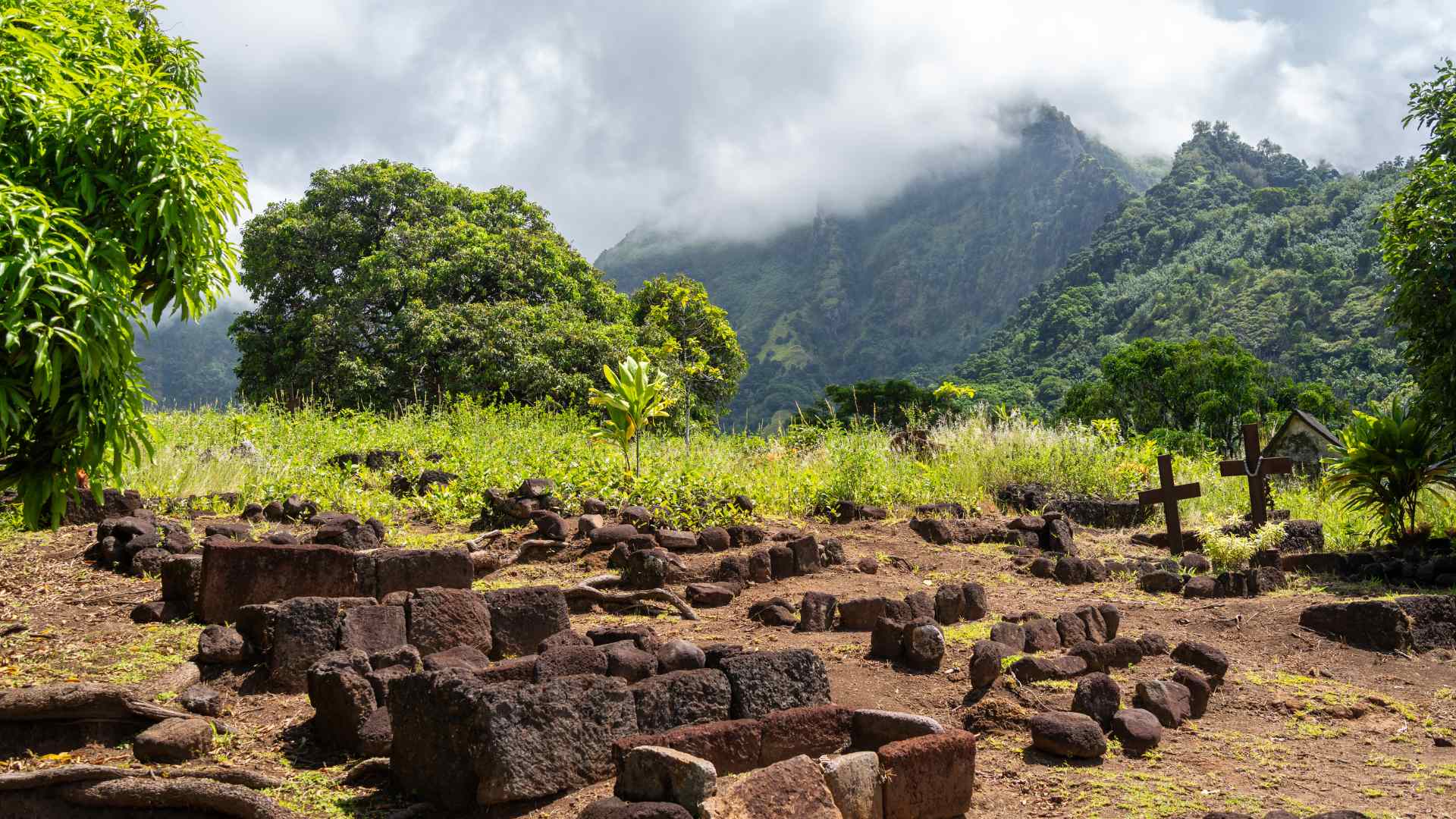
Their stories are worth exploring, yet Marquesan people, language, carving, tattoo traditions, dance, navigation, genealogy, and sacred landscapes existed long before either man arrived. A thoughtful visit treats the European biographies as one layer, not the island’s headline and footnotes.
In 2024, UNESCO inscribed Te Henua Enata, The Marquesas Islands, as a mixed cultural and natural World Heritage property. The serial listing includes landscapes and archaeological areas that testify to Marquesan settlement, social organization, sacred spaces, and exceptional biodiversity.
Taaoa and Puamau on Hiva Oa are among the valleys named in UNESCO’s documentation. That recognition raises the responsibility to stay on guided routes, avoid touching carvings, and understand that a me’ae is a sacred space rather than an outdoor prop department.
A compact Atuona route
The best short-call plan stays in and around Atuona. It combines the Paul Gauguin cultural site, Espace Jacques Brel, the village, local craft, and Calvary Cemetery without gambling on the island’s longest roads.
The Gauguin center presents reproductions, interpretation, and a reconstruction connected with the artist’s Maison du Jouir. Do not expect a gallery of major original Gauguin paintings, which are held in museums far from Hiva Oa.
That distinction matters because the center is about context. His work, colonial attitudes, relationships, health, and self-created mythology require more thought than a simple “artist found paradise” story.
Espace Jacques Brel displays photographs, biographical material, and his small aircraft, Jojo. Tahiti Tourisme notes his practical role in the community as well as his artistic fame.
The sites are close enough to pair, though opening and staffing can follow island realities. Visit early and ask locally before assuming a door will remain open until your preferred hour.
Atuona’s craft workshops and stalls may sell carved wood or bone, pāreu, jewelry, honey, and other local products. Ask makers about the material and motif, and follow customs rules on wood, shell, seeds, or animal products when bringing anything home.
Calvary Cemetery, with a hill attached
Calvary Cemetery overlooks Atuona and contains the graves of Gauguin and Brel. The setting provides wide views over the bay and surrounding ridges.
The route is uphill, hot, and uneven in places. Take water, pace yourself, and avoid treating “short” on the map as a comment on effort.
This is an active cemetery and a place of local remembrance. Keep voices low, avoid intrusive posing, and make room for residents visiting graves unrelated to tourism’s two famous names.
If mobility or heat makes the climb unsuitable, ask whether a local vehicle can approach the upper area. Access conditions can vary, and the driver should confirm how much walking remains.
Taaoa: the stronger half-day cultural choice
The Taaoa valley lies close enough to Atuona for a half-day guided outing. Its Upeke ceremonial complex includes stone platforms and gathering or sacred spaces set within a landscape that remains culturally significant.
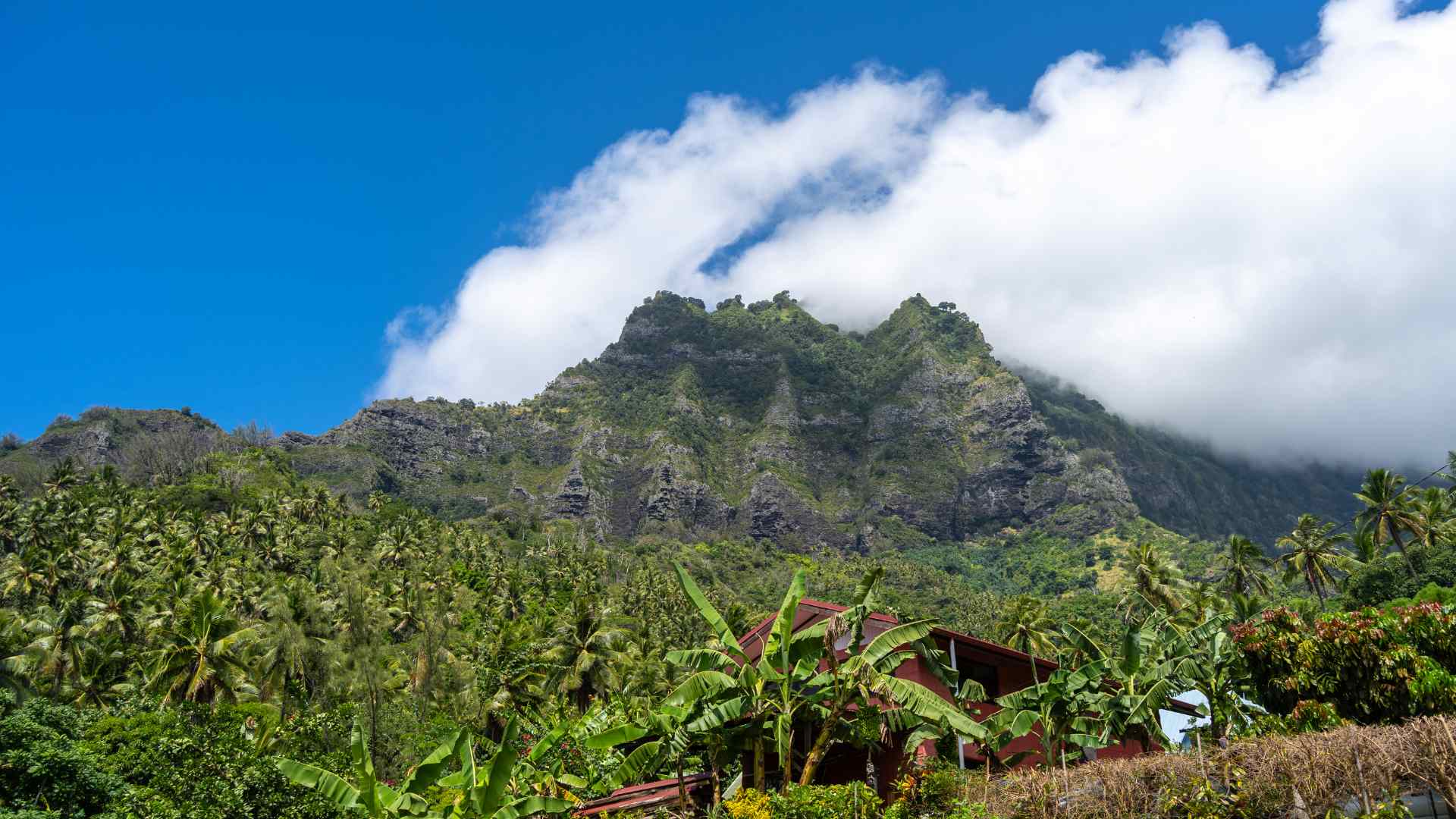
Go with a local guide who can explain appropriate behavior and distinguish among paepae, tohua, me’ae, and other features. The stones do not come with tidy museum labels, and guessing loudly is not interpretation.
Vegetation, roots, rain, and uneven ground affect the site. UNESCO notes that invasive plants and erosion threaten the integrity of archaeological remains across the Marquesas.
Taaoa pairs naturally with the Atuona sites on a medium or long call. It provides cultural depth without the much longer and rougher commitment required for Puamau.
Puamau and Lipona: magnificent, but not a casual dash
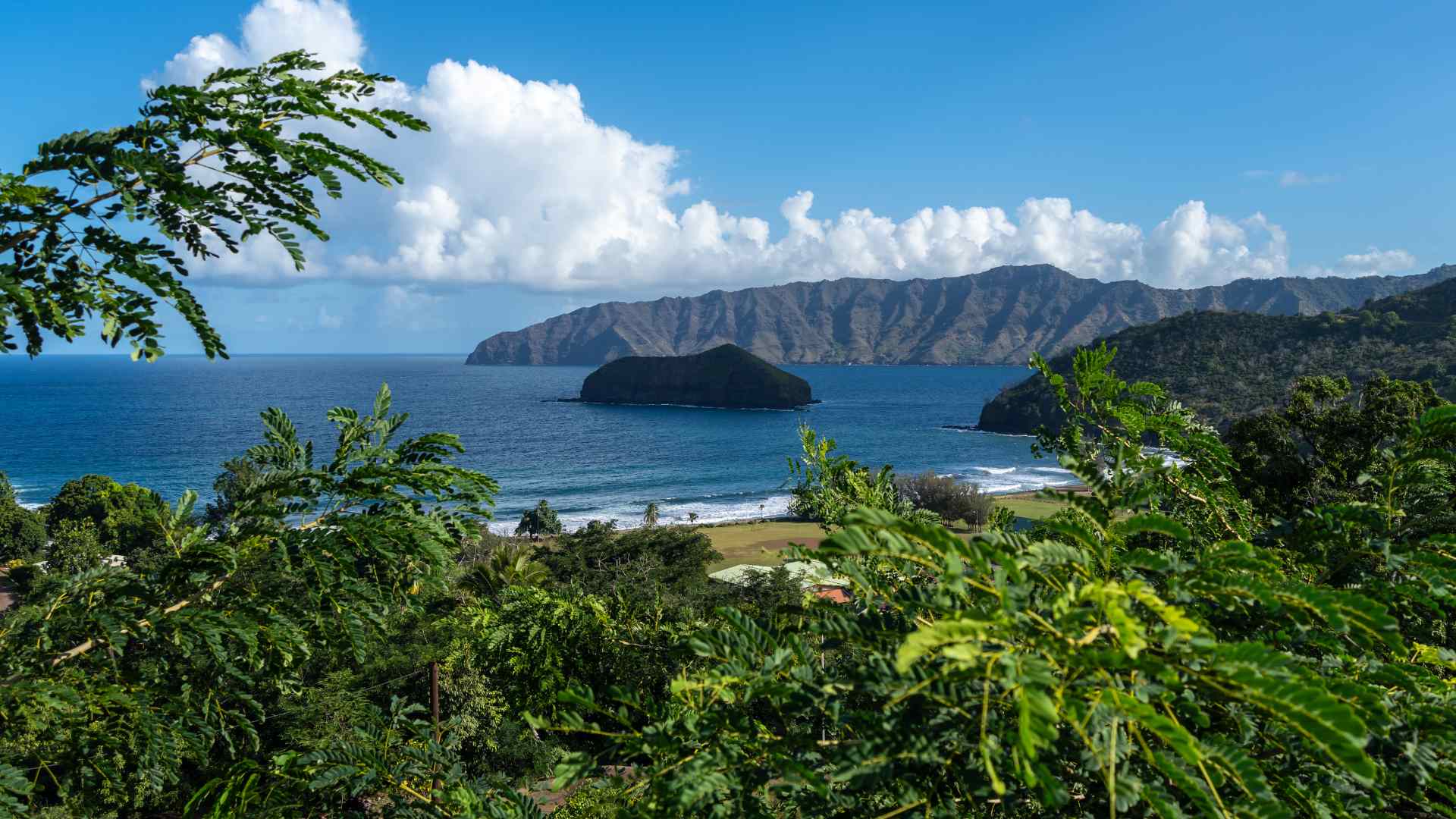
The archaeological complex often called Lipona or Iipona lies near Puamau on the island’s northeastern side. The official Hiva Oa itinerary presents its monumental tiki and sacred sites as part of a longer four-wheel-drive circuit.
Reaching Puamau from Atuona involves a long drive on roads that can be rough, narrow, muddy, or slow. Tahiti Tourisme places the wider cultural circuit in a multi-day Hiva Oa itinerary, which is a useful warning against squeezing it into a short cruise call.
Only consider the journey with a reputable local 4×4 driver, a genuinely long day, suitable weather, and a very generous tender buffer. Confirm the route’s current condition before departure.
The limitation is not merely comfort. A mechanical problem or blocked road in this terrain can turn a brilliant site visit into a serious ship-return problem.
If your call is short, choose Taaoa instead. Saving Lipona for a land stay is good judgment, not travel failure.
Boats, diving, and Tahuata
Hiva Oa’s surrounding waters support rich marine life, and the Marquesas lack the broad coral reefs familiar from some other French Polynesian islands. The underwater character is dramatic, productive, and not necessarily gentle.
Local dive operations can offer guided trips for qualified divers, subject to certification, equipment, weather, and ship timing. Arrange in advance and disclose when you must be back at the tender.
Boat trips toward neighboring Tahuata may be offered in suitable conditions. The channel can be rough, and a beach that looks close across the water may require a serious open-sea transfer.
Do not book wildlife encounters on the assumption that dolphins, mantas, sharks, or whales appear to schedule. Choose the outing for the seascape and guiding, with wildlife as an unscripted bonus.
Swimming access around Hiva Oa can involve dark sand, rock, surge, currents, and limited facilities. Ask locally where conditions are safe that day, and do not copy swimmers who may understand the shore far better than you do.
Our piece on Aranui Cruise is the fuller version of this point.
Treat permission, health, and the tender as one plan
A guide is not just transport at Taaoa, Puamau, or another cultural site. Local access, landowner expectations, and respectful behavior can vary, so use the ship or an established local operator and never enter a me’ae, move a stone, or fly a drone without explicit permission.
Hiva Oa has limited medical resources, while an evacuation can depend on aircraft, weather, and onward care in Tahiti. Bring essential medication in its original packaging, mosquito protection, water, and travel insurance that covers remote medical evacuation.
Return to Tahauku at least 60 to 90 minutes before the last tender, and allow more after Puamau or a boat trip because there is no quick backup route. Check entry requirements for your passport with the French Polynesia High Commission and follow the ship’s document instructions.
Three plans for the actual time available
A short call
Use the ship shuttle or confirmed local transfer to Atuona. Visit the Gauguin center and Espace Jacques Brel, browse local craft, and add Calvary Cemetery only if the heat and timing are comfortable.
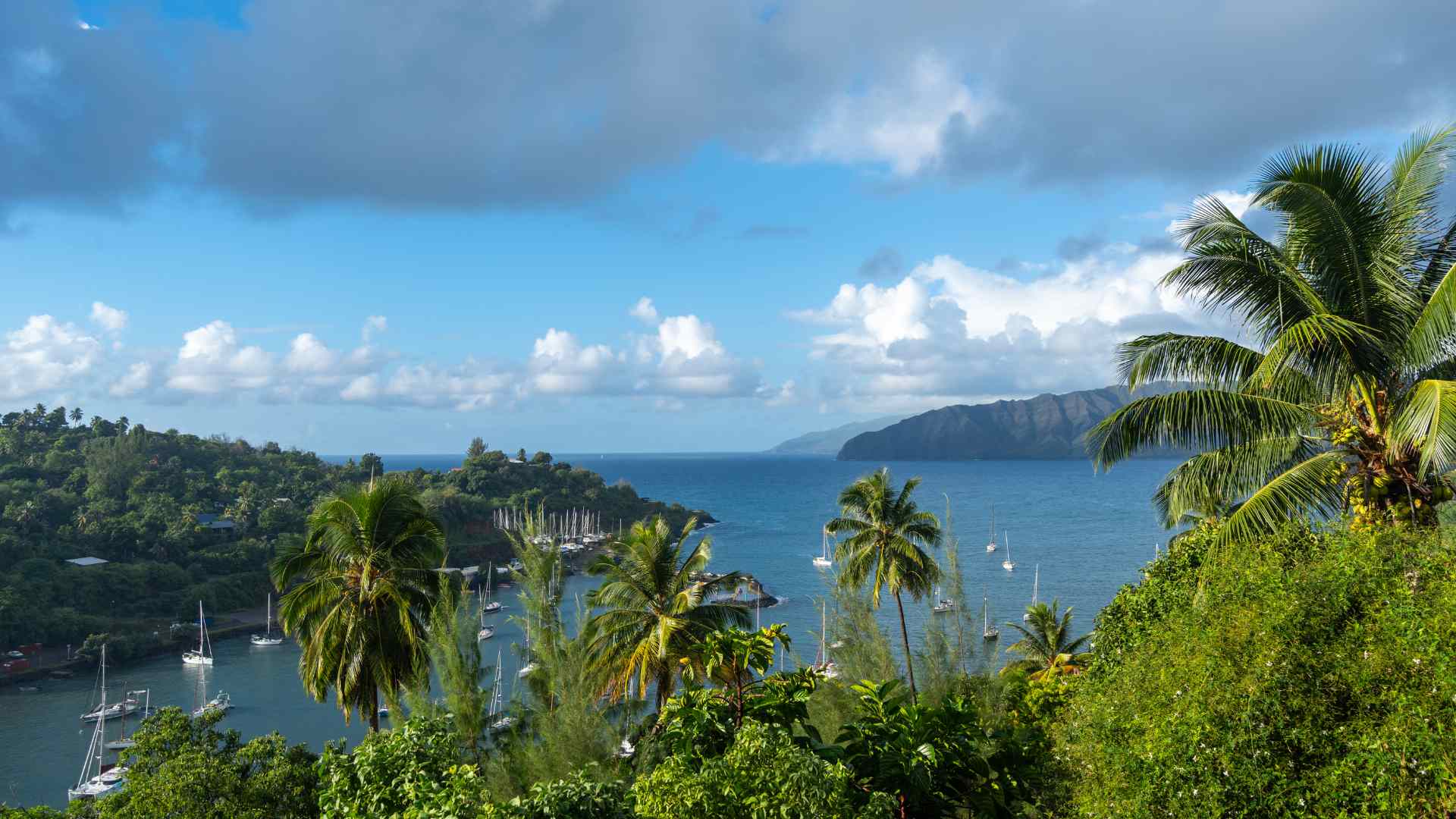
This plan keeps the final hour close to the landing. It also leaves room for an attraction to open late without breaking the day.
Five to seven hours ashore
Book a local guide to Taaoa first, then return to Atuona for the cultural centers and cemetery. Starting with the road excursion protects it from later tender anxiety.
Keep lunch simple and local. A leisurely restaurant meal is lovely, but only after the guide confirms the return transfer.
A very long call
Choose either Puamau by 4×4 or a sea outing, never both. Each depends on conditions and deserves the entire usable window.
I would favor Puamau for archaeology if the road is confirmed and the ship offers a protected excursion. Independent travelers should be more conservative because the consequences of delay are unusually high here.
Accessibility and honest limitations
Tendering may exclude some mobility devices or passengers who cannot manage a moving step. Ask the cruise line about the exact procedure before assuming shore access is possible.
Atuona has some manageable village areas, but heat, gradients, broken surfaces, and limited curb infrastructure complicate movement. The cemetery climb and archaeological sites are not step-free.
Taaoa and Puamau involve uneven stones, roots, grass, mud, and rough vehicle approaches. A driver can reduce distance but cannot create a smooth route through protected heritage terrain.
Espace Jacques Brel is likely the simplest major cultural stop, but current access still needs confirmation. Tell the ship and local operator your needs early, including vehicle step height and storage for equipment.
Heat, rain, insects, and what to pack
Hiva Oa is warm throughout the year, with humidity and showers possible in any season. Valleys and ridges create local weather, while road conditions can change after heavy rain.
Carry drinking water, reef-conscious sun protection, insect repellent, and a light rain layer. A waterproof bag protects electronics during both the tender and sudden showers.
Closed shoes are best for cultural sites, while secure sandals may suit the village. Do not wear smooth ship-deck soles onto wet roots and ancient stone unless slapstick is part of the excursion package.
Sun exposure can feel severe even under broken cloud. Start outdoor visits early and use shade without sitting or climbing on archaeological structures.
Money, language, and connectivity
French Polynesia uses the CFP franc. Cards may work at larger businesses, but small cash is important for local transport, crafts, and services when connections fail.
French and Marquesan are used locally, and English may be limited outside tourism settings. A few courteous French words and patience solve more than an increasingly loud repetition in English.
Mobile data and Wi-Fi should not be treated as guaranteed. Save booking details, ship contacts, and maps offline before going ashore.
Prices and availability reflect isolation, freight costs, and limited supply. This is not the place to haggle aggressively over a hand-carved object while standing within sight of the person who made it.
My recommendation
For most cruise calls, I would combine Taaoa with Atuona’s cultural centers and the cemetery. Compare it with our Nuku Hiva guide or broader French Polynesia port guide when choosing an itinerary.
I would attempt Puamau only on a long, well-protected excursion with current road information. Hiva Oa’s greatest lesson is scale, and sometimes understanding the island means accepting how much of it cannot fit between two tender rides.
How this guide was researched: Unless a first-hand visit is explicitly identified above, this guide is based on independent research using official port, tourism, transit, government, and attraction sources where available. Logistics and time-sensitive details were reviewed in September 2026; see our Editorial Policy.