Port Douglas Cruise Port Guide: Tender, Reef & Rainforest
Port Douglas is the rare cruise stop where the tender ride feels like part of the arrival scene. Marina masts, tropical trees, reef boats, and one very important return clock wait ashore because the final tender determines the shape of the whole day.
I love this port for its honest choice between three excellent experiences: an easy town day, a rainforest outing, or a reef adventure designed around the ship. Pick one, keep a weatherproof backup, and resist treating reef and rainforest as boxes that must both be checked before lunch.
Port Douglas cruise port quick facts
- Arrival: Cruise ships normally anchor offshore and tender passengers to Crystalbrook Superyacht Marina.
- Town access: Central Port Douglas, Macrossan Street, and waterfront sights are reachable on foot from the marina for many travelers.
- Best easy day: Combine town, Anzac Park, Flagstaff Hill viewpoints, Four Mile Beach, and lunch.
- Best rainforest option: Mossman Gorge is the most practical major Daintree experience from Port Douglas.
- Best reef option: Use a cruise-aware permitted operator whose check-in and return times explicitly fit your tender schedule.
- Currency: Australian dollars are used, and cards are widely accepted.
- Main caution: Tender delays, tropical weather, reef boat schedules, and road time can shorten the day.
The arrival: anchor, tender, marina
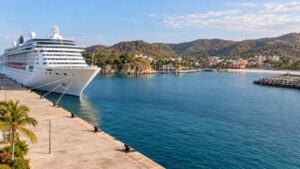
Port Douglas is normally an anchorage port rather than a place where large cruise ships berth. The official Tourism Port Douglas cruise guide says passengers come ashore by tender at Crystalbrook Superyacht Marina.
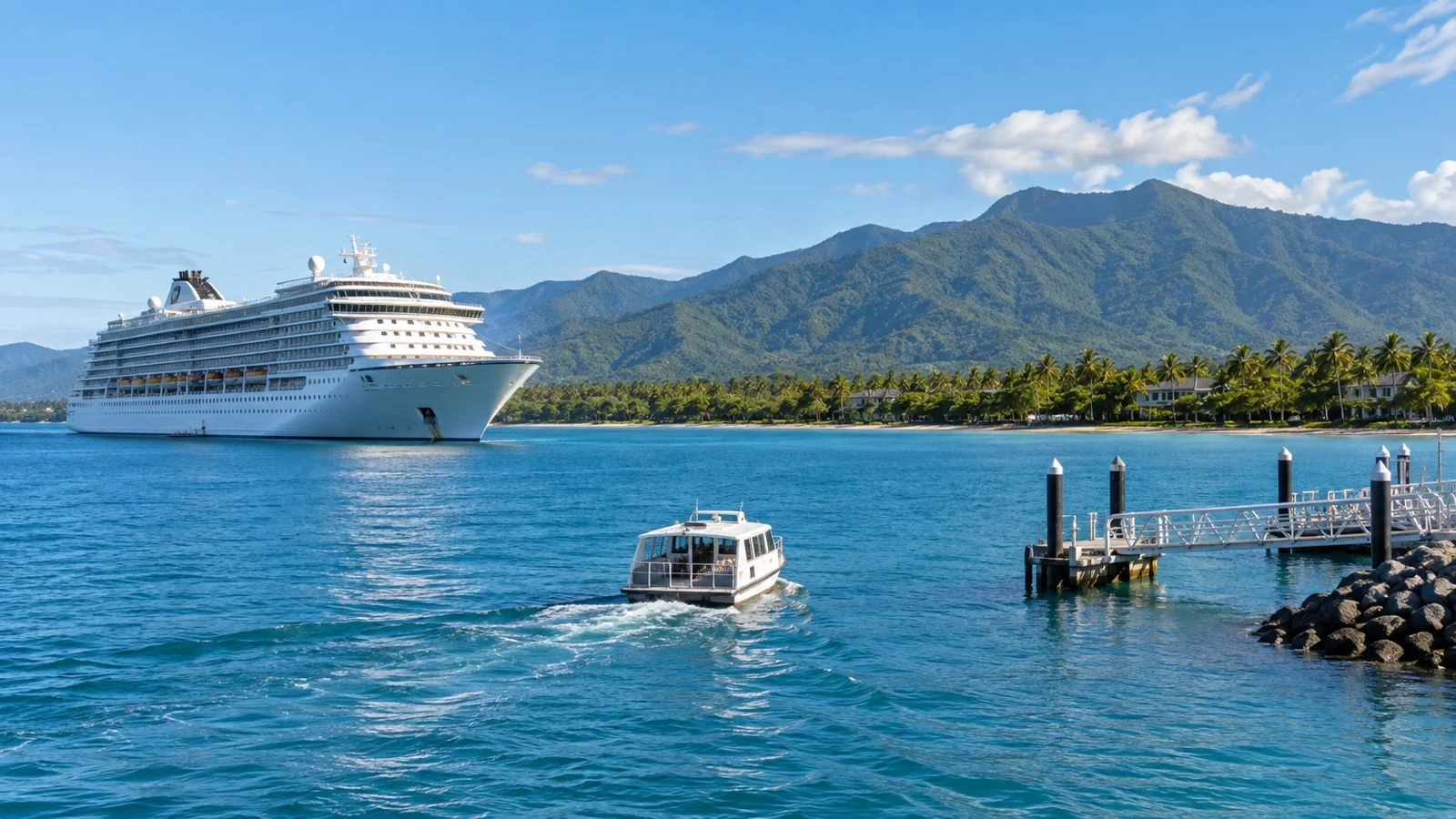
The marina has restrooms, cafes, tour meeting points, and access to local transportation. It is also close enough to central Port Douglas that many passengers can walk into town without arranging a vehicle.
Tender operations depend on the ship, swell, wind, harbor conditions, and local instructions. Your printed itinerary may show a full day, yet clearance, tender tickets, loading, and weather can reduce the usable hours.
A tender number is not the same thing as an arrival appointment. If you independently reserve a tour, tell the operator you are a cruise passenger arriving by tender and ask how it handles a delayed first boat.
Let the tender clock choose the adventure
Start with the actual time you step onto the marina, then work backward from the published last tender. A late landing favors town, while an early arrival and generous cutoff may support Mossman Gorge or a cruise-specific reef trip.
Build only one major commitment into the day. Port Douglas is beautiful enough that lunch, a beach view, and a shaded walk feel like a plan rather than leftover time.
The easiest day stays in Port Douglas
Walk from the marina toward Macrossan Street, the compact commercial heart of town. Restaurants, cafes, boutiques, galleries, and visitor services make it easy to change pace when weather or tender timing shifts.
Anzac Park and historic St Mary’s by the Sea sit near the waterfront. A market may operate in the park on scheduled Sundays, but confirm the current calendar instead of assuming a cruise call automatically brings stalls.
This town plan minimizes vehicle dependence and keeps the marina within reach. It is my default recommendation for a short call, a late tender, or a traveler who wants freedom from reservation anxiety.
Flagstaff Hill and coastal views
The Flagstaff Hill Walking Trail climbs to views over the coast and can connect toward Four Mile Beach. Heat, humidity, wet surfaces, and gradients matter, so use shoes with grip and turn around before the return feels rushed.
Carry water and sun protection even under cloud. Tropical ultraviolet exposure remains strong, and a shaded beginning does not guarantee a cool walk back.
Four Mile Beach
Four Mile Beach is Port Douglas’s classic sweep of sand, but the name is not an instruction to walk its entire length. Use signed access points, remain in currently recommended swimming areas, and check patrol and marine-stinger advice.
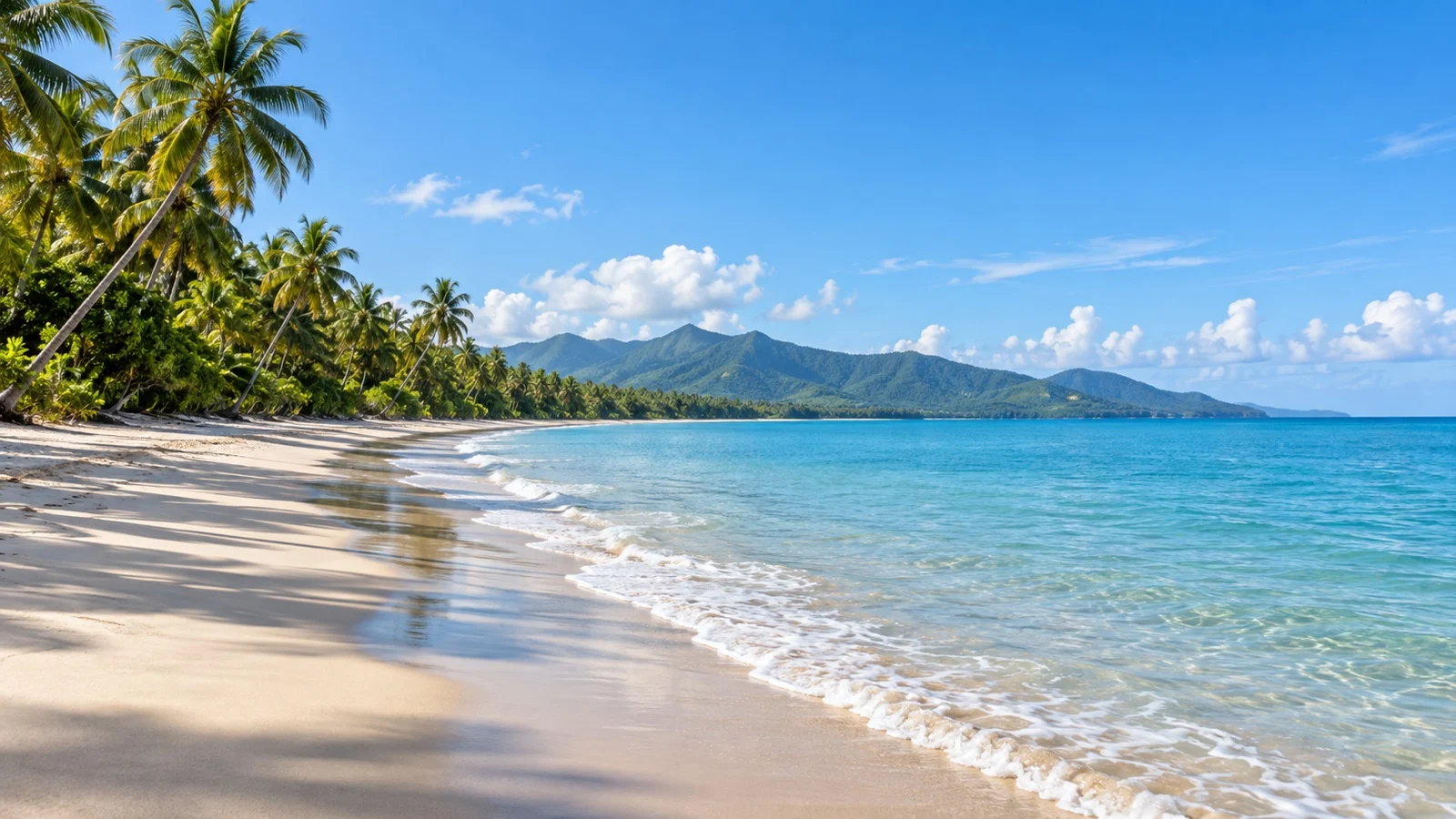
Crocodile warnings and temporary beach closures must be taken literally. Do not enter water outside approved areas simply because it looks calm or because other visitors are doing so.
A short beach visit combines easily with Macrossan Street and lunch. Keep your valuables attended and carry sandals or shoes that remain comfortable on hot sand and wet paths.
Mossman Gorge and the Daintree Rainforest
Mossman Gorge is the most realistic major rainforest excursion from Port Douglas, commonly reached in about half an hour under normal conditions. It forms part of Daintree National Park within Queensland’s Wet Tropics World Heritage Area.
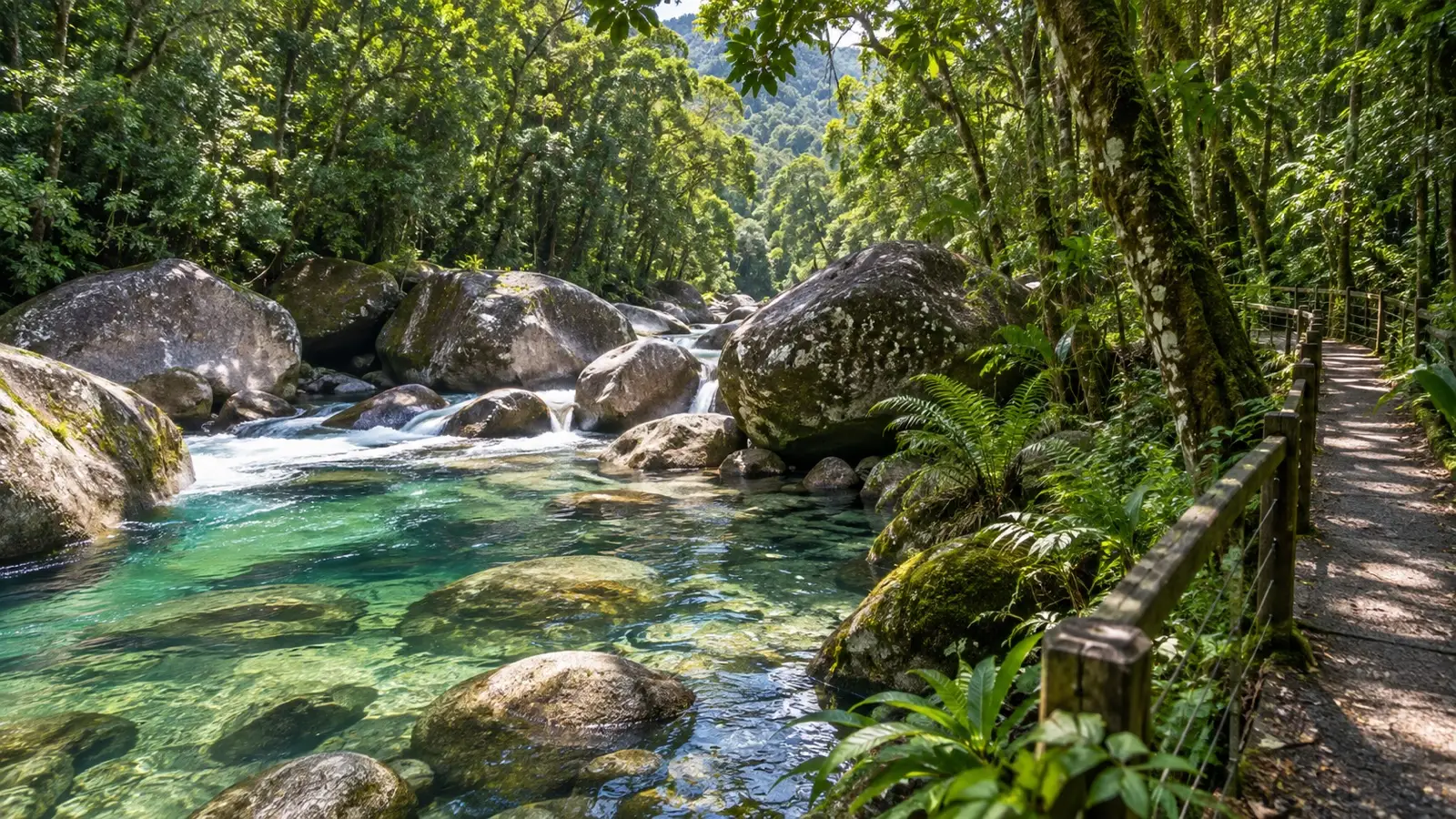
Visitors begin at Mossman Gorge Centre and use the dedicated shuttle toward the day-use area when operating. Current park alerts, shuttle details, access, and track conditions should be checked before leaving the marina.
The forest rewards a slower visit with buttress roots, clear water, layered canopy, and interpretive walking. It does not reward a frantic dash between photo stops while your driver waits with the clock running.
Swimming and trail safety
River conditions can change rapidly after rain, and apparently clear water can hide strong current or submerged hazards. Obey every closure and warning, and never assume that a popular swimming image reflects conditions on your day.
Wear enclosed shoes with traction, use insect protection suited to your health needs, and carry drinking water. A light rain layer and dry protection for electronics belong in the bag even when the coast is sunny.
Arrange the return vehicle before you depart Port Douglas because on-demand availability should not be treated as guaranteed. A cruise-aware guided tour is the easiest way to align the shuttle, walking time, and tender deadline.
How far should you go into the Daintree?
Daintree Village, river cruises, and the road toward Cape Tribulation sit farther north than Mossman Gorge. Cape Tribulation also requires crossing the Daintree River ferry, where traffic and queues can add uncertainty.
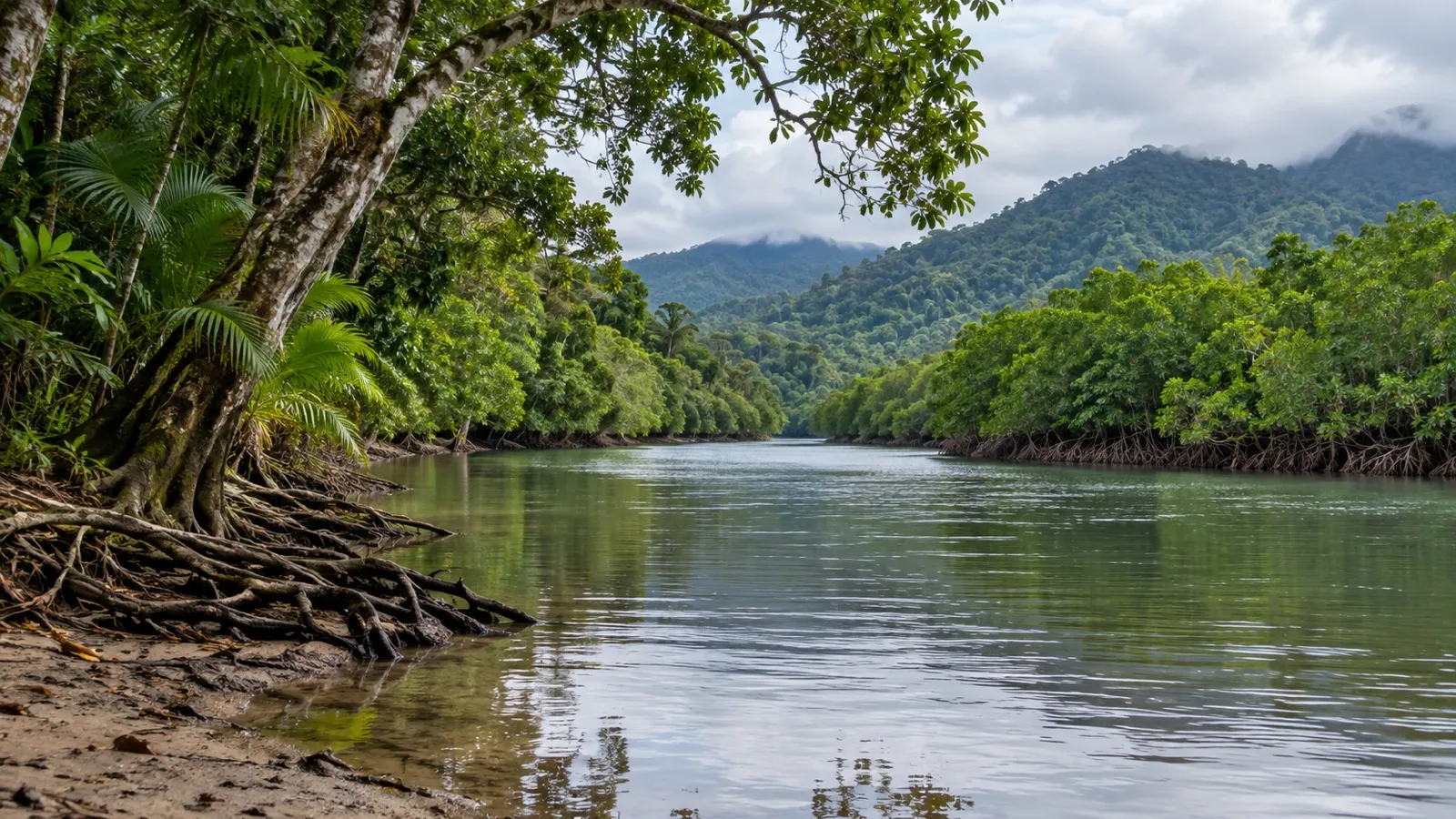
A full northern Daintree route belongs with a ship excursion or a highly experienced private operator using a conservative itinerary. Independent travelers should not use a best-case map estimate as the return plan.
A Daintree River wildlife cruise may fit when carefully timed, but sightings are never guaranteed. Choose a licensed operator, follow all crocodile safety instructions, and keep hands and belongings inside the boat.
Great Barrier Reef trips from Port Douglas
Port Douglas is a major gateway to the Great Barrier Reef, yet ordinary day-boat schedules do not automatically suit tender passengers. Many outer-reef vessels depart before an independently tendering cruiser can promise to finish ship clearance and marina check-in.
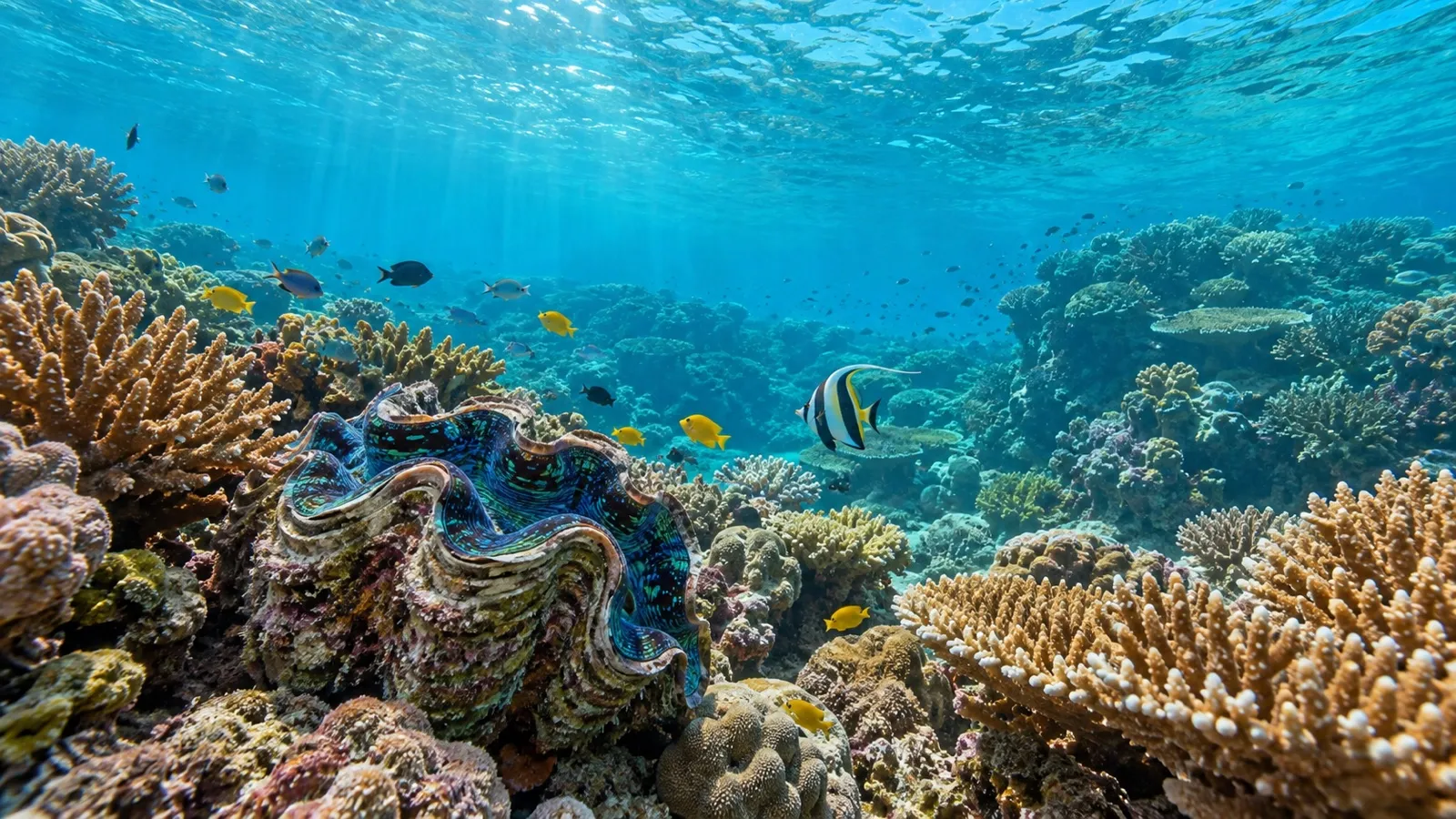
Tourism Port Douglas promotes reef experiences designed around typical cruise calls, but it also tells booked guests to contact the operator about timing concerns. Get written confirmation for your ship, date, check-in, departure, and return rather than relying on a general cruise-friendly label.
A cruise-line excursion offers the strongest schedule protection because the operator coordinates with the ship. An independent booking can work only when the provider accepts tender uncertainty and returns well before the final boat.
Choosing a responsible reef operator
Commercial tourism in the Great Barrier Reef Marine Park requires appropriate permission, and eligible visitors may pay an Environmental Management Charge through the operator. Ask what the fare includes, whether the charge is separate, and which equipment or optional activities cost more.
The briefing is part of the experience, not an obstacle before the water. Do not touch coral, stand on the reef, chase wildlife, feed fish, or remove shells and marine life.
Ask about flotation devices, prescription masks, wetsuits, shade, seasickness, water entry, and supervision before booking. Travelers who do not snorkel can still enjoy some trips through pontoons, underwater viewing, semi-submersible vessels, or guided interpretation, depending on the operator.
Medical and diving questions
Scuba diving and some in-water activities require medical screening, honest health disclosure, and proof of certification where applicable. Never hide a condition to preserve a booking, because a remote reef is the wrong place to discover why a question mattered.
Review the provider’s rules for children, older adults, pregnancy, mobility limitations, and recent flying or diving. Carry required medication in its original packaging and tell a companion where it is.
Wildlife Habitat and easier animal encounters
Wildlife Habitat Port Douglas sits south of town and is a practical alternative when a long Daintree trip feels too ambitious. A taxi or organized tour can connect the marina with the attraction, subject to current hours, encounter schedules, and vehicle availability.
Prebook only after checking that the visit and return fit the tender window. Animal encounters operate on the attraction’s safety terms, and a specific species or photograph should never become more important than staff instructions.
Arrange the ride back before entering because it is easy to lose time around scheduled presentations. If the call shortens, stay in town and save the wildlife park for a land visit.
River cruises and close-to-town alternatives
Local river and inlet trips can offer mangroves, birdlife, coastal scenery, and possible crocodile sightings without the long road north. They are still boat excursions with their own departure, weather, accessibility, and return requirements.
Ask whether the trip was specifically timed for your ship and where it departs within the marina. Wildlife is never guaranteed, and a responsible skipper will keep a safe distance rather than manufacture a close encounter.
Town tours, trike outings, galleries, and food experiences can also fill a cruise day. Choose the activity that ends early enough to leave a calm walk back to the tender.
Taxis, tours, and rental cars
Taxis and prearranged tour vehicles are the simplest ways to reach Mossman Gorge, Wildlife Habitat, or another site outside town. Confirm the quoted currency, waiting time, pickup point, inclusions, and return plan before leaving the marina.
A rental car adds navigation, parking, refueling, traffic, insurance, and return-desk time to a tender call. It makes sense only for a confident driver with a simple route and a reservation that explicitly accommodates cruise timing.
Australians drive on the left, and rural roads can bring rain, wildlife, cyclists, and changing surfaces. Never let a late start tempt you into unsafe speed on the return.
Accessibility starts on the water
Tender boarding is the first and most important accessibility check. Cruise lines may restrict wheelchairs, scooters, or passengers unable to manage steps when swell, lifting limits, or tender design make transfer unsafe.
Ask the cruise line before sailing about manual transfers, device dimensions, companion help, accessible tender seating, and the possibility of a same-day restriction. A marina described as accessible does not guarantee that the ship-to-tender transfer is possible.
On shore, verify surfaces, gradients, restrooms, vehicle steps, securement, and water-entry arrangements with each operator. Mossman Gorge, a reef pontoon, Four Mile Beach, and a wildlife attraction each pose different mobility questions.
A central Port Douglas day can still be excellent if tender or vehicle access limits the range. Marina cafes, Macrossan Street, waterfront parks, shops, and nearby viewpoints offer flexibility.
Tropical weather and tender reality
Far North Queensland can shift between strong sun, humidity, wind, and heavy tropical rain. Check the Bureau of Meteorology and the ship’s announcements, then dress in light layers with a compact rain shell.
The wet season can bring intense downpours, flooding, road disruptions, and tropical cyclone activity. The dry season often brings easier conditions, but wind and swell can still affect tenders and reef boats.
A canceled tender is an operational safety decision, not a problem an independent operator can fix. Know the cancellation terms before booking anything ashore and keep confirmation messages.
Marine stingers, crocodiles, and wildlife safety
Marine stinger risk varies with season and conditions, and local patrol advice should control where and how you swim. Use stinger-resistant protection when recommended and stay inside designated areas.
Saltwater crocodiles can occur in coastal waters, estuaries, rivers, and beaches of northern Queensland. Obey warning signs, stay back from water edges where advised, and never approach or feed one.
Cassowaries may be encountered in the wider Wet Tropics. Give them space, never feed them, secure food, and follow Queensland Parks guidance if one appears.
Do not touch unfamiliar plants, insects, marine animals, or stranded creatures. The most respectful wildlife encounter is often the one where you quietly watch and leave the animal’s path open.
Money, food, and connectivity
The Australian dollar is the local currency, and cards are widely used in Port Douglas. A backup payment method remains useful for a small vendor, a connection failure, or a transport provider with different acceptance rules.
Port Douglas has a strong restaurant scene, so lunch can be a highlight rather than filler. If you have a timed excursion, reserve or eat outside the busiest period and tell staff when you must leave.
Mobile service is generally useful in town but can weaken on roads, in rainforest, or offshore. Download tickets, maps, operator contacts, and the tender deadline before departure.
Australian entry and biosecurity rules
Passport, visa, and shore-leave requirements depend on nationality, cruise itinerary, and cruise-line processing. Use Australia’s Department of Home Affairs and your cruise line as the final authorities for the specific voyage.
Australian biosecurity law requires travelers to declare specified food, plant material, animal products, and rural equipment. The Department of Agriculture also says footwear, clothing, and equipment used in rural areas or near animals must be thoroughly cleaned and declared on arrival.
Never carry fruit or other ship food ashore unless the ship explicitly confirms it is permitted. When uncertain, declare an item and let a biosecurity officer decide rather than risking a penalty.
Return-to-ship rules that work
Work backward from the ship’s published last tender, not from scheduled departure. Allow time to finish the attraction, reach the marina, find the correct queue, complete any screening, board, and cross back to the ship.
I prefer to be at the marina 60 to 90 minutes before the final tender after an independent trip, with more margin after a distant Daintree outing. This is a planning preference, and the cruise line’s deadline always controls.
Independent reef boats need an even larger operational cushion because their arrival can be affected by sea conditions. If a provider returns too close to the cutoff, choose the ship’s excursion or a different activity.
Three realistic Port Douglas cruise-day plans
Town, beach, and lunch
Walk from the marina through the waterfront area, browse Macrossan Street, and choose Anzac Park, Flagstaff Hill, or a short Four Mile Beach visit. Finish with lunch and return to the marina early enough to avoid the last rush.
Mossman Gorge focus
Use a cruise-aware tour or prearranged driver to Mossman Gorge Centre, check park alerts, take the shuttle when operating, and choose a track suited to the day’s conditions. Return directly to Port Douglas with town time as a bonus rather than a promise.
Reef day
Book a cruise-line excursion or a verified cruise-specific reef operator with written timing confirmation. Follow the marine briefing, enjoy the permitted activity, and skip any extra town stop if the vessel returns later than planned.
Common planning mistakes
The first mistake is booking a standard reef departure that leaves before your tender can reliably arrive. Match the exact ship call rather than hoping a timetable will bend.
The second is combining Mossman Gorge, Cape Tribulation, and a beach in one independent rush. Daintree roads, ferry queues, rain, and tender deadlines make that plan fragile.
The third is swimming wherever the sand looks inviting. Marine stingers, crocodiles, currents, and local closures require current advice and designated access.
The fourth is treating the final tender as the time to reach the marina. It is the cutoff for the ship’s process, so arrive well before it.
Port Douglas cruise port FAQ
Where do cruise tenders land?
Official local tourism information identifies Crystalbrook Superyacht Marina as the tender landing. The ship’s final instructions control if an operational change occurs.
Can I walk into town?
Yes, central Port Douglas is a short walk from the marina for many travelers. Heat, gradients, and mobility needs can still make a local ride useful.
Can I book an independent reef boat?
Only if the operator confirms in writing that its check-in and return fit your ship’s tender schedule. Standard public departures often do not align with cruise arrival.
Is Mossman Gorge realistic?
Yes, it is the most practical major rainforest outing from Port Douglas when transport and park access are arranged. Check current alerts and leave a generous return margin.
What happens if tendering is canceled?
You may be unable to go ashore, and the cruise line will adjust the port call. Review independent cancellation policies before booking because the operator’s terms may differ from the ship’s decision.
What is best for a short call?
Stay in Port Douglas for Macrossan Street, waterfront parks, a short beach view, and lunch. This plan is flexible, enjoyable, and least exposed to transport delays.
My bottom line on Port Douglas
Port Douglas offers a genuine choice between reef, rainforest, wildlife, and a charming tropical town. The winning plan is not the one with the most famous names, but the one that fits the tender window with room to breathe.
Choose one major experience, use a cruise-aware operator, follow tropical safety guidance, and return to the marina early. That is how this spectacular gateway feels like an adventure instead of a race.
Keep planning your Australia cruise
Continue with our guides to Cairns cruise port, Airlie Beach cruise port, and Australia cruise ports. Recheck the ship’s daily program after arrival because tender timing and the final boarding deadline can change.