Qatar and Bahrain Cruise Ports: Doha and Manama Compared
Doha puts you in the city the moment you step off the gangway. Manama puts you inside a working container terminal on an island with no sidewalk out of it, and that single difference decides how you should spend your money in each port.
My quick take
These two get sold as a matched pair and they are nothing alike. Doha is a walk-off port where the excursion desk is mostly selling you a ride you do not need, and Manama is a port where transport is the whole day.
If you have one excursion budget to spend across a Gulf itinerary, I would spend it in Bahrain and walk in Qatar. That is the opposite of what most people do, and it is the single piece of advice on this page I feel strongest about.
The quick facts
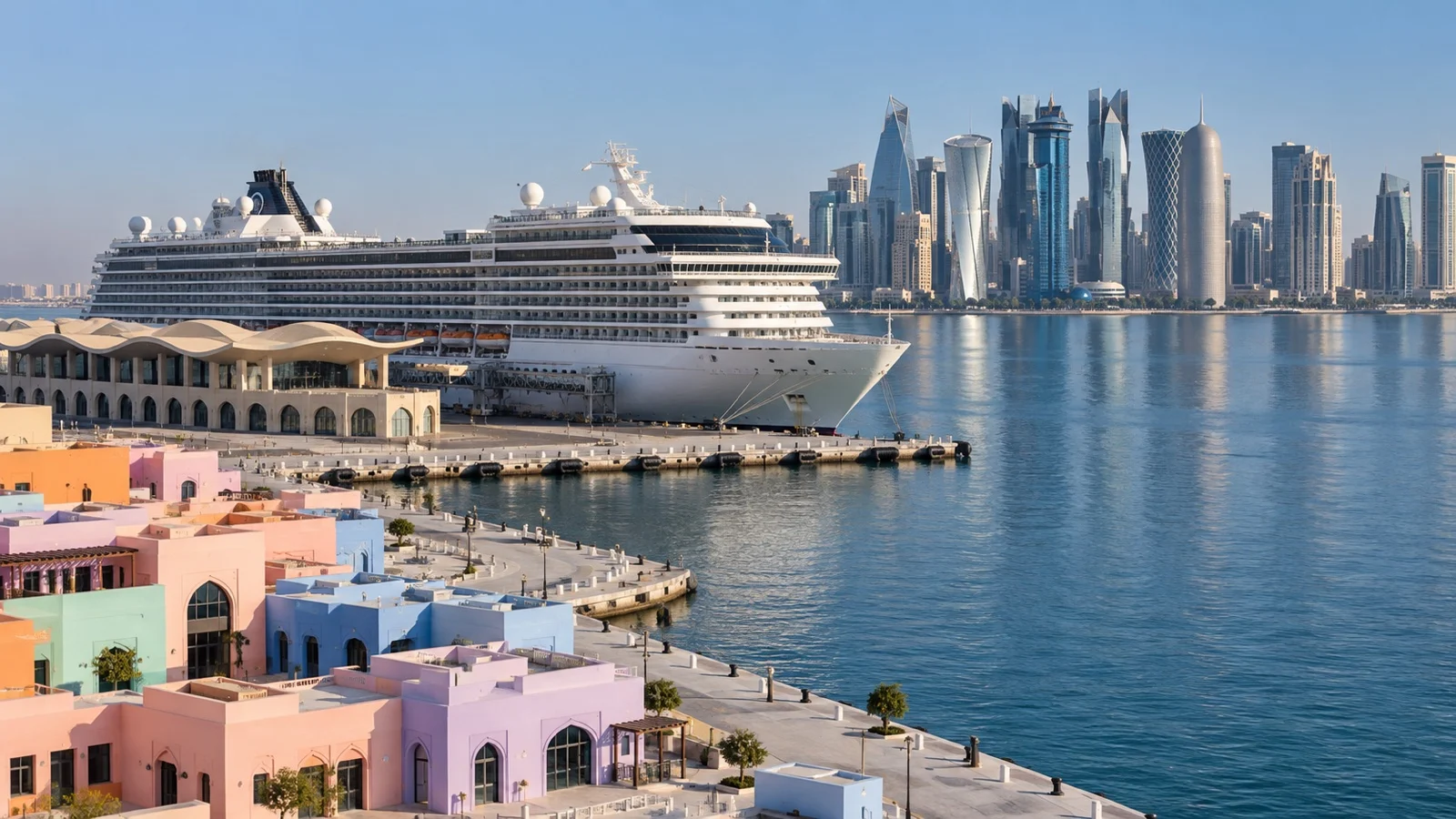
- Doha berth: The Grand Cruise Terminal sits on Corniche Road in the Mina District, with two berths and museums within walking distance.
- Manama berth: Ships tie up inside Khalifa Bin Salman Port on Hidd, a container facility with no pedestrian exit.
- Season: Both are winter calls, running roughly November through April and effectively closed to cruise ships in summer.
- Entry: Two separate countries with two separate rule sets, including different passport validity requirements.
- Money: Qatari riyal in Doha, Bahraini dinar in Manama, with cards fine in museums and malls and cash better everywhere else.
How Qatar and Bahrain end up on your itinerary at all
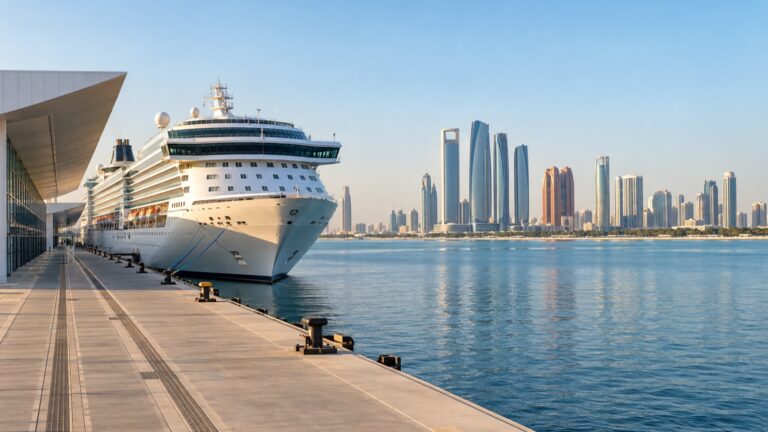
Almost nobody flies halfway around the world to board a ship in Doha or Manama. Both show up as side calls on a loop that starts and ends in Dubai or Abu Dhabi, usually seven to fourteen nights with a couple of sea days folded in.
The standard shape is the two Emirates ports first, then one or both of these, sometimes with Muscat or Khasab added on the Oman side. Our comparison of Dubai and Abu Dhabi as cruise ports covers the anchor half of that itinerary, and it is worth reading first because those two set the tone for the week.
Doha: the rare Gulf port where the terminal is the town
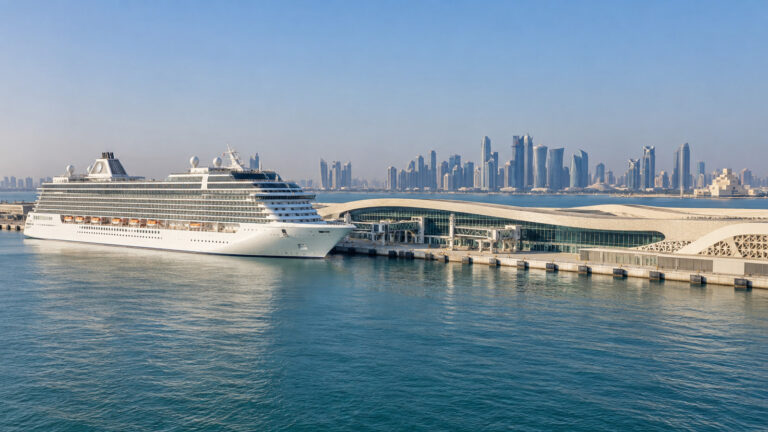
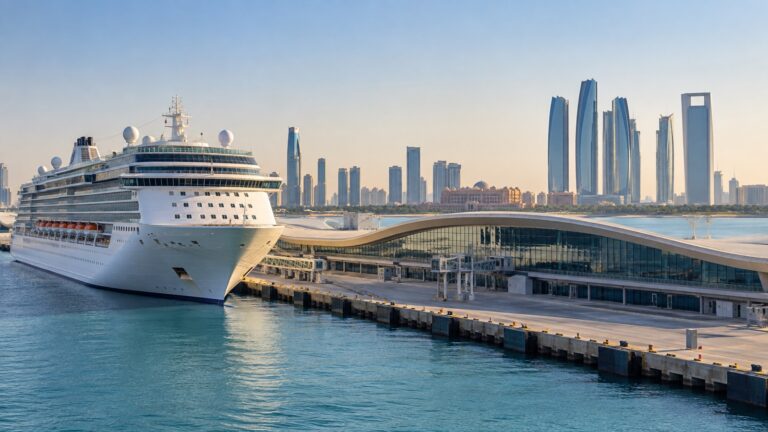
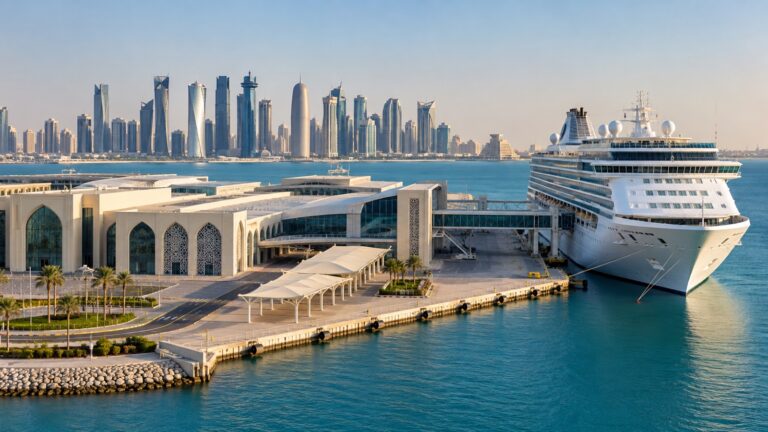
The Grand Cruise Terminal is on Corniche Road in the Mina District, which means you are already downtown when the gangway drops. Two berths, a purpose-built passenger building with immigration, ATMs and free wi-fi, and no long bus ride to a gate.
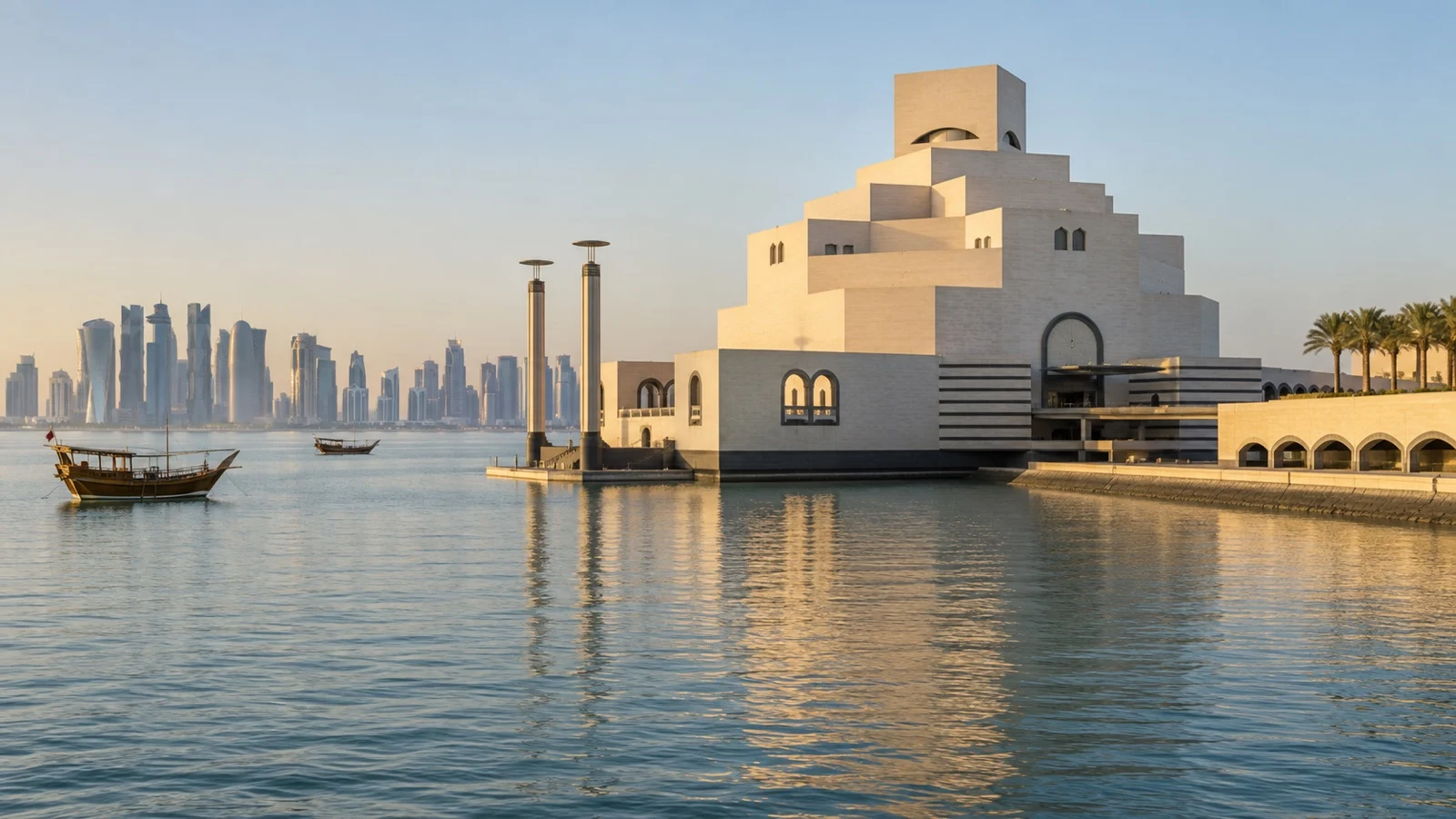
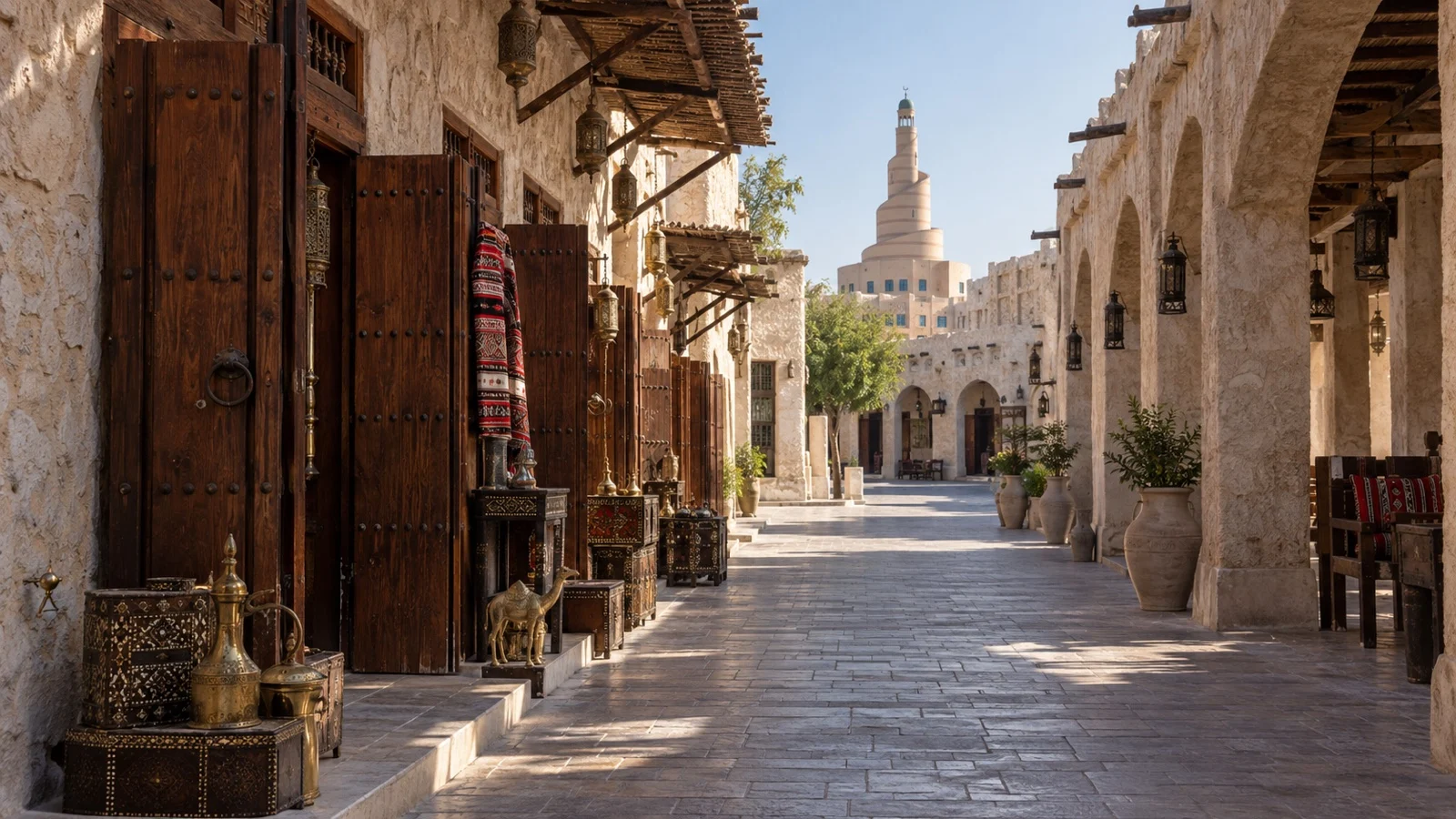
Box Park, Flag Plaza, the rebuilt Mina District waterfront and the Museum of Islamic Art are all walkable from the ship. Souq Waqif and the National Museum of Qatar are a five to ten minute taxi ride, which is short enough that a metered turquoise cab beats any organized transfer.
Our full Doha cruise port guide has the terminal layout, the metro fares and the museum hours in detail. If Doha is your embarkation city rather than a day call, the list of hotels near the Doha cruise port keeps you inside taxi range.
What I would do with a Doha day, and what I would skip
One museum in the morning, lunch and coffee at Souq Waqif, then a slow walk back along the Corniche. That is a full, satisfying port day and it costs you two short cab fares and two admissions.
What I would not buy here is a desert safari. Dune bashing swallows four to six hours once you count transfers, and on a short call you will spend most of your Qatar day looking at sand instead of at the city that spent a fortune making itself worth looking at.
Manama: your ship docks on Hidd, not in the capital
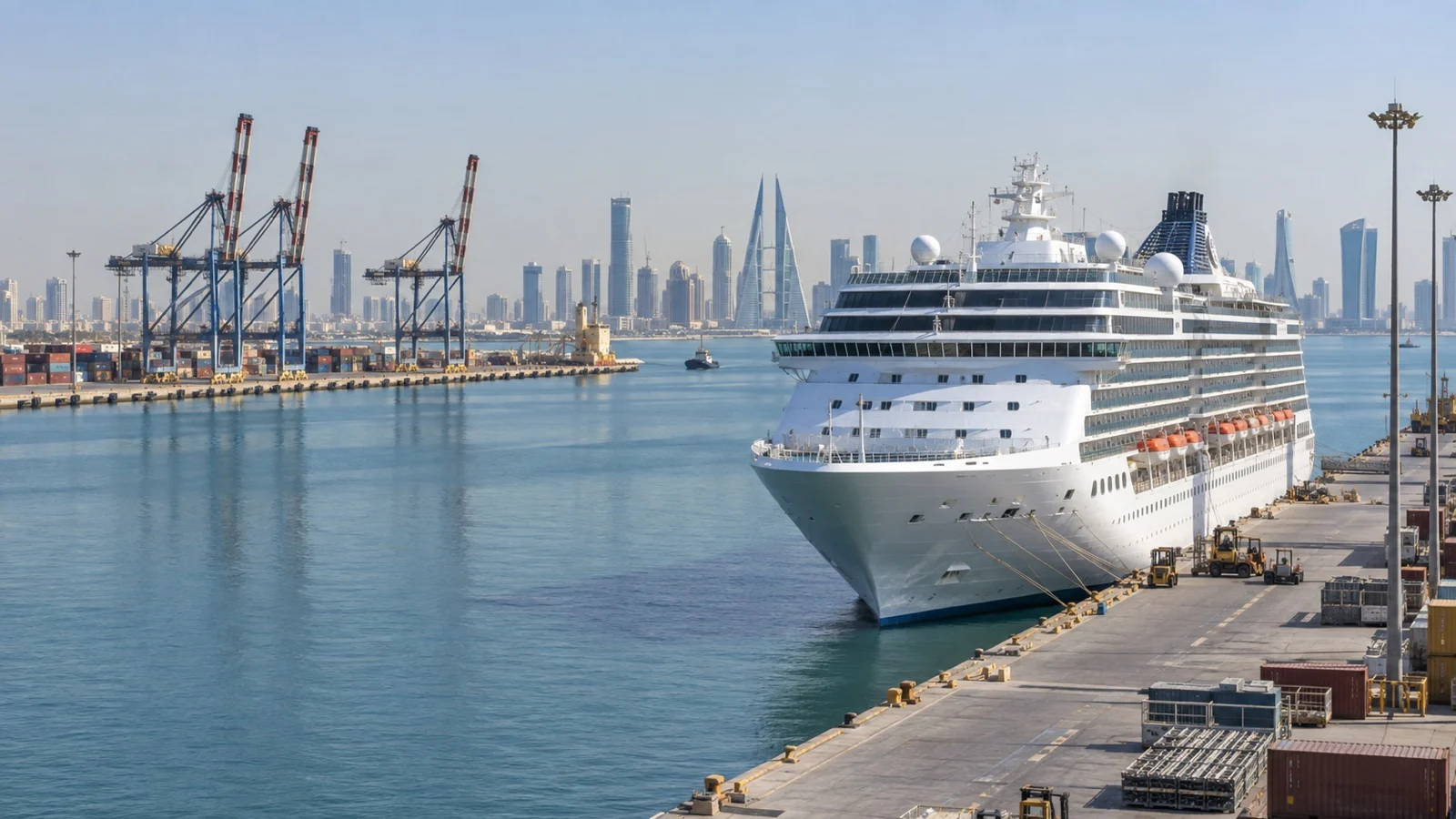
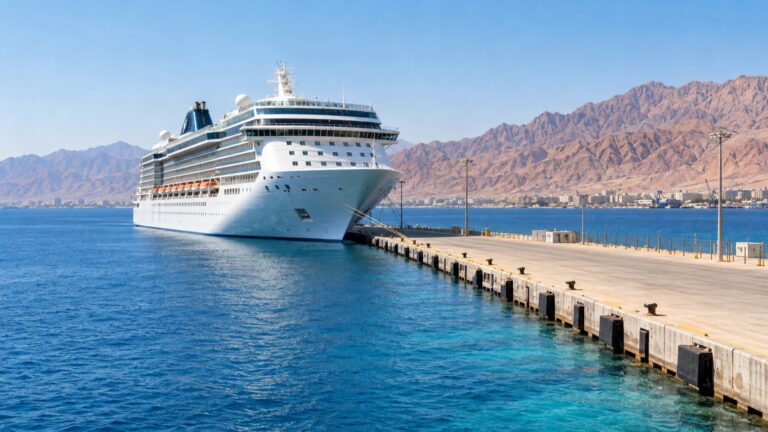
Khalifa Bin Salman Port is a container and cargo facility with a cruise berth attached, sitting on the industrial island of Hidd across the water from Manama. The passenger building is small and functional, a processing hall rather than a place to linger.
There is no walking out of it. You will be moved to the gate by vehicle whether you like it or not, because the space between the terminal door and the public road is an active port working around you.
The Manama cruise port guide covers the berth, the taxi stand and the site hours properly. The one line I would carry with me is that the taxi rank thins out fast when a big ship empties at once.
What a Bahrain day is actually for
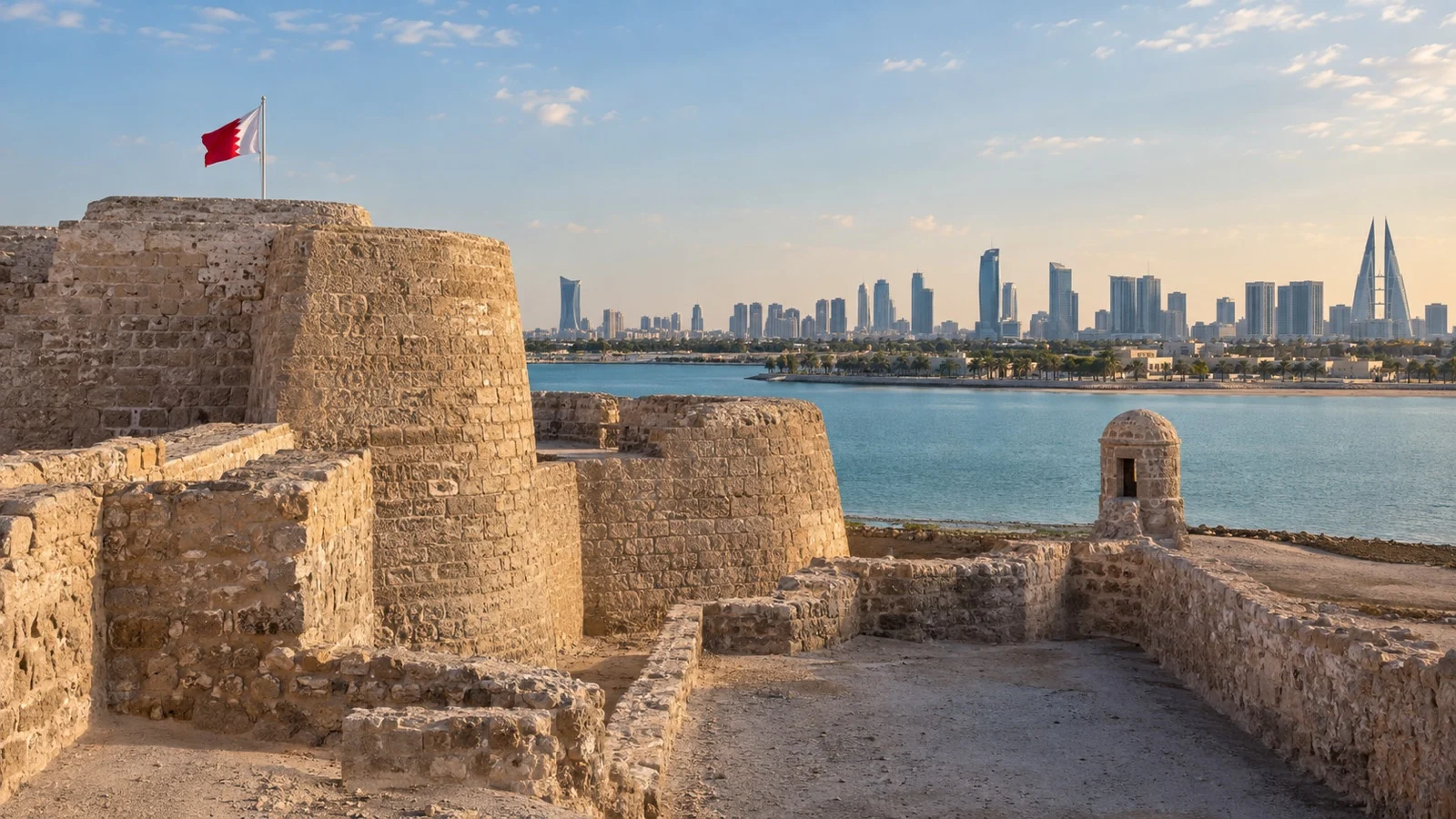
Bahrain is the one stop on a Gulf itinerary where the headline attraction is thousands of years old rather than a few years old. That is the reason to come ashore, and it is the reason I would not spend the day in a mall.
The short list is genuinely short, which makes planning easy:
- Qal’at al-Bahrain: The archaeological tell that was the capital of Dilmun sits about 3.4 miles (5.5 km) west of Manama, with a Portuguese fort on top and a site museum beside it.
- Bahrain National Museum: The best hour of context on this coast, and it closes on Tuesdays.
- Al Fateh Grand Mosque: Free multilingual guides and a famously large dome, but closed to visitors on Fridays.
- Manama Souq and Bab Al Bahrain: Gold, spices and halwa behind a 1940s gateway that used to be the country’s front door from the sea.
Which one actually deserves an excursion
Doha does not need one. The berth is central, the taxis are metered, the two museums are minutes away and the terminal itself opens onto a walkable waterfront, so buying a bus tour here is paying to be driven past things you could reach on foot.
Manama does need one, or at least it needs the transport half of one. A car and driver for four or five hours is the best value decision at this port, and a ship tour is a perfectly reasonable substitute if you would rather not negotiate anything on the pier.
So the honest ranking splits in two directions. Doha is the better port, Bahrain is the better excursion, and if your itinerary only includes one of them I would rather have the Doha call and the Bahrain tour than the other way around.
The season is about five months long, and that is the whole story
Cruise ships come to this corner of the Gulf from roughly November to April and then leave. There is no shoulder season worth chasing and no summer program to speak of, because the weather in between is not a matter of comfort but of safety.
If you are booking at the very edges of the season, late October or early May, read the forecast rather than the brochure. The calendar says shoulder season and the thermometer often disagrees.
Gulf winter is warm, not mild, and shade runs out fast
Doha’s winter averages sit somewhere around 59 to 68 degrees (15 to 20 C), and Bahrain runs slightly warmer in the same months. Those are pleasant numbers and they hide the fact that the sun is still doing serious work at midday.
January can also surprise you at the other end. Nighttime and early morning temperatures can drop toward 50 degrees (10 C), which catches out everyone who packed for a desert and brought one linen shirt.
Summer highs in both countries run past 110 degrees (43 C), which is the entire reason the season exists. Our piece on extreme heat on a cruise in the Gulf and Red Sea covers what that actually does to a port day, and it is the reason I plan shade breaks into any Corniche walk.
Two countries, two different sets of entry rules
For Qatar, US tourist passport holders can generally obtain entry on arrival for a short visit, with a small fee, and the passport requirement is three months of validity plus a couple of blank pages. Everyone not on the visa-free list applies online in advance.
Bahrain requires a visa, which you can arrange in advance online or obtain on arrival depending on your nationality, and it wants six months of passport validity. That six versus three month gap is the detail that quietly disqualifies people who thought their passport was fine.
On a cruise call, most passengers are cleared as a group by the ship and never touch a form. That is convenient right up until it is not, so our guide to ports where your passport alone is not enough is worth a read before you book, not on the morning you dock.
What to wear, and where it actually matters
The baseline in both countries is shoulders and knees covered, for men as well as women. Qatar states it more firmly than Bahrain does, extending the expectation to chests and stomachs and to leggings worn without something longer over them.
No head covering is required of visitors in either country in ordinary public places. Mosques are the exception, and Al Fateh in Bahrain hands out abayas and headscarves at the door so you do not need to dress for it on the ship.
Money, taxis and the practical layer
Two currencies, two very different denominations. The Qatari riyal behaves the way you expect a small note to behave, while the Bahraini dinar is one of the highest value currencies in the world, so a single note covers a lot and change matters more than usual.
Cards work fine at museums, hotels, malls and most restaurants in both countries. Cash is still simpler for taxis, souq stalls and tips, which is exactly the pattern our guide to carrying cash and cards in port describes.
English is spoken widely in both places, to the point where the language barrier is rarely the thing that goes wrong. Ride-hailing exists in both, and I still treat the taxi rank as the plan and the app as the bonus.
Tipping is appreciated rather than enforced, and rounding up a fare or leaving a small amount for a driver who waited is normal. Do not overthink it, and do not assume a service charge on a bill went to the person who served you.
The day of the week can wreck either port
In Qatar, the weekend is Friday and Saturday, and Friday mornings belong to prayers. The flagship museums open in the early afternoon on Fridays, and midweek they close on different days from each other, so one of the two is usually shut.
In Bahrain, the national museum closes on Tuesdays and the grand mosque does not receive visitors on Fridays. A Tuesday call and a Friday call each remove one of the two best things to do.
Ramadan changes hours across both countries and moves about eleven days earlier each year. Check it against the actual date of your call rather than against a general guide, including this one.
What people get wrong about pairing these two
The common mistake is expecting two smaller versions of Dubai. What you actually get is a compact walkable city day and an archaeology day that starts with a car ride out of a container terminal.
The second mistake is assuming the famous ruins are reachable. Qatar’s only World Heritage site is the abandoned pearling town of Al Zubarah, and it sits on the far northwest coast rather than anywhere near the Corniche, which makes it a long day out of a short call.
Quick answers
Do cruise ships dock or tender in Doha and Manama?
Both are alongside berths, so there is no tender in either port. Doha uses a dedicated passenger terminal on the Corniche, while Manama uses a cruise berth inside a working container port on Hidd.
Can you walk into town from the Bahrain cruise port?
No, and it is not a close call. The terminal sits inside a secure industrial port with no pedestrian route out, so a taxi, a private driver or a ship transfer is the only way off the pier.
Do I need a visa for Qatar and Bahrain on a cruise?
Many nationalities can enter Qatar on arrival for a short visit, while Bahrain requires a visa arranged in advance or obtained at the border depending on your passport. Cruise passengers are usually cleared as a group by the ship, but confirm your own case with the line before you sail.
When is the cruise season in Qatar and Bahrain?
Roughly November through April, with the heart of it falling between December and March. Summer calls barely exist because daytime highs push past 110 degrees (43 C).
What should I wear ashore in Doha and Manama?
Shoulders and knees covered is the working rule for everyone in both countries, and Qatar applies it more strictly in public. Add a light long sleeve layer for mosque visits, which the Bahraini grand mosque will supplement with an abaya and headscarf at the door.
Final word
If you can only fit one of these two into an itinerary, take Doha. It gives you a real city day for the price of two cab rides, and it is the only Gulf port where the terminal itself is worth ten minutes of your attention.
But if both are on the schedule, do not spend the same way in each. Walk Qatar, book a driver in Bahrain, check what closes on your particular day of the week, and you will get two good port days out of a region that punishes people who plan them identically.
How this guide was researched: Berth locations, terminal access, season dates, entry and passport rules, dress expectations and attraction closing days for both countries were checked against official government, port and heritage listings in November 2026. Visa fees, opening hours and cruise deployments change often, so confirm the details that matter for your own sailing before you book. See our Editorial Policy.