Manama Cruise Port: Hidd Berths, Taxis and Dilmun
Manama is a cruise port where the first surprise comes before you see the skyline. Ships use Khalifa Bin Salman Port in the Hidd industrial area, so the gangway does not place you within a casual stroll of Bab Al Bahrain or the old souq.
Once you solve that transfer, Bahrain is compact enough for a satisfying day of archaeology, Islamic architecture, markets, and modern waterfronts. Choose one major historic site, add central Manama, and keep a generous return buffer for the secured port gate.
Manama cruise port quick facts
- Country: Kingdom of Bahrain
- Cruise berth: Khalifa Bin Salman Port
- Port area: Hidd on Muharraq Island
- City-center access: Ship shuttle, organized tour, or taxi
- Walkability from berth: No, the commercial port is secured and remote from central sights
- Signature city stop: Bab Al Bahrain and Manama Souq
- Best archaeology: Qal’at al-Bahrain and its site museum
- Best cultural overview: Bahrain National Museum
- Currency: Bahraini dinar
- Language: Arabic, with English widely used in visitor services
- Main cruise season: Cooler months, with exact calls set by cruise lines
- Return rule: Allow time for traffic, security, and the drive through the port
My quick take
Bahrain Fort is the strongest choice if you want the island’s deepest story. The layered settlement connects the cruise call to Dilmun, long-distance trade, later fortifications, and a maritime history far older than the modern port.
For an easier day, pair the Bahrain National Museum with Bab Al Bahrain and the souq. That combination gives you context, local atmosphere, air-conditioned time, and fewer long road transfers.
Where cruise ships dock in Bahrain
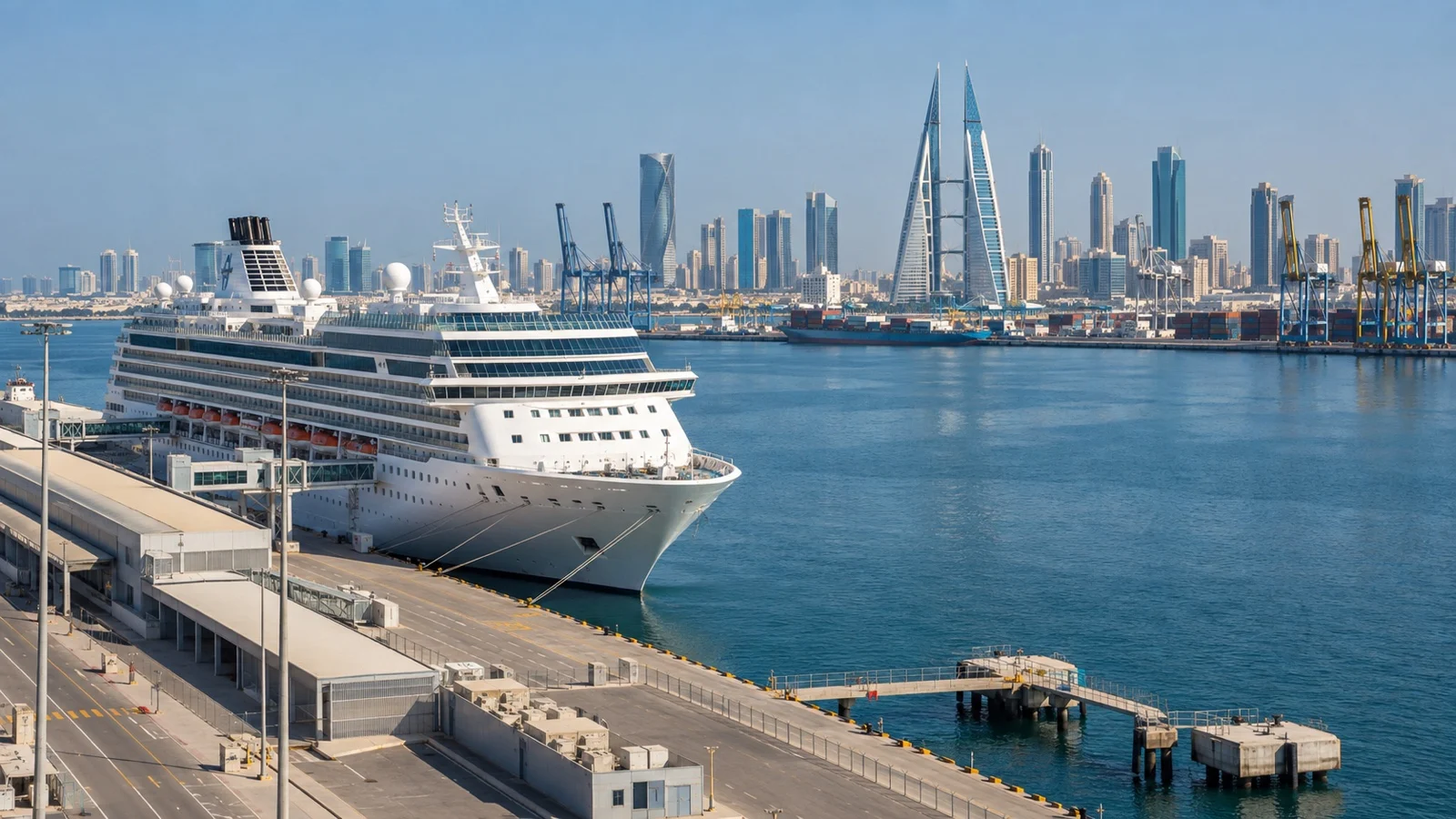
Cruise ships serving Manama normally dock at Khalifa Bin Salman Port, often shortened to KBSP. The commercial port is in Hidd, away from the central streets that travelers usually picture when they hear Manama.
APM Terminals operates the port and publishes current corporate information on its official Bahrain page. Berth assignments, terminal procedures, and access arrangements remain operational decisions for the port and cruise line.
Do not plan to walk out of the berth complex. It is a working, secured environment with cargo traffic, controlled gates, and distances that are not designed for independent sightseeing on foot.
What the arrival feels like
The exact passenger setup can vary with the ship and call. You may encounter a terminal building, temporary processing area, shuttle staging point, taxis, tour coaches, or a combination arranged for that day.
Listen carefully to the onboard briefing because instructions about shuttle tickets, taxi pickup, passports, and the final return can be specific to your sailing. The gate procedure matters just as much as the road distance back from Manama.
Why the berth is not in downtown Manama
Khalifa Bin Salman Port is Bahrain’s major commercial maritime facility, built for large-scale port operations rather than a downtown promenade. Cruise passengers benefit from modern ship access but pay for it with a transfer at the beginning and end of the visit.
The location does put you on Muharraq Island, which can be useful if your plan includes Muharraq’s pearling heritage. It does not make the historic lanes walkable from the ship, since you still need authorized transport out of the port.
Getting from Hidd into Manama
Ship shuttle
A cruise line may provide a shuttle, sell a transfer, or direct guests to an approved transport point. Confirm the destination because a drop near Bab Al Bahrain is far more useful for independent visitors than a remote mall or hotel.
Also check whether the shuttle runs continuously or at fixed times. A queue near all-aboard can erase the buffer you thought you had saved.
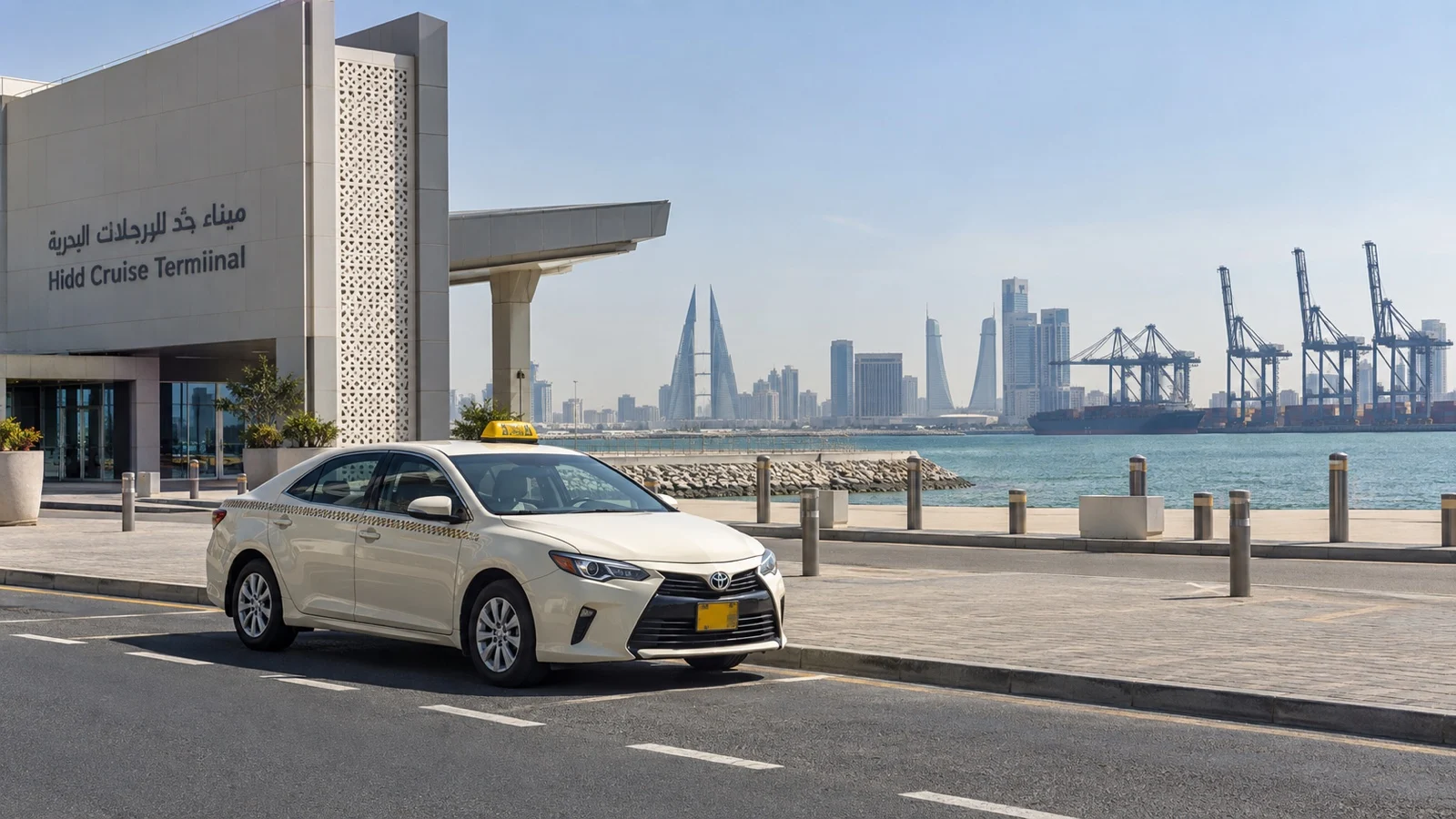
Taxi
A taxi is the simplest flexible option when vehicles are authorized to collect passengers at the terminal. Agree on the destination, confirm that the meter is used when appropriate, and keep the ship and port details available for the return.
Ask reception or the terminal staff how to arrange the return vehicle because an ordinary city taxi may need precise instructions to reach the correct passenger entrance. A photo of the port card or shuttle notice can be more useful than saying only the ship’s name.
Public transportation
Bahrain has a public bus network with route maps, journey planning, service notices, and fare information on the Bahrain Public Transport Company website. It can be practical within the urban area when the schedule suits your plans.
The berth itself is the complication, since passengers cannot assume they can walk through the commercial port to a roadside stop. Use buses only after confirming a legal, reliable connection from the terminal and a return that preserves your ship buffer.
Organized excursion
A ship tour removes the port-transfer puzzle and can combine widely separated sights. It is especially useful for Bahrain Fort, the burial mounds, or a mosque visit with fixed access requirements.
Read the itinerary closely because a panoramic stop is not the same as entering a museum or archaeological site. The best tour for you is the one that protects your priority, not the one with the longest list of photo stops.
Bab Al Bahrain and Manama Souq
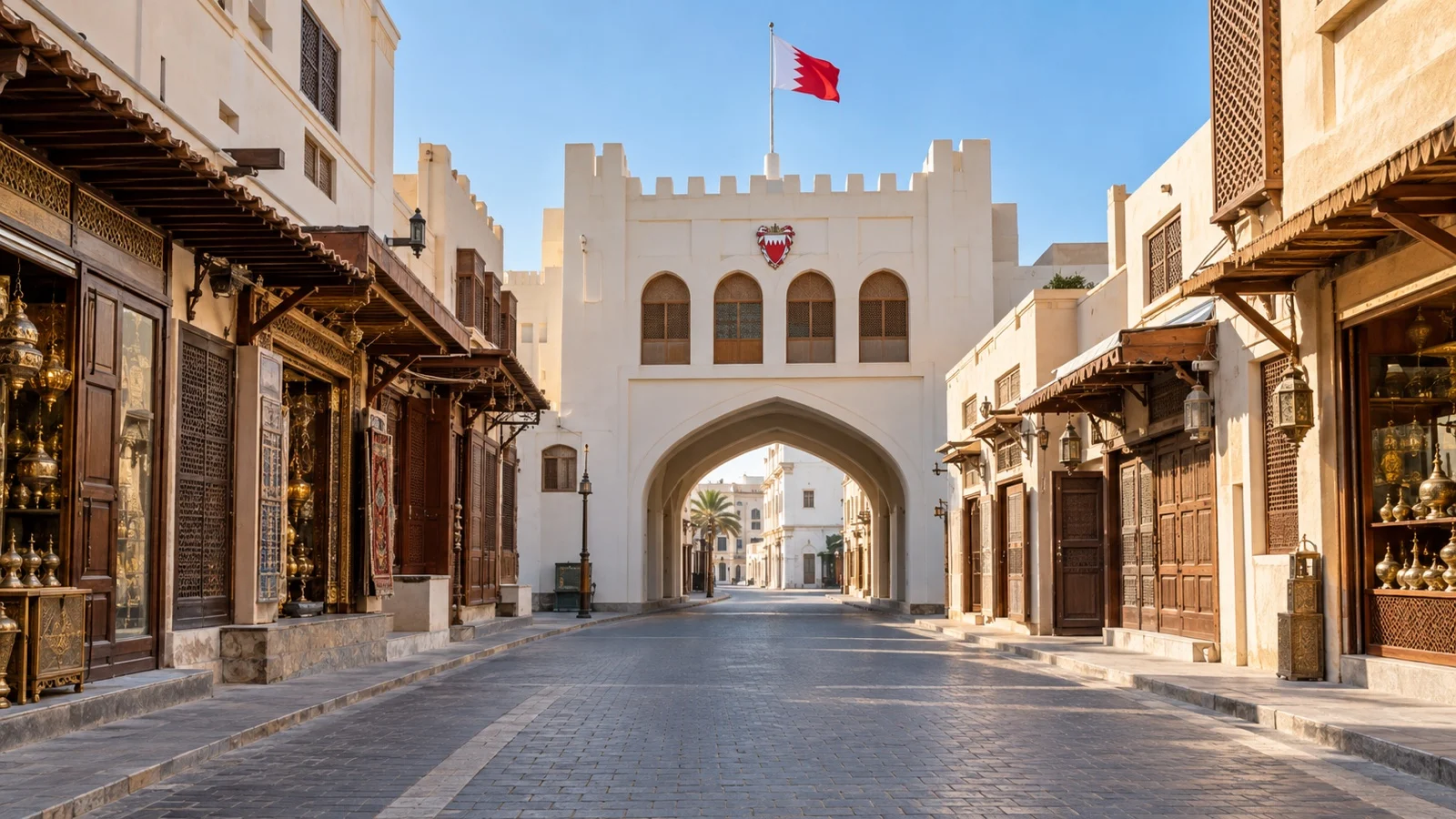
Bab Al Bahrain is the ceremonial gateway at the edge of the traditional market district. Its white arches make an easy meeting point, while the surrounding streets lead into shops selling spices, perfumes, textiles, sweets, jewelry, and everyday goods.
The souq rewards a slower walk more than a rushed shopping mission. Step away from the brightest storefronts, notice the mix of communities and businesses, and ask before photographing people or small shops.
Opening patterns can change around prayer times, holidays, Ramadan, and the midday break. A morning arrival may feel quiet, while later hours can bring more activity but also less margin before departure.
Buying gold, pearls, and perfume
Bahrain has a long association with natural pearls, but that does not make every attractive item an automatic bargain. Ask for documentation, understand whether a pearl is natural or cultured, and compare the return policy before making a major purchase.
Gold is commonly sold by weight plus workmanship, while perfume can range from familiar sprays to concentrated oils and custom blends. Keep receipts for customs and insurance, and do not let a tight return time rush the decision.
Bahrain National Museum
The Bahrain National Museum is the best single introduction to the island when you want history presented in a manageable, climate-controlled visit. Its collections help explain Dilmun archaeology, burial customs, traditional crafts, domestic life, and Bahrain’s relationship with the sea.
Use the official Bahrain tourism listing to confirm opening hours, admission, exhibitions, and holiday changes. Museum schedules can shift, and Friday or Ramadan hours deserve special attention.
Visit the museum before Bahrain Fort if you enjoy archaeology but find exposed ruins difficult to interpret. The galleries give you the vocabulary to recognize the story when you later stand on the tell.
Qal’at al-Bahrain and the site museum
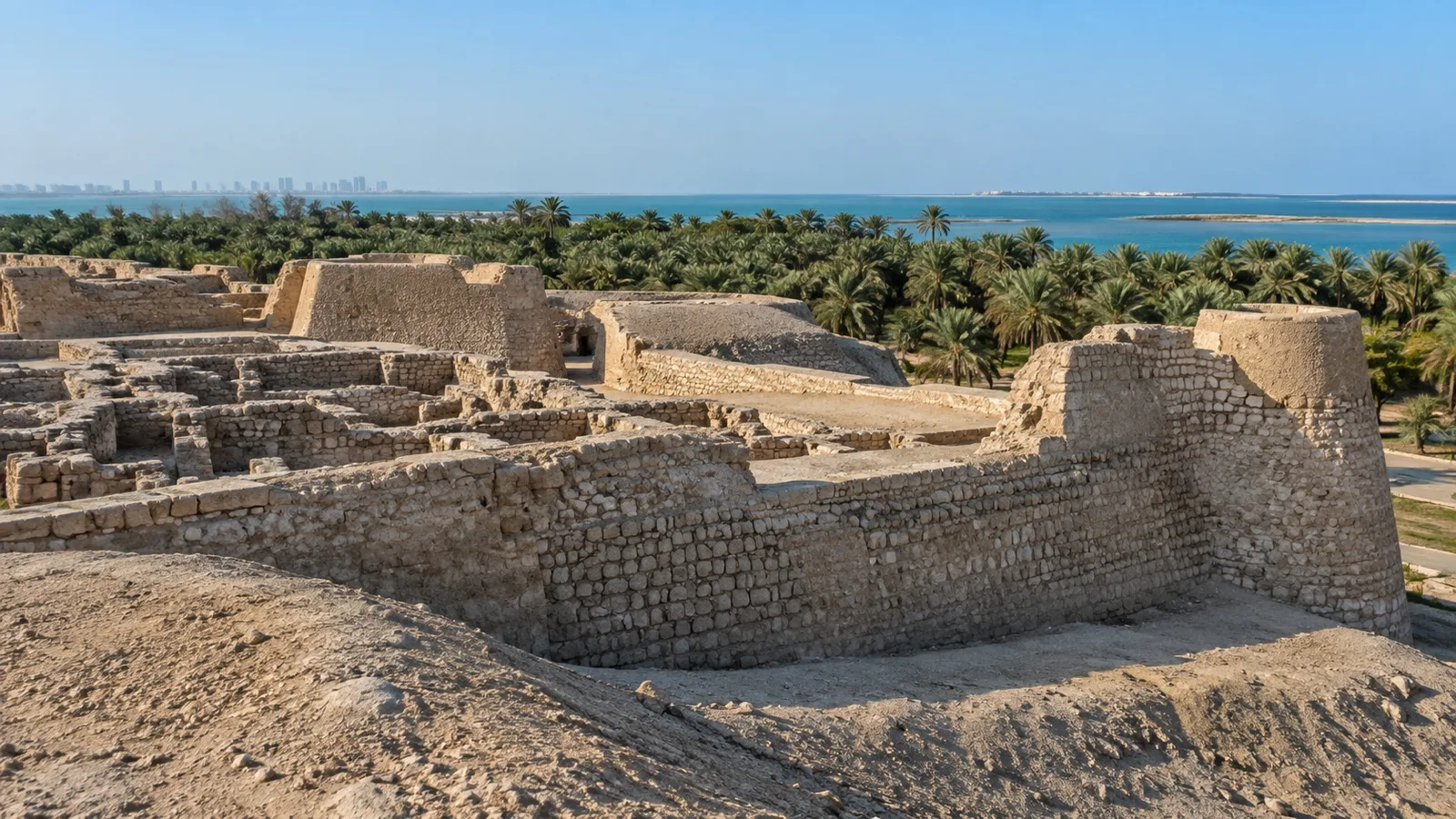
Qal’at al-Bahrain is not merely a photogenic Portuguese fort. UNESCO describes a large archaeological tell with layers of occupation reaching from about 2300 BCE to the sixteenth century, including the richest known remains of the Dilmun capital.
The UNESCO World Heritage listing explains that the site functioned as an important trading port and connected Bahrain with wider maritime networks. The visible fortress crowns a much deeper landscape of palaces, houses, defenses, and commercial activity.
The site museum makes the ruins more intelligible and offers welcome indoor time. Check the official visitor listing for current access, then plan around heat and sunset rather than assuming every area follows the same hours.
How much time to allow
Give the fort and museum enough time to feel like one experience. A quick exterior photograph misses the archaeology, while a long scholarly visit may squeeze out your return to Hidd.
Wear shoes with grip and bring water, sun protection, and a light layer for air conditioning. Surfaces can be uneven, and shade is limited once you move away from the museum.
Al Fateh Grand Mosque
Al Fateh Grand Mosque offers an introduction to contemporary Islamic architecture and religious life. Visitor access depends on worship, events, day of the week, and current policy, so check the official tourism information before building your day around an interior visit.
Dress modestly, follow staff directions, and expect to remove shoes where requested. Photography rules can vary inside, and a place of worship should never be treated as a backdrop before you understand the etiquette.
A guided visit is the best version because the building becomes more than scale and decoration. Ask respectful questions and leave room for prayer schedules to take precedence.
Muharraq and the Pearling Path
Historic Muharraq provides a more intimate alternative to central Manama. Its lanes, merchant houses, shops, and cultural spaces tell the story of an island economy shaped by pearling before oil transformed the region.
UNESCO’s Pearling, Testimony of an Island Economy property includes seventeen buildings in Muharraq, offshore oyster beds, seashore, and Qal’at Bu Mahir. The urban sites are spread through a living neighborhood, so this is a route rather than one museum door.
Choose a defined section instead of attempting the entire heritage trail on a short call. Current access to individual houses and visitor centers can vary, making an official map or guided walk valuable.
The Dilmun Burial Mounds
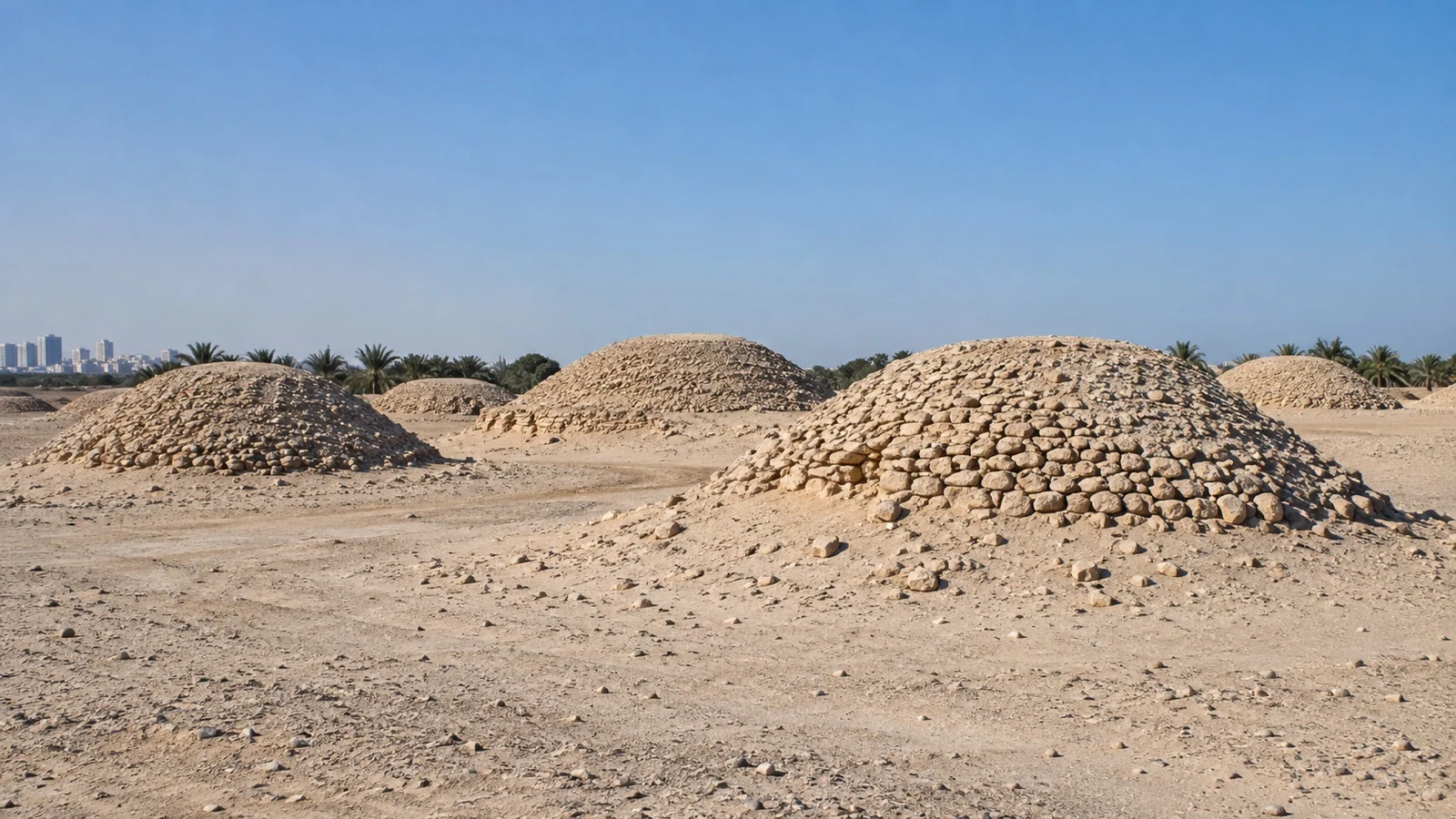
The Dilmun Burial Mounds are a serial World Heritage property across twenty-one archaeological sites in western Bahrain. UNESCO dates them mainly to 2200 through 1750 BCE and counts about 11,774 mounds within the inscribed components.
That scale is the point, but it can be difficult to grasp from a coach window. The royal mounds around A’ali are most rewarding with a guide who can explain construction, social hierarchy, conservation, and the modern neighborhoods around them.
Use the UNESCO listing for background, then verify which visitor facilities and specific mound areas are accessible on your date. Do not climb, enter, or cross barriers unless the managed route clearly permits it.
Food and drink in Manama
A short port day can still include Bahraini flavors such as machboos, grilled fish, dates, cardamom coffee, and sweet pastries. The souq area gives you casual choices, while hotel and waterfront districts offer more polished meals.
Ask about spice level and ingredients if you have allergies, and drink sealed or reliably filtered water. During Ramadan, daytime service patterns may change and eating or drinking in public requires greater cultural awareness.
Alcohol is available only in licensed settings and should not be treated casually outside them. Return to the ship sober enough to handle traffic, security, and the gangway safely.
Money, cards, and connectivity
Bahrain uses the Bahraini dinar, commonly abbreviated BHD. Cards are widely useful in formal businesses, but small cash can help with traditional shops, modest purchases, and transport contingencies.
Use bank-operated ATMs or a reputable exchange counter, and decline unfamiliar conversion offers when your own card provides a clearer rate. Notify your bank about travel if its fraud controls are sensitive.
Cell service and roaming costs depend on your plan. Download the port address, offline maps, and your driver’s pickup details before leaving the ship in case data fails.
Entry requirements and documents
Visa rules depend on nationality, passport, and itinerary, and a cruise line’s group process may differ from an independent arrival. The Kingdom of Bahrain eVisa portal identifies itself as the only official site for online visa applications and provides eligibility tools.
Follow the cruise line’s instructions before applying or paying anyone. Carry the document the ship tells you to take ashore, keep a copy of your passport information secure, and never assume a visa guarantees entry.
Dress, behavior, and Ramadan
Bahrain is cosmopolitan, but modest dress remains the easy respectful choice in markets, museums, and public spaces. Cover shoulders and knees for religious visits, and carry a light layer that also helps with strong indoor air conditioning.
Public displays of affection, aggressive behavior, intoxication, and intrusive photography can create problems. Ask before photographing residents, security facilities, ports, government buildings, or worshippers.
During Ramadan, opening hours and meal service may change, and visitors should be especially considerate about eating, drinking, or smoking in public during daylight. Your cruise line and the venue’s official page are the right sources for the exact day’s arrangements.
Weather and the cruise season
Bahrain’s main cruise season favors the cooler part of the year, but sunny winter days can still feel hot on stone and exposed archaeological sites. Summer heat and humidity make long outdoor walks more demanding.
Check the forecast on the morning of your call and plan indoor stops around the hottest hours. Sun protection, water, breathable clothing, and shoes suited to uneven ground matter even when the ship feels comfortably cool.
Dust, wind, fog, or regional operating conditions can disrupt transport and ship schedules. Treat the daily program as live information, not a promise printed months earlier.
Accessibility
The ship’s gangway, terminal route, coach steps, and port security process determine the first part of an accessible visit. Ask the cruise line for a same-day description because the assigned berth and equipment can change.
Modern museums and hotels may offer smoother access than archaeological sites, old souqs, and historic houses. Qal’at al-Bahrain includes uneven exterior surfaces, while the burial mounds and heritage lanes need route-specific assessment.
Confirm whether an adapted vehicle can enter the passenger area and whether your mobility device fits it. A generic promise of accessible transport is not enough if the ramp, tie-downs, or storage dimensions do not match your equipment.
Three practical Manama plans
An easy city day
Take the ship transfer or a taxi to the Bahrain National Museum, then continue to Bab Al Bahrain and the souq. Return directly to Hidd with a generous buffer and save distant archaeological sites for another visit.
A Dilmun-focused day
Begin at Qal’at al-Bahrain and its site museum, then add the Bahrain National Museum if opening hours and traffic cooperate. This pairing gives the ancient port story both physical scale and museum context.
A culture and market day
Choose a confirmed guided visit to Al Fateh Grand Mosque, continue to Bab Al Bahrain, and leave free time for the souq. This plan depends on mosque access, so keep the museum as the backup.
Common Manama cruise questions
Can I walk from the ship into Manama?
No practical independent walking route should be assumed from the secured commercial berth. Use the transfer, taxi, or excursion procedure announced for your call.
Where should a shuttle drop me?
Bab Al Bahrain is the most useful central drop for the souq and downtown exploration. Confirm the exact stop and final departure time before leaving the vehicle.
Is Bahrain Fort worth the drive?
Yes, especially if Dilmun history interests you. Combine the fort with its museum and avoid reducing the visit to one exterior photograph.
Can I use public buses?
The urban network can be useful, but the port connection is the weak point. Confirm how you will legally leave and reenter the secured terminal before relying on a bus route.
Do I need a visa?
Requirements vary by nationality and cruise arrangements. Check the official Bahrain eVisa portal and follow your cruise line’s written instructions.
How early should I return?
Use the ship’s all-aboard time, not the sailing time, and add a buffer for traffic and security. Returning to the port entrance is not the same as reaching the gangway.
The last word
Manama works best when you respect the distance between Hidd and the sights. Solve the transfer first, choose one strong cultural or archaeological anchor, and let the rest of the day stay flexible.
Prioritize Bahrain Fort for history, the national museum for context, or Bab Al Bahrain for atmosphere. Any one of those can make the call memorable without gambling on an overloaded route back to the ship.
About the author: Ellie writes practical cruise port guides for travelers who want clear choices, realistic timing, and useful backup plans.
How this guide was researched: Port logistics, World Heritage details, and entry guidance were checked against APM Terminals Bahrain, UNESCO, Bahrain’s official tourism listings, and the Kingdom of Bahrain eVisa portal on September 12, 2026. Confirm the day’s arrangements with your cruise line because berths, entry rules, attraction hours, and port transport can change.